
Metaverse Real Estate Across Chains: Blockchain Interoperability and Virtual Land Ownership


Welcome to Blockchain Trends, your guide to the revolutionary world of blockchain technology!
Intrigued by the idea of owning virtual property? Dive into our latest analysis on Blockchain metaverse real estate investment and uncover how blockchain interoperability is reshaping virtual land ownership. Explore the possibilities, challenges, and future prospects of this exciting frontier. Prepare to discover how cross-chain solutions are paving the way for a truly interconnected metaverse economy... and what it means for you.
Metaverse Real Estate Across Chains: Blockchain Interoperability and Virtual Land Ownership
- Introduction: The Rise of Blockchain Metaverse Real Estate Investment
- Blockchain Interoperability: Bridging the Metaverse Divide
- Exploring Metaverse Real Estate Opportunities Across Different Chains
- Benefits of Blockchain Interoperability for Metaverse Real Estate Investors
- Risks and Challenges of Interoperable Metaverse Real Estate
- The Future of Metaverse Real Estate: A Vision of Interconnected Virtual Worlds
- Conclusion: Embracing Interoperability for a Thriving Metaverse Real Estate Market
-
Frequently Asked Questions
- How does blockchain interoperability impact metaverse real estate investment?
- What are the potential benefits of investing in metaverse real estate using blockchain technology?
- What are the key regulatory challenges facing blockchain-based metaverse real estate investment?
- How does DeFi (Decentralized Finance) play a role in blockchain metaverse real estate investment?
- What are the risks associated with investing in metaverse real estate across different blockchains?
- Final Reflection: Bridging Worlds, Building Futures
- Unveil Your Metaverse Empire!
Introduction: The Rise of Blockchain Metaverse Real Estate Investment
Understanding the Appeal of Virtual Land Ownership
The concept of owning land in the metaverse, or virtual land, has rapidly moved from a niche idea to a burgeoning investment sector. This surge in interest is fueled by the fundamental human desire for ownership and the evolving digital landscape where virtual experiences are becoming increasingly immersive and valuable. Just as in the physical world, virtual land in blockchain-based metaverses offers a sense of scarcity, control, and potential for appreciation.
Early adopters envision virtual land as the foundation for digital businesses, social hubs, and immersive experiences, drawing parallels to the early days of the internet where domain names became prime digital real estate. The allure of participating in the ground floor of these virtual economies, coupled with the potential for high returns demonstrated by early metaverse land sales, is a significant driver behind the increasing demand for blockchain metaverse real estate investment.
Furthermore, virtual land ownership within blockchain metaverses provides unique utility and monetization opportunities. Owners can develop their land to host virtual events, create digital storefronts, build interactive games, or even rent out spaces to other users or businesses. For instance, in Decentraland, landowners have constructed virtual casinos, art galleries, and concert venues, generating revenue through various activities.
The inherent programmability of blockchain-based virtual land allows for dynamic and customizable experiences, moving beyond static webpages to interactive and engaging environments. This utility, combined with the potential for speculative value appreciation as metaverses grow in popularity and user base, makes virtual land a compelling asset class for a growing number of investors and digital natives.
The Challenge of Siloed Metaverse Ecosystems
Despite the immense potential, the current metaverse landscape is characterized by fragmentation and isolation. Different metaverse platforms, often built on distinct blockchains, operate as walled gardens, with limited or no interoperability between them. This siloed nature presents significant challenges for users and investors alike.
Assets purchased or developed in one metaverse, such as virtual land or avatars, are typically locked within that specific ecosystem, unable to be transferred or utilized in others. Imagine owning a prime piece of virtual real estate in one metaverse but being unable to leverage it to attract users or businesses from another popular, yet unconnected, virtual world. This lack of interoperability significantly restricts the potential reach and utility of metaverse assets.
This fragmentation also hinders the overall growth and maturation of the metaverse real estate market. The absence of seamless asset transfer and communication between metaverses limits liquidity and market efficiency. Investors are forced to make platform-specific bets, potentially missing out on opportunities and diversification benefits that a more interconnected metaverse ecosystem could offer.
For example, a user holding virtual land in an Ethereum-based metaverse might want to expand their portfolio to a Solana-based metaverse, but the lack of interoperability creates friction and complexity, potentially deterring investment. Overcoming these siloed ecosystems through blockchain interoperability is crucial to unlock the full potential of metaverse real estate and create a truly interconnected and thriving virtual world.
Blockchain Interoperability: Bridging the Metaverse Divide
What is Blockchain Interoperability?
Blockchain interoperability refers to the ability of different blockchain networks to communicate, share data, and transact with each other seamlessly. In essence, it is the technology that allows disparate blockchains to "talk" and work together, overcoming the inherent isolation of independent networks. This communication can take various forms, including the transfer of assets, the sharing of smart contract logic, and the exchange of information.
Think of it as creating bridges and pathways between different digital islands, enabling the flow of value and information across previously disconnected systems. Interoperability is crucial for realizing the full potential of blockchain technology, as it moves beyond isolated applications to a more interconnected and collaborative ecosystem.
Several approaches are being developed to achieve blockchain interoperability. These include cross-chain bridges, which facilitate the transfer of assets between blockchains; layer-2 scaling solutions, which can enhance interoperability indirectly by improving transaction speed and reducing costs across multiple chains; and blockchain-agnostic platforms, designed from the ground up to operate across multiple blockchains.
The underlying goal of all these approaches is to break down the barriers between different blockchain networks, fostering a more unified and efficient decentralized ecosystem. For the metaverse, blockchain interoperability is not just a technical advancement; it is a fundamental requirement for creating a truly open, interconnected, and user-centric virtual world.
The Importance of Interoperability for Metaverse Real Estate
For blockchain metaverse real estate investment, interoperability is not merely a desirable feature, but a critical catalyst for growth and maturity. Imagine a future metaverse where your virtual land asset, represented as a Non-Fungible Token (NFT), can be seamlessly moved and utilized across different virtual worlds, regardless of the underlying blockchain they are built upon. This level of interoperability would unlock significant benefits for both landowners and the broader metaverse ecosystem.
It would foster greater liquidity for virtual land assets, as buyers and sellers from different metaverses could easily participate in a unified market. Furthermore, it would enhance the user experience by allowing individuals to carry their virtual identities, assets, and experiences across various virtual platforms, creating a more cohesive and immersive metaverse journey.
Interoperability is also essential for fostering innovation and competition within the metaverse real estate market. By breaking down the walled gardens of individual metaverses, it allows for a more open and competitive landscape where different platforms can differentiate themselves based on unique features and user experiences, rather than relying on network lock-in.
This competitive environment would ultimately benefit users and investors by driving innovation and improving the overall quality of metaverse experiences. In essence, blockchain interoperability is the key to transforming the fragmented metaverse real estate landscape into a truly global and interconnected digital economy, attracting wider adoption and unlocking the full potential of blockchain metaverse real estate investment.
Current Solutions for Blockchain Interoperability in the Metaverse
Cross-Chain Bridges for Virtual Land Assets
Cross-chain bridges are emerging as a primary solution to enable interoperability for virtual land assets in the metaverse. These bridges function as conduits, allowing users to transfer their NFTs, representing virtual land ownership, from one blockchain to another. For instance, a bridge could facilitate the movement of a virtual land NFT from an Ethereum-based metaverse like The Sandbox to a Solana-based metaverse like Star Atlas.
This process typically involves locking the NFT on the origin chain and minting a corresponding wrapped NFT on the destination chain, which represents ownership on the new network. Projects like Wormhole and Multichain are examples of platforms providing cross-chain bridging capabilities that can be utilized for metaverse assets.
However, it's important to acknowledge that cross-chain bridges are still a relatively nascent technology and come with inherent complexities and security considerations. Several high-profile exploits targeting cross-chain bridges have highlighted the potential vulnerabilities associated with these systems. For example, the Ronin Bridge hack in 2022, which resulted in the theft of over $600 million in cryptocurrency, demonstrated the risks involved in securing these complex interoperability solutions. Despite these challenges, ongoing development and advancements in bridge technology are crucial for enabling seamless transfer of virtual land assets and fostering a more interconnected metaverse real estate market.
Layer-2 Scaling Solutions and Metaverse Interoperability
Layer-2 scaling solutions, while primarily designed to improve transaction throughput and reduce gas fees on blockchains like Ethereum, also play an indirect yet significant role in enhancing metaverse interoperability. By making transactions faster and cheaper, Layer-2 solutions like Polygon, Arbitrum, and Optimism facilitate smoother and more frequent interactions across different blockchain networks.
For instance, if a metaverse platform utilizes a Layer-2 solution, it can become more economically viable for users to bridge assets to and from other chains, as the transaction costs associated with bridging are reduced. This increased efficiency in cross-chain interactions contributes to a more interoperable metaverse environment.
Furthermore, some Layer-2 solutions are actively exploring cross-chain compatibility and communication. Projects like Polygon are developing solutions like 'zkEVM' and 'Supernets' aiming to provide more seamless interoperability with other blockchains and Layer-2 networks. These advancements could pave the way for more fluid movement of assets and data between different metaverse platforms built on various Layer-2 solutions, further contributing to the overall interoperability of the metaverse ecosystem. While not direct interoperability solutions themselves, Layer-2 technologies are crucial enablers for a more connected and accessible metaverse real estate market.
Blockchain Agnostic Metaverse Platforms
An emerging approach to address the challenge of metaverse interoperability is the development of blockchain-agnostic metaverse platforms. These platforms are designed from their inception to operate across multiple blockchains, rather than being tied to a single network. This can be achieved through various architectural designs, such as utilizing interoperability protocols at the core platform level or building on blockchain frameworks specifically designed for cross-chain compatibility, like Polkadot or Cosmos. By being blockchain-agnostic, these platforms aim to provide users with a more seamless and unified metaverse experience, regardless of the underlying blockchain infrastructure.
Examples of projects exploring blockchain-agnostic approaches include metaverse platforms built on Cosmos, utilizing the Inter-Blockchain Communication Protocol (IBC) to enable interoperability with other IBC-compatible chains. Similarly, platforms being developed on Polkadot can leverage its parachain structure to potentially interact with other parachains and even external blockchains through bridges. While still in early stages of development, blockchain-agnostic metaverse platforms represent a promising direction towards building a truly interoperable metaverse ecosystem, where virtual land and other assets can seamlessly move and interact across different virtual worlds, fostering a more unified and accessible blockchain metaverse real estate investment landscape.
Exploring Metaverse Real Estate Opportunities Across Different Chains
Virtual Land Ownership on Ethereum-Based Metaverses
Ethereum has been a foundational blockchain for the metaverse, hosting some of the most prominent and established virtual worlds, including Decentraland and The Sandbox. These platforms pioneered the concept of blockchain-based virtual land ownership, represented as NFTs, and have witnessed significant growth in their virtual real estate markets. Decentraland, for instance, offers a decentralized, user-owned virtual world where users can purchase LAND NFTs and build experiences ranging from virtual casinos to art galleries. The Sandbox, another leading Ethereum-based metaverse, focuses on user-generated content and gaming, allowing landowners to create interactive experiences and monetize them.
Investing in virtual land on Ethereum-based metaverses offers access to well-established platforms with large user bases and active virtual economies. Land prices in these metaverses have historically shown significant appreciation, reflecting the early mover advantage and strong network effects. For example, premium parcels of LAND in Decentraland and The Sandbox have sold for hundreds of thousands of dollars, demonstrating the high value placed on virtual real estate in these ecosystems.
However, Ethereum's historically higher gas fees can be a consideration for frequent trading and transactions of virtual land NFTs. Despite this, Ethereum remains a crucial ecosystem for blockchain metaverse real estate investment, offering access to some of the most mature and recognizable virtual worlds.
Metaverse Real Estate on Solana: Star Atlas
Solana has emerged as a compelling blockchain for metaverse projects, offering high transaction speeds and lower fees compared to Ethereum, making it attractive for complex and interactive virtual worlds. Star Atlas is a prominent example of a metaverse built on Solana, focusing on space exploration, strategy, and play-to-earn mechanics.
In Star Atlas, virtual land takes the form of planetary plots and space stations, represented as NFTs, which players can own, develop, and utilize within the game's expansive universe. The game’s ambitious scope and visually stunning graphics, powered by Unreal Engine 5, have attracted significant attention and investment in its virtual real estate market.
Investing in metaverse real estate on Solana, particularly within Star Atlas, offers exposure to a metaverse project with high potential for growth and innovation. Solana's technological advantages in terms of speed and cost make it well-suited for handling the demands of complex metaverse environments.
While Star Atlas is still under development, its vision and early land sales have generated substantial interest, with some virtual land plots fetching significant prices. For investors seeking exposure to a next-generation metaverse platform with a focus on immersive gaming and virtual economies, Solana-based projects like Star Atlas present a compelling opportunity within the blockchain metaverse real estate landscape.
Investing in Virtual Land on Binance Smart Chain (BSC) Metaverses
Binance Smart Chain (BSC), now rebranded as BNB Chain, has also become a popular platform for metaverse projects, offering a balance of scalability and lower transaction fees, similar to Solana, but with strong ties to the Binance ecosystem. Metaverses built on BSC often focus on accessibility and play-to-earn mechanics, attracting a broader audience of users.
SecondLive and Radio Caca are examples of metaverse projects on BSC that incorporate virtual land ownership and offer opportunities for users to participate in virtual economies. SecondLive, for example, aims to create a diverse metaverse with virtual spaces for events, shopping, and social interactions, while Radio Caca gained popularity with its Metaverse (MetaMon) and associated virtual land NFTs.
Investing in virtual land on BSC-based metaverses can provide access to projects with a focus on mass adoption and play-to-earn models. The lower transaction fees on BSC make it more accessible for users to engage in frequent trading and interactions within these metaverses. While perhaps not as visually advanced as some Ethereum or Solana-based platforms, BSC metaverses often prioritize user accessibility and community engagement. For investors seeking exposure to metaverse projects with a strong focus on play-to-earn and broad user adoption, BSC-based metaverses offer a viable avenue for blockchain metaverse real estate investment.
Polkadot and the Promise of Interoperable Metaverse Real Estate
Polkadot presents a unique and potentially transformative approach to metaverse interoperability through its parachain structure. Polkadot is not a single blockchain but a network of interconnected blockchains, called parachains, that can communicate and share data seamlessly. This architecture is inherently designed for interoperability, making it a promising platform for building metaverse projects that can interact with each other and with other blockchain ecosystems. Projects building on Polkadot can leverage its parachain functionality to create interoperable metaverse experiences where assets and data can flow freely between different virtual worlds.
The promise of Polkadot for metaverse real estate lies in its potential to create a truly interconnected metaverse ecosystem. Imagine different metaverse projects built as parachains on Polkadot, seamlessly interoperating and allowing users to move their virtual land and assets between them.
This vision of an interoperable metaverse is a key driver for projects choosing to build on Polkadot. While still in the early stages of metaverse development on Polkadot, the platform's inherent interoperability capabilities position it as a potentially significant player in the future of blockchain metaverse real estate, offering the promise of a more unified and interconnected virtual world.
Benefits of Blockchain Interoperability for Metaverse Real Estate Investors
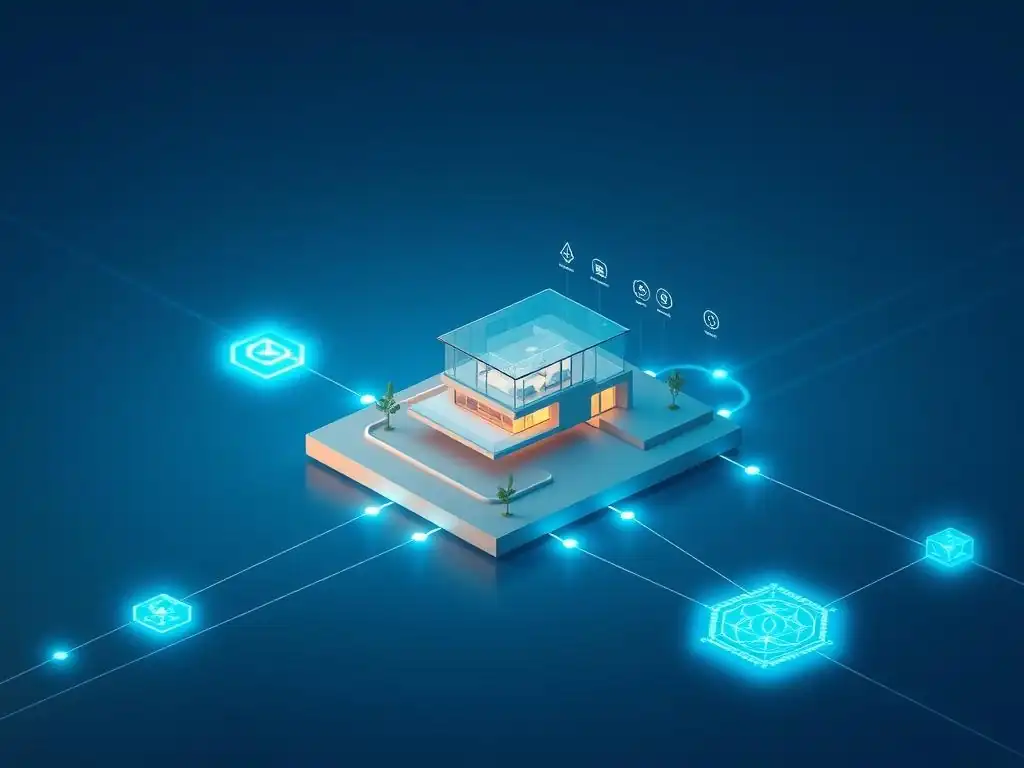
Increased Liquidity and Trading Volume for Virtual Land Assets
Blockchain interoperability is poised to significantly enhance liquidity and trading volume for blockchain metaverse real estate investment. Currently, virtual land markets are fragmented across different metaverses, each operating within its own walled garden. Interoperability breaks down these walls, allowing for the creation of unified marketplaces where virtual land NFTs from various metaverses can be traded seamlessly.
This pooling of assets from different ecosystems would dramatically increase the available supply and demand, leading to higher trading volume and improved liquidity. Investors would benefit from a more efficient market where they can buy and sell virtual land assets more easily and at potentially better prices.
For example, imagine a scenario where a virtual land NFT originally purchased in Decentraland can be listed and sold on a marketplace that also features virtual land from The Sandbox, Star Atlas, and other interoperable metaverses. This aggregated market would attract a larger pool of buyers and sellers, creating a more dynamic and liquid trading environment.
Increased liquidity reduces the risk of being unable to sell assets quickly and efficiently, making blockchain metaverse real estate investment more attractive to a wider range of investors. Interoperability is therefore a crucial catalyst for unlocking the full potential of the virtual land market and establishing it as a more mature and liquid asset class.
Enhanced User Experience Across Different Metaverse Platforms
Interoperability promises a significantly enhanced user experience for individuals engaging with multiple metaverse platforms and their associated virtual real estate. Currently, users are often confined to a single metaverse ecosystem, with their avatars, assets, and virtual identities locked within that specific platform. Interoperability aims to break down these barriers, allowing users to seamlessly traverse between different metaverses, carrying their virtual identities and assets with them. Imagine being able to use the same avatar and virtual land holdings across Decentraland, The Sandbox, and other interoperable metaverse platforms, creating a more cohesive and unified metaverse experience.
This seamless portability of assets and identities would dramatically improve the user experience, making the metaverse feel less fragmented and more like a unified digital world. Users could explore different metaverse environments, participate in various virtual economies, and leverage their virtual land holdings across multiple platforms without the friction of creating new accounts, purchasing duplicate assets, or dealing with complex cross-chain transfers. This enhanced user experience is crucial for driving wider adoption of metaverse platforms and their associated virtual real estate, as it removes significant barriers and makes the metaverse more accessible and enjoyable for a broader audience.
Reduced Transaction Costs and Faster Settlement Times
Interoperability solutions, particularly Layer-2 scaling solutions and advancements in cross-chain bridge technology, have the potential to significantly reduce transaction costs and speed up settlement times for blockchain metaverse real estate transactions. Currently, transferring assets between different blockchains, or even performing transactions within certain congested blockchains, can be costly and time-consuming. Interoperability solutions aim to address these issues by streamlining cross-chain interactions and leveraging more efficient blockchain infrastructure.
Layer-2 solutions, for instance, offer significantly lower transaction fees and faster confirmation times compared to Layer-1 blockchains like Ethereum. By utilizing Layer-2 solutions for metaverse platforms and interoperability bridges, transaction costs associated with virtual land trading and transfers can be drastically reduced. Similarly, advancements in cross-chain bridge technology are focusing on improving the efficiency and speed of asset transfers between blockchains.
Reduced transaction costs and faster settlement times make blockchain metaverse real estate investment more accessible and efficient, encouraging greater participation and activity in the market. This improved transaction efficiency is a key benefit of interoperability, making virtual land a more practical and appealing asset class.
Greater Flexibility and Diversification in Blockchain Metaverse Real Estate Investment
Blockchain interoperability provides metaverse real estate investors with greater flexibility and diversification options for their portfolios. In a fragmented metaverse landscape, investors are often limited to investing within specific metaverse ecosystems, potentially concentrating their risk and missing out on opportunities in other virtual worlds. Interoperability breaks down these limitations, allowing investors to diversify their virtual land holdings across multiple metaverse platforms built on different blockchains. This diversification reduces portfolio risk by spreading investments across various ecosystems and mitigates the potential impact of platform-specific risks or downturns.
For example, an investor could hold virtual land in an Ethereum-based metaverse like Decentraland, a Solana-based metaverse like Star Atlas, and a BSC-based metaverse like SecondLive, creating a diversified portfolio across different blockchain ecosystems and metaverse themes. This flexibility to invest across multiple platforms, facilitated by interoperability, allows investors to tailor their portfolios to their risk tolerance and investment strategies, maximizing potential returns while mitigating risks. Greater diversification is a significant advantage of interoperability, making blockchain metaverse real estate investment a more robust and attractive asset class for a wider range of investors.
Risks and Challenges of Interoperable Metaverse Real Estate
Security Concerns and Potential for Cross-Chain Exploits
While blockchain interoperability offers numerous benefits, it also introduces new security concerns and potential vulnerabilities, particularly related to cross-chain bridges. Cross-chain bridges are complex technological systems that act as intermediaries for transferring assets between blockchains. Their complexity makes them potential targets for exploits and hacks, as demonstrated by several high-profile incidents in the cryptocurrency space. If a bridge used to transfer virtual land NFTs is compromised, it could lead to significant financial losses for investors and erode trust in interoperable metaverse systems.
The security risks associated with cross-chain bridges stem from various factors, including vulnerabilities in smart contract code, centralized components within bridge infrastructure, and the inherent complexities of managing cross-chain transactions. The Ronin Bridge hack and the Wormhole bridge exploit serve as stark reminders of the potential for significant financial losses due to bridge vulnerabilities. Mitigating these security risks requires ongoing research, development, and rigorous security audits of interoperability solutions. Investors in interoperable metaverse real estate need to be aware of these inherent security risks and exercise caution when utilizing cross-chain bridges and platforms.
Regulatory Uncertainty Surrounding Virtual Land Ownership
The regulatory landscape surrounding virtual land ownership, both within individual metaverses and in the context of interoperability, remains highly uncertain and evolving. Governments and regulatory bodies are still grappling with how to classify and regulate digital assets like virtual land NFTs. This regulatory uncertainty poses challenges for blockchain metaverse real estate investment, as it creates ambiguity regarding legal ownership, property rights, taxation, and compliance requirements. The lack of clear regulations can deter institutional investors and create risks for individual investors navigating the legal complexities of virtual land ownership.
Furthermore, interoperability adds another layer of complexity to the regulatory landscape. When virtual land assets can move across different blockchain networks and potentially across different jurisdictions, it becomes even more challenging to determine applicable regulations and legal frameworks. The cross-border nature of interoperable metaverse real estate requires international cooperation and harmonization of regulations, which is a complex and ongoing process. Investors need to be aware of the regulatory uncertainties and potential changes in regulations that could impact the value and legality of their blockchain metaverse real estate investments.
Scalability Limitations of Current Interoperability Solutions
Current interoperability solutions, while promising, still face scalability limitations that can impact the efficiency and user experience of interoperable metaverse real estate. Cross-chain bridges, in particular, can sometimes experience congestion and delays, especially during periods of high network activity. The speed and throughput of cross-chain transfers can be bottlenecks, limiting the seamlessness of interoperable metaverse interactions. Similarly, while Layer-2 solutions improve scalability on individual blockchains, the interoperability between different Layer-2 networks is still under development and may face its own scalability challenges.
These scalability limitations can affect the user experience in interoperable metaverses, leading to slower transaction times and potential delays in transferring virtual land assets between platforms. As the metaverse ecosystem grows and user activity increases, the scalability of interoperability solutions will become even more critical. Ongoing research and development efforts are focused on improving the scalability and efficiency of interoperability technologies, but these limitations are currently a factor to consider for blockchain metaverse real estate investment.
The Complexity of Managing Assets Across Multiple Blockchains
Managing virtual land assets across multiple blockchains in an interoperable metaverse environment introduces complexities for investors and users. Currently, managing virtual land typically involves interacting with a specific metaverse platform and its associated blockchain wallet. However, in an interoperable setting, users may need to manage assets across multiple wallets and blockchain networks, which can be technically challenging and require a deeper understanding of blockchain technology. Keeping track of virtual land holdings, transaction histories, and security keys across different blockchains can be cumbersome and increase the risk of errors or loss of assets.
This complexity of asset management can be a barrier to entry for less technically savvy users and investors. User-friendly tools and interfaces are needed to simplify the process of managing assets across multiple blockchains in an interoperable metaverse. Wallet solutions that support multiple chains and provide a unified view of assets are crucial for improving the user experience and making interoperable metaverse real estate more accessible. Addressing the complexity of asset management is essential for wider adoption and usability of interoperable metaverse systems.
The Future of Metaverse Real Estate: A Vision of Interconnected Virtual Worlds
The Role of NFTs in Enabling Cross-Chain Metaverse Real Estate Ownership
Non-Fungible Tokens (NFTs) are fundamental to enabling cross-chain metaverse real estate ownership. NFTs serve as unique digital certificates of ownership for virtual land parcels, and their inherent properties make them well-suited for cross-chain transfers and interoperability. The uniqueness and immutability of NFTs allow for verifiable ownership of virtual land assets, regardless of the blockchain they reside on. Cross-chain bridges and other interoperability solutions leverage NFTs to represent virtual land ownership across different blockchain networks, facilitating the seamless movement of these assets.
As the metaverse evolves towards greater interoperability, NFTs will play an increasingly crucial role in establishing and maintaining ownership of virtual land across multiple platforms. Standardized NFT metadata and interoperability protocols will further enhance the seamless transfer and recognition of virtual land NFTs across different metaverses. The future of interoperable metaverse real estate is intrinsically linked to the ongoing development and adoption of NFT technology, which provides the foundational layer for verifiable and portable digital ownership in virtual worlds.
The Potential of Decentralized Autonomous Organizations (DAOs) in Managing Interoperable Virtual Land
Decentralized Autonomous Organizations (DAOs) hold significant potential for managing interoperable virtual land in the metaverse. DAOs are community-governed organizations that operate based on rules encoded in smart contracts, enabling decentralized decision-making and management of digital assets. In the context of interoperable metaverse real estate, DAOs could be utilized to manage shared virtual land parcels, govern virtual communities spanning multiple metaverses, and facilitate decentralized land marketplaces that operate across different blockchains.
Imagine a DAO that owns a virtual land portfolio distributed across multiple metaverses. DAO members could collectively decide on the development, utilization, and monetization strategies for these land assets, leveraging the benefits of interoperability to maximize value and community engagement across different virtual worlds. DAOs can also facilitate decentralized governance of interoperable metaverse infrastructure, ensuring that interoperability solutions are developed and maintained in a community-driven and transparent manner. The decentralized and community-driven nature of DAOs aligns well with the ethos of blockchain and the metaverse, making them a promising model for managing interoperable virtual land in the future.
Predicting the Evolution of Blockchain Metaverse Real Estate Investment
Predicting the precise evolution of blockchain metaverse real estate investment is challenging, but several trends and factors point towards a future characterized by increasing interoperability, maturation, and broader adoption. As interoperability solutions become more robust and secure, the fragmentation of the metaverse real estate market is likely to diminish, leading to more unified and liquid marketplaces. This increased liquidity and accessibility will attract a wider range of investors, including institutional players, further driving the growth and maturation of the market.
The utility and functionality of virtual land in interoperable metaverses are also expected to evolve significantly. As virtual worlds become more interconnected and immersive, the demand for virtual land as a foundation for digital businesses, social hubs, and interactive experiences will likely increase.
The development of standardized protocols and tools for managing interoperable virtual land assets will further simplify investment and participation in the market. While risks and challenges remain, the long-term trajectory of blockchain metaverse real estate investment points towards a future of interconnected virtual worlds, where virtual land ownership plays an increasingly significant role in the digital economy.
Conclusion: Embracing Interoperability for a Thriving Metaverse Real Estate Market
Key Takeaways for Blockchain Metaverse Real Estate Investors
For blockchain metaverse real estate investors, embracing interoperability is crucial for navigating the evolving virtual landscape and maximizing investment potential. Interoperability is the key to unlocking a more liquid, accessible, and user-friendly metaverse real estate market. Investors should consider the interoperability potential of metaverse platforms when evaluating investment opportunities and be aware of the risks and challenges associated with current interoperability solutions, particularly security concerns related to cross-chain bridges. Diversifying virtual land portfolios across different metaverses and blockchain ecosystems, where interoperability allows, can mitigate risks and enhance potential returns.
Staying informed about the development of interoperability technologies, regulatory changes, and the evolving metaverse landscape is essential for making informed investment decisions. As the metaverse matures and interoperability becomes more prevalent, the opportunities for blockchain metaverse real estate investment are expected to expand significantly. Embracing interoperability is not just a technological trend; it is a fundamental shift towards a more interconnected and thriving metaverse ecosystem, offering long-term potential for investors who understand and adapt to this evolving paradigm.
The Future of Virtual Land Ownership and Blockchain Technology
The future of virtual land ownership is inextricably linked to the advancement of blockchain technology and the drive towards greater interoperability. Blockchain provides the foundation for secure and verifiable ownership of virtual assets, while interoperability is the key to unlocking the full potential of the metaverse as a unified and interconnected digital world. As interoperability solutions mature and become more widely adopted, virtual land is poised to become an increasingly significant asset class within the digital economy, representing ownership and participation in the evolving metaverse.
The vision of a truly interoperable metaverse, where users can seamlessly traverse between virtual worlds and leverage their digital assets across different platforms, is becoming increasingly tangible. This vision promises to revolutionize how we interact with the digital world, blurring the lines between virtual and physical realities and creating new opportunities for commerce, social interaction, and immersive experiences. Blockchain technology and the pursuit of interoperability are driving this transformation, paving the way for a future where virtual land ownership plays a central role in a thriving and interconnected metaverse ecosystem.
Frequently Asked Questions
How does blockchain interoperability impact metaverse real estate investment?
Blockchain interoperability allows for seamless transfer and management of virtual land assets across different metaverse platforms, increasing liquidity and expanding investment opportunities. This reduces fragmentation and enhances the overall user experience.
What are the potential benefits of investing in metaverse real estate using blockchain technology?
Investing in metaverse real estate using blockchain offers benefits such as verifiable ownership, increased transparency, and the potential for passive income through renting or developing virtual properties.
What are the key regulatory challenges facing blockchain-based metaverse real estate investment?
Regulatory challenges include the lack of clear guidelines on property rights, taxation, and cross-border transactions within virtual environments. These ambiguities create legal uncertainty for investors.
How does DeFi (Decentralized Finance) play a role in blockchain metaverse real estate investment?
DeFi can provide novel financing options for metaverse real estate, such as fractional ownership, lending protocols, and yield farming opportunities related to virtual land assets. It democratizes access to investment.
What are the risks associated with investing in metaverse real estate across different blockchains?
Risks include market volatility, platform-specific vulnerabilities, and the potential for smart contract exploits that could lead to loss of assets. Thorough due diligence is crucial.
Final Reflection: Bridging Worlds, Building Futures
The exploration of metaverse real estate across chains reveals a landscape ripe with potential, yet fraught with complexities. The promise of seamless interoperability, where virtual land ownership transcends individual blockchain ecosystems, remains a pivotal, albeit nascent, reality. Understanding the nuances of blockchain technology, decentralized finance, and the evolving legal frameworks surrounding virtual assets is crucial for anyone considering a blockchain metaverse real estate investment.
The allure of owning digital land, shaping virtual worlds, and participating in the burgeoning metaverse economy is undeniable. This journey into the interconnected metaverse has profoundly underscored the importance of community, collaboration, and a shared vision for the future of digital ownership. The metaverse is not just a place to play games or socialize; it's a new frontier for economic activity, creativity, and self-expression,
a sentiment echoed by many pioneers in the blockchain space. This quote encapsulates the transformative potential of blockchain metaverse real estate investment.
As we stand at the cusp of this digital revolution, let us not only consider the financial opportunities but also the ethical implications and the potential for positive social impact. What kind of virtual worlds do we want to build? How can we ensure equitable access and prevent the pitfalls of unchecked speculation? The future of the metaverse is not predetermined; it is being shaped by the choices we make today. Consider how you can contribute to a metaverse that is inclusive, sustainable, and truly empowering for all.
Unveil Your Metaverse Empire!
Thank you for exploring the exciting world of cross-chain metaverse real estate! Now that you understand the potential for interoperability and virtual land ownership, it's time to take action and shape your own digital future.
Here are a few steps you can take to start building your presence in the metaverse:
- Explore a cross-chain metaverse platform and begin examining land options. Don't just browse—actively seek opportunities and get to know the community.
- Research different blockchain bridges and layer-2 solutions to optimize your land transactions and reduce gas fees. Having the right knowledge is essential in the decentralized world!
- Share this article with fellow blockchain enthusiasts or potential metaverse investors. Together, we can build a more connected and interoperable virtual environment!
What creative business or community are you imagining building on your future virtual land? Let's brainstorm in the comments!
Leave a Reply