
Advanced DeFi Strategies
Explore Advanced DeFi Strategies shaping the future of decentralized finance—from sophisticated yield opportunities and synthetic assets to stablecoin optimization, cross-chain liquidity, risk management, and institutional adoption. Discover expert insights into DeFi innovation, portfolio strategies, security considerations, and emerging blockchain solutions designed to help investors and organizations navigate the evolving decentralized economy with greater confidence.
 Institutional DeFi
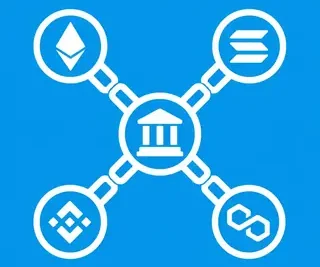 Cross-Chain DeFi Strategies
 Stablecoin Strategies
 DeFi Risk Management
 DeFi Derivatives & Synthetics
Advanced DeFi Strategies explores sophisticated decentralized finance techniques for users, analysts, builders, and institutions seeking to understand how capital can work across permissionless financial markets. From derivatives and synthetic assets to stablecoins, cross-chain liquidity, and institutional adoption, this category examines the tools and frameworks shaping the next generation of blockchain-based finance.
Readers can discover practical insights into yield optimization, liquidity provision, decentralized exchanges, smart contract risk, portfolio diversification, and on-chain financial infrastructure. Each guide is designed to explain complex DeFi concepts clearly while highlighting potential rewards, limitations, security considerations, and evolving regulatory requirements.
Whether you are researching DeFi investment strategies, comparing blockchain protocols, or evaluating decentralized finance for a business, Blockchain Trends provides educational analysis focused on informed decision-making. Explore advanced DeFi strategies with an emphasis on transparency, risk awareness, interoperability, and the future of decentralized financial systems.
📈 DeFi Derivatives & Synthetics
This subcategory explains how decentralized derivatives markets and synthetic assets operate across blockchain networks. Expect coverage of perpetual contracts, options, futures, structured products, and tokenized representations of real-world or digital assets without relying on traditional intermediaries.
Articles will explore leverage, collateralization, oracle design, liquidity, funding rates, and liquidation mechanics. Readers can also learn how synthetic assets create broader market exposure while understanding the risks associated with volatility, counterparty dependencies, smart contracts, and insufficient collateral.
🛡️ DeFi Risk Management
DeFi Risk Management focuses on protecting capital in a rapidly changing decentralized finance environment. Content covers protocol evaluation, smart contract vulnerabilities, impermanent loss, liquidity risk, oracle manipulation, governance attacks, bridge exploits, and the importance of diversification.
Readers can expect practical frameworks for assessing DeFi protocol security, total value locked, audit quality, collateral ratios, liquidation thresholds, and market conditions. The goal is to help users build more resilient strategies by identifying risks before depositing funds or interacting with unfamiliar applications.
💵 Stablecoin Strategies
Stablecoin Strategies examines how fiat-pegged, crypto-collateralized, algorithmic, and commodity-backed stablecoins are used within decentralized finance. Topics include stablecoin lending, liquidity pools, yield generation, payments, treasury management, and portfolio hedging.
Guides also address depegging risk, reserve transparency, redemption mechanisms, collateral quality, interest-rate changes, and regulatory developments. Readers will gain a clearer understanding of how stablecoins can support capital efficiency while recognizing that price stability is never guaranteed.
🌉 Cross-Chain DeFi Strategies
Cross-Chain DeFi Strategies explores how users access liquidity, applications, and yield opportunities across multiple blockchain networks. This section covers interoperability protocols, blockchain bridges, cross-chain lending, multichain liquidity, wrapped assets, and decentralized exchange routing.
Readers will learn how to compare networks based on transaction fees, settlement speed, security models, liquidity depth, bridge design, and ecosystem maturity. Content emphasizes the operational and technical risks of moving assets between chains, including bridge vulnerabilities, fragmented liquidity, and incompatible smart contract standards.
🏦 Institutional DeFi
Institutional DeFi focuses on how banks, asset managers, fintech companies, corporations, and professional investors are evaluating decentralized financial infrastructure. Topics include tokenized funds, real-world assets, compliant lending markets, digital securities, custody, permissioned networks, and institutional liquidity.
This subcategory examines the balance between blockchain efficiency and enterprise requirements such as compliance, identity verification, governance, reporting, cybersecurity, and regulatory oversight. Readers can explore how institutions may use DeFi to improve settlement, reduce operational costs, access programmable markets, and develop new financial products.
❓ Frequently Asked Questions About Advanced DeFi Strategies
What are advanced DeFi strategies?
Advanced DeFi strategies are structured approaches to using decentralized financial protocols for lending, borrowing, trading, hedging, liquidity provision, yield generation, and portfolio management. They often involve multiple protocols or blockchains and require careful analysis of market, smart contract, liquidity, and governance risks.
Are advanced DeFi strategies suitable for beginners?
Many advanced strategies are complex and may expose users to significant losses. Beginners should first understand wallets, gas fees, decentralized exchanges, lending protocols, collateral, and smart contract approvals. Starting with small amounts and using reputable, transparent protocols can help reduce avoidable mistakes.
What are the biggest risks in advanced DeFi?
Important risks include smart contract exploits, oracle failures, liquidation, impermanent loss, token volatility, stablecoin depegging, bridge attacks, governance manipulation, and low liquidity. High advertised yields do not eliminate risk and may indicate additional exposure to volatile or experimental protocols.
How can investors evaluate a DeFi protocol?
Evaluation should include the protocol’s security audits, code history, team transparency, governance structure, collateral model, liquidity, token distribution, oracle providers, insurance options, and incident record. It is also useful to review whether the protocol has clear documentation and explains how its yield is generated.
Will institutions adopt decentralized finance?
Institutional adoption is likely to develop selectively as organizations address regulatory, custody, identity, compliance, and risk-management requirements. Tokenized real-world assets, programmable settlement, stablecoin payments, and permissioned DeFi markets may provide practical entry points for banks and asset managers.