
Fighting Deepfakes and Misinformation: Blockchain & AI for Data Integrity


Welcome to Blockchain Trends, your compass in the ever-evolving world of decentralized technologies!
Dive deep into the transformative power of blockchain, far beyond just cryptocurrencies. Are you ready to explore how blockchain is revolutionizing data integrity in the age of AI? Our latest article tackles the critical challenge of deepfakes and misinformation, revealing the powerful synergy of Blockchain AI data integrity. Discover how these cutting-edge technologies are being combined to fight back against manipulation and secure the future of information. Intrigued? Read on to uncover the solutions and implications!
- Fighting Deepfakes and Misinformation: Blockchain & AI for Data Integrity
- Blockchain & AI: A Synergistic Solution for Data Verification
- Blockchain-Based Solutions for Verifying Data Authenticity
- AI-Driven Deepfake Detection Methods
- Combining Blockchain and AI for Enhanced Data Integrity
- Real-World Applications of Blockchain AI Data Integrity
- Challenges and Future Directions in Blockchain AI Data Integrity
- The Future of Trust: Blockchain and AI as Pillars of Data Integrity
-
Frequently Asked Questions
- How can blockchain technology help combat deepfakes?
- What role does AI play in conjunction with blockchain for data integrity?
- What are some practical enterprise applications of blockchain and AI for data integrity?
- How is regulation impacting the adoption of blockchain and AI for data integrity?
- What is the future outlook for decentralized systems using blockchain and AI to ensure data integrity?
- Final Reflection: Securing Truth in a Digital Age
- Embrace Truth: Secure the Future of Information!
Fighting Deepfakes and Misinformation: Blockchain & AI for Data Integrity
Understanding the Threat: How Deepfakes Manipulate Reality
Deepfakes, sophisticatedly manipulated videos, images, or audio recordings, are rapidly emerging as a significant threat to data integrity. These synthetic media pieces leverage advanced artificial intelligence, particularly deep learning algorithms, to convincingly alter or fabricate content. The technology allows for seamless face swapping, voice cloning, and the creation of entirely fabricated scenarios that are increasingly difficult to distinguish from reality. This ease of creation and dissemination, primarily through online platforms, poses a serious challenge to the authenticity of digital information.
The danger of deepfakes lies in their ability to manipulate perception and erode trust. Early deepfakes were often crude and easily detectable, but advancements in AI have dramatically improved their realism. For example, recent deepfakes of public figures have become so convincing that even experts struggle to identify them without specialized tools. This increasing sophistication means that the average person is highly susceptible to believing fabricated content, leading to the rapid spread of misinformation and a significant data integrity crisis. The manipulation of reality through deepfakes has far-reaching implications, impacting everything from political discourse to personal reputations.
The Erosion of Trust: Consequences of Widespread Misinformation
The proliferation of deepfakes directly contributes to a concerning erosion of trust in information sources and established institutions. When individuals are constantly bombarded with potentially manipulated content and struggle to differentiate between genuine and synthetic media, a climate of skepticism and cynicism takes root. This pervasive distrust undermines the foundations of informed public discourse and weakens societal cohesion. Even reputable news organizations and established fact-checking bodies face increased scrutiny and accusations of bias, even when reporting accurate information.
The consequences of this widespread misinformation extend beyond social and political spheres. Businesses can suffer significant reputational damage from fabricated videos depicting executives making damaging statements or engaging in unethical behavior. Financial markets can be destabilized by deepfake news reports designed to manipulate stock prices. In legal contexts, the admissibility of digital evidence is increasingly questioned due to the potential for deepfake manipulation. The economic and social costs of this erosion of trust, fueled by deepfakes, are substantial and growing, underscoring the urgent need for robust solutions to restore and maintain data integrity in the digital age.
Blockchain & AI: A Synergistic Solution for Data Verification
Harnessing the Power of Blockchain for Immutable Data Provenance
Blockchain technology presents a powerful and innovative approach to establishing immutable data provenance, a crucial element in combating deepfakes. Its decentralized and distributed ledger system records transactions in blocks that are cryptographically linked and time-stamped. This design inherently makes it exceptionally difficult to alter or delete data once recorded, creating an auditable and transparent history of a data's origin and any modifications. This immutability is paramount in the fight against deepfakes, as it offers a mechanism to verify the authenticity and origin of digital content.
Imagine a scenario where content creators, such as news agencies or independent journalists, register their original work on a blockchain. Each piece of content, whether it's a video, image, or article, is assigned a unique digital fingerprint (hash) and a timestamp, both securely recorded on the blockchain. If a deepfake version of this content surfaces online, the blockchain record can be consulted to verify the original source and creation time.
This establishes a verifiable chain of custody, making it significantly easier to identify manipulated content, trace its origin, and ultimately strengthen data integrity. This approach provides a critical layer of defense against the deceptive nature of deepfakes.
AI-Powered Deepfake Detection: Identifying Synthetic Media
While blockchain provides a robust framework for ensuring data provenance, artificial intelligence (AI) is indispensable for actively detecting deepfakes. AI, particularly machine learning (ML) algorithms, excels at analyzing vast amounts of visual and audio data to identify subtle anomalies and inconsistencies that are characteristic of synthetic media. These algorithms are trained on extensive datasets of both real and fake content, learning to recognize patterns in facial features, voice tonality, and video motion that are often imperceptible to the human eye but indicative of manipulation.
AI-powered deepfake detection systems are continuously evolving, adapting to the increasing sophistication of deepfake technology. For instance, AI algorithms can analyze minute details like blinking patterns in videos, as early deepfakes often struggled to replicate this natural human behavior convincingly. Similarly, AI can scrutinize the consistency of lighting and shadows in images and videos, as inconsistencies can be a telltale sign of manipulation.
The accuracy of these systems is constantly improving, with research focusing on developing more robust algorithms and expanding training datasets. According to a study by the University of California, Berkeley, AI detection methods have achieved accuracy rates exceeding 90% in identifying certain types of deepfakes, demonstrating the significant progress in this field. The ongoing development of these AI tools is crucial in the ongoing battle against increasingly sophisticated deepfake technology.
Blockchain-Based Solutions for Verifying Data Authenticity
Timestamping and Hashing: Ensuring Data Integrity on the Blockchain
Timestamping and hashing are fundamental cryptographic techniques that form the bedrock of blockchain's ability to ensure data integrity. Timestamping provides a verifiable and chronological record of when data was created or modified, anchoring data to a specific point in time. Hashing, on the other hand, generates a unique, fixed-size digital fingerprint of data. This hash is extremely sensitive to change; even a single bit alteration in the original data will result in a drastically different hash value. When these techniques are combined and implemented on a blockchain, they create an immutable and verifiable record of data and its history.
Consider a photojournalist capturing a crucial moment in a conflict zone. Immediately upon capturing the image, they could utilize a blockchain-based application to timestamp and hash the original photograph. This unique digital fingerprint, along with the timestamp, is then securely recorded on the blockchain.
If someone later attempts to manipulate the photograph, even subtly, the hash of the altered image will no longer match the original hash stored on the blockchain. This discrepancy provides irrefutable evidence of tampering, effectively compromising data integrity. This mechanism is invaluable for maintaining the authenticity of sensitive data across various sectors, including journalism, legal documentation, supply chain management, and digital archives.
Decentralized Identity (DID) and Data Ownership
Decentralized Identity (DID) offers a transformative, user-centric approach to managing digital identities and data ownership. This paradigm shift away from centralized identity providers empowers individuals and organizations with greater control over their digital personas and data. In the context of combating deepfakes and misinformation, DIDs, when integrated with blockchain technology, can play a pivotal role in establishing verifiable credentials for content creators and sources, enhancing data integrity significantly.
Using DIDs, a journalist, for example, could possess a DID linked to their verified identity and professional credentials, securely recorded on a blockchain. When this journalist publishes an article or video, their DID can be cryptographically linked to the content. This provides verifiable proof of authorship and origin that can be independently verified by anyone.
This system fosters trust in the source of information, making it considerably more difficult for malicious actors to impersonate credible sources and disseminate deepfakes under false pretenses. Furthermore, DIDs promote data ownership by giving individuals control over their personal data and how it is utilized online, cultivating a more transparent, secure, and trustworthy digital environment overall. The World Wide Web Consortium (W3C) has standardized DIDs, highlighting their growing importance in shaping the future of digital identity and data integrity.
Use Case: FactCheck.org's Blockchain-Based Initiative for Verifying News Content
FactCheck.org, a prominent non-profit fact-checking organization, has actively explored the application of blockchain technology to enhance the verification and provenance of news content. While the specifics of their blockchain initiative are continually developing, the underlying concept effectively illustrates how blockchain can be practically applied to improve data integrity within the media landscape. FactCheck.org could potentially leverage a blockchain to timestamp and hash their articles and fact-checks immediately upon publication. This would create a publicly auditable and immutable record of their work and its origin.
This initiative exemplifies the potential of blockchain to bolster transparency and accountability within the news ecosystem. By recording their content on a blockchain, organizations like FactCheck.org provide verifiable proof of their work's authenticity and timestamps.
This can be instrumental in combating the spread of misinformation by offering a trusted and independently verifiable source for confirming the accuracy of news content and demonstrating the integrity of fact-checking processes. While the full scope and long-term impact of FactCheck.org's blockchain exploration are still unfolding, it serves as a compelling real-world example of how blockchain can be concretely applied to address critical data integrity challenges in the media and beyond.
AI-Driven Deepfake Detection Methods
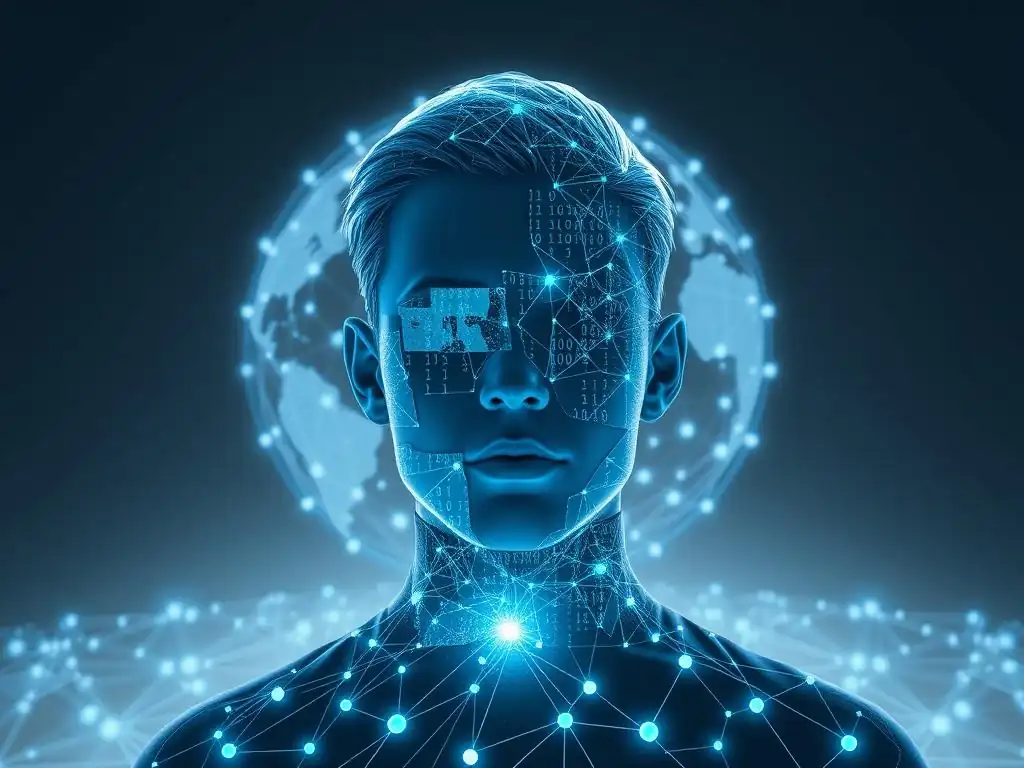
Machine Learning Algorithms for Deepfake Identification
Machine learning (ML) algorithms are at the cutting edge of AI-driven deepfake detection, offering powerful tools for identifying synthetic media. These algorithms are trained on vast datasets comprising both real and fake media content to learn the subtle distinctions between them. Several ML techniques are particularly effective, including convolutional neural networks (CNNs) and recurrent neural networks (RNNs).
CNNs are adept at analyzing visual features within images and videos, enabling them to detect manipulations in facial textures, lighting inconsistencies, and other visual artifacts often present in deepfakes. RNNs, on the other hand, are well-suited for processing sequential data such as video frames and audio waveforms, allowing them to identify temporal inconsistencies or unnatural patterns in deepfake videos.
For example, a CNN can be trained to meticulously analyze facial regions in videos, identifying subtle anomalies in skin texture, tone, and lighting that are often introduced during the deepfake creation process. Another ML-based approach focuses on detecting unnatural blinking patterns, a telltale sign in early deepfakes where realistic blinking was often overlooked. The effectiveness of these algorithms is directly correlated with the quality and size of the training datasets.
Researchers are continuously refining these algorithms by incorporating more advanced techniques, such as attention mechanisms and generative adversarial networks (GANs), and expanding training datasets to keep pace with the rapidly evolving sophistication of deepfake technology. According to Google AI, their deepfake detection models have achieved significant improvements in accuracy by leveraging larger and more diverse training datasets.
Facial Recognition and Anomaly Detection Techniques
Facial recognition technology, primarily known for identification purposes, can be skillfully adapted for deepfake detection by focusing on subtle anomalies within facial features and expressions. AI systems can be trained to analyze facial micro-expressions, the minute, involuntary muscle movements that are exceedingly difficult to convincingly replicate in deepfakes.
These micro-expressions often betray underlying emotions and reactions that synthetic media may fail to capture accurately. Furthermore, anomaly detection techniques can be deployed to identify inconsistencies in facial landmarks, such as the precise distance between eyes, the shape of the jawline, or the symmetry of facial features, which can be unintentionally altered or distorted during the deepfake generation process.
For instance, in a deepfake attempting to swap one person's face onto another's body, AI-powered facial recognition can meticulously analyze the geometry and texture of the face. By comparing these features to known characteristics of the original person's face, the system can detect subtle discrepancies indicative of manipulation. Anomaly detection can also be employed to identify unusual warping or blurring around the edges of the face, telltale artifacts often introduced during the deepfake generation process. These facial analysis techniques, when integrated with other AI-driven methods, contribute to a more comprehensive and multi-layered approach to robust deepfake detection.
The Role of AI in Continuously Improving Deepfake Detection
The battle against deepfakes is an ongoing technological arms race, with both deepfake generation and detection methods perpetually evolving. AI plays a pivotal role in continuously enhancing deepfake detection capabilities to stay ahead of this ever-changing landscape. As deepfake generation techniques become increasingly sophisticated, producing more realistic and deceptive synthetic media, AI algorithms must adapt and learn to identify increasingly subtle manipulation cues that were previously imperceptible. This necessitates continuous research, development, and refinement of AI models and detection strategies.
A critical aspect of this continuous improvement is the utilization of adversarial training. In this innovative approach, two AI models are pitted against each other in a competitive scenario. One model, the generator, is tasked with creating increasingly realistic deepfakes, while the other model, the discriminator, is trained to detect these synthetic media pieces. This adversarial process forces both models to become progressively more sophisticated.
The generator strives to create deepfakes that are indistinguishable from reality, while the discriminator becomes more adept at identifying even the most subtle signs of manipulation. This constant back-and-forth drives continuous advancements in both deepfake generation and detection technologies. Furthermore, researchers are actively exploring novel AI techniques, such as generative adversarial networks (GANs) specifically for detection, and incorporating multimodal analysis, which combines visual, audio, and textual data analysis, to create even more robust and resilient deepfake detection systems for the future.
Combining Blockchain and AI for Enhanced Data Integrity
AI Analyzing Data Provenance on the Blockchain
While blockchain technology excels at providing immutable data provenance, artificial intelligence (AI) can significantly enhance its effectiveness by autonomously analyzing this wealth of provenance information. AI algorithms can be specifically trained to scrutinize the historical data recorded on a blockchain, identifying patterns, anomalies, and inconsistencies that might suggest manipulation, tampering, or fraudulent activity. This proactive and intelligent analysis adds a critical extra layer of security and trust to blockchain-based data integrity solutions, going beyond simply recording data to actively monitoring its integrity over time.
Imagine a blockchain meticulously used to track the provenance of valuable digital art. AI algorithms could be deployed to analyze the transaction history of a Non-Fungible Token (NFT) representing a piece of digital art on the blockchain. The AI could be trained to identify suspicious patterns, such as rapid transfers of ownership between newly created and unverified accounts, which might be indicative of fraudulent activity or attempts to artificially inflate the artwork's perceived value or manipulate its provenance.
Furthermore, AI can be integrated to automatically verify the identities of participants involved in blockchain transactions, adding another layer of validation and strengthening the overall integrity of the data recorded on the ledger. By seamlessly combining AI's sophisticated analytical capabilities with blockchain's inherent immutability, we can create more intelligent, proactive, and robust data integrity systems that are better equipped to detect and prevent manipulation.
Smart Contracts for Automated Data Verification
Smart contracts, self-executing agreements written in code and securely stored on a blockchain, offer a powerful mechanism for automating data verification processes, further enhancing data integrity and efficiency. These contracts can be programmed to automatically verify the authenticity of data based on pre-defined criteria and conditions. Upon successful or failed verification, smart contracts can trigger specific actions automatically, eliminating the need for manual intervention in many verification workflows and significantly speeding up the overall process. This automation not only reduces the potential for human error but also makes data verification more reliable, consistent, and scalable.
For example, a smart contract system could be implemented to automatically verify the authenticity of digital certificates, such as academic degrees or professional licenses. When a certificate is initially issued, its unique hash and relevant issuer information can be securely recorded on a blockchain. A smart contract can then be programmed to automatically verify this information whenever the certificate is presented for validation, perhaps during a job application or professional credential check.
If the verification process fails, indicating a potential discrepancy or invalid certificate, the smart contract can automatically flag the certificate as potentially fraudulent or unauthentic. This automated verification process, powered by smart contracts, significantly enhances data integrity, reduces reliance on manual and potentially fallible verification methods, and minimizes the risk of accepting falsified or manipulated information in various contexts.
Building Trustworthy Systems: The Synergy of AI and Blockchain
The synergistic combination of AI and blockchain technologies creates a particularly potent and transformative force for building trustworthy systems and effectively addressing data integrity challenges, especially in the face of sophisticated threats like deepfakes and pervasive misinformation. Blockchain provides the foundational layer of immutability, transparency, and verifiable data provenance, ensuring tamper-proof records and auditable data histories. AI, on the other hand, contributes the critical intelligence and analytical capabilities necessary to actively detect manipulation, automate complex verification processes, and continuously improve security measures in response to evolving threats.
By strategically combining these complementary technologies, we can construct systems where data authenticity can be reliably and independently verified, the origins of information can be traced with confidence, and malicious manipulations and deepfakes can be proactively detected, mitigated, and ultimately prevented. This powerful synergy is absolutely crucial for building a more trustworthy digital environment, where individuals and organizations can have significantly greater confidence in the integrity of the information they consume, share, and rely upon in their daily lives and operations.
From effectively combating the spread of misinformation and disinformation to robustly protecting intellectual property rights and ensuring the authenticity of valuable digital assets like NFTs, the combined power of blockchain and AI offers a truly promising and impactful path towards a future characterized by enhanced data integrity and a more trustworthy digital world for everyone.
Real-World Applications of Blockchain AI Data Integrity
Combating Disinformation in the 2024 US Presidential Election
The 2024 US Presidential election, like many elections globally, is highly vulnerable to sophisticated disinformation campaigns, including the malicious deployment of deepfakes. Blockchain and AI technologies can be strategically deployed to effectively combat these threats and significantly enhance data integrity throughout the electoral process. Blockchain can be leveraged to create tamper-proof and auditable records of critical campaign communications, official media releases, and even sensitive voting data, providing an immutable trail of information that is resistant to manipulation. This increased transparency and accountability can help build trust in the integrity of electoral information.
AI-powered deepfake detection tools can be proactively used to continuously monitor online platforms, social media channels, and news outlets for the emergence of manipulated videos, images, and audio recordings of candidates or election-related information. News organizations and independent fact-checking organizations can further enhance their credibility by leveraging blockchain to timestamp and verifiably authenticate their reports and fact-checks, providing a trusted and independently verifiable source of accurate information for voters.
While completely eliminating disinformation in the complex and dynamic information ecosystem surrounding elections is likely unattainable, the combined and strategic use of blockchain and AI can substantially mitigate its harmful impact and contribute to a more informed, transparent, and trustworthy electoral process.
According to a recent report by the Carnegie Endowment for International Peace, concerns regarding deepfakes and their potential to significantly influence election outcomes are rapidly growing, underscoring the urgent need for proactive technological solutions like blockchain and AI to safeguard electoral integrity.
Protecting Intellectual Property Rights
Intellectual property (IP) rights, encompassing copyrights, trademarks, patents, and other forms of creative and innovative works, are increasingly susceptible to infringement in the digital age. The rise of sophisticated deepfakes can further exacerbate this issue, making it easier to create and distribute counterfeit or infringing content. Blockchain and AI, when combined, offer robust and innovative solutions for protecting IP rights and ensuring data integrity in the realm of digital assets and creations.
Blockchain can be effectively utilized to register and transparently track ownership of digital creations, providing immutable and irrefutable proof of IP rights and provenance. Artists, musicians, writers, and other creators can leverage blockchain to securely timestamp and register their original work, establishing clear and verifiable provenance and ownership that is resistant to tampering.
AI-powered image, video, and audio analysis technologies can be deployed to proactively detect instances of copyright infringement, including the unauthorized use or distribution of deepfakes that incorporate copyrighted material or mimic protected styles. AI can also assist in continuously monitoring online platforms, marketplaces, and social media for the distribution of counterfeit or infringing content, alerting IP rights holders to potential violations.
The World Intellectual Property Organization (WIPO) has actively explored the potential applications of blockchain for IP management, recognizing its transformative potential to enhance transparency, security, and efficiency in protecting creative works and innovations in the digital age. The strategic combination of blockchain's secure and transparent record-keeping capabilities with AI's powerful detection and analysis functionalities provides a formidable arsenal for safeguarding intellectual property rights in the increasingly complex digital landscape.
Ensuring the Authenticity of Digital Art and Collectibles (NFTs)
Non-Fungible Tokens (NFTs) have revolutionized the digital art and collectibles market, offering a novel mechanism for representing ownership of unique digital assets. However, persistent concerns regarding authenticity, provenance, and the potential for fraud remain significant challenges for the widespread adoption and long-term viability of the NFT ecosystem. Blockchain technology forms the foundational infrastructure for NFTs, providing inherent proof of ownership and scarcity.
However, AI can further enhance the integrity and trustworthiness of NFT ecosystems by proactively addressing critical issues related to deepfakes, counterfeit NFTs, and manipulated digital artworks. AI-powered image and content analysis technologies can be effectively utilized to rigorously verify the authenticity of digital artworks and collectibles associated with NFTs. This ensures that the NFTs represent genuine creations and not manipulated, copied, or counterfeit works, bolstering buyer confidence and market integrity.
AI can also play a crucial role in detecting and flagging potentially fraudulent NFTs, such as those associated with deepfakes of existing artworks, NFTs that infringe on existing copyrights, or NFTs created using stolen or unauthorized digital assets. Popular NFT marketplaces, such as OpenSea and Rarible, are increasingly exploring and integrating AI-driven tools and technologies to actively combat fraud, enhance the authenticity of digital assets traded on their platforms, and build greater trust within the NFT community.
The strategic and responsible integration of AI into NFT ecosystems, working in synergy with blockchain's inherent security and transparency, is absolutely crucial for building a sustainable, trustworthy, and thriving digital art and collectibles market that can withstand the challenges posed by deepfakes and other forms of digital manipulation.
Challenges and Future Directions in Blockchain AI Data Integrity
Scalability and Performance Considerations
Scalability and performance are significant challenges for blockchain technology, particularly when applied to data integrity solutions that require processing and verifying large volumes of data in real-time. Traditional blockchain architectures can be inherently slower and more resource-intensive compared to centralized systems, potentially limiting their ability to efficiently handle the demands of real-time deepfake detection, large-scale data verification, and high-throughput applications. As the volume of digital content continues to grow exponentially, driven by increasing internet usage and content creation, blockchain-based solutions must demonstrably scale to effectively meet these evolving demands and maintain performance under increasing load.
Researchers and developers are actively working on innovative scaling solutions for blockchain, including layer-2 protocols, sharding techniques, and state channels. These approaches aim to increase transaction throughput, reduce latency, and improve the overall efficiency of blockchain networks without compromising security or decentralization. Furthermore, optimizing AI algorithms for efficiency and speed is equally crucial for real-time deepfake detection and data analysis.
Hybrid approaches that strategically combine the inherent strengths of both blockchain and AI while effectively mitigating their individual limitations are likely to be the most successful in addressing scalability and performance challenges in the long term. The ongoing development and refinement of more efficient and scalable blockchain platforms are absolutely critical for enabling the widespread adoption and practical implementation of blockchain AI data integrity solutions across various industries and applications.
Addressing Bias in AI-Driven Deepfake Detection
AI algorithms, including those specifically designed for deepfake detection, are inherently susceptible to bias, particularly if they are trained on datasets that do not adequately represent the diversity of the real world's population and content. If an AI model is primarily trained on images or videos predominantly featuring one demographic group, for example, it may perform significantly less accurately and reliably when attempting to detect deepfakes of individuals from other demographic groups or those with different physical characteristics.
This inherent bias can lead to unfair, discriminatory, or inaccurate outcomes, undermining the trustworthiness and ethical implications of AI-driven data integrity systems.
Addressing bias in AI-driven deepfake detection requires a multifaceted and proactive approach, starting with meticulous attention to data collection, model training, and rigorous evaluation processes. Datasets used for training deepfake detection algorithms must be carefully curated to be diverse, representative, and inclusive of the global population and various forms of digital content. Researchers are also actively developing novel techniques to mitigate bias directly within AI models, such as adversarial debiasing methods and fairness-aware machine learning algorithms.
Furthermore, ongoing monitoring, auditing, and independent evaluation of AI systems are essential to proactively identify, measure, and address potential biases in real-world deployments. Ensuring fairness, equity, and inclusivity in AI-driven deepfake detection is paramount to building trustworthy and ethically responsible data integrity solutions.
The Evolving Landscape of Deepfake Technology and Countermeasures
Deepfake technology is rapidly evolving, becoming progressively more sophisticated, realistic, and consequently, increasingly challenging to detect. This rapid advancement creates a continuous technological arms race between deepfake creators and those developing countermeasures and detection methods.
As detection methodologies improve and become more effective at identifying existing deepfake techniques, deepfake generation techniques also advance in parallel, constantly pushing the boundaries of what is technically possible and requiring continuous innovation and adaptation on both sides of this technological cat-and-mouse game. The future effectiveness and long-term viability of blockchain AI data integrity solutions are intrinsically dependent on the ability to proactively stay ahead of this constantly evolving landscape of deepfake technology and countermeasures.
Researchers are actively exploring cutting-edge AI techniques, such as advanced generative adversarial networks (GANs) and transformer-based models, to both create increasingly realistic and deceptive deepfakes and, simultaneously, develop more robust and resilient detection mechanisms. The development of truly robust and future-proof data integrity solutions necessitates a proactive, adaptive, and collaborative approach. This includes continuously monitoring emerging deepfake technologies, anticipating future trends, and fostering ongoing collaboration between researchers, technologists, policymakers, media organizations, and the broader public to effectively address the evolving challenges posed by deepfakes and proactively maintain data integrity in the face of these rapid advancements.
The Future of Trust: Blockchain and AI as Pillars of Data Integrity
In an increasingly digital world saturated with information, the ability to confidently discern truth from falsehood is more critical than ever. Deepfakes and the pervasive spread of misinformation pose a significant and growing threat to trust in information sources, established institutions, and the very fabric of informed public discourse. However, blockchain and AI, when synergistically combined and responsibly deployed, offer powerful and transformative tools to effectively combat these challenges and build a future where data integrity is paramount and trust can be restored and strengthened.
Blockchain provides the essential and immutable foundation for verifiable data provenance, transparent data histories, and tamper-proof records, ensuring the integrity and authenticity of data at its core. AI, on the other hand, contributes the critical intelligence, analytical prowess, and automated detection capabilities needed to proactively identify and mitigate sophisticated manipulations like deepfakes, analyze vast datasets for anomalies, and continuously improve security measures in response to evolving threats.
The ongoing development, refinement, and widespread adoption of blockchain AI data integrity solutions are absolutely crucial for fostering a more trustworthy and resilient digital environment. As these technologies mature, become more accessible, and are implemented strategically across various sectors, they hold the immense promise of not only restoring and strengthening trust in information and institutions but also paving the way for a future where data integrity is a fundamental cornerstone of a more informed, transparent, and resilient society for all.
Frequently Asked Questions
How can blockchain technology help combat deepfakes?
Blockchain provides an immutable ledger that can be used to verify the provenance and authenticity of data, making it easier to identify manipulated content like deepfakes. This verifiable timestamping creates trust.
What role does AI play in conjunction with blockchain for data integrity?
AI can be used to detect deepfakes and manipulated content. Blockchain then ensures that the detection results and the original data are permanently recorded and verifiable. This synergistic approach enhances trust.
What are some practical enterprise applications of blockchain and AI for data integrity?
Supply chain management, where tracking product origins becomes more secure; media verification, ensuring news is authentic; and identity management, creating tamper-proof digital identities are all potential applications. These secure and transparent systems are beneficial.
How is regulation impacting the adoption of blockchain and AI for data integrity?
Regulatory frameworks are still evolving, but increasing focus is being placed on data privacy, security, and accountability. Clearer regulations will be crucial for widespread adoption and building public trust in these technologies.
What is the future outlook for decentralized systems using blockchain and AI to ensure data integrity?
The future involves greater integration of blockchain and AI to create more robust and trustworthy decentralized systems. We can expect to see more sophisticated solutions for combating misinformation and protecting data integrity across various industries, focusing on enhanced security.
Final Reflection: Securing Truth in a Digital Age
The fight against deepfakes and misinformation is no longer a futuristic concern; it's a present-day battle for truth and trust. The convergence of blockchain and AI, as explored in this article, offers a powerful, albeit complex, solution to safeguard data integrity and combat the erosion of reality in our increasingly digital world. The stakes are high, and the urgency to implement robust verification systems has never been greater.
The insidious nature of deepfakes and the ease with which misinformation spreads have profoundly impacted our cultural and social landscape. Witnessing the manipulation of information firsthand underscores the critical need for innovative solutions like blockchain-secured AI. This technology isn't just about verifying data; it's about preserving the very fabric of informed discourse and democratic processes. In an era of fake news and alternative facts, truth itself has become a contested commodity.
- Shoshana Zuboff
As we navigate this complex digital terrain, let us not be passive observers. Consider how you can contribute to a more truthful and transparent online environment. Question the information you consume, support initiatives that promote data integrity, and advocate for the responsible development and deployment of blockchain and AI technologies. The future of truth depends on our collective commitment to safeguarding the integrity of information.
Embrace Truth: Secure the Future of Information!
Thank you for exploring the critical intersection of blockchain, AI, and data integrity. You've gained valuable insights into how these technologies are combating deepfakes and misinformation. Now, let's turn knowledge into action!
Here's how you can get involved:
- Become a Data Guardian: Verify the authenticity of online content using blockchain-based verification tools.: This is one of the most effective ways to contribute!
- Dive deeper: Explore the resources shared and research projects focused on decentralized fact-checking initiatives.
- Spark the conversation: Share this article with your network and discuss innovative strategies to promote trustworthy information in the digital age.
What small change can you make today to actively fight misinformation and foster a more truthful online environment? Share your ideas in the comments below!
Leave a Reply