
Cardano's Hydra: Layer2 State Channels for Enhanced Scalability


Welcome to Blockchain Trends, your compass navigating the evolving landscape of decentralized technologies! Dive into a world beyond cryptocurrencies and discover how blockchain is reshaping industries through DeFi, enterprise solutions, and groundbreaking innovations. Ever wondered how Cardano is tackling scalability issues? Our deep dive into Cardano's Hydra scalability solutions uncovers the potential of Layer2 state channels to revolutionize transaction speeds and efficiency. Explore this revolutionary approach and unlock the future of blockchain with us!
- Cardano Hydra Architecture: How it Works
-
Frequently Asked Questions
- What is Cardano's Hydra and what problem does it aim to solve?
- How does Hydra achieve scalability through state channels?
- What are the potential benefits of implementing Hydra on the Cardano network?
- How secure are transactions processed through Hydra state channels?
- What is the current status of Cardano's Hydra development and deployment?
- Final Reflection: Unleashing Cardano's Potential
- Unlock Cardano's Scalability: Embrace the Future!
Cardano Hydra Architecture: How it Works
The Hydra Head Protocol: Key Components and Functionality
The core of Cardano Hydra scalability solutions lies in the Hydra Head protocol. This protocol defines a state channel established between a specific, limited set of participants, typically a small group ranging from two to several dozen. The primary function of a Hydra Head is to create a secure, off-chain environment where these participants can conduct a high volume of transactions and smart contract interactions rapidly and with minimal fees, effectively bypassing the main blockchain's throughput limitations.
Opening a Hydra Head requires an initial on-chain transaction where participants commit a certain amount of funds or assets into a dedicated smart contract on the Cardano mainnet. This committed state serves as the initial "snapshot" of the mini-ledger within the head.
Once the initial commitment is made and confirmed on the main chain, the Hydra Head is considered "open." Within this open head, participants maintain a shared, agreed-upon state that mirrors a segment of the main chain's ledger relevant only to them. This state includes their balances and the status of any smart contracts they are interacting with inside the head.
All subsequent transactions and state changes occur within this head, validated and signed by the participating parties. This off-chain state is updated collaboratively, with each participant signing off on the new state after a transaction, ensuring consensus among the head members without requiring the broader Cardano network to validate every single micro-transaction.
Off-Chain Transaction Processing and State Updates
Within an open Hydra Head, transactions between the participating parties occur almost instantaneously. Unlike main-chain transactions that require global network consensus and block confirmation time (which can take minutes), transactions inside a Hydra Head are validated solely by the parties involved. When one participant initiates a transaction, they broadcast it to the others in the head.
Once all relevant participants sign off on the transaction, the shared state within the head is updated to reflect the change. This process can handle potentially thousands or even millions of transactions per second per head, demonstrating the significant leap in transaction throughput offered by Cardano Hydra scalability solutions.
This off-chain processing model dramatically reduces the latency and costs associated with frequent interactions. For example, if two users open a Hydra Head to exchange small amounts of ADA repeatedly, each individual transfer happens instantly off-chain. The state within the head (their respective balances) is updated with each transfer. Only the initial funding and the final settlement require interaction with the main chain. This mechanism is a cornerstone of how Cardano Hydra aims to provide substantial Cardano Hydra scalability solutions for various applications, from micropayments to complex decentralized finance operations.
On-Chain Settlement and Dispute Resolution Mechanisms
The "close" phase of a Hydra Head brings the off-chain activity back to the main Cardano blockchain for final settlement. When participants decide to close a head, or when one participant wishes to exit, the final agreed-upon state within the head is submitted to the main chain via a single transaction. This transaction effectively settles all the off-chain activity that occurred within the head since it was opened.
The funds committed initially are then distributed according to this final state. This aggregation of numerous off-chain transactions into a single on-chain settlement transaction is key to reducing the load on the main chain and lowering overall transaction costs for the participants, a critical aspect of achieving effective Cardano Hydra scalability solutions.
A crucial element of the Hydra Head protocol is its robust dispute resolution mechanism. If, during the closing process, a participant attempts to submit an old or incorrect state to the main chain, other participants have a defined window of time, known as the "contestation period," to submit the correct and most recent state. The smart contract on the main chain holding the committed funds verifies these submitted states using cryptographic proofs (the signatures from participants on the state updates).
The main chain will ultimately enforce the state that is proven to be the latest valid one signed by all parties. This ensures that participants cannot cheat by reverting to an earlier state and provides a trustless way to guarantee the integrity of the off-chain computations, relying on the underlying security of the Cardano blockchain.
Security Considerations within the Hydra Architecture
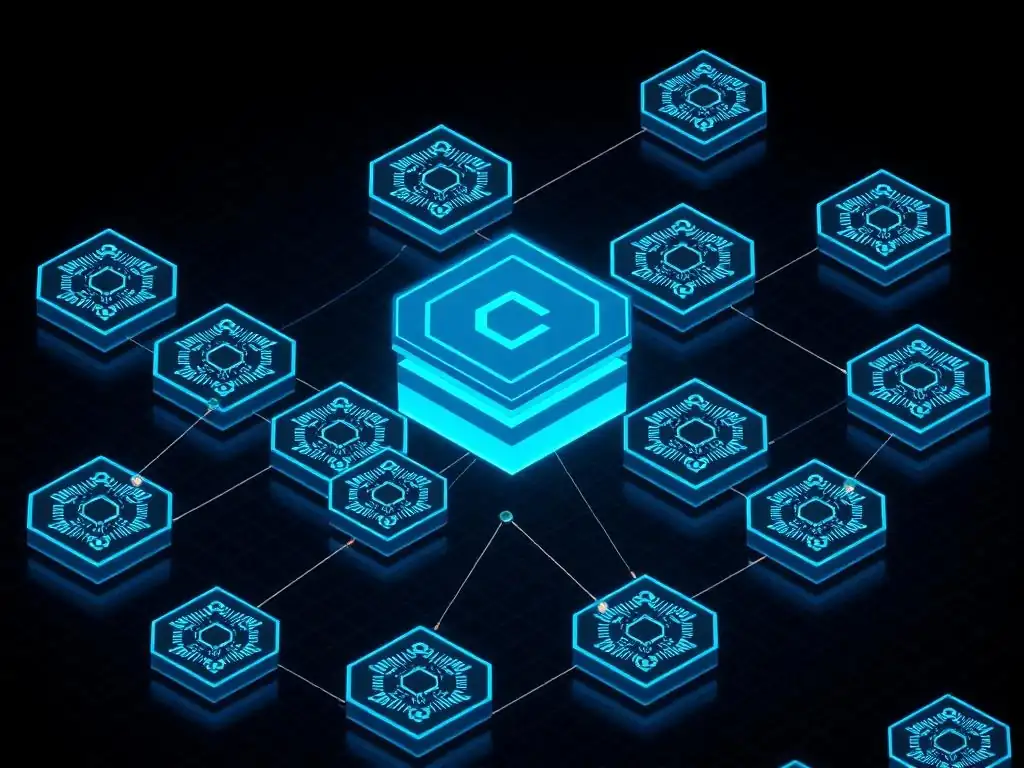
The security of the Hydra Head architecture is inherently linked to the security of the underlying Cardano mainnet and the design of the protocol itself. While transactions occur off-chain, the system relies on the main chain for the initial commitment, final settlement, and, most importantly, dispute resolution.
This anchor to the main chain's security ensures that even if participants in a head behave maliciously off-chain, their actions can be challenged and corrected on-chain, preventing theft or fraudulent final settlements. The smart contracts governing the Hydra Head on the main chain are designed to be robust and enforce the protocol's rules, acting as the ultimate arbiter.
Security within the head depends on participants validating each transaction and state update by signing off on them. However, challenges exist, such as participant availability. If a participant goes offline, it could potentially delay the closing process or require specific protocol steps to ensure the head can still be settled correctly without their active participation.
The protocol includes mechanisms, like the ability for a single participant to initiate closing and wait for contestation, to mitigate this. The economic incentives are also aligned: attempting to cheat is detectable and punishable on the main chain, making it generally unprofitable. This layered security approach contributes to making Cardano Hydra scalability solutions reliable for real-world applications.
Multi-Party Computation for Enhanced Privacy
While the standard Hydra Head protocol's primary focus is on scalability through off-chain transaction processing and state updates, which are typically visible to all participants within that specific head, the architecture can potentially be combined with other cryptographic techniques for enhanced privacy in specific use cases. One such technique is Multi-Party Computation (MPC).
MPC allows a group of participants to jointly compute a function over their private inputs without revealing those inputs to any other participant or an external party. This is not a core part of the basic Hydra Head mechanism for achieving high transaction throughput but rather an additional layer that could be integrated for applications requiring confidential computations.
In the context of Cardano Hydra scalability solutions, MPC could be leveraged within a Hydra Head to perform operations where the data involved must remain private among the participants. For instance, participants in a private business consortium using a Hydra Head for supply chain tracking might use MPC to compute aggregate statistics or verify certain conditions based on sensitive data (like costs or quantities) without revealing the individual data points to each other.
This allows them to benefit from Hydra's speed and low cost for frequent interactions while maintaining data confidentiality. This integration demonstrates the flexibility of building privacy-preserving applications on top of scalable infrastructure like Hydra, extending the potential use cases beyond simple value transfers or public smart contract interactions.
Frequently Asked Questions
What is Cardano's Hydra and what problem does it aim to solve?
Hydra is a Layer 2 scalability solution for the Cardano blockchain. It aims to increase transaction throughput and reduce latency by processing transactions off-chain. This helps address the issue of blockchain scalability inherent in many Layer 1 systems.
How does Hydra achieve scalability through state channels?
Hydra utilizes state channels, which are secure off-chain communication channels between participants. These channels allow for direct peer-to-peer transactions without involving the main Cardano blockchain for every single transaction, significantly reducing congestion.
What are the potential benefits of implementing Hydra on the Cardano network?
Implementing Hydra could lead to faster transaction speeds, lower transaction fees, and improved overall network performance. This makes Cardano more attractive for applications requiring high throughput, such as decentralized finance (DeFi) and enterprise solutions.
How secure are transactions processed through Hydra state channels?
Hydra uses cryptographic protocols and smart contracts on the main Cardano chain to ensure the security and integrity of off-chain transactions. The state channels are anchored to the main chain, allowing for dispute resolution if necessary.
What is the current status of Cardano's Hydra development and deployment?
Hydra is under active development with various testnets and prototypes being explored. While not yet fully deployed on the mainnet, it represents a key component in Cardano's roadmap for future scalability and improved user experience.
Final Reflection: Unleashing Cardano's Potential
The exploration of Cardano's Hydra has revealed a powerful vision for the future of blockchain technology, where scalability is no longer a bottleneck but a catalyst for innovation. The potential of Hydra to drastically improve transaction speeds and reduce costs is not just theoretical; it represents a tangible step towards realizing the promise of decentralized applications for a global audience.
This journey into Hydra's architecture and capabilities has underscored the importance of continuous evolution in the blockchain space. Witnessing the dedication and ingenuity behind Cardano's Layer-2 solutions reinforces the belief that decentralized technologies can truly transform our world. The future of finance is decentralized, and Cardano is building the infrastructure to make it a reality.
This quote encapsulates the spirit of innovation driving projects like Hydra, pushing the boundaries of what's possible.
Now, as we conclude this exploration, consider the implications of enhanced scalability for your own interactions with blockchain technology. How can you leverage the potential of solutions like Hydra to build more efficient, accessible, and impactful applications? The future of Cardano, and indeed the broader blockchain ecosystem, depends on our collective willingness to embrace and build upon these advancements. Let us all strive to contribute to a future where blockchain technology empowers individuals and transforms industries, one scalable solution at a time.
Unlock Cardano's Scalability: Embrace the Future!
Thank you for exploring the transformative potential of Cardano's Hydra. Now that you understand how it can enhance blockchain scalability, it's time to take action and help grow the Cardano ecosystem.
Here's how you can get involved:
- Learn More: Explore the official Cardano documentation on Hydra to grasp the technical details and consider contributing to its development on GitHub.
- Join the Conversation: Share this article with fellow blockchain enthusiasts and discuss Hydra’s impact on the future of decentralized applications on social media using #CardanoHydra.
- Try Demos: Find or create a simple demo application that utilizes Hydra’s state channels. Share your projects with the community and help others learn.
Are you ready to explore Hydra’s possibilities and contribute to building a more scalable blockchain? What innovative applications do you imagine developing with this technology? Share your ideas in the comments below!
Leave a Reply