
Blockchain for Organic and Fair Trade Certification: Building Consumer Trust

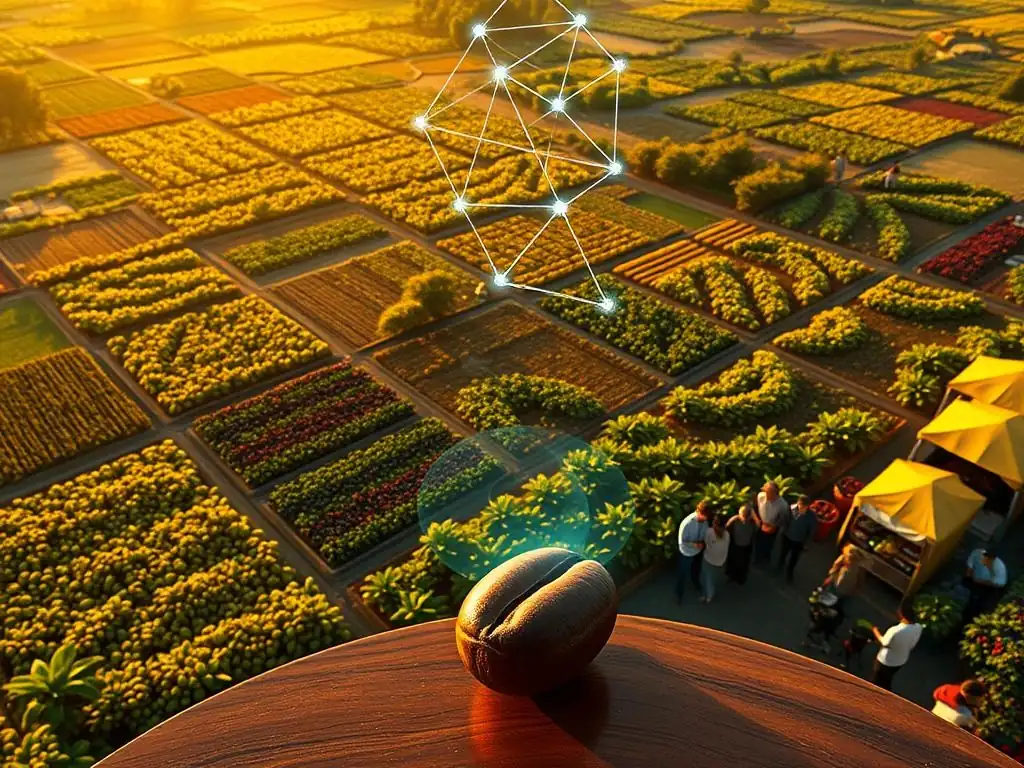
Welcome to Blockchain Trends, your guide to understanding the real-world impact of blockchain technology.
Imagine a world where you can instantly verify the authenticity and ethical sourcing of your organic produce. Our deep dive into how Blockchain certifies organic fair trade will reveal how this revolutionary technology is building unprecedented consumer trust and reshaping the future of ethical supply chains. Explore how blockchain is going beyond cryptocurrencies to revolutionize industries and foster sustainable practices. Ready to trace your food's journey from farm to table with unwavering certainty? Let's begin!
Blockchain for Organic and Fair Trade Certification: Building Consumer Trust
- Introduction: The Growing Demand for Transparency in Organic and Fair Trade Products
- Understanding Organic and Fair Trade Certification Challenges
- Blockchain's Role in Certifying Organic and Fair Trade Practices
- Key Benefits of Using Blockchain for Organic and Fair Trade Certification
- Implementing Blockchain for Organic and Fair Trade: A Step-by-Step Approach
- Real-World Examples: Blockchain Initiatives in Organic and Fair Trade
- Overcoming Challenges and Considerations for Blockchain Adoption
- The Future of Blockchain in Organic and Fair Trade: Building a More Sustainable and Trustworthy System
- Conclusion: Blockchain – A Powerful Tool for Rebuilding Consumer Trust in Organic and Fair Trade
-
Frequently Asked Questions
- How can blockchain technology enhance organic and fair trade certification?
- What are the key benefits of using blockchain for organic and fair trade practices?
- How does blockchain address the issue of counterfeit organic or fair trade products?
- What regulatory challenges might arise from using blockchain for organic and fair trade certification?
- How might blockchain impact the future of decentralized certification systems for organic and fair trade?
- Final Reflection: Empowering Trust Through Transparency
- Unearth Authenticity: Your Journey Beyond the Article!
Introduction: The Growing Demand for Transparency in Organic and Fair Trade Products
The Problem of Trust in Current Organic and Fair Trade Systems
Consumer trust in organic and fair trade labeling has faced significant challenges in recent years. Reports of fraud, mislabeling, and opaque supply chains have eroded confidence, making it difficult for consumers to verify the authenticity and ethical sourcing of the products they purchase.
A 2018 survey by Organic Monitor found that consumer trust in organic certification was a key concern, with many questioning whether products truly met the stringent standards claimed. This skepticism stems from a lack of visibility into the entire journey of a product, from its origin on the farm to the store shelf, making it hard to distinguish genuine certified goods from fraudulent ones.
The complexity of global supply chains further exacerbates this trust deficit. Products often pass through multiple intermediaries, processors, and distributors across different countries before reaching the final consumer. At each step, there's potential for adulteration, substitution, or misrepresentation of origin or production methods. Current paper-based or centralized digital systems are often vulnerable to manipulation, errors, or lack of timely updates, failing to provide a robust, immutable record that can assure consumers that their organic bananas were indeed grown organically or that the fair trade coffee beans genuinely benefited the farmers.
How Blockchain Technology Can Enhance Transparency and Traceability
Blockchain technology offers a promising solution to the transparency and traceability issues plaguing organic and fair trade markets. By providing a decentralized, immutable ledger, blockchain can record every transaction and movement of a product throughout its supply chain in a way that is resistant to tampering. This creates a single, shared source of truth accessible to all authorized participants, including farmers, processors, distributors, certifiers, and ultimately, consumers.
The inherent nature of blockchain, where data is added in blocks and linked cryptographically, ensures that once information about a product's origin, certification status, or handling is recorded, it cannot be retrospectively altered or deleted without the consensus of the network. This makes it an ideal tool for creating verifiable digital identities for products and tracking their journey.
By linking physical products to their digital records on the blockchain, stakeholders can gain unprecedented visibility, allowing consumers to scan a QR code on a package and see verified details about its organic certification, fair trade status, origin, and even the specific farm or farmer who produced it. This level of verifiable transparency is key to rebuilding fractured consumer trust.
Understanding Organic and Fair Trade Certification Challenges
Current Limitations of Traditional Certification Processes
Traditional organic and fair trade certification processes, while well-intentioned, often face significant limitations that hinder their effectiveness and transparency. These systems typically rely on periodic audits, paper documentation, and centralized databases, which can be cumbersome, costly, and prone to errors or deliberate manipulation. An organic farmer might receive an annual audit, but the information recorded during that audit isn't easily accessible or continuously updated throughout the year or across the supply chain.
Furthermore, the sheer volume of documentation required can overwhelm small producers and certifiers alike. Proving compliance with hundreds of specific standards, from soil management practices to labor conditions, generates a mountain of paperwork. This data is often siloed within different organizations – the certification body, the importer, the retailer – making it difficult to stitch together a complete and verifiable story for a single product. The lack of real-time, interconnected data means that issues discovered during an audit might take months to address, and the system struggles to provide dynamic assurance to consumers.
The Rise of "Organic Fraud" and Mislabeling
The premium price associated with organic and fair trade products creates a strong incentive for fraudulent activities, often referred to as "organic fraud." This can range from misrepresenting conventionally grown products as organic to falsely claiming fair labor practices or origin. The U.S. Department of Agriculture (USDA) has documented instances of large shipments of non-organic grains being fraudulently labeled as organic upon arrival in the U.S., bypassing the rigorous certification needed for domestic producers.
Mislabeling can also occur at various points, from packaging facilities to retail shelves. A 2020 report highlighted how some products labeled as "fair trade" might only have a small percentage of ingredients meeting the standard, or the certification itself might be from a less reputable body. These practices deceive consumers who are willing to pay more for ethically and sustainably produced goods, and they undermine the integrity of legitimate certified producers. Without a robust, tamper-proof system to track products and verify claims against immutable records, detecting and preventing such fraud remains a significant challenge for traditional systems.
The Need for Improved Traceability and Supply Chain Visibility
Effective traceability is fundamental to guaranteeing the integrity of organic and fair trade claims, yet current systems often fall short. Traceability means being able to follow a product through all stages of production, processing, and distribution. For an organic apple, this involves knowing which farm it came from, when and how it was harvested, how it was transported, where it was stored, when it was processed (e.g., into juice or sauce), and when it was packaged and shipped to a retailer.
Traditional traceability systems often rely on batch numbers and paper trails, which can be incomplete, easily lost, or falsified. If a problem arises, such as a contamination issue or a question about the origin of a product labeled "organic," tracing it back quickly and accurately through a complex global supply chain becomes incredibly difficult and time-consuming.
A lack of granular visibility means that identifying the exact source of an issue, isolating affected products, and verifying compliance at each step is a manual and often retrospective process, highlighting the urgent need for a more reliable and transparent method for tracking goods.
Blockchain's Role in Certifying Organic and Fair Trade Practices
Blockchain: A Secure and Immutable Ledger for Product Information
At its core, blockchain technology functions as a distributed, digital ledger that records transactions across many computers. This decentralized nature means there is no single point of failure or control, making it highly resistant to censorship and manipulation. For organic and fair trade certification, this ledger can store critical information about a product's journey and verification status from its point of origin.
Once data about a product – such as its harvest date, organic certification number, fair trade premium paid, or processing location – is added to a block and that block is added to the chain, it is cryptographically linked to the previous blocks. This makes it virtually impossible to alter past records without invalidating the entire chain, a process that would be immediately visible to all network participants. This immutability provides a level of security and trustworthiness far beyond traditional paper records or centralized databases, ensuring that the recorded history of a product is accurate and dependable.
Leveraging Distributed Ledger Technology (DLT) for Enhanced Transparency
Blockchain is a type of Distributed Ledger Technology (DLT). DLT enables multiple parties to have access to a shared, synchronized database ledger across different locations. In the context of organic and fair trade supply chains, this means that farmers, cooperatives, processors, exporters, importers, certifiers, retailers, and even consumers can potentially access relevant, permissioned information about a specific product's journey on a single, shared platform.
This shared visibility fundamentally changes the dynamic from opaque, siloed data systems to a transparent ecosystem. Instead of relying on intermediaries to relay information, stakeholders can verify data directly on the distributed ledger. For example, a certifier can log audit results directly onto the blockchain, an exporter can record shipment details, and a retailer can confirm receipt. This shared, transparent ledger ensures that all parties are working from the same, verified set of facts, significantly reducing information asymmetry and fostering greater accountability across the supply chain.
Smart Contracts: Automating Certification and Verification Processes
Smart contracts are self-executing contracts with the terms of the agreement directly written into code. They run on the blockchain and automatically execute actions when predefined conditions are met. This capability is particularly powerful for automating aspects of organic and fair trade certification and verification.
For instance, a smart contract could be programmed to automatically trigger a payment to a farmer once a shipment of certified organic produce is verified upon arrival at a processing plant, based on data recorded on the blockchain by the processor. Another smart contract could verify if a product meets specific criteria for "fair labor" status based on data points like wage payments or working hours logged by a cooperative.
By automating these processes based on immutable blockchain data, smart contracts can streamline operations, reduce the need for manual checks, minimize delays, and ensure that certification standards are being met and verified programmatically, adding a layer of automated trust and efficiency to how blockchain certifies organic fair trade practices.
Key Benefits of Using Blockchain for Organic and Fair Trade Certification
Increased Consumer Confidence Through Verifiable Data
One of the most significant benefits of using blockchain for organic and fair trade certification is the ability to provide consumers with direct, verifiable access to product information. Imagine a consumer in a supermarket scanning a QR code on a bag of coffee. Instead of just seeing a logo, they could instantly access a tamper-proof record detailing the coffee's origin farm, the date it was harvested, its organic certification status recorded by the certifying body, confirmation of the fair trade premium paid to the cooperative, and even photos or stories from the farmers.
This level of granular, verifiable data, accessible directly from the blockchain, empowers consumers to make informed purchasing decisions based on trust built on transparency, not just marketing claims. A 2021 IBM study on food traceability found that 71% of consumers said traceability was important to them, and 69% were willing to pay a premium for products with more supply chain transparency. Blockchain provides the infrastructure to deliver this transparency convincingly, demonstrating how blockchain certifies organic fair trade claims with unprecedented clarity.
Reduced Fraud and Counterfeiting of Organic and Fair Trade Products
The immutable and transparent nature of blockchain significantly raises the bar for anyone attempting to commit fraud or counterfeit organic and fair trade products. Because every step of the product's journey and every certification event is recorded on a distributed ledger that is difficult to alter, it becomes much harder to introduce counterfeit goods or falsely label conventional products.
If a batch of coffee beans is recorded on the blockchain with specific details about its organic certification and origin, attempting to substitute it with non-certified beans or misrepresenting its source would require altering the immutable record, which is practically impossible without detection. This acts as a strong deterrent against fraudulent activities. Furthermore, blockchain allows for unique digital identities for products or batches, making it easier to track specific items and verify their authenticity throughout the supply chain, thereby protecting both consumers and legitimate certified producers.
Streamlined Auditing and Compliance Processes for Certifiers
Certification bodies play a crucial role in verifying compliance with organic and fair trade standards. However, their work is often manual, document-intensive, and relies on snapshots in time (periodic audits). Blockchain can significantly streamline their processes by providing access to a continuous, real-time, and tamper-proof record of compliance-related data.
Instead of sifting through stacks of paper forms or disparate digital files, auditors can access a unified, verifiable history of a farm's practices, transaction records, or labor data directly on the blockchain. Smart contracts can even automate checks for certain compliance points, flagging potential issues before an audit is conducted.
This access to reliable, continuous data reduces the burden of manual verification, increases the efficiency of audits, and allows certifiers to focus on higher-level assurance tasks, ultimately making the certification process more robust and less costly. A pilot project involving organic certification and blockchain showed potential to reduce audit time by an estimated 30-40% by providing auditors with readily accessible, verified data.
Improved Efficiency and Cost Savings Across the Supply Chain
Implementing blockchain technology can lead to improved efficiency and cost savings across the entire organic and fair trade supply chain. The shared, transparent ledger reduces the need for multiple parties to maintain their own separate databases and manually reconcile data. This reduces administrative overhead and minimizes delays caused by information silos.
Automated processes via smart contracts, such as triggering payments upon verified delivery or automatically updating inventory records, further streamline operations. Reduced instances of fraud and mislabeling also lead to fewer costly recalls or disputes. While initial implementation requires investment, the long-term benefits in terms of reduced administrative costs, improved logistics, faster payments, and mitigation of risks associated with fraud can offer significant savings and increase overall supply chain efficiency for products where blockchain certifies organic fair trade claims.
Implementing Blockchain for Organic and Fair Trade: A Step-by-Step Approach
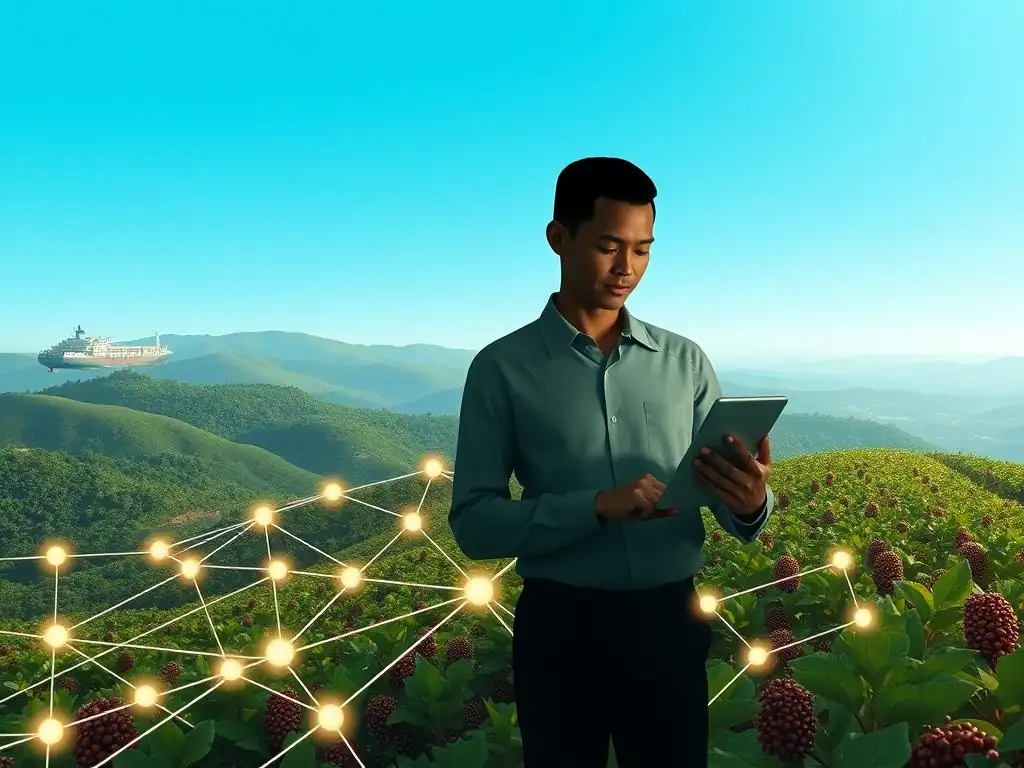
Step 1: Data Input and Traceability from Farm to Consumer
The foundational step in implementing blockchain for organic and fair trade is establishing robust data input mechanisms at every critical point in the supply chain, starting at the origin. This involves collecting data from farmers, such as planting dates, harvest yields, organic input usage (fertilizers, pesticides, documented in compliance with standards), and initial handling information. For fair trade, this would include data on cooperative membership, training received, and initial sales volumes.
As the product moves through the supply chain – to processors, packagers, distributors, and retailers – subsequent data points are added. This includes processing dates, ingredients added (verified for organic/fair trade status), packaging details, shipment information (dates, routes, carriers), and storage conditions. The goal is to create a digital trail that mirrors the physical movement of the product, ensuring that every significant event is recorded. This step often requires integrating with existing systems (like ERPs or inventory management) or providing user-friendly interfaces (like mobile apps for farmers) to capture data accurately at the source.
Step 2: Secure Data Storage and Immutability on the Blockchain
Once data is captured at various points in the supply chain, it needs to be securely stored on the blockchain. This involves structuring the data in a standardized format and submitting it as transactions to the chosen blockchain network. Each transaction represents an event (e.g., "Batch 123 harvested on Date X," "Batch 123 processed into Product Y," "Product Y shipped to Location Z").
These transactions are then grouped into blocks, validated by network participants (depending on the blockchain type, e.g., proof-of-work, proof-of-stake, or a permissioned consensus mechanism), and added to the immutable ledger. The cryptographic linking of blocks ensures that the historical record cannot be altered. This step is critical for ensuring the integrity and trustworthiness of the data, providing the secure foundation upon which blockchain certifies organic fair trade status and related claims.
Step 3: Verification of Claims Through Smart Contracts
Smart contracts play a vital role in automating the verification of organic and fair trade claims based on the data stored on the blockchain. These contracts can be programmed to check if recorded data points align with specific certification standards. For example, a smart contract could verify if the recorded inputs for a farm conform to organic regulations or if the documented payments to a cooperative meet fair trade minimums or premium requirements.
When a product reaches a certain point or meets specific criteria recorded on the blockchain, a smart contract can automatically verify its status and potentially issue a digital certificate or update its status on the ledger. This automated verification reduces the reliance on manual audits for certain aspects of compliance and provides near real-time assurance that standards are being met throughout the product's journey, leveraging the power of code to verify claims based on immutable data.
Step 4: Consumer Access to Product Information via QR Codes or Apps
The final step involves making the verifiable information stored on the blockchain accessible to the end consumer. This is typically achieved by assigning a unique identifier (like a QR code or a serial number) to individual products or batches. When a consumer scans this code using a smartphone app or visits a dedicated website, they are directed to a user interface that retrieves the relevant, permissioned data from the blockchain.
This interface presents the product's journey in an easily understandable format, showcasing its origin, processing history, certification status (verified by the blockchain), and any other relevant details like farmer stories or sustainability metrics. This direct access to immutable data empowers consumers, allowing them to independently verify the authenticity of organic and fair trade claims and building a direct connection between the consumer and the product's ethical journey, demonstrating how blockchain certifies organic fair trade credentials transparently.
Real-World Examples: Blockchain Initiatives in Organic and Fair Trade
Provenance: Tracking Indonesian Tuna Supply Chains
Provenance is a notable example of a company using blockchain to improve transparency in supply chains, including sustainable and ethical sourcing. One of their early and impactful projects involved tracking tuna caught by small-scale fishermen in Indonesia. By using mobile applications at the point of catch, fishermen could register their catch on the blockchain, including details about the boat, location, and time.
As the tuna moved through processors and exporters to buyers in Japan and other markets, each transaction and handling step was recorded on the blockchain. This created a verifiable digital history for each fish or batch. This initiative helped demonstrate the authenticity of sustainably caught tuna, improving traceability for consumers and providing valuable data back to the fishing communities, proving the concept that blockchain certifies organic fair trade-like sustainability claims in complex marine supply chains.
Carrefour: Enhancing Food Traceability for Poultry in France
Major retailers have also begun exploring blockchain for food traceability. Carrefour, a large European supermarket chain, implemented a blockchain solution (initially using IBM Food Trust) to track its Label Rouge free-range chicken in France. This initiative aimed to provide consumers with greater transparency regarding the quality and origin of their poultry.
By scanning a QR code on the package, consumers could access information recorded on the blockchain, including the chick's birth date, the farmer's name and location, the type of feed used, details of the slaughterhouse, and the date it arrived in the store. This project demonstrated how blockchain could be used by large corporations to build trust with consumers by providing verifiable details about product sourcing and quality, extending the principle of how blockchain certifies organic fair trade standards to conventional high-welfare products.
Within the first year, Carrefour expanded its blockchain traceability to include other products like eggs, oranges, and tomatoes.
Farmer Connect: Connecting Coffee Farmers to Consumers
Farmer Connect is a platform that specifically uses blockchain technology to improve transparency and fairness in the coffee supply chain, a sector where fair trade is a major concern. Their "Thank My Farmer" application, built on IBM Food Trust, allows consumers to trace their coffee back to its origin.
By scanning a QR code on participating coffee brands, consumers can see the journey of the beans, learn about the farmers who grew them, and even see how their purchase might have contributed to community projects funded by fair trade premiums or other initiatives. The platform records data points from farmers, cooperatives, roasters, and distributors on the blockchain, creating an end-to-end traceable supply chain. This initiative directly addresses the "fair" aspect of fair trade by making the connection between consumer and producer more visible and verifiable, illustrating how blockchain certifies organic fair trade principles and empowers producers.
Overcoming Challenges and Considerations for Blockchain Adoption
Data Privacy and Security Concerns in Blockchain Systems
While blockchain is inherently secure due to its cryptographic nature and immutability, implementing it in supply chains involves handling potentially sensitive data. Information about farm locations, production volumes, or specific transactions could be considered commercially sensitive or raise privacy concerns for individuals involved. Public blockchains, while transparent, might expose more data than desired for private business operations.
Permissioned or private blockchains offer more control over who can participate and access specific data, addressing some privacy concerns. However, ensuring that sensitive data is handled responsibly, access is properly managed through cryptographic keys and permissions, and compliance with data protection regulations (like GDPR) is maintained remains a critical challenge. Designing the system to balance transparency with necessary privacy is paramount.
Scalability and Interoperability of Different Blockchain Platforms
The scalability of blockchain networks is a significant consideration, especially for high-volume supply chains. Public blockchains like Bitcoin or Ethereum can be slow and expensive for micro-transactions or logging millions of data points daily from numerous farms and intermediaries. While newer blockchains and Layer 2 solutions offer improved throughput, ensuring the chosen platform can handle the volume and speed required by complex agricultural supply chains is essential.
Furthermore, the lack of interoperability between different blockchain platforms and legacy systems poses a challenge. Different companies or initiatives might adopt different blockchain technologies (e.g., Hyperledger Fabric, Ethereum, Corda). Ensuring these disparate systems can communicate and share data seamlessly is crucial for creating truly end-to-end traceability across a fragmented global supply chain. Standards and protocols for data exchange between different DLTs are still evolving.
The Cost of Implementing and Maintaining Blockchain Solutions
Implementing a blockchain solution for organic and fair trade certification involves significant upfront costs. This includes the cost of developing or licensing the software, integrating it with existing systems, purchasing or leasing hardware (servers, IoT devices), training personnel, and potentially transaction fees on the network. For smallholder farmers or cooperatives, these costs can be prohibitive without external support or industry-wide initiatives.
Ongoing maintenance costs, including network fees, system updates, and technical support, also need to be considered. While blockchain can lead to long-term efficiencies and cost savings, the initial investment hurdle is substantial and requires careful planning and justification. Finding cost-effective and accessible solutions, particularly for the producers at the beginning of the supply chain, is vital for widespread adoption.
Ensuring Data Accuracy and Integrity Throughout the Supply Chain
The principle of "garbage in, garbage out" applies strongly to blockchain. While the blockchain ensures the immutability of data once recorded, it does not inherently guarantee the accuracy of the data before it is entered onto the ledger. If inaccurate or fraudulent data is input at the source – for example, a farmer incorrectly logs organic input usage or a processor misrepresents a batch – that incorrect information will be immutably stored.
Therefore, ensuring data accuracy and integrity at the point of capture is paramount. This requires robust data collection protocols, reliable input mechanisms (like verified IoT sensors or trusted human operators), and potentially additional verification layers off-chain or through consensus mechanisms involving multiple parties confirming data before it's added to the blockchain. While blockchain certifies organic fair trade status based on recorded data, the reliability of that certification depends heavily on the quality of the initial data input.
The Future of Blockchain in Organic and Fair Trade: Building a More Sustainable and Trustworthy System
Potential for Integration with IoT and Other Technologies
The future of blockchain in organic and fair trade lies significantly in its integration with other emerging technologies, particularly the Internet of Things (IoT). IoT devices, such as sensors monitoring soil conditions, temperature, humidity during transport, or even automated weighing scales, can collect real-time, objective data directly from the physical world.
This data can then be automatically fed onto the blockchain via secure gateways. This reduces reliance on manual data input, which is prone to human error or manipulation, and provides a continuous stream of verifiable information. Imagine sensors in a container of organic produce logging temperature fluctuations throughout its journey, with that data immutably recorded on the blockchain. This integration enhances the reliability of the information on the ledger, strengthening the assurance that blockchain certifies organic fair trade conditions were maintained throughout the supply chain.
Blockchain as a Catalyst for Ethical and Sustainable Consumption
By providing unprecedented transparency and verifiable information, blockchain can act as a powerful catalyst for driving more ethical and sustainable consumer choices. When consumers can easily access and trust information about a product's environmental impact, labor practices, and origin, they are better equipped to support brands and producers who genuinely adhere to high standards.
This increased transparency can create market pressure for companies to improve their practices and seek certifications, knowing that their claims can be easily verified. As more consumers demand verifiable proof of sustainability and fairness, blockchain-powered transparency will become a competitive advantage, rewarding those who operate ethically and encouraging others to follow suit. This shift empowers consumers to vote with their wallets based on reliable information.
The Role of Blockchain in Promoting Fair Prices and Farmer Empowerment
Fair trade aims to ensure producers, particularly in developing countries, receive fair prices for their goods and have better working conditions. Blockchain can play a direct role in promoting these goals by increasing transparency in payment flows and supply chain costs. By recording transactions and payments on the blockchain, it becomes easier to verify that fair trade premiums are paid and that a reasonable portion of the final consumer price reaches the producers at the beginning of the chain.
Furthermore, providing farmers with access to the blockchain platform allows them to record their own data, connect directly with buyers, and potentially access financial services or receive payments more efficiently. This level of transparency and direct connection can help empower farmers, giving them more control over their data and their position within the supply chain, reinforcing the core principles of fair trade and demonstrating how blockchain certifies organic fair trade benefits reaching the source.
Conclusion: Blockchain – A Powerful Tool for Rebuilding Consumer Trust in Organic and Fair Trade
Key Takeaways: How Blockchain Certifies Organic Fair Trade and Builds Trust
The journey of organic and fair trade products from farm to fork is complex and often opaque, leading to significant trust issues for consumers. Traditional certification systems, while valuable, struggle with limitations in traceability, vulnerability to fraud, and cumbersome manual processes. Blockchain technology offers a transformative solution by providing a decentralized, immutable, and transparent ledger to record and verify every step of a product's supply chain journey. This ensures that claims about organic practices, fair labor conditions, and origin are not just printed on a label but are backed by verifiable data accessible to all authorized parties.
By leveraging blockchain's core features – immutability, transparency through a distributed ledger, and automation via smart contracts – the system creates a single source of truth that is resistant to tampering. This allows consumers to gain unprecedented confidence that the products they purchase genuinely meet the stringent standards associated with organic and fair trade labels.
Real-world examples, from tracking tuna in Indonesia to poultry in France and coffee globally, demonstrate the practical application and potential of blockchain in building verifiable trust. Ultimately, blockchain certifies organic fair trade claims by providing the secure, transparent infrastructure needed to rebuild consumer confidence in ethical and sustainable sourcing.
The Importance of Collaboration and Standardization in the Blockchain Ecosystem
While the potential of blockchain for organic and fair trade is immense, successful widespread adoption requires overcoming significant challenges, including data privacy, scalability, costs, and ensuring data accuracy at the source. Addressing these issues necessitates collaboration among all stakeholders in the supply chain – farmers, cooperatives, processors, certifiers, retailers, technology providers, and consumers.
Establishing industry-wide standards for data collection, formatting, and interoperability between different blockchain platforms is crucial to avoid fragmentation and ensure seamless, end-to-end traceability. Collaborative efforts can also help develop cost-effective and user-friendly solutions accessible to small producers. By working together to build robust, interoperable, and inclusive blockchain ecosystems, the industry can fully leverage the power of this technology to create a more transparent, trustworthy, and sustainable future for organic and fair trade globally.
Frequently Asked Questions
How can blockchain technology enhance organic and fair trade certification?
Blockchain provides immutable records of the product's journey, from origin to consumer. This transparency and traceability help to verify claims and build trust. It reduces fraud and counterfeiting.
What are the key benefits of using blockchain for organic and fair trade practices?
Using blockchain offers improved supply chain visibility, enhanced consumer confidence, and reduced administrative overhead for certification bodies. It also facilitates direct connections between producers and consumers.
How does blockchain address the issue of counterfeit organic or fair trade products?
Blockchain creates a secure and transparent ledger, making it difficult to introduce counterfeit products into the supply chain. Each transaction is recorded and verified, ensuring authenticity.
What regulatory challenges might arise from using blockchain for organic and fair trade certification?
Potential challenges include the need for standardized data formats, clear legal frameworks for data ownership and access, and ensuring compliance with privacy regulations, like GDPR.
How might blockchain impact the future of decentralized certification systems for organic and fair trade?
Blockchain paves the way for decentralized certification systems, empowering farmers and consumers with greater control over the certification process. This can lead to more efficient and transparent systems overall.
Final Reflection: Empowering Trust Through Transparency
The exploration of blockchain's potential to revolutionize organic and fair trade certification reveals a crucial truth: consumer trust is paramount in a world increasingly skeptical of traditional systems. The ability to verify the authenticity and ethical sourcing of products, from farm to table, is no longer a luxury but a necessity for building lasting relationships between producers and consumers. Blockchain offers a tangible solution to the pervasive problem of greenwashing and certification fraud, paving the way for a more equitable and sustainable marketplace.
The impact of this technology extends far beyond mere verification; it fosters a deeper connection with the origins of our food and the people who produce it. Witnessing the potential for blockchain to empower marginalized farmers and ensure fair compensation highlights the profound social responsibility inherent in our purchasing decisions. The ultimate test of our moral fiber is our ability to recognize the rights of others.
- Eleanor Roosevelt. This sentiment resonates deeply with the core principles of fair trade, and blockchain provides a powerful tool to uphold these principles in a transparent and verifiable manner.
Now, consider the power you hold as a consumer. Armed with the knowledge of how blockchain can certify organic fair trade, you can actively seek out products that embody these values. Let us embrace this technology not just as a means of verification, but as a catalyst for a more just and sustainable world, one purchase at a time. Choose transparency, choose ethics, choose to empower the producers who are committed to doing good.
Unearth Authenticity: Your Journey Beyond the Article!
Thanks for diving into the world of blockchain and its potential to revolutionize organic and fair trade certification. You've gained valuable insights into how this technology can foster trust and transparency. Now, let's put that knowledge into action!
- Demand Transparency: Actively seek out and support brands that utilize blockchain technology to verify their organic and fair trade certifications. This is the most impactful step you can take.
- Explore Further: Delve deeper into specific blockchain solutions mentioned in the article and investigate their real-world applications in sustainable sourcing.
- Share and Discuss: Spread the word! Share this article with your network and start a conversation about the importance of blockchain in building consumer trust.
What specific organic or fair trade product are you now more likely to purchase knowing it's verified via blockchain? Share your thoughts in the comments!
Leave a Reply