
The Role of Oracles in Decentralized Real Estate: Bridging the Gap to the Real World


Welcome to Blockchain Trends, where we dive deep into the transformative potential of blockchain technology beyond the realm of cryptocurrencies. In today's exploration, we uncover the fascinating world of decentralized real estate oracles and their pivotal role in bridging the gap between digital assets and the physical world. As you navigate through our insights, prepare to discover how these innovative systems are reshaping the landscape of real estate and paving the way for a more transparent and efficient future. Join us on this journey and unlock the secrets of how oracles are revolutionizing the industry!
The Role of Oracles in Decentralized Real Estate: Bridging the Gap to the Real World
- Introduction: Decentralized Real Estate and the Oracle Problem
- What are Decentralized Real Estate Oracles?
- Key Applications of Oracles in Decentralized Real Estate
- Types of Oracles Used in Decentralized Real Estate
- Benefits of Implementing Decentralized Real Estate Oracles
- Challenges and Considerations for Decentralized Real Estate Oracles
- Examples of Real-World Decentralized Real Estate Projects Using Oracles
- The Future of Oracles in Decentralized Real Estate
- Conclusion: Embracing Oracles for a More Transparent and Efficient Real Estate Future
-
Frequently Asked Questions
- What are decentralized real estate oracles, and why are they important?
- How do oracles ensure the accuracy and reliability of real estate data on the blockchain?
- What are some potential applications of decentralized real estate oracles beyond simple property valuation?
- What are the main challenges currently facing the widespread adoption of decentralized real estate oracles?
- How might decentralized real estate oracles impact the future of the real estate industry?
- Final Reflection: Embracing Trust in Decentralized Real Estate
- Ignite Your Real Estate Revolution!
Introduction: Decentralized Real Estate and the Oracle Problem
The convergence of blockchain technology and the real estate sector promises a revolution in how properties are bought, sold, managed, and invested in. Decentralized real estate aims to strip away layers of intermediaries, reduce costs, enhance transparency, and increase liquidity in a traditionally illiquid market.
Concepts like tokenization, where ownership is represented by digital tokens on a blockchain, are paving the way for fractional ownership, making real estate accessible to a broader range of investors. Pilot programs and platforms are already exploring these possibilities, demonstrating the potential for transactions to be settled faster and with greater certainty than traditional methods.
However, the inherent design of blockchains presents a fundamental challenge: they are isolated systems, unable to directly access data from the outside world. This limitation, often referred to as the "oracle problem," becomes particularly acute in decentralized real estate applications (dApps). These dApps rely heavily on accurate, real-time, and verifiable information about physical properties – data that exists entirely off-chain. Without a secure and reliable mechanism to feed this external data onto the blockchain, the functionality and trustworthiness of decentralized real estate platforms are severely constrained.
Understanding the Rise of Blockchain in Real Estate
Blockchain's appeal in real estate stems from its core properties: immutability, transparency (for public blockchains), and the ability to execute self-enforcing agreements via smart contracts. These characteristics are particularly valuable in a sector plagued by bureaucracy, lack of transparency, and high transaction costs. Estimates suggest that traditional real estate transactions can involve fees and costs amounting to 6-10% of the property value, a significant portion of which could potentially be reduced through decentralization and automation.
The adoption of blockchain in real estate is moving beyond theoretical discussions. Projects are actively exploring its use for managing property records, facilitating fractional ownership through tokenization, streamlining title transfers, and even automating rental payments. The vision is a global, accessible, and highly efficient market where property rights are digitally secure and transactions are executed autonomously based on predefined conditions within smart contracts. This rise necessitates robust infrastructure to connect these digital assets and processes to their real-world counterparts.
Identifying the Need for Real-World Data in Decentralized Applications (dApps)
Decentralized real estate dApps require a constant flow of accurate, external data to function effectively. Consider a smart contract designed to automatically transfer ownership tokens upon full payment and verification of clear title. While the payment can be tracked on-chain, the verification of the title status or the physical condition of the property requires information from the real world. Similarly, automated valuation models (AVMs) used in tokenized property platforms need access to recent sales data, market trends, and property characteristics that reside outside the blockchain.
Without reliable access to this off-chain data, the smart contracts powering decentralized real estate transactions become static and unable to react to real-world events or verify critical conditions. This dependency on external information highlights a critical vulnerability and a significant hurdle for the widespread adoption of blockchain in the sector. The need for accurate, timely, and tamper-proof data feeds is paramount for decentralized real estate oracles to build trust and functionality into these nascent platforms.
The Critical Role of Oracles in Decentralized Real Estate Marketplaces
This is where decentralized real estate oracles become indispensable. They serve as the vital bridge, acting as data feeds that connect the deterministic world of the blockchain with the dynamic, unpredictable external environment. Oracles fetch, verify, and transmit real-world data – such as property market prices, regulatory changes, legal document statuses, or even physical inspection results – onto the blockchain for use by smart contracts and dApps.
The reliability and security of these oracles are paramount. If an oracle feed is compromised or provides inaccurate data, it can lead to incorrect smart contract execution, potentially resulting in significant financial losses or legal complications in decentralized real estate transactions. Therefore, the design and implementation of robust decentralized real estate oracles are central to realizing the full potential of blockchain technology in the property market, ensuring that digital representations and agreements accurately reflect real-world conditions.
What are Decentralized Real Estate Oracles?
At its core, an oracle is a service that provides smart contracts with external information. It is not a source of data itself, but rather an intermediary that queries, verifies, and authenticates data from off-chain sources and relays it onto the blockchain in a format that smart contracts can understand. Think of it as a secure API specifically designed for blockchain interaction. In the context of decentralized real estate, these oracles specialize in providing data relevant to property assets and transactions.
The function of an oracle within a decentralized ecosystem is crucial because blockchains, by design, cannot initiate outbound connections to external systems or databases. They are deterministic, meaning every node on the network must arrive at the same state based only on the information contained within the blockchain itself. Oracles break this isolation, allowing smart contracts to react to real-world events like a property sale completion, a change in zoning laws, or fluctuations in rental yields, thereby enabling more complex and useful decentralized applications in real estate.
Defining Oracles: The Data Bridge Between Blockchains and the External World
Oracles are essentially secure data feeds that allow smart contracts to interact with the outside world. They fetch information from various sources – APIs, websites, databases, sensors, or even human input – and translate it into a format usable by the blockchain. Without oracles, smart contracts would be limited to data already on the chain, severely restricting their utility for real-world applications like decentralized real estate.
Consider a smart contract designed to release funds from escrow upon confirmation of a successful property inspection. The inspection result is external data. An oracle is needed to securely bring that inspection outcome onto the blockchain. The oracle acts as the necessary bridge, ensuring that the off-chain event triggers the correct on-chain action, making it a fundamental component for functional decentralized real estate platforms.
How Oracles Function in a Decentralized Ecosystem
In a decentralized ecosystem, particularly for something as high-value as decentralized real estate, relying on a single, centralized oracle presents a significant single point of failure and trust. Therefore, decentralized oracle networks (DONs) are preferred. These networks utilize multiple independent oracle nodes that aggregate data from various sources and reach a consensus on the correct value before submitting it to the blockchain.
This distributed approach significantly enhances the security and reliability of the data feed. If one oracle node is compromised or provides incorrect data, the consensus mechanism among the network of nodes can identify and disregard the malicious or faulty input. This multi-layered verification process is vital for decentralized real estate oracles, where the integrity of the data directly impacts property rights and significant financial value locked in smart contracts.
The Importance of Trust and Security in Oracle Design
Given their role as the gateway for external data, the security and trustworthiness of oracles are paramount, especially in decentralized real estate. A compromised oracle can feed false data to a smart contract, leading to erroneous or malicious execution, such as transferring property tokens based on a fake payment confirmation or an incorrect title status. This is known as the "oracle problem" – ensuring the data provided by the oracle is as trustworthy as the blockchain itself.
Robust oracle design incorporates multiple security measures. These include using decentralized networks of independent nodes, employing cryptographic proofs to verify data authenticity, implementing reputation systems for oracle providers, and utilizing financial incentives or penalties (staking) to encourage honest behavior. For decentralized real estate oracles, the stakes are particularly high, requiring rigorous security protocols to protect valuable assets and maintain user confidence.
Key Applications of Oracles in Decentralized Real Estate
Decentralized real estate oracles unlock numerous possibilities for automating and enhancing property-related processes on the blockchain. Their ability to bring reliable off-chain data on-chain is essential for the functionality of complex smart contracts and decentralized applications within the sector. From valuation to title management and transaction execution, oracles provide the necessary external context.
The applications span the entire real estate lifecycle. Automating property valuations based on real-time market data, verifying legal documents like titles and liens, powering smart contracts for automated transactions and fractional ownership management, and even enabling sophisticated property management systems on the blockchain all depend on accurate and secure data feeds delivered by decentralized real estate oracles.
Property Valuation and Appraisal Using Oracles
Accurate property valuation is fundamental for buying, selling, financing, and tokenizing real estate assets. Traditionally, this involves manual appraisals and access to disparate, often private, data sources like MLS listings, tax records, and recent sales data. Bringing this process onto the blockchain requires a reliable way to feed this diverse external information into decentralized applications.
Decentralized real estate oracles can aggregate and verify property data from various sources, including public records, licensed data providers, and potentially even sensor data from properties. This data can then be used by smart contracts or decentralized applications to generate automated valuation models (AVMs) on the blockchain, providing near real-time estimates of property values based on verifiable external data. This process enhances transparency and potentially reduces the time and cost associated with traditional appraisals.
Utilizing Oracles for Automated Valuation Models (AVMs) on the Blockchain
Automated Valuation Models (AVMs) leverage statistical modeling and databases of property information to estimate a property's value. Integrating AVMs with blockchain requires oracles to supply the necessary input data. These oracles can pull data points such as recent comparable sales in the area, property characteristics (square footage, number of bedrooms/bathrooms), neighborhood data, and market trends.
For example, a decentralized real estate platform offering tokenized properties might use an oracle to continuously update the estimated value of the underlying asset based on current market conditions. The oracle would query data feeds from multiple real estate data providers, aggregate the information, and provide a verified data point to the smart contract managing the property tokens. This allows token holders to see near real-time value fluctuations, increasing market transparency and liquidity.
Enhancing Transparency and Accuracy in Real Estate Valuations
By sourcing data from multiple, verifiable off-chain sources and using decentralized oracle networks to achieve consensus, decentralized real estate oracles can significantly enhance the transparency and accuracy of property valuations compared to relying on single, potentially biased sources. The data used for the valuation can be publicly auditable on the blockchain (though the raw source data might remain private depending on its nature and licensing).
This transparency builds trust among participants in decentralized real estate marketplaces. Investors in tokenized properties can have greater confidence in the stated value of their assets, knowing that the valuation is based on aggregated, verified external data brought onto the chain by robust decentralized real estate oracles. While AVMs provide estimates, the use of verifiable external data through oracles makes these estimates more reliable within a decentralized context.
Title Verification and Ownership Validation through Oracles
Verifying property titles and confirming legal ownership is a cornerstone of real estate transactions. This process is often manual, time-consuming, and involves navigating complex, sometimes outdated, land registry systems. Bringing title verification onto the blockchain requires connecting the digital ledger to official, off-chain records.
Decentralized real estate oracles can act as the interface between blockchain smart contracts and official land registries or title databases. An oracle could be tasked with querying a land registry API (where available and permissioned) or relaying information verified by trusted third parties (like title companies or lawyers) onto the blockchain. This enables smart contracts to programmatically verify the current ownership status and any associated liens or encumbrances before executing a transfer of digital property tokens.
Streamlining Title Searches and Due Diligence with Blockchain Technology
Blockchain's ability to maintain an immutable and transparent record of ownership transfers can significantly streamline the title search process over time. However, for existing properties, the initial or ongoing verification against official records is critical. Decentralized real estate oracles facilitate this by providing access to the necessary off-chain title information.
Imagine a smart contract for a property sale requiring confirmation that the seller holds clear title. An oracle network could interact with authorized data sources – perhaps government land registry APIs or reputable title insurance company databases – to retrieve and verify the title information. This verified status is then provided to the smart contract, allowing it to proceed only when the title is confirmed as clear, potentially reducing the time and cost associated with traditional title searches which can take days or even weeks.
Reducing Fraud and Increasing Trust in Property Transactions
By providing a secure and verifiable link to official title records via decentralized real estate oracles, the risk of fraud related to false claims of ownership or undisclosed liens is significantly reduced. The smart contract relies on data verified by a network of independent oracles, rather than potentially relying on easily falsifiable paper documents or single points of failure.
This increased security and reliance on verifiable external data provided by decentralized real estate oracles builds trust in the entire transaction process. Participants can have higher confidence that the digital representation of ownership on the blockchain accurately reflects the legal status of the physical property, mitigating risks that are prevalent in traditional real estate markets.
Smart Contracts for Real Estate Transactions: Powered by Oracles
Smart contracts are the backbone of automated processes in decentralized real estate, enabling everything from escrow management to fractional ownership. However, their execution often depends on external conditions being met. Oracles provide the necessary external triggers and data points for these smart contracts to function effectively and autonomously.
A smart contract for a property sale might require confirmation of loan approval, completion of inspections, or verification of legal documents. These are all off-chain events. Decentralized real estate oracles deliver the verified status of these events to the smart contract, allowing it to automatically proceed with the next step, such as releasing funds from escrow or transferring property tokens. This automation reduces reliance on manual processes and intermediaries.
Automating Escrow Services and Payments with Oracle-Verified Data
Escrow is a critical component of real estate transactions, ensuring funds and assets are held by a neutral third party until all conditions are met. Smart contracts can automate escrow, but they need external data to know when conditions are met. Decentralized real estate oracles provide this data.
For instance, a smart contract could hold the buyer's funds in escrow. An oracle network could be configured to monitor the status of the title transfer in the official registry (if connected via an API) or receive a verified confirmation from a trusted legal party that the title has been successfully transferred to the buyer's name. Once the oracle confirms this off-chain event, the smart contract automatically releases the funds to the seller and transfers the property tokens to the buyer. This eliminates the need for a traditional escrow agent, potentially saving costs and accelerating the closing process.
Enabling Fractional Ownership and Tokenization of Real Estate Assets
Tokenization breaks down property ownership into smaller, divisible tokens on a blockchain, enabling fractional ownership and increasing liquidity. Managing these tokenized assets and distributing associated revenues (like rent) or profits (from sale) requires smart contracts that can react to real-world events. Decentralized real estate oracles are essential for providing the data needed for these smart contracts to operate.
A smart contract managing a tokenized rental property might use an oracle to receive verified data on rental income collected off-chain. The oracle would confirm the payment has been received in a traditional bank account (perhaps via integration with a payment processor and verification mechanism). Upon confirmation from the oracle, the smart contract could automatically distribute the corresponding proportion of rental income to each token holder based on their ownership percentage. Similarly, if the property is sold, oracles could provide the final sale price, allowing the smart contract to calculate and distribute profits.
Rental Agreements and Property Management on the Blockchain: The Oracle's Role
Blockchain can also streamline property management by automating aspects of rental agreements, payment collection, and maintenance requests. Smart contracts can manage leases, track payment schedules, and even handle conditional tasks based on property status. Again, this requires connecting the blockchain to real-world activities.
Decentralized real estate oracles can provide the necessary data feeds for these property management dApps. They can confirm receipt of rental payments made via traditional channels, verify the completion of maintenance work (perhaps via a verified service provider's API or a trusted third-party confirmation), or even report on property conditions based on sensor data (like temperature or humidity for insurance/maintenance purposes).
Tracking Rental Payments and Lease Terms Using Oracles
A smart contract representing a lease agreement could automatically track payment due dates. An oracle would be tasked with verifying whether the tenant has made the rental payment by the due date. The oracle could receive confirmation from a payment gateway or a trusted financial institution that the funds have been successfully transferred off-chain.
Upon receiving verified payment confirmation from the decentralized real estate oracle, the smart contract would mark the payment as received and update the lease status on the blockchain. If payment is not confirmed by the oracle within a grace period, the smart contract could trigger automated reminders or initiate predefined actions based on the lease terms, all powered by the oracle's ability to report on the real-world payment status.
Automating Maintenance Requests and Tenant Management
Oracles can also play a role in automating aspects of property maintenance. A smart contract could be designed to handle maintenance requests. When a tenant submits a request through an integrated system, an oracle could relay this request data onto the blockchain. Once a service provider is assigned and the work is completed off-chain, another oracle could verify the completion (e.g., via the service provider's confirmed invoice or a third-party verification).
Upon oracle verification of completed work, the smart contract could automatically process payment to the service provider or update the property's maintenance record on the blockchain. This use of decentralized real estate oracles streamlines communication and payment processes within property management dApps, making the system more efficient and transparent for both landlords and tenants.
Types of Oracles Used in Decentralized Real Estate
The specific needs of decentralized real estate applications necessitate different types of oracles, each with its own characteristics regarding data sourcing, security, and structure. Understanding these types is crucial for designing robust and reliable decentralized real estate oracles. The choice of oracle type depends heavily on the specific data required and the level of trust and decentralization needed for the application.
These oracle types can often be combined or used in conjunction within a decentralized oracle network to provide comprehensive and secure data feeds. For decentralized real estate, a combination of data feed oracles for market prices, centralized oracles for specific API access (with appropriate security), and potentially hardware oracles for physical property data could be utilized to create a robust system of decentralized real estate oracles.
Centralized Oracles: Speed and Efficiency Considerations
A centralized oracle is operated by a single entity. This design can offer speed and efficiency, as there is no need for consensus among multiple parties. Data can often be delivered quickly from a single, trusted source.
However, the major drawback is the single point of failure and trust. If the operator of a centralized oracle is malicious, incompetent, or experiences technical issues, the integrity of the data provided to the blockchain is compromised. While potentially suitable for less critical data or in permissioned blockchain environments with high trust among participants, centralized oracles pose a significant risk for high-value, trustless applications like decentralized real estate transactions on public blockchains. Using centralized oracles for critical functions like title verification or fund release would contradict the core principles of decentralization.
Decentralized Oracles: Enhanced Security and Trust
Decentralized Oracles (often operating within Decentralized Oracle Networks - DONs) involve multiple independent oracle nodes that collectively retrieve, verify, and deliver data to the blockchain. This distributed approach eliminates the single point of failure inherent in centralized oracles. Data is typically sourced from multiple providers, and the oracle nodes reach a consensus on the correct value before submitting it on-chain.
This design significantly enhances security and trust, making decentralized oracles the preferred choice for critical applications in decentralized real estate, such as verifying property status for transaction execution or providing market data for high-stakes valuations. While potentially slower and more complex to set up than centralized oracles due to the consensus mechanism, the increased robustness is vital for maintaining the integrity of decentralized real estate oracles and the smart contracts they serve.
Hardware Oracles: Connecting Physical Assets to the Blockchain
Hardware oracles connect data from physical devices or sensors to the blockchain. While less common than data feed oracles in current decentralized real estate platforms focused on transactions, they have potential applications in property management and verification.
Imagine sensors installed in a property providing data on occupancy, temperature, or structural integrity. A hardware oracle could securely collect this data and transmit it to a smart contract managing property insurance or maintenance schedules. While the implementation in widespread decentralized real estate is still nascent, hardware oracles offer a path to incorporating real-time physical property conditions into blockchain-based applications, expanding the scope of decentralized real estate oracles beyond purely informational data.
Data Feed Oracles: Providing Real-Time Market Information
Data feed oracles are the most common type used in decentralized finance (DeFi) and are highly relevant for decentralized real estate. They specialize in fetching and delivering specific types of data, such as asset prices, exchange rates, or, in this context, property market data.
These oracles typically aggregate data from multiple APIs or data providers (e.g., real estate listing services, government databases, economic data sources) to provide a robust and accurate feed of information like average property prices in a specific area, rental yield data, or construction cost indices. Reliable data feed oracles are fundamental decentralized real estate oracles, powering AVMs and informing investment decisions within tokenized property platforms.
Computation Oracles: Complex Calculations and Data Analysis
Computation oracles perform off-chain computations or data analysis that would be too complex, costly, or private to execute directly on the blockchain. They can take raw data provided by other oracles or off-chain sources, perform calculations, and then submit the result to the smart contract.
In decentralized real estate, a computation oracle could be used to perform complex calculations for property tax assessments based on data from a data feed oracle, calculate rental yields based on income and property value data, or execute sophisticated valuation algorithms that are too resource-intensive for the blockchain. This allows decentralized real estate dApps to leverage advanced analytics while keeping the blockchain lean and efficient, with decentralized real estate oracles providing the verified computational results.
Benefits of Implementing Decentralized Real Estate Oracles
The integration of robust decentralized real estate oracles offers significant advantages that address many of the inefficiencies and trust issues inherent in traditional real estate. By securely and reliably connecting blockchain applications to the external world, oracles pave the way for more transparent, efficient, and accessible property markets.
The transformative potential lies in their ability to automate processes that currently rely on manual verification and intermediaries, reducing costs and speed. Furthermore, by providing verifiable external data, decentralized real estate oracles enhance the trustworthiness of blockchain-based property records and transactions.
Increased Transparency and Trust in Real Estate Transactions
Decentralized real estate oracles contribute significantly to transparency by providing a verifiable link to off-chain data sources. When data like property valuations, title statuses, or payment confirmations are delivered by a decentralized oracle network sourcing information from multiple reputable providers, the process is far more transparent than relying on single, potentially opaque sources.
This transparency builds trust among all parties involved in a decentralized real estate transaction. Buyers, sellers, and investors can audit the data feeds used by the smart contracts, increasing confidence that the transaction is proceeding based on accurate, real-world information. This contrasts sharply with traditional processes where access to critical information can be limited or controlled by intermediaries.
Reduced Costs and Streamlined Processes
Many costs in traditional real estate stem from the need for intermediaries (escrow agents, title companies, brokers) to verify information and facilitate trust between parties. By enabling smart contracts to automatically execute based on oracle-verified data, decentralized real estate can significantly reduce or eliminate the need for some of these intermediaries.
Automated escrow services, streamlined title verification, and automated payment processing, all powered by decentralized real estate oracles, contribute to a more efficient and less expensive transaction process. Estimates vary, but the potential for cost reduction is substantial, potentially cutting transaction fees by several percentage points compared to the traditional 6-10% range.
Enhanced Security and Fraud Prevention
Traditional real estate is susceptible to various forms of fraud, from forged documents to misrepresentation of property details. Blockchain's immutability helps secure the on-chain record, but decentralized real estate oracles enhance security by providing a trustworthy link to off-chain reality.
By using decentralized oracle networks that aggregate and verify data from multiple sources, it becomes significantly harder to manipulate the external information feeding the smart contract. A single fraudulent data point is less likely to pass the consensus mechanism of a robust DON. This makes decentralized real estate oracles a critical layer of defense against fraud, ensuring that smart contracts execute based on verified, tamper-resistant external data.
Improved Liquidity and Accessibility to Real Estate Investments
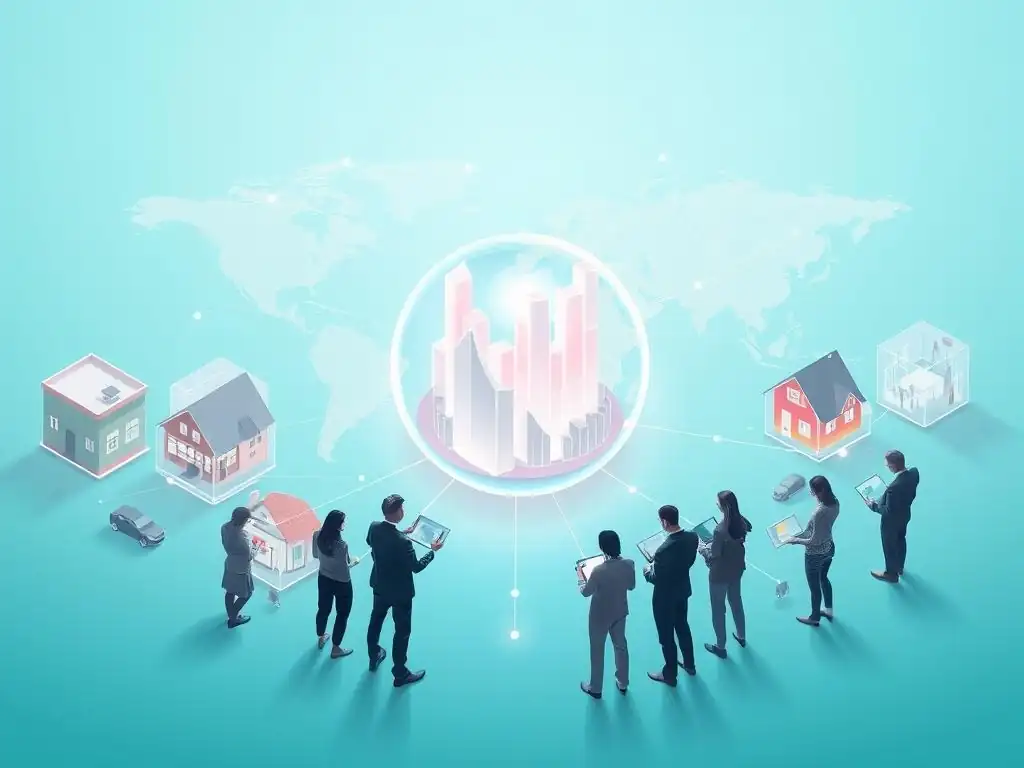
Tokenization, enabled by blockchain and powered by decentralized real estate oracles, promises to dramatically improve the liquidity of real estate assets. By dividing properties into smaller, tradable tokens, investors can buy and sell fractions of properties more easily than dealing with whole properties.
Oracles facilitate this by providing the necessary data for pricing the tokens (via AVMs), distributing rental income (via payment verification), and managing the underlying asset (via maintenance or status updates). This accessibility allows smaller investors to participate in the real estate market, which was previously often limited to high-net-worth individuals or institutions. Decentralized real estate oracles are key to making this fractional ownership model functional and trustworthy.
Global Reach and Democratization of Real Estate Ownership
Decentralized real estate platforms have the potential to operate globally, transcending geographical barriers and disparate legal systems (though regulatory challenges remain). Oracles play a role in this by providing standardized access to diverse, location-specific data required for cross-border transactions or investments.
An investor in one country could potentially invest in a tokenized property located in another, relying on decentralized real estate oracles to provide verified data on the property's value, rental income, and legal status in its local jurisdiction. This democratization of access, facilitated by reliable decentralized real estate oracles, opens up new investment opportunities and allows for a more globally connected real estate market.
Challenges and Considerations for Decentralized Real Estate Oracles
Despite their crucial role and significant benefits, decentralized real estate oracles face several challenges that must be addressed for widespread adoption. These challenges are not unique to real estate but are particularly critical given the high value and legal complexities involved in property transactions.
Addressing these issues requires careful design, robust technology, and potentially new regulatory frameworks. The "oracle problem" – how to trust the data source when the blockchain is trustless – remains a central challenge that decentralized real estate oracles must continuously mitigate.
Oracle Vulnerabilities and Security Risks
The primary challenge for any oracle, including decentralized real estate oracles, is security. If an oracle is compromised or provides incorrect data, the smart contracts relying on that data can malfunction, leading to significant financial losses or incorrect asset transfers. Vulnerabilities could include data manipulation at the source, during transmission, or within the oracle mechanism itself.
Mitigating these risks requires a multi-faceted approach. Using decentralized oracle networks reduces reliance on a single entity. Implementing cryptographic proofs and digital signatures helps verify data authenticity. Utilizing economic incentives and penalties (like staking collateral that can be slashed for dishonest reporting) encourages oracle node operators to provide accurate data. Despite these measures, ensuring the absolute security and reliability of decentralized real estate oracles against sophisticated attacks remains an ongoing challenge.
Data Accuracy and Reliability Concerns
Even if an oracle mechanism is secure, the accuracy and reliability of the source data itself can be a challenge. Real estate data can be fragmented, outdated, or inconsistent across different providers or jurisdictions. Relying on inaccurate source data, even if transmitted securely by a decentralized oracle, will lead to flawed smart contract execution.
Decentralized real estate oracles must employ strategies to ensure data quality. This includes sourcing data from multiple reputable providers and using aggregation techniques to identify discrepancies and arrive at a consensus. Establishing clear standards for data formatting and quality for real estate information is also crucial. The challenge lies in consistently accessing high-quality, standardized data feeds for diverse property types and locations globally.
Regulatory Compliance and Legal Frameworks
Integrating blockchain and oracles into real estate transactions intersects with complex and often outdated legal and regulatory frameworks. Property rights and transfer laws are typically jurisdiction-specific and deeply rooted in traditional systems. The legal status of blockchain-based property tokens and smart contracts executing based on oracle data is still evolving.
Decentralized real estate oracles must operate within these existing legal constraints. For instance, querying official land registries may require specific legal permissions or integrations that are not widely available. Ensuring that the data provided by an oracle is legally recognized and sufficient for official processes (like registering a change of ownership in a government database) is a significant hurdle. Collaboration with legal experts and regulatory bodies is essential for the widespread adoption of decentralized real estate oracles.
Scalability and Performance Limitations
As the volume of decentralized real estate transactions grows, the demand on oracles to provide data in a timely and efficient manner will increase. Fetching, verifying, and submitting data on-chain can incur costs (gas fees) and introduce latency, potentially impacting the performance and scalability of decentralized real estate dApps.
Decentralized oracle networks need to be designed for scalability, capable of handling a high volume of data requests for various properties and data types without becoming prohibitively expensive or slow. Innovations in oracle design, such as off-chain computation and layer-2 solutions for data aggregation, are being explored to address these scalability and performance limitations for decentralized real estate oracles.
The "Oracle Problem" and Mitigation Strategies
The fundamental "oracle problem" is trusting the off-chain data provider when the blockchain is designed to be trustless. While decentralized oracle networks mitigate the single point of failure, they still rely on the honesty and accuracy of the contributing oracle nodes and the underlying data sources.
Mitigation strategies focus on maximizing redundancy, verification, and incentivization. Using multiple independent oracle nodes from diverse operators, sourcing data from various data providers, employing cryptographic proofs, implementing reputation systems, and using economic incentives/penalties (like staking LINK tokens in Chainlink's model) are all crucial for making decentralized real estate oracles as trust-minimized as possible. Despite these strategies, the challenge of perfectly replicating blockchain's trustless nature for off-chain data remains.
Examples of Real-World Decentralized Real Estate Projects Using Oracles
While the field is still developing, several projects are actively leveraging or exploring the use of oracles to bridge the gap between blockchain and the physical real estate world. These examples illustrate the practical application of decentralized real estate oracles in different facets of the property market.
- Tokenization Platforms: Projects focused on tokenizing real estate assets often use oracles to provide property valuation data, rental income verification, or data related to the property's legal status. For instance, platforms might integrate with oracle networks to pull estimated market values based on real estate data feeds, allowing token holders to track the approximate value of their fractional ownership.
- Property Management dApps: Some decentralized property management platforms utilize oracles to verify rental payments made in traditional fiat currency or to confirm the completion of maintenance tasks reported by third-party service providers. This allows the smart contract to automate payment distributions or update property records based on real-world events.
- Pilot Programs for Land Registry: While full integration with government land registries is complex, some pilot programs or private blockchain initiatives are exploring how oracles could be used to relay official title information or changes onto a distributed ledger, often involving trusted intermediaries acting as oracle nodes.
These examples, while sometimes operating on a limited scale or in specific jurisdictions, demonstrate the tangible need for and application of decentralized real estate oracles to make blockchain-based property solutions functional and connected to the real world.
The Future of Oracles in Decentralized Real Estate
The role of oracles in decentralized real estate is poised to grow significantly as the sector matures. As more property assets are tokenized and more real estate processes move onto the blockchain, the demand for reliable, diverse, and real-time off-chain data will skyrocket. Future innovations in oracle technology will be critical to unlocking the full potential of this transformation.
The convergence with other emerging technologies like Artificial Intelligence (AI) and the Internet of Things (IoT) will further expand the capabilities and importance of decentralized real estate oracles, enabling more sophisticated automation and data-driven insights within blockchain-based property applications.
Emerging Trends and Innovations in Oracle Technology
Several trends are shaping the future of decentralized real estate oracles. One is the development of more sophisticated decentralized oracle networks that can handle complex data types and computation, moving beyond simple price feeds. Another is the focus on "verifiable computation" or "zero-knowledge proofs" within oracles, allowing complex calculations or data validations to occur off-chain with cryptographic proof of their accuracy submitted on-chain, enhancing privacy and scalability.
Cross-chain oracle solutions are also becoming more important, allowing data to be shared securely between different blockchains, which could be crucial if different aspects of a real estate transaction or property management are handled on different ledgers. These innovations aim to make decentralized real estate oracles faster, cheaper, more secure, and more versatile.
The Convergence of Oracles, AI, and IoT in Real Estate
The combination of decentralized real estate oracles with AI and IoT holds immense potential. IoT sensors in properties can generate vast amounts of data (occupancy, condition, utility usage), which hardware oracles can bring on-chain. AI can then analyze this data (on-chain or off-chain via computation oracles) to provide insights for property management, predictive maintenance, or even dynamic rental pricing.
For example, an AI model trained on market data (provided by data feed oracles) and property sensor data (provided by hardware oracles) could dynamically adjust the rental price of a tokenized property listed on a decentralized marketplace, with the oracle relaying the recommended price to the smart contract. This convergence will create highly automated and data-driven decentralized real estate applications, with decentralized real estate oracles acting as the essential data conduits.
Predictions for the Evolution of Decentralized Real Estate Marketplaces
As oracle technology advances and regulatory clarity increases, decentralized real estate marketplaces are expected to evolve significantly. We may see more sophisticated fractional ownership platforms, automated property financing mechanisms triggered by oracle-verified credit scores or property valuations, and potentially even the tokenization of mortgages or real estate-backed securities.
The role of decentralized real estate oracles will expand from primarily providing valuation and status data to enabling more complex interactions, such as automated compliance checks based on oracle-fed regulatory data or dynamic smart contracts that adjust based on real-time environmental or market conditions. The evolution of these marketplaces is intrinsically linked to the capability and reliability of the underlying decentralized real estate oracles.
Conclusion: Embracing Oracles for a More Transparent and Efficient Real Estate Future
Blockchain technology offers a compelling vision for transforming the real estate sector, promising greater transparency, efficiency, and accessibility. However, this vision cannot be fully realized without a reliable way to connect the blockchain to the vast amount of data and events that exist in the physical world of property. This is the vital role played by decentralized real estate oracles.
These oracles act as the essential data bridges, enabling smart contracts to automate complex processes like property valuation, title verification, transaction execution, and property management based on real-world information. While challenges related to security, data accuracy, and regulation persist, ongoing innovations in oracle technology and network design are continuously improving their robustness and reliability. Embracing and developing secure, decentralized real estate oracles is not merely an option but a necessity for building the future of decentralized real estate marketplaces.
Recap of the Benefits and Challenges of Decentralized Real Estate Oracles
Decentralized real estate oracles offer substantial benefits, including increased transparency, reduced costs, enhanced security against fraud, improved liquidity through tokenization, and broader global accessibility to real estate investments. They are fundamental to automating processes that currently rely on manual verification and intermediaries.
However, significant challenges remain, such as mitigating oracle vulnerabilities and security risks, ensuring the accuracy and reliability of diverse off-chain data sources, navigating complex regulatory landscapes, and achieving scalability for high-volume applications. The core "oracle problem" – trusting off-chain data – requires continuous development of robust mitigation strategies.
The Transformative Potential of Oracles in Shaping the Future of Real Estate
The transformative potential of decentralized real estate oracles lies in their ability to unlock the full power of smart contracts and blockchain for the property market. By providing trustworthy access to real-world data, they enable the automation of high-value transactions, the seamless management of tokenized assets, and the creation of entirely new models for property ownership and investment.
As oracle technology converges with AI and IoT, we can anticipate even more sophisticated and automated decentralized real estate applications. The future of real estate is increasingly digital and decentralized, and decentralized real estate oracles are positioned as a foundational layer for this evolution, making the market more efficient, accessible, and transparent for participants worldwide.
Call to Action: Exploring the Possibilities of Oracles in Your Real Estate Ventures.
For developers building decentralized real estate platforms, investors considering tokenized property, or real estate professionals exploring blockchain solutions, understanding the role and capabilities of decentralized real estate oracles is crucial. Evaluating different oracle solutions, understanding their security models, and considering the specific data needs of your application are essential first steps.
The development and adoption of robust decentralized real estate oracles are key to overcoming the limitations of blockchain in interacting with the physical world and unlocking the true potential of a decentralized, transparent, and efficient future for real estate. Explore how these vital data bridges can enhance your next real estate venture in the decentralized space.
Frequently Asked Questions
What are decentralized real estate oracles, and why are they important?
Decentralized real estate oracles are data feeds that connect blockchain-based smart contracts to real-world real estate data, such as property values, ownership records, and legal information. They are crucial for enabling trustworthy and automated real estate transactions on the blockchain.
How do oracles ensure the accuracy and reliability of real estate data on the blockchain?
Oracles use various mechanisms, including multiple data sources, reputation systems, and staking, to ensure data accuracy. This helps to mitigate the risk of manipulation or inaccurate information being fed into the smart contracts. Decentralization is key to avoiding single points of failure.
What are some potential applications of decentralized real estate oracles beyond simple property valuation?
Beyond valuation, they can be used for automated lease agreements, tokenized real estate ownership, smart mortgages, and verifying compliance with regulations. This opens up possibilities for more efficient and transparent real estate processes.
What are the main challenges currently facing the widespread adoption of decentralized real estate oracles?
Challenges include data standardization across different regions, regulatory uncertainty, and scalability issues. Also, ensuring data privacy and security are paramount concerns that need addressing.
How might decentralized real estate oracles impact the future of the real estate industry?
They could lead to increased liquidity in real estate markets, reduced transaction costs, and greater accessibility for investors. Furthermore, they enable more efficient and transparent property management and investment opportunities.
Final Reflection: Embracing Trust in Decentralized Real Estate
The journey into decentralized real estate oracles reveals more than just technological innovation; it underscores a fundamental shift in how we perceive trust and transparency in property transactions. The potential to revolutionize real estate through verifiable, tamper-proof data is no longer a distant dream, but a tangible reality shaping the future of ownership and investment.
The impact of this technology extends far beyond mere efficiency. It promises to democratize access to real estate, empowering individuals and communities previously excluded from traditional markets. The future of real estate is not just about technology; it's about building a more equitable and accessible world for everyone.
This vision fuels the ongoing development and adoption of decentralized real estate oracles, ensuring that the benefits of blockchain technology are shared by all.
As we stand at the cusp of this transformation, I invite you to consider the role you can play in shaping this future. Reflect on the potential of decentralized real estate oracles to create a more transparent, efficient, and equitable world. Embrace the opportunity to learn, contribute, and advocate for a future where property ownership is accessible to all, powered by the unwavering trust of decentralized technology.
Okay, here's a CTA designed for the end of a web article titled "The Role of Oracles in Decentralized Real Estate: Bridging the Gap to the Real World" on Blockchain Trends (blockchaintrends.org):
Ignite Your Real Estate Revolution!
Thank you for exploring the fascinating world of oracles and their impact on decentralized real estate! You've gained valuable insights into how these technologies are reshaping property ownership and management. Now, it's time to put that knowledge into action and become part of the change:
- Dive deeper into practical applications: Research real-world examples of oracle-integrated real estate platforms and analyze their performance. This will give you a concrete understanding of the current landscape.
- Explore emerging Oracle projects: Discover new Oracle projects that aim to enhance trust and reliability. Contribute to project discussions and become a member to show your support.
- Discuss with others: Share this article with your network and start a conversation about the future of decentralized real estate and the role of oracles.
Ready to be a pioneer in the future of real estate? What innovative oracle applications do you envision for the property market?
Leave a Reply