
The Future of DApp User Experience: Predictions and Possibilities


Welcome to Blockchain Trends, your compass in the rapidly evolving world of decentralized technology!
Ever wondered how blockchain's impact extends far beyond Bitcoin? We delve into the transformative power of this technology, from DeFi innovations to enterprise solutions, and the crucial regulatory landscapes shaping its future. This week, we're focusing on a critical aspect of blockchain adoption: the DApp user experience evolution. Join us as we explore the challenges and exciting possibilities shaping the future of DApp design, and what it means for mass adoption of decentralized applications. Intrigued? Let's dive in and uncover the future, together!
- Introduction: Understanding the Importance of DeFi User Experience Evolution
-
Predicting the Evolution of DeFi User Experience Design
- Prediction 1: Enhanced Onboarding Processes for New DeFi Users
- Prediction 2: Improved Transaction Speed and Reduced Gas Fees Impact on UX
- Prediction 3: Mobile-First DeFi Development and Design Trends
- Prediction 4: Integration of AI and Machine Learning for Personalized DeFi Experiences
- Prediction 5: Cross-Chain Interoperability and Unified DeFi Experiences
- Exploring Potential DeFi UX/UI Innovations
- The Role of Developers in Shaping the Future of DeFi Usability
- Case Studies: Examples of Excellent DeFi User Experience
- Conclusion: The Future is Bright for DeFi User Experience
-
Frequently Asked Questions
- What are the primary challenges currently hindering widespread DApp adoption regarding user experience?
- How is the evolution of DApp user experience expected to impact traditional web applications?
- What role does abstraction play in improving the DApp user experience?
- What are some key technologies or design principles driving the DApp user experience evolution?
- How might regulatory developments influence the future of DApp user experience?
- Final Reflection: Embracing the DApp UX Revolution
- Shape Tomorrow: Revolutionize Your DApp Experience!
Introduction: Understanding the Importance of DeFi User Experience Evolution
The landscape of decentralized finance (DeFi) has undergone significant transformation since its nascent stages. While the underlying blockchain technology offers revolutionary potential, the adoption curve for DeFi applications has historically been steep, largely due to complex and often intimidating user interfaces. The DeFi user experience evolution is not merely about aesthetics; it is a critical factor determining whether these powerful financial tools will remain niche or achieve widespread global adoption. Improving usability is paramount for unlocking the full potential of decentralized finance and integrating it into everyday financial activities.
The current state of decentralized applications (DApps), particularly within the DeFi sector, often presents significant hurdles for average users. Concepts like gas fees, wallet management, seed phrases, and complex smart contract interactions require a level of technical understanding far beyond traditional financial services. This complexity directly impacts the DApp user experience evolution, hindering growth and limiting access to those already familiar with blockchain technology. Addressing these UX challenges is essential to onboard the next wave of users and demonstrate the tangible benefits of decentralized systems.
Why DeFi UX/UI Matters for Mainstream Adoption
The success of any technology hinges on its accessibility and ease of use. For decentralized finance to move beyond early adopters and become a viable alternative or supplement to traditional finance, the user experience and user interface (UX/UI) must become intuitive and familiar. Consider the growth of the internet; its widespread adoption accelerated dramatically once interfaces became user-friendly, abstracting away the underlying technical complexities of protocols like TCP/IP. Similarly, the DeFi user experience evolution is the key driver for mainstream engagement.
Poor UX in DeFi leads to user frustration, costly errors (like sending funds to the wrong address or paying excessive gas fees), and a general reluctance to engage with platforms perceived as risky or overly complicated. Data from various reports consistently shows that user onboarding friction is a major barrier. For instance, a significant percentage of potential users drop off during the wallet creation or funding process. Simplifying these initial steps and providing clear, concise information is fundamental to fostering trust and encouraging participation in the decentralized economy, thereby accelerating the overall DApp user experience evolution.
The Current State of DeFi User Interfaces: Challenges and Opportunities
Current DeFi user interfaces, while improving, still present substantial challenges. Users are often confronted with a barrage of technical terms (APY, TVL, impermanent loss, gas limits) without adequate explanation. Navigation can be counter-intuitive, and the process of connecting a wallet, approving tokens, and executing transactions involves multiple steps that are prone to user error. Security, while a core benefit of blockchain, is often presented in a way that shifts the entire burden onto the user, with irreversible consequences for mistakes like losing a seed phrase.
However, these challenges also represent significant opportunities for innovation in DeFi user experience evolution. The rapid growth of the sector has attracted talented designers and developers focused on solving these problems. There's a clear demand for interfaces that abstract blockchain complexities, provide clearer visual feedback on transaction status and costs, and offer robust educational resources within the application itself. Projects that prioritize user-centric design are already gaining traction, demonstrating that a focus on UX can be a powerful differentiator in a competitive market and drive the broader DApp user experience evolution.
Predicting the Evolution of DeFi User Experience Design
The trajectory of DeFi user experience evolution points towards interfaces that are significantly more intuitive, integrated, and personalized. Several key predictions can be made regarding the future of DeFi UX design, focusing on reducing friction and making decentralized finance accessible to everyone, regardless of their technical background. These advancements will not only benefit DeFi but will also drive the overall DApp user experience evolution across various sectors.
The shift will involve not just cosmetic changes but fundamental redesigns of how users interact with blockchain protocols. This includes everything from the initial steps of accessing DeFi to managing complex financial strategies. The goal is to create experiences that feel less like interacting with low-level blockchain functions and more like using modern, familiar web or mobile applications, while retaining the core benefits of decentralization, transparency, and user control inherent in the DApp user experience evolution.
Prediction 1: Enhanced Onboarding Processes for New DeFi Users
One of the most significant barriers to entry in decentralized finance is the onboarding process. Creating and securing a wallet, understanding how to acquire and manage cryptocurrency, and navigating the initial steps on a DeFi platform can be overwhelming for newcomers. The future of DeFi user experience evolution will heavily focus on streamlining these initial interactions, making it as simple as signing up for a traditional online service, while still educating users about the unique aspects of decentralized finance.
Expect to see innovative solutions that abstract away the complexities of seed phrases and private keys for new users, perhaps through managed key services or social recovery mechanisms that don't compromise decentralization. Initial platform interactions will likely involve interactive tutorials and guided tours, explaining concepts like staking, lending, and swapping in plain language. The goal is to reduce the cognitive load on new users and quickly demonstrate the value proposition of DeFi, fostering a positive first impression crucial for driving the DApp user experience evolution.
Streamlining Wallet Integration and Creation
The current requirement for users to manage their own private keys via seed phrases is a major point of failure and complexity. While essential for self-custody, losing a seed phrase means losing all assets. Future DeFi UX will integrate wallet creation and management more seamlessly into the application flow, potentially leveraging technologies like account abstraction ( ERC-4337) to offer more flexible and user-friendly key management options. This could include multi-factor authentication or linking wallets to familiar accounts (like email or social media, but in a decentralized manner) for easier recovery, without users needing to write down 12 or 24 words.
Furthermore, connecting wallets to DeFi platforms will become less clunky. Instead of requiring browser extensions or QR code scans for every interaction, future interfaces will likely offer persistent, secure connections that are easy to manage and revoke. Mobile-first wallet designs will become standard, allowing users to interact with DeFi directly from their smartphones with integrated security features like biometric authentication. This focus on simplifying wallet interaction is central to the DeFi user experience evolution and broader DApp user experience evolution.
Simplified Explanations of DeFi Concepts for Beginners
DeFi terminology is notoriously dense. Terms like 'yield farming,' 'liquidity mining,' 'slippage,' and 'gas limits' are second nature to experienced users but completely alien to newcomers. The future of DeFi UX will embed educational content directly into the application interface. This could take the form of contextual tooltips, short explainer videos, interactive guides, or even AI-powered chatbots that can answer user questions in real-time.
Platforms will likely adopt progressive disclosure principles, revealing complexity only as the user becomes more comfortable. Basic actions like swapping tokens will be presented with minimal jargon, while more advanced strategies will have dedicated sections with thorough explanations and risk warnings. The aim is to empower users with knowledge without overwhelming them upfront, making the DeFi user experience evolution accessible to a much wider audience and contributing significantly to the overall DApp user experience evolution.
Prediction 2: Improved Transaction Speed and Reduced Gas Fees Impact on UX
High transaction fees (gas fees) and slow confirmation times, particularly on congested networks like Ethereum mainnet, have been significant deterrents for users interacting with DeFi. These factors directly impact the perceived performance and cost-effectiveness of decentralized applications, frustrating users and making small transactions economically unviable. The future of DeFi user experience evolution is intrinsically linked to advancements in blockchain scalability and cost reduction, which will translate into faster, cheaper, and more predictable user interactions.
As layer-2 scaling solutions, sidechains, and alternative high-throughput blockchains mature and gain wider adoption, the user experience will dramatically improve. Transactions that currently take minutes and cost tens or even hundreds of dollars will execute in seconds for pennies or even less. This will enable new types of DeFi interactions that were previously impractical, such as frequent small trades or micro-lending, accelerating the DApp user experience evolution.
Layer-2 Solutions and Their Influence on DeFi Usability
Layer-2 solutions like optimistic rollups (e.g., Optimism, Arbitrum) and zero-knowledge rollups (e.g., zkSync, StarkNet) process transactions off the main blockchain (Layer 1) and then batch them together before submitting a single proof back to Layer 1. This drastically increases transaction throughput and reduces costs. As more DeFi protocols deploy on or integrate with Layer-2 networks, users will experience near-instant confirmations and significantly lower fees, making DeFi feel much more responsive and affordable.
The challenge for UX is abstracting the complexity of moving assets between Layer 1 and Layer 2. Future interfaces will make this process seamless, potentially handling bridging behind the scenes or providing extremely clear guidance on how to move assets between layers. The goal is for users to interact with a DeFi application without necessarily needing to know which layer they are on, focusing instead on the financial action they want to perform. This abstraction is a crucial step in the DeFi user experience evolution.
Gas Fee Prediction and Management Tools for Users
Even with lower fees on Layer-2s or other chains, understanding and managing transaction costs remains important. On chains where gas fees fluctuate (like Ethereum mainnet during peak times), users need reliable information. Future DeFi interfaces will provide more accurate, real-time gas fee predictions, allowing users to make informed decisions about when to execute transactions. Some platforms may even offer options to set maximum gas prices or queue transactions for when fees are lower.
Tools that visually estimate the cost of an action before the user confirms it will become standard. Furthermore, protocols might explore meta-transactions where a third party (like a relayer) pays the gas fee on behalf of the user, who then reimburses the relayer in a different, more user-friendly way (e.g., paying in the token they are transacting). This moves the complexity of gas management away from the end-user, significantly enhancing the DeFi user experience evolution and contributing to the overall DApp user experience evolution.
Prediction 3: Mobile-First DeFi Development and Design Trends
The vast majority of internet users globally access services primarily through their smartphones. While many DeFi applications have mobile-responsive websites, the experience is often clunky compared to native mobile apps. The future of DeFi user experience evolution will heavily prioritize mobile-first design and development, recognizing that decentralized finance needs to be accessible anytime, anywhere, from the device most users carry constantly.
This trend involves not just shrinking desktop interfaces to fit smaller screens but rethinking interactions and information presentation specifically for mobile environments. Features like push notifications for transaction status updates, biometric security integration, and simplified navigation optimized for touch screens will become standard. The goal is to make interacting with DeFi on a phone as smooth and intuitive as using a mobile banking app, driving the DApp user experience evolution forward on mobile platforms.
Responsive DeFi Interfaces for Seamless Mobile Experiences
While native apps offer the best performance and integration, responsive web design will continue to be important, especially for initial discovery and access. Future responsive DeFi interfaces will go beyond basic adaptability; they will be highly optimized for mobile browsers, minimizing load times, simplifying layouts, and ensuring all core functionalities are easily accessible via touch. This includes intuitive input fields for amounts, clear calls to action for trades or deposits, and easily digestible charts and data visualizations tailored for smaller screens.
The focus will be on creating a consistent and reliable experience regardless of the device used. This means ensuring that complex actions like managing liquidity pools or reviewing transaction histories are still navigable and understandable on a smartphone. A seamless transition between desktop and mobile will be a key indicator of maturity in DeFi user experience evolution.
Native Mobile DeFi Applications vs. Web-Based DeFi Apps
The debate between native mobile applications and web-based (or progressive web apps - PWAs) will continue, but native apps are likely to gain prominence for core DeFi interactions. Native apps offer superior performance, deeper integration with device features (like biometric security, push notifications), and a more polished user experience. Wallets like Argent and Rainbow have already demonstrated the potential of mobile-first or mobile-only approaches, setting a high bar for DeFi user experience evolution on smartphones.
Future native DeFi apps will likely abstract away more blockchain details, potentially integrating features like gas price prediction and management directly into the transaction flow. They will prioritize security features that leverage the device's hardware (e.g., secure enclaves for key storage) and offer simplified onboarding flows. While web-based interfaces will remain important for accessibility and discovery, the most sophisticated and user-friendly DeFi interactions are expected to happen within dedicated mobile applications, pushing the boundaries of DApp user experience evolution.
Prediction 4: Integration of AI and Machine Learning for Personalized DeFi Experiences
Artificial intelligence (AI) and machine learning (ML) have the potential to revolutionize the DeFi user experience evolution by making platforms smarter, more proactive, and highly personalized. Instead of users having to constantly monitor market conditions, track complex strategies, and manually adjust positions, AI could provide intelligent assistance, insights, and even automate certain tasks based on user preferences and risk tolerance.
This integration will move DeFi from being a purely reactive environment (where users manually execute every action) to a more proactive one. AI can analyze vast amounts of on-chain data to identify opportunities, predict potential risks, and provide tailored recommendations, making DeFi less intimidating and more effective for individual users. This level of personalization is a key component in accelerating the overall DApp user experience evolution.
AI-Powered User Assistance and Risk Assessment
Imagine a DeFi platform with an integrated AI assistant that can answer questions about specific protocols, explain complex concepts, or guide users through different strategies. This AI could monitor a user's portfolio and alert them to potential risks, such as impermanent loss in a liquidity pool or high liquidation risk on a lending position, based on real-time market data. Such assistance would significantly lower the knowledge barrier for new users and help experienced users manage their positions more effectively.
AI could also be used to assess the risk profile of different DeFi protocols or tokens based on historical data, smart contract audits, and community sentiment, providing users with more comprehensive information before they invest. This intelligent layer would make the DeFi user experience evolution safer and more accessible, empowering users to make more informed decisions within the decentralized ecosystem.
Personalized Investment Recommendations and Portfolio Management within DeFi
Leveraging AI and ML, DeFi platforms could offer personalized investment recommendations based on a user's stated goals, risk tolerance, and existing portfolio. The AI could analyze various yield farming opportunities, lending protocols, or trading strategies across different chains and suggest the most suitable options. This moves beyond simply displaying available opportunities to actively helping users navigate the vast and often overwhelming DeFi landscape.
Furthermore, AI could automate aspects of portfolio management, such as rebalancing assets across different protocols to optimize yield or manage risk, all while maintaining user control and transparency over the automated actions. This level of intelligent assistance would make managing a diversified DeFi portfolio far simpler and more efficient, showcasing a significant leap in the DeFi user experience evolution and driving the broader DApp user experience evolution towards intelligent, autonomous interactions.
Prediction 5: Cross-Chain Interoperability and Unified DeFi Experiences
Currently, interacting with DeFi often means navigating isolated ecosystems on different blockchains. Moving assets or executing strategies across multiple chains typically involves complex and sometimes risky bridging processes. The future of DeFi user experience evolution will involve seamless cross-chain interoperability, creating a unified experience where users can interact with assets and protocols on any supported chain without being explicitly aware of the underlying blockchain infrastructure.
This will unlock unprecedented liquidity and opportunity, allowing users to access the best yields or services regardless of which chain they started on. Abstracting away the complexities of cross-chain communication is paramount for achieving this unified experience, making the DApp user experience evolution truly chain-agnostic from the user's perspective.
Seamless Asset Transfers Between Different Blockchains
Future DeFi interfaces will integrate advanced bridging solutions and cross-chain protocols in a way that is invisible to the user. Initiating a transaction that involves assets on different chains will feel as simple as moving funds between different accounts in traditional finance. Users won't need to understand the nuances of different bridging technologies or worry about wrapping/unwrapping assets.
The interface will handle the complex routing and execution across chains, providing clear feedback on the progress and status of cross-chain transactions. This seamless transfer capability is fundamental to creating a truly interconnected DeFi ecosystem and is a critical step in the DeFi user experience evolution.
Abstracting Away Blockchain Complexity for Users
Ultimately, the goal of future DeFi user experience evolution is to abstract away the blockchain itself. Users should be able to focus on the financial outcome they want to achieve – lending assets, borrowing funds, swapping tokens, earning yield – without needing to understand the specifics of gas fees, block confirmations, or which smart contract is being called on which chain.
Interfaces will communicate actions and statuses in plain language, using familiar financial metaphors. While transparency about the underlying blockchain operations will remain available for those who want it, it won't be required for basic interaction. This level of abstraction is key to making DeFi accessible to billions and represents the pinnacle of the DApp user experience evolution, where decentralized applications feel as easy to use as their centralized counterparts, while retaining their core benefits.
Exploring Potential DeFi UX/UI Innovations
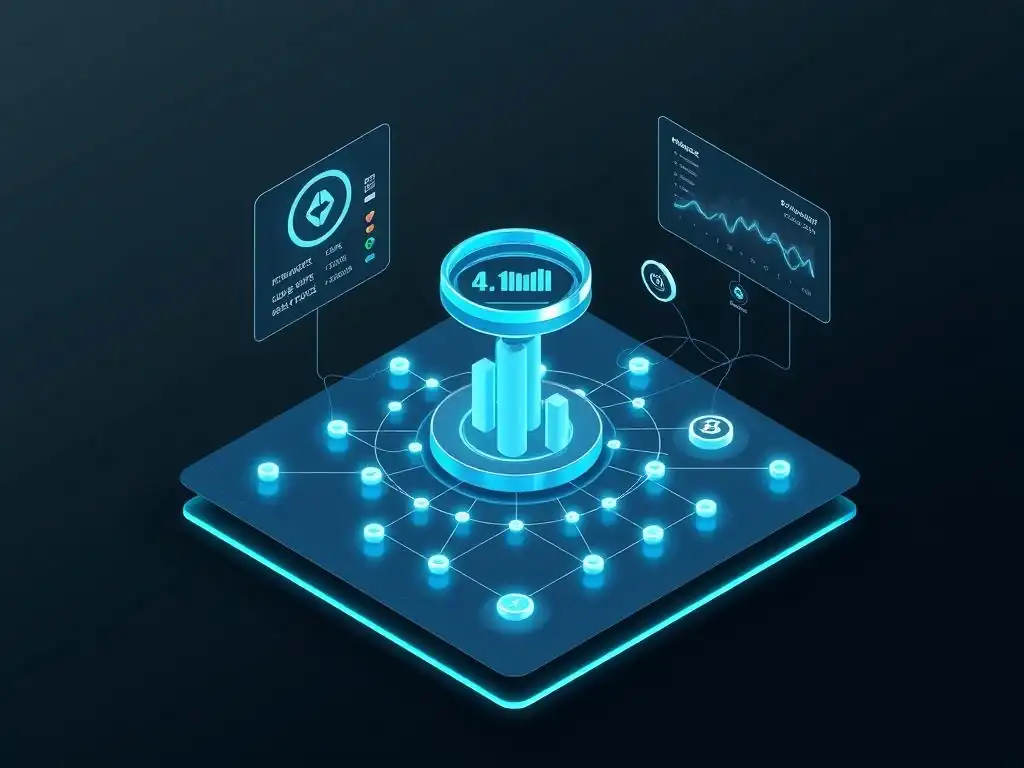
Beyond the core predictions, the rapid pace of development in the blockchain space is paving the way for exciting and innovative approaches to DeFi user experience evolution. These innovations leverage emerging technologies and design paradigms to create more engaging, secure, and intuitive interactions with decentralized financial protocols. They push the boundaries of what is possible in the DApp user experience evolution.
These explorations involve rethinking fundamental aspects of how users perceive and interact with financial data and processes, moving towards interfaces that are not only functional but also delightful and trustworthy.
Innovative Interface Designs for Decentralized Finance Applications
The design language of DeFi is evolving rapidly. Moving away from cluttered dashboards filled with numbers, designers are exploring more visual, interactive, and even gamified approaches to present complex financial information and actions. These innovative designs aim to reduce cognitive load, increase engagement, and make interacting with decentralized finance a more positive experience, contributing significantly to the DeFi user experience evolution.
This includes leveraging data visualization techniques to make complex concepts like impermanent loss or yield curves easier to understand, using animations and micro-interactions to provide clear feedback on user actions, and adopting design patterns that feel familiar from other successful web and mobile applications.
Gamified DeFi Interfaces for Increased Engagement
Introducing elements of gamification into DeFi interfaces can make interacting with protocols more engaging and less intimidating, especially for younger demographics or those new to finance. This could involve progress tracking for yield farming strategies, badges or rewards for participating in governance, or visual representations of portfolio growth that feel like leveling up.
While careful not to trivialize the financial risks involved, gamification can motivate users to learn more about protocols, participate more actively, and better understand the mechanics of decentralized finance through interactive challenges or simulations. This approach could significantly boost user retention and drive a new phase in the DApp user experience evolution.
Immersive and Interactive DeFi Trading Environments
For trading and asset management, future DeFi interfaces could move towards more immersive and interactive environments. Imagine 3D visualizations of market data, interactive charts that allow users to simulate trades or analyze historical performance with ease, or interfaces that use spatial metaphors to represent different protocols or asset classes.
These approaches could make complex trading strategies more understandable and engaging, providing users with richer context and better tools for analysis. While still in early stages, these concepts represent a potential future direction for the DeFi user experience evolution, making decentralized trading platforms feel more like sophisticated financial terminals but with the transparency and control of blockchain.
The Rise of Account Abstraction and Its Impact on User Experience
Account abstraction ( ERC-4337 on Ethereum, and similar concepts on other chains) is a technical innovation with profound implications for DeFi user experience evolution. It blurs the line between externally owned accounts (EOAs, typical user wallets managed by seed phrases) and contract accounts (managed by code), allowing for programmable wallets with much more flexible and user-friendly features. This is a fundamental shift that will significantly impact the overall DApp user experience evolution.
With account abstraction, wallets can be controlled by smart contracts, enabling features previously impossible or difficult with standard EOAs. This opens the door to innovations that make wallets feel more like traditional accounts while retaining the benefits of self-custody and decentralization.
Programmable Wallets and Customized User Flows
Account abstraction enables programmable wallets that can execute complex logic. This means users could set up automated recurring payments, approve transactions based on pre-defined conditions (e.g., automatically paying a subscription if the price is below a certain threshold), or even bundle multiple transactions into a single user-facing action (e.g., swapping tokens and then depositing them into a yield farm in one click).
Developers can design customized user flows that are tailored to specific applications or user needs, abstracting away the individual blockchain interactions. This level of programmability and customization will make interacting with DeFi significantly more efficient and intuitive, marking a major milestone in the DeFi user experience evolution.
Social Recovery and Enhanced Security Features
Account abstraction facilitates much more user-friendly security features, most notably social recovery. Instead of relying on a fragile seed phrase, users could designate trusted friends, family members, or even devices as "guardians" who can help them recover access to their wallet if they lose their primary key. This eliminates the single point of failure associated with seed phrases.
Other enhanced security features could include daily spending limits, requiring multi-factor authentication for large transactions, or automatically pausing account activity if suspicious behavior is detected. These features, enabled by programmable wallets, will make DeFi significantly safer and more accessible for the average user, addressing a major concern in the DApp user experience evolution.
Decentralized Identity (DID) and Streamlined Authentication in DeFi
Decentralized Identity (DID) technologies offer a way for users to control their digital identity and share verifiable credentials selectively and securely. Integrating DID into DeFi applications can streamline the authentication process, enhance privacy, and potentially enable compliance solutions without requiring users to reveal excessive personal information. This is another layer of the DeFi user experience evolution that focuses on secure, user-centric access.
Instead of requiring separate logins or wallet connections for every DApp, a user could use their DID to authenticate securely and port relevant, verifiable information (like proof of age or accreditation) without revealing their underlying personal data. This creates a more seamless and privacy-preserving experience across the decentralized web and is critical for the DApp user experience evolution.
Passwordless Login and Enhanced Privacy
With DID, users could potentially log in to DeFi platforms using cryptographic keys associated with their decentralized identifier, eliminating the need for traditional usernames and passwords which are prone to phishing and data breaches. This passwordless authentication method is not only more secure but also significantly improves the user experience by removing a common point of friction.
Furthermore, DID allows for selective disclosure of information. Instead of undergoing a full Know Your Customer (KYC) process with every platform, a user could use a verifiable credential issued by a trusted third party (like a government agency or identity verification service) to prove, for example, that they are over 18 or reside in a specific jurisdiction, without revealing their name, birth date, or address to the DeFi protocol itself. This enhances user privacy while potentially enabling compliance, a significant step in the DeFi user experience evolution.
User-Controlled Data Management
Decentralized identity puts the user in control of their data. Instead of platforms holding and managing user information in centralized databases, users store their verifiable credentials securely in their digital wallet and choose exactly which pieces of information to share with whom.
This paradigm shift from platform-centric data management to user-centric control builds trust and empowers individuals. Within DeFi, this could mean users control access to their transaction history or portfolio data, sharing it only with services they choose, fostering a more private and secure DeFi user experience evolution and advancing the principles of the DApp user experience evolution.
The Role of Developers in Shaping the Future of DeFi Usability
While design plays a crucial role, the practical implementation of a great DeFi user experience evolution ultimately rests on the shoulders of front-end developers. They are responsible for translating complex blockchain interactions into intuitive interfaces, optimizing performance, and ensuring the security and reliability of the user-facing application. Their commitment to user-centric development is key to driving the DApp user experience evolution.
Developers need to adopt best practices that prioritize usability and accessibility, constantly iterate based on user feedback, and leverage the right tools and frameworks to build robust and performant DeFi interfaces.
Best Practices for DeFi Front-End Development
Building user-friendly DeFi interfaces requires a specific skillset and approach. Developers must not only understand modern web development techniques but also the nuances of interacting with smart contracts, handling asynchronous transactions, and managing real-time blockchain data. Adhering to best practices ensures that the resulting application is not only functional but also intuitive and reliable, contributing positively to the DeFi user experience evolution.
This includes writing clean, maintainable code, utilizing established design systems, and rigorously testing the application across different devices and network conditions. Security considerations are paramount, as vulnerabilities in the front-end could expose users to risks even if the underlying smart contracts are secure.
Prioritizing User Research and Testing
The most effective way to improve DeFi UX is to understand the users themselves. Front-end development teams should prioritize user research, gathering insights into user needs, pain points, and behaviors. This involves usability testing with real users, conducting surveys, and analyzing user interaction data (while respecting privacy).
Iterative development cycles that incorporate regular user feedback are essential. Building prototypes, testing specific features with target users, and incorporating their feedback into subsequent development sprints ensures that the application evolves in a way that truly meets user needs and drives the DeFi user experience evolution based on real-world usage.
Utilizing UX/UI Frameworks and Libraries
Leveraging established UX/UI frameworks and component libraries can significantly accelerate the development process and help maintain consistency in design and interaction patterns. Libraries like Material UI, Ant Design, or Chakra UI provide pre-built, accessible components that follow established design principles.
For interacting with blockchain, libraries such as web3.js, ethers.js, and front-end frameworks like React, Vue.js, or Svelte, combined with specific tooling for blockchain data fetching (e.g., The Graph), provide the necessary tools to build dynamic and responsive DeFi interfaces. Utilizing these tools effectively is crucial for efficient development and delivering a high-quality DApp user experience evolution.
Overcoming Technical Challenges in DeFi User Interface Development
Developing user interfaces for decentralized applications presents unique technical challenges compared to traditional web development. These challenges stem from the inherent nature of blockchain technology, including its asynchronous operations, variable transaction times, and the need for constant synchronization with decentralized data sources. Addressing these issues is vital for a smooth DeFi user experience evolution.
Developers must implement robust error handling for failed transactions, provide clear feedback during lengthy operations (like block confirmations), and manage complex state related to wallet connections, network status, and real-time protocol data.
Addressing Latency and Scalability Issues
Blockchain transactions are not instantaneous. Developers must design interfaces that manage user expectations during the waiting periods for transaction confirmation. This involves providing clear visual indicators of transaction status, estimated completion times, and options for users to track their transactions on block explorers. As Layer-2 solutions improve speed, the challenge shifts to managing cross-layer interactions seamlessly.
Furthermore, displaying real-time data from the blockchain efficiently is challenging, especially as the amount of data grows. Developers need to employ efficient data fetching strategies, caching mechanisms, and potentially decentralized indexing protocols to ensure the interface remains responsive and performs well, even under heavy load, thereby supporting the DApp user experience evolution at scale.
Ensuring Cross-Platform Compatibility
DeFi users access applications from a variety of devices (desktops, laptops, smartphones, tablets) and browsers. Ensuring a consistent and functional experience across all these platforms requires careful development and testing. This includes responsive design, optimizing performance for different screen sizes and processing capabilities, and ensuring compatibility with various browser extensions and mobile wallets.
Developers must also consider different blockchain networks and wallet standards, ensuring their interfaces can seamlessly connect and interact with the user's chosen setup. This commitment to cross-platform compatibility is fundamental to making DeFi accessible to the broadest possible audience and accelerating the DeFi user experience evolution.
Case Studies: Examples of Excellent DeFi User Experience
Examining successful DeFi platforms provides valuable insights into what constitutes excellent DeFi user experience evolution. These platforms have managed to simplify complex interactions, provide clear information, and create intuitive interfaces that have contributed to their widespread adoption. Learning from these examples is crucial for driving the future of DApp user experience evolution.
These case studies highlight how focusing on specific aspects of the user journey, from initial interaction to complex financial operations, can make a significant difference in usability and accessibility.
Case Study 1: Uniswap V3 - A DeFi Platform Demonstrating Simplified Swapping
Uniswap, a decentralized exchange protocol, is a prime example of how simplifying a core DeFi function – token swapping – can lead to massive adoption. While the underlying automated market maker (AMM) mechanism is technically complex, the user interface for swapping tokens is remarkably straightforward. Users select input and output tokens, enter an amount, and the interface handles the rest, including calculating exchange rates, estimating gas fees, and managing slippage settings (which are often pre-configured or explained simply).
Uniswap V3 further refined the interface, particularly for liquidity providers, introducing concentrated liquidity with a more visual and interactive interface to manage positions. While still requiring some understanding of the underlying mechanics, the design choices made complex concepts more approachable, setting a standard for the DeFi user experience evolution within decentralized exchanges. Its focus on a single, core function with a clean UI has been a major driver of its success and influence on the DApp user experience evolution.
Case Study 2: Aave - A DeFi Lending Platform Effectively Utilizing Dynamic APY Display
Aave, a leading decentralized lending and borrowing protocol, excels in presenting real-time, dynamic financial data in a clear and understandable way. The platform prominently displays interest rates (APY/APR) for various assets in both lending and borrowing pools, updating them frequently to reflect market conditions. This dynamic display is crucial for users making financial decisions and is presented without unnecessary clutter.
Aave's interface also provides clear visual indicators for a user's health factor (in borrowing) and potential liquidation risks, making it easy for users to monitor their positions. The process for depositing, borrowing, and withdrawing assets is broken down into logical steps with clear prompts. This focus on transparently presenting dynamic financial data and simplifying complex lending/borrowing actions showcases a mature approach to DeFi user experience evolution.
Case Study 3: Argent - A Mobile-First DeFi Wallet with a User-Friendly Interface
Argent is a mobile-only smart contract wallet that has significantly pushed the boundaries of DeFi user experience evolution by abstracting away many of the complexities of traditional crypto wallets. It eliminates seed phrases in favor of social recovery, allows users to set daily transaction limits, and enables gasless transactions for certain operations by utilizing meta-transactions (though this depends on protocol support).
The interface is clean, intuitive, and designed specifically for mobile interaction. It integrates direct access to popular DeFi protocols within the wallet itself, creating a seamless experience for staking, lending, or swapping assets without leaving the application. Argent's focus on security, ease of recovery, and integrated DeFi access sets a high bar for the future of mobile DApp user experience evolution.
Conclusion: The Future is Bright for DeFi User Experience
The journey of DeFi user experience evolution is one of continuous refinement, driven by the need to make decentralized finance accessible to a global audience. While significant challenges remain from the early, technically-focused interfaces, the progress made in recent years, particularly in areas like onboarding, transaction management, and mobile accessibility, is promising. The future holds the potential for DeFi interfaces that are not only functional but also intuitive, intelligent, and seamlessly integrated into users' digital lives, accelerating the overall DApp user experience evolution.
The collaboration between designers, developers, and protocol engineers, guided by user feedback and leveraging emerging technologies like account abstraction and AI, will be crucial in realizing this vision. As the technology matures and the focus shifts from simply building functional protocols to creating delightful user interactions, decentralized finance will shed its image as a niche technology for the technically savvy and become a powerful, accessible tool for financial empowerment worldwide.
Key Takeaways: The Future of DeFi Usability and Accessibility
The future of DeFi user experience evolution hinges on several key factors:
- Simplification: Abstracting away technical complexities like gas fees, private keys, and blockchain networks.
- Accessibility: Prioritizing mobile-first design and ensuring compatibility across various devices and platforms.
- Intelligence: Leveraging AI/ML for personalized insights, risk management, and automated assistance.
- Interoperability: Creating seamless experiences across different blockchain networks.
- Security: Implementing user-friendly security features like social recovery enabled by account abstraction.
- Education: Embedding contextual explanations and guides within the interface.
These elements collectively contribute to a future where interacting with decentralized finance is as easy and intuitive as using traditional online banking or financial apps, thereby driving the broader DApp user experience evolution.
The Importance of Continuous Improvement in DeFi UX Design
The DeFi and broader DApp ecosystem is constantly evolving, with new protocols, features, and technologies emerging rapidly. Therefore, the DeFi user experience evolution is not a one-time project but an ongoing process of research, design, development, and iteration.
Development teams must commit to continuous improvement, regularly gathering user feedback, analyzing usage patterns, and adapting their interfaces to meet changing user needs and technological advancements. Staying agile and user-centric is essential for building platforms that not only attract initial users but also retain them and contribute to the long-term growth and adoption of decentralized finance and the overall DApp user experience evolution.
Frequently Asked Questions
What are the primary challenges currently hindering widespread DApp adoption regarding user experience?
DApp adoption is hampered by complex user interfaces, high transaction fees often associated with blockchain, and a general lack of user-friendly onboarding processes.
How is the evolution of DApp user experience expected to impact traditional web applications?
The advancements in DApp UX are pushing for more transparent and user-controlled data management, potentially influencing traditional apps to adopt similar decentralized principles and enhanced security measures.
What role does abstraction play in improving the DApp user experience?
Abstraction simplifies complex blockchain interactions by hiding the underlying technical details from the user, focusing on providing a familiar and intuitive interface, which leads to increased user accessibility.
What are some key technologies or design principles driving the DApp user experience evolution?
Layer-2 scaling solutions, account abstraction, and user-centered design principles are pivotal in creating faster, cheaper, and more intuitive DApps, paving the way for mass adoption.
How might regulatory developments influence the future of DApp user experience?
Regulations could impact DApp design by enforcing greater transparency and accountability, potentially leading to standardized UX patterns that prioritize user protection and regulatory compliance, while balancing innovation.
Okay, here's a final reflection designed for your article "The Future of DApp User Experience: Predictions and Possibilities," optimized for the keyword "DApp user experience evolution" and following the requested structure:
Final Reflection: Embracing the DApp UX Revolution
The journey through predicting and exploring the future of DApp user experience reveals a crucial truth: the evolution of DApp UX is no longer a possibility, but an inevitability. The current landscape, while promising, is riddled with friction points that hinder mainstream adoption. Addressing these challenges is not just about improving aesthetics; it's about unlocking the true potential of decentralized applications and bringing their transformative power to a wider audience.
The impact of a seamless and intuitive DApp experience extends far beyond mere convenience. It shapes perceptions, fosters trust, and ultimately determines the success or failure of the decentralized web. My personal belief is that the future of DApps hinges on our ability to prioritize user-centric design, making them accessible and enjoyable for everyone, regardless of their technical expertise. The best user interface is the one that requires no explanation.
- Golden Krishna, The Best Interface Is No Interface. This quote perfectly encapsulates the direction we must strive for in the DApp space.
As we stand at the cusp of this DApp user experience evolution, I invite you to reflect on your own interactions with decentralized applications. Consider the barriers you've encountered, the frustrations you've felt, and the potential you see. Let this reflection fuel your own contributions to this vital field. Whether you're a developer, designer, or simply an enthusiastic user, your voice matters. Embrace the challenge, champion user-centricity, and help us build a future where DApps are not just powerful, but also a pleasure to use.
Shape Tomorrow: Revolutionize Your DApp Experience!
Thank you for exploring the future of DApp user experience with us. We hope you've gained valuable insights into the exciting possibilities ahead. Now, let's put that knowledge into action!
Here are a few ways you can contribute to building a better DApp future:
- Dive Deep: Start prototyping a new DApp user experience concept based on the latest trends, focusing on simplified onboarding or improved accessibility.
- Spread the Word: Share this article with your fellow developers and designers on social media. Let's start the conversation!
- Become a Pioneer: Contribute to open-source DApp user experience libraries. Even a small contribution can have a significant impact on the entire ecosystem.
What innovative DApp user experience feature will you build next, and how will it influence user adoption? Share your ideas in the comments below!
Leave a Reply