
DeFi for the Unbanked: Exploring Financial Solutions in Decentralized Finance


Welcome to Blockchain Trends, your compass in the rapidly evolving world of decentralized innovation. Dive into the intricacies of blockchain technology and discover its power to reshape industries, economies, and even societies.
Are you ready to explore how decentralized finance is revolutionizing access to financial services? Our latest article, " DeFi for the Unbanked: Exploring Financial Solutions in Decentralized Finance," delves into how this groundbreaking technology empowers underserved communities, offering a glimpse into a future where financial inclusion is not just a dream, but a tangible reality. What are the real-world implications of DeFi for those excluded from traditional banking? Let's find out...
- DeFi for the Unbanked: Exploring Financial Solutions in Decentralized Finance
- Understanding the Challenges Faced by the Unbanked
-
DeFi Solutions Tailored for the Unbanked: A Deep Dive
- Decentralized Lending and Borrowing: Empowering Individuals Without Credit Scores
- Stablecoins and Cross-Border Payments: Facilitating Remittances and International Transactions
- Microfinance in DeFi: Providing Small Loans to Entrepreneurs in Developing Countries
- Yield Farming and Staking: Opportunities for Passive Income Generation
- Real-World Examples: DeFi Impacting Underserved Populations
- Navigating the Risks and Challenges of DeFi for the Unbanked
- The Future of DeFi and Financial Inclusion
- Conclusion: Decentralized Finance as a Catalyst for Financial Empowerment
-
Frequently Asked Questions
- What are the key challenges that DeFi aims to address for the unbanked?
- How can Decentralized Finance offer more accessible financial solutions?
- What are some real-world examples of DeFi projects targeting the unbanked?
- What are the regulatory hurdles facing DeFi adoption for the unbanked?
- What is the future outlook for Decentralized Finance in serving the unbanked population?
- Final Reflection: Empowering Futures Through Decentralized Finance
- Unlock Financial Freedom: Start Your DeFi Journey Today!
DeFi for the Unbanked: Exploring Financial Solutions in Decentralized Finance
Addressing Financial Exclusion Through Blockchain Technology
Financial exclusion remains a significant global challenge, impacting billions of adults who lack access to basic financial services like savings accounts, credit, or insurance. This exclusion can perpetuate cycles of poverty, limit economic mobility, and hinder development. Traditional financial institutions often struggle to serve remote populations or those with irregular income, high transaction costs, or lack of formal identification. Blockchain technology, the foundation of decentralized finance (DeFi), presents a paradigm shift by offering permissionless and borderless access to financial tools, potentially bridging this gap and providing decentralized finance for underserved populations.
By leveraging distributed ledgers and smart contracts, DeFi platforms can operate without the need for intermediaries like banks. This inherently reduces costs and removes many of the traditional barriers to entry. Individuals can access a range of financial services using just a smartphone and an internet connection, regardless of their geographic location or socioeconomic status. This potential for broad, inclusive access makes decentralized finance for underserved communities a compelling area of exploration.
How DeFi Platforms Offer Access to Financial Services for the Unbanked
DeFi platforms provide a suite of financial services that mirror, and in some ways exceed, those offered by traditional banks, but in a decentralized manner. These services include lending and borrowing, asset management, trading, and payments. For someone without a bank account, these services are typically inaccessible. DeFi protocols, however, often require only a cryptocurrency wallet, which can be created relatively easily and anonymously, circumventing the need for extensive documentation or credit checks.
For example, a user can deposit cryptocurrency into a lending protocol and earn interest, effectively creating a savings mechanism. They can also use their deposited crypto as collateral to borrow other assets. This offers a pathway to credit for individuals who would never qualify for a traditional bank loan due to lack of credit history or formal employment records. The accessibility and lower cost structure inherent in decentralized finance for underserved individuals are key advantages.
Understanding the Challenges Faced by the Unbanked
Limited Access to Traditional Banking Services: A Global Overview
Globally, a substantial portion of the adult population still lacks access to formal financial services. While figures vary, estimates from organizations like the World Bank have indicated that hundreds of millions of adults remain unbanked or underbanked. In certain regions, particularly in developing economies, this figure can exceed 50% of the adult population. This lack of access means individuals cannot safely save money, receive remittances efficiently, access credit for emergencies or business, or participate fully in the formal economy.
The reasons for this limited access are multifaceted. Geographic remoteness is a major factor, as building and maintaining physical bank branches in rural or sparsely populated areas is often economically unviable for traditional institutions. Furthermore, the operational costs associated with serving low-income customers with small transaction volumes can be prohibitively high for banks, leading them to focus on more profitable demographics. This leaves a significant void where decentralized finance for underserved communities could step in.
Barriers to Entry: Identification, Credit History, and Minimum Balances
Traditional banking requires significant hurdles that many unbanked individuals cannot overcome. A primary barrier is the requirement for formal identification documents, such as government-issued IDs or proof of address. Millions worldwide lack these documents, making it impossible to open a standard bank account. Furthermore, demonstrating a verifiable credit history is crucial for accessing loans or credit lines, a record that the unbanked, by definition, do not possess.
Minimum balance requirements and account fees also pose significant obstacles. Many traditional bank accounts require an initial deposit or maintenance of a minimum balance, which can be unaffordable for low-income individuals. Transaction fees, especially for small or frequent transactions, can also erode limited funds. These systemic barriers inherent in traditional finance highlight the potential for decentralized finance for underserved groups to offer a more accessible alternative.
The Impact of Financial Exclusion on Economic Opportunity
Financial exclusion severely limits economic opportunity for individuals and communities. Without access to safe savings mechanisms, people are vulnerable to economic shocks and have difficulty accumulating capital for investment. Lack of access to affordable credit prevents entrepreneurs from starting or expanding small businesses, hindering job creation and economic growth at the grassroots level. Receiving remittances, a vital source of income in many developing countries, becomes costly and insecure when relying on informal channels.
The inability to participate in the formal financial system also means missing out on opportunities for wealth accumulation and financial security. Financial exclusion traps individuals in a cycle of poverty, making it difficult to invest in education, health, or housing. Addressing this exclusion through innovative approaches like decentralized finance for underserved populations is crucial for fostering inclusive economic development.
DeFi Solutions Tailored for the Unbanked: A Deep Dive
Decentralized Lending and Borrowing: Empowering Individuals Without Credit Scores
Decentralized lending and borrowing protocols are a cornerstone of DeFi's potential for the unbanked. Unlike traditional banks that rely on centralized credit bureaus and extensive financial history, most DeFi lending protocols operate based on collateralization. Users deposit digital assets (like Ether or stablecoins) into a lending pool and can then borrow other assets against this collateral, typically up to a certain collateralization ratio (e.g., 150%). This system eliminates the need for a traditional credit score or extensive personal documentation.
While current DeFi lending is largely overcollateralized, meaning the value of the collateral exceeds the loan amount, innovations are emerging to address undercollateralized lending, particularly for verified identities or reputation systems built on the blockchain. Even with overcollateralization, DeFi lending provides a way for those with some digital assets (perhaps earned through digital work or remittances) to access liquidity without selling their principal, offering a flexibility unavailable through traditional means. This mechanism is a powerful tool within decentralized finance for underserved populations seeking financial flexibility.
Stablecoins and Cross-Border Payments: Facilitating Remittances and International Transactions
One of the most immediate and impactful applications of DeFi for the unbanked is through stablecoins and decentralized payment networks. Stablecoins are cryptocurrencies pegged to a stable asset, like the US dollar (e.g., USDC, DAI) or other fiat currencies, minimizing the price volatility often associated with cryptocurrencies like Bitcoin or Ether. This stability makes them suitable for everyday transactions, savings, and remittances.
Sending money across borders using traditional methods is often expensive, slow, and requires both the sender and receiver to have bank accounts or access to specific money transfer services. Fees can be as high as 7-10% or more in some corridors.
Using stablecoins on a decentralized network allows for near-instantaneous transfers with significantly lower fees, often fractions of a cent or a few dollars depending on network congestion. This dramatically reduces the cost and increases the speed of sending vital funds home, directly benefiting families who rely on remittances and making decentralized finance for underserved communities involved in global labor flows highly relevant.
Microfinance in DeFi: Providing Small Loans to Entrepreneurs in Developing Countries
Microfinance provides small loans to low-income individuals or groups, particularly those who lack access to traditional banking, often for starting or expanding small businesses. DeFi has the potential to revolutionize microfinance by reducing operational costs and expanding reach. By leveraging blockchain identity solutions and decentralized reputation systems, DeFi protocols could potentially offer undercollateralized or even uncollateralized microloans based on on-chain activity, community vouching, or verifiable income streams not recognized by traditional banks.
While large-scale, pure DeFi microfinance is still in its early stages, pilot programs are exploring models where local community leaders or decentralized autonomous organizations (DAOs) manage risk pools and facilitate loans using stablecoins. This approach could bypass the administrative overhead of traditional microfinance institutions, making smaller loan amounts economically viable and reaching remote populations more effectively. The potential to scale microfinance solutions through decentralized finance for underserved entrepreneurs is immense.
Yield Farming and Staking: Opportunities for Passive Income Generation
DeFi offers various avenues for users to earn passive income on their digital assets, such as yield farming and staking. Staking involves locking up cryptocurrency to support the operations of a proof-of-stake blockchain network, for which users receive rewards. Yield farming involves depositing assets into DeFi protocols to provide liquidity, earning fees or governance tokens in return. These activities offer potentially higher returns than traditional savings accounts, which often provide negligible interest rates, especially in low-interest rate environments.
For individuals in regions with unstable local currencies or limited investment opportunities, holding stablecoins and earning yield through DeFi protocols can be a way to preserve and grow wealth. While these activities carry risks, they represent new pathways for passive income generation and wealth building that are accessible with relatively small amounts of capital, contributing to the promise of decentralized finance for underserved individuals seeking financial growth.
Real-World Examples: DeFi Impacting Underserved Populations
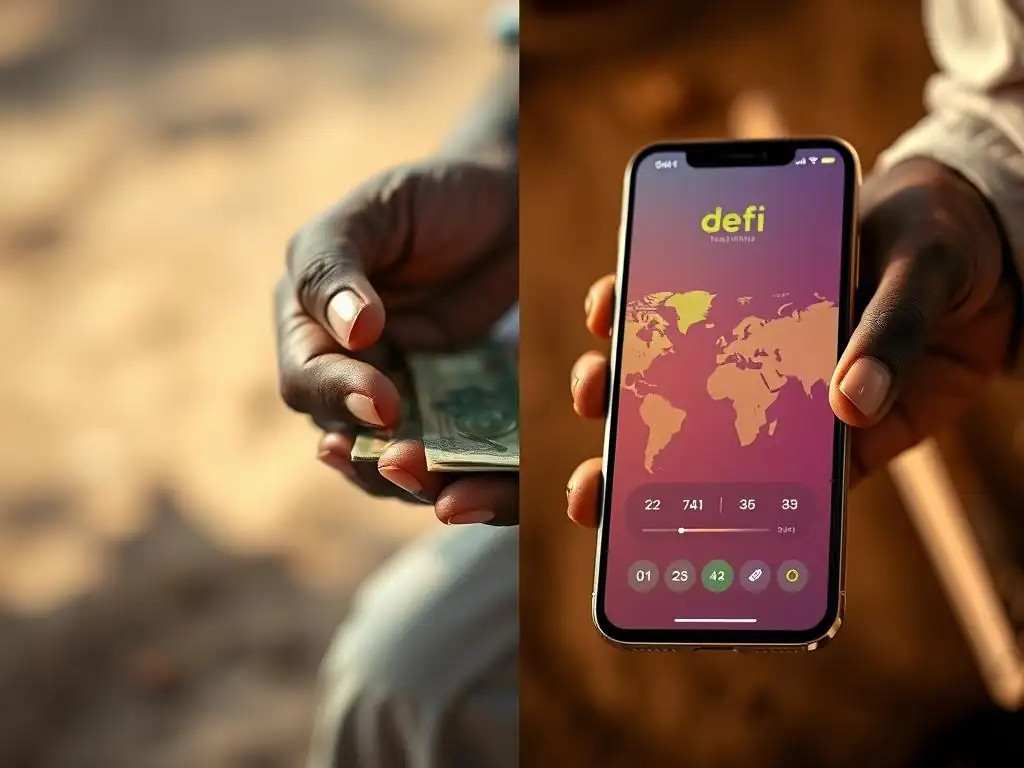
Case Study 1: Celo's Impact on Mobile-First DeFi in Emerging Markets
Celo is a blockchain platform specifically designed for mobile users, aiming to make financial tools accessible to anyone with a smartphone. Its focus on mobile-first design, low transaction fees, and the use of phone numbers as public keys dramatically lowers the technical barrier to entry compared to many other blockchain networks. Celo's stablecoins, like cUSD (pegged to the US Dollar) and cEUR (pegged to the Euro), facilitate stable value transfer and savings.
In regions like parts of Africa and Latin America, Celo is being used for peer-to-peer payments, remittances, and accessing decentralized applications (dApps) for savings and lending. For instance, initiatives built on Celo allow users to receive micro-remittances directly to their mobile wallets, bypassing traditional money transfer services with their high fees. This demonstrates a tangible example of decentralized finance for underserved communities being implemented at scale through a mobile-centric approach.
Case Study 2: Teller Protocol and Undercollateralized Lending for the Credit Invisible
Teller Protocol is exploring ways to enable undercollateralized lending in DeFi by leveraging off-chain data. While still an evolving area, the protocol aims to allow users to access credit based on factors beyond just on-chain collateral, such as verified income streams or traditional credit scores (where available) integrated through secure oracles. This approach seeks to bridge the gap between traditional finance and DeFi.
For individuals who are "credit invisible" – lacking a formal credit history despite potentially having reliable income – platforms like Teller could theoretically offer access to loans without requiring 150%+ collateralization. By incorporating alternative data points or building decentralized reputation systems, protocols could assess risk differently, opening up lending opportunities for those excluded by traditional credit models. This represents a crucial step towards making decentralized finance for underserved individuals with limited or no credit history a reality.
Success Stories: Testimonials from Individuals Benefiting from DeFi
Numerous anecdotal success stories highlight the potential of decentralized finance for underserved individuals. In countries experiencing hyperinflation, individuals have reported using stablecoins to protect their savings from devaluation, accessing a stable store of value previously unavailable to them. Small business owners in regions with limited bank access have used DeFi lending protocols (often with help from local crypto communities) to secure small amounts of capital to purchase inventory or equipment.
For example, a small shop owner in a rural area might receive remittances via stablecoin, save these funds in a yield-bearing stablecoin pool, and then use a portion as collateral for a small loan to expand their business, all without ever interacting with a traditional bank branch. While these stories are often localized and not always widely documented, they illustrate the transformative potential of decentralized finance for underserved populations seeking financial autonomy and economic empowerment.
Security Concerns: Smart Contract Vulnerabilities and Rug Pulls
Despite its promise, DeFi is not without significant risks, particularly for newcomers. Smart contracts, the automated agreements powering DeFi protocols, can contain vulnerabilities or bugs that malicious actors can exploit, leading to the loss of deposited funds. High-profile hacks have resulted in millions of dollars being stolen from DeFi protocols.
Furthermore, the decentralized and often pseudonymous nature of DeFi makes users susceptible to scams like "rug pulls," where project developers suddenly abandon a project and steal users' funds. For unbanked individuals who may have limited technical literacy or financial education, identifying legitimate protocols from scams is a major challenge. Addressing these security risks is paramount for building trust and ensuring the safety of decentralized finance for underserved users.
Regulatory Uncertainty: The Evolving Legal Landscape of DeFi
The regulatory landscape for DeFi is still evolving globally, creating uncertainty for users and developers. Different jurisdictions are proposing or implementing varying rules regarding DeFi protocols, stablecoins, and cryptocurrency usage. This lack of clear and consistent regulation can make it difficult for users to understand their rights and obligations, and for projects aiming to serve the unbanked to operate legally and sustainably.
Regulatory crackdowns or sudden changes in policy could impact the accessibility and usability of DeFi platforms. While decentralization offers some resilience, points of interaction, like exchanges or on-ramps/off-ramps between crypto and local currency, are often subject to regulation. Navigating this uncertain environment is a significant challenge for the widespread adoption of decentralized finance for underserved communities.
Education and Awareness: Bridging the Knowledge Gap for New Users
A major hurdle for the unbanked adopting DeFi is the significant knowledge gap. Understanding concepts like private keys, wallet security, gas fees, impermanent loss, and how different protocols work requires a level of technical and financial literacy that many unbanked individuals may not possess. Poorly designed user interfaces and complex terminology exacerbate this issue.
Effective education and user-friendly interfaces are crucial. Initiatives need to focus on building local language resources, providing simple tutorials, and creating intuitive mobile applications that abstract away much of the underlying complexity. Without adequate education, potential users cannot safely and effectively utilize decentralized finance for underserved populations, limiting its potential impact.
Volatility and Impermanent Loss: Understanding the Risks of DeFi Investments
While stablecoins offer stability, many DeFi activities involve volatile cryptocurrencies. Staking volatile assets or providing liquidity in decentralized exchanges (DEXs) can expose users to significant price swings. Impermanent loss, a risk specific to providing liquidity in DEXs, can occur when the price of deposited assets changes compared to when they were deposited, potentially resulting in a loss of value compared to simply holding the assets.
For individuals with limited financial safety nets, exposure to such volatility can be devastating. While the potential for high yields exists, the risks of losing principal are real. Users need to understand these risks clearly before participating, especially when promoting decentralized finance for underserved populations as a means of wealth building.
The Future of DeFi and Financial Inclusion
Innovations in DeFi Accessibility: User-Friendly Interfaces and Mobile Solutions
The future of decentralized finance for underserved communities hinges on improving accessibility. Developers are increasingly focusing on building intuitive, mobile-native applications that simplify the user experience. Features like social recovery wallets (allowing trusted contacts to help regain access if a private key is lost) and abstracting away complex concepts like gas fees are becoming more common.
Innovations in Layer 2 scaling solutions are also reducing transaction costs and increasing speed, making DeFi more practical for small, frequent transactions common among low-income users. As user interfaces become cleaner and more akin to traditional mobile banking apps, the technical barrier to entry for decentralized finance for underserved populations will significantly decrease.
Collaborations Between DeFi Projects and NGOs: Expanding Reach and Impact
Collaborations between DeFi projects and non-governmental organizations (NGOs) or local community groups are vital for expanding the reach and impact of decentralized finance for underserved populations. NGOs often have established trust networks, local knowledge, and infrastructure on the ground, which are crucial for reaching remote or marginalized communities.
Partnerships can facilitate on-the-ground education, provide technical support, and help build tailored solutions that address specific local needs, such as facilitating aid distribution via stablecoins or setting up community-managed lending circles on the blockchain. These collaborations can bridge the gap between innovative technology and the practical needs of the unbanked, ensuring that decentralized finance for underserved groups is implemented effectively and responsibly.
The Role of Regulation in Fostering Responsible DeFi Growth
While regulatory uncertainty is a challenge, well-considered regulation can play a positive role in fostering responsible DeFi growth and protecting users. Clear rules regarding stablecoin issuers, consumer protection, and anti-money laundering (AML)/know-your-customer (KYC) where appropriate (e.g., at fiat on/off-ramps) can build trust and legitimacy.
Regulations that focus on clarity and risk mitigation rather than outright prohibition can help mainstream adoption. A balanced regulatory approach could encourage innovation while safeguarding vulnerable users from scams and exploits, ultimately supporting the sustainable development of decentralized finance for underserved populations.
Conclusion: Decentralized Finance as a Catalyst for Financial Empowerment
Empowering the Underserved Through Decentralized Financial Systems
Decentralized finance holds immense potential to empower the unbanked and underbanked by offering a direct pathway to financial services without the need for traditional intermediaries. By providing access to savings, credit, payments, and investment opportunities, DeFi can help individuals build financial resilience, escape poverty cycles, and participate more fully in the global economy. The permissionless nature of decentralized finance for underserved individuals is its core strength, enabling access based on technology rather than identity or location.
While significant challenges remain, including security risks, regulatory hurdles, and the need for extensive education, ongoing innovation and targeted initiatives are steadily improving accessibility and safety. Real-world examples demonstrate that DeFi is already making a difference in various communities.
The Potential for DeFi to Create a More Inclusive and Equitable Financial Future
The vision of decentralized finance for underserved populations is one of a more inclusive and equitable financial future. By lowering costs, removing barriers to entry, and providing transparent, programmable financial services, DeFi can democratize finance. It offers the promise of a system where financial opportunity is not dictated by geography, wealth, or social status, but is accessible to anyone with an internet connection.
Achieving this future requires continued development of user-friendly technologies, robust security measures, effective education programs, and thoughtful collaboration with local communities and regulators. As the technology matures and adoption grows, decentralized finance for underserved communities could become a powerful catalyst for global financial inclusion, unlocking economic potential for billions.
Frequently Asked Questions
What are the key challenges that DeFi aims to address for the unbanked?
DeFi seeks to overcome traditional banking barriers like high fees, lack of access due to geographical limitations, and strict KYC requirements preventing the unbanked from accessing financial services.
How can Decentralized Finance offer more accessible financial solutions?
DeFi leverages blockchain technology to create permissionless and transparent systems. This allows for financial services like lending and borrowing to be offered without traditional intermediaries, potentially lowering costs and increasing accessibility for the underserved population.
What are some real-world examples of DeFi projects targeting the unbanked?
Various DeFi platforms are developing solutions like micro-lending platforms, stablecoin-based payment systems, and decentralized insurance. These projects aim to provide basic financial tools for individuals excluded from traditional banking.
What are the regulatory hurdles facing DeFi adoption for the unbanked?
Regulatory uncertainty surrounding DeFi poses a significant challenge. Clarity is needed on issues like compliance with KYC/AML regulations, consumer protection, and liability for smart contract vulnerabilities to encourage widespread adoption.
What is the future outlook for Decentralized Finance in serving the unbanked population?
The future hinges on technological advancements, regulatory clarity, and user education. Successful DeFi adoption requires building trust and ensuring user-friendly interfaces to make these solutions accessible and safe for the underserved.
Final Reflection: Empowering Futures Through Decentralized Finance
The exploration of Decentralized Finance (DeFi) as a solution for the unbanked reveals a profound truth: financial inclusion is no longer a distant aspiration, but a tangible possibility. The potential of DeFi to bypass traditional barriers and provide access to essential financial services for underserved communities is not just theoretical; it's actively shaping a more equitable financial landscape.
The journey of understanding DeFi's impact on the unbanked has been deeply impactful, highlighting the urgent need for innovative solutions to address systemic inequalities. Witnessing the potential for individuals to gain control over their financial lives, free from the constraints of traditional institutions, is truly inspiring. Financial inclusion is not just about giving people access to banking services; it's about empowering them to participate fully in the economy and improve their lives.
- Queen Máxima of the Netherlands, UN Secretary-General's Special Advocate for Inclusive Finance for Development.
As we conclude this exploration, let us not simply acknowledge the potential of DeFi for the underserved, but actively champion its responsible development and adoption. Consider how you can contribute, whether through supporting DeFi projects, advocating for inclusive policies, or simply educating yourself and others about the transformative power of decentralized finance. The future of finance is being written now, and it's up to each of us to ensure that it's a future where everyone has the opportunity to thrive.
Unlock Financial Freedom: Start Your DeFi Journey Today!
Thank you for exploring decentralized finance and discovering how it can empower underserved communities. We hope this article highlighted the potential of DeFi to bridge financial gaps and foster a more inclusive future. Are you ready to get involved? Here’s how you can take action:
- Begin with a small step: Fund a DeFi wallet with a modest amount of stablecoins and try out lending platforms to see how DeFi functions firsthand. This initial experience will open your eyes to the opportunities available.
- Support local initiatives. Find organizations in your community dedicated to providing financial access to those in need, and consider how DeFi solutions might enhance their efforts. Contribute your skills to help advance their mission.
- Share this article with friends and colleagues! Let’s start a conversation about the transformative potential of DeFi and encourage others to explore these innovative solutions.
What’s one small step you can take this week to help someone access the benefits of DeFi? Share your ideas in the comments below!
Leave a Reply