
Understanding the Data Model of Verifiable Credentials on the Blockchain


Welcome to Blockchain Trends, your guide to navigating the revolutionary world of blockchain technology beyond the hype!
Intrigued by how blockchain can reshape digital identity? Dive in to explore the groundbreaking potential of Blockchain verifiable credentials data model. Discover how this innovative approach is building a more secure, private, and user-centric future, and uncover the secrets behind its architecture and application. Ready to unlock the power of verifiable credentials?
Understanding the Data Model of Verifiable Credentials on a Distributed Ledger
- Introduction to Distributed Ledger-Based Verifiable Credentials
- The Core Components of a Verifiable Credentials Data Model
- Deep Dive into the Data Model Structure for Verifiable Credentials on a Distributed Ledger
- Distributed Ledger Integration and Verifiable Credentials Data Storage
- Benefits of a Robust Distributed Ledger Verifiable Credentials Data Model
- Use Cases for Distributed Ledger Verifiable Credentials Data Models
- Challenges and Considerations for Implementing VC Data Models on Distributed Ledgers
- Future Trends in Distributed Ledger Verifiable Credentials Data Modeling
- Conclusion: The Transformative Potential of Distributed Ledger VCs and Their Data Model
-
Frequently Asked Questions
- What are Blockchain Verifiable Credentials, and how are they related to a data model?
- Why is a standardized data model important for Blockchain Verifiable Credentials?
- How does the Blockchain Verifiable Credentials data model contribute to data privacy and security?
- What are some common components of a Blockchain Verifiable Credentials data model?
- How does the Blockchain Verifiable Credentials data model enable new applications beyond traditional identity management?
- Final Reflection: Embracing Trust Through Verifiable Data
- Unleash the Power of Verifiable Credentials Now!
Introduction to Distributed Ledger-Based Verifiable Credentials
The Growing Importance of Digital Identity in a Decentralized World
In today's increasingly digital landscape, robust and trustworthy digital identity is no longer a luxury but a fundamental necessity. The shift towards online interactions for everything from banking and healthcare to education and social connection has highlighted the vulnerabilities of traditional identity systems, which are often centralized, prone to data breaches, and fragmented across various service providers.
Estimates suggest that identity-related fraud costs businesses billions annually; for example, the US Federal Trade Commission reported over 3.9 million fraud reports in 2023, with identity theft being a significant component. This underscores the urgent need for more secure, user-centric, and privacy-preserving methods of managing digital identity.
The rise of decentralized technologies, particularly blockchain and distributed ledgers, offers a promising paradigm shift. Unlike centralized databases where a single entity controls vast amounts of sensitive personal information, distributed ledgers enable a system where data ownership and control can be placed back into the hands of individuals. This move towards decentralization aligns with principles of self-sovereign identity (SSI), empowering users to manage their own identity attributes and decide who they share them with. Understanding the underlying blockchain verifiable credentials data model is crucial for grasping how this decentralized identity management becomes technically feasible and secure.
What are Verifiable Credentials (VCs)? A Definition
Verifiable Credentials (VCs) are a digital equivalent of physical credentials, such as a driver's license, passport, or university degree, but designed for the online world with enhanced security and privacy features. Defined by the W3C (World Wide Web Consortium), VCs are tamper-evident, privacy-preserving credentials that cryptographically link an issuer (the entity asserting information, like a university), a holder (the individual who holds the credential), and a verifier (the entity that needs to check the credential's validity, like an employer). They consist of a set of claims made about a subject (typically the holder), cryptographically signed by the issuer.
The power of VCs lies in their verifiable nature. Using cryptographic proof mechanisms, a verifier can confirm that the credential was indeed issued by the stated issuer and that it has not been tampered with since issuance. This is distinct from simply presenting a digital copy of a document, which can be easily forged. The blockchain verifiable credentials data model provides the structured format and cryptographic framework necessary for these digital assertions to be securely created, held, and verified across different systems and platforms.
How Distributed Ledgers Enhance Verifiable Credentials Security and Trust
Distributed ledgers, often referred to interchangeably with blockchain in this context, provide a foundational layer of trust and security for Verifiable Credentials. While the VCs themselves (the claims and signature) are typically not stored entirely on the ledger due to privacy and scalability concerns, the ledger plays a critical role in anchoring key components and ensuring the integrity of the system. Specifically, distributed ledgers are often used to publish and anchor Decentralized Identifiers (DIDs) and their associated DID Documents, which are essential for resolving issuer and holder identities and retrieving public keys necessary for verification.
The immutable and transparent nature of a distributed ledger ensures that once a DID and its associated public key are published, they cannot be retroactively altered without detection. This provides a robust public key infrastructure crucial for verifying the cryptographic signatures on VCs. Furthermore, ledgers can be used to record revocation statuses, allowing verifiers to check if a credential, though validly issued, has since been invalidated by the issuer (e.g., a degree revoked).
This anchoring mechanism significantly enhances the trust in the overall VC ecosystem, providing a decentralized root of trust that eliminates reliance on centralized authorities for identity and key management. The design of the blockchain verifiable credentials data model inherently leverages these ledger properties to achieve its security guarantees.
The Core Components of a Verifiable Credentials Data Model
Issuer: Creating and Signing Verifiable Credentials
The issuer is the entity responsible for creating and digitally signing the Verifiable Credential. This could be a university issuing a degree, a government agency issuing a driver's license, an employer issuing proof of employment, or any organization making an assertion about a subject. The issuer holds the authority and knowledge to make the claims contained within the credential. For instance, a university has records confirming a student's graduation and major.
To issue a VC, the issuer uses its private key to cryptographically sign the credential data structure. This signature acts as a digital seal, proving that the credential originated from the issuer and has not been altered. The issuer's public key, typically associated with a Decentralized Identifier (DID) published on a distributed ledger, allows any verifier to validate this signature. A robust blockchain verifiable credentials data model ensures that the issuer's identity is clearly linked to the credential through standard fields and that the signing process adheres to established cryptographic standards.
Holder: Managing and Presenting Verifiable Credentials
The holder is the individual or entity to whom the Verifiable Credential is issued. The holder receives the digitally signed credential from the issuer and stores it securely, typically in a digital wallet application on their smartphone or computer. Unlike physical credentials, where the holder merely possesses the item, a VC holder has active control over their digital credentials.
The holder decides which credentials to store and, crucially, when and with whom to share them. When a verifier requests proof of a certain attribute (e.g., proof of age), the holder can select the relevant VC from their wallet and present it to the verifier.
The holder can also selectively disclose specific information from a credential using privacy-preserving techniques like Zero-Knowledge Proofs (ZKPs), sharing only the necessary information without revealing other details within the credential. The design of the blockchain verifiable credentials data model supports this holder-centric control by structuring the data in a way that enables selective disclosure and secure presentation.
Verifier: Validating the Authenticity of Verifiable Credentials
The verifier is the entity that requests and validates a Verifiable Credential presented by a holder. This could be an employer checking educational qualifications, a bar verifying age, or an online service performing identity verification. The verifier's goal is to confirm that the credential is authentic, hasn't been tampered with, and was issued by a trusted source.
To validate a VC, the verifier performs several checks. First, they use the issuer's DID (obtained from the credential) to retrieve the issuer's public key from the distributed ledger or DID registry. Then, they use this public key to verify the cryptographic signature on the credential, ensuring it hasn't been altered since it was signed by the issuer. The verifier may also check the credential's validity period ( issuanceDate and expirationDate) and potentially check the issuer's DID document on the ledger for revocation information. The structure defined by the blockchain verifiable credentials data model provides all the necessary fields and cryptographic links for the verifier to perform these crucial validation steps efficiently and securely.
The Role of Decentralized Identifiers (DIDs) in the Data Model
Decentralized Identifiers (DIDs) are a cornerstone technology for Verifiable Credentials and the broader self-sovereign identity movement. DIDs are a new type of identifier designed to enable verifiable, decentralized digital identity. Unlike traditional identifiers (like email addresses or usernames) that are tied to a specific organization or system, DIDs are globally unique identifiers that do not require a centralized registration authority. They are typically anchored on a distributed ledger or other decentralized system, making them resilient to censorship and control by any single entity.
Each DID is associated with a DID Document, a standardized document containing information about the DID, including public keys and service endpoints. These public keys are essential for cryptographic operations related to VCs, such as verifying an issuer's signature or encrypting information for a holder. The blockchain verifiable credentials data model explicitly incorporates DIDs to identify the issuer ( issuer property) and the subject of the credential ( credentialSubject property, which often contains the holder's DID). This reliance on DIDs ensures that the identities involved in the VC exchange are resolvable in a decentralized manner, providing a robust and trust-minimized link between the credential and the parties involved.
Deep Dive into the Data Model Structure for Verifiable Credentials on a Distributed Ledger
JSON-LD and the Standardized Data Format for VCs
Verifiable Credentials are typically formatted using JSON-LD (JavaScript Object Notation for Linked Data). JSON-LD is a lightweight Linked Data format that provides a standardized way to represent structured data on the web. Its use in VCs is crucial for ensuring interoperability between different systems, wallets, and verifiers. By using a common format, a VC issued by one entity can be understood and verified by another, regardless of the underlying technology stack they use, as long as they adhere to the W3C VC data model specification.
JSON-LD allows for semantic understanding of the data within the credential. It uses @context properties to link data elements to definitions in shared vocabularies or ontologies, giving meaning to the properties (e.g., defining what "degree" or "dateOfBirth" means). This semantic richness is vital for building applications that can process and interpret credentials automatically. The blockchain verifiable credentials data model leverages JSON-LD to provide this structured, semantically-aware format, making VCs machine-readable and facilitating their exchange and processing across decentralized networks.
Key Properties Within the Verifiable Credential Data Model
The W3C Verifiable Credential data model specifies a set of standard properties that a VC document should contain. While specific schemas for the claims within a credential can vary, the top-level structure follows a defined pattern. Understanding these key properties is essential for working with VCs.
{
  "@context": [
    "https://www.w3.org/2018/credentials/v1",
    "https://www.w3.org/2018/credentials/examples/v1"
  ],
  "id": "http://example.edu/credentials/1872",
  "type": [
    "VerifiableCredential",
    "UniversityDegreeCredential"
  ],
  "issuer": "did:example:123456789abcdefghi",
  "issuanceDate": "2020-01-01T10:00:00Z",
  "expirationDate": "2025-01-01T10:00:00Z",
  "credentialSubject": {
    "id": "did:example:abcdefghijk0987654321",
    "degree": {
      "type": "BachelorDegree",
      "name": "Computer Science"
    }
  },
  "proof": {
    "type": "Ed25519Signature2018",
    "created": "2020-01-01T10:00:00Z",
    "verificationMethod": "did:example:123456789abcdefghi#keys-1",
    "proofPurpose": "assertionMethod",
    "jws": "eyJhbGciOiJFZERTQSIsImI2NCI6ZmFsc2UsImNyaXQiOlsibjY0Il19....."
  }
}
This JSON-LD structure illustrates the essential components of a Verifiable Credential according to the standard. It includes context, a unique identifier, types, issuer, dates, the subject of the claims, and cryptographic proof. The blockchain verifiable credentials data model relies on this standardized format for consistency and interoperability.
type: Defining the Credential Type and Schema
The type property is an array that specifies the type(s) of the Verifiable Credential. The first value must be "VerifiableCredential", indicating that the document conforms to the W3C VC specification. Subsequent values specify the specific type of credential, such as "UniversityDegreeCredential", "KycCredential", or "VaccinationCredential". These types often implicitly reference a schema or vocabulary that defines the expected structure and meaning of the claims within the credentialSubject.
Defining specific types allows verifiers and applications to understand the nature of the credential and process its contents appropriately. For example, a verifier looking for proof of age might specifically look for a credential with a type like "AgeVerificationCredential". The types contribute significantly to the interoperability aspect of the blockchain verifiable credentials data model, ensuring that different parties can correctly interpret the data being exchanged.
issuer: Identifying the Credential Authority
The issuer property identifies the entity that issued and signed the Verifiable Credential. According to the W3C specification, the value of the issuer property must be a URI (Uniform Resource Identifier), and in the context of distributed ledger-based VCs, this URI is typically a Decentralized Identifier (DID). For example, did:example:123456789abcdefghi.
Using a DID for the issuer provides a decentralized and verifiable way to identify the issuing authority. A verifier can resolve this DID on the relevant distributed ledger or DID registry to retrieve the issuer's DID Document, which contains the public key needed to verify the credential's signature. This decentralized identification mechanism is a core strength of the blockchain verifiable credentials data model, removing reliance on centralized certificate authorities or identity providers for issuer verification.
issuanceDate and expirationDate: Time-Bound Validity
The issuanceDate property indicates the date and time when the Verifiable Credential was issued by the issuer. It is formatted according to the XML Schema Part 2: Datatypes specification (xsd:dateTime) or ISO 8601. This timestamp is included in the data that is signed by the issuer, ensuring its integrity.
The expirationDate property, while optional, specifies the date and time after which the issuer considers the credential to be invalid. This is useful for credentials that represent temporary states or require periodic renewal, such as a professional license or a temporary access pass. Both dates are crucial for verifiers to determine if a credential is still valid at the time of presentation. The inclusion of these standardized date properties within the blockchain verifiable credentials data model ensures that the time-based validity of a credential can be universally interpreted and checked.
credentialSubject: Representing the Attested Information
The credentialSubject property is the core of the Verifiable Credential, containing the claims or assertions being made about the subject. The subject is typically the holder of the credential, but it can technically be any entity (a person, organization, or even a thing). The structure of the data within credentialSubject is often defined by a specific schema associated with the credential's type.
For instance, a "UniversityDegreeCredential" might have a credentialSubject containing properties like id (the subject's DID), degree (with sub-properties like type and name), and graduationDate. A "KycCredential" might include properties like name, dateOfBirth, and address. The credentialSubject property can also contain an id property that identifies the subject, usually using their DID. The flexible but structured nature of the credentialSubject within the blockchain verifiable credentials data model allows it to accommodate a wide variety of claims and assertions across different domains.
proof: Cryptographic Assurance of Authenticity
The proof property is perhaps the most critical part of the Verifiable Credential data model from a security perspective. It contains the cryptographic material that allows a verifier to confirm the authenticity and integrity of the credential. This typically includes the signature generated by the issuer using their private key.
The proof property itself is an object that includes details about the proof, such as the type of cryptographic suite used (e.g., Ed25519Signature2018, EcdsaSecp256k1Signature2019), the created timestamp when the proof was generated, the verificationMethod (often a DID URL pointing to the specific public key in the issuer's DID Document), the proofPurpose (e.g., assertionMethod for an issuer signing a claim), and the actual cryptographic signature value (e.g., in jws format). This detailed proof structure is fundamental to the security of the blockchain verifiable credentials data model, enabling trustless verification of the credential's origin and integrity.
Data Schemas and Their Impact on Interoperability
While the top-level Verifiable Credential structure is standardized by the W3C, the specific data format and semantics of the claims within the credentialSubject are often defined by separate data schemas. These schemas specify the expected properties, data types, and potentially semantic meanings for a particular type of credential (e.g., a schema for a university degree, a schema for a health record). Organizations or communities define these schemas to ensure consistency and interoperability for specific use cases.
Adherence to common data schemas is crucial for achieving true interoperability. If a university issues a degree credential using one schema, and an employer expects a different schema for verifying degrees, the process breaks down. Initiatives like Schema.org or domain-specific standards bodies are working towards developing widely accepted schemas for common credential types. The flexibility of the blockchain verifiable credentials data model allows it to incorporate claims defined by various schemas, but the effectiveness of the ecosystem depends heavily on the adoption of shared schema standards to ensure that data can be reliably interpreted across different systems.
Distributed Ledger Integration and Verifiable Credentials Data Storage
On-Ledger vs. Off-Ledger Storage Options for Verifiable Credentials Data
A common misconception is that the entire Verifiable Credential document is stored directly on a distributed ledger. While technically possible, this approach is generally discouraged due to privacy concerns, data size limitations, and the cost/speed of writing data to most public ledgers. Storing sensitive personal data directly on an immutable public ledger would create significant privacy risks, as the data would be permanently accessible (albeit potentially encrypted, though key management remains an issue).
Instead, the prevailing model for blockchain verifiable credentials data model implementations is to store the bulk of the credential data off-ledger, while using the distributed ledger for anchoring related, non-sensitive information. The ledger is primarily used to anchor DIDs and their associated DID Documents (containing public keys and service endpoints) and potentially for recording revocation status proofs.
The actual VC document, containing the claims, is stored by the holder in their secure wallet. This off-ledger storage strategy, combined with on-ledger anchoring of identifiers and keys, provides a balance between data privacy, scalability, and the need for a decentralized root of trust.
Using Decentralized Storage Solutions for VC Data
While the primary location for a VC is the holder's wallet, there may be use cases where the issuer or holder needs to store the credential data in a decentralized manner outside the wallet itself, perhaps for backup or shared access (with explicit consent). Decentralized storage solutions, such as IPFS (InterPlanetary File System) or Filecoin, offer alternatives to traditional centralized cloud storage. These systems distribute data across a network of nodes, providing resilience and reducing reliance on a single provider.
When using decentralized storage for VC data, the storage system acts as a secure, distributed repository for the off-ledger credential data. A reference (like a content identifier or hash) to the stored data can potentially be included in the issuer's system or linked within the holder's wallet. However, it is crucial that access to the stored credential data is controlled by the holder, often requiring their explicit permission and perhaps decryption keys held only by the holder. Integrating with such storage solutions expands the possibilities for managing the off-ledger components of the blockchain verifiable credentials data model.
Smart Contracts for Managing and Validating Verifiable Credentials
Smart contracts on a distributed ledger can play a supportive role in a Verifiable Credentials ecosystem, although they don't typically store the full VC data. Smart contracts can be used to manage DID registries, allowing users and organizations to create, update, and deactivate their DIDs and DID Documents in a decentralized way. This provides the essential on-ledger component for resolving DIDs and retrieving public keys needed for VC verification.
Furthermore, smart contracts can be used to manage revocation lists or status registries. Instead of embedding revocation status directly in the VC (which would require re-issuance upon revocation), an issuer can publish a revocation proof or flag associated with the credential's ID or the holder's DID on the ledger via a smart contract. Verifiers can then query this smart contract to check the current status of a credential.
While not part of the core blockchain verifiable credentials data model itself, smart contracts provide the programmatic logic on the ledger that supports the lifecycle and verification of VCs. For example, the ERC-734 and ERC-735 standards on Ethereum propose using smart contracts for managing claims and identity, which aligns conceptually with aspects of VC management.
Benefits of a Robust Distributed Ledger Verifiable Credentials Data Model
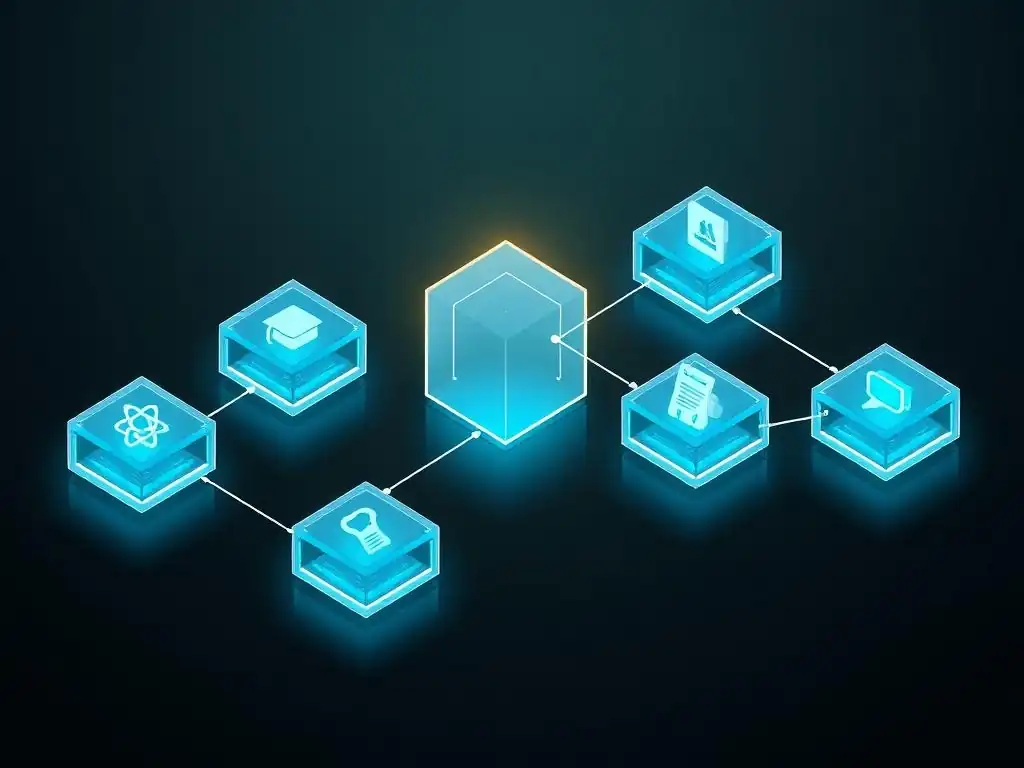
Enhanced Security and Tamper-Proof Credentials
One of the most significant advantages of using a distributed ledger-based approach for Verifiable Credentials is the inherent enhancement in security. The cryptographic nature of VCs, combined with the immutability and transparency of the ledger, makes the credentials highly tamper-proof. The issuer's digital signature ensures that any modification to the credential data after issuance will invalidate the signature, immediately alerting the verifier to tampering.
The anchoring of DIDs and public keys on a distributed ledger provides a secure and decentralized public key infrastructure. Unlike centralized systems that can be single points of failure or susceptible to certificate authority compromises, the ledger offers a resilient and verifiable source for public key retrieval. This robust security framework, built upon the principles embedded in the blockchain verifiable credentials data model, significantly reduces the risk of fraud and identity theft compared to traditional paper-based or easily forgeable digital documents.
Improved Interoperability and Data Portability
The adoption of standardized data formats like JSON-LD and adherence to the W3C Verifiable Credentials specification are central to achieving interoperability. A VC issued by one organization, perhaps a university in Europe, can be easily verified by an employer in North America, provided both systems adhere to the standards. The use of DIDs as universal, decentralized identifiers further facilitates this, ensuring that identities can be resolved across different platforms and ledgers.
This interoperability leads to improved data portability for the holder. An individual is no longer locked into using their credentials only within the system of the issuing organization. They can collect credentials from various sources (universities, employers, government agencies) and reuse them across different services and applications as needed. This contrasts sharply with siloed traditional systems where credentials are often difficult to transfer or verify across different contexts. The standardized blockchain verifiable credentials data model is the technical enabler for this seamless data exchange and portability.
Streamlined Verification Processes and Reduced Costs
Verifying traditional credentials can be a cumbersome and time-consuming process, often involving manual checks, phone calls, or expensive third-party verification services. For example, verifying academic degrees or employment history can take days or even weeks. Verifiable Credentials streamline this process significantly.
Verifiers can automate the validation process by programmatically checking the credential's signature against the issuer's public key (obtained from their DID Document on the ledger) and verifying the credential's validity period and revocation status. This automated, cryptographic verification is almost instantaneous and significantly reduces the administrative burden and costs associated with manual checks. Estimates suggest that automating identity verification processes using technologies like VCs could reduce costs by up to 80% in certain sectors. The efficiency gains are a direct result of the structured and verifiable nature of the data defined by the blockchain verifiable credentials data model.
Greater User Control Over Personal Data
A core principle of Verifiable Credentials and the self-sovereign identity movement is putting the individual in control of their identity data. With VCs, the holder possesses their credentials directly in their digital wallet. They are not stored in centralized databases controlled by third parties (except for the issuer's original records, which are the source of truth for issuance).
This means the holder decides which credentials to share, with whom, and when. They can also leverage privacy-preserving techniques like selective disclosure or Zero-Knowledge Proofs to share only the minimum amount of information required for a specific interaction, without revealing unnecessary personal details. For example, they could prove they are over 18 without revealing their exact birth date. This level of granular control over personal data is a significant departure from traditional systems and is fundamentally supported by the design principles of the blockchain verifiable credentials data model, which places the holder at the center of the data flow.
Use Cases for Distributed Ledger Verifiable Credentials Data Models
Identity Verification for Know Your Customer (KYC) Processes
Know Your Customer (KYC) and Anti-Money Laundering (AML) regulations require businesses, particularly in finance, to verify the identity of their customers. This often involves collecting and storing sensitive documents like passports or utility bills. This process is costly, repetitive for users (who must re-verify with each new service), and creates honeypots of personal data attractive to hackers.
Verifiable Credentials offer a transformative alternative. A trusted identity provider (an issuer) can verify a user's identity once and issue a KYC Verifiable Credential. This credential, conforming to a specific blockchain verifiable credentials data model for identity, contains attested claims about the user's identity attributes. The user can then present this VC to multiple businesses (verifiers) for instant, privacy-preserving verification without repeatedly submitting original documents. Companies like Civic and uPort have explored or implemented such solutions, demonstrating the potential for VCs to streamline and secure KYC.
Secure Academic Credentials and Transcript Verification
Academic credentials, such as diplomas, degrees, and transcripts, are prime candidates for Verifiable Credentials. Forgeries of academic documents are a persistent problem globally, undermining trust in qualifications. Traditional verification methods are often slow and manual.
Universities can act as issuers, creating VCs for graduates and students. These credentials, structured according to an academic blockchain verifiable credentials data model, would contain details like the degree awarded, major, graduation date, and potentially a list of courses and grades within the credentialSubject. Holders (students) can store these VCs in their digital wallets and present them to potential employers or other educational institutions (verifiers). Companies like Learning Machine (now part of Hyland) have pioneered blockchain-based academic credentials, issuing millions of VCs for institutions like MIT, demonstrating the practical application of this data model for secure and efficient academic verification.
Supply Chain Traceability and Product Authentication
Beyond personal identity, Verifiable Credentials can be used to create digital identities and verifiable claims about objects and events in a supply chain. An issuer (e.g., a manufacturer or certifier) can issue VCs about a product's origin, components, certifications (like organic or fair trade), or handling history. These VCs, following a supply chain-specific blockchain verifiable credentials data model, can be associated with a physical product via QR codes or NFC tags.
As the product moves through the supply chain, different parties can issue additional VCs related to handling, quality checks, or transportation. Consumers or businesses can act as verifiers, scanning the product's identifier to retrieve and verify the associated VCs, gaining trusted insights into its journey and authenticity. This use case enhances transparency, combats counterfeiting, and allows for rapid recall management. Projects like IBM Food Trust have explored using blockchain and related identity concepts for supply chain traceability.
Healthcare Data Management and Patient Empowerment
Healthcare data is highly sensitive, fragmented across different providers, and often difficult for patients to access or control. Verifiable Credentials offer a way to give patients greater control over their health information. Hospitals or clinics can act as issuers, issuing VCs for patient records, lab results, vaccination status, or prescriptions.
These VCs, structured according to a healthcare-specific blockchain verifiable credentials data model, would contain attested health claims within the credentialSubject. Patients (holders) can aggregate these VCs from different providers in a personal health wallet. They can then selectively share specific health VCs with new doctors, specialists, or even for travel purposes (e.g., vaccination proofs), without needing to request records from multiple institutions. This empowers patients, improves care coordination, and enhances privacy by allowing granular sharing of sensitive information. The potential for VCs in managing vaccination records has become particularly apparent globally.
Challenges and Considerations for Implementing VC Data Models on Distributed Ledgers
Scalability Issues and Transaction Costs
While distributed ledgers offer security and decentralization, many face challenges related to scalability and transaction costs, particularly public, proof-of-work chains like Bitcoin or early Ethereum. Writing data to the ledger (such as publishing DID Documents or revocation proofs) can be slow and expensive, especially at high transaction volumes.
This is why the blockchain verifiable credentials data model design emphasizes keeping the bulk of the credential data off-ledger. However, even anchoring DIDs and managing revocation status on-chain requires ledger capacity. The choice of distributed ledger technology significantly impacts scalability and cost. Newer ledgers using proof-of-stake or other consensus mechanisms, or permissioned ledgers, may offer better performance and lower costs suitable for large-scale VC deployments. Careful consideration of the underlying ledger's capabilities is essential when designing a VC implementation.
Interoperability Challenges Across Different Distributed Ledger Technologies
While the W3C VC data model provides a standard for the credential format itself, the underlying distributed ledger implementations can vary significantly. Different ledgers have different DID methods (e.g., did:ethr, did:ion, did:indy), different smart contract languages, and different ways of handling transactions and identity anchoring.
This poses an interoperability challenge at the ledger layer. A DID resolved on one ledger might not be resolvable on another. A revocation check implemented via a smart contract on Ethereum won't work directly on a Hyperledger Fabric network. While DID methods aim to abstract away some ledger specifics, achieving seamless cross-ledger verification remains an area of active development and standardization. Ensuring that the chosen blockchain verifiable credentials data model implementation can interact with relevant DID methods and ledger-specific features is crucial for broad adoption.
Data Privacy Concerns and Regulatory Compliance (e.g., GDPR)
Despite VCs being designed with privacy in mind, implementing them in a distributed ledger context raises complex data privacy considerations. While VCs themselves are off-ledger, the anchoring of DIDs and potentially revocation information on an immutable ledger can still involve processing personal data (e.g., linking a DID to an organization or individual). Compliance with stringent data protection regulations like GDPR (General Data Protection Regulation) in Europe is paramount.
GDPR grants individuals rights such as the right to erasure ("right to be forgotten"). The immutable nature of some distributed ledgers conflicts directly with this right. Solutions involve carefully designing what information is stored on-chain (ideally only public keys or hashes, not directly identifiable data), using privacy-preserving techniques like ZKPs, and implementing off-chain mechanisms for data management and consent. The blockchain verifiable credentials data model itself doesn't guarantee GDPR compliance; careful architectural design and implementation are necessary to meet regulatory requirements.
Key Management and Recovery Strategies
Managing private keys is a critical challenge in any cryptographic system, and Verifiable Credentials are no exception. Holders need to securely store the private keys associated with their DIDs to manage and present their credentials. Issuers need to securely manage the private keys used to sign credentials. Loss or compromise of these keys can have severe consequences – a holder losing their key might lose access to their credentials, while an issuer's compromised key could be used to issue fraudulent credentials.
Developing user-friendly and secure key management and recovery strategies is essential for mass adoption. This includes exploring options like secure hardware modules (e.g., TPM, secure enclaves), multi-factor authentication, social recovery mechanisms, or custodial solutions where a trusted third party helps manage keys (though this reintroduces a degree of centralization). The security of the entire blockchain verifiable credentials data model ecosystem hinges on robust key management practices for all participants.
Future Trends in Distributed Ledger Verifiable Credentials Data Modeling
Advancements in Zero-Knowledge Proofs (ZKPs) for Enhanced Privacy
Zero-Knowledge Proofs (ZKPs) are cryptographic techniques that allow one party (the prover) to prove to another party (the verifier) that a statement is true, without revealing any information beyond the validity of the statement itself. In the context of VCs, ZKPs can enable powerful privacy-preserving presentations. For example, a holder could prove to a verifier that they are over 18 (the statement) based on a VC containing their date of birth, without revealing the actual birth date.
Integrating ZKPs more deeply into the Verifiable Credentials ecosystem is a major area of development. While the current blockchain verifiable credentials data model supports privacy through off-ledger storage and selective disclosure, ZKPs offer a more advanced method for minimizing data leakage during verification. This will require standardizing ZKP formats and methods that can be seamlessly integrated with the existing VC data structure and verification flows, further enhancing the privacy benefits of decentralized identity.
Integration with Decentralized Autonomous Organizations (DAOs)
Decentralized Autonomous Organizations (DAOs) are internet-native organizations collectively owned and managed by their members, often using smart contracts on a blockchain. As DAOs evolve, there's a growing need for robust identity and reputation systems within these decentralized governance structures. Verifiable Credentials can play a significant role here.
VCs can be used to represent membership, roles, permissions, contributions, or even reputation within a DAO. For example, a DAO could issue VCs for completing specific tasks, holding certain tokens, or participating in governance votes. These VCs, adhering to a relevant blockchain verifiable credentials data model, could then be used by DAO smart contracts or governance tools to grant access, assign voting weight, or determine eligibility for certain actions. Integrating VCs provides a standardized, verifiable, and portable way to manage identity and credentials within decentralized organizations, moving beyond simple token-based access control.
The Rise of Self-Sovereign Identity (SSI) and Verifiable Credentials
Verifiable Credentials are a foundational technical building block for the broader movement towards Self-Sovereign Identity (SSI). SSI is a paradigm where individuals have complete ownership and control over their digital identities. It emphasizes decentralization, user control, transparency, and privacy.
As SSI gains traction, the blockchain verifiable credentials data model will continue to evolve alongside it. Future trends will likely involve greater standardization of schemas for various credential types, improved wallet implementations that offer advanced privacy features (like ZKP presentations) and secure key management, and wider adoption of interoperable DID methods across different distributed ledgers. The maturation of the SSI ecosystem will drive further development and refinement of the underlying data models and technical standards for VCs, making decentralized identity more practical and accessible for mainstream use.
Conclusion: The Transformative Potential of Distributed Ledger VCs and Their Data Model
The Future of Digital Identity is Decentralized and Verifiable
The current landscape of digital identity is characterized by fragmentation, centralization, and vulnerability. Data breaches are rampant, users lack control over their information, and verification processes are often inefficient. The emergence of Verifiable Credentials, underpinned by the trust and security of distributed ledgers, offers a compelling alternative. By shifting identity management away from centralized silos and towards a user-centric, decentralized model, VCs empower individuals and streamline interactions.
The future of digital identity is undeniably moving towards a decentralized and verifiable paradigm. This shift promises enhanced security, greater privacy, improved efficiency, and increased user autonomy. Understanding the technical underpinnings, particularly the blockchain verifiable credentials data model, is key to appreciating how this transformation is being realized and its potential impact across various sectors.
Embracing Distributed Ledger verifiable credentials data model for a Secure and Trustworthy Future
The blockchain verifiable credentials data model, leveraging standards like JSON-LD and building upon the security of distributed ledgers for identifier anchoring, provides the essential framework for creating, managing, and verifying digital credentials in a decentralized world. It defines how identity claims are structured, cryptographically signed by issuers, securely held by individuals, and trustlessly verified by relying parties.
While challenges related to scalability, interoperability, and key management remain, ongoing advancements in distributed ledger technology, cryptography (like ZKPs), and standardization efforts are continuously improving the ecosystem. Embracing the principles and technical specifications of the distributed ledger verifiable credentials data model is crucial for organizations and individuals looking to participate in a future where digital identity is more secure, private, and firmly in the hands of the user. The potential for VCs to transform industries from finance and education to healthcare and supply chains is immense, paving the way for a more trustworthy and efficient digital future.
Frequently Asked Questions
Verifiable Credentials (VCs) are digital credentials that provide tamper-proof and secure proof of claims. The data model defines the structure and semantics of these credentials, making them interoperable and understandable across different systems.
Why is a standardized data model important for Blockchain Verifiable Credentials?
A standardized data model ensures interoperability between different blockchain platforms and applications. This allows for seamless verification and exchange of credentials across various systems, promoting wider adoption.
How does the Blockchain Verifiable Credentials data model contribute to data privacy and security?
The data model allows for selective disclosure, meaning users can share only the necessary information from their credentials. This minimizes data exposure and enhances privacy, while the blockchain's immutability ensures data security.
What are some common components of a Blockchain Verifiable Credentials data model?
Typical components include the issuer, the subject (the individual or entity the credential is about), the credential schema defining the attributes, and a digital signature for verification.
How does the Blockchain Verifiable Credentials data model enable new applications beyond traditional identity management?
It enables applications like supply chain tracking, academic credential verification, and healthcare data sharing by providing a secure and verifiable way to represent and share information across different parties without relying on centralized authorities.
Final Reflection: Embracing Trust Through Verifiable Data
The exploration of the blockchain verifiable credentials data model reveals more than just a technical architecture; it unveils a pathway to a future where trust is not blindly given, but verifiably earned. In a world increasingly saturated with misinformation, the ability to authenticate claims and identities with cryptographic certainty is not merely advantageous, it's becoming essential for secure and reliable interactions.
The impact of this technology extends far beyond the realm of developers and blockchain enthusiasts. It touches upon the very fabric of our social interactions, influencing how we access services, prove our identities, and share information securely. Trust but verify
is no longer just a maxim; it's becoming a technological imperative, driving the evolution of digital ecosystems towards greater transparency and accountability.
Now, consider the implications of this knowledge in your own life. How can you leverage the principles of verifiable credentials to safeguard your own data, build trust in your online interactions, and contribute to a more secure and transparent digital future? The power to shape this future lies within our collective understanding and adoption of technologies like the blockchain verifiable credentials data model. Embrace this power, and let's build a world where trust is not a commodity, but a verifiable truth.
Unleash the Power of Verifiable Credentials Now!
Thanks for diving deep into the fascinating world of verifiable credentials on the blockchain! We hope you’ve gained valuable insights into how this technology is reshaping trust and data ownership. Ready to put that knowledge to work?
Here are a few ways you can take the next step:
- Start experimenting with building your own simple verifiable credential using a development platform like Hyperledger Aries. This is the best way to truly understand the underlying mechanics.
- Share this article with your network on LinkedIn or Twitter and spark a conversation about the potential of blockchain-based identity solutions.
- Explore different blockchain platforms and their compatibility with verifiable credentials. You might be surprised at the variety of options available!
What exciting use case for verifiable credentials are you most eager to see become a reality?
Leave a Reply