
Supply Chain Transparency: Blockchain Identity for Product Authentication


Welcome to Blockchain Trends, your compass in the evolving world of decentralized technology!
Dive in to uncover the transformative power of blockchain, extending far beyond cryptocurrencies. This week, we're focusing on a critical application: supply chain authentication. Explore the potential and blockchain supply chain authentication benefits that are reshaping industries and building trust in a world of complex global networks. Intrigued by how blockchain can guarantee product authenticity and provenance? Keep reading to discover the future of transparent and secure supply chains.
- Introduction: The Growing Need for Seafood Supply Chain Authentication
- Blockchain-Based Digital Identity for Tuna Authentication
- Blockchain Tuna Authentication Benefits: Enhancing Trust and Sustainability
-
Implementing Blockchain for Seafood Supply Chain Transparency: A Practical Guide
- Step 1: Defining Tuna Supply Chain Authentication Requirements and Goals
- Step 2: Selecting the Appropriate Blockchain Platform (e.g., Hyperledger Fabric, Corda)
- Step 3: Integrating Blockchain with Existing Supply Chain Systems (e.g., Vessel Tracking Systems)
- Step 4: Establishing Data Standards and Governance Policies (e.g., GS1 Standards)
- Step 5: Onboarding Fishermen, Processors, and Retailers to the Blockchain Network
- Use Cases: Real-World Examples of Blockchain Tuna Authentication
- Challenges and Considerations for Blockchain Seafood Supply Chain Adoption
- The Future of Blockchain in Seafood Supply Chain Management
- Conclusion: Embracing Blockchain for a More Transparent and Sustainable Seafood Supply Chain
-
Frequently Asked Questions
- What are the primary benefits of using blockchain for supply chain authentication?
- How does blockchain identity contribute to supply chain transparency?
- What role does decentralization play in improving supply chain security?
- What are some potential challenges in implementing blockchain for supply chain authentication?
- How can blockchain help combat counterfeit products in the supply chain?
- Final Reflection: Embracing Trust Through Transparency
- Ignite Supply Chain Trust: Start Authenticating!
Introduction: The Growing Need for Seafood Supply Chain Authentication
The global seafood industry faces significant challenges, from combating illegal, unreported, and unregulated (IUU) fishing to meeting increasing consumer demand for sustainable and ethically sourced products. The complexity of modern supply chains, often spanning multiple continents and involving numerous intermediaries, makes it difficult to track seafood from its origin to the final consumer. This opacity creates opportunities for fraud, mislabeling, and the entry of illegally caught fish into the market, undermining conservation efforts and eroding consumer trust. Specifically for high-value species like tuna, ensuring provenance and authenticity is paramount.
Estimates suggest that IUU fishing accounts for a substantial portion of global catches, potentially valued at billions of dollars annually, representing a major threat to marine ecosystems and legitimate fishing operations. This illegal activity often involves misreporting catch data, fishing in prohibited areas, or using banned gear, making it impossible to verify the true origin or sustainability of the seafood. Furthermore, the lack of transparency enables fraudulent practices like species substitution or weight misrepresentation downstream in the supply chain. Addressing these issues requires a robust system for verifying the identity and journey of seafood products.
The Rise of Illegal, Unreported, and Unregulated (IUU) Fishing
IUU fishing poses a critical threat to the health of global fish stocks and the livelihoods of legitimate fishers. This illicit activity ranges from fishing without authorization or outside designated areas to misreporting catch volumes or species. Such practices deplete fish populations at unsustainable rates and distort market prices, disadvantaging those who adhere to regulations.
The scale of IUU fishing is staggering, with some reports indicating it accounts for up to 26 million tonnes of fish annually, representing a significant percentage of global catches. This volume translates into enormous economic losses for coastal nations and contributes directly to overfishing, threatening the long-term viability of fisheries, including tuna populations. Without effective mechanisms to verify the origin and legality of catches, products derived from IUU fishing can easily enter the legitimate supply chain, making it difficult for consumers and regulators to distinguish between legal and illegal seafood.
Consumer Demand for Sustainable and Traceable Seafood
Today's consumers are increasingly conscious of the environmental and social impact of their food choices. They want to know where their food comes from, how it was produced, and whether it was sourced sustainably and ethically. This demand for transparency is particularly strong for seafood, given widespread concerns about overfishing, habitat destruction, and labor practices in the fishing industry.
Surveys consistently show that a significant percentage of consumers are willing to pay more for products with verified sustainability credentials and clear traceability information. For tuna, consumers are often looking for assurances about the fishing method (e.g., pole-and-line vs. purse seine), the fishing ground, and whether the catch was within legal quotas. Meeting this demand requires supply chains that can reliably capture, store, and share this information in a trustworthy manner, which traditional paper-based or centralized digital systems often struggle to achieve.
How Blockchain Technology Addresses Seafood Supply Chain Challenges
Blockchain technology offers a promising solution to the challenges of seafood supply chain transparency by providing a decentralized, immutable, and secure ledger for recording transaction data. Unlike traditional databases, blockchain creates a shared, tamper-proof record of each step in the supply chain, from the moment a fish is caught until it reaches the consumer.
By assigning a unique digital identity to each batch or even individual fish (via tagging), blockchain can track its movement, changes in custody, and associated data (like fishing location, date, vessel, processing details) across the entire journey. This distributed ledger technology (DLT) ensures that once data is recorded, it cannot be altered or deleted without the consensus of network participants, creating a high level of trust and accountability among stakeholders and providing robust blockchain supply chain authentication benefits.
Blockchain-Based Digital Identity for Tuna Authentication
Establishing a verifiable digital identity for tuna products is fundamental to ensuring authenticity and traceability throughout the supply chain. Blockchain technology is uniquely suited for this purpose due to its inherent characteristics of immutability, transparency (within the network), and security. By leveraging blockchain, each catch or batch of tuna can be assigned a unique digital token or identifier that acts as its immutable record on the distributed ledger.
This digital identity becomes a living history of the product, accumulating data points as it moves through the supply chain – from the fishing vessel to the processor, distributor, retailer, and ultimately, the consumer. Any event or transaction related to that specific tuna lot is recorded on the blockchain, creating a verifiable audit trail. This system drastically reduces the possibility of mislabeling or substitution because the digital identity is linked to the physical product and validated by multiple parties in the network, providing significant blockchain supply chain authentication benefits.
Understanding Blockchain's Role in Creating Immutable Tuna Identities
Blockchain technology creates immutable identities by linking blocks of transaction data together cryptographically. When a catch of tuna is recorded on the blockchain, key information such as the vessel ID, date, location of catch (using GPS data), species, and weight is added to a block. This block is then timestamped and linked to the previous block in the chain.
Once a block is added and validated by the network, the data within it becomes extremely difficult to alter. Any attempt to tamper with the information in a block would require altering all subsequent blocks in the chain, a computationally infeasible task, especially on larger, more distributed networks. This immutability ensures that the digital identity and associated history of the tuna product are trustworthy and cannot be fraudulently changed during transit or processing.
Leveraging Distributed Ledger Technology (DLT) for Supply Chain Visibility
Distributed Ledger Technology (DLT), the underlying technology behind blockchain, provides a shared, synchronized database across multiple participants in the supply chain. Instead of relying on a single, central authority or database that could be a single point of failure or manipulation, DLT distributes the ledger across the network.
Each participant in the tuna supply chain (fishermen, processors, transporters, retailers) can have access to the ledger, viewing the transaction history relevant to their role. This shared visibility increases transparency across the entire chain, allowing stakeholders to verify the origin and handling of the product at any stage. Smart contracts can automate verification processes based on predefined rules, further enhancing efficiency and trust by ensuring compliance with standards or regulations as the tuna moves from one node to the next.
Key Features of a Blockchain-Enabled Tuna Authentication System
A robust blockchain-enabled system for tuna authentication incorporates several key features designed to ensure data integrity and traceability. Firstly, it requires a mechanism for capturing data at the source, typically on the fishing vessel, linking physical catch data to a digital record. This often involves integrating with vessel monitoring systems (VMS) and electronic reporting systems (ERS).
Secondly, the system must define a clear data model for recording information relevant to traceability and authentication, such as catch details, processing information (e.g., facility ID, processing date, methods), transport logs, and quality certifications. Each entry should be timestamped and linked to the unique digital identity of the tuna lot. Finally, the system needs a user interface or API that allows authorized participants to input data securely and consumers to access verified information (often via a QR code on the product packaging) about the tuna's journey, thereby realizing the blockchain supply chain authentication benefits.
Blockchain Tuna Authentication Benefits: Enhancing Trust and Sustainability
Implementing blockchain technology in the tuna supply chain offers a multitude of advantages that significantly enhance trust, improve efficiency, and support sustainability efforts. These blockchain supply chain authentication benefits address long-standing issues within the industry, providing value to every participant, from the fisherman to the end consumer. The transparency and immutability provided by blockchain create a foundation for a more reliable and accountable supply chain ecosystem.
Beyond simply tracking products, blockchain enables verifiable claims about origin, quality, and sustainability, empowering consumers to make informed choices and rewarding producers who adhere to best practices. The reduction in fraud and mislabeling protects legitimate businesses and safeguards consumer health. Ultimately, these benefits contribute to a healthier marine environment and a more equitable seafood industry.
Improved Tuna Traceability and Provenance Tracking (Fishing Location, Date)
One of the most significant blockchain supply chain authentication benefits is the dramatic improvement in traceability. With blockchain, every step a tuna takes from the ocean to the plate can be recorded on a shared, immutable ledger. This includes crucial data captured at the point of catch, such as the precise GPS coordinates of where and when the fish was caught, the vessel name, fishing method used, and the weight of the catch.
As the tuna moves through processing facilities, distributors, and retailers, additional data points are added to its digital identity on the blockchain – details about processing methods, storage temperatures, transport routes, and changes in ownership. This comprehensive, verifiable history allows any stakeholder to trace a specific piece of tuna back to its origin, providing unparalleled transparency and verifying its provenance. For example, a retailer can scan a QR code on a tuna steak and instantly access verified data confirming it was caught by a certified sustainable fishery in a specific ocean region on a particular date.
Reduced Seafood Fraud and Mislabeling
Seafood fraud and mislabeling are rampant issues, costing the industry billions and deceiving consumers. Common forms of fraud include substituting high-value species (like Bluefin tuna) with lower-value fish, misrepresenting the weight or quantity, or falsely claiming sustainable origin. Traditional paper trails or siloed databases are vulnerable to manipulation, making it difficult to detect such fraud.
Blockchain's immutable ledger makes it incredibly difficult to alter records retrospectively. If a processor attempts to record a different species or weight than what was originally logged by the fisherman and verified by the network rules, the discrepancy can be flagged. By creating a single source of truth for the product's identity and journey, blockchain provides a powerful tool for authentication, making it much harder for fraudulent products to enter or move undetected through the supply chain. This directly contributes to the blockchain supply chain authentication benefits by ensuring the product matches its digital record.
Streamlined Supply Chain Operations and Enhanced Efficiency
Beyond combating fraud, blockchain can significantly streamline supply chain operations. The shared, real-time visibility provided by the distributed ledger reduces reliance on manual data entry, paper documentation, and time-consuming verification processes between different parties.
Automated processes through smart contracts can trigger payments or update inventory records automatically when certain conditions are met (e.g., successful delivery and verification of a shipment). This automation reduces administrative overhead, minimizes delays, and lowers transaction costs. For instance, verifying a shipment's compliance with import regulations might take days with traditional methods but could be near-instantaneous with verified data on a blockchain, leading to faster transit times and reduced spoilage, highlighting key blockchain supply chain authentication benefits for operational efficiency.
Increased Consumer Confidence and Support for Sustainable Fishing Practices
Consumers are often wary of seafood provenance claims due to past instances of fraud and lack of transparency. A blockchain-powered system allows consumers to directly access the verified history of the tuna they are purchasing, often by scanning a QR code on the packaging. They can see details about where, when, and how the fish was caught, processed, and transported, along with relevant sustainability certifications.
This direct access to verifiable information builds trust and confidence in the product and the brand. By choosing products with clear, blockchain-verified traceability, consumers can actively support fishermen and companies committed to legal, sustainable, and ethical practices. This increased demand for traceable, sustainable tuna incentivizes more supply chain participants to adopt responsible methods, ultimately contributing to healthier oceans and realizing the full blockchain supply chain authentication benefits for the industry and the environment.
Implementing Blockchain for Seafood Supply Chain Transparency: A Practical Guide
Implementing a blockchain solution for tuna supply chain authentication is a complex undertaking that requires careful planning, collaboration, and technical expertise. It involves integrating new technology with existing systems and processes across a diverse group of stakeholders, from small fishing vessels to large processing plants and retailers. A phased approach, starting with pilot programs and gradually expanding, is often the most effective strategy.
Success hinges on clearly defining the objectives, selecting the right technology platform, ensuring seamless data capture and integration, establishing robust governance, and securing buy-in from all participants. Addressing these steps systematically is crucial for building a functional and widely adopted blockchain network that delivers the intended blockchain supply chain authentication benefits.
Step 1: Defining Tuna Supply Chain Authentication Requirements and Goals
The initial step in implementing a blockchain solution is to clearly define what you want to achieve. This involves identifying the specific pain points in the current tuna supply chain that blockchain is intended to address, such as reducing IUU product entry, improving traceability data accuracy, or enhancing consumer trust.
Establish measurable goals for the project, such as achieving 95% traceability for specific tuna products within a defined timeframe or reducing verification time for shipments by a certain percentage. Define the critical data points that need to be captured and immutably stored on the blockchain for each stage of the supply chain, from catch details to processing information and distribution logs. This foundational step ensures the project is aligned with business needs and sustainability objectives.
Step 2: Selecting the Appropriate Blockchain Platform (e.g., Hyperledger Fabric, Corda)
Choosing the right blockchain platform is a critical technical decision. Public blockchains like Ethereum might offer high decentralization but can have variable transaction costs and speed. Private or permissioned blockchains are often more suitable for supply chain applications as they offer better control over network participants, potentially faster transaction speeds, and lower, more predictable costs.
Platforms like Hyperledger Fabric, R3 Corda, or IBM Food Trust (which is built on Hyperledger Fabric) are designed for enterprise use cases and allow for complex transaction logic and data privacy controls (e.g., permitting data visibility only between relevant parties in a transaction). The selection should be based on factors such as scalability requirements, data privacy needs, ease of integration with existing systems, development costs, and the level of consensus required among network participants.
Step 3: Integrating Blockchain with Existing Supply Chain Systems (e.g., Vessel Tracking Systems)
A blockchain network for tuna authentication cannot operate in isolation; it must integrate seamlessly with the various systems already used across the supply chain. This includes vessel monitoring systems (VMS) that track fishing locations, electronic reporting systems (ERS) used by fishers, processing plant inventory and quality control systems, logistics management software, and retail point-of-sale systems.
APIs and middleware are typically used to connect these disparate systems to the blockchain platform, ensuring that relevant data is automatically captured and recorded on the ledger as events occur in the physical supply chain. For example, data from a VMS unit confirming a vessel's location and entry from a specific fishing zone could trigger a transaction on the blockchain recording the legality of the catch origin. Effective integration is paramount for automating data capture and ensuring data accuracy at the source, maximizing the blockchain supply chain authentication benefits.
Step 4: Establishing Data Standards and Governance Policies (e.g., GS1 Standards)
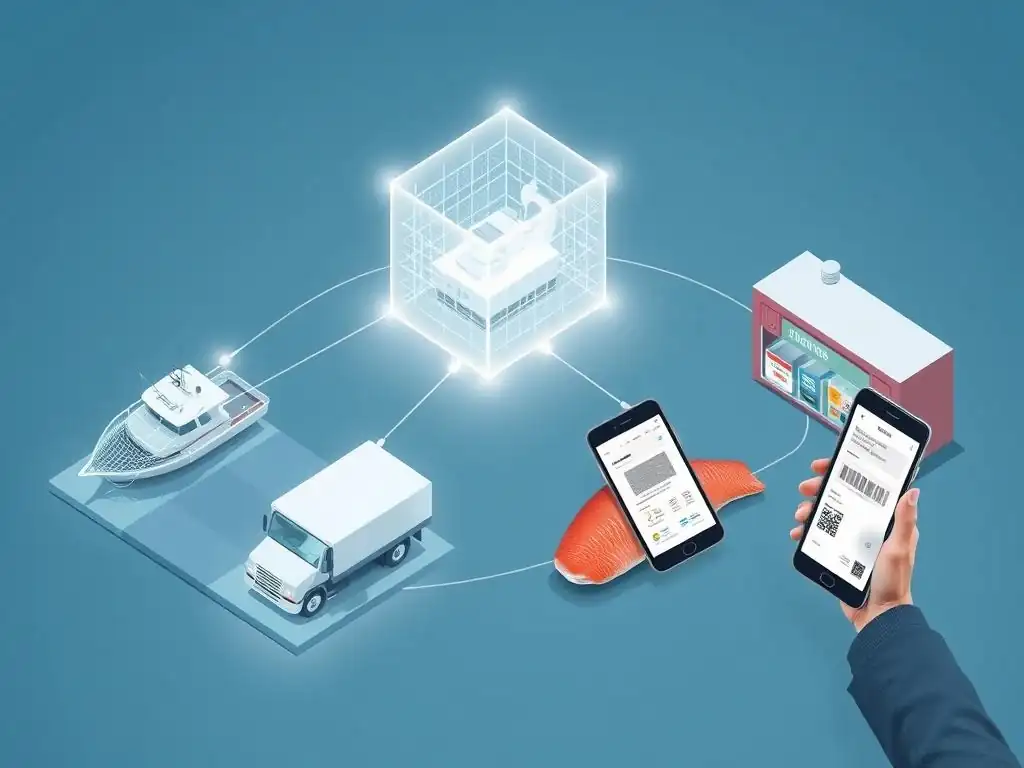
For a blockchain network involving multiple independent parties to function effectively, clear data standards and governance policies are essential. All participants must agree on the format, structure, and quality of the data being recorded on the ledger. Utilizing established industry standards, such as GS1 standards for product identification (e.g., GTINs) and location identification (e.g., GLNs), can greatly facilitate interoperability and data consistency across the network.
Governance policies must define who is allowed to join the network, the roles and permissions of different participants, how data is validated and recorded, how disputes are resolved, and procedures for handling errors or exceptions. A well-defined governance framework ensures trust and cooperation among network members and maintains the integrity of the data on the blockchain, which is crucial for reliable blockchain supply chain authentication benefits.
Step 5: Onboarding Fishermen, Processors, and Retailers to the Blockchain Network
The success of a blockchain supply chain solution ultimately depends on the active participation of all stakeholders. Onboarding fishermen, processing plants, distributors, and retailers requires training, technical support, and demonstrating the value proposition for each party.
Fishermen, for instance, need easy-to-use tools (like mobile apps or simple interfaces integrated with their existing electronics) to record catch data accurately at sea. Processors need integration with their inventory systems. Retailers need tools to access and display traceability information to consumers. Highlighting the specific blockchain supply chain authentication benefits for each group – such as reduced paperwork for fishers, improved efficiency for processors, enhanced brand reputation for retailers, and increased consumer trust – is key to driving adoption and ensuring the network is actively used by all participants.
Use Cases: Real-World Examples of Blockchain Tuna Authentication
While widespread adoption is still evolving, pilot projects and early implementations demonstrate the practical applications and blockchain supply chain authentication benefits in the seafood industry, particularly for high-value species like tuna. These examples showcase how blockchain is being used to build trust and verify claims throughout the complex journey from ocean to consumer.
These use cases highlight the versatility of blockchain, from tracking individual fish to ensuring compliance with international regulations. They move beyond theoretical discussions to show tangible ways in which distributed ledger technology is enhancing transparency and accountability in the tuna supply chain, paving the way for broader industry change.
Tracking Tuna from Fishing Vessel to Consumer Plate
Several initiatives have piloted tracking tuna using blockchain from the point of catch. In one well-documented example, a project tracked yellowfin tuna caught by a specific fishing fleet in the Pacific. Data points, including fishing vessel name, date and location of catch, fishing method, and weight, were recorded on the blockchain at the source.
As the tuna was transferred to a processing facility, processed into loins or cans, transported, and eventually sold at retail, each transaction and transformation was added to the immutable ledger. Consumers could then scan a QR code on the final product packaging using a smartphone app and view the complete, verified history of that specific tuna product, confirming its journey and origin, a clear demonstration of blockchain supply chain authentication benefits.
Verifying the Origin and Sustainability of Tuna Products
Blockchain is being used to verify claims about the origin and sustainability of tuna. For instance, companies sourcing tuna from fisheries certified by organizations like the Marine Stewardship Council (MSC) are using blockchain to provide consumers with verifiable proof.
When MSC-certified tuna is caught, the certification status is recorded on the blockchain along with the catch data. As the product moves through the supply chain, each handler's certification status (Chain of Custody) can also be verified and recorded. This creates an unbroken, verifiable digital chain of custody on the blockchain, assuring consumers that the tuna they are buying is indeed from a certified sustainable fishery, unlike relying solely on paper certificates which are easier to forge or misrepresent.
Ensuring Compliance with Fishing Regulations and Quotas
Compliance with complex international and national fishing regulations, including quotas, fishing seasons, and gear restrictions, is critical but challenging to monitor effectively across vast ocean areas. Blockchain can help automate and verify compliance by linking regulatory data to catch records.
When a vessel records a catch on the blockchain, the system can automatically check if the reported location is within legal fishing grounds, if the date is within the open season, and if the reported catch volume contributes to the vessel's allocated quota. Smart contracts can be programmed to flag non-compliant entries or even restrict further processing or sale of non-compliant catches recorded on the network. This provides regulators and supply chain partners with a more reliable way to ensure adherence to rules and realize blockchain supply chain authentication benefits for regulatory oversight.
Preventing the Entry of Illegally Caught Tuna into the Market
Ultimately, a key goal of blockchain tuna authentication is to prevent illegally caught tuna from entering the legitimate market. By requiring all tuna entering the tracked supply chain to be recorded at the point of catch with verified data (like vessel ID, license info, and location), the system creates a barrier to entry for products from IUU fishing operations.
If a batch of tuna cannot be linked back to a verified catch event recorded on the blockchain, supply chain participants can be alerted that it potentially originates from an unverified or illegal source. This allows processors, distributors, and retailers to refuse to handle or sell such products, effectively shutting down pathways for illicit catches to reach consumers and protecting the integrity of the legal market. This is a crucial element of the blockchain supply chain authentication benefits.
Challenges and Considerations for Blockchain Seafood Supply Chain Adoption
While the potential blockchain supply chain authentication benefits are significant, implementing these solutions in the seafood industry is not without challenges. The global nature of fishing, the diversity of participants, and the specific environmental conditions under which data must be captured present unique hurdles that need careful consideration and strategic planning to overcome.
Addressing these challenges requires not only technical solutions but also significant efforts in terms of industry collaboration, policy development, and capacity building. Overcoming these obstacles is key to moving from pilot projects to widespread adoption and realizing the full potential of blockchain for transparent and sustainable seafood supply chains.
Scalability and Interoperability of Blockchain Networks
One major challenge is ensuring that blockchain networks can scale to handle the massive volume of data generated by the global tuna trade. Millions of tonnes of tuna are caught and processed annually, involving countless transactions and data points. The chosen blockchain platform must be capable of processing a high volume of transactions efficiently and cost-effectively.
Furthermore, ensuring interoperability between different blockchain networks or between blockchain networks and legacy systems used by various supply chain partners is crucial. A fisherman using one system needs to be able to seamlessly transfer data to a processor using another, and potentially to a retailer using a third. Lack of interoperability can create data silos, undermining the goal of end-to-end transparency and hindering the realization of blockchain supply chain authentication benefits.
Data Privacy and Security Concerns (Protecting Fishing Vessel Locations)
While transparency is a goal, certain data points, such as the precise real-time location of a fishing vessel, can be highly sensitive competitive information. Fishermen may be reluctant to share this data openly on a public or even a permissioned blockchain if they fear competitors could gain an advantage.
Ensuring data privacy while maintaining necessary transparency for authentication requires careful design of the blockchain solution. Techniques like zero-knowledge proofs or restricting data visibility using permissions managed by smart contracts can allow the verification of certain facts (e.g., 'the catch occurred within legal boundaries') without revealing the underlying sensitive data (e.g., the exact GPS coordinates at all times). Balancing the need for security and privacy with the goal of transparency is a critical design consideration.
Regulatory Compliance and Legal Frameworks (International Fishing Laws)
The seafood industry is governed by a complex web of national and international regulations, treaties, and agreements (like those from Regional Fisheries Management Organizations - RFMOs). Integrating blockchain solutions into this existing legal framework and ensuring compliance can be challenging.
Questions arise about the legal status of blockchain records as evidence, how smart contracts interact with traditional contracts, and which jurisdiction applies to disputes on a distributed ledger spanning multiple countries. Furthermore, regulatory bodies need to understand and potentially endorse the use of blockchain data for compliance monitoring and enforcement. Harmonizing blockchain implementation with existing international fishing laws and developing clear legal frameworks is necessary for widespread adoption and leveraging the blockchain supply chain authentication benefits for governance.
The Importance of Collaboration and Standardization Across the Seafood Industry
Successfully implementing a blockchain for tuna authentication requires unprecedented collaboration among diverse and often competitive stakeholders, including fishers, vessel owners, processors, distributors, retailers, NGOs, and government agencies. All parties must agree to participate, share data, and adhere to common standards and governance rules.
Lack of trust or unwillingness to share information can become significant barriers. Establishing industry-wide standards for data capture, formatting, and network protocols is crucial to ensure interoperability and scalability. Without a collaborative effort to agree on common approaches and build a shared infrastructure, the industry risks fragmentation with multiple incompatible blockchain initiatives, limiting the overall impact on transparency and sustainability. Achieving consensus and fostering collaboration is fundamental to unlocking the full blockchain supply chain authentication benefits.
The Future of Blockchain in Seafood Supply Chain Management
The application of blockchain technology in the seafood industry, particularly for tuna authentication and transparency, is still in its relatively early stages. However, the potential for future advancements and integration with other technologies is vast. As blockchain networks mature and become more widespread, we can anticipate more sophisticated use cases and greater efficiency in managing complex seafood supply chains.
The convergence of blockchain with technologies like the Internet of Things (IoT) and Artificial Intelligence (AI) promises to create even more robust and automated systems for monitoring, verifying, and optimizing the movement of tuna from catch to consumer. These developments will further enhance traceability, improve sustainability outcomes, and solidify the blockchain supply chain authentication benefits.
Emerging Trends in Blockchain-Based Tuna Authentication
Several emerging trends are shaping the future of blockchain in tuna authentication. One is the increasing focus on tokenization, where each individual fish or batch is represented by a unique digital token on the blockchain. This allows for granular tracking and potentially enables new business models, such as fractional ownership or direct-to-consumer sales with full transparency.
Another trend is the development of more user-friendly interfaces and mobile applications tailored for use in challenging environments, such as on fishing vessels at sea, making data capture easier and more reliable. Furthermore, there's growing interest in using blockchain not just for tracking but also for managing digital identities of vessels, crew members, and processing facilities to ensure compliance with labor laws and safety standards, expanding the scope of blockchain supply chain authentication benefits.
The Role of IoT and AI in Enhancing Seafood Supply Chain Transparency (Sensor Data on Fishing Vessels)
The integration of blockchain with IoT devices and AI will significantly enhance the automation and reliability of data captured in the seafood supply chain. IoT sensors on fishing vessels can automatically record environmental conditions, temperature logs for storage, and even detect fishing gear deployment. This data can be fed directly onto the blockchain, creating an objective, automated record that is less susceptible to human error or manipulation.
AI can be used to analyze the vast amounts of data collected via IoT and stored on the blockchain. For example, AI algorithms can analyze fishing patterns and locations against regulatory data to automatically flag potential instances of IUU fishing or non-compliance. AI can also predict potential spoilage based on temperature logs or optimize logistics routes. This integration of automated data capture and intelligent analysis amplifies the accuracy and actionability of the information on the blockchain, strengthening the blockchain supply chain authentication benefits.
The Potential for Decentralized Seafood Supply Chains and Automated Compliance
Looking further ahead, blockchain technology could facilitate the development of more decentralized seafood supply chains. By reducing the need for central intermediaries to manage data and trust, blockchain enables more direct interactions and transparency between producers, processors, and buyers.
Smart contracts could automate compliance checks and payments based on verified data recorded on the blockchain. For example, payment to a fishing vessel could be automatically released via a smart contract once blockchain data confirms the catch volume, species, and fishing location are compliant with regulations and quotas. This level of automation reduces administrative burdens, speeds up transactions, and provides greater assurance of compliance across the network, representing the peak potential of blockchain supply chain authentication benefits.
Conclusion: Embracing Blockchain for a More Transparent and Sustainable Seafood Supply Chain
The challenges facing the global seafood industry, particularly concerning transparency, traceability, and sustainability, are significant. Illegal, unreported, and unregulated fishing undermines conservation efforts and fair markets, while consumers increasingly demand verifiable information about the origin and impact of their seafood choices. Traditional supply chain management systems often lack the necessary robustness and transparency to adequately address these issues.
Blockchain technology offers a transformative solution by providing a decentralized, immutable, and secure ledger for creating verifiable digital identities and tracking the journey of seafood products like tuna. The implementation of blockchain-based systems delivers compelling blockchain supply chain authentication benefits, enhancing trust among all stakeholders and promoting more responsible practices throughout the value chain.
Recap of Blockchain Tuna Authentication Benefits
The adoption of blockchain for tuna authentication unlocks numerous advantages. It dramatically improves traceability, allowing precise tracking of tuna from the specific fishing location and date to the consumer. This enhanced visibility significantly reduces the incidence of seafood fraud and mislabeling by creating a tamper-proof record of the product's identity and handling.
Furthermore, blockchain streamlines supply chain operations through automated data capture and verification, leading to increased efficiency and reduced costs. Crucially, it builds consumer confidence by providing direct access to verified provenance and sustainability information, incentivizing market support for legitimate and sustainable fishing operations and reinforcing the core blockchain supply chain authentication benefits.
Call to Action: Exploring Blockchain Solutions for Your Seafood Supply Chain Needs
The evidence from pilot projects and early implementations clearly demonstrates the power of blockchain to create more transparent, efficient, and sustainable seafood supply chains. While challenges related to scalability, interoperability, privacy, regulation, and collaboration exist, they are being addressed through ongoing technological development and industry initiatives.
For businesses involved in the tuna supply chain – from fishermen and processors to distributors and retailers – exploring blockchain solutions is no longer a futuristic concept but a tangible opportunity to enhance brand reputation, meet consumer demand, improve operational efficiency, and contribute to the long-term health of marine ecosystems. Embracing blockchain is a strategic step towards a more trustworthy and sustainable future for the seafood industry.
Frequently Asked Questions
What are the primary benefits of using blockchain for supply chain authentication?
The primary benefits include enhanced transparency, improved product traceability, and increased trust between stakeholders. Blockchain's immutable nature helps prevent counterfeiting and fraud.
How does blockchain identity contribute to supply chain transparency?
Blockchain identity creates a unique and verifiable digital identity for each product, ingredient, or asset within the supply chain. This allows for real-time tracking and verification of authenticity at every stage.
What role does decentralization play in improving supply chain security?
Decentralization ensures that no single entity controls the data, making the system more resistant to manipulation and single points of failure. This enhances data integrity and trust across the network.
What are some potential challenges in implementing blockchain for supply chain authentication?
Challenges include scalability issues, the need for industry-wide adoption, and the integration with existing legacy systems. Overcoming these hurdles is crucial for realizing the full potential of blockchain.
How can blockchain help combat counterfeit products in the supply chain?
By providing a verifiable and tamper-proof record of a product's journey, blockchain enables consumers and businesses to easily authenticate products and identify counterfeit goods, reducing fraud and protecting consumers.
Final Reflection: Embracing Trust Through Transparency
The journey towards unbreakable supply chain integrity is no longer a futuristic dream, but a tangible reality powered by blockchain technology. The benefits of blockchain supply chain authentication, as explored throughout this article, extend far beyond simple tracking; they represent a fundamental shift towards building trust and accountability within global commerce, addressing critical concerns about product authenticity and ethical sourcing that resonate deeply in today's consumer-driven world.
This paradigm shift is profoundly impacting how we perceive and interact with the products we consume. The ability to trace a product's journey from origin to consumer, verifying its authenticity and ethical provenance, empowers us to make informed choices and supports businesses committed to responsible practices. Transparency is not about exposing everything; it's about creating a culture of trust and accountability.
This quote encapsulates the essence of blockchain's potential to revolutionize supply chains, fostering a more ethical and sustainable global economy.
As we move forward, let us embrace the transformative power of blockchain technology to build supply chains that are not only efficient and secure but also transparent and trustworthy. Consider how you, as a consumer, a business owner, or a policymaker, can champion the adoption of blockchain-based authentication systems. By demanding greater transparency and supporting initiatives that prioritize ethical sourcing and product integrity, you can contribute to a future where trust is not a luxury, but a fundamental component of every transaction.
Ignite Supply Chain Trust: Start Authenticating!
Thanks for exploring how blockchain can revolutionize supply chain transparency! We hope you've gained valuable insights into leveraging this technology for product authentication. Now, let's put that knowledge into action and build a more trustworthy supply chain, starting with these steps:
- Begin mapping your own supply chain using blockchain principles. Identify key points where identity verification can drastically improve transparency and fight counterfeiting. This is where the revolution begins!
- Share this article with a colleague in your industry. Let's spread the word and collectively build momentum for blockchain-based supply chain solutions.
- Research existing blockchain platforms tailored for supply chain management. Consider which platform best aligns with your company's needs and resources.
What immediate steps will you take to implement blockchain for product authentication in your supply chain? Share your initial strategies in the comments below!
Leave a Reply