
Mining Explained Simply: Securing and Validating Blockchain Transactions


Welcome to Blockchain Trends, your guide to understanding the revolutionary world of blockchain technology. Beyond the hype of cryptocurrencies, blockchain's true potential lies in transforming industries and reshaping our digital future. Curious about how this intricate system actually works? In this article, we delve into the essential blockchain transaction validation process, unraveling the complexities of mining and its crucial role in maintaining the integrity and security of decentralized networks. Prepare to decode the mysteries behind the blockchain!
Mining Explained Simply: Securing and Validating Blockchain Transactions
- Introduction to Blockchain Mining and Transaction Validation
-
The Blockchain Transaction Validation Process: A Step-by-Step Guide
- Step 1: Initiating a Blockchain Transaction
- Step 2: Transaction Broadcasting to the Network
- Step 3: Miner Selection and Transaction Pooling
- Step 4: The Mining Process: Solving the Cryptographic Puzzle
- Step 5: Blockchain Transaction Validation and Block Creation
- Step 6: Adding the Block to the Blockchain
- Step 7: Transaction Confirmation and Finalization
- The Role of Miners in Decentralized Consensus
- Mining Pools: Collaboration in Blockchain Networks
- Alternative Consensus Mechanisms: Beyond Proof-of-Work
- The Future of Blockchain Mining and Transaction Validation
- Conclusion: The Importance of Understanding Blockchain Transaction Validation
-
Frequently Asked Questions
- What is the main role of mining in the Blockchain transaction validation process?
- How does mining secure the Blockchain transaction validation process?
- What are the key steps involved in the Blockchain transaction validation process using mining?
- What is the difference between mining and Blockchain transaction validation in a broader sense?
- How does regulation impact the future of the Blockchain transaction validation process?
- Final Reflection: The Enduring Power of Trust in a Decentralized World
- Unearth Your Blockchain Potential!
Introduction to Blockchain Mining and Transaction Validation
Blockchain technology relies on a robust mechanism to ensure the integrity and security of its distributed ledger. At the heart of this mechanism lies mining, a process fundamental to many blockchain networks, particularly those utilizing a Proof-of-Work consensus algorithm like Bitcoin. Mining serves a dual purpose: creating new units of cryptocurrency and, crucially, validating and recording transactions onto the blockchain.
This validation process is vital for maintaining trust in a decentralized system where no single authority oversees operations. Without a reliable method to verify transactions and prevent issues like double-spending, the entire edifice of a blockchain would collapse. Understanding the blockchain transaction validation process provides insight into how these networks achieve security, transparency, and immutability, forming the bedrock upon which decentralized applications and digital assets are built.
Understanding the Role of Mining in Blockchain Security
Mining, in the context of blockchain, is the computational work performed by participants (miners) to add new blocks of transactions to the chain. This process involves solving complex mathematical problems that require significant computing power. The difficulty of these problems is adjusted periodically to ensure a consistent block creation time, such as approximately every 10 minutes for Bitcoin.
The primary security function of mining lies in making it computationally expensive to alter past transactions. To change a transaction recorded in a block, an attacker would need to re-mine that block and all subsequent blocks on the chain, a task requiring more than 50% of the network's total computing power (a '51% attack'). The immense and ever-growing hash rate of large networks like Bitcoin makes such an attack prohibitively expensive and practically impossible, thereby securing the historical ledger.
Why is Blockchain Transaction Validation Necessary?
In a traditional financial system, a central authority like a bank validates transactions, ensuring funds exist and preventing double-spending (spending the same money twice). In a decentralized blockchain network, this central authority is replaced by a distributed consensus mechanism involving the participants themselves, primarily miners in a Proof-of-Work system. The blockchain transaction validation process is the distributed equivalent of this verification.
The necessity of this validation stems from the distributed nature of the ledger. Every participant holds a copy of the blockchain. When a transaction occurs, it must be verified by the network to ensure it adheres to the protocol's rules – for example, checking that the sender has sufficient funds and that the transaction is correctly formatted and signed. This collective validation prevents fraudulent activities and ensures all distributed ledgers remain synchronized and accurate across the network.
The Blockchain Transaction Validation Process: A Step-by-Step Guide
The journey of a transaction from initiation to becoming a permanent record on the blockchain involves several critical steps. This multi-stage blockchain transaction validation process ensures that every movement of value or data on the network is legitimate and agreed upon by the decentralized network participants. It's a choreography of cryptographic functions, network broadcasting, and computational consensus.
From the moment a user decides to send funds or interact with a smart contract, a sequence of events is triggered that involves the entire network in verifying and ultimately confirming the action. Understanding each step provides a clear picture of the complexity and robustness inherent in blockchain operations, highlighting how security and trust are established without intermediaries.
Step 1: Initiating a Blockchain Transaction
A blockchain transaction begins when a user decides to send cryptocurrency, interact with a decentralized application (dApp), or perform any action that requires updating the blockchain state. This is typically done through a digital wallet or a dApp interface. The user specifies the recipient's address, the amount (if applicable), and any other necessary data.
Once the details are entered, the user's wallet software creates a transaction request. This request includes the transaction data (sender, receiver, amount, etc.) and is then cryptographically signed by the sender using their private key. This digital signature proves ownership of the funds or data being sent and ensures the transaction cannot be altered after being signed. The signed transaction is now ready to be broadcast to the network for the blockchain transaction validation process to begin.
Step 2: Transaction Broadcasting to the Network
After being signed, the transaction is broadcast from the user's node (often their wallet software connected to the network) to nearby nodes on the blockchain network. These nodes, in turn, validate the transaction based on basic criteria, such as checking the signature's validity and verifying that the transaction format is correct.
If the initial checks pass, the nodes relay the transaction to other connected nodes, propagating it across the entire network. This broadcasting ensures that the transaction reaches miners (or validators in other consensus systems) who will include it in a block. The transaction sits in a pool of unconfirmed transactions, often called the 'mempool,' waiting to be selected for inclusion in the next block, marking its entry into the core blockchain transaction validation process.
Step 3: Miner Selection and Transaction Pooling
Miners (in Proof-of-Work networks) or validators (in Proof-of-Stake networks) continuously listen for newly broadcast transactions. Each miner maintains their own pool of unconfirmed transactions (the mempool) that they have received from the network. The size and contents of mempools can vary slightly between nodes depending on network connectivity and propagation delays.
From their mempool, miners select transactions to include in the block they are currently attempting to mine. Miners typically prioritize transactions that offer higher transaction fees, as these fees are part of their reward for successfully mining a block. For example, in Bitcoin, network congestion can lead to significant variation in transaction fees, with users paying more to ensure faster inclusion in a block and quicker progression through the blockchain transaction validation process.
Step 4: The Mining Process: Solving the Cryptographic Puzzle
This is the core of Proof-of-Work mining. Once a miner has assembled a candidate block of transactions, they must solve a computationally intensive cryptographic puzzle. This puzzle involves finding a specific number (a 'nonce') that, when combined with the data in the candidate block and run through a hash function, produces a hash value that meets a certain difficulty target (e.g., starts with a specific number of zeros).
Miners use specialized hardware (like ASICs for Bitcoin) to rapidly try countless different nonces until one is found that produces a valid hash. This trial-and-error process is what consumes significant computational power and energy. The first miner to find a valid nonce and generate a valid block hash wins the right to propose the next block to the network and receive the block reward, moving the selected transactions closer to final confirmation via the blockchain transaction validation process.
Understanding Hash Functions in Blockchain Mining
Hash functions are fundamental cryptographic algorithms that take an input (of any size) and produce a fixed-size output string of bytes, known as a hash or digest. Examples include SHA-256, commonly used in Bitcoin. A key property is that the same input always produces the same output hash.
Crucially for blockchain, hash functions are designed to be one-way functions: it's computationally infeasible to determine the original input from the output hash alone. They are also highly sensitive to input changes; even a tiny change in the input data will result in a drastically different output hash. This sensitivity and one-way property are leveraged in mining and the blockchain transaction validation process to link blocks securely and make tampering evident.
Proof-of-Work (PoW) Explained Simply
Proof-of-Work (PoW) is a consensus mechanism where participants (miners) must expend significant computational effort to solve a difficult, arbitrary mathematical puzzle to propose the next block. The "work" is the energy and processing power burned in the process of finding the correct hash.
The difficulty of the puzzle is adjusted by the network protocol to control the rate at which new blocks are added to the chain. For instance, Bitcoin's difficulty adjusts roughly every two weeks to maintain a 10-minute block time target. Because finding the solution is hard but verifying it is easy, PoW ensures that adding new blocks requires substantial investment, making it economically unfeasible for malicious actors to gain control of the network and disrupt the blockchain transaction validation process.
Step 5: Blockchain Transaction Validation and Block Creation
Once a miner finds a valid solution (a nonce that produces a hash meeting the difficulty target) for their candidate block, they have successfully 'mined' the block. Before broadcasting it to the network, the miner performs a final round of checks on the transactions included. This is a critical phase of the blockchain transaction validation process.
The miner verifies each transaction within their potential block to ensure it complies with network rules. This includes checking digital signatures, verifying that the sender's address has sufficient unspent transaction outputs (UTXOs in Bitcoin's model) to cover the amount being sent plus the fee, and ensuring no double-spending attempts are present within the block or against the current state of the blockchain.
Verifying Transaction Validity: Double-Spending Prevention
Double-spending is a major challenge in digital currency – preventing a user from spending the same unit of currency more than once. In blockchain, the blockchain transaction validation process is designed explicitly to prevent this. When a transaction is included in a block, miners verify that the input funds (the UTXOs being spent) have not already been spent in a previous transaction recorded on the blockchain.
This check is fundamental. Miners consult their copy of the blockchain's state (the ledger of unspent outputs) to confirm the validity of each transaction's inputs. If a transaction attempts to spend funds that have already been spent in a confirmed transaction, it is deemed invalid and rejected by the miner. This rigorous verification at the block creation stage is essential for the integrity of the ledger.
Assembling Transactions into a Block
A block is essentially a container for verified transactions. After selecting transactions from the mempool and performing initial validity checks, the winning miner assembles them into a block structure. This block includes several key components: a block header (containing metadata like the previous block's hash, a timestamp, the difficulty target, and the winning nonce) and the list of validated transactions.
The transactions themselves are typically organized into a Merkle Tree, a cryptographic data structure that efficiently summarizes all the transactions in the block. The root of this Merkle Tree is included in the block header. This structure allows for efficient verification that a specific transaction is included in the block without needing to download the entire block's transaction list, streamlining the blockchain transaction validation process for network participants.
Step 6: Adding the Block to the Blockchain
After a miner successfully mines a block (finds the correct nonce) and validates the transactions within it, they broadcast the newly created block to the rest of the network. Other nodes and miners receive this block and perform their own validation checks.
These checks include verifying the block header's hash (to ensure the PoW puzzle was correctly solved), verifying the validity of each transaction within the block (repeating the checks performed by the winning miner), and ensuring the block correctly references the hash of the previous block on the longest chain they are aware of. If the block is deemed valid by the majority of the network, it is added to their local copy of the blockchain, extending the chain by one block. This step solidifies the blockchain transaction validation process for all transactions contained within that block.
The Importance of Block Height and Chain Length
Block height refers to the number of blocks preceding a specific block in the blockchain. The first block is Block 0 (the genesis block), the next is Block 1, and so on. The length of the chain is the total number of blocks from the genesis block to the current tip. In a decentralized network, there might occasionally be temporary forks where two miners find a block at roughly the same time, creating two competing chains.
The network resolves these forks based on the "longest chain rule" (or "heaviest chain" in some protocols, considering cumulative work). Nodes and miners will always consider the chain with the most cumulative Proof-of-Work (i.e., the longest or heaviest valid chain) as the canonical chain. Blocks mined on shorter or lighter forks are abandoned, and the transactions within them return to the mempool to be included in a new block on the winning chain. This ensures the network eventually converges on a single, agreed-upon history, reinforcing the integrity of the blockchain transaction validation process.
Maintaining Blockchain Immutability
The use of cryptographic hashing and the linking of blocks is what provides the immutability of the blockchain. Each block contains the hash of the previous block in its header. If an attacker were to alter a transaction in an old block, the hash of that block would change.
Because the next block's header includes the original hash of the altered block, the subsequent block's hash would no longer be valid when calculated with the changed header information. This cascading effect means changing one block requires re-mining that block and every subsequent block in the chain. As mentioned earlier, this becomes computationally infeasible for blocks that are buried deep under many subsequent blocks, making historical data on the blockchain practically immutable and securing the outcome of the blockchain transaction validation process.
Step 7: Transaction Confirmation and Finalization
Once a transaction is included in a block that has been successfully added to the blockchain, it is considered 'confirmed'. However, for high-value transactions, it is standard practice to wait for several additional blocks to be added on top of the block containing the transaction. Each new block added on top increases the computational work an attacker would need to redo to alter the transaction's block.
This waiting period for multiple confirmations provides an increasing degree of certainty that the transaction is irreversible and will remain a permanent part of the ledger. The blockchain transaction validation process is finalized for a specific transaction once a sufficient number of blocks have been added after the one it was included in, making a reversal virtually impossible under normal network conditions.
How Many Confirmations are Needed?
The number of confirmations required before a transaction is considered final varies depending on the blockchain network and the risk tolerance of the parties involved. For Bitcoin, 6 confirmations are widely considered sufficient for high-value transactions, as this means 5 additional blocks have been mined on top of the block containing the transaction. At Bitcoin's average 10-minute block time, 6 confirmations take roughly one hour.
Other blockchains may require fewer or more confirmations depending on their block time and security parameters. For example, Ethereum (before transitioning to PoS) often required fewer confirmations (e.g., 12-15) due to its shorter block time (around 12-15 seconds). Exchanges and payment processors typically specify the number of confirmations they require before crediting a user's account or finalizing a payment, marking the completion of the blockchain transaction validation process from their perspective.
The Role of Miners in Decentralized Consensus
Miners are not just transaction processors; they are the engine of the decentralized consensus mechanism in Proof-of-Work networks. Their computational work is the basis for agreeing on the state of the ledger. By competing to solve the cryptographic puzzle, they collectively validate transactions and propose new blocks, ensuring that all participants eventually agree on the single, truthful history of transactions.
This decentralized competition prevents any single entity from controlling the network or manipulating the ledger. The economic incentives provided to miners align their interests with the network's security; it is more profitable for them to support and secure the network than to attack it. This dynamic is central to how the blockchain transaction validation process achieves trust in a trustless environment.
Miners as Guardians of the Blockchain
In PoW networks, miners act as the de facto guardians of the blockchain's integrity. They are responsible for verifying the legitimacy of every transaction they include in a block, ensuring it adheres to the network's protocol rules. This involves checking digital signatures, confirming the source of funds, and preventing double-spends.
Furthermore, by expending computational power to find valid blocks, miners are also enforcing the established consensus rules. Any miner who attempts to include invalid transactions or deviate from the protocol will have their block rejected by the rest of the network, wasting their computational effort and preventing them from earning rewards. This self-enforcement mechanism, powered by miners' economic incentives, is a cornerstone of the secure blockchain transaction validation process.
Incentives for Miners: Block Rewards and Transaction Fees
Miners are incentivized to dedicate significant computing resources and electricity to the mining process through two primary forms of reward: the block reward and transaction fees. The block reward is a predetermined amount of new cryptocurrency created and awarded to the miner who successfully mines a block. For example, Bitcoin's block reward started at 50 BTC per block and halves approximately every four years (currently 6.25 BTC per block).
Transaction fees are paid by users who initiate transactions and are collected by the miner who includes their transaction in a block. When network congestion is high (many transactions waiting), users may include higher fees to encourage miners to prioritize their transactions. These incentives are crucial; they ensure miners are willing to invest in the necessary hardware and energy, thereby securing the network and enabling the continuous blockchain transaction validation process.
Mining Pools: Collaboration in Blockchain Networks
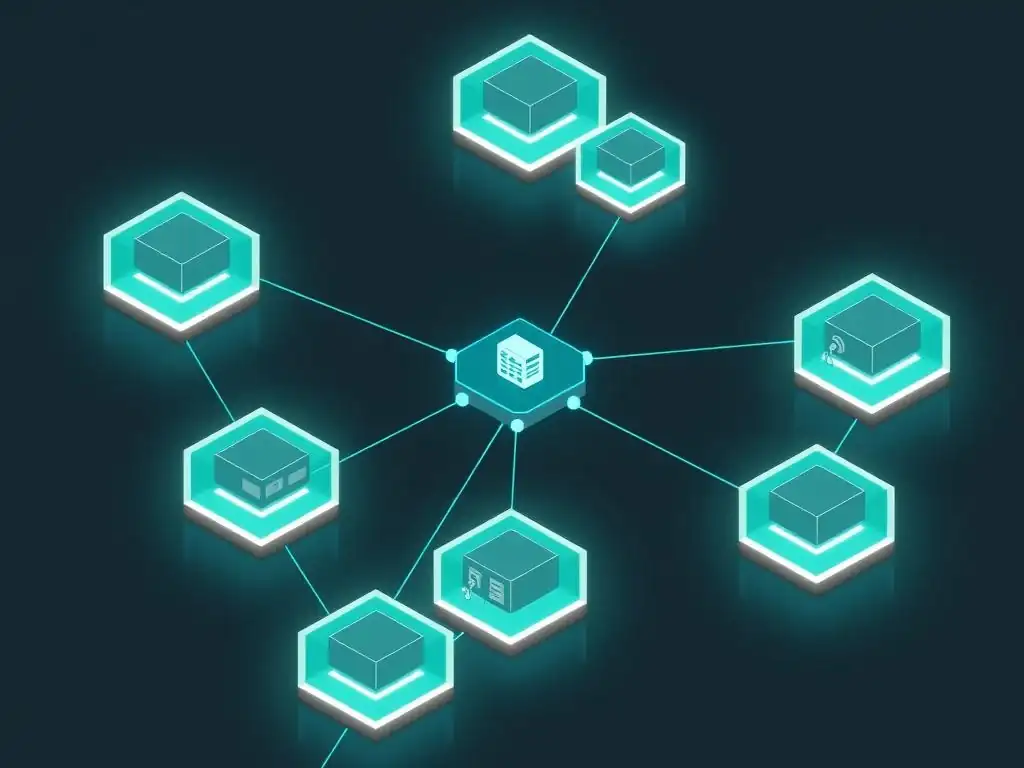
As blockchain networks, particularly Bitcoin, have grown, the difficulty of mining has increased dramatically. It became increasingly difficult for individual miners with limited hardware to find a block on their own. This led to the formation of mining pools, where individual miners combine their computational power to increase their chances of finding a block and earning rewards.
Mining pools represent a significant shift in how mining operations are conducted, moving from purely individual efforts to collaborative enterprises. While increasing the predictability of income for participants, they also introduce new dynamics regarding decentralization and the concentration of hash power, impacting the practical execution of the blockchain transaction validation process.
What are Mining Pools and How Do They Work?
A mining pool is a group of miners who agree to combine their hashing power (their collective computing strength) and share the resulting block rewards proportionally to the amount of work each participant contributed. The pool operator manages the pool, coordinating the miners' efforts and distributing rewards.
Individual miners in a pool contribute their hash rate towards solving the overall puzzle set by the network. When the pool successfully finds a block, the block reward (and associated transaction fees) is distributed among all pool members based on their share of the total work contributed to finding that specific block. This model allows even miners with modest hardware to earn a small, but regular, stream of cryptocurrency, rather than waiting years for a solo mining success.
Benefits and Drawbacks of Joining a Mining Pool
The primary benefit of joining a mining pool is the increased frequency and predictability of payouts. Instead of potentially waiting years to solo mine a block and receive a large reward, pool members receive smaller, more frequent payouts based on the pool's collective success. This reduces the risk and volatility associated with mining, making it more accessible and sustainable for many participants.
However, joining a mining pool also has drawbacks. Pool members typically pay a fee to the pool operator (e.g., 1-3% of earnings). More significantly, large mining pools can concentrate a substantial portion of the network's total hash rate. If a single pool or a small number of pools were to control over 50% of the network's hash rate, they could theoretically launch a 51% attack, potentially disrupting the blockchain transaction validation process or double-spending coins, raising concerns about centralization.
Alternative Consensus Mechanisms: Beyond Proof-of-Work
While Proof-of-Work has proven effective in securing networks like Bitcoin, its significant energy consumption and potential scalability limitations have led to the exploration and adoption of alternative consensus mechanisms. These mechanisms aim to achieve decentralized agreement and secure the network without relying on energy-intensive computational races.
Understanding these alternatives is crucial for appreciating the diverse landscape of blockchain technology and the ongoing evolution of how decentralized networks achieve consensus and validate transactions. They represent different approaches to solving the fundamental problem of agreeing on a single, truthful ledger state among distrusting participants, thereby enabling different forms of the blockchain transaction validation process.
Proof-of-Stake (PoS) as an Alternative to Mining
Proof-of-Stake (PoS) is a consensus mechanism that selects validators based on the amount of cryptocurrency they "stake" (lock up) as collateral. Instead of competing with computing power, validators compete based on the size of their stake. The protocol randomly selects a validator to create the next block, with the probability of being chosen proportional to the amount of stake they hold.
Validators in PoS networks don't 'mine' in the PoW sense; they 'forge' or 'mint' blocks. If a validator proposes a malicious or invalid block, they risk losing part or all of their staked amount (slashing). This economic incentive to act honestly replaces the energy-based incentive of PoW. Ethereum, for instance, transitioned from PoW to PoS in 2022, significantly reducing its energy consumption while maintaining a robust blockchain transaction validation process through staking.
Delegated Proof-of-Stake (DPoS)
Delegated Proof-of-Stake (DPoS) is a variation of PoS where token holders elect a smaller, fixed number of delegates or witnesses who are responsible for validating transactions and creating blocks. Users vote with their stake to elect these representatives, similar to electing politicians. The elected delegates then perform the consensus duties on behalf of the network.
DPoS systems typically achieve much faster transaction speeds and higher throughput compared to PoW and standard PoS because consensus is reached by a smaller, more manageable group of participants. However, this comes at the cost of a higher degree of centralization compared to other mechanisms, as block production is controlled by a limited number of elected delegates. This mechanism provides a streamlined, though less decentralized, approach to the blockchain transaction validation process.
Other Emerging Consensus Algorithms
The field of blockchain consensus is constantly evolving, with researchers and developers exploring numerous other algorithms beyond PoW and PoS. Examples include Proof-of-Authority (PoA), where validation is performed by approved accounts (often used in private or consortium blockchains); Proof-of-History (PoH), used by Solana, which creates a historical record to verify the order of events; and various forms of Byzantine Fault Tolerance (BFT), which aim for faster finality.
Each of these mechanisms offers different trade-offs in terms of decentralization, security, scalability, and energy efficiency. The choice of consensus mechanism significantly impacts how a blockchain operates, how quickly transactions are processed, and the specifics of its blockchain transaction validation process. The ongoing innovation in this area reflects the desire to build more efficient, scalable, and sustainable decentralized systems.
The Future of Blockchain Mining and Transaction Validation
The landscape of blockchain mining and transaction validation is not static. It is continually shaped by technological advancements, network growth, regulatory considerations, and the pursuit of greater efficiency and sustainability. The dominance of Proof-of-Work, while foundational, is being challenged by alternative mechanisms, and innovations in scalability are changing how transactions are handled before reaching the main chain.
Understanding these trends provides insight into the potential evolution of blockchain networks and their ability to handle increasing transaction volumes and broader adoption. The future of the blockchain transaction validation process likely involves a blend of different approaches, tailored to the specific needs and goals of various blockchain applications.
The Impact of Scalability Solutions on Mining
Scalability remains one of the biggest challenges for many blockchains, particularly those relying on PoW with limited block sizes and slow block times. Layer 2 scaling solutions, such as the Lightning Network for Bitcoin or rollups (Optimistic and ZK-Rollups) for Ethereum, aim to address this by processing a large volume of transactions off the main blockchain (Layer 1).
These Layer 2 solutions bundle many off-chain transactions into a single transaction that is then settled on the main chain. While the bulk of the transaction processing happens off-chain, the final settlement transaction still requires validation and inclusion in a mainnet block. This means that while Layer 2 reduces the load on the main chain, the underlying blockchain transaction validation process on Layer 1 remains critical for final security and settlement of these batched transactions.
The Evolution of Consensus Mechanisms
The move by major networks like Ethereum from Proof-of-Work to Proof-of-Stake signals a significant evolution in consensus mechanisms. This shift is driven by desires for increased energy efficiency, lower barriers to participation (staking vs. expensive hardware), and potentially better foundations for future scaling solutions.
As the blockchain space matures, it's likely we will see further diversification and refinement of consensus algorithms. Different applications and networks may adopt mechanisms best suited to their specific needs – e.g., PoA for enterprise consortia, DPoS for speed-sensitive applications, and potentially new hybrid models. This evolution will reshape the mechanics of the blockchain transaction validation process across the ecosystem.
The Environmental Concerns of Blockchain Mining and Sustainable Solutions
Proof-of-Work mining, particularly for large networks like Bitcoin, consumes a substantial amount of electricity. Estimates from the Cambridge Bitcoin Electricity Consumption Index (CBECI) have, at times, put Bitcoin's annual electricity consumption comparable to that of medium-sized countries. This environmental impact is a significant concern and a major driver for the adoption of more energy-efficient consensus mechanisms like PoS.
Beyond transitioning to PoS, the industry is exploring other sustainable solutions. These include using renewable energy sources for mining operations, optimizing mining hardware for better efficiency, and developing protocols that require less computational work. Addressing the environmental footprint is crucial for the long-term viability and public acceptance of PoW-based blockchains and influences discussions around the future of the blockchain transaction validation process.
Conclusion: The Importance of Understanding Blockchain Transaction Validation
The blockchain transaction validation process is a complex yet elegant system that underpins the security and trustworthiness of decentralized networks. Whether powered by Proof-of-Work mining or alternative consensus mechanisms, this process ensures that transactions are legitimate, funds are available, and the ledger remains consistent across all participants.
Understanding how transactions are verified, bundled into blocks, and added to the chain is fundamental to comprehending how blockchains achieve their core properties of immutability, transparency, and resistance to censorship. As blockchain technology continues to evolve and find new applications beyond cryptocurrencies, the core principles of securing and validating transactions will remain paramount, adapting to new consensus models and scaling solutions while maintaining the integrity of the decentralized ledger.
Frequently Asked Questions
What is the main role of mining in the Blockchain transaction validation process?
Mining's primary role is to validate and confirm new transactions before they are added to the blockchain. Miners essentially solve complex cryptographic puzzles to secure the network and prevent double-spending.
How does mining secure the Blockchain transaction validation process?
Mining secures the blockchain by requiring significant computational power, making it extremely difficult and costly for malicious actors to alter or tamper with the transaction history. This process is known as Proof-of-Work.
What are the key steps involved in the Blockchain transaction validation process using mining?
The process involves collecting transactions, creating a block, solving a complex cryptographic puzzle, and then broadcasting the solution to the network for verification. Successful miners are rewarded with newly minted coins.
What is the difference between mining and Blockchain transaction validation in a broader sense?
Mining is a specific mechanism (often Proof-of-Work) used for Blockchain transaction validation. Other mechanisms like Proof-of-Stake also exist to validate transactions, but they don't involve mining.
How does regulation impact the future of the Blockchain transaction validation process?
Regulatory scrutiny can affect the legitimacy and adoption of different validation methods like mining. Stricter regulations might favor more energy-efficient or environmentally friendly validation processes.
Final Reflection: The Enduring Power of Trust in a Decentralized World
The intricacies of the blockchain transaction validation process, as explored in this article, might seem technical and distant, but they are fundamentally about redefining trust in a digital age. The reliance on cryptographic proofs and decentralized consensus mechanisms, rather than centralized authorities, speaks to a growing desire for transparency and verifiable truth in an increasingly complex world. This shift has profound implications for how we interact, transact, and ultimately, build our future.
The impact of blockchain technology and its validation processes extends far beyond the realm of cryptocurrency. It represents a fundamental shift in how we think about data ownership, security, and accountability. The potential for applications in supply chain management, healthcare, and even voting systems is immense. The blockchain is not only a disruptive technology, but a disruptive idea.
This quote encapsulates the transformative potential of this technology, urging us to consider its far-reaching implications and embrace the possibilities it unlocks.
Now, as you understand the mechanics of blockchain transaction validation, consider its broader implications. How can you apply the principles of decentralization, transparency, and verifiable truth to your own life and work? Embrace the power of distributed trust, and become an active participant in shaping a more equitable and secure future for all.
Unearth Your Blockchain Potential!
Thanks for exploring the world of blockchain mining with us! We hope you now have a clearer understanding of how it works and its vital role in keeping the network secure. Are you ready to take the next step?
Here are some ways to apply your new knowledge:
- Consider joining a mining pool to gain hands-on experience with the process.
- Learn about alternative consensus mechanisms like Proof-of-Stake and see how they compare to traditional mining.
- Share this article with friends and colleagues to help others understand how blockchain mining works.
Now that you see the importance of mining, what is one small action you can take today to contribute to the blockchain community?
Leave a Reply