
Blockchain Transactions Explained: From Initiation to Confirmation


Welcome to Blockchain Trends, your guide to understanding the revolutionary world of blockchain technology!
Ever wondered what truly happens behind the scenes when you execute a blockchain transaction? This article delves deep into the blockchain transaction process explained, demystifying each stage from initiation to final confirmation. Discover the intricate mechanisms that ensure security and transparency, and unlock a deeper understanding of how this groundbreaking technology is shaping our future. Ready to unravel the complexities? Let's dive in!
Bitcoin Transactions Explained: From Initiation to Confirmation
- Understanding the Bitcoin Transaction Process
-
Step-by-Step Breakdown of a Bitcoin Transaction
- 1. Transaction Initiation: Creating and Signing the Transaction
- 2. Transaction Propagation: Broadcasting to the Bitcoin Network
- 3. Transaction Validation: The Mining Process
- 4. Block Creation: Grouping Transactions into Blocks
- 5. Transaction Confirmation: Achieving Immutability on the Bitcoin Blockchain
- Bitcoin Transaction Fees: Understanding the Cost
- Exploring Different Types of Bitcoin Transactions
- Potential Issues and Challenges in Bitcoin Transactions
- The Future of Bitcoin Transactions: Innovations and Advancements
- Conclusion: Mastering the Bitcoin Transaction Process
- Frequently Asked Questions
- Final Reflection: Unlocking the Future with Blockchain Transparency
- Decode the Blockchain: Your Next Move!
Understanding the Bitcoin Transaction Process
The Bitcoin transaction process is the fundamental mechanism by which value is transferred within the network. Unlike traditional financial systems that rely on centralized intermediaries, Bitcoin operates on a decentralized ledger, the blockchain. Every transaction, from a simple peer-to-peer payment to more complex operations, follows a specific flow from its creation by a user to its permanent recording on this distributed ledger. Understanding this process is key to grasping how Bitcoin works and the unique properties of its monetary system, such as immutability and transparency. This detailed explanation aims to clarify the steps involved in a standard Bitcoin transaction.
Exploring the blockchain transaction process explained for Bitcoin requires delving into cryptographic principles, network dynamics, and consensus mechanisms. Each step plays a vital role in ensuring the security, integrity, and finality of value transfers. From the moment a user decides to send Bitcoin, their action sets off a chain of events across a global network of computers, culminating in the transaction being included in a block and added to the ever-growing blockchain. This multi-stage process, while seemingly complex, is designed to be robust and resistant to fraud and manipulation, forming the backbone of Bitcoin's trustless environment.
What is a Bitcoin Transaction? A Beginner's Guide
At its core, a Bitcoin transaction is a transfer of value between Bitcoin addresses. It's essentially a record of who sent how much Bitcoin to whom. However, unlike a bank transfer where actual funds are moved, a Bitcoin transaction represents a change in ownership of unspent transaction outputs (UTXOs).
Think of UTXOs as digital cash notes of varying denominations. When you receive Bitcoin, you receive UTXOs. When you spend Bitcoin, you use some of your existing UTXOs as inputs to a new transaction, and the transaction creates new UTXOs as outputs for the recipient and potentially for yourself as change.
This UTXO model is a crucial aspect of the Bitcoin transaction process explained. Each transaction must consume existing UTXOs (inputs) to create new UTXOs (outputs). The sum of the inputs must equal or exceed the sum of the outputs. Any excess input value not allocated to outputs becomes the transaction fee, which incentivizes miners. A transaction is immutable once confirmed on the blockchain; it cannot be reversed. This finality is a defining characteristic, differentiating it from traditional payment methods which often have chargeback mechanisms.
Key Components of a Bitcoin Transaction
Every Bitcoin transaction is structured with several essential components. Understanding these parts is vital to comprehending the mechanics of sending and receiving Bitcoin. The primary components include inputs, outputs, and one or more digital signatures. Inputs reference previous transaction outputs that are being spent. Each input must unlock a specific output from a prior transaction using a cryptographic signature. Outputs define the new UTXOs being created, specifying the amount of Bitcoin and the recipient's address (or more accurately, a script that locks the funds, requiring a corresponding signature to spend them later).
Furthermore, a transaction includes metadata such as its size (in bytes or virtual bytes), a unique transaction ID (TxID), and potentially other data like an OP_RETURN script for embedding small amounts of arbitrary information. The digital signature, derived from the sender's private key, proves ownership of the inputs being spent without revealing the private key itself. It authorizes the spending of the specific UTXOs listed as inputs.
Without a valid digital signature, a transaction is considered invalid by the network. These components together form the data package that is broadcast to the network for validation and inclusion in the blockchain, completing one cycle of the blockchain transaction process explained.
Step-by-Step Breakdown of a Bitcoin Transaction
The journey of a Bitcoin transaction involves several distinct phases, starting from its creation by a user and ending with its permanent inclusion in the blockchain. Each step is essential for the network's security and functionality.
1. Transaction Initiation: Creating and Signing the Transaction
The very first step in the Bitcoin transaction process explained is the creation of the transaction itself. This typically happens within a Bitcoin wallet application. The user specifies the amount of Bitcoin they want to send and the recipient's Bitcoin address.
The wallet software then identifies suitable UTXOs the user owns that are sufficient to cover the amount plus a potential transaction fee. These UTXOs become the inputs of the new transaction. The wallet constructs the transaction data, specifying the inputs being spent and creating new outputs: one for the recipient's address with the specified amount, and potentially a second output sending any leftover Bitcoin back to a change address controlled by the sender.
Once the transaction structure is formed, it must be authorized by the sender. This is achieved through digital signatures. Using the private key associated with each input's public key (Bitcoin address), the sender's wallet generates a unique digital signature for the entire transaction data. This signature proves that the sender owns the private keys corresponding to the public keys that control the UTXOs being spent.
Without valid digital signatures for all inputs, the transaction is invalid. The digital signature is created using cryptographic hash functions and the sender's private key, ensuring that only the legitimate owner can authorize the spending of funds. This cryptographic authorization is a cornerstone of the secure blockchain transaction process explained.
Generating a New Transaction: Inputs, Outputs, and Amount
When a user initiates a transfer, their wallet scans the blockchain to find unspent transaction outputs (UTXOs) associated with their addresses. Suppose a user wants to send 0.5 BTC, and they have UTXOs of 0.3 BTC and 0.4 BTC. The wallet might select both UTXOs as inputs, totaling 0.7 BTC.
The transaction will then have one output of 0.5 BTC going to the recipient's address and a second output of 0.18 BTC returning as change to one of the sender's addresses (assuming a 0.02 BTC fee). The wallet automatically handles the selection of inputs and the creation of change outputs, though advanced users can sometimes manually select inputs.
The structure of inputs and outputs is fundamental. Each input points to a specific output of a previous transaction using its transaction ID and output index. It also includes the script necessary to unlock that output, typically a signature and the corresponding public key.
Each output contains the amount of Bitcoin being sent and a locking script (usually a script specifying the recipient's public key hash) that defines the conditions under which this new UTXO can be spent in the future. The total value of inputs minus the total value of outputs determines the transaction fee, which is explicitly included in the transaction data. This fee mechanism is crucial for the network's operation and miner incentives, as integral to the Bitcoin transaction process explained.
Digital Signatures: Securing and Authorizing Your Transaction
Digital signatures are a cryptographic method used to ensure the authenticity and integrity of the transaction data. When a transaction is created, the wallet hashes the transaction data and then encrypts this hash using the sender's private key. The result is the digital signature.
This signature, along with the corresponding public key, is included with the transaction inputs. Anyone on the network can use the sender's public key to decrypt the signature and verify that it matches the hash of the transaction data. If it matches, it proves that the transaction was authorized by the holder of the private key associated with that public key, and the transaction data has not been tampered with since it was signed.
Each input in a transaction typically requires a separate digital signature because each input represents spending a specific UTXO locked to a specific public key. For a transaction to be valid, all inputs must be properly signed. This process guarantees that only the legitimate owner of the Bitcoin can spend it. The private key never leaves the owner's wallet or device during the signing process, maintaining its security. This cryptographic proof of ownership and authorization is a non-repudiable part of the blockchain transaction process explained for Bitcoin, ensuring trust in a trustless environment.
2. Transaction Propagation: Broadcasting to the Bitcoin Network
Once a transaction is created and signed, it needs to be announced to the rest of the Bitcoin network. This process is called broadcasting or propagation. The user's wallet typically connects to one or more Bitcoin nodes it trusts and sends the transaction data to them. These nodes then validate the basic structure and signatures of the transaction. If the transaction appears valid at this initial check (e.g., inputs exist and are not already spent, signatures are correct), the node adds it to its temporary pool of unconfirmed transactions, known as the mempool.
From the first node it reaches, the transaction is rapidly relayed across the global peer-to-peer network. Each node that receives a valid unconfirmed transaction will broadcast it to its own connected peers, who in turn broadcast it to their peers, and so on.
This ensures that within seconds or minutes, the transaction data has spread across a significant portion of the network, making it available for miners to pick up and include in a block. This efficient propagation mechanism is a key part of the Bitcoin transaction process explained, allowing transactions to quickly reach the eyes of the network participants responsible for validation and confirmation.
The Role of Nodes in Distributing Transactions
Bitcoin nodes are computers running the Bitcoin software that participate in the network. Full nodes download and validate the entire blockchain, enforce the network rules, and relay transactions and blocks. When a node receives a new transaction, it first performs a series of validation checks: Is the transaction format correct? Are the inputs valid and unspent? Do the signatures match the public keys? Is the total input value greater than or equal to the total output value? If the transaction passes these checks, the node adds it to its mempool.
Nodes play a critical role in the propagation phase. They act as relay stations, ensuring that every valid transaction broadcast anywhere in the world quickly reaches other nodes, particularly mining nodes. A well-connected node will have many peer connections, allowing it to receive and relay transactions efficiently. This decentralized distribution prevents any single point of failure and ensures that the transaction has the opportunity to be included in the next block mined by any miner on the network. Their constant validation and relaying are fundamental to the smooth operation of the blockchain transaction process explained.
Peer-to-Peer (P2P) Network and Transaction Routing
The Bitcoin network operates as a peer-to-peer system. There is no central server or authority. All participating nodes connect directly to each other. When a transaction is broadcast by a wallet or a node, it doesn't go to a specific destination; instead, it's sent to all the peers the broadcasting node is connected to. These peers then relay it to their peers, creating a flood fill effect across the network. This decentralized routing ensures that the transaction reaches a wide audience of nodes and miners quickly.
The P2P architecture is designed for resilience and censorship resistance. Even if some nodes go offline, the network can continue to function as long as there are enough interconnected nodes. Transaction routing is based on simple relay rules: receive a valid transaction you haven't seen before, add it to your mempool, and send it to your connected peers. This robust, distributed system is essential for the reliable propagation phase of the Bitcoin transaction process explained, making it difficult to prevent a transaction from reaching the network and eventually being confirmed.
3. Transaction Validation: The Mining Process
Once a transaction is in the mempool of various mining nodes, it becomes a candidate for inclusion in the next block. Miners are network participants who use computational power to solve a complex cryptographic puzzle. This process is known as mining, and it is the core of Bitcoin's Proof-of-Work (PoW) consensus mechanism. Miners gather transactions from their mempool, prioritize them (often based on the transaction fee offered), and assemble them into a block template.
The validation step primarily occurs during the mining process. Before adding transactions to a block, miners perform thorough checks on each one. They verify that the inputs are indeed unspent, that the digital signatures are valid, and that the transaction adheres to all of Bitcoin's protocol rules. Only valid transactions are included in a block candidate. The miner then works on solving the PoW puzzle for this block candidate. The difficulty of this puzzle is adjusted roughly every two weeks to maintain an average block discovery time of approximately 10 minutes.
Miners and Proof-of-Work (PoW) Validation
Miners are the backbone of the Bitcoin network's security and validation process. They compete to find a number (nonce) such that when added to the block data and hashed, the resulting hash is below a target set by the network difficulty. This requires a massive amount of computational trial and error. The first miner to find a valid nonce broadcasts their newly mined block to the network. Other nodes receiving the block verify the PoW solution and the validity of all transactions included within the block.
The miner who successfully mines a block is rewarded with newly minted Bitcoin (the block subsidy, currently 6.25 BTC per block as of late 2023, halving approximately every four years) plus the sum of all transaction fees from the transactions included in that block. This reward incentivizes miners to expend energy and secure the network. The PoW mechanism ensures that creating new blocks is computationally expensive, making it economically infeasible for malicious actors to tamper with past transactions or create invalid ones. This energy expenditure is the cost of security in the Bitcoin transaction process explained.
Understanding Consensus Mechanisms: Ensuring Transaction Integrity
Consensus mechanisms are the rules and processes by which all nodes in a decentralized network agree on the state of the ledger. Bitcoin uses Nakamoto Consensus, based on Proof-of-Work and the rule that the longest chain of blocks is the valid chain. When a miner broadcasts a new block, other nodes validate it. If it's valid (correct PoW, all transactions valid, follows all rules), they accept it and start building their next block on top of it. This act of building on top of a block is an implicit vote of confidence and part of the consensus.
If two miners find a valid block at roughly the same time, the network temporarily experiences a fork. Nodes will build on the first valid block they receive. However, as subsequent blocks are mined, one chain will eventually become longer than the other.
The network converges on the longest chain because the PoW difficulty makes it highly improbable for a shorter chain to catch up. Transactions in blocks that end up on the shorter, orphaned chain are returned to the mempool to be included in a future block on the winning chain. This longest-chain rule ensures that the network eventually agrees on a single, consistent transaction history, a critical aspect of the Bitcoin transaction process explained.
4. Block Creation: Grouping Transactions into Blocks
Once a miner successfully solves the Proof-of-Work puzzle for a block candidate, that collection of transactions becomes a validated block. This block contains the block header (which includes the hash of the previous block, the timestamp, the difficulty target, the nonce used to solve the puzzle, and a Merkle root of all transactions in the block) and the list of validated transactions. The Merkle root is a cryptographic hash that summarizes all transactions in the block in a way that allows for efficient verification that a specific transaction is included without needing to download the entire block.
The miner broadcasts this newly found block to the network. Other full nodes receive the block and perform their own set of rigorous validations. They check the block header for the correct PoW solution, verify that the block correctly references the hash of the previous block (linking it to the chain), and crucially, re-validate every single transaction within the block to ensure they are all valid according to the network rules and were not spent elsewhere before this block was mined. If the block is valid, nodes accept it and add it to their copy of the blockchain.
How Blocks are Formed and Added to the Blockchain
Blocks are essentially batches of validated Bitcoin transactions. Miners select transactions from their mempool, prioritizing those with higher fees (though this is not strictly enforced and can vary by miner). They aim to fill the block up to the block size limit (historically 1 MB, now effectively managed by SegWit and block weight, allowing for a maximum block size equivalent of up to 4 MB, though average block size is often around 1.5-2 MB). These selected transactions are organized into a Merkle tree, and the root of this tree is included in the block header.
Once a block is successfully mined and validated by the network, it is added to the end of the longest chain of blocks. This act of adding a block extends the blockchain and permanently records all transactions contained within that block. The hash of the new block includes the hash of the previous block, creating a secure, chronological link.
This chaining mechanism is what gives the blockchain its name and its tamper-evident property. Once a block is added and subsequent blocks are built on top of it, it becomes extremely difficult to alter the transactions within it, solidifying the blockchain transaction process explained.
Block Size Limits and Transaction Capacity
Bitcoin's block size limit is a critical factor influencing the network's transaction capacity. The original limit was 1 MB. The introduction of Segregated Witness (SegWit) effectively increased the block weight limit to 4 million weight units, where serialized transaction data (like signatures) counts differently than other parts. This change, adopted by a majority of the network, allows more transactions to fit into a block, effectively increasing the transaction throughput. Typical block sizes now hover around 1.5 to 2 MB when measured in the old way, accommodating more transactions than the strict 1 MB limit allowed.
The block size limit, even with SegWit, imposes a bottleneck on the number of transactions the network can process per second. While the average block time is 10 minutes, the limited space means only a certain number of transactions can be included in each block. Estimates vary, but the Bitcoin network typically processes between 3 to 7 transactions per second on the base layer. This limitation is a significant factor in transaction fees and confirmation times, especially during periods of high network activity, and is a major point of discussion regarding the scalability of the blockchain transaction process explained.
5. Transaction Confirmation: Achieving Immutability on the Bitcoin Blockchain
A Bitcoin transaction is considered "confirmed" when it has been included in a block that has been added to the blockchain and subsequent blocks have been mined on top of that block. The first confirmation occurs when the transaction is included in a newly mined block. However, for higher security assurances, more confirmations are generally recommended.
Each new block added on top of the block containing your transaction is an additional confirmation. Six confirmations are often considered sufficient for high-value transactions, as this signifies that a significant amount of computational work has been performed on top of your transaction's block, making it incredibly difficult to reverse.
Once a transaction has received a sufficient number of confirmations, it is considered practically irreversible. Altering a confirmed transaction would require re-mining the block it's in, plus all subsequent blocks, which would demand an astronomical amount of computational power, vastly exceeding the capabilities of any single entity or even a large collective of malicious actors. This increasing difficulty with each confirmation is why confirmation count is the standard metric for transaction finality in the Bitcoin ecosystem, highlighting the robust nature of the blockchain transaction process explained.
What Determines Transaction Confirmation Time?
The time it takes for a transaction to receive its first confirmation (inclusion in a block) depends primarily on the transaction fee offered and the current network congestion. Miners prioritize transactions with higher fees (measured in satoshis per virtual byte, or sat/vB) to maximize their revenue. During periods of high network activity, the mempool can become very large, containing tens or even hundreds of thousands of unconfirmed transactions. In such times, transactions with lower fees may have to wait longer to be included in a block, potentially hours or even days.
After the first confirmation, subsequent confirmations depend on the average block discovery time, which is approximately 10 minutes. So, achieving six confirmations typically takes around 60 minutes on average, though this can fluctuate based on the randomness inherent in the mining process. Users can check the status of their transaction using a block explorer by searching for its transaction ID (TxID). The block explorer will show whether the transaction is confirmed and, if so, how many confirmations it has received, providing transparency in the Bitcoin transaction process explained.
Understanding Block Height and Chain Depth
Block height refers to the number of blocks preceding a specific block in the blockchain. The genesis block (the very first block) is at height 0. Each subsequent block has a height one greater than the block before it. The current block height is the total number of blocks in the main chain minus one. Understanding block height helps users track the progression of the blockchain and locate specific transactions within it.
Chain depth, in the context of transaction confirmations, refers to the number of blocks built on top of the block containing your transaction. If your transaction is in a block at height X, a block at height X+1 represents one confirmation, a block at height X+2 represents two confirmations, and so on.
The deeper a block is buried under subsequent blocks, the more secure and irreversible the transactions within it are considered. This depth is a direct measure of the amount of Proof-of-Work that has been performed since the transaction was included, reinforcing the finality aspects of the blockchain transaction process explained.
The Significance of Multiple Confirmations for Security
While one confirmation means your transaction has been included in the current longest chain, multiple confirmations significantly reduce the risk of a "reorganization" or "reorg." A reorg happens when a competing chain of blocks temporarily overtakes the current longest chain, causing nodes to switch to the new, longer chain. If your transaction was in a block on the old chain that is not present on the new chain (an orphaned block), it would be returned to the mempool unconfirmed.
The probability of a reorg decreases exponentially with each additional confirmation. After six confirmations, the amount of computational power required to create a longer chain that excludes your transaction's block is astronomically high.
For example, overcoming a chain with six blocks would require a malicious miner or group to possess more than 50% of the network's total hashing power and get lucky enough to find seven blocks faster than the rest of the network finds one. This is why exchanges and vendors typically wait for multiple confirmations before considering a transaction final and releasing goods or services, solidifying the security aspect of the Bitcoin transaction process explained.
Bitcoin Transaction Fees: Understanding the Cost
Transaction fees are an integral part of the Bitcoin ecosystem and the Bitcoin transaction process explained. They are small amounts of Bitcoin included in a transaction that are collected by the miner who successfully mines the block containing that transaction.
Fees are not fixed but are determined by market forces: the supply of block space (limited by the block size/weight limit) and the demand for that space (the number of transactions waiting in the mempool). Users specify a fee rate (e.g., satoshis per virtual byte) when creating a transaction, signaling to miners how much they are willing to pay for inclusion.
The total fee is calculated as the difference between the total value of the inputs and the total value of the outputs. For instance, if inputs total 1.0 BTC and outputs total 0.99 BTC, the fee is 0.01 BTC. This fee is paid to the miner who includes the transaction. Fees serve two main purposes: they incentivize miners to secure the network by providing a revenue stream beyond the block subsidy, and they act as a spam prevention mechanism, making it economically prohibitive to flood the network with trivial transactions.
Why are Transaction Fees Necessary?
Transaction fees are necessary for several critical reasons within the Bitcoin network. Firstly, they provide the economic incentive for miners to dedicate computational resources to the Proof-of-Work process. As the block subsidy (the number of new Bitcoins created per block) halves approximately every four years, transaction fees will eventually become the primary, and then sole, reward for miners. This ensures the network remains secure and decentralized in the long term, even after all 21 million Bitcoins have been mined (estimated around 2140).
Secondly, fees help manage the limited block space. Since blocks have a maximum size/weight, only a finite number of transactions can fit into any given block. When the network is busy, there are more transactions waiting than can fit into the next block.
Fees create a priority queue; miners typically select transactions with higher fee rates first. This market-based mechanism ensures that users who value faster confirmation times can pay a premium, while users willing to wait can pay less. Without fees, the network would be vulnerable to spam transactions that could fill up blocks and clog the network, making the Bitcoin transaction process explained inefficient.
Factors Affecting Bitcoin Transaction Fees
Several factors influence the fee required for a Bitcoin transaction to be confirmed promptly. The most significant factor is network congestion: when many people are sending transactions simultaneously, the demand for block space increases, and users must offer higher fees to compete for inclusion in the next block. Conversely, during periods of low activity, fees tend to be much lower. Users can monitor the average fee rates in the mempool using various online tools to gauge the current network conditions.
Another key factor is the size of the transaction in terms of virtual bytes (vBytes). Transaction size is influenced by the number of inputs and outputs. A transaction with many inputs (e.g., consolidating funds from many small UTXOs) will be larger than a transaction with a few inputs, and thus will require a higher total fee for the same fee rate (sat/vB).
The type of transaction also plays a role; for instance, SegWit transactions are generally cheaper than legacy transactions of equivalent value because their signature data is weighted differently, making them effectively smaller. Understanding these factors allows users to better estimate costs within the blockchain transaction process explained.
Optimizing Transaction Fees for Faster Confirmation
Users can optimize transaction fees based on their urgency. If a transaction needs to be confirmed quickly (e.g., within the next block or two), a higher fee rate is necessary, especially during peak network times. Many wallets provide dynamic fee recommendations based on current network conditions and desired confirmation speed (e.g., "fast," "medium," "slow"). These tools estimate the fee rate needed to get into the next few blocks or within a certain number of minutes.
If confirmation speed is not critical, users can opt for a lower fee rate. The transaction might take hours or even days to confirm, but it will eventually be picked up by a miner when network activity decreases or if a miner specifically includes lower-fee transactions.
Some wallets also allow users to replace a transaction with a higher-fee version (Replace-by-Fee or RBF) or to collaboratively "bump" the fee of an unconfirmed transaction by spending one of its outputs in a new, higher-fee transaction (Child Pays For Parent or CPFP). These strategies offer flexibility in managing costs and speed within the Bitcoin transaction process explained.
Exploring Different Types of Bitcoin Transactions
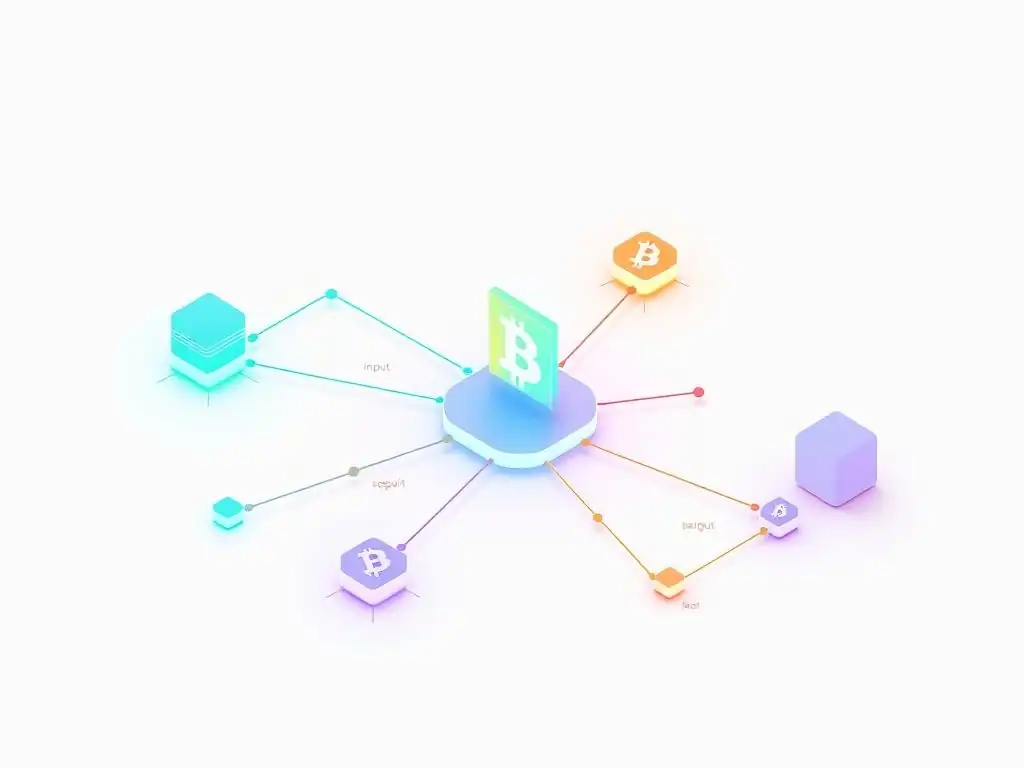
While the basic peer-to-peer transfer is the most common, the Bitcoin protocol supports various transaction types, enabling different functionalities and security features. These variations utilize different scripts to define the conditions under which outputs can be spent.
Standard Transactions: Peer-to-Peer Value Transfer
The most fundamental type is the Pay-to-Public-Key-Hash (P2PKH) transaction. This is the standard transaction used for sending Bitcoin from one address to another. The output script of a P2PKH transaction locks the funds to a recipient's public key hash (what a typical Bitcoin address represents). To spend this output, the spender must provide the corresponding public key and a digital signature created with the associated private key. This transaction type is the backbone of simple value transfer in the Bitcoin transaction process explained.
P2PKH transactions are relatively straightforward and widely supported by wallets. When you send Bitcoin to an address starting with '1', you are typically creating a P2PKH output. While simple, the requirement to reveal the public key when spending a P2PKH output can have minor privacy implications, as all past and future transactions associated with that public key become linkable.
Multi-Signature Transactions: Enhanced Security Measures
Multi-signature (multisig) transactions require more than one signature to spend the funds. Instead of locking funds to a single public key hash, a multisig output locks funds to a set of public keys and specifies a threshold (M of N), meaning M signatures out of a possible N public keys are required to spend the funds. For example, a 2-of-3 multisig requires signatures from any two out of three designated private keys.
Multisig transactions significantly enhance security by eliminating single points of failure. They are commonly used for shared wallets (e.g., by businesses or families), escrow services (where a trusted third party holds one key), or enhanced personal security (e.g., requiring a key on a hardware wallet and another on a phone). While the transaction creation and signing process is more complex, the principle remains the same: valid signatures are needed to unlock the UTXOs, adding a layer of complexity to the Bitcoin transaction process explained.
Pay-to-Script-Hash (P2SH) Transactions
Pay-to-Script-Hash (P2SH) transactions were introduced to make complex script types, like multisig, easier to use and share. Instead of sending funds directly to a complex script, the sender sends funds to the hash of that script. This hash is much shorter and looks like a standard Bitcoin address (starting with '3'). To spend a P2SH output, the spender must provide the original redemption script (the complex script) and the necessary signatures/data that satisfy the conditions of that script.
P2SH addresses abstract away the complexity from the sender and make the transaction data smaller on the blockchain initially, pushing the complexity to the spending phase. This makes complex transaction types more user-friendly and efficient. Multisig addresses starting with '3' are often P2SH addresses. SegWit transactions also commonly use P2SH wrappers (P2WPKH-in-P2SH or P2WSH-in-P2SH) for backward compatibility with older wallets, further illustrating the versatility enabled by different transaction types within the Bitcoin transaction process explained.
Potential Issues and Challenges in Bitcoin Transactions
While the Bitcoin transaction process is designed to be robust, it is not without potential issues and challenges. Understanding these can provide a more complete picture of the network's operational complexities.
Transaction Malleability: Explanation and Mitigation Strategies
Transaction malleability refers to the possibility that a third party (or even a recipient) could alter a transaction's unique identifier (TxID) before it is confirmed on the blockchain, without invalidating the transaction itself. This is possible because the original method of calculating the TxID included the transaction's digital signature, and certain minor modifications to the signature could result in a different TxID while still being a valid signature. If a sender relied on the original TxID remaining constant after broadcasting but before confirmation (e.g., for tracking or linking transactions), this change could cause issues.
A notable historical instance involved the Mt. Gox exchange, which was reportedly affected by malleability attacks that allowed attackers to claim they hadn't received Bitcoin withdrawals by presenting a modified TxID, sometimes leading to double spends. The primary mitigation strategy implemented in Bitcoin is Segregated Witness (SegWit). SegWit moves the transaction signature data to a separate structure that is not included in the calculation of the TxID. This makes the TxID immutable once the transaction is created and broadcast, effectively resolving transaction malleability issues for SegWit transactions and strengthening the integrity of the Bitcoin transaction process explained.
Scalability Issues: Addressing Transaction Throughput Limitations
One of the most widely discussed challenges for Bitcoin is its scalability – its ability to handle a large volume of transactions. As mentioned regarding block size limits, the base layer of Bitcoin (the blockchain itself) can only process a limited number of transactions per second, estimated to be around 3-7. This limitation becomes apparent during periods of high demand, leading to increased transaction fees and confirmation times as users compete for limited block space.
Various solutions are being developed and implemented to address these scalability issues. Layer-2 solutions, such as the Lightning Network, are designed to handle a high volume of transactions off-chain, settling the net result on the main blockchain periodically. Other proposals involve changes to the base layer protocol, though these are often contentious due to the need for network-wide consensus. Improving scalability is crucial for Bitcoin to function as a widely used medium of exchange, impacting the efficiency of the blockchain transaction process explained.
Transaction Reversibility: The Immutability Trade-off
A core feature of confirmed Bitcoin transactions is their immutability – they cannot be reversed or altered once added to the blockchain and confirmed. This is a significant advantage for censorship resistance and finality but can be a disadvantage in cases of error, fraud, or dispute. If you send Bitcoin to the wrong address, or if a counterparty defrauds you after receiving confirmed funds, there is generally no mechanism within the Bitcoin protocol to reverse the transaction.
This immutability represents a fundamental trade-off compared to traditional financial systems, which offer chargebacks and recourse mechanisms. While this places a greater responsibility on users to ensure the accuracy of transaction details and the trustworthiness of counterparties, it also makes Bitcoin highly resistant to censorship and provides absolute finality for payments. Users must exercise caution and verify details carefully when engaging in the Bitcoin transaction process explained.
The Future of Bitcoin Transactions: Innovations and Advancements
The Bitcoin protocol is not static. While changes are slow and require broad consensus, ongoing research and development aim to improve the efficiency, privacy, and capabilities of Bitcoin transactions.
Layer-2 Scaling Solutions: Examples: Lightning Network
Layer-2 scaling solutions are built on top of the Bitcoin blockchain and are designed to handle transactions off the main chain. The most prominent example is the Lightning Network. The Lightning Network creates payment channels between users. Once a channel is opened (which requires an on-chain transaction), users can send an unlimited number of transactions instantly and with very low fees within that channel, without broadcasting each one to the main blockchain. Only when the channel is closed is the final net balance settled in an on-chain transaction.
The Lightning Network significantly increases transaction throughput and reduces costs for micropayments and frequent transfers. It allows for routing payments through a network of connected channels, even if the sender and receiver don't have a direct channel open. While still under development and adoption, Layer-2 solutions like Lightning are seen as crucial for enabling Bitcoin to scale to potentially billions of users, fundamentally changing how the Bitcoin transaction process explained might operate for everyday payments.
Schnorr Signatures: Improving Security and Efficiency
Schnorr signatures are a cryptographic signature scheme that offers several advantages over the ECDSA signatures currently used in Bitcoin. One key benefit is linearity, which allows for the aggregation of multiple signatures within a single transaction. This means that in complex transactions, like multisig or transactions with multiple inputs, multiple signatures can be combined into a single, smaller signature.
Implementing Schnorr signatures (part of the Taproot upgrade) makes transactions with multiple inputs or multiple required signatures smaller and cheaper, as well as more private because aggregated signatures look identical to single signatures. This improves efficiency in terms of block space usage and validation time for nodes. Schnorr signatures enhance the security and privacy aspects of the Bitcoin transaction process explained.
Taproot: Enhancing Privacy and Scripting Capabilities
Taproot is a protocol upgrade activated in November 2021 that combined several improvements, most notably Schnorr signatures and Merkleized Alternative Script Trees (MAST). MAST allows for complex spending conditions (scripts) to be committed to an output in a way that only the specific script path being executed needs to be revealed and included in the transaction data when the funds are spent.
Together, Schnorr and Taproot enable more complex smart contracts and multi-signature setups to appear on the blockchain as simple, standard single-signature transactions, provided only the simplest spending condition is met. This significantly improves privacy by making different types of transactions indistinguishable on the blockchain and reduces transaction fees for complex spending conditions. Taproot represents a major step forward in the evolution of the Bitcoin transaction process explained, making it more private, efficient, and flexible for future innovations.
Conclusion: Mastering the Bitcoin Transaction Process
Understanding the Bitcoin transaction process explained in detail, from its initiation and signing to its propagation, validation by miners via Proof-of-Work, inclusion in a block, and eventual confirmation, is fundamental to appreciating the ingenuity and security of the Bitcoin network. Each step is designed to ensure that transactions are authentic, broadcast reliably, validated according to strict rules, and permanently recorded on an immutable ledger.
The journey of a Bitcoin transaction highlights the interplay between cryptographic principles, decentralized network architecture, and economic incentives. While challenges like scalability and transaction fees exist, ongoing innovations such as Layer-2 solutions, Schnorr signatures, and Taproot are continually improving the efficiency, privacy, and capability of Bitcoin transactions. Mastering this process empowers users to participate confidently in the decentralized economy that Bitcoin enables.
Frequently Asked Questions
What are the key steps in a Blockchain transaction process?
The process involves several steps: transaction initiation, verification by nodes, block creation, and finally, confirmation on the blockchain. These steps ensure security and immutability.
How is a Blockchain transaction verified?
Network nodes, often called miners or validators, verify transactions by solving complex cryptographic puzzles. This process, known as consensus mechanism, ensures the transaction's validity.
What role do blocks play in the Blockchain transaction process?
Verified transactions are grouped together into blocks, which are then linked to the previous block, forming a chain. This creates a permanent and tamper-proof record.
What does "confirmation" mean in the context of Blockchain transactions?
Confirmation refers to the number of blocks added to the chain after a transaction's block. More confirmations mean greater security and reduced risk of reversal.
How does Blockchain enhance transparency in transactions?
Every transaction recorded on a Blockchain is publicly viewable on the ledger. This allows anyone to trace the flow of funds, enhancing trust and accountability.
Final Reflection: Unlocking the Future with Blockchain Transparency
The journey of a blockchain transaction, from its initial spark to its immutable confirmation, is more than just a technical process; it's a testament to the power of decentralized trust in an increasingly interconnected world. Understanding this process is no longer a niche interest, but a crucial step towards navigating the future of finance, supply chains, and countless other industries poised for blockchain disruption.
The impact of blockchain technology extends far beyond cryptocurrency. Its potential to revolutionize data security and transparency is undeniable, offering a pathway to greater accountability and efficiency across various sectors. As we witness its integration into diverse applications, it's clear that blockchain is not just a trend, but a fundamental shift in how we interact with information and value. The blockchain is to transactions what the internet is to information. It is a foundational technology that has the potential to create new levels of trust and transparency in a wide range of industries.
Now, armed with a deeper understanding of the blockchain transaction process, consider how you can leverage this knowledge. Reflect on the ways blockchain can improve transparency and security in your own field, and explore opportunities to contribute to this transformative technology. The future of blockchain is being written now, and your understanding is a vital part of that narrative.
Decode the Blockchain: Your Next Move!
Thanks for exploring the world of blockchain transactions with Blockchain Trends! Now that you've learned how transactions are initiated and confirmed, it's time to apply that knowledge and delve deeper into this innovative technology.
Take these next steps to expand your understanding:
- Use a reputable blockchain explorer to look up a recent transaction. Examine the details of inputs, outputs, and confirmation status to reinforce your comprehension.
- Join the discussion on our forum about how transaction speed affects different applications. Are there scenarios where slower confirmation times might actually be beneficial?
- Share this article with a friend interested in blockchain technology to help them start their learning journey.
With your new knowledge of how transactions work, which blockchain development or project will you support next? Share your thoughts in the comments below!
Leave a Reply