
Decentralized Identity and the Empowerment of Underserved Populations

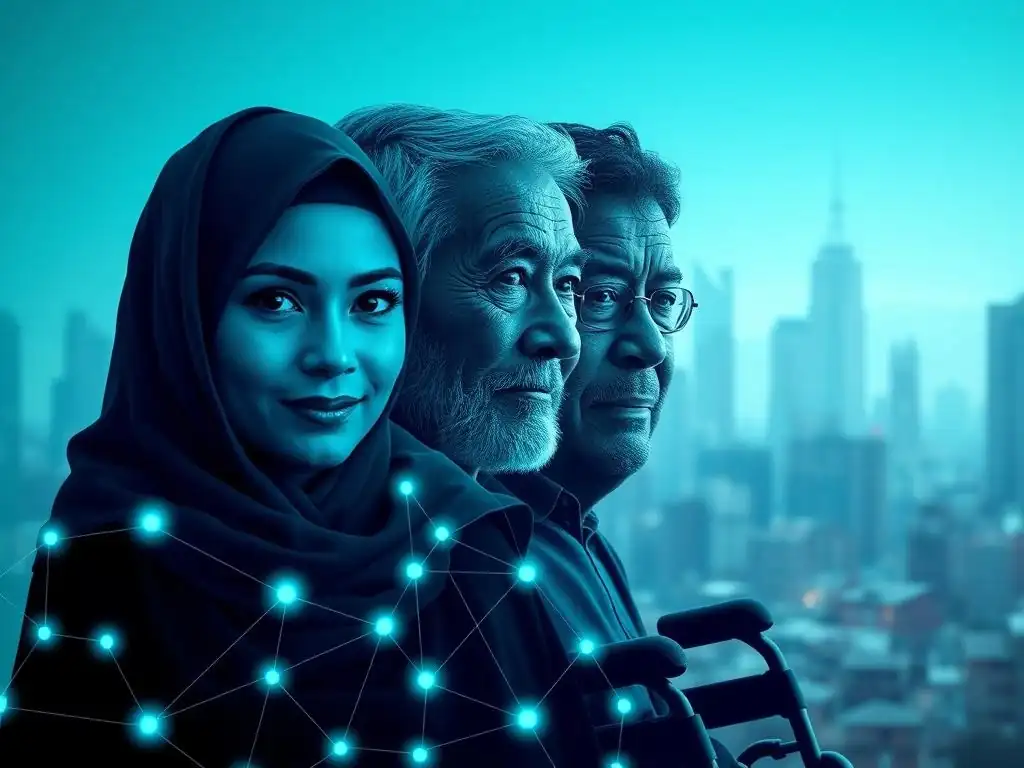
Welcome to Blockchain Trends, your guide to understanding the revolutionary potential of blockchain technology.
Are you ready to explore how blockchain is moving beyond cryptocurrencies and transforming industries worldwide? In this article, we delve into a critical application with profound social impact: blockchain identity for underserved populations. Discover how decentralized identity solutions can empower individuals and communities currently excluded from traditional systems, offering a path to greater inclusion and opportunity. Intrigued? Read on to uncover the challenges, innovations, and the bright future of this vital application of blockchain.
Decentralized Identity and the Empowerment of Underserved Populations
- Introduction: Blockchain Identity for Underserved Communities
- Understanding Decentralized Identity and Blockchain Technology
-
The Impact of Decentralized Identity on Underserved Populations
- Financial Inclusion: Accessing Banking and Credit Services
- Healthcare Access: Secure and Portable Medical Records
- Educational Opportunities: Verifiable Credentials and Skills Recognition
- Land Rights and Property Ownership: Establishing Secure Records on the Blockchain
- Humanitarian Aid and Disaster Relief: Efficient and Transparent Distribution
- Case Studies: Blockchain Identity Solutions in Action
- Overcoming the Challenges of Implementing Blockchain Identity for Underserved Populations
- The Future of Blockchain Identity and Underserved Communities
- Conclusion: Empowering Underserved Populations Through Blockchain Identity
-
Frequently Asked Questions
- What is decentralized identity (DID) and how does it relate to underserved populations?
- How can blockchain technology specifically address the identity challenges faced by underserved populations?
- What are some practical applications of blockchain-based identity solutions for underserved populations?
- What are the main regulatory and ethical considerations surrounding the implementation of blockchain identity solutions for underserved populations?
- What is the future outlook for blockchain identity in empowering underserved populations, and what are the potential challenges?
- Final Reflection: Blockchain Identity and a Future of Inclusion
- Unlock Your Potential: Join the Decentralized Revolution!
Introduction: Blockchain Identity for Underserved Communities
The Promise of Decentralized Identity (DID)
Decentralized Identity (DID) represents a paradigm shift in how individuals manage their personal information, moving away from centralized databases controlled by governments or corporations towards a user-centric model. At its core, DID empowers individuals to own and control their digital identities, deciding who can access their data and under what conditions.
This is achieved by leveraging technologies like blockchain, which provide a secure, immutable, and transparent ledger for verifying identity claims without requiring a central authority. The promise is a world where identity is portable, persistent, and universally verifiable, opening doors to opportunities previously inaccessible due to a lack of formal identification.
For underserved populations, who often lack traditional forms of identification such as birth certificates or national IDs, the potential of DID is particularly profound. It offers a pathway to inclusion by providing a verifiable digital identity that is not tied to physical documents or geographical location. This self-sovereign identity can serve as a foundational layer for accessing essential services, participating in the digital economy, and exercising fundamental rights. The development of robust and user-friendly DID systems built on blockchain technology holds the key to unlocking the potential of billions globally who are currently excluded from formal systems.
Challenges Faced by Underserved Populations: A Need for Secure and Accessible Identity
Globally, it is estimated that over 1 billion people lack official proof of identity, with a significant portion residing in underserved communities, including refugees, stateless persons, rural populations, and those living in poverty. This lack of formal identity creates significant barriers to accessing basic services. Without identification, individuals struggle to open bank accounts, register for healthcare, enroll children in school, claim property rights, or even receive humanitarian aid during crises. The inability to prove who they are traps them in cycles of marginalization and vulnerability, limiting their economic opportunities and social mobility.
Furthermore, even when identity documents exist, they can be easily lost, stolen, or destroyed, especially in conflict zones or natural disasters. Centralized identity systems are also susceptible to data breaches, surveillance, and control by potentially oppressive regimes. Underserved populations are often the most vulnerable to these risks, facing discrimination or exploitation if their identity data is compromised or misused. Therefore, there is a critical need for secure, resilient, and accessible identity solutions that prioritize individual privacy and control, which is precisely where blockchain identity for underserved populations offers a compelling alternative.
Understanding Decentralized Identity and Blockchain Technology
What is Decentralized Identity (DID)? Key Concepts Explained
Decentralized Identity (DID) is an identity framework that allows individuals and organizations to create and manage their own digital identities without relying on a centralized authority. The core principle is self-sovereignty, meaning the individual has ultimate control over their identity data. Unlike traditional systems where identity is issued and controlled by governments or corporations (like passports or driver's licenses), DID uses cryptographic keys to link an individual to a unique identifier (the DID) that resides on a decentralized network, often a blockchain.
Key concepts in DID include DIDs themselves (unique identifiers), Verifiable Credentials (VCs), and DID Documents. Verifiable Credentials are digital attestations issued by trusted entities (like a university, a bank, or a healthcare provider) about an individual's attributes (e.g., a degree, account ownership, vaccination status).
These VCs are cryptographically signed by the issuer and can be presented by the individual (the holder) to a verifier, who can cryptographically prove that the credential was issued by the claimed issuer and has not been tampered with, all without needing permission from a central authority. The DID Document contains public keys and service endpoints associated with the DID, enabling secure communication and interaction within the decentralized identity ecosystem.
How Blockchain Enables Secure and Self-Sovereign Identity
Blockchain technology provides the foundational infrastructure for many DID systems by offering a decentralized, immutable, and transparent ledger. When a DID is anchored to a blockchain, the public key associated with that DID and potentially the location of the DID Document are recorded on the distributed ledger. This anchoring process makes the DID persistent and globally resolvable; anyone can look up the public information associated with a DID on the blockchain, proving its existence and validity without relying on a single point of failure or control.
The immutability of the blockchain is crucial for security. Once a DID is registered or a change is recorded (like updating a public key), it is extremely difficult to alter or delete, protecting against censorship or tampering. Furthermore, the distributed nature of the blockchain means there is no central database to hack or control, enhancing resilience and privacy compared to traditional identity systems.
While the sensitive personal data itself is typically not stored on the public blockchain (for privacy reasons), the blockchain acts as a secure public registry for DIDs and related metadata, enabling the verification of identity claims and the secure management of cryptographic keys that underpin self-sovereign identity. This robust infrastructure is vital for building blockchain identity for underserved populations where trust in centralized systems may be low or infrastructure is unreliable.
Benefits of Blockchain-Based Identity Solutions
Blockchain-based identity solutions offer a multitude of benefits, particularly when considering blockchain identity for underserved populations. Firstly, they enhance security and privacy. By allowing individuals to control their own data and share only what is necessary for a specific transaction using Verifiable Credentials, the risk of mass data breaches and identity theft is significantly reduced compared to centralized databases. Users are not forced to share excessive personal information to prove a single attribute, like their age or professional certification.
Secondly, these solutions promote accessibility and portability. A blockchain identity is not tied to a physical document that can be lost or destroyed, nor is it limited by geographical borders. An individual can potentially access their digital identity and associated credentials from anywhere with internet access, using a secure digital wallet on a smartphone or other device.
This is transformative for migrants, refugees, and those in remote areas. Furthermore, blockchain-based identities can be more resilient to corruption and discrimination, as verification is based on cryptographic proof rather than potentially biased human gatekeepers, providing a more equitable pathway for underserved communities to access services.
The Impact of Decentralized Identity on Underserved Populations
Financial Inclusion: Accessing Banking and Credit Services
Lack of formal identification is a major barrier to financial inclusion. Without a recognized ID, individuals cannot open bank accounts, access credit, send or receive remittances formally, or secure loans to start businesses. This forces many into informal, often precarious, financial systems. Decentralized Identity, powered by blockchain, can provide a verifiable digital identity that meets Know Your Customer (KYC) and Anti-Money Laundering (AML) regulations without requiring traditional documents. For instance, a trusted NGO or local authority could issue a Verifiable Credential attesting to a person's identity based on community knowledge or alternative verification methods.
With a secure, verifiable DID, individuals in underserved populations can gain access to formal financial services. They could open digital wallets, receive payments, build a transaction history, and potentially access microfinance or small business loans. Projects exploring blockchain identity for underserved populations are demonstrating this potential. For example, initiatives using blockchain identity in regions with low traditional banking penetration aim to onboard individuals onto digital financial platforms, allowing them to participate in the formal economy. This access to financial tools is crucial for poverty reduction and economic empowerment, enabling savings, investment, and resilience against financial shocks.
Healthcare Access: Secure and Portable Medical Records
Accessing adequate healthcare can be challenging for underserved populations, especially those who are mobile or lack permanent addresses. Medical history is often fragmented or non-existent without a formal identity or consistent healthcare provider. Decentralized Identity allows individuals to securely store and manage their health records as Verifiable Credentials in their digital wallet. They can then share specific parts of their medical history (e.g., vaccination records, allergies, past diagnoses) with healthcare providers as needed, regardless of location or facility.
This portability and control over health data can significantly improve healthcare outcomes for marginalized groups. A refugee arriving in a new country could present their vaccination history credential, allowing them to receive appropriate care immediately without repeating tests or relying on unreliable verbal accounts. In remote areas, mobile clinics could update a patient's health credentials on the spot, creating a continuous, accessible record. This enhances patient safety, improves the efficiency of care delivery, and empowers individuals to take a more active role in managing their health, directly addressing critical needs within underserved communities.
Educational Opportunities: Verifiable Credentials and Skills Recognition
Proof of education and skills is vital for employment and further learning, yet traditional certificates can be lost, difficult to verify, or not recognized across borders. For underserved populations, particularly those displaced by conflict or living in areas with disrupted educational systems, proving their educational background is a major hurdle. Blockchain-based Verifiable Credentials can digitally represent academic degrees, course completions, vocational training certifications, and even informal skills learned. These digital credentials are cryptographically signed by the issuing institution and stored securely in the individual's DID wallet.
This system allows individuals to easily share verifiable proof of their qualifications with potential employers or educational institutions anywhere in the world. An employer can instantly verify the authenticity of a degree credential presented by a job applicant from a different country, streamlining the hiring process.
This is especially valuable for refugees or migrants seeking to utilize their existing skills. Furthermore, it opens possibilities for recognizing non-formal learning and skills gained outside traditional institutions, providing pathways to opportunity for those who have been excluded from formal education systems, thereby directly impacting the potential of blockchain identity for underserved populations in accessing better livelihoods.
Land Rights and Property Ownership: Establishing Secure Records on the Blockchain
In many developing regions, land ownership records are centralized, paper-based, incomplete, or non-existent, leaving marginalized populations vulnerable to land grabbing, displacement, and inability to use land as collateral for loans. Establishing secure and verifiable land rights is a critical step towards economic stability and security. Blockchain technology offers a robust solution for creating immutable and transparent land registries. By linking land parcels to DIDs of their owners or communities and recording ownership details and transactions on a blockchain, a secure and auditable record can be established.
This approach provides individuals in underserved communities with undeniable proof of their property rights, protecting them against fraudulent claims and arbitrary evictions. For example, a project in Ghana explored using blockchain to register land titles, aiming to reduce disputes and empower smallholder farmers. While complex due to legal and social factors, the technical potential is clear.
Secure land rights also enable individuals to leverage their property as an asset, accessing credit to invest in their farms or businesses. Establishing blockchain identity for underserved populations in conjunction with property rights on a distributed ledger can significantly improve economic security and social stability.
Humanitarian Aid and Disaster Relief: Efficient and Transparent Distribution
Delivering humanitarian aid effectively and transparently to vulnerable populations, especially in disaster zones or conflict areas, is a major challenge. Identifying recipients, preventing diversion of aid, and ensuring accountability are complex logistical hurdles. Decentralized Identity offers a powerful tool to address these issues. By providing a verifiable digital identity to aid recipients, aid organizations can ensure that resources reach the intended individuals directly and securely. For instance, refugees in a camp could have a DID linked to Verifiable Credentials indicating their eligibility for specific aid packages (e.g., food rations, medical supplies).
Organizations like the World Food Programme have piloted using blockchain technology, including elements of decentralized identity, to manage aid distribution in camps like Kakuma in Kenya. By recording transactions on the blockchain linked to recipient identities, they can track the flow of aid with unprecedented transparency and efficiency. This reduces administrative costs, minimizes fraud and corruption, and ensures that aid is delivered promptly to those who need it most. Leveraging blockchain identity for underserved populations in humanitarian contexts provides a more dignified and effective way to provide assistance during times of crisis.
Case Studies: Blockchain Identity Solutions in Action

Kakuma Refugee Camp: Using DID for Aid Distribution and Identity Verification
One of the most prominent examples of blockchain identity principles being applied in a humanitarian context is the World Food Programme's (WFP) Building Blocks program in the Kakuma refugee camp in Kenya. While not a full self-sovereign DID system initially, it utilizes a private blockchain to manage aid distribution and identity verification for refugees. Refugees are enrolled and linked to a unique digital identity recorded on the blockchain. This identity is then used to authenticate transactions when they redeem aid, such as food vouchers, at local shops within the camp.
This system replaced traditional paper vouchers and cash, significantly improving efficiency and security. By recording transactions on the blockchain, WFP gained a transparent and immutable ledger of aid distribution, allowing for better auditing and reduced opportunities for fraud.
The digital identity ensures that only registered refugees can access the aid allocated to them. While refugees did not initially have full control over this identity (it was managed by WFP), the program demonstrated the practical benefits of using distributed ledger technology for verifiable identity and resource allocation in challenging environments, paving the way for more decentralized approaches to blockchain identity for underserved populations.
Estonia's e-Residency Program: Providing Digital Identity for Global Entrepreneurs
Estonia's e-Residency program, launched in 2014, provides a state-issued digital identity to non-residents, enabling them to establish and run an EU-based company remotely and access various Estonian e-services. While not a pure decentralized identity system in the sense of being blockchain-anchored, it incorporates principles of digital identity verification and access to services that are relevant to empowering individuals through identity. E-residents receive a smart ID card with cryptographic keys that serve as their secure digital identity for authentication and digital signing.
This program has significantly empowered entrepreneurs globally, allowing individuals from countries with unstable economies or complex bureaucracy to easily establish legitimate businesses within the EU framework. As of 2023, Estonia had over 100,000 e-residents who have started more than 20,000 companies.
While the core identity is centralized with the Estonian government, the use of cryptographic keys and digital signatures for secure interactions aligns with the goals of enabling digital participation through verifiable identity. It serves as a successful large-scale example of how digital identity can transcend geographical barriers and empower individuals economically, providing valuable lessons for implementing blockchain identity for underserved populations on a national or international scale.
Lessons Learned and Best Practices
Implementing blockchain identity solutions, especially for underserved populations, comes with unique challenges and valuable lessons. A key lesson learned is the importance of user-centric design and accessibility. Solutions must be simple to use, require minimal technical expertise, and function on affordable devices, potentially including offline capabilities or community-based access points. Relying solely on smartphone ownership in areas with low digital literacy or connectivity is a significant barrier. Projects must prioritize intuitive interfaces and robust user support.
Another best practice is fostering collaboration and building trust among stakeholders. Successful implementations often involve partnerships between technology providers, NGOs, governments, and local communities.
Engaging with the target population from the outset is crucial to understand their needs, build trust in the new technology, and ensure the solution is culturally appropriate and addresses real-world problems. Furthermore, focusing on interoperability and open standards is essential to avoid vendor lock-in and ensure that different blockchain identity systems can communicate, allowing individuals to use their identity across various services and platforms, which is critical for the widespread adoption of blockchain identity for underserved populations.
Overcoming the Challenges of Implementing Blockchain Identity for Underserved Populations
Addressing Digital Literacy and Access to Technology
A primary hurdle in deploying blockchain identity for underserved populations is the significant disparity in digital literacy and access to technology. Many individuals in these communities may not own smartphones, have reliable internet access, or possess the skills needed to manage complex digital wallets and cryptographic keys. Simply providing a sophisticated digital identity solution without addressing these foundational issues will exclude those who need it most.
Overcoming this requires multi-faceted approaches. This includes developing user interfaces that are extremely simple and intuitive, potentially relying on biometric authentication rather than complex passwords or seed phrases. It also necessitates investing in digital literacy training programs tailored to the specific needs and languages of the target communities.
Furthermore, solutions must explore alternative access methods, such as community-shared devices, partnerships with local organizations providing digital access points, or even integrating with basic feature phones where smartphone penetration is low. Innovative approaches combining digital identity with accessible physical touchpoints or community-based facilitators are vital to bridge the digital divide and ensure equitable access to blockchain identity for underserved populations.
Ensuring Data Privacy and Security
While blockchain-based DID offers enhanced privacy compared to centralized systems, ensuring data privacy and security for vulnerable populations remains paramount. Underserved individuals are often at higher risk of surveillance, coercion, or exploitation. The design of the DID system must prioritize user control over data sharing, ensuring that individuals only reveal the minimum information necessary for a given transaction (e.g., using zero-knowledge proofs to prove they are over 18 without revealing their birth date).
Furthermore, the security of the user's private keys is critical. Losing access to keys or having them compromised could result in losing control of their identity. Solutions must incorporate robust, yet user-friendly, key management strategies, potentially including social recovery mechanisms or secure hardware wallets designed for durability and ease of use. Education on digital security best practices is also essential. Developers and implementing organizations must adhere to strict data protection regulations and ethical guidelines, ensuring that the technology is used to empower, not endanger, individuals seeking blockchain identity for underserved populations.
The regulatory landscape surrounding digital identity and blockchain technology is complex and varies significantly across jurisdictions. For blockchain identity solutions to be widely adopted and recognized, they must align with existing legal frameworks related to identity verification (e.g., KYC/AML), data protection (e.g., GDPR, local privacy laws), and the legal recognition of digital signatures and credentials. This is particularly challenging when implementing solutions across multiple countries or for populations that cross borders, like refugees.
Navigating this requires proactive engagement with governments, regulatory bodies, and international organizations. Advocacy for the legal recognition of decentralized identifiers and verifiable credentials is necessary. Developers must design systems with compliance in mind, allowing for auditability where required by law while still preserving user privacy. Establishing trust with authorities by demonstrating the security, reliability, and compliance capabilities of blockchain identity systems is key to gaining official acceptance and enabling the widespread use of blockchain identity for underserved populations within formal systems.
Building Trust and Collaboration Among Stakeholders
Successful implementation of blockchain identity for underserved populations hinges on building trust and fostering strong collaboration among a diverse group of stakeholders. This includes the target population themselves, local community leaders, NGOs, international aid organizations, government agencies, technology providers, and financial institutions. Without trust from the users, adoption will be minimal. Without collaboration among implementing partners, efforts will be fragmented and unsustainable.
Trust must be built through transparency, open communication, and demonstrating clear benefits to the community. Engaging local leaders and organizations to champion the initiative can significantly increase acceptance. Collaboration among implementing partners ensures that technical solutions are integrated with on-the-ground support, training, and existing service delivery channels.
For example, a DID system for healthcare access needs buy-in from local clinics and health workers. A solution for financial inclusion requires partnerships with banks or mobile money operators. A unified effort, driven by the needs of underserved communities and built on a foundation of trust and mutual goals, is essential for the long-term success and scaling of blockchain identity for underserved populations.
The Future of Blockchain Identity and Underserved Communities
Emerging Technologies and Innovations in Decentralized Identity
The field of Decentralized Identity is rapidly evolving, with several emerging technologies and innovations poised to enhance its capabilities and accessibility for underserved populations. Zero-knowledge proofs (ZKPs) are a key area of development, allowing individuals to prove a statement is true (e.g., "I am over 18") without revealing any additional information (e.g., the exact date of birth). This significantly enhances privacy, which is crucial for vulnerable groups who may fear revealing personal details.
Another area is the development of interoperability standards, such as those being defined by the W3C (World Wide Web Consortium) for DIDs and Verifiable Credentials. These standards aim to ensure that identities and credentials issued on one platform can be recognized and verified by others, creating a truly interconnected decentralized identity ecosystem. Furthermore, innovations in mobile-first design, secure hardware elements within smartphones, and alternative authentication methods like biometrics are making managing digital identities more secure and user-friendly, directly addressing the accessibility challenges faced by underserved communities and improving the viability of blockchain identity for underserved populations.
The Role of Blockchain in Achieving Sustainable Development Goals (SDGs)
Blockchain identity, particularly for underserved populations, has a significant role to play in achieving several of the United Nations Sustainable Development Goals (SDGs). Providing a legal identity (SDG 16.9) is a fundamental enabler for accessing other rights and services. By helping to provide verifiable digital identities to those currently undocumented, blockchain directly contributes to this goal.
Furthermore, blockchain identity supports SDG 1 (No Poverty) and SDG 8 (Decent Work and Economic Growth) by enabling financial inclusion and access to employment opportunities through verifiable credentials. It contributes to SDG 3 (Good Health and Well-being) by facilitating portable health records and access to healthcare.
It can support SDG 5 (Gender Equality) by empowering women who are disproportionately affected by lack of identity. By providing a secure, private, and accessible foundation for participation in the digital and physical world, blockchain identity for underserved populations acts as a powerful tool for inclusive development and poverty reduction, directly aligning with the global agenda for sustainable growth.
Scaling and Adoption Strategies for Widespread Impact
Achieving widespread adoption and scaling of blockchain identity solutions for underserved populations requires strategic planning and collaborative efforts. One key strategy is focusing on use cases that provide immediate, tangible benefits to users, such as receiving aid, accessing mobile money, or verifying vaccination status. Demonstrating value early on encourages adoption and trust within the community.
Another crucial strategy involves building partnerships with large-scale organizations already working with these populations, such as international NGOs, UN agencies, and national governments. Integrating blockchain identity into existing programs and infrastructure can accelerate deployment and reach. Furthermore, advocating for supportive policy and regulatory environments is essential for enabling legal recognition and interoperability. Finally, investing in open-source technologies and fostering a collaborative ecosystem of developers and implementers can drive innovation and reduce costs, making blockchain identity for underserved populations more accessible and sustainable in the long term.
Conclusion: Empowering Underserved Populations Through Blockchain Identity
The Transformative Potential of Decentralized Identity
The transformative potential of Decentralized Identity, underpinned by blockchain technology, for underserved populations is immense. It offers a pathway to dismantle systemic barriers rooted in the lack of formal identification, providing individuals with a verifiable, portable, and self-sovereign digital identity. This fundamental shift can unlock access to essential services such as banking, healthcare, education, and legal rights, paving the way for greater economic opportunity, social inclusion, and personal dignity.
By enabling individuals to control their own identity data and share it securely and selectively, blockchain identity solutions empower the most vulnerable, reducing their susceptibility to exploitation and discrimination. The examples in humanitarian aid, financial inclusion, and land rights demonstrate that while challenges exist, the practical application of blockchain identity for underserved populations is not only feasible but also holds the promise of fundamentally improving lives on a global scale, moving towards a more equitable and inclusive future.
Call to Action: Promoting Equitable Access to Identity Solutions
Realizing the full potential of blockchain identity for underserved populations requires concerted effort from all stakeholders. It is imperative to invest in accessible technology and digital literacy programs tailored to the needs of marginalized communities. We must advocate for supportive regulatory frameworks that recognize and integrate decentralized identity solutions.
Furthermore, fostering collaboration between technology developers, humanitarian organizations, governments, and the communities themselves is crucial to build trust and ensure solutions are user-centric and sustainable. Promoting equitable access to secure, verifiable identity is a critical step towards empowering underserved populations and ensuring that no one is left behind in the digital age.
Frequently Asked Questions
What is decentralized identity (DID) and how does it relate to underserved populations?
Decentralized Identity (DID) allows individuals to control their own digital identity without relying on centralized authorities. This is crucial for underserved populations who often lack traditional forms of identification, enabling access to essential services.
How can blockchain technology specifically address the identity challenges faced by underserved populations?
Blockchain provides a secure and immutable ledger for storing identity credentials. This can help overcome issues like lack of documentation and identity theft, which disproportionately affect underserved communities.
What are some practical applications of blockchain-based identity solutions for underserved populations?
These solutions can facilitate access to financial services, healthcare, and education. By providing a verifiable and portable identity, individuals can overcome bureaucratic barriers and participate more fully in society.
What are the main regulatory and ethical considerations surrounding the implementation of blockchain identity solutions for underserved populations?
Data privacy and security are paramount concerns. Ensuring equitable access to technology and preventing the misuse of personal information are also crucial ethical considerations.
What is the future outlook for blockchain identity in empowering underserved populations, and what are the potential challenges?
The future involves wider adoption and integration with existing systems. Challenges include scalability, interoperability, and addressing the digital divide to ensure inclusive access for all.
Final Reflection: Blockchain Identity and a Future of Inclusion
The exploration of decentralized identity and its potential to empower underserved populations culminates in a crucial realization: access to verifiable identity is not just a technological advancement, but a fundamental human right. In a world increasingly reliant on digital interactions, the lack of a secure and universally recognized identity excludes millions from essential services, economic opportunities, and even basic civic participation. Blockchain technology offers a powerful solution, providing a pathway towards a more equitable and inclusive future.
This journey into decentralized identity has profoundly illuminated the ongoing struggle for recognition and agency faced by marginalized communities. The ability to control one's own digital identity, free from centralized control and potential discrimination, represents a paradigm shift in how we approach social inclusion. As we continue to navigate the complexities of a digital world, the words of Nelson Mandela resonate deeply: To deny people their human rights is to challenge their very humanity.
Decentralized identity offers a chance to restore that humanity and empower individuals to participate fully in society.
Now, as you consider the potential of blockchain identity, I urge you to reflect on your own role in building a more inclusive future. How can you support initiatives that promote digital literacy and access to decentralized identity solutions for underserved populations? How can you advocate for policies that protect individual privacy and promote equitable access to digital resources? The power to shape a more just and equitable world lies within each of us. Let us embrace the transformative potential of blockchain identity and work together to ensure that no one is left behind.
Unlock Your Potential: Join the Decentralized Revolution!
Thanks for taking the time to explore how decentralized identity (DID) can empower underserved populations. You've now gained valuable insights into the transformative potential of owning your digital identity. Ready to make a difference?
Here are a few ways you can get involved and champion this movement:
- Create your own DID: Explore platforms like Metamask or similar DID providers and take the first step towards owning your digital identity. Experiment with the technology firsthand!
- Share this article with your network, especially those working in social justice, humanitarian aid, or technology, and spark a conversation about the possibilities.
- Research organizations already using DIDs to support underserved communities. Reach out to them and see how you can contribute your skills or resources.
What specific challenge facing an underserved community do you believe decentralized identity could best address, and how would you propose implementing it? Let's discuss in the comments below!
Leave a Reply