
Investing in Privacy: The Growing Market for Blockchain Data Protection Solutions


Welcome to Blockchain Trends, your compass in the rapidly evolving world of decentralized technologies. Beyond the hype of cryptocurrencies, blockchain is reshaping industries, from finance to supply chains. The need for robust data security is paramount in this revolution.
Are you ready to delve into the burgeoning field of blockchain data protection solutions? In this article, we explore the growing market, its key players, and the crucial role it plays in securing the future of decentralized data. Discover why privacy is no longer an option, but a necessity, and how the blockchain data protection solutions market is poised to redefine trust in the digital age. Let's begin!
Investing in Privacy: The Growing Market for Blockchain Data Protection Solutions
- Introduction: The Convergence of Blockchain and Data Privacy
- Understanding the Need for Blockchain-Based Data Protection
- Key Drivers of the Blockchain Data Protection Solutions Market
- Types of Blockchain Data Protection Solutions
- Major Players in the Blockchain Data Protection Market
- Use Cases: Applications of Blockchain Data Protection
- Investment Opportunities in Blockchain Data Protection
- Challenges and Future Trends in the Market
- Conclusion: The Future of Data Privacy is Decentralized
-
Frequently Asked Questions
- What are the primary drivers fueling the growth of the Blockchain data protection solutions market?
- How do blockchain data protection solutions differ from traditional data security methods?
- What are some examples of real-world applications of blockchain data protection solutions beyond finance?
- What are the main challenges facing the adoption of blockchain data protection solutions?
- How is the regulatory landscape impacting the blockchain data protection solutions market?
- Final Reflection: Embracing the Future of Secure Data
- Embrace Data Sovereignty: Unlock Your Privacy Potential!
Introduction: The Convergence of Blockchain and Data Privacy
The Rising Importance of Data Privacy in the Digital Age
In an era defined by ubiquitous digital interaction, the sheer volume of personal and sensitive data being generated, collected, and processed has exploded. This proliferation of data has simultaneously amplified its value and the risks associated with its handling. High-profile data breaches, unauthorized data usage, and growing concerns about surveillance have propelled data privacy from a niche technical concern to a fundamental societal and regulatory imperative. Individuals and organizations alike are demanding greater control and transparency over how their information is managed, leading to a critical need for robust data protection frameworks and technologies.
This heightened awareness is driven by a series of incidents that have exposed the vulnerabilities of traditional centralized data storage models. Reports indicate that millions, sometimes billions, of records are compromised in major breaches annually. This constant threat landscape underscores the inadequacy of relying solely on perimeter security and highlights the urgent need for solutions that embed privacy and security directly into the data infrastructure itself. The demand for comprehensive data protection is not just a matter of compliance but a fundamental requirement for building trust in the digital economy.
Blockchain's Role in Addressing Data Security Concerns
Blockchain technology, with its inherent properties of immutability, transparency (in public chains), and decentralization, offers a compelling new paradigm for addressing long-standing data security challenges. By distributing data across a network of nodes rather than storing it in a single, vulnerable location, blockchain reduces the risk of a single point of failure that is common in traditional databases. The cryptographic nature of blockchain transactions ensures data integrity, making it virtually impossible to tamper with records once they are added to the chain without consensus from the network.
While public blockchains are transparent, revealing transaction details, the underlying technology can be adapted to create systems where data remains private yet verifiable. Techniques such as hashing, encryption, and permissioned networks allow organizations to leverage blockchain's security benefits while controlling access to sensitive information. This potential to combine strong security with verifiable integrity makes blockchain a promising foundation for developing advanced blockchain data protection solutions.
Overview of the Blockchain Data Protection Solutions Market
The market for blockchain data protection solutions is emerging rapidly, driven by the confluence of increasing data privacy regulations, the growing adoption of blockchain technology in enterprise settings, and the escalating threat of cyberattacks. This market encompasses a range of technologies and services designed to enhance the privacy, security, and control of data stored or managed using blockchain or distributed ledger technologies. It includes software, protocols, and platforms that enable features like encrypted data storage on-chain, private transactions, decentralized identity management, and privacy-preserving data computation.
Analysts project significant growth in the blockchain data protection solutions market over the next few years, fueled by investment in privacy-enhancing technologies (PETs) and the expansion of blockchain use cases beyond cryptocurrencies. While precise market size figures vary between reports, the consensus points towards a multi-billion dollar market opportunity, indicating strong investor interest and a clear demand from industries like finance, healthcare, and supply chain for solutions that can secure sensitive data while leveraging the benefits of decentralization.
Understanding the Need for Blockchain-Based Data Protection
Challenges with Traditional Data Protection Methods
Traditional data protection relies heavily on centralized security measures such as firewalls, intrusion detection systems, and access controls applied to databases stored in central servers or data centers. While these methods are essential, they often create single points of failure that are attractive targets for malicious actors. A successful breach of a central database can expose massive amounts of sensitive information, leading to significant financial losses, reputational damage, and regulatory penalties. Furthermore, ensuring data integrity and proving that data has not been tampered with over time can be complex and resource-intensive within traditional systems.
Another challenge is the difficulty in providing users with granular control over their data and transparent visibility into how it is accessed and used. Traditional systems are often opaque, making it hard for individuals to exercise their rights regarding their data, such as the right to access or the right to erasure, as mandated by regulations like GDPR. The fragmented nature of data storage across various systems within an organization also complicates efforts to implement consistent and effective data protection policies.
The Inherent Privacy Limitations of Public Blockchains
While blockchain offers robust security and immutability, public blockchains like Bitcoin and Ethereum are inherently transparent. Every transaction, including the sender, receiver, and amount (for cryptocurrencies), is publicly visible on the ledger. While participant identities are typically pseudonymous (represented by wallet addresses), advanced analysis techniques can often link addresses to real-world identities, compromising privacy. This transparency, while beneficial for auditability and trust in permissionless systems, is a significant limitation for use cases involving sensitive personal or proprietary data.
For organizations and applications that handle confidential information, deploying solutions directly on a public, transparent blockchain without additional privacy layers is often not feasible due to regulatory requirements and the need to protect sensitive business or personal data. This limitation has spurred the development of privacy-preserving technologies and protocols specifically designed to enable confidential transactions and data storage on or alongside blockchain networks, driving demand in the blockchain data protection solutions market.
Regulatory Pressures: GDPR, CCPA, and the Demand for Privacy-Enhancing Technologies
The global regulatory landscape is increasingly focused on strengthening data privacy rights. Landmark regulations such as the European Union's General Data Protection Regulation (GDPR) and the California Consumer Privacy Act (CCPA) impose strict requirements on how organizations collect, process, and store personal data. These regulations grant individuals rights over their data, including the right to access, rectify, erase, and port their information, and mandate strong security measures to prevent data breaches. Non-compliance can result in severe penalties, including fines reaching tens of millions of dollars or a significant percentage of global annual revenue.
These regulations are significant drivers for the blockchain data protection solutions market because they necessitate technologies that can provide enhanced data control, transparency, and security. Features like the right to erasure (the "right to be forgotten") pose unique challenges for immutable ledgers, requiring innovative approaches such as data masking, secure off-chain storage with on-chain hashes, or the use of mutable references. The demand for privacy-enhancing technologies (PETs) that can help organizations meet these stringent compliance requirements while exploring the benefits of blockchain is therefore growing rapidly.
Key Drivers of the Blockchain Data Protection Solutions Market
Increasing Data Breaches and Cybersecurity Threats
The escalating frequency and sophistication of cyberattacks, including ransomware, phishing, and direct data breaches, represent a primary driver for the blockchain data protection solutions market. Organizations across all sectors are facing unprecedented threats to their digital assets and sensitive data. The average cost of a data breach has risen consistently, reportedly exceeding $4 million globally in recent years, according to industry reports. These costs include not only direct expenses like forensic investigation and remediation but also legal fees, regulatory fines, and long-term damage to reputation and customer trust.
This persistent threat environment compels businesses to seek more resilient and secure ways to manage data. Blockchain's distributed and immutable nature offers a potential defense against certain types of attacks by making it harder for attackers to alter or delete data undetected. Solutions built on blockchain that incorporate encryption, access control, and verifiable data integrity are increasingly seen as vital tools in a comprehensive cybersecurity strategy, boosting their adoption in the blockchain data protection solutions market.
Growing Adoption of Blockchain in Enterprise Applications
Beyond cryptocurrencies, enterprises are exploring and implementing blockchain technology for a wide array of applications, including supply chain management, trade finance, digital identity, and secure data sharing. As businesses integrate blockchain into their core operations, the need to handle sensitive business data and potentially personal information on these ledgers becomes paramount. For instance, a supply chain solution might track sensitive information about goods, suppliers, or customers.
The expansion of enterprise blockchain adoption directly fuels the demand for blockchain data protection solutions. Companies require ways to leverage the benefits of blockchain—such as transparency and efficiency—while ensuring that confidential data remains private and compliant with regulations. This includes solutions for permissioned access, private transactions within consortium chains, and methods for securely hashing or encrypting data stored on or referenced by the ledger, thereby expanding the addressable market for blockchain data protection solutions.
Demand for Secure and Transparent Data Management Systems
Organizations are increasingly seeking data management systems that combine strong security with enhanced transparency and auditability. Traditional databases often struggle to provide an easily verifiable audit trail of data access and modifications. Blockchain, by its design, creates an immutable and transparent (or verifiably private) record of transactions or data changes, making it an ideal technology for applications requiring high levels of trust and accountability.
Industries like finance, healthcare, and government require systems where data integrity is paramount and where every interaction with sensitive information can be traced and verified. Blockchain data protection solutions enable organizations to build systems where data is not only secured through advanced cryptography but where its provenance and history are also transparently (or confidentially, with verifiable proofs) recorded on a distributed ledger. This unique combination of security, transparency, and auditability is a significant driver for the adoption of these solutions in critical infrastructure and sensitive data environments.
The Rise of Decentralized Finance (DeFi) and Privacy Concerns
The explosion of Decentralized Finance (DeFi) has demonstrated the power of blockchain to create open, permissionless financial systems. However, the transparency of public blockchains used by most DeFi protocols means that all transactions, including trading activities, loan collateral, and yield farming strategies, are publicly visible. While addresses are pseudonymous, sophisticated chain analysis can often reveal the identities of participants, raising significant privacy concerns for both institutional and individual users.
This lack of privacy in many current DeFi applications is a barrier to broader adoption, particularly for institutional players who need to maintain confidentiality regarding their trading strategies and positions. The demand for privacy-preserving DeFi protocols and underlying blockchain data protection solutions that enable confidential transactions and private smart contract execution is growing. This sector represents a significant potential market segment for privacy-focused blockchain technologies and services.
Types of Blockchain Data Protection Solutions
Encryption and Anonymization Techniques for Blockchain
Protecting data on blockchain often involves cryptographic techniques to obscure the actual information while allowing for verification or computation. Encryption ensures that data is unreadable to unauthorized parties. Anonymization techniques aim to remove or obscure identifying information. Combining these within blockchain architectures is key to creating privacy-preserving systems. Solutions range from encrypting data before storing its hash on-chain to more complex methods that allow computation on encrypted data.
The goal is to leverage blockchain's integrity and security features without exposing sensitive plaintext data. This requires careful design to balance the need for privacy with the functional requirements of the application, such as allowing specific parties to access or process the data under defined conditions. These techniques form the bedrock of many advanced blockchain data protection solutions available today.
Homomorphic Encryption on Blockchain
Homomorphic Encryption (HE) is a powerful cryptographic method that allows computations to be performed directly on encrypted data without needing to decrypt it first. The result of the computation remains encrypted and, when eventually decrypted, is the same as the result of performing the operation on the original plaintext data. Applying HE to blockchain environments would allow smart contracts or network participants to process sensitive data (like financial figures or medical records) while the data remains encrypted on the ledger, significantly enhancing privacy.
While computationally intensive, advancements are making HE more practical. Its potential in blockchain is immense, enabling private data analysis, secure machine learning on decentralized networks, and confidential processing of transactions where the values involved remain hidden. Though still largely in the research and development phase for widespread blockchain integration, HE is considered a frontier technology in the blockchain data protection solutions market.
Zero-Knowledge Proofs (ZKPs) for Enhanced Privacy
Zero-Knowledge Proofs (ZKPs) are cryptographic protocols that allow one party (the prover) to prove to another party (the verifier) that a statement is true, without revealing any information beyond the validity of the statement itself. In the context of blockchain, ZKPs can be used to verify the validity of a transaction or the properties of data without revealing the underlying details. For example, a ZKP could prove that a transaction amount is within a certain range or that a user meets specific criteria (like being over 18) without revealing the exact amount or the user's birthdate.
ZKPs are already being implemented in various privacy-focused blockchain protocols and scaling solutions (like zk-Rollups). They are crucial for enabling confidential transactions (where sender, receiver, and amount are hidden) and for private execution of smart contracts. The increasing adoption of ZKPs is a significant trend within the blockchain data protection solutions market, offering a balance between privacy and verifiability.
Ring Signatures and Confidential Transactions
Ring signatures are a type of digital signature that can be performed by any member of a designated group of users, but it is computationally impossible to determine which member of the group actually produced the signature. This technique enhances anonymity by obscuring the true signer among a group of potential signers. When applied to blockchain transactions, ring signatures can help hide the identity of the sender.
Confidential Transactions (CT) are a method used in some blockchain protocols (like Monero and elements of Liquid Network) to hide the amount being transacted. While CTs typically hide the amount, they can be combined with other techniques, such as ring signatures, to also obscure sender and receiver identities, creating fully private transactions. These techniques are foundational to privacy-centric cryptocurrencies and are being adapted for broader use in confidential data transfer within the blockchain data protection solutions market.
Decentralized Identity (DID) Solutions and Self-Sovereign Data
Decentralized Identity (DID) solutions leverage blockchain to give individuals and organizations greater control over their digital identities and personal data. Instead of relying on centralized identity providers (like social media giants or government databases), users can create and manage their own identifiers, storing verifiable credentials (like proof of age, education, or professional licenses) securely and privately. The blockchain acts as a public, immutable ledger for anchoring DID documents and verifying the integrity of credentials without storing sensitive personal data on-chain.
This model, often referred to as Self-Sovereign Identity (SSI), empowers individuals to choose what information they share, with whom, and when. It shifts control away from intermediaries and towards the data owner. DID and SSI solutions are a critical component of the blockchain data protection solutions market, addressing the privacy challenges associated with identity verification and data sharing in a decentralized manner, enabling compliant and secure data exchange.
Data Masking and Redaction on Distributed Ledgers
Given the immutability of blockchain, directly deleting sensitive data that has been recorded can be challenging, posing issues for "right to erasure" requirements. Data masking and redaction techniques offer alternative approaches. Data masking involves obscuring specific sensitive data points while leaving the rest of the information intact, often replacing sensitive values with realistic but false data. Redaction involves removing sensitive data entirely from a record or view.
In a blockchain context, this can involve storing sensitive data off-chain in secure databases and placing only a cryptographic hash of the data on the ledger. If the data needs to be "erased," the off-chain data can be deleted, rendering the on-chain hash meaningless without the original data. Alternatively, advanced techniques might involve encrypting data on-chain and securely managing decryption keys off-chain, allowing for the key to be destroyed if the data needs to become inaccessible. These methods are crucial for building regulatory-compliant applications within the blockchain data protection solutions market.
Privacy-Focused Smart Contracts and dApps
Standard smart contracts on public blockchains execute logic based on publicly visible data inputs and outputs. Privacy-focused smart contracts and decentralized applications (dApps) are designed to operate on encrypted data or leverage techniques like ZKPs to ensure that the contract logic can be executed and verified without revealing the underlying sensitive information. This is essential for building private decentralized applications in areas like finance, healthcare, or voting.
Developing these privacy-preserving dApps often requires specialized blockchain protocols or layer-2 solutions that support confidential computation. Examples include platforms that use trusted execution environments (TEEs) or cryptographic techniques like homomorphic encryption or secure multi-party computation. The demand for tools and platforms to build such applications is a key driver for innovation within the blockchain data protection solutions market, enabling a new wave of privacy-preserving decentralized services.
Major Players in the Blockchain Data Protection Market
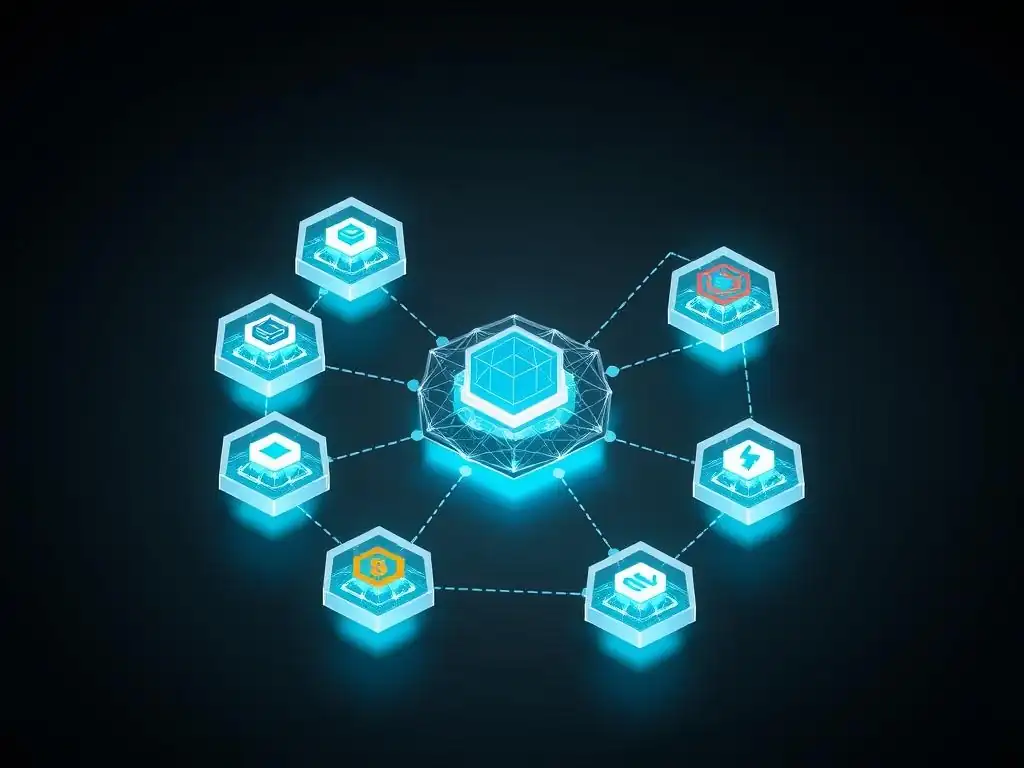
Oasis Labs: Focus and Offerings
Oasis Labs is a prominent player focusing on privacy-preserving cloud computing built on blockchain. Their platform, the Oasis Network, is designed to support confidential computation, allowing data to be processed by smart contracts while remaining encrypted. They utilize a combination of confidential computing technology (like TEEs) and a proof-of-stake blockchain architecture to enable developers to build privacy-preserving decentralized applications and process sensitive data securely.
Their offerings cater to enterprises and developers looking to leverage blockchain for data-intensive applications in areas like finance, healthcare, and artificial intelligence, where data privacy is critical. Oasis Labs aims to unlock new use cases for blockchain by providing a platform where data can be used for analysis or computation without exposing the raw information, positioning them strongly within the blockchain data protection solutions market.
Enigma (Secret Network): Data Privacy Solutions for Enterprises
Enigma, now known as the Secret Network, is another key player focused on bringing data privacy to smart contracts. Secret Network is a blockchain that supports "secret contracts," which are smart contracts that can perform computations on encrypted data. It uses a combination of encryption techniques and TEEs to ensure that the input data, output data, and state of secret contracts remain encrypted and private, even to the nodes running the computation.
Secret Network's technology enables developers to build privacy-preserving dApps and protocols that can handle sensitive information without revealing it on the public ledger. This makes it suitable for a wide range of applications requiring confidentiality, such as decentralized finance (providing privacy for transactions and trading strategies), private voting systems, and secure data sharing marketplaces. Their work is instrumental in expanding the capabilities of the blockchain data protection solutions market.
Civic Technologies: Specializing in Decentralized Identity Management
Civic Technologies focuses specifically on decentralized identity solutions, a crucial segment of the blockchain data protection solutions market. Civic provides a platform that allows users to manage their digital identities and control access to their personal information using blockchain technology. Their solutions enable secure and verifiable identity verification processes without relying on centralized databases that are prone to breaches.
Civic's approach involves using blockchain to anchor identity claims and proofs, while sensitive personal data remains under the user's control, often stored securely on their device. This self-sovereign identity model reduces the need for businesses to store vast amounts of sensitive customer data, thereby lowering their risk profile and helping them comply with privacy regulations. Their focus on identity makes them a specialized but significant contributor to the overall blockchain data protection landscape.
The blockchain data protection solutions market is still relatively nascent but highly dynamic, with no single vendor holding a dominant market share. The competitive landscape includes a mix of specialized blockchain projects focused explicitly on privacy (like Monero, Zcash, Secret Network), platforms enabling privacy-preserving computation (like Oasis Labs, Inpher), and companies building decentralized identity solutions (like Civic, VerusID). Additionally, established cybersecurity firms and enterprise blockchain providers are increasingly incorporating privacy features into their offerings.
Market share is fragmented, with different players leading in specific niches, such as confidential transactions, private smart contracts, or decentralized identity. Growth is driven by innovation in cryptographic techniques (ZKPs, HE), advancements in secure hardware (TEEs), and increasing enterprise demand. Competition is expected to intensify as regulations tighten and the value of privacy-preserving technologies becomes more widely recognized, fueling further development and adoption in the blockchain data protection solutions market.
Use Cases: Applications of Blockchain Data Protection
Securing Healthcare Data on Blockchain
The healthcare sector handles some of the most sensitive personal data imaginable – patient health records. Storing and sharing this data securely while maintaining patient privacy and complying with regulations like HIPAA (in the US) or GDPR is a major challenge. Blockchain data protection solutions offer a way to create secure, immutable, and auditable systems for managing healthcare data. Patient records, or hashes of records, can be stored on a permissioned blockchain, with access controlled by private keys held by the patient.
Privacy-enhancing techniques can ensure that even authorized parties (like doctors or researchers) can only access necessary data under strict conditions, potentially using confidential computing to perform analysis on encrypted data without seeing the raw information. This enhances security, improves data integrity, and empowers patients with greater control over who accesses their health information, representing a critical application area for the blockchain data protection solutions market.
Protecting Financial Transactions and Identity
The financial services industry is a prime target for cybercrime and operates under stringent data privacy regulations. While public blockchains provide transparency, financial institutions require confidentiality for transaction details, trading strategies, and customer identities. Blockchain data protection solutions enable financial firms to leverage the benefits of distributed ledgers – such as faster settlements and reduced counterparty risk – while keeping sensitive information private.
Solutions involving confidential transactions (hiding amounts), zero-knowledge proofs (verifying transaction validity without revealing details), and decentralized identity (securely verifying customer identity for KYC/AML without centralized data storage) are being explored and implemented. These technologies allow for the creation of privacy-preserving financial networks and applications, crucial for enabling institutional adoption of blockchain and expanding the use cases within the blockchain data protection solutions market for finance.
Supply Chain Transparency with Enhanced Data Privacy
Supply chain management involves tracking goods and components across multiple parties, generating vast amounts of data related to logistics, inventory, quality control, and supplier information. While blockchain can provide unprecedented transparency and traceability in supply chains, not all participants are comfortable sharing all their data publicly with competitors or other network members. For instance, cost data or proprietary manufacturing processes need to remain confidential.
Blockchain data protection solutions allow supply chain networks to achieve transparency where needed (e.g., verifying product origin or compliance) while maintaining privacy for sensitive commercial data. This can involve using permissioned ledgers with granular access controls, storing sensitive data off-chain with on-chain hashes and access permissions, or using confidential computing to perform aggregate analysis on private data within the network. This enables the benefits of a shared ledger without compromising competitive advantage, driving adoption in the blockchain data protection solutions market for logistics.
Government Applications: Secure and Auditable Data Storage
Governments handle vast amounts of citizen data, requiring the highest levels of security, integrity, and privacy. Blockchain technology offers potential for creating secure, auditable, and tamper-proof systems for managing public records, land registries, identity documents, and voting systems. However, the sensitive nature of this data necessitates robust blockchain data protection solutions to prevent unauthorized access and ensure compliance with privacy laws.
Using permissioned blockchains with strong cryptographic controls, data masking, and potentially confidential computing, governments can build systems that provide secure storage and verifiable audit trails of data access and modification. Decentralized identity solutions can empower citizens with greater control over their personal information when interacting with government services. The need for secure, transparent, and privacy-respecting digital infrastructure is a significant driver for the blockchain data protection solutions market in the public sector.
Investment Opportunities in Blockchain Data Protection
Venture Capital Funding Trends in the Privacy-Focused Blockchain Space
Venture Capital (VC) funding into privacy-focused blockchain projects and companies developing blockchain data protection solutions has seen significant growth in recent years. Investors recognize the increasing demand for technologies that can address the critical intersection of blockchain's potential and the need for robust data privacy. Funding rounds have supported projects focused on privacy-preserving protocols, confidential computing platforms, and decentralized identity solutions.
While specific figures fluctuate, reports indicate hundreds of millions, if not billions, of dollars have been invested in this sector collectively. This trend reflects investor confidence in the long-term viability and market potential of technologies that can unlock blockchain's use cases in regulated industries and for sensitive data. The focus of VC funding highlights the areas perceived as having the greatest potential for growth and impact within the blockchain data protection solutions market.
Publicly Traded Companies Involved in Blockchain Data Security
While many pure-play blockchain data protection companies are currently privately held or operate via token ecosystems, several publicly traded companies are involved in this space, either by developing relevant technologies or integrating them into their services. This includes large technology companies exploring enterprise blockchain solutions with privacy features, cybersecurity firms incorporating blockchain for data integrity, and companies providing infrastructure that can support privacy-preserving blockchain applications.
Identifying publicly traded companies with significant exposure to the core blockchain data protection solutions market requires looking beyond explicit "privacy" labels to companies building enterprise blockchain platforms (like IBM, Microsoft Azure Blockchain Service - although some services have evolved), or those providing underlying secure computing technologies. Investment in this area through public markets can be more indirect, often part of broader digital transformation or cybersecurity strategies.
Emerging Token Projects Focused on Privacy-Enhancing Technologies
A significant portion of innovation and investment in the blockchain data protection solutions market is occurring within the cryptocurrency ecosystem through emerging token projects. These projects are building decentralized protocols and networks explicitly focused on privacy-enhancing technologies. Examples include privacy coins (though their regulatory status can be complex), protocols enabling confidential smart contracts (like Secret Network), and networks designed for private data computation (like Oasis Network).
Investing in these token projects allows participation in the growth of decentralized privacy solutions. However, it comes with the inherent volatility and risks associated with cryptocurrency markets and the specific challenges related to the regulatory treatment of privacy-focused digital assets. Evaluating these projects requires deep technical understanding and careful consideration of their technology, team, tokenomics, and regulatory compliance strategy within the broader blockchain data protection solutions market landscape.
Evaluating Risk and Return in Blockchain Data Protection Investments
Investing in the blockchain data protection solutions market presents unique opportunities and risks. The potential for high returns is driven by the strong market demand, regulatory tailwinds, and the transformative nature of the technology. However, risks include the nascent stage of many technologies, regulatory uncertainty (especially regarding privacy coins and decentralized finance), intense competition, and the technical challenges of building scalable and user-friendly privacy solutions.
Due diligence is crucial. Investors should evaluate the specific technology being developed, the team's expertise, the target market and use cases, the competitive landscape, and the project's approach to regulatory compliance. Understanding the different types of solutions (encryption, ZKPs, DID, etc.) and their suitability for various applications is key. As the market matures, successful investments will likely be in projects that can effectively balance privacy, usability, scalability, and regulatory adherence within the blockchain data protection solutions market.
Challenges and Future Trends in the Market
Scalability and Performance Limitations of Privacy-Enhancing Technologies
One of the significant challenges facing the blockchain data protection solutions market is the inherent performance overhead associated with many privacy-enhancing technologies (PETs). Cryptographic techniques like Homomorphic Encryption and Zero-Knowledge Proofs, while powerful, are often computationally intensive and can slow down transaction processing or data computation compared to operations on plaintext data. This can impact the scalability and efficiency of privacy-preserving blockchain networks.
Efforts are underway to improve the performance of these technologies through cryptographic research, hardware acceleration (like specialized chips for ZKPs), and optimization at the protocol level. Layer-2 scaling solutions are also being explored to handle private transactions or computations off the main chain. Overcoming these scalability limitations is crucial for widespread adoption of privacy-preserving blockchain applications and will be a key focus area for the blockchain data protection solutions market.
Regulatory Uncertainty and Compliance Requirements
The regulatory landscape surrounding blockchain and data privacy is still evolving, creating uncertainty for companies operating in the blockchain data protection solutions market. While regulations like GDPR and CCPA drive demand for privacy solutions, the specific application of these rules to decentralized technologies, immutable ledgers, and tokenized data assets is not always clear. For example, the "right to erasure" poses fundamental questions for immutable blockchains.
Furthermore, privacy-enhancing technologies themselves can face regulatory scrutiny, particularly privacy coins, which have sometimes been associated with illicit activities due to their anonymity features. Navigating this complex and fragmented regulatory environment requires careful legal consideration and proactive engagement with policymakers. Future trends will likely involve clearer regulatory guidance and the development of compliance-by-design frameworks within blockchain data protection solutions.
Interoperability Between Different Blockchain Data Protection Solutions
The blockchain ecosystem is characterized by a multitude of different protocols and platforms, each potentially employing different methods for data protection and privacy. Ensuring interoperability between these diverse solutions is a significant challenge. Data secured or processed using a specific privacy technique on one blockchain might not be easily shareable or verifiable on another, limiting the potential for seamless data flow across different networks and applications.
Future trends in the blockchain data protection solutions market will likely focus on developing standards and protocols that enable interoperability between different privacy-preserving technologies and blockchain networks. This could involve cross-chain communication protocols that support private data transfer or standardized formats for verifiable credentials that can be recognized across different decentralized identity systems. Achieving greater interoperability is key to unlocking the full potential of decentralized, privacy-preserving ecosystems.
The Future of Privacy-Preserving Computation and Blockchain
The intersection of privacy-preserving computation (such as Homomorphic Encryption, Secure Multi-Party Computation, and Trusted Execution Environments) and blockchain technology holds immense promise for the future of data privacy. These technologies allow for computations to be performed on encrypted or distributed data without exposing the raw information, enabling new paradigms for secure data analysis, machine learning, and collaborative data processing in decentralized environments.
Future trends in the blockchain data protection solutions market will see deeper integration of these advanced computational privacy techniques into blockchain platforms and decentralized applications. This will unlock use cases that are currently not feasible due to privacy constraints, such as decentralized marketplaces for sensitive data analysis, privacy-preserving AI training on distributed datasets, and confidential multi-party computations for complex business processes. Continued research and development in this area will be critical for the market's evolution.
Conclusion: The Future of Data Privacy is Decentralized
The Growing Importance of Investing in Blockchain Data Protection
The increasing volume and sensitivity of digital data, coupled with a rising tide of data breaches and stringent privacy regulations, underscore the critical importance of robust data protection. Investing in blockchain data protection solutions is no longer just an option but a necessity for organizations seeking to build trust, ensure compliance, and mitigate risks in the digital age. These solutions offer a powerful combination of security, integrity, and verifiable privacy that is difficult to achieve with traditional centralized systems.
The market for blockchain data protection solutions is poised for substantial growth, driven by clear demand signals from enterprises, regulators, and individuals. Companies and investors recognizing this trend and focusing on developing or adopting these technologies are well-positioned to capitalize on a significant market opportunity and contribute to building a more secure and privacy-respecting digital future. The strategic importance of this sector within the broader blockchain landscape cannot be overstated.
Opportunities for Innovation and Market Growth
The blockchain data protection solutions market is ripe with opportunities for innovation. The challenges related to scalability, interoperability, and regulatory clarity are actively being addressed by researchers and developers, creating space for groundbreaking technologies and solutions. From advancing cryptographic techniques like ZKPs and HE to building user-friendly decentralized identity systems and privacy-preserving computation platforms, the scope for development is vast.
Market growth will be fueled by the expanding adoption of blockchain technology across various industries and the increasing sophistication of cyber threats, necessitating advanced privacy measures. As regulations become clearer and technologies mature, the demand for reliable and scalable blockchain data protection solutions will continue to rise, creating a fertile ground for new entrants and driving the expansion of existing players in the market.
The Potential of Blockchain to Revolutionize Data Privacy
Blockchain technology, when combined with advanced cryptographic and privacy-preserving techniques, has the potential to fundamentally revolutionize data privacy. By shifting control from centralized entities to individuals and enabling verifiable, yet confidential, data management, blockchain offers a path towards a digital world where users have greater sovereignty over their information. It provides the technical foundation for systems that are secure by design and privacy-preserving by default.
While challenges remain, the ongoing development and adoption of blockchain data protection solutions are paving the way for a future where data is managed in a more secure, transparent, and privacy-conscious manner. The convergence of blockchain's distributed ledger technology with cutting-edge privacy techniques is creating a new paradigm for data protection, promising a more trustworthy and equitable digital ecosystem for everyone.
Frequently Asked Questions
What are the primary drivers fueling the growth of the Blockchain data protection solutions market?
The growth is mainly driven by increasing data breaches, stricter data privacy regulations like GDPR, and the need for secure and transparent data management.
How do blockchain data protection solutions differ from traditional data security methods?
Unlike traditional methods that rely on centralized control, blockchain data protection solutions offer decentralized security, enhanced transparency through immutability, and improved data integrity.
What are some examples of real-world applications of blockchain data protection solutions beyond finance?
These solutions are being used in healthcare for secure patient data management, supply chain for traceability and anti-counterfeiting, and identity management for verifiable credentials.
What are the main challenges facing the adoption of blockchain data protection solutions?
Challenges include the complexity of blockchain technology, scalability issues, and the lack of standardized regulations and interoperability between different blockchain platforms.
How is the regulatory landscape impacting the blockchain data protection solutions market?
Regulations like GDPR and CCPA are pushing companies to adopt robust data protection measures, thus driving demand for solutions. However, regulatory uncertainty and varying interpretations create complexities.
Final Reflection: Embracing the Future of Secure Data
The exploration of the blockchain data protection solutions market reveals a critical truth: the demand for privacy is no longer a niche concern, but a fundamental requirement in our increasingly data-driven world. The solutions discussed are not merely technological advancements; they represent a paradigm shift in how we value and safeguard personal information in the digital age.
The rise of blockchain data protection solutions reflects a growing awareness of the vulnerabilities inherent in centralized data systems. This movement towards decentralized and privacy-preserving technologies is not just about security; it's about empowering individuals and fostering trust in digital interactions. Privacy is not an option, and it shouldn't come with a price tag; it's a fundamental right.
This quote encapsulates the core principle driving the innovation and investment in this burgeoning market.
As we look ahead, let us not only celebrate the technological advancements in blockchain data protection but also commit to championing a future where privacy is the default, not an afterthought. Consider how you can support and advocate for these solutions in your own sphere of influence, contributing to a world where data security and individual autonomy coexist harmoniously.
Embrace Data Sovereignty: Unlock Your Privacy Potential!
Thanks for diving deep into the exciting world of blockchain data protection! We hope you've gained valuable insights into how these innovative solutions are shaping the future of privacy. Ready to take control?
- Claim your digital autonomy by exploring decentralized identity (DID) solutions and selecting one that aligns with your personal values and needs.
- Share this article with your network and spark a conversation about the importance of privacy in the digital age.
- Consider contributing to open-source blockchain privacy projects, making your mark on the future of data protection.
What steps are you prepared to take to reclaim ownership of your data footprint today?
Leave a Reply