
Choosing the Right DApp Architecture Framework: Selecting Tools for Efficient Development


Welcome to Blockchain Trends, your guide to understanding the revolutionary impact of blockchain beyond just cryptocurrencies.
Ever wondered how to build a truly scalable and efficient Decentralized Application (DApp)? This week, we dive deep into the critical process of DApp architecture framework selection, exploring the key tools and considerations that can make or break your DApp project. Discover which framework aligns best with your specific needs and unlock the potential for streamlined development. Intrigued? Keep reading to explore the options!
Choosing the Right DApp Architecture Framework: Selecting Tools for Efficient Development
- Introduction: Understanding the Importance of DApp Architecture Framework Selection
- DApp Architecture Frameworks: A Comparative Overview
- Factors Influencing DApp Architecture Framework Selection
- Top DApp Architecture Frameworks: Detailed Analysis
- Optimizing DApp Development with the Right Framework
- Best Practices for DApp Architecture Framework Implementation
- Case Studies: Successful DApps Built with Different Frameworks
- Future Trends in DApp Architecture Frameworks
- Conclusion: Making an Informed Decision on DApp Frameworks
-
Frequently Asked Questions
- What are the key considerations when selecting a DApp architecture framework?
- How does the choice of a DApp architecture framework impact development efficiency?
- Beyond Ethereum, what blockchain platforms are supported by various DApp architecture frameworks?
- What are some common security vulnerabilities that DApp architecture frameworks help to mitigate?
- How will regulatory changes impact the selection of DApp architecture frameworks in the future?
- Final Reflection: Navigating the Decentralized Future
- Unlock Your DApp Potential: Architect for Success!
Introduction: Understanding the Importance of DApp Architecture Framework Selection
The Growing Need for Efficient DApp Development Frameworks
The landscape of decentralized applications (DApps) is expanding rapidly, moving beyond simple token transfers to complex ecosystems involving decentralized finance (DeFi), non-fungible tokens (NFTs), supply chain management, and decentralized autonomous organizations (DAOs). This evolution necessitates sophisticated development environments that can handle the intricacies of smart contract development, testing, deployment, and interaction. As DApps become more complex, the need for robust, efficient, and developer-friendly tools becomes paramount. Developers require frameworks that abstract away some of the low-level complexities of blockchain interaction, allowing them to focus on building the core logic and user experience of their applications.
Furthermore, the demand for skilled DApp developers is consistently high, and providing them with effective DApp architecture framework selection options is crucial for accelerating development cycles. Projects often face tight deadlines and resource constraints, making the choice of a framework a critical factor in determining how quickly and reliably a DApp can go from concept to production.
An efficient framework provides pre-built tools for common tasks like compiling Solidity code, running local blockchain nodes for testing, debugging transactions, and deploying contracts to various networks. Without such tools, developers would spend significant time building these functionalities from scratch, hindering innovation and increasing the likelihood of errors.
Why Choosing the Right Framework Matters for DApp Success
The process of choosing the right DApp architecture framework is not merely a technical decision; it's a strategic one that significantly impacts a DApp's long-term viability, security, and scalability. A well-suited framework can drastically reduce development time and costs, streamline the deployment process, and improve the overall quality of the codebase.
Conversely, selecting an inappropriate framework can lead to development bottlenecks, introduce security vulnerabilities, increase maintenance overhead, and ultimately jeopardize the project's success. For instance, a framework lacking robust testing capabilities might result in smart contracts with undetected bugs, potentially leading to significant financial losses, as seen in numerous past incidents where smart contract flaws were exploited.
Moreover, the chosen framework often dictates the development workflow, the available libraries and plugins, and the ease with which the DApp can integrate with other blockchain services or scale for increased user adoption. Some frameworks offer extensive plugin ecosystems that provide integrations with security auditing tools, front-end development libraries, or monitoring services.
Others might excel in specific areas, such as rapid prototyping or formal verification. Therefore, the decision regarding DApp architecture framework selection must carefully consider the project's specific requirements, the team's expertise, and the desired features and performance characteristics of the final application to ensure a solid foundation for future growth and resilience.
DApp Architecture Frameworks: A Comparative Overview
Defining DApp Architecture Frameworks: What are They?
DApp architecture frameworks are integrated suites of tools and libraries designed to facilitate the development lifecycle of decentralized applications, primarily those interacting with blockchain networks like Ethereum, Polygon, or Binance Smart Chain. At their core, these frameworks provide structured environments for writing, compiling, deploying, and testing smart contracts, which form the backend logic of most DApps. They often include components like local blockchain clients for development (e.g., Ganache, Hardhat Network), command-line interfaces (CLIs) for managing project tasks, testing frameworks (e.g., Mocha, Chai, Waffle), and deployment scripts.
Beyond smart contract management, many frameworks also offer features or integrations that support the front-end development of DApps. This might include scaffolding tools for setting up a project structure, integration with popular front-end frameworks like React or Vue.js, and utilities for connecting the front-end to the deployed smart contracts. Essentially, a DApp architecture framework aims to provide a cohesive development experience, abstracting away much of the complexity of interacting directly with blockchain nodes and smart contract byte code, thereby accelerating the development process and enabling developers to build more sophisticated decentralized applications efficiently.
Key Features to Consider in DApp Development Frameworks
When undertaking DApp architecture framework selection, several key features should be evaluated to determine the most suitable toolset for a project. A fundamental feature is support for smart contract languages, primarily Solidity, but increasingly Vyper and others. The framework should offer efficient compilation, debugging tools, and ideally, linting and static analysis integrations to catch errors early. Another crucial aspect is testing capabilities; a robust framework provides a testing environment that allows developers to write comprehensive unit and integration tests for their smart contracts, often including gas usage reporting to optimize efficiency.
Deployment management is also a vital feature, enabling developers to easily deploy contracts to various networks (local, testnets like Sepolia or Goerli, and mainnet) and manage contract addresses and ABIs. Development network support, such as a built-in in-memory blockchain or easy integration with tools like Ganache, is essential for rapid iteration and testing without incurring real network costs or delays.
Furthermore, consider features like debugging tools for transactions, support for upgrading smart contracts, integration with security analysis tools, an active community, and good documentation. The availability of plugins and integrations for tasks like IPFS interaction, oracle services, or specific layer-2 solutions can also heavily influence the DApp architecture framework selection process.
Popular DApp Frameworks: A Brief Comparison Table
While a strict table format isn't possible, we can outline some popular frameworks and their general characteristics relevant to comparison. The DApp architecture framework selection often comes down to choosing between a few leading options, each with its strengths.
- Truffle Suite: Known for its comprehensive nature, Truffle includes a development environment, testing framework (Mocha/Chai), and asset pipeline for DApps. It bundles Ganache (a personal blockchain for Ethereum development) and Drizzle (a collection of front-end libraries). Truffle has been a long-standing choice, offering a broad feature set suitable for many types of DApps.
- Hardhat: Positioned as a flexible and extensible Ethereum development environment. Hardhat comes with a built-in Hardhat Network, which is designed for speed and debugging. It strongly emphasizes plugins, allowing developers to customize their workflow. Hardhat gained popularity for its speed and excellent debugging features, including console.log for smart contracts.
- Brownie: A Python-based development and testing framework for smart contracts targeting the Ethereum Virtual Machine (EVM). Brownie appeals to developers familiar with Python, offering a different syntax and ecosystem compared to Node.js-based frameworks like Truffle or Hardhat. It provides features similar to its counterparts, including testing, deployment, and network interaction.
- Foundry: A relatively newer framework written in Rust, focusing on speed and providing developers with tools written purely in Solidity for testing (using
forge test) and scripting (forge script). Foundry is often praised for its performance and the ability to write tests directly in Solidity, which can be intuitive for smart contract developers.
Each framework has its unique approach and ecosystem, making the DApp architecture framework selection dependent on team preference, project requirements, and the importance placed on features like language preference (Python vs. JavaScript/TypeScript vs. Rust), speed, debugging capabilities, or plugin availability.
Factors Influencing DApp Architecture Framework Selection
DApp Complexity and Scalability Requirements
The inherent complexity of the decentralized application being built is a primary factor in DApp architecture framework selection. A simple DApp involving a few smart contracts for token transfer or basic data storage will have different framework needs than a complex DeFi protocol managing billions in assets across multiple integrated components and requiring frequent upgrades. For highly complex projects with intricate smart contract interactions, a framework offering advanced debugging tools, formal verification integrations, and robust testing capabilities becomes essential. Hardhat's strong debugging features, for example, might be particularly valuable for intricate logic.
Furthermore, anticipated scalability requirements play a significant role. While the blockchain itself dictates ultimate throughput, the framework can influence how easily a DApp can integrate with layer-2 scaling solutions (like Optimism, Arbitrum, or zkSync) or manage off-chain components. Some frameworks have better community support or specific plugins for interacting with these scaling technologies. Projects expecting high transaction volume or large user bases must prioritize frameworks that facilitate integration with scalable infrastructure and support efficient smart contract design patterns that minimize gas costs, which comprehensive testing environments like those offered by Foundry or Hardhat can help analyze.
Team Expertise and Development Experience
The existing skill set and experience of the development team are critical considerations in DApp architecture framework selection. If the team is already proficient in JavaScript or TypeScript, frameworks like Hardhat or Truffle, which are built on Node.js, would be a natural fit. The learning curve would be minimal, allowing the team to become productive quickly. Similarly, a team with a strong background in Python might find Brownie to be the most efficient choice, leveraging their existing knowledge of the language and its ecosystem.
Conversely, introducing a framework based on a completely new language or paradigm (e.g., moving from JavaScript to Rust for Foundry) might require significant time investment for training and adaptation. While exploring new technologies can be beneficial, the potential delay in development speed and the risk of errors due to unfamiliarity must be weighed against the framework's potential advantages. The ease of onboarding new team members and the availability of developers with experience in a particular framework's ecosystem also factor into this decision, influencing long-term maintenance and scalability of the development effort.
Budget Constraints and Resource Allocation
Resource availability, including both financial budget and developer time, significantly influences DApp architecture framework selection. While most popular DApp frameworks are open-source and free to use, the choice can impact costs indirectly through development speed, debugging time, and the need for external tools or services. A framework that speeds up development and reduces debugging time effectively lowers labor costs. For instance, a framework with excellent testing features can reduce the risk of costly security breaches or post-deployment bug fixes.
Consideration must also be given to the cost of infrastructure required by the framework, such as computational resources for running local nodes or complex tests, though this is often minimal for standard setups. The availability of community support versus the potential need for paid support or consulting services if the team encounters issues with a less popular framework can also impact the budget. Efficient DApp architecture framework selection means choosing a toolset that provides the necessary capabilities within the project's allocated resources, ensuring that development can proceed smoothly without unexpected financial burdens.
Security Considerations in DApp Framework Choices
Security is paramount in DApp development, and the chosen framework can play a role in facilitating secure practices. While the framework doesn't inherently make smart contracts secure (that depends on the code itself), it can provide tools and integrations that aid in identifying and mitigating vulnerabilities. A strong framework will offer robust testing environments that allow for comprehensive scenario testing, including edge cases and potential attack vectors. Features like gas reporting during tests can help identify potential denial-of-service vulnerabilities related to excessive gas usage.
Furthermore, some frameworks integrate with or are compatible with security analysis tools, linters, and formal verification software. For example, integrating static analysis tools like Slither or formal verification tools can help catch common vulnerabilities before deployment. When making a DApp architecture framework selection, developers should look for frameworks that actively support or facilitate the use of such security-enhancing tools. The ease with which security audits can be performed using the framework's output (e.g., clear compilation artifacts, reproducible build environments) is also a valuable security consideration.
Top DApp Architecture Frameworks: Detailed Analysis
Truffle Suite: A Comprehensive Development Environment
Truffle has been a cornerstone in the Ethereum development ecosystem for several years, offering a comprehensive suite designed to simplify the entire DApp development process. It includes Truffle itself (for compilation, deployment, and testing), Ganache (a personal blockchain for local development), and Drizzle (a collection of front-end libraries). Truffle provides a structured project template and a command-line interface to manage the development workflow from writing smart contracts in Solidity or Vyper to interacting with them from a web interface. Its long history means it has extensive documentation and a large community.
The framework follows a contract-first development approach, emphasizing the smart contract logic before building the front-end. It uses migrations for deploying contracts in a controlled and versioned manner, which is helpful for managing deployments across different networks. Truffle's testing framework, based on Mocha and Chai, allows developers to write tests in JavaScript or Solidity, providing flexibility. While perhaps perceived as less cutting-edge than some newer alternatives, Truffle remains a reliable and feature-rich option for developers seeking an all-in-one solution for their DApp architecture framework selection.
Advantages of Using Truffle for DApp Development
One of the main advantages of Truffle is its maturity and comprehensive nature. It bundles most necessary tools, reducing the need to integrate disparate components manually. Its extensive documentation and large, active community mean developers can easily find help and resources when encountering issues. The concept of "Truffle Boxes" allows developers to quickly bootstrap projects with pre-built structures and integrations (e.g., boxes for React, Vue, or specific smart contract patterns), significantly accelerating the initial setup phase of a project.
Truffle's testing framework is also quite flexible, supporting both JavaScript and Solidity tests, allowing teams to choose the approach that best suits their expertise. The migration system provides a robust way to manage contract deployments and updates across different environments, which is crucial for complex projects. For teams looking for a stable, well-supported, and integrated development environment without needing to assemble many separate tools, Truffle presents a compelling case during the DApp architecture framework selection process.
Disadvantages of Using Truffle for DApp Development
Despite its strengths, Truffle has faced criticism regarding its speed, particularly for compilation and testing in larger projects. As DApp complexity grows, build times can become a bottleneck, slowing down the development loop. Some developers also find the configuration and dependency management less flexible compared to frameworks built with a stronger focus on modularity and plugins.
Another point of concern for some is the debugging experience, which is often cited as less intuitive or powerful compared to newer frameworks like Hardhat, especially regarding visibility into transaction execution and smart contract state during testing. While Truffle is continuously updated, these perceived limitations have led many developers to explore alternatives when making their DApp architecture framework selection, particularly for projects where rapid iteration and advanced debugging are high priorities.
Hardhat: A Flexible and Extensible Framework
Hardhat emerged as a strong alternative to Truffle, emphasizing flexibility, extensibility through plugins, and an enhanced developer experience, particularly around testing and debugging. Written in TypeScript, it offers native support for TypeScript in configuration and tests, appealing to a broad range of web developers. Hardhat's standout feature is its built-in Hardhat Network, an in-memory Ethereum network specifically designed for development and testing. This network provides detailed error messages, stack traces, and the ability to use console.log within Solidity code, dramatically improving the debugging process.
Hardhat's architecture is heavily plugin-driven. While it provides core functionalities like compilation, testing, and deployment, much of its power comes from its rich ecosystem of plugins. This allows developers to tailor their development environment precisely to their needs, adding support for Ethers.js or Web3.js integration, gas reporting, code coverage analysis, smart contract verification on Etherscan, and more. This modular approach makes Hardhat highly adaptable for various project sizes and complexities, influencing many developers' DApp architecture framework selection.
Advantages of Using Hardhat for DApp Development
The primary advantage of Hardhat is its superior developer experience, especially in testing and debugging. The Hardhat Network is significantly faster than Ganache in many scenarios and provides invaluable debugging information directly in the console, including Solidity stack traces and console.log output. This drastically reduces the time spent identifying and fixing bugs in smart contracts. The plugin system offers unparalleled flexibility, allowing developers to pick and choose only the tools they need, leading to a lighter and more customized setup.
Hardhat's performance during compilation and testing is generally considered faster than Truffle for larger projects, which is a significant benefit for development velocity. Its native TypeScript support is also a plus for teams working within that ecosystem. For developers prioritizing speed, flexibility, and advanced debugging capabilities, Hardhat often ranks high in the DApp architecture framework selection process.
Disadvantages of Using Hardhat for DApp Development
While Hardhat excels in many areas, its plugin-centric nature means that developers might need to spend more time initially configuring their environment compared to Truffle's more opinionated, all-in-one approach. Relying heavily on community-developed plugins also means that the quality and maintenance of certain features might vary.
Another potential disadvantage, depending on the team's background, is its primary focus on JavaScript/TypeScript. Teams strictly working with Python might find Brownie a more natural fit. Although Hardhat is widely adopted, the need to integrate and manage various plugins can add a layer of complexity that some developers might prefer to avoid during their initial DApp architecture framework selection.
Brownie: Python-Focused Framework for Smart Contract Development
Brownie is a development and testing framework for smart contracts targeting the EVM, distinguished by its use of Python. This makes it an attractive option for developers already proficient in Python, a language widely used in data science, backend development, and increasingly in blockchain analytics. Brownie provides a robust environment for compiling, testing, and deploying smart contracts, supporting both Solidity and Vyper. It integrates with ganache-cli or geth for local development networks and uses standard Python testing libraries like pytest.
Brownie's design leverages Python's strengths, offering a clean syntax and access to Python's extensive libraries for scripting, data manipulation, and analysis. It provides powerful features for interacting with contracts, managing accounts, and analyzing transaction traces. For teams where Python is the dominant language, Brownie offers a way to stay within a familiar ecosystem for DApp development, potentially speeding up the learning curve and development process compared to adopting a JavaScript-based framework.
Advantages of Using Brownie for DApp Development
The primary advantage of Brownie is its Python foundation, which lowers the barrier to entry for Python developers entering the DApp space. It allows seamless integration with existing Python tooling and libraries, which can be beneficial for tasks like generating test data, performing complex simulations, or integrating with off-chain Python services. Brownie's testing framework, based on pytest, is highly flexible and powerful, allowing for sophisticated test setups and parameterization.
Brownie provides excellent capabilities for scripting complex deployment scenarios and interacting with deployed contracts using Python scripts. Its console offers a convenient interactive environment for testing contract calls and transactions. For organizations or teams with a strong Python background, Brownie presents a compelling and efficient choice for DApp architecture framework selection.
Disadvantages of Using Brownie for Smart Contract Development
The main limitation of Brownie is its reliance on the Python ecosystem, which is smaller compared to the JavaScript/Node.js ecosystem in the broader web development and blockchain tooling space. While Python is powerful, many cutting-edge blockchain tools and libraries are initially released for JavaScript. This might mean slower access to new features or integrations with certain blockchain protocols or layer-2 solutions.
Debugging capabilities, while solid, might not be as advanced or visually intuitive as those offered by Hardhat Network's integrated debugger and console logging. Teams without Python expertise would face a steeper learning curve compared to adopting a JavaScript-based framework. Therefore, the DApp architecture framework selection of Brownie is often most strategic when Python proficiency is a key asset within the development team.
Foundry: Blazing-Fast Testing and Development
Foundry is a relatively new, high-performance development toolkit for Ethereum, written in Rust. It distinguishes itself with a strong focus on speed and providing developers with the ability to write tests and scripts in Solidity. This approach allows smart contract developers to use the same language for both their application logic and their tests and deployment scripts, potentially reducing context switching and making tests closer to the actual contract code. Foundry includes forge (for compiling, testing, and deploying) and cast (a command-line tool for interacting with the EVM).
Foundry's testing framework ( forge test) is known for its speed, leveraging parallel execution and efficient compilation. Writing tests in Solidity allows developers to perform low-level assertions and manipulate contract state directly within their tests. The cast tool provides powerful command-line utilities for sending transactions, querying blockchain data, and interacting with contracts without needing to write scripts. Foundry is gaining popularity among experienced smart contract developers who prioritize performance and a Solidity-centric workflow during DApp architecture framework selection.
Advantages of Using Foundry for DApp Development
Foundry's most significant advantage is its speed. Compilation and test execution times are often substantially faster than Node.js-based frameworks, which is a major benefit for large projects with many tests. The ability to write tests and scripts directly in Solidity is a unique and powerful feature that resonates well with smart contract developers, potentially leading to more robust and expressive tests. The cast tool is highly versatile for command-line interactions.
Foundry also offers excellent debugging capabilities, including detailed stack traces and support for fuzz testing (generating random inputs to find edge cases). Its focus on performance and Solidity-native tooling makes it a top contender for developers who are deeply embedded in the smart contract development world and value speed and low-level control in their DApp architecture framework selection.
Disadvantages of Using Foundry for DApp Development
As a newer framework, Foundry's ecosystem and community support, while growing rapidly, are not yet as extensive or mature as those of Truffle or Hardhat. Documentation is improving but may still be less comprehensive in certain areas. The Rust foundation means contributing to the core framework requires Rust knowledge, which is less common among DApp developers than JavaScript or Python.
Writing tests in Solidity, while powerful, can also be a disadvantage for teams where front-end or general software engineers are expected to contribute to testing, as they might not be as comfortable writing complex logic in Solidity compared to JavaScript or Python. The tooling around front-end integration might also require more manual setup compared to more integrated suites like Truffle. These factors are important considerations when making a DApp architecture framework selection, especially for teams with diverse skill sets.
Optimizing DApp Development with the Right Framework
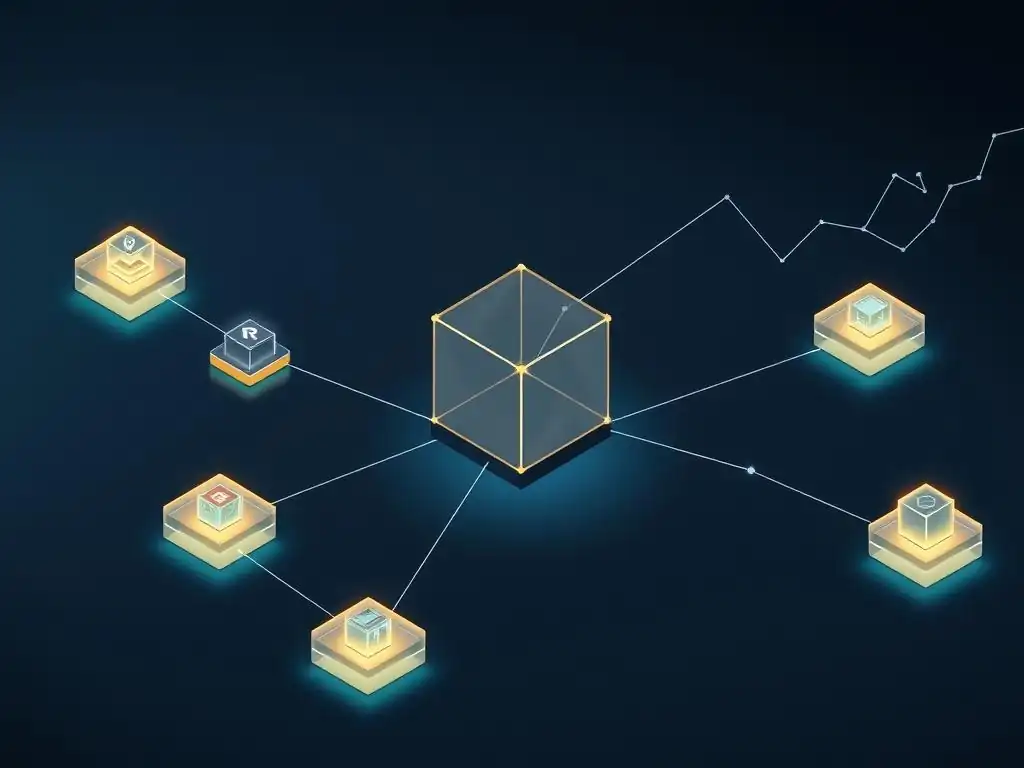
Streamlining Development Processes with Efficient Tools
Selecting the appropriate DApp architecture framework directly impacts the efficiency of the development process. A well-chosen framework provides integrated tools that automate repetitive tasks, such as compiling smart contracts, running tests, and deploying to different networks. For instance, using a framework with a fast compiler and a capable local development network significantly reduces the feedback loop – the time it takes from making a code change to testing its effect. Hardhat's rapid iteration with its in-memory network or Foundry's blazing-fast compilation exemplify how framework features can streamline development.
Furthermore, frameworks that support features like hot-reloading for smart contracts or provide clear error messages and debugging information minimize time spent troubleshooting. Tools that facilitate reproducible builds and deployments ensure consistency across development, staging, and production environments. By providing a cohesive environment and automating boilerplate, the right framework allows developers to focus their energy on writing the core logic and user experience of the DApp, rather than wrestling with infrastructure setup and manual processes, thereby significantly optimizing development time and resources.
Enhancing DApp Security Through Framework Features
While the security of a DApp primarily depends on the quality of its smart contract code, the chosen framework plays a crucial role in enabling and reinforcing secure development practices. A good DApp architecture framework selection provides robust testing environments that allow developers to write comprehensive unit, integration, and property-based tests. This thorough testing helps catch logical errors and potential vulnerabilities before deployment. Frameworks that offer detailed gas usage reports during testing can help identify potential denial-of-service vectors.
Moreover, frameworks that integrate with or facilitate the use of static analysis tools (like Slither), linters (like Solhint), and formal verification tools (like Certora or MythX) are invaluable for enhancing security. These tools automatically scan code for known vulnerabilities and logical flaws. Some frameworks also provide features for managing contract ownership, access control, and upgradeability in a secure manner. By providing tools that support rigorous testing, automated analysis, and secure deployment patterns, the right framework significantly contributes to reducing the attack surface and improving the overall security posture of the DApp.
Improving DApp Performance and Scalability
The choice of DApp architecture framework can indirectly influence the performance and scalability of a decentralized application. While the base layer blockchain's throughput is a hard limit, the framework can help developers write more gas-efficient smart contracts and facilitate integration with scaling solutions. Frameworks that provide detailed gas reports for transaction execution enable developers to identify gas-heavy operations and optimize their smart contract code to reduce costs and improve execution speed on the network.
Furthermore, frameworks that have good support or plugins for interacting with layer-2 scaling solutions (like rollups) or sidechains make it easier to build DApps that can handle higher transaction volumes and offer lower fees. The ability to easily interact with off-chain services, decentralized storage (like IPFS), or oracle networks also contributes to building more scalable and performant DApps. An effective DApp architecture framework selection considers how well the framework supports building performant, gas-efficient code and integrating with the necessary infrastructure for scaling the application beyond the base layer's limitations.
Best Practices for DApp Architecture Framework Implementation
Planning and Design Before Framework Selection
Before diving into DApp architecture framework selection, thorough planning and design of the DApp are essential. Clearly define the project's goals, core functionalities, target blockchain network(s), expected complexity, and scalability requirements. Outline the smart contract architecture, including the number and interaction patterns of contracts. Consider the team's existing expertise and preferred programming languages. This upfront analysis provides a clear set of criteria against which potential frameworks can be evaluated.
Creating a detailed technical specification or even prototype the core smart contract logic independently can help identify specific framework features that will be most beneficial. For instance, if the project involves frequent contract upgrades, look for frameworks with strong support for upgrade patterns like proxies. If complex off-chain computations are required, consider frameworks that integrate well with oracles or off-chain workers. A well-defined plan makes the DApp architecture framework selection process informed and strategic, rather than based on hype or superficial features.
Conducting Thorough Testing and Auditing
Regardless of the chosen DApp architecture framework, rigorous testing is non-negotiable for DApp security and reliability. Utilize the framework's testing capabilities to write comprehensive unit, integration, and end-to-end tests for all smart contract functionalities. Aim for high code coverage. Test common attack vectors, edge cases, and unexpected inputs. Leverage features like gas reporting to optimize contract efficiency and identify potential denial-of-service risks.
Beyond automated testing facilitated by the framework, external security audits are critical, especially for DApps handling significant value. Engage reputable security firms to review the smart contract code and the DApp's overall architecture. While the framework doesn't replace the audit, some frameworks provide tools or integrations that make the audit process easier, such as generating detailed reports or facilitating interaction with the deployed code during the audit. Continuous testing and periodic audits should be part of the DApp's lifecycle, even after initial deployment.
Monitoring and Maintaining Your DApp Post-Deployment
Deploying a DApp is not the end of the development journey; ongoing monitoring and maintenance are crucial for its continued success and security. The chosen DApp architecture framework can assist in these post-deployment activities. Frameworks often provide tools or utilities for interacting with deployed contracts on the live network, allowing developers to query state, execute transactions, and perform administrative tasks.
Implement monitoring solutions that track smart contract events, transaction volume, gas usage, and potential anomalies. Set up alerting systems for critical events or errors. Plan for potential smart contract upgrades if the framework supports upgradeable patterns (like UUPS or Transparent Proxies), ensuring a secure and reliable process for deploying new versions. Regularly review smart contract code and dependencies for newly discovered vulnerabilities. Effective monitoring and maintenance, supported by the right framework tools, are vital for responding quickly to issues and ensuring the DApp remains secure and functional over time.
Case Studies: Successful DApps Built with Different Frameworks
Case Study 1: Uniswap - Using Solidity and Hardhat for DeFi
Uniswap, one of the largest decentralized exchanges (DEXs) in the DeFi space, serves as a prime example of a complex DApp successfully built on Ethereum. While the specific versions and tooling might evolve, Uniswap's smart contracts are written in Solidity, and the development team has publicly indicated using Hardhat in their development workflow. Uniswap V3, for instance, introduced significant complexity with concentrated liquidity and multiple fee tiers, requiring extensive testing and precise control over deployment.
Hardhat's strengths in rapid iteration, detailed debugging (including Solidity stack traces and console.log), and robust testing environment were likely instrumental in developing and refining the intricate smart contract logic of Uniswap V3. The ability to quickly test various scenarios locally, analyze gas costs, and debug complex interactions within the Hardhat Network would have been invaluable for a project handling billions in Total Value Locked (TVL) and processing millions of dollars in volume daily. This case highlights how a framework like Hardhat, with its focus on developer experience and debugging, can support the development of highly complex and critical DeFi protocols.
Case Study 2: CryptoKitties - Leveraging Truffle for NFT Development
CryptoKitties, one of the earliest and most famous examples of a successful NFT collection and game on Ethereum, was largely developed using the Truffle Suite. Launched in late 2017, at a time when Truffle was a dominant framework, it provided the necessary tools for compiling their ERC-721 compliant smart contracts, managing their deployment, and building the initial front-end interface.
Truffle's comprehensive nature and established workflow for contract compilation, migration scripts for deployment, and integration with tools like Ganache for local testing provided a solid foundation for the CryptoKitties development team. The ability to easily manage contract addresses and ABIs across different environments using Truffle's conventions simplified the connection between the smart contracts and the front-end application. This case study demonstrates how a mature and integrated framework like Truffle can be effectively used to build innovative DApps, including early and successful examples of the now-booming NFT sector.
Future Trends in DApp Architecture Frameworks
The Rise of Domain-Specific Languages (DSLs)
While Solidity remains the dominant smart contract language for the EVM, there's a growing interest in domain-specific languages (DSLs) tailored for specific types of DApps, such as financial protocols or governance mechanisms. Future DApp architecture frameworks may increasingly incorporate native support or enhanced tooling for these DSLs, alongside or as an alternative to general-purpose languages like Solidity or Vyper.
These DSLs aim to simplify the expression of complex logic specific to a domain, potentially reducing the surface area for errors and improving security by design. Frameworks will need to provide compilers, testing environments, and debugging tools that are fully compatible with these new languages. This trend suggests that future DApp architecture framework selection might involve considering frameworks that are extensible enough to support emerging languages or specialize in particular DApp domains.
Integration with Layer-2 Scaling Solutions
The widespread adoption of layer-2 scaling solutions (such as Optimistic Rollups, Zk-Rollups, and Validiums) is crucial for the scalability of the decentralized ecosystem. Future DApp architecture frameworks will need to provide even more seamless and integrated support for developing and deploying DApps onto these layer-2 networks. This includes enhanced tooling for cross-layer communication, bridging assets between layers, and deploying contracts to L2-specific virtual machines (which might differ slightly from the mainnet EVM).
Frameworks that offer robust testing environments capable of simulating layer-2 interactions and provide clear deployment workflows for these networks will become increasingly valuable. The complexity of managing deployments and interactions across multiple layers necessitates framework support that abstracts away some of this complexity. Therefore, when considering future DApp architecture framework selection, developers will increasingly prioritize frameworks with strong L2 integration capabilities.
Enhanced Security and Formal Verification Features
As DApps handle ever-increasing value, security remains a paramount concern. Future DApp architecture frameworks are likely to integrate more advanced security features natively. This could include tighter integration with formal verification tools, making it easier for developers to mathematically prove the correctness of critical smart contract logic. Enhanced static analysis and fuzz testing capabilities may also become standard features rather than relying solely on external plugins.
Frameworks might also offer built-in support for secure coding patterns, vulnerability scanning during the compilation or testing phase, and improved methods for managing private keys and secrets securely within the development environment. The goal is to shift security left in the development lifecycle, making it easier for developers to write secure code from the outset. This focus on security will heavily influence future DApp architecture framework selection, with developers seeking tools that actively help them build more secure decentralized applications.
Conclusion: Making an Informed Decision on DApp Frameworks
Key Takeaways for Selecting the Best DApp Architecture Framework
Choosing the best DApp architecture framework is a critical decision that lays the foundation for a project's success. There is no single "best" framework; the optimal choice depends heavily on the specific needs of the DApp, the composition and expertise of the development team, and the project's priorities regarding speed, flexibility, and security. Key takeaways for making an informed decision include: understanding your project's complexity and scalability needs, evaluating your team's proficiency with different programming languages (JavaScript/TypeScript, Python, Solidity), considering budget and resource constraints, and prioritizing frameworks that offer robust security features and testing capabilities.
Popular options like Truffle, Hardhat, Brownie, and Foundry each offer distinct advantages. Truffle provides a mature, all-in-one suite; Hardhat excels in flexibility, speed, and debugging; Brownie is ideal for Python-centric teams; and Foundry offers blazing-fast performance and Solidity-native tooling. Thoroughly evaluating these options against your project's requirements through prototyping or pilot projects can provide valuable insights. Ultimately, the goal of DApp architecture framework selection is to choose a toolset that maximizes developer productivity, ensures code quality and security, and facilitates the long-term success of the decentralized application.
The Future of DApp Development and Framework Evolution
The field of DApp development is constantly evolving, driven by advancements in blockchain technology, the emergence of new layer-2 solutions, and the increasing sophistication of decentralized applications. DApp architecture frameworks will continue to adapt to these changes, incorporating support for new smart contract languages, enhancing integration with scaling technologies, and embedding more advanced security and formal verification tools directly into the development workflow.
The trend towards faster iteration, improved debugging, and more specialized tooling is likely to continue. As the ecosystem matures, we may see frameworks become even more modular or potentially converge on common standards for certain development tasks. For developers and organizations entering or operating within the DApp space, staying abreast of these framework evolutions and being prepared to evaluate and potentially adopt new tools will be crucial for maintaining efficiency and building innovative, secure, and scalable decentralized applications. The process of DApp architecture framework selection will remain a dynamic and important consideration in the years to come.
Frequently Asked Questions
What are the key considerations when selecting a DApp architecture framework?
The primary considerations include scalability, security, and the developer experience. Also, assess the framework's community support and available documentation.
How does the choice of a DApp architecture framework impact development efficiency?
A well-chosen framework can significantly reduce development time by providing pre-built components and standardized structures. This allows developers to focus on core logic rather than boilerplate code.
Beyond Ethereum, what blockchain platforms are supported by various DApp architecture frameworks?
Many frameworks now support a range of blockchains including Polygon, Solana, and Avalanche. The best choice depends on your specific project requirements and target audience.
What are some common security vulnerabilities that DApp architecture frameworks help to mitigate?
Frameworks often offer features to protect against common vulnerabilities like reentrancy attacks, overflow errors, and front-running. Choosing one with built-in security best practices is crucial.
How will regulatory changes impact the selection of DApp architecture frameworks in the future?
Frameworks that prioritize compliance and transparency are likely to be favored as regulations evolve. Developers need to choose frameworks that offer adaptability to changing legal landscapes.
The journey through the landscape of DApp architecture frameworks reveals more than just technical choices; it highlights the fundamental shift towards decentralized applications and the power they hold to reshape industries. Understanding the nuances of each framework, from scalability to security, is no longer a niche concern, but a crucial skill for developers building the future of the web. The choices we make today in DApp architecture will directly impact the accessibility, security, and overall success of decentralized solutions tomorrow.
The ongoing evolution of DApps and blockchain technology has profoundly influenced the way we think about trust, transparency, and ownership. This article underscores the importance of informed decision-making in this rapidly evolving space, reminding us that the right tools can empower developers to build truly innovative and impactful applications. The best way to predict the future is to create it.
- Peter Drucker. This quote resonates deeply with the spirit of DApp development, urging us to actively shape the decentralized future through thoughtful architecture and strategic framework selection.
As you embark on your own DApp development journey, remember that the perfect architecture framework isn't a fixed entity, but a dynamic choice tailored to your specific project needs. Embrace the challenge of DApp architecture framework selection not as a hurdle, but as an opportunity to build something truly transformative. Let this exploration inspire you to create decentralized applications that are not only efficient and secure, but also contribute to a more equitable and transparent digital world.
Unlock Your DApp Potential: Architect for Success!
Thank you for exploring the key factors in choosing the right DApp architecture framework. We hope this guide has equipped you with the insights needed to develop more efficient and scalable decentralized applications. Now, it’s time to turn that knowledge into action!
Here’s how you can move forward:
- Select and evaluate a framework: Begin by reviewing your project requirements and matching them with the features of different frameworks. Consider testing at least two options with a small prototype to determine which best fits your needs.
- Explore other projects. Browse our DApp showcase to see applications built with various architectures. What are their strengths and weaknesses?
- Share your architectural insights with the community! Discuss your strategies with fellow developers on social media and help spread valuable knowledge.
What innovative DApp are you inspired to create now, armed with this understanding of architecture? Share your project ideas in the comments below!
Leave a Reply