
Tokenized Content: Monetizing Media in the Blockchain Age


Welcome to Blockchain Trends, your compass in the rapidly evolving world of decentralized technologies! Delve into the transformative power of blockchain beyond the hype, uncovering its potential to reshape industries and redefine the future. Ever wondered how creators can truly own and profit from their work in the digital age? Explore how the blockchain is revolutionizing content creation and distribution, starting with a deep dive into groundbreaking blockchain content monetization strategies. Prepare to unlock new possibilities!
Tokenized Content: Monetizing Media in the Blockchain Age
- Introduction: The Evolution of Content Monetization and the Blockchain Revolution
- Understanding Tokenized Content and its Ecosystem
- Blockchain Content Monetization Strategies: A Deep Dive
- Use Cases of Tokenized Content Across Different Media Formats
- The Technological Infrastructure for Tokenized Content
- Challenges and Opportunities in the Tokenized Content Space
- The Future of Media: Predictions for Tokenized Content
- Conclusion: Embracing the Potential of Blockchain Content Monetization
-
Frequently Asked Questions
- What are the primary benefits of using blockchain for content monetization?
- How can tokenization be used to monetize content on a blockchain?
- What are some examples of "Blockchain content monetization strategies" in practice?
- What are the regulatory challenges associated with tokenized content and blockchain-based monetization?
- How does blockchain enable more equitable revenue sharing for content creators?
- Final Reflection: Embracing the Decentralized Future of Content
- Unleash Your Content's Potential: Step into the Tokenized Future!
Introduction: The Evolution of Content Monetization and the Blockchain Revolution
The Challenges of Traditional Media Monetization Models
Traditional media monetization models, such as advertising and subscriptions, have long been the backbone of the content industry. However, these systems are increasingly facing significant challenges in the digital age. Advertising revenue, once the dominant source of income for publishers, is becoming increasingly concentrated in the hands of a few tech giants, leaving creators and smaller media outlets struggling to capture their fair share.
Furthermore, the rise of ad blockers and consumer fatigue with intrusive advertising formats are further diminishing the effectiveness of this model. Subscription models, while offering a more direct revenue stream, often face high churn rates and require significant investment in user acquisition and retention. Creators are often forced to rely on intermediaries who take a substantial cut of their earnings, limiting their financial independence and control over their content.
The current landscape is also plagued by issues of content piracy and copyright infringement, which further erode potential revenue streams for creators. Traditional methods of combating piracy, such as legal takedowns and digital rights management (DRM), have proven to be costly, inefficient, and often ineffective in the face of sophisticated online piracy networks.
Moreover, the centralized nature of these traditional models creates vulnerabilities in terms of censorship and control, where platforms can unilaterally decide to deplatform creators or alter monetization terms, leaving creators with little recourse and impacting their livelihoods. These challenges highlight the need for innovative and more equitable content monetization strategies.
Blockchain's Potential to Disrupt Content Creation and Distribution
Blockchain technology offers a compelling alternative to the limitations of traditional media monetization models by introducing decentralization, transparency, and new forms of ownership. Its potential to disrupt content creation and distribution lies in its ability to empower creators directly, fostering a more equitable and efficient ecosystem. By leveraging blockchain, creators can bypass intermediaries and establish direct relationships with their audiences, retaining a larger portion of the revenue generated from their work. This disintermediation can lead to increased profitability and greater creative control for content producers across various media formats.
Furthermore, blockchain's inherent transparency and immutability can address issues of copyright and content provenance. By registering content on a blockchain, creators can establish irrefutable proof of ownership and authorship, making it easier to track and manage intellectual property rights. Smart contracts, self-executing agreements encoded on the blockchain, can automate royalty payments and content distribution, ensuring fair compensation for creators and streamlining the monetization process. This technological shift promises to reshape the media landscape, fostering innovation and creating new opportunities for both creators and consumers within a decentralized framework.
Understanding Tokenized Content and its Ecosystem
What is Tokenized Content? Defining Key Concepts
Tokenized content represents a paradigm shift in how we perceive and interact with digital media. At its core, tokenized content refers to the representation of digital assets, such as articles, music, videos, or art, as unique, verifiable tokens on a blockchain. These tokens, often Non-Fungible Tokens (NFTs) or fungible tokens, act as digital certificates of ownership or access rights to the content.
Unlike traditional digital files that can be easily copied and distributed without control, tokenized content leverages blockchain's cryptographic security to establish scarcity and provenance. This means each token is unique and its ownership can be publicly verified on the blockchain ledger, creating digital scarcity for intangible goods.
The concept extends beyond simple ownership. Tokenization can also represent different forms of content access, such as subscriptions, pay-per-view access, or even voting rights within a content community. Essentially, tokenization transforms content from a readily reproducible commodity into a digitally scarce and potentially tradable asset. This fundamental shift opens up new avenues for content monetization strategies, allowing creators to directly benefit from the value they create and build stronger connections with their audiences through blockchain-based mechanisms.
Key Components of a Tokenized Content Ecosystem: NFTs, DAOs, and Smart Contracts
A thriving tokenized content ecosystem relies on several key components working in synergy. NFTs (Non-Fungible Tokens) are fundamental, serving as the digital representation of unique content pieces. Each NFT is distinct and indivisible, making it ideal for representing ownership of digital art, collectibles, or exclusive content access. DAOs (Decentralized Autonomous Organizations) offer a new model for community governance and content curation.
DAOs are blockchain-based organizations governed by rules encoded in smart contracts and operated by their members, enabling shared ownership and decision-making in content platforms and projects. Smart contracts are the backbone of automation and trust within the ecosystem. These self-executing contracts automatically enforce the terms of agreements, such as royalty payments to creators, content access permissions, and governance rules within DAOs, eliminating the need for intermediaries and ensuring transparency.
These components interlock to create a decentralized and transparent infrastructure for content monetization. NFTs establish digital scarcity and ownership, DAOs facilitate community-driven governance and revenue sharing, and smart contracts automate processes and enforce rules. Together, they form a powerful toolkit for building innovative blockchain content monetization strategies and fostering a more creator-centric media landscape.
Benefits of Tokenizing Content for Creators and Consumers
Tokenizing content presents a plethora of benefits for both creators and consumers, fundamentally reshaping the dynamics of the media industry. For creators, tokenization unlocks new revenue streams and greater control over their work. NFT-based sales allow creators to directly monetize unique digital assets, capturing value that would otherwise be lost in traditional distribution models.
Tokenized subscriptions and memberships offer recurring revenue and foster stronger audience loyalty. Furthermore, tokenization reduces reliance on intermediaries, enabling creators to retain a larger share of their earnings and build direct relationships with their fans. This increased financial independence empowers creators to pursue their creative vision more freely.
Consumers also benefit from tokenized content through enhanced ownership and new forms of engagement. Purchasing an NFT grants verifiable ownership of a digital asset, offering a sense of scarcity and collectibility not found in traditional digital content. Tokenization can also unlock exclusive access to content, communities, and experiences, fostering deeper engagement with creators and fellow fans.
Moreover, the transparency and security of blockchain technology build trust and accountability within the content ecosystem, offering consumers greater confidence in the provenance and authenticity of the digital assets they acquire. Ultimately, tokenized content promises a more equitable, transparent, and engaging media landscape for everyone involved.
Blockchain Content Monetization Strategies: A Deep Dive
NFT-Based Content Sales: Owning Unique Digital Assets
NFT-based content sales represent a revolutionary approach to blockchain content monetization strategies, allowing creators to sell unique digital assets directly to consumers. NFTs, as unique and non-interchangeable tokens on a blockchain, provide verifiable proof of ownership and authenticity for digital items. This scarcity, inherent in NFTs, creates value and allows creators to monetize digital art, music, videos, collectibles, and even virtual real estate in a way that was previously impossible.
Creators can mint NFTs representing their digital creations on various blockchain platforms and list them for sale on NFT marketplaces. Buyers, in turn, gain verifiable ownership of these digital assets, which can be traded, collected, or used within various digital environments.
The appeal of NFT-based sales lies in the direct connection it fosters between creators and collectors, bypassing traditional intermediaries like galleries or record labels. Creators retain more control over pricing, distribution, and royalties, while collectors gain unique digital assets with verifiable provenance and potential appreciation in value. This model has been particularly transformative for digital artists and creators who previously struggled to monetize their work in the online space, offering a new avenue for financial sustainability and recognition.
Case Study: Grimes' NFT Art Sale
A prominent example of the success of NFT-based content sales is the case of Grimes, the musician and visual artist. In February 2021, Grimes sold a collection of digital artworks as NFTs, titled "WarNymph Collection Vol. 1," through the Nifty Gateway marketplace. This sale generated approximately \$6 million in revenue within just a few days. One of the most notable pieces in the collection, a unique NFT artwork called "Death of the Old," sold for nearly \$389,000. This event showcased the immense potential of NFTs to generate significant revenue for digital artists and creators.
Grimes' success story highlighted several key aspects of NFT-based content sales. Firstly, it demonstrated the market demand for unique digital art and collectibles represented as NFTs. Secondly, it illustrated the potential for artists to bypass traditional art market gatekeepers and directly engage with collectors. Finally, the high sales figures generated by Grimes' NFT drop brought mainstream attention to the burgeoning NFT market and its potential to revolutionize the art world and beyond, solidifying NFTs as a viable blockchain content monetization strategy.
Tokenized Subscriptions: Recurring Revenue Streams for Creators
Tokenized subscriptions offer a compelling evolution from traditional subscription models, leveraging blockchain technology to create more flexible, transparent, and creator-friendly recurring revenue streams. Instead of relying on centralized platforms and payment processors, tokenized subscriptions can be implemented using blockchain-based tokens and smart contracts. Users can purchase tokens that grant them access to premium content, communities, or services for a specific period.
These tokens can be NFTs representing membership tiers or fungible tokens that are staked or burned to maintain subscription access. Smart contracts automate the subscription process, ensuring that access is granted upon token purchase and revoked when the subscription period expires, all without intermediaries.
Tokenized subscriptions offer several advantages over traditional models. They can reduce transaction fees associated with centralized payment processors, increasing the revenue share for creators. They can also provide greater flexibility in subscription tiers and access levels, allowing creators to offer customized packages. Furthermore, tokenized subscriptions can be integrated with decentralized identity solutions, enhancing user privacy and control over their data. This approach to blockchain content monetization strategies fosters a more direct and sustainable relationship between creators and their audience.
Implementing Tokenized Subscription Models: Challenges and Solutions
While tokenized subscription models offer significant promise, their implementation also presents certain challenges. One key challenge is user adoption and understanding. Many users are still unfamiliar with blockchain technology and token concepts, requiring educational efforts to onboard them into tokenized subscription systems. Solutions include user-friendly interfaces, simplified token acquisition processes, and clear explanations of the benefits of tokenized subscriptions. Another challenge is the volatility of cryptocurrency prices, which can impact the perceived value of subscription tokens. Stablecoins or price-pegged tokens can mitigate this risk, providing more predictable subscription costs for users and revenue for creators.
Scalability is another crucial consideration. Blockchain networks need to handle potentially large volumes of subscription transactions efficiently. Layer-2 scaling solutions and optimized smart contract designs are essential to ensure smooth and cost-effective subscription management. Furthermore, interoperability between different blockchain platforms and token standards is important for broader adoption and user convenience. Addressing these challenges through technological advancements, user education, and industry collaboration is crucial for the successful implementation and widespread adoption of tokenized subscription models as effective blockchain content monetization strategies.
Decentralized Advertising: A New Paradigm for Content Promotion
Decentralized advertising presents a radical departure from traditional advertising models, aiming to address issues of opacity, inefficiency, and user privacy concerns that plague the current digital advertising landscape. By leveraging blockchain technology, decentralized advertising seeks to create a more transparent, efficient, and user-centric system for content promotion.
Instead of relying on centralized advertising platforms that act as intermediaries and control vast amounts of user data, decentralized advertising utilizes blockchain's distributed ledger and smart contracts to directly connect advertisers and publishers. This disintermediation can lead to lower transaction fees, increased transparency in ad placement and performance tracking, and greater control over user data for both publishers and consumers.
In a decentralized advertising ecosystem, ad campaigns can be executed and tracked using smart contracts, ensuring transparency and accountability in ad spending. Publishers can directly connect with advertisers and negotiate terms without relying on intermediaries. Furthermore, blockchain-based solutions can empower users with greater control over their data and ad preferences, potentially offering opt-in advertising models where users are rewarded for their attention or data sharing. This new paradigm for blockchain content monetization strategies aims to create a more equitable and efficient advertising ecosystem for all stakeholders.
How Blockchain Can Improve Transparency and Efficiency in Advertising
Blockchain technology offers several key features that can significantly improve transparency and efficiency in advertising. Firstly, the immutability of the blockchain ledger provides an auditable and transparent record of ad transactions, impressions, and clicks. This eliminates the "black box" nature of traditional advertising platforms, where data is often opaque and difficult to verify. Advertisers can track their ad spend and performance in real-time with greater accuracy, reducing ad fraud and ensuring accountability. Smart contracts can automate ad placement and payment processes, streamlining workflows and reducing administrative overhead.
Secondly, blockchain can facilitate direct connections between advertisers and publishers, eliminating intermediaries and their associated fees. This disintermediation can lead to lower advertising costs for advertisers and higher revenue for publishers. Furthermore, blockchain-based identity solutions can enhance user privacy by allowing users to control their data and selectively share information with advertisers. Tokenized reward systems can incentivize user engagement with advertising, creating a more user-centric and value-driven advertising experience. By leveraging these capabilities, blockchain has the potential to revolutionize the advertising industry and create a more transparent, efficient, and equitable ecosystem for blockchain content monetization strategies.
Content DAOs (Decentralized Autonomous Organizations) represent a novel approach to content creation and governance, leveraging blockchain technology to empower communities and foster shared ownership. Unlike traditional content platforms governed by centralized entities, Content DAOs are community-driven organizations where decision-making power is distributed among token holders. These tokens often represent membership, governance rights, or even a share in the DAO's revenue. Smart contracts define the rules of the DAO, automating governance processes such as content curation, funding proposals, and revenue distribution, ensuring transparency and community control.
Content DAOs can be applied to various forms of content creation, from news publications and online magazines to video platforms and creative collectives. Members can participate in content creation, curation, and platform governance, contributing to the collective success of the DAO. This model fosters a sense of ownership and shared responsibility among community members, incentivizing active participation and contributing to higher quality content and a more engaged audience. Content DAOs represent a powerful tool for building decentralized and community-owned media platforms, offering an alternative to centralized models for blockchain content monetization strategies.
Building and Managing a Successful Content DAO
Building and managing a successful Content DAO requires careful planning and execution across several key areas. Firstly, defining a clear purpose and value proposition for the DAO is crucial to attract and engage community members. The DAO's mission, content focus, and governance mechanisms need to be clearly articulated and aligned with the interests of potential participants. Secondly, designing a robust tokenomics model is essential for incentivizing participation and ensuring fair distribution of value. Token distribution, governance rights, and revenue sharing mechanisms need to be carefully considered to foster a healthy and sustainable DAO ecosystem.
Community building and management are paramount for a Content DAO's success. Attracting and retaining active members, fostering a collaborative culture, and implementing effective communication channels are crucial for driving participation and achieving the DAO's goals. Transparent and democratic governance processes are essential to build trust and ensure that all members have a voice in decision-making. Furthermore, legal and regulatory considerations need to be addressed, ensuring that the DAO operates within applicable legal frameworks. By addressing these aspects thoughtfully, creators and communities can build thriving Content DAOs that empower shared ownership and drive innovation in blockchain content monetization strategies.
Microtransactions and Pay-Per-View on the Blockchain
Microtransactions and pay-per-view models, facilitated by blockchain technology, offer granular and flexible options for blockchain content monetization strategies, particularly for accessing individual pieces of content or specific features. Instead of relying on subscriptions or advertising, users can pay small amounts of cryptocurrency to access individual articles, videos, music tracks, or premium features within a content platform. Blockchain enables these microtransactions with lower fees and faster processing times compared to traditional payment systems, making them economically viable for small-value content consumption. Smart contracts can automate these transactions, ensuring instant access upon payment and transparent tracking of revenue for creators.
This model is particularly well-suited for content platforms offering diverse and on-demand content libraries, where users may only want to access specific items rather than subscribe to the entire platform. Pay-per-view events, such as live streams or premium content releases, can also be effectively monetized using blockchain-based microtransactions. The granularity and flexibility of microtransactions can cater to diverse user preferences and content consumption patterns, offering a viable alternative or complement to other blockchain content monetization strategies.
Overcoming Scalability Challenges for Microtransactions
One of the primary challenges for implementing microtransactions on the blockchain is scalability. Traditional blockchain networks, like Ethereum's mainnet, can face high transaction fees and slow processing times, making them less suitable for frequent, low-value microtransactions. However, advancements in blockchain scalability solutions are addressing this issue. Layer-2 scaling solutions, such as sidechains, rollups, and payment channels, offer significantly faster and cheaper transactions, making microtransactions more practical for content platforms. These solutions offload transaction processing from the main blockchain, reducing congestion and lowering fees.
Furthermore, optimized smart contract designs and efficient transaction batching techniques can further enhance the scalability of blockchain-based microtransaction systems. As blockchain technology continues to evolve and scalability solutions mature, the viability of microtransactions as a mainstream blockchain content monetization strategy will continue to increase, offering new opportunities for creators and consumers in the digital content landscape.
Use Cases of Tokenized Content Across Different Media Formats
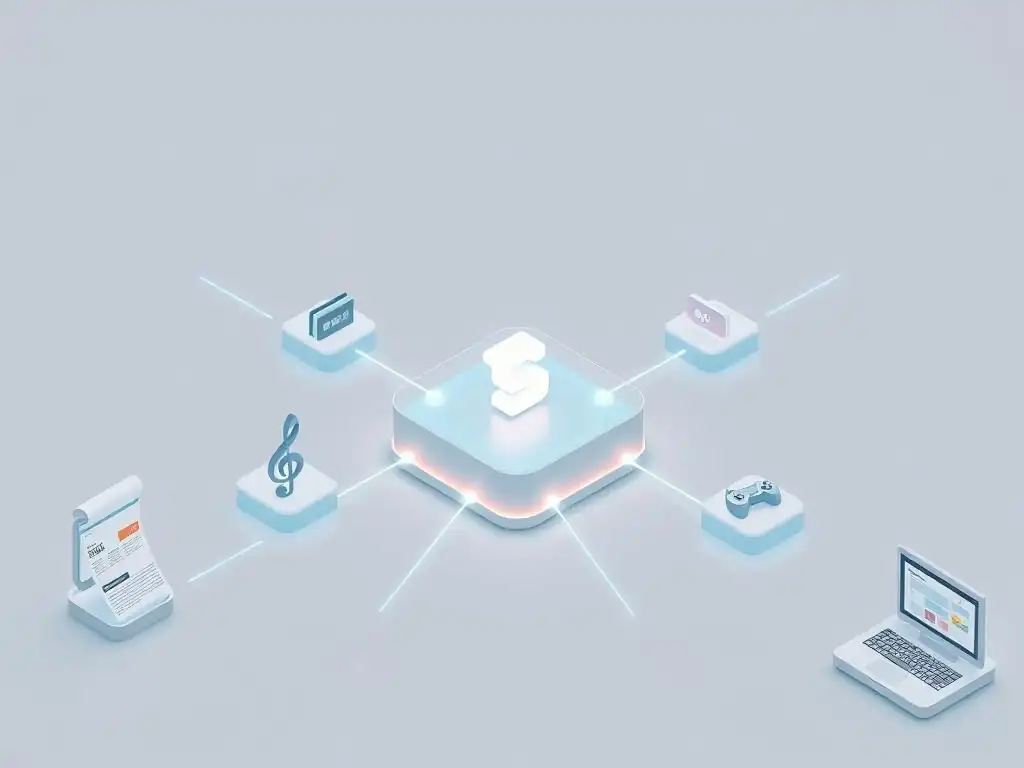
Tokenizing Music: Empowering Artists and Fans
Tokenizing music is transforming the music industry, offering artists greater control over their work and fostering deeper connections with fans. NFTs can represent ownership of songs, albums, or even exclusive musical experiences, allowing artists to directly monetize their creations and bypass traditional record labels. Fans can purchase music NFTs, gaining verifiable ownership of digital music assets, which can be traded, collected, or used within metaverse environments.
Tokenized music platforms are emerging, providing artists with tools to mint and sell music NFTs, distribute their music directly to fans, and manage royalties transparently using smart contracts. This shift empowers artists to retain a larger share of their revenue and build stronger, more direct relationships with their fanbase.
Furthermore, tokenization can facilitate new forms of fan engagement and participation in the music ecosystem. Artists can issue social tokens that grant fans access to exclusive content, behind-the-scenes experiences, or even voting rights in artist decisions. Decentralized music DAOs are emerging, allowing fans to collectively invest in artists, participate in music production, and share in the success of the music they support. Tokenizing music is fostering a more equitable and community-driven music industry, shifting power from intermediaries to artists and fans.
Audius: A Blockchain-Based Music Platform
Audius is a prominent example of a blockchain-based music platform that exemplifies the potential of tokenizing music. Built on blockchain technology, Audius aims to create a decentralized and artist-owned music streaming service. Artists on Audius can upload their music, tokenize it as NFTs, and directly distribute it to fans without relying on traditional streaming platforms and intermediaries. Audius utilizes its native token, AUDIO, for platform governance, artist rewards, and feature access. Fans can stream music on Audius for free and support artists directly through tips and tokenized purchases.
Audius has gained significant traction within the music industry, attracting both established and emerging artists. As of 2023, Audius reportedly hosts millions of tracks and boasts a large user base. Its success demonstrates the viability of blockchain-based music platforms as a compelling alternative to centralized streaming services, offering artists greater control, fairer revenue sharing, and a more direct connection with their audience. Audius serves as a real-world example of how tokenizing music can empower artists and reshape the music industry landscape.
Tokenizing Video Content: From Short Films to Documentaries
Tokenizing video content is opening up new avenues for filmmakers, video creators, and audiences, enabling innovative blockchain content monetization strategies and distribution models. NFTs can represent ownership of films, episodes, documentaries, or even individual scenes, allowing creators to directly monetize their video content and bypass traditional film studios or streaming platforms. Viewers can purchase video NFTs to own digital copies of films, gain access to exclusive content, or support independent filmmakers directly. Tokenized video platforms are emerging, offering creators tools to mint and distribute video NFTs, manage digital rights, and engage with their audience in new ways.
Tokenization can also facilitate decentralized film funding and production. Filmmakers can issue tokens to raise capital for their projects, offering token holders a share in future revenue or governance rights. Decentralized film DAOs are being formed, enabling communities to collectively fund and produce films, fostering greater transparency and community involvement in the filmmaking process. Tokenizing video content is democratizing the film industry, empowering independent creators and fostering a more direct and sustainable connection with audiences.
Decentralized Film Fund (DeFil): A Tokenized Video Project
Decentralized Film Fund (DeFil) is an example of a tokenized video project that illustrates the potential of blockchain in film financing and distribution. DeFil is a decentralized autonomous organization (DAO) that aims to fund and support independent filmmakers through tokenization and community governance. DeFil issues its native token, DEFIL, which is used for governance, funding proposals, and revenue sharing within the DAO. Filmmakers can submit proposals to DeFil for funding, and DEFIL token holders vote on which projects to support. Funded films are then released on DeFil's platform, and revenue generated is shared among token holders and filmmakers.
DeFil represents a novel approach to film financing, bypassing traditional film studios and funding institutions. It empowers independent filmmakers to access funding directly from a community of supporters and fosters greater transparency and community involvement in the filmmaking process. DeFil exemplifies how tokenization can disrupt the traditional film industry and create new opportunities for independent filmmakers and audiences alike, showcasing blockchain content monetization strategies in action for video content.
Tokenizing Written Content: Articles, Books, and Journalism
Tokenizing written content is revolutionizing the publishing industry and journalism, offering new blockchain content monetization strategies for writers, journalists, and publishers. NFTs can represent ownership of articles, books, blog posts, or even individual paragraphs, allowing writers to directly monetize their written work and bypass traditional publishers or paywalls. Readers can purchase NFTs to own digital copies of written content, support their favorite writers, or gain access to exclusive content or communities. Tokenized publishing platforms are emerging, providing writers with tools to mint and distribute written content NFTs, manage digital rights, and connect directly with their readers.
Tokenization can also foster decentralized journalism and content curation. Decentralized news DAOs are being formed, enabling communities to collectively fund and curate news content, ensuring greater transparency and editorial independence. Journalists can tokenize their articles and distribute them directly to readers, retaining a larger share of the revenue and reducing reliance on traditional media outlets. Tokenizing written content is empowering writers and journalists, fostering a more direct and sustainable relationship with their audience, and promoting a more decentralized and equitable publishing ecosystem.
Civil: A Blockchain-Powered Publishing Platform
Civil was a notable, though now defunct, example of a blockchain-powered publishing platform that aimed to revolutionize journalism through tokenization and decentralization. Civil sought to create a decentralized news ecosystem where journalists could publish their work directly to readers and be rewarded through cryptocurrency payments. Civil utilized its native token, CVL, for platform governance, content curation, and journalist rewards. Readers could subscribe to Civil's news outlets using CVL tokens and support independent journalism directly. Civil aimed to create a more sustainable and independent model for journalism, reducing reliance on advertising and centralized media ownership.
While Civil ultimately faced challenges and ceased operations in its initial form, its vision and approach highlighted the potential of blockchain to transform the publishing industry and empower journalists. Civil's attempt to create a decentralized news ecosystem paved the way for further experimentation and innovation in blockchain-based publishing platforms and blockchain content monetization strategies for written content. Its legacy serves as a valuable case study in the challenges and opportunities of applying blockchain to journalism.
Tokenizing Photography and Digital Art
Tokenizing photography and digital art has ignited a revolution in the art world, providing artists with new blockchain content monetization strategies and empowering them to reach global audiences directly. NFTs have become the standard for representing ownership of digital art and photography, creating digital scarcity and verifiability for intangible artworks. Artists can mint NFTs of their digital creations and sell them on NFT marketplaces, bypassing traditional art galleries and auction houses.
Collectors can purchase NFT art, gaining verifiable ownership of unique digital artworks, which can be traded, displayed in virtual galleries, or collected as digital assets. The rise of NFT art has empowered digital artists to monetize their work in unprecedented ways, creating a thriving digital art market and expanding the definition of art ownership and value.
Tokenization has also fostered new forms of digital art creation and collaboration. Generative art, AI-generated art, and interactive digital art are flourishing within the NFT space, pushing the boundaries of artistic expression. Collaborative art projects and decentralized art DAOs are emerging, enabling artists to collaborate and share ownership of digital artworks collectively. Tokenizing photography and digital art is not only transforming the art market but also fostering innovation and creativity in the digital art world, creating new opportunities for artists and collectors alike and establishing NFTs as a core component of blockchain content monetization strategies for visual arts.
The Rise of NFT Art and its Impact on the Art World
The rise of NFT art has had a profound and multifaceted impact on the art world, disrupting traditional norms and creating new paradigms for art creation, ownership, and monetization. NFTs have democratized access to the art market, allowing digital artists, who were previously marginalized by the traditional art establishment, to gain recognition and financial success.
The emergence of NFT marketplaces has created a global and accessible platform for buying and selling digital art, expanding the reach of artists and collectors worldwide. NFT art sales have generated significant revenue for artists, with some digital artworks selling for millions of dollars, demonstrating the economic viability of this new art form.
However, the rise of NFT art has also sparked debates and controversies within the art world. Concerns about environmental impact, copyright issues, and market speculation have been raised. Nevertheless, the transformative impact of NFTs on the art world is undeniable. NFTs have challenged traditional notions of art ownership, value, and scarcity, and they have opened up new possibilities for artistic expression and engagement. The ongoing evolution of NFT art continues to reshape the art world, solidifying its place as a significant force in the contemporary art landscape and a key driver of blockchain content monetization strategies for digital artists.
The Technological Infrastructure for Tokenized Content
Blockchain Platforms for Content Creation: Ethereum, Solana, and Beyond
The technological infrastructure for tokenized content relies heavily on various blockchain platforms, each offering different features and capabilities suited for content creation and monetization. Ethereum, the pioneering smart contract platform, has been a popular choice for many tokenized content projects due to its established ecosystem, large developer community, and robust smart contract functionality. Ethereum's ERC-721 standard is widely used for NFTs, making it a foundational platform for NFT-based content sales and ownership.
Solana has emerged as a high-performance blockchain platform, offering faster transaction speeds and lower fees compared to Ethereum. Solana's scalability makes it attractive for content platforms requiring high transaction throughput, such as microtransaction-based content access or platforms with a large user base. Other blockchain platforms, such as Polygon (a Layer-2 scaling solution for Ethereum), Flow (designed for NFTs and gaming), and Tezos (known for its energy efficiency and governance features), are also gaining traction in the tokenized content space, offering diverse options for developers and creators based on their specific needs and priorities for blockchain content monetization strategies.
Smart Contract Development for Content Monetization
Smart contract development is crucial for building robust and automated blockchain content monetization strategies. Smart contracts are self-executing agreements encoded on the blockchain, automating various processes related to content ownership, distribution, and revenue sharing. For NFT-based content sales, smart contracts are used to mint NFTs, manage ownership transfers, and enforce royalty payments to creators on secondary sales. For tokenized subscriptions, smart contracts automate subscription access management, ensuring that users gain access upon token purchase and lose access when their subscription expires.
Developing secure and efficient smart contracts requires specialized skills and expertise in blockchain programming languages, such as Solidity (for Ethereum) or Rust (for Solana). Smart contract audits are essential to ensure the security and reliability of these contracts, preventing vulnerabilities and protecting user funds and content rights. The complexity of smart contract development highlights the importance of skilled developers in building and maintaining the technological infrastructure for tokenized content and effective blockchain content monetization strategies.
Decentralized Storage Solutions: IPFS and Filecoin
Decentralized storage solutions are essential components of the technological infrastructure for tokenized content, addressing the limitations of traditional centralized storage systems. IPFS (InterPlanetary File System) is a decentralized peer-to-peer network for storing and sharing data. Content stored on IPFS is content-addressed, meaning it is accessed based on its content hash rather than a location address, ensuring content integrity and resilience to censorship. IPFS is often used to store the actual content associated with NFTs, ensuring that the content remains accessible and immutable over time.
Filecoin is a decentralized storage network built on IPFS, providing incentivized storage and retrieval services. Filecoin uses its native token, FIL, to incentivize storage providers to contribute storage space to the network and to reward users for storing and retrieving data. Filecoin offers a more robust and economically sustainable decentralized storage solution compared to relying solely on IPFS. Other decentralized storage solutions, such as Arweave and Sia, are also emerging, offering diverse options for storing and managing content in a decentralized and censorship-resistant manner, crucial for the long-term viability of blockchain content monetization strategies.
Challenges and Opportunities in the Tokenized Content Space
Regulatory Uncertainty and Legal Considerations
The tokenized content space, being a nascent and rapidly evolving field, faces significant regulatory uncertainty and legal considerations. The legal classification of NFTs and content tokens is still evolving in many jurisdictions, creating ambiguity around ownership rights, intellectual property rights, and tax implications. Regulations related to securities laws, consumer protection, and data privacy can also impact tokenized content projects. Navigating this regulatory landscape requires careful legal analysis and compliance to ensure projects operate within legal boundaries and avoid potential legal challenges.
Furthermore, cross-border regulations and international legal frameworks for tokenized content are still underdeveloped, posing challenges for projects operating globally. The lack of clear and consistent regulations can create uncertainty for creators, consumers, and investors, hindering wider adoption and investment in the tokenized content space. Addressing regulatory uncertainty through proactive engagement with regulators, industry self-regulation, and legal innovation is crucial for fostering a sustainable and legally compliant tokenized content ecosystem and enabling long-term growth of blockchain content monetization strategies.
Scalability and Performance Issues
Scalability and performance issues remain significant challenges for the tokenized content space, particularly as adoption grows and content platforms scale to accommodate larger user bases and content volumes. Blockchain networks, especially older platforms like Ethereum's mainnet, can face limitations in transaction throughput and processing speed, leading to congestion and high transaction fees. These scalability limitations can impact the user experience, particularly for content platforms requiring frequent transactions, such as microtransaction-based content access or platforms with high user activity.
Addressing scalability issues requires leveraging Layer-2 scaling solutions, optimizing smart contract designs, and exploring alternative high-performance blockchain platforms. Continued technological advancements in blockchain scalability are crucial for enabling the widespread adoption of tokenized content and ensuring that blockchain content monetization strategies can handle the demands of mainstream media consumption and content creation. Improving scalability and performance is essential for creating a seamless and user-friendly experience for both creators and consumers in the tokenized content space.
Educating Creators and Consumers About Blockchain Technology
Educating creators and consumers about blockchain technology and its potential for content monetization is a critical challenge for driving mainstream adoption of tokenized content. Many creators and consumers are still unfamiliar with blockchain concepts, NFTs, and tokenized systems, creating a barrier to entry and hindering wider participation in the tokenized content space. Overcoming this educational gap requires clear and accessible educational resources, user-friendly interfaces, and simplified onboarding processes for blockchain-based content platforms.
Content creators need to understand the benefits of tokenization, how to mint and sell NFTs, and how to leverage blockchain tools for content distribution and monetization. Consumers need to understand the value proposition of tokenized content, how to acquire and manage tokens, and how to interact with blockchain-based content platforms. Effective education and outreach efforts are essential for bridging the knowledge gap and fostering broader understanding and acceptance of tokenized content and blockchain content monetization strategies among both creators and consumers.
Overcoming Barriers to Entry for Mainstream Adoption
Overcoming barriers to entry is crucial for achieving mainstream adoption of tokenized content and realizing its full potential. Beyond education, other barriers include the complexity of current blockchain interfaces, the perceived technical hurdles of using blockchain technology, and the volatility of cryptocurrency markets. Simplifying user interfaces, abstracting away technical complexities, and providing user-friendly tools for content creation and consumption are essential for lowering barriers to entry. Integrating tokenized content platforms with familiar web and mobile applications can also improve accessibility and user experience.
Addressing concerns about cryptocurrency volatility through stablecoin integration and predictable pricing models can increase user confidence and encourage broader participation. Furthermore, fostering interoperability between different blockchain platforms and token standards can enhance user convenience and reduce fragmentation within the tokenized content space. By systematically addressing these barriers to entry, the tokenized content space can pave the way for mainstream adoption and unlock the transformative potential of blockchain content monetization strategies for the media industry.
The Future of Media: Predictions for Tokenized Content
The Rise of Creator Economies and Decentralized Platforms
The future of media is increasingly pointing towards the rise of creator economies and decentralized platforms, and tokenized content is poised to play a pivotal role in this transformation. As creators seek greater autonomy and control over their work and revenue streams, decentralized platforms powered by blockchain technology offer a compelling alternative to traditional centralized media intermediaries. Tokenization empowers creators to directly monetize their content, build direct relationships with their audiences, and participate in community-driven governance models. This shift is fueling the growth of creator economies, where individual creators can thrive and build sustainable businesses around their content.
Decentralized content platforms, leveraging tokenization and DAOs, are emerging as viable alternatives to centralized social media and content distribution platforms. These platforms offer greater transparency, user control, and fairer revenue sharing models, attracting creators and users seeking a more equitable and democratic media landscape. The convergence of creator economies and decentralized platforms, driven by tokenized content, is likely to reshape the media industry in the coming years, empowering creators and fostering a more diverse and vibrant content ecosystem.
The Convergence of Blockchain, AI, and Content Creation
The future of media will likely witness a powerful convergence of blockchain, artificial intelligence (AI), and content creation, creating new possibilities for innovation and automation. AI can enhance content creation processes, automate content curation and distribution, and personalize user experiences. Blockchain can provide the underlying infrastructure for secure and transparent content ownership, monetization, and governance. The integration of AI and blockchain can lead to intelligent content platforms that are self-governing, data-driven, and highly efficient.
AI-powered tools can assist creators in generating content, optimizing content for different platforms, and reaching wider audiences. Blockchain can ensure that creators retain ownership and control over their AI-generated content and that revenue is distributed fairly and transparently. Smart contracts can automate content licensing, royalty payments, and content moderation, streamlining workflows and reducing administrative overhead. This convergence of blockchain, AI, and content creation is expected to drive significant advancements in the media industry, leading to more personalized, efficient, and creator-centric content ecosystems and innovative blockchain content monetization strategies.
Market Size of Tokenized Content in 2030
Predicting the precise market size of tokenized content in 2030 is challenging due to the nascent and rapidly evolving nature of the space. However, current trends and projections indicate significant growth potential. The NFT market, a key component of tokenized content, has already experienced exponential growth in recent years, and this trend is expected to continue as NFTs gain wider adoption across various media formats. The increasing demand for digital collectibles, virtual assets, and creator-centric monetization models is likely to drive further growth in the tokenized content market.
Industry reports and market analysis suggest that the NFT market alone could reach hundreds of billions of dollars in value by 2030. The broader tokenized content market, encompassing music, video, written content, and other media formats, has the potential to be significantly larger.
Factors such as mainstream adoption of blockchain technology, increasing creator participation in tokenized content platforms, and growing consumer demand for digital ownership and exclusive content experiences are expected to contribute to substantial market growth. While precise figures are speculative, it is reasonable to anticipate that the tokenized content market will become a significant force in the media industry by 2030, representing a substantial portion of the overall digital content economy and a major avenue for blockchain content monetization strategies.
Conclusion: Embracing the Potential of Blockchain Content Monetization
Key Takeaways for Creators and Media Companies
For creators and media companies, embracing the potential of blockchain content monetization strategies offers a transformative opportunity to reshape their business models and engage with audiences in new ways. Key takeaways include the power of NFTs for monetizing unique digital assets, tokenized subscriptions for building recurring revenue streams, decentralized advertising for greater transparency and efficiency, and Content DAOs for empowering communities and shared ownership. Creators should explore tokenization as a means to gain greater control over their content, reduce reliance on intermediaries, and build direct relationships with their fans.
Media companies should consider integrating blockchain technology into their content distribution and monetization strategies to enhance transparency, efficiency, and user engagement. Experimenting with tokenized subscription models, NFT-based content offerings, and decentralized advertising solutions can unlock new revenue streams and create a more sustainable and equitable media ecosystem. Embracing blockchain innovation is essential for creators and media companies to thrive in the evolving digital landscape and capitalize on the opportunities presented by tokenized content and blockchain content monetization strategies.
The Long-Term Vision for a Decentralized and Equitable Media Landscape
The long-term vision for a decentralized and equitable media landscape, powered by blockchain technology and tokenized content, is one where creators are empowered, audiences are engaged, and the flow of value is more transparent and equitable. In this vision, creators retain greater control over their work and receive fairer compensation for their contributions. Audiences have greater ownership and agency in the content they consume and support. Intermediaries are minimized, and value flows directly between creators and consumers, fostering a more sustainable and creator-centric media ecosystem.
Blockchain technology provides the infrastructure to realize this vision, enabling decentralized platforms, transparent monetization models, and community-driven governance. Tokenized content is the key enabler, transforming digital content into verifiable assets and unlocking new forms of value creation and exchange. As blockchain technology matures and adoption grows, the vision of a decentralized and equitable media landscape becomes increasingly attainable, promising a more vibrant, diverse, and sustainable future for content creation and consumption and solidifying blockchain content monetization strategies as a central pillar of this future.
Frequently Asked Questions
What are the primary benefits of using blockchain for content monetization?
Blockchain offers enhanced transparency and direct creator-to-consumer relationships, eliminating intermediaries. This leads to higher revenue shares and greater control over content distribution.
How can tokenization be used to monetize content on a blockchain?
Tokenization allows creators to issue digital tokens representing ownership or access rights to their content. These tokens can be sold or traded, providing a new revenue stream and incentivizing engagement.
What are some examples of "Blockchain content monetization strategies" in practice?
Examples include pay-per-view content using blockchain-based microtransactions, NFT-backed media ownership, and decentralized content platforms with tokenized rewards for creators and users.
What are the regulatory challenges associated with tokenized content and blockchain-based monetization?
Regulatory frameworks surrounding digital assets and securities offerings are still evolving. Compliance with KYC/AML regulations and securities laws is crucial for legality.
How does blockchain enable more equitable revenue sharing for content creators?
Blockchain's smart contracts can automate revenue distribution, ensuring creators receive a predetermined percentage of earnings directly, bypassing traditional gatekeepers and middlemen.
Okay, here's a final reflection designed to close your article "Tokenized Content: Monetizing Media in the Blockchain Age," optimized for the keyword "Blockchain content monetization strategies," and following the structure you outlined:
Final Reflection: Embracing the Decentralized Future of Content
The journey through the world of blockchain content monetization strategies reveals a profound shift in how we value and interact with media. The potential to empower creators and reward consumers directly, bypassing traditional gatekeepers, is not just a theoretical possibility; it's a rapidly unfolding reality that promises to reshape the digital landscape as we know it.
This movement towards decentralized content ownership has already begun to subtly, yet powerfully, influence the cultural and social landscape. The ability for creators to connect directly with their audience, fostering genuine community and shared value, is a game-changer that resonates deeply with the desire for authenticity and transparency. The future of media is not about controlling content, but about empowering creators and rewarding consumers.
This sentiment underscores the fundamental shift in power dynamics that blockchain technology enables.
As we stand on the cusp of this new era, I invite you to reflect on the possibilities presented by blockchain content monetization. Consider how you, as a creator, consumer, or innovator, can contribute to building a more equitable and sustainable media ecosystem. Explore the tools and platforms available, experiment with new models, and champion the vision of a future where content is truly valued and rewarded. The power to shape this future is in your hands.
Unleash Your Content's Potential: Step into the Tokenized Future!
Thank you for exploring the exciting world of tokenized content! We hope you've gained valuable insights into how blockchain technology can transform media monetization. Now, it's time to turn that knowledge into action.
Here are some steps you can take today:
- Explore platforms that support creating and distributing tokenized content. Getting hands-on is the best way to understand practical applications and see how blockchain can empower creators.
- Share this article with your network to inspire discussions about the future of content ownership and monetization. Let’s build a community of innovators!
- Try creating a simple NFT for one of your pieces—be it a tweet, a photo, or a short blog post—to learn how minting and ownership work on the blockchain.
What type of content are you most excited to tokenize, and why? Share your ideas in the comments below!
Leave a Reply