
Blockchain for Education: Funding and Tracking Educational Initiatives Globally


Welcome to Blockchain Trends, your guide to understanding the revolutionary impact of blockchain technology beyond the hype. In this space, we delve into decentralized finance (DeFi), enterprise solutions, regulatory landscapes, and the exciting future of decentralized systems.
Are you curious about how blockchain is impacting education? This week, we're diving deep into Blockchain for Education, specifically tracking blockchain education funding globally. Discover how this innovative technology is revolutionizing the way educational initiatives are funded and monitored, and what this means for the future of learning. Join us as we explore the funding landscape and the potential for increased transparency and accountability in education.
Blockchain for Education: Funding and Tracking Educational Initiatives Globally
- Introduction: The Promise of Blockchain in Education Funding
- Blockchain Education Funding Tracking: A Deeper Dive
- Global Blockchain Education Initiatives: Case Studies
- Blockchain Solutions for Education: Beyond Funding
- Overcoming the Challenges of Blockchain Adoption in Education
- The Future of Blockchain in Education: Trends and Predictions
- Conclusion: Empowering Education with Blockchain Technology
-
Frequently Asked Questions
- How can blockchain technology improve the transparency of education funding?
- What are some potential applications of blockchain for tracking student achievements and credentials?
- How might blockchain facilitate cross-border collaboration in educational research and development?
- What are the key regulatory challenges associated with using blockchain in education, particularly regarding student data privacy?
- How does blockchain offer opportunities for new models of educational funding, beyond traditional sources?
- Final Reflection: Empowering Education Through Transparency
Introduction: The Promise of Blockchain in Education Funding
Understanding the Challenges in Current Education Funding Models
Education is a fundamental human right and a cornerstone of societal development. However, the current models for funding educational initiatives globally face significant challenges. A major issue is the lack of transparency and accountability in how funds are allocated and utilized. Traditional systems often involve multiple intermediaries, from government agencies to international organizations and local administrations. This complex web can obscure the flow of funds, making it difficult to track where money is actually going and whether it is being used effectively. For instance, a 2019 report by UNESCO highlighted that approximately 30% of funds allocated for education in developing countries are lost to corruption or inefficiency. This loss directly impacts the quality and reach of educational programs, hindering progress towards universal education. Furthermore, donors, both governmental and private, often struggle to verify the impact of their contributions, leading to a lack of trust and potentially reduced funding over time.
Another critical challenge is the inefficiency and high administrative costs associated with traditional funding distribution methods. Disbursements can be slow, bureaucratic, and expensive, particularly in remote or underserved areas. Consider the example of a school in a rural African village waiting months for approved funds to arrive, delaying essential repairs or the purchase of learning materials.
These delays not only disrupt educational activities but also erode the value of the funds due to inflation and changing needs. Moreover, the lack of direct control and visibility over fund usage makes it challenging to ensure that resources are being directed to the most pressing needs, such as teacher training, infrastructure development, or scholarships for disadvantaged students. This lack of efficiency and transparency undermines the effectiveness of education funding and necessitates innovative solutions.
How Blockchain Technology Can Revolutionize Education Finance and Transparency
Blockchain technology offers a compelling solution to address the persistent challenges in education funding. Its inherent characteristics of transparency, security, and immutability can revolutionize how educational initiatives are financed and tracked globally. By leveraging a distributed ledger system, blockchain provides an open and auditable record of all transactions, from the initial donation to the final disbursement and utilization of funds.
Every transaction is timestamped and cryptographically secured, making it virtually impossible to tamper with or alter the data. This enhanced transparency builds trust among donors, recipients, and stakeholders, as everyone can verify the flow of funds in near real-time. Imagine a donor in Europe being able to track their donation directly to a specific school project in South Asia and see evidence of its impact through verifiable on-chain data.
Furthermore, blockchain can streamline the disbursement of education funds, reducing bureaucratic delays and administrative costs. Smart contracts, self-executing agreements coded on the blockchain, can automate the release of funds based on pre-defined conditions. For example, a smart contract could automatically release scholarship funds to a student upon verification of their enrollment and academic progress, eliminating the need for manual processing and intermediaries.
This automation not only accelerates fund delivery but also reduces the potential for human error and corruption. Studies have shown that utilizing blockchain for financial transactions can potentially reduce administrative costs by up to 70% in certain sectors.
Applying this to education funding could free up significant resources that can be redirected to directly benefit students and educators, ultimately enhancing the effectiveness and reach of educational programs worldwide. Blockchain's capacity for transparent and efficient fund management positions it as a powerful tool to transform education finance for the better.
Blockchain Education Funding Tracking: A Deeper Dive
What is Blockchain-Based Education Funding Tracking?
Blockchain-based education funding tracking refers to the application of blockchain technology to monitor and manage the flow of funds allocated to educational initiatives. At its core, it involves recording all financial transactions related to education funding on a distributed, immutable ledger – the blockchain. This ledger is shared across a network of computers, making it transparent and resistant to censorship or manipulation.
Each transaction, whether it's a donation from a philanthropist, a grant from a government agency, or a scholarship disbursement to a student, is recorded as a "block" of data and linked chronologically to the previous block, forming a "chain." This chain of blocks provides a complete and auditable history of all funding activities.
In practice, blockchain-based tracking systems for education funding can range from simple platforms that record basic transaction details to more sophisticated systems that integrate smart contracts and data analytics. For instance, a basic system might track the movement of funds from a donor to an educational institution, providing timestamps, amounts, and involved parties. More advanced systems could incorporate smart contracts to automate fund release upon meeting specific milestones, such as school construction completion or student enrollment targets.
These systems can also generate reports and analytics based on the on-chain data, providing stakeholders with insights into funding distribution patterns, efficiency, and impact. The key element is the utilization of blockchain's inherent transparency and immutability to create a reliable and trustworthy system for tracking education funding, fostering accountability and reducing the risk of misuse or corruption.
Key Benefits of Using Blockchain for Education Grants and Donations
Employing blockchain for managing education grants and donations offers a multitude of compelling benefits that address the shortcomings of traditional funding models. Enhanced Transparency is paramount. Blockchain's open ledger provides unparalleled visibility into the flow of funds, enabling donors to track their contributions directly and verify that they are being used as intended. This transparency fosters trust and encourages greater philanthropic engagement in education.
Reduced Corruption and Fraud are significant advantages. The immutability of blockchain records makes it extremely difficult to tamper with financial data or divert funds illicitly. Every transaction is permanently recorded and auditable, deterring fraudulent activities and promoting accountability among all parties involved in the funding process.
Increased Efficiency and Lower Administrative Costs are also crucial benefits. Smart contracts can automate many aspects of grant and donation management, from application processing to disbursement and reporting. This automation reduces the need for manual interventions and intermediaries, streamlining processes and lowering administrative overhead. Furthermore, Improved Donor Engagement and Trust result from the transparency and accountability offered by blockchain. Donors are more likely to contribute when they have confidence that their funds will be used effectively and transparently.
Blockchain-based tracking provides this assurance, fostering stronger donor relationships and potentially increasing overall funding for education. Finally, Data-Driven Insights and Impact Measurement are enabled by blockchain. The data recorded on the blockchain can be analyzed to gain valuable insights into funding patterns, program effectiveness, and areas for improvement. This data-driven approach allows for more informed decision-making and better allocation of resources to maximize the impact of education grants and donations.
Global Blockchain Education Initiatives: Case Studies
Case Study 1: UNICEF's Cryptocurrency Fund - Funding Open-Source Education Projects
UNICEF, the United Nations Children's Fund, has been at the forefront of exploring innovative technologies to improve the lives of children globally, including leveraging blockchain for education. In 2019, UNICEF launched its Cryptocurrency Fund, becoming the first UN agency to receive, hold, and disburse cryptocurrencies. This fund is specifically designed to invest in open-source technology projects with the potential to benefit children worldwide.
A significant portion of this funding is directed towards education-focused initiatives, particularly those promoting digital learning and open educational resources. For example, UNICEF's Innovation Fund has invested in companies developing blockchain-based platforms to provide access to educational content in remote areas and to track student progress and learning outcomes securely. By utilizing cryptocurrency donations and blockchain technology, UNICEF aims to enhance the efficiency, transparency, and impact of its education funding programs.
Challenges Faced and Solutions Implemented
UNICEF's foray into cryptocurrency and blockchain for education funding has not been without its challenges. One significant hurdle is the volatility of cryptocurrencies. The value of cryptocurrencies can fluctuate dramatically, which poses risks to the fund's value and requires careful financial management strategies. To mitigate this, UNICEF has implemented robust risk management protocols and works with experienced cryptocurrency custodians to manage volatility and ensure fund security.
Another challenge is the regulatory landscape surrounding cryptocurrencies, which varies significantly across different countries. Navigating these complex and often evolving regulations requires ongoing legal expertise and adaptation to local contexts. UNICEF addresses this by engaging with legal experts and policymakers to ensure compliance and advocate for supportive regulatory frameworks.
Furthermore, technical capacity and adoption within the organizations and communities they serve present challenges. Implementing blockchain-based solutions requires technical expertise and training for staff and partners. UNICEF invests in capacity building programs and collaborates with technology partners to ensure successful implementation and adoption of these innovative solutions in diverse settings.
Results and Impact on Educational Outcomes
While UNICEF's blockchain education initiatives are still relatively recent, early indicators point to positive results and promising impact on educational outcomes. The Cryptocurrency Fund has successfully disbursed funds to several open-source education projects, supporting the development of innovative learning platforms and tools. For example, investments in blockchain-based identity solutions are aimed at providing students with verifiable digital credentials, enabling them to access educational opportunities and track their learning achievements across different institutions.
Moreover, the enhanced transparency provided by blockchain is improving accountability and trust in UNICEF's funding processes. Donors can track their cryptocurrency contributions and see how they are being used to support education projects.
While quantifying the direct impact on educational outcomes is an ongoing process, UNICEF is actively monitoring and evaluating the effectiveness of these initiatives. Initial data suggests that blockchain-based solutions are contributing to more efficient fund disbursement, increased transparency, and the development of innovative tools that have the potential to improve access to quality education for children in underserved communities.
Case Study 2: BitDegree - Blockchain for Transparent Scholarship Distribution
BitDegree is an online education platform that has adopted blockchain technology to enhance transparency and efficiency in scholarship distribution. Recognizing the challenges of fraud and lack of transparency in traditional scholarship programs, BitDegree developed a blockchain-based scholarship system. This system leverages smart contracts to automate the scholarship application, selection, and disbursement process, ensuring that funds reach deserving students in a verifiable and secure manner.
BitDegree partners with educational institutions and organizations to offer scholarships through its platform, connecting donors directly with students and providing a transparent record of scholarship allocations. By utilizing blockchain, BitDegree aims to build trust and accountability in the scholarship ecosystem, making education more accessible and equitable.
Implementing Smart Contracts for Automated Scholarship Disbursement
A key innovation of BitDegree's approach is the implementation of smart contracts to automate scholarship disbursement. Smart contracts are self-executing agreements written in code and stored on the blockchain. In the context of scholarships, these contracts can be programmed to automatically release funds to students once they meet pre-defined criteria, such as enrollment verification, academic performance, or completion of specific courses.
For example, a smart contract could be set up to release scholarship installments to a student each semester upon verification of their continued enrollment and satisfactory grades. This automation eliminates the need for manual processing and intermediaries in the disbursement process, reducing administrative delays and the potential for human error.
Furthermore, the terms and conditions of the scholarship, including disbursement schedules and eligibility criteria, are transparently encoded within the smart contract, ensuring clarity and accountability for both donors and recipients. This automated and transparent system streamlines scholarship distribution and enhances trust in the process.
Ensuring Accountability and Reducing Fraud
BitDegree's blockchain-based scholarship system significantly enhances accountability and reduces the risk of fraud compared to traditional methods. The transparent and immutable nature of blockchain records every scholarship transaction, creating an auditable trail from donor contribution to student receipt. This transparency makes it much more difficult to divert funds or engage in fraudulent activities. Smart contracts further enhance accountability by ensuring that funds are disbursed automatically and only when pre-defined conditions are met.
This eliminates the potential for manual manipulation or biased decision-making in the disbursement process. Moreover, BitDegree utilizes blockchain-based identity verification to ensure that scholarship applicants are legitimate and eligible, reducing the risk of identity fraud. By combining blockchain transparency, smart contract automation, and identity verification, BitDegree's system creates a more secure and accountable scholarship distribution mechanism, ensuring that funds reach deserving students and contribute to their educational advancement.
Blockchain Solutions for Education: Beyond Funding
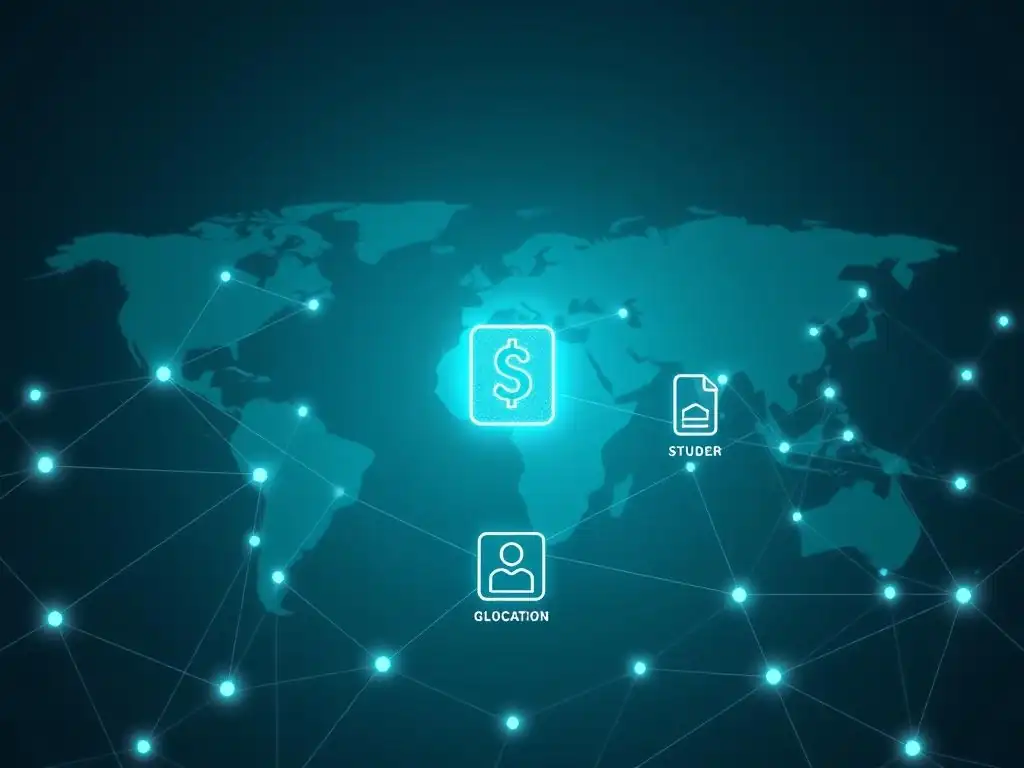
Digital Identity and Credentials for Students and Educators
Beyond funding and tracking, blockchain technology offers significant potential to revolutionize other aspects of the education sector, particularly in the realm of digital identity and credentials. Traditional systems for managing student and educator identities and credentials are often fragmented, inefficient, and vulnerable to fraud. Blockchain-based digital identity solutions can provide students and educators with secure, verifiable, and portable digital identities that are controlled by the individuals themselves.
These digital identities can be used to access educational resources, manage academic records, and prove qualifications to employers or educational institutions globally. For instance, a student could have a blockchain-based digital ID that securely stores their academic transcripts, diplomas, and professional certifications, which they can easily share with potential employers or universities without the need for centralized verification processes.
For educators, blockchain-based digital identities can streamline credential verification and professional development tracking. Educators can securely store their teaching licenses, certifications, and records of professional development activities on the blockchain, creating a verifiable and portable professional profile. This can simplify the process of applying for jobs, demonstrating qualifications, and tracking career progression.
Furthermore, blockchain-based digital identity systems can enhance data privacy and security by giving individuals greater control over their personal information. Students and educators can choose what information to share and with whom, reducing the risk of data breaches and unauthorized access. By providing secure, verifiable, and user-centric digital identities, blockchain can empower students and educators and transform the management of credentials in the education sector.
Secure Storage and Management of Educational Records on the Blockchain
The secure storage and management of educational records is another critical area where blockchain technology can offer significant improvements. Traditional systems for storing and managing academic records are often centralized, vulnerable to data breaches, and inefficient in terms of access and verification. Blockchain provides a decentralized, immutable, and secure platform for storing and managing educational records, including transcripts, diplomas, certificates, and learning achievements. Storing these records on a blockchain ensures their integrity and authenticity, making them virtually tamper-proof and resistant to forgery. This is particularly valuable in combating academic fraud and ensuring the credibility of educational qualifications.
Blockchain-based systems can also streamline the process of verifying educational credentials. Instead of relying on slow and cumbersome manual verification processes, educational institutions, employers, and other stakeholders can instantly verify the authenticity of records stored on the blockchain. This can significantly reduce administrative overhead and accelerate processes such as university admissions and employment verification.
Moreover, blockchain can enhance data privacy by allowing students to control access to their educational records. Students can grant permission to specific institutions or employers to view their records, ensuring that their data is shared only with authorized parties. By providing a secure, transparent, and efficient platform for managing educational records, blockchain can enhance the integrity of the education system and empower students with greater control over their academic data.
Overcoming the Challenges of Blockchain Adoption in Education
Addressing Scalability Issues in Blockchain Education Platforms
While blockchain offers numerous benefits for education, scalability remains a significant challenge for widespread adoption. Many existing blockchain platforms have limitations in terms of transaction processing speed and capacity, which can hinder their ability to handle the large volume of transactions required for large-scale educational applications. For example, a blockchain-based system for managing student records for a large university would need to process thousands of transactions daily, which could strain the capacity of some blockchain networks.
To address scalability issues, various solutions are being explored and developed. Layer-2 scaling solutions, such as payment channels and sidechains, are designed to offload transaction processing from the main blockchain, increasing throughput and reducing transaction costs. These solutions can significantly improve the scalability of blockchain platforms without compromising security or decentralization.
Consortium blockchains offer another approach to scalability for educational applications. Consortium blockchains are permissioned blockchains governed by a group of organizations, such as universities or educational institutions. These blockchains can be designed to be more scalable and efficient than public blockchains while still providing transparency and security within the consortium.
Furthermore, optimizations in blockchain protocols are continuously being developed to improve scalability. These include techniques such as sharding, which divides the blockchain into smaller, more manageable pieces, and improved consensus mechanisms that can process transactions more efficiently. Addressing scalability challenges is crucial for realizing the full potential of blockchain in education, and ongoing technological advancements are paving the way for more scalable and robust blockchain-based educational platforms.
Ensuring Data Privacy and Security in Educational Blockchain Implementations
Data privacy and security are paramount concerns in any educational technology implementation, and blockchain is no exception. While blockchain itself is inherently secure due to its cryptographic nature and decentralized architecture, careful consideration must be given to data privacy and security in the design and implementation of blockchain-based education platforms. Data minimization is a key principle to ensure privacy.
Blockchain systems should be designed to store only the necessary data on the blockchain, avoiding the storage of sensitive personal information directly on the public ledger. Instead, hashing and encryption techniques can be used to store data off-chain while maintaining a verifiable link to the blockchain for integrity and authenticity.
Permissioned blockchains can also enhance data privacy in educational applications. By controlling access to the blockchain network and data, permissioned blockchains can ensure that sensitive student and educator information is only accessible to authorized parties. Compliance with data privacy regulations, such as GDPR and FERPA, is essential for blockchain implementations in education. Platforms must be designed to comply with these regulations and provide users with control over their data.
Furthermore, robust security measures are necessary to protect blockchain-based education platforms from cyber threats. This includes implementing strong authentication protocols, access controls, and regular security audits. Addressing data privacy and security concerns proactively is critical for building trust and ensuring the responsible adoption of blockchain technology in education.
The Role of Regulation and Policy in Promoting Blockchain Education
Regulation and policy play a crucial role in shaping the adoption and development of blockchain technology in all sectors, including education. Supportive regulatory frameworks and policies can foster innovation, encourage investment, and ensure the responsible use of blockchain in education. Clear legal frameworks for blockchain-based digital identities and credentials are needed to provide legal recognition and acceptance of these credentials by educational institutions, employers, and government agencies.
This legal clarity is essential for widespread adoption and interoperability. Data privacy regulations need to be adapted to address the unique characteristics of blockchain technology while ensuring the protection of student and educator data. Policymakers need to strike a balance between promoting innovation and safeguarding individual rights.
Government funding and support for blockchain education initiatives can accelerate development and adoption. Governments can invest in research and development, pilot projects, and capacity building programs to promote the use of blockchain in education. International collaboration and standardization are also important.
Harmonizing standards and regulations across different countries can facilitate interoperability and cross-border recognition of blockchain-based educational credentials. Furthermore, education and awareness programs are needed to educate policymakers, educators, and the public about the potential benefits and challenges of blockchain in education. By creating a supportive regulatory and policy environment, governments and international organizations can play a vital role in fostering the responsible and beneficial adoption of blockchain technology to transform education globally.
The Future of Blockchain in Education: Trends and Predictions
Decentralized Learning Platforms and Blockchain-Based Micro-Credentials
The future of blockchain in education points towards the rise of decentralized learning platforms and the widespread adoption of blockchain-based micro-credentials. Decentralized learning platforms leverage blockchain to create more open, accessible, and student-centric learning environments. These platforms can empower learners by giving them greater control over their learning pathways, data, and credentials.
Blockchain can facilitate peer-to-peer learning, decentralized content creation and distribution, and transparent reputation systems for educators and learners. Micro-credentials, which are small, modular units of learning that recognize specific skills or competencies, are gaining traction in the education and employment sectors. Blockchain is ideally suited for issuing and managing micro-credentials due to its immutability, verifiability, and portability.
Blockchain-based micro-credentials can provide learners with a more flexible and granular way to demonstrate their skills and knowledge, enhancing their employability and career prospects. They can also enable employers to more easily identify and verify the specific skills and competencies of job candidates. The combination of decentralized learning platforms and blockchain-based micro-credentials has the potential to disrupt traditional education models and create a more learner-driven, skills-focused, and globally accessible education ecosystem. We can expect to see an increasing number of platforms and initiatives emerging in this space, transforming how education is delivered and recognized.
The Potential of Blockchain to Democratize Access to Education Globally
Blockchain technology holds immense potential to democratize access to education globally, particularly for underserved and marginalized populations. Financial inclusion is a key aspect. Blockchain-based payment systems can facilitate the efficient and transparent disbursement of education funding to remote and underbanked communities, bypassing traditional banking infrastructure. Decentralized identity solutions can provide individuals without formal identification documents with verifiable digital identities, enabling them to access educational opportunities and services. Open educational resources (OER) can be distributed and accessed more easily through blockchain-based platforms, making quality educational content available to learners regardless of their location or socioeconomic background.
Blockchain-based learning platforms can break down geographical barriers and provide access to education for learners in conflict zones, refugee camps, and remote areas with limited infrastructure. Furthermore, blockchain can empower learners in developing countries by giving them ownership and control over their educational credentials and data, enabling them to participate more fully in the global knowledge economy. By leveraging blockchain's transparency, security, and accessibility, we can create a more equitable and inclusive education system that reaches learners in even the most remote and challenging circumstances, contributing to global educational equity and opportunity.
Increased Focus on Interoperability Between Blockchain-Based Educational Platforms
As blockchain adoption in education grows, interoperability between different blockchain-based platforms will become increasingly crucial. Interoperability refers to the ability of different blockchain systems to communicate and exchange data seamlessly. In the context of education, interoperability is essential for ensuring that blockchain-based digital identities, credentials, and records can be recognized and verified across different institutions, platforms, and countries. Standardization efforts are needed to develop common protocols and standards for blockchain-based educational applications, facilitating interoperability and preventing the creation of siloed systems.
Cross-chain technologies, which enable communication and data transfer between different blockchains, are also emerging as a key enabler of interoperability. These technologies can allow for the seamless exchange of educational credentials and data between different blockchain platforms, creating a more interconnected and efficient education ecosystem. Collaborative initiatives involving educational institutions, technology providers, and policymakers are needed to promote interoperability and develop common standards for blockchain in education. Increased focus on interoperability will be essential for realizing the full potential of blockchain to transform education globally and create a truly interconnected and accessible learning ecosystem.
Conclusion: Empowering Education with Blockchain Technology
The Transformative Potential of Blockchain for Education Funding and Beyond
Blockchain technology presents a transformative opportunity to address long-standing challenges in education, particularly in funding and tracking educational initiatives globally. Its inherent transparency, security, and efficiency can revolutionize how education is financed, managed, and delivered. From enhancing transparency in education funding and reducing corruption to providing secure digital identities and credentials, blockchain offers a wide range of solutions to empower students, educators, and institutions.
The case studies of UNICEF and BitDegree demonstrate the real-world applications and positive impact of blockchain in education, highlighting its potential to improve access, accountability, and efficiency. While challenges such as scalability, data privacy, and regulation need to be addressed, ongoing technological advancements and policy developments are paving the way for wider adoption.
Call to Action: Supporting and Investing in Blockchain Education Initiatives
The journey to fully realize the transformative potential of blockchain in education requires collective effort and commitment. Supporting and investing in blockchain education initiatives is crucial for driving innovation, fostering adoption, and ensuring that these technologies benefit learners worldwide. This includes supporting research and development of blockchain-based educational platforms and solutions, investing in pilot projects and implementation initiatives, and promoting capacity building and education programs to raise awareness and expertise in blockchain for education.
Collaboration between educational institutions, technology providers, policymakers, and donors is essential to create a thriving ecosystem for blockchain in education. By embracing innovation, addressing challenges proactively, and working together, we can harness the power of blockchain to empower education, democratize access to learning, and create a brighter future for students globally.
Frequently Asked Questions
How can blockchain technology improve the transparency of education funding?
Blockchain offers a tamper-proof ledger that can track the allocation and use of funds, ensuring greater accountability and reducing the risk of corruption. This can lead to more effective use of limited educational resources.
What are some potential applications of blockchain for tracking student achievements and credentials?
Blockchain can create verifiable digital diplomas and transcripts, making it easier for students to share their credentials with employers and institutions. This enhances trust and reduces credential fraud.
How might blockchain facilitate cross-border collaboration in educational research and development?
Blockchain can enable secure and transparent sharing of research data and findings, fostering international collaboration and accelerating innovation. This is achieved through decentralized data storage and management.
What are the key regulatory challenges associated with using blockchain in education, particularly regarding student data privacy?
Ensuring compliance with data privacy regulations like GDPR is crucial. Data encryption and permissioned access control are necessary to protect student information and prevent unauthorized use.
How does blockchain offer opportunities for new models of educational funding, beyond traditional sources?
Blockchain can facilitate crowdfunding and impact investing for educational initiatives, connecting projects directly with donors and investors. This bypasses traditional intermediaries and reduces overhead costs.
Final Reflection: Empowering Education Through Transparency
The exploration of blockchain technology in education funding and tracking reveals a powerful potential for democratizing access and ensuring accountability in a sector vital to global progress. The ability to transparently monitor the allocation and impact of educational resources, as discussed throughout this article, is not just a technological advancement; it's a fundamental shift towards a more equitable and effective educational landscape.
This shift resonates deeply because education is the cornerstone of individual and societal advancement. The promise of blockchain to reduce corruption, streamline funding processes, and provide verifiable proof of impact is transformative. It's about more than just numbers; it's about empowering students and educators alike. Education is the most powerful weapon which you can use to change the world.
- Nelson Mandela. This quote underscores the profound responsibility we have to ensure that educational resources are used effectively and ethically, a responsibility that blockchain can help us fulfill.
Now, consider how you can contribute to this future. Reflect on the ways you can advocate for transparency and accountability in education, whether through supporting initiatives that leverage blockchain, demanding greater oversight of educational funding, or simply educating yourself and others about the potential of this technology. The future of education is being shaped today, and your engagement can make a difference.
Blockchain technology is transforming the education sector by providing innovative solutions for funding and tracking educational initiatives worldwide. With secure, transparent, and decentralized systems, educational institutions can now efficiently manage funding sources, ensure the integrity of academic records, and foster global collaboration. As governments, universities, and organizations increasingly adopt blockchain, the potential to revolutionize how education is funded and monitored is immense. Stay tuned for more insights on how blockchain is shaping the future of education and learn how you can be part of this exciting transformation.
Leave a Reply