
The Convergence of AR/VR and Blockchain: A New Era for the Metaverse

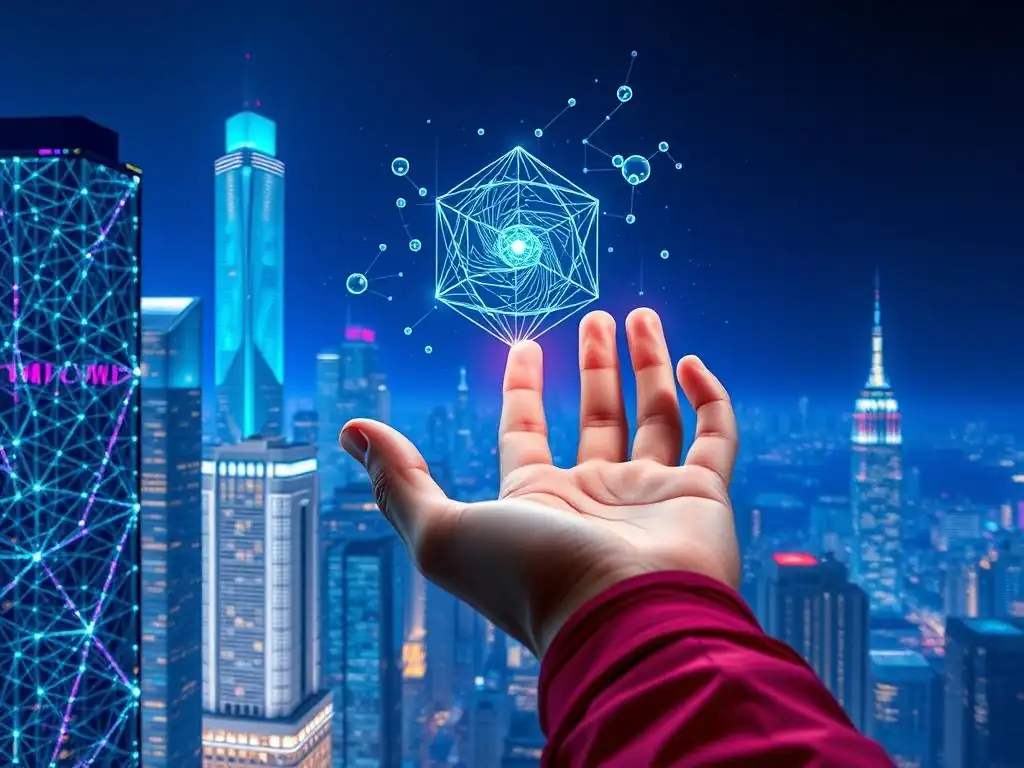
Welcome to Blockchain Trends, your compass in the ever-evolving landscape of decentralized technologies. Wondering how blockchain transcends cryptocurrencies? Dive in and discover its potential across DeFi, enterprise solutions, and beyond. This article unveils a particularly fascinating intersection: the AR/VR blockchain metaverse integration. Prepare to explore how this powerful convergence is shaping the future of immersive experiences, sparking innovation, and potentially revolutionizing the digital world as we know it. The possibilities are just beginning... Keep reading to unlock them.
The Convergence of AR/VR and Blockchain: A New Era for the Metaverse
- Introduction: Exploring the AR/VR Blockchain Metaverse Integration
- The Symbiotic Relationship: How AR/VR and Blockchain Enhance the Metaverse
- Key Benefits of AR/VR Blockchain Metaverse Integration
- Use Cases: AR/VR Blockchain Applications in the Metaverse
- Challenges and Opportunities in the AR/VR Blockchain Metaverse
- Real-World Examples: Companies Pioneering the AR/VR Blockchain Metaverse
- The Future of the Metaverse: AR/VR and Blockchain as Catalysts for Growth
- Conclusion: Embracing the Potential of the AR/VR Blockchain Metaverse
-
Frequently Asked Questions
- What are the primary benefits of AR/VR blockchain metaverse integration?
- How does blockchain technology enhance the AR/VR metaverse user experience?
- What are some practical examples of AR/VR blockchain metaverse integration currently being developed?
- What are the main challenges hindering the widespread adoption of AR/VR blockchain metaverse integration?
- How might regulations impact the future development of the AR/VR blockchain metaverse?
- Final Reflection: Embracing the Decentralized Metaverse
- Step into the Future: Start Building Your Metaverse Today!
Introduction: Exploring the AR/VR Blockchain Metaverse Integration
The Rise of the Metaverse and the Need for Decentralization
The metaverse, once a concept confined to science fiction, is rapidly evolving into a tangible digital reality. Fueled by advancements in connectivity, graphics, and immersive technologies, the metaverse promises a persistent, shared virtual world where users can interact, work, play, and transact. Initial iterations of metaverses, often centralized platforms, are facing scrutiny regarding data privacy, user control, and the equitable distribution of value.
This has ignited a crucial conversation around decentralization, pushing for metaverse architectures that prioritize user empowerment and democratic governance. The limitations of centralized control highlight the pressing need for technologies that can foster trust, transparency, and user ownership within these burgeoning digital realms.
The demand for decentralization in the metaverse stems from a desire to avoid the pitfalls of Web2, where user data and digital assets are often controlled by large corporations. Users are increasingly wary of centralized platforms that can dictate terms of service, censor content, and profit disproportionately from user-generated content and interactions. Decentralization, through technologies like blockchain, offers a compelling alternative. It promises to distribute power more equitably, enabling users to have greater control over their digital identities, assets, and experiences within the metaverse. This paradigm shift is crucial for fostering a truly open, inclusive, and sustainable metaverse ecosystem.
Understanding Augmented Reality (AR) and Virtual Reality (VR) Technologies
Augmented Reality (AR) and Virtual Reality (VR) are pivotal technologies driving the immersive experiences envisioned for the metaverse. AR enhances the real world by overlaying digital information onto it. Think of applications like Pokémon GO, which superimposed digital creatures onto real-world locations using smartphone cameras, or industrial AR applications that provide technicians with real-time instructions overlaid on machinery during repairs.
AR’s core strength lies in its ability to blend the digital and physical worlds, offering contextual information and interactive experiences without fully immersing the user in a virtual environment. This makes AR highly accessible and versatile for everyday applications, from gaming and entertainment to retail and enterprise solutions.
Virtual Reality (VR), on the other hand, creates entirely simulated digital environments that users can immerse themselves in using headsets and motion tracking technologies. VR offers a deeper level of immersion than AR, transporting users to virtual worlds where they can interact with digital objects and other users in a highly sensory and engaging way.
VR applications range from gaming and entertainment, where users can explore fantastical worlds and participate in simulated experiences, to training and simulation in industries like healthcare and aerospace, where VR provides safe and cost-effective environments for practicing complex procedures. Both AR and VR are essential components in realizing the full potential of the metaverse, each offering unique capabilities that contribute to different facets of immersive digital experiences.
Blockchain Technology: The Foundation for a Decentralized Future
Blockchain technology, initially popularized by cryptocurrencies like Bitcoin, provides the foundational infrastructure necessary for building decentralized and secure metaverses. At its core, a blockchain is a distributed, immutable ledger that records transactions across a network of computers. This decentralized nature eliminates the need for a central authority, fostering trust and transparency among participants. Key features of blockchain, such as cryptography, consensus mechanisms, and smart contracts, enable secure and verifiable digital ownership, transparent governance, and the automation of complex processes within the metaverse.
Beyond cryptocurrencies, blockchain’s utility extends to various aspects of the metaverse, including digital asset ownership through Non-Fungible Tokens (NFTs), decentralized identity management, and the creation of decentralized autonomous organizations (DAOs) for community governance. NFTs, in particular, are revolutionizing digital ownership by providing provable scarcity and authenticity for virtual assets within the metaverse, ranging from digital art and collectibles to virtual land and in-game items.
Smart contracts, self-executing agreements written in code and stored on the blockchain, automate transactions and enforce rules within the metaverse, creating trustless and efficient interactions between users and platforms. This combination of features positions blockchain as a critical enabler of a decentralized, user-centric metaverse ecosystem.
The Symbiotic Relationship: How AR/VR and Blockchain Enhance the Metaverse
Enhancing User Experience in the Metaverse with AR/VR
AR and VR technologies are crucial for elevating the user experience within the metaverse, transforming it from a conceptually interesting idea into a truly immersive and engaging reality. VR headsets transport users into fully simulated digital environments, allowing for deeply immersive experiences in virtual worlds. Imagine attending a virtual concert where you feel present on stage with your favorite band, or exploring a historical site as if you were physically there.
AR, conversely, blends digital content with the real world, offering contextual information and interactive overlays that enhance daily life and bridge the gap between the physical and digital realms. Think of AR applications that allow you to visualize furniture in your home before purchasing it, or educational AR apps that bring historical events to life in your living room.
The combination of AR and VR capabilities within the metaverse promises a spectrum of experiences, catering to diverse user needs and preferences. For example, a user might use VR to attend a virtual meeting in a fully immersive office environment, and then switch to AR to access contextual information related to the meeting overlaid on their physical workspace.
This seamless integration of AR and VR within the metaverse ecosystem will create more intuitive, engaging, and ultimately more useful digital experiences. The visual and interactive nature of AR/VR significantly enhances user presence and agency within the metaverse, making interactions feel more natural and impactful compared to traditional 2D interfaces.
Blockchain's Role in Securing and Decentralizing Metaverse Assets
Blockchain technology provides the critical security and decentralization infrastructure necessary to manage and protect digital assets within the metaverse. In centralized metaverse platforms, users are often at the mercy of platform operators regarding the ownership and control of their digital assets. Blockchain, through the use of NFTs, changes this paradigm by enabling verifiable and immutable ownership of virtual items. An NFT representing a piece of virtual land, a digital artwork, or an in-game item is securely recorded on the blockchain, providing irrefutable proof of ownership that is independent of any single platform.
This decentralized ownership model has profound implications for the metaverse economy. Users truly own their digital assets and can freely trade, sell, or transfer them across different metaverse platforms that support the same blockchain standard. This interoperability is a key aspect of a truly open metaverse, preventing vendor lock-in and empowering users with greater control over their digital lives.
Furthermore, blockchain’s security features, including cryptographic hashing and distributed consensus, make it extremely difficult to tamper with or counterfeit digital assets, ensuring the integrity and scarcity of NFTs and other blockchain-based metaverse assets. This robust security framework is essential for building trust and fostering a thriving digital economy within the metaverse.
Creating Immersive and Trustless Metaverse Environments
The synergy of AR/VR and blockchain technologies is instrumental in creating metaverse environments that are not only immersive but also inherently trustless. AR/VR provides the visual and interactive interface that draws users into the metaverse, while blockchain provides the underlying infrastructure for secure and transparent interactions within it. Traditional online environments often rely on centralized intermediaries to facilitate transactions and verify identities, requiring users to place trust in these entities. Blockchain, in contrast, enables trustless interactions by using cryptography and distributed consensus to verify transactions and establish identities without the need for intermediaries.
In an AR/VR blockchain integrated metaverse, users can interact, trade, and collaborate with each other in a secure and transparent manner, knowing that their actions are recorded on an immutable ledger and governed by pre-defined smart contracts. This trustless environment fosters greater user autonomy and reduces the risks associated with centralized control and potential manipulation.
For example, in a blockchain-based virtual marketplace within the metaverse, users can buy and sell digital goods directly from each other using smart contracts that automatically execute upon agreed-upon conditions, eliminating the need for a central marketplace operator to act as an intermediary and guarantor of transactions. This combination of immersive experiences and trustless interactions is a defining characteristic of the next generation of metaverses.
Key Benefits of AR/VR Blockchain Metaverse Integration
Enhanced Security and Ownership of Virtual Assets (NFTs)
One of the most significant benefits of AR/VR blockchain metaverse integration is the enhanced security and verifiable ownership of virtual assets, primarily through the use of Non-Fungible Tokens (NFTs). In traditional gaming or virtual worlds, digital assets often reside within the platform's ecosystem, granting limited ownership and control to users. These assets can be subject to platform policies, potential shutdowns, or even unilateral modifications by the platform provider. Blockchain-based NFTs revolutionize this paradigm by representing digital assets as unique, verifiable tokens on a distributed ledger.
NFTs provide users with true digital ownership, recorded immutably on the blockchain, independent of any single platform. This means that when a user acquires an NFT representing a virtual land parcel, a piece of digital art, or an in-game item in an AR/VR metaverse, they have verifiable proof of ownership that cannot be easily altered or taken away.
This enhanced security and ownership fosters greater confidence and investment in virtual assets, as users know their digital possessions are protected and can potentially be transferred or traded across different compatible metaverse platforms. The integration of AR/VR interfaces with blockchain-secured NFTs creates a powerful combination for building robust and user-centric metaverse economies.
Improved Interoperability and Cross-Platform Experiences
AR/VR blockchain metaverse integration paves the way for improved interoperability and seamless cross-platform experiences. Currently, many virtual worlds and online platforms operate in silos, with limited or no ability for users to transfer their avatars, assets, or identities between them. This fragmented landscape hinders the development of a truly interconnected metaverse. Blockchain technology, with its inherent focus on standardization and interoperability, offers a solution. By utilizing blockchain-based standards for digital assets and identities, different AR/VR metaverse platforms can begin to interoperate more effectively.
Imagine owning an avatar and a collection of digital items represented as NFTs that you can seamlessly use across various AR/VR metaverse environments. This level of interoperability would unlock new possibilities for users, allowing them to carry their digital identities and possessions with them as they explore different virtual worlds and experiences.
The use of open blockchain protocols and standards is crucial for fostering this interoperability, enabling developers to build metaverse platforms that can connect and interact with each other, creating a more unified and interconnected metaverse ecosystem. This cross-platform compatibility will be a key driver for mass adoption and user engagement in the AR/VR blockchain metaverse.
Transparent and Decentralized Governance within Metaverse Platforms
Blockchain technology facilitates the implementation of transparent and decentralized governance models within AR/VR metaverse platforms. Traditional online platforms are often governed by centralized entities that make decisions regarding platform policies, content moderation, and economic models. This centralized control can lead to concerns about fairness, censorship, and lack of user participation in platform governance. Blockchain enables the creation of Decentralized Autonomous Organizations (DAOs) that can govern metaverse platforms in a transparent and community-driven manner.
DAOs utilize smart contracts on the blockchain to encode governance rules and decision-making processes. Token holders within a DAO can vote on proposals related to platform development, policy changes, and resource allocation, ensuring that governance is distributed among the community rather than concentrated in the hands of a single entity.
This decentralized governance model empowers users to have a direct say in the evolution of the AR/VR metaverse platforms they participate in, fostering a sense of ownership and community. Transparency is also enhanced as all governance decisions and voting records are publicly auditable on the blockchain, promoting accountability and trust within the metaverse ecosystem.
Fostering Creator Economies and Digital Ownership
The integration of AR/VR and blockchain technologies in the metaverse is poised to foster thriving creator economies and empower digital ownership for content creators. In traditional Web2 platforms, creators often face challenges in monetizing their content and maintaining control over their intellectual property. Blockchain, particularly through NFTs, provides creators with new avenues to monetize their work and establish direct relationships with their audiences in the metaverse. Creators can mint their digital creations – be it 3D models, virtual art, music, or in-world experiences – as NFTs and sell them directly to users on decentralized marketplaces.
This direct-to-consumer model eliminates intermediaries and reduces platform fees, allowing creators to retain a larger share of the value they generate. Furthermore, NFTs enable creators to embed royalty mechanisms into their digital assets, ensuring they receive ongoing compensation whenever their creations are resold in secondary markets.
AR/VR provides creators with powerful tools to design and build immersive experiences and digital assets for the metaverse, while blockchain provides the infrastructure for secure ownership, monetization, and distribution. This combination empowers creators to build sustainable businesses and contribute to a vibrant and diverse metaverse ecosystem, where digital ownership is truly valued and rewarded.
Use Cases: AR/VR Blockchain Applications in the Metaverse
Decentralized Gaming Platforms and Play-to-Earn Economies
Decentralized gaming platforms within the AR/VR metaverse represent a significant use case, leveraging blockchain to create play-to-earn economies. Traditional gaming models often operate on a play-to-win or pay-to-win basis, where in-game assets are controlled by game developers and players have limited opportunities to earn real-world value from their gameplay. Blockchain-based gaming platforms are disrupting this model by introducing play-to-earn mechanics, where players can earn cryptocurrency or NFTs through their participation and achievements in the game. These earned assets can then be traded on external marketplaces, providing players with tangible economic incentives to engage with the game.
AR/VR enhances the immersive experience of these decentralized games, allowing players to interact with virtual worlds and in-game assets in a more engaging and visceral way. Imagine playing a virtual reality role-playing game where you earn NFTs representing unique in-game items or characters that you can then trade or sell to other players. Platforms like Axie Infinity, while primarily 2D, have demonstrated the potential of play-to-earn models, and the integration of AR/VR could significantly amplify the appeal and immersion of these decentralized gaming experiences, attracting a wider audience and fostering more robust in-game economies.
Virtual Real Estate and Land Ownership on the Blockchain
Virtual real estate and land ownership within the AR/VR blockchain metaverse is emerging as a prominent and potentially lucrative use case. Metaverse platforms are creating virtual worlds where users can purchase, develop, and trade virtual land parcels represented as NFTs on the blockchain. These virtual land NFTs grant owners rights to control and monetize their digital land within the metaverse, similar to real-world real estate ownership. Users can build virtual homes, businesses, entertainment venues, or even rent out their virtual land to other users or businesses.
AR/VR technologies are essential for visualizing and interacting with this virtual real estate. VR headsets allow users to fully immerse themselves in their virtual properties, exploring the virtual environments they have created or acquired.
AR applications could enable users to overlay virtual land boundaries and information onto real-world locations, blending the digital and physical aspects of metaverse real estate. Platforms like Decentraland and The Sandbox are leading examples of metaverse projects where virtual land ownership is a core feature, and the integration of AR/VR will further enhance the value and utility of these digital real estate assets, creating new opportunities for investment and development within the metaverse.
AR/VR blockchain metaverse integration is transforming social experiences and virtual events by creating more immersive and engaging environments. Traditional online social platforms and virtual events often lack the sense of presence and social connection that characterizes real-world interactions. AR/VR technologies bridge this gap by creating shared virtual spaces where users can interact with each other in a more natural and embodied way. Imagine attending a virtual concert or conference in VR, where you can see and interact with other attendees’ avatars, experience spatial audio, and participate in immersive activities together.
Blockchain can enhance these social experiences by enabling verifiable digital identities and secure transactions within virtual events. NFTs can be used as tickets to virtual events, providing proof of attendance and potentially unlocking exclusive content or experiences. Decentralized platforms can also ensure that virtual events are more resistant to censorship and control, fostering greater freedom of expression and community participation. The combination of AR/VR immersion and blockchain security and decentralization promises to create more engaging, social, and democratized virtual event experiences within the metaverse, transforming how people connect and interact in digital spaces.
Digital Art and Collectibles in Augmented Reality

Digital art and collectibles are finding new avenues for expression and ownership through AR/VR blockchain applications in the metaverse. NFTs have revolutionized the digital art market by providing provable scarcity and authenticity for digital artworks. AR and VR technologies are now expanding the ways in which digital art can be experienced and interacted with. AR allows digital art to be seamlessly integrated into the real world, overlaying virtual sculptures or paintings onto physical spaces. Imagine viewing a digital art collection in your own home, with AR applications projecting virtual artworks onto your walls.
VR provides immersive galleries and virtual spaces where digital art can be displayed and experienced in a more engaging and contextualized manner. Artists can create immersive virtual installations or exhibitions that users can explore in VR, pushing the boundaries of digital art and creating new forms of artistic expression. Blockchain ensures that digital art and collectibles remain securely owned and verifiable, even when experienced in AR/VR environments. This integration of AR/VR and blockchain is creating new opportunities for digital artists to reach wider audiences, monetize their work, and explore innovative forms of artistic creation and distribution within the metaverse.
Enterprise Applications: Training, Collaboration, and Remote Work
Beyond entertainment and social applications, AR/VR blockchain metaverse integration offers significant potential for enterprise applications, particularly in training, collaboration, and remote work. VR provides immersive training environments that can simulate real-world scenarios, allowing employees to practice complex procedures or develop new skills in a safe and cost-effective way. AR can enhance on-the-job training by providing real-time guidance and information overlaid onto the physical workspace. Imagine technicians using AR headsets to receive step-by-step instructions while repairing equipment, or surgeons practicing complex procedures in VR simulations.
Blockchain can enhance enterprise metaverse applications by providing secure and verifiable digital identities and access control for virtual workspaces and training environments. Decentralized platforms can also facilitate secure collaboration and data sharing among remote teams, fostering greater efficiency and productivity. AR/VR metaverse environments can create more engaging and collaborative remote work experiences, reducing the isolation often associated with remote work and improving team communication and cohesion. The integration of these technologies offers businesses new tools to enhance training programs, improve collaboration, and optimize remote work strategies in the evolving digital landscape.
Challenges and Opportunities in the AR/VR Blockchain Metaverse
Scalability and Performance Issues
One of the primary challenges facing the AR/VR blockchain metaverse is scalability and performance. Metaverse environments require handling vast amounts of data, complex graphics rendering, and real-time interactions for potentially millions of users simultaneously. Current blockchain technologies, while constantly evolving, can face limitations in transaction throughput and latency, which can impact the responsiveness and fluidity of metaverse experiences. AR/VR applications, particularly VR, demand high frame rates and low latency to prevent motion sickness and ensure a comfortable and immersive user experience.
Scaling blockchain infrastructure to meet the demands of a massive, interactive AR/VR metaverse is a significant technical hurdle. Solutions such as layer-2 scaling solutions, sharding, and advancements in consensus mechanisms are being explored to improve blockchain scalability. Optimizing AR/VR rendering and networking technologies to handle large-scale metaverse environments is also crucial. Addressing these scalability and performance challenges is essential for ensuring that the AR/VR blockchain metaverse can support a large user base and deliver seamless and engaging experiences. Overcoming these limitations is a key opportunity for technological innovation and development in the metaverse space.
Regulatory Uncertainty and Legal Frameworks
Regulatory uncertainty and the lack of clear legal frameworks pose a significant challenge to the development and adoption of the AR/VR blockchain metaverse. The metaverse, with its convergence of virtual worlds, digital assets, and decentralized technologies, operates across jurisdictional boundaries and often falls outside the scope of existing regulations designed for the physical world or traditional online platforms. Issues such as data privacy, intellectual property rights, virtual asset ownership, and cross-border transactions in the metaverse require clear legal frameworks to provide clarity and protect users and businesses.
Governments and regulatory bodies are beginning to grapple with the implications of the metaverse and are exploring potential regulatory approaches. However, the pace of technological innovation often outstrips the development of legal frameworks, creating uncertainty for metaverse developers and users.
Establishing clear and adaptable legal frameworks that address the unique challenges and opportunities of the AR/VR blockchain metaverse is crucial for fostering responsible innovation, protecting user rights, and promoting the long-term growth of the metaverse ecosystem. This regulatory landscape presents both a challenge and an opportunity for policymakers and industry stakeholders to collaborate and shape the future of the metaverse in a responsible and sustainable manner.
User Adoption and Education
User adoption and education are critical factors for the widespread success of the AR/VR blockchain metaverse. While interest in the metaverse is growing, AR/VR technologies and blockchain concepts can still be unfamiliar or complex for many users. Widespread adoption requires making AR/VR metaverse experiences more accessible, user-friendly, and intuitive. This includes improving the usability of AR/VR devices, simplifying blockchain interactions, and creating onboarding processes that are easy for new users to navigate.
Education plays a crucial role in demystifying blockchain and AR/VR technologies and highlighting the benefits of the metaverse. Users need to understand the value proposition of decentralized ownership, immersive experiences, and new forms of social interaction and economic opportunity within the metaverse. Content creators, educators, and metaverse platforms have a responsibility to provide clear and accessible information about the metaverse and its underlying technologies. Addressing user adoption and education challenges is essential for broadening the reach of the AR/VR blockchain metaverse beyond early adopters and fostering mainstream acceptance and participation.
Technological Advancements and Future Development
Technological advancements and ongoing development are crucial for realizing the full potential of the AR/VR blockchain metaverse. Rapid innovation in AR/VR hardware, software, and networking technologies is driving improvements in immersion, performance, and accessibility. Advancements in blockchain scalability, interoperability, and security are essential for building robust and user-centric metaverse platforms. Areas such as haptic feedback, brain-computer interfaces, and artificial intelligence have the potential to further enhance metaverse experiences and create even more immersive and interactive environments.
The AR/VR blockchain metaverse is still in its early stages of development, and continuous innovation is necessary to overcome existing limitations and unlock new possibilities. Research and development efforts focused on improving AR/VR technologies, blockchain infrastructure, and metaverse platform design are essential for driving the evolution of the metaverse. Embracing open standards, fostering collaboration among developers, and encouraging experimentation are key to accelerating technological advancements and shaping the future of the AR/VR blockchain metaverse. This continuous evolution presents a significant opportunity for innovation and progress in the metaverse space.
Real-World Examples: Companies Pioneering the AR/VR Blockchain Metaverse
Decentraland: A User-Owned Virtual World
Decentraland stands as a prominent example of a user-owned virtual world pioneering the AR/VR blockchain metaverse concept. Built on the Ethereum blockchain, Decentraland is a decentralized autonomous organization (DAO) where users can buy, sell, and develop virtual land, represented as NFTs. This virtual land ownership grants users control over the content and experiences they create on their parcels, fostering a user-generated metaverse environment. Decentraland's governance is also decentralized, with LAND holders having voting rights on platform policies and developments.
While currently accessible through web browsers and desktop applications, Decentraland is actively exploring AR/VR integration to enhance user immersion. Imagine exploring Decentraland’s virtual districts and interacting with other users in VR, or using AR to overlay Decentraland’s virtual world onto your physical surroundings. Decentraland exemplifies the potential of blockchain to create user-owned and governed metaverse platforms, and its ongoing development towards AR/VR compatibility showcases the future direction of immersive decentralized experiences. The platform’s focus on user empowerment and decentralized governance makes it a key player in the evolving AR/VR blockchain metaverse landscape.
Somnium Space: An Open, Persistent VR World Powered by Blockchain
Somnium Space is another compelling example of a metaverse project leveraging blockchain to create an open and persistent VR world. Built on the Ethereum and Solana blockchains, Somnium Space focuses on providing a fully immersive VR experience where users can own virtual land, avatars, and in-world assets as NFTs. The platform emphasizes openness and interoperability, allowing users to import and export assets, and integrates with various VR headsets for a truly immersive experience. Somnium Space also features a persistent world, meaning the virtual environment continues to exist and evolve even when users are offline.
Somnium Space is a VR-first metaverse, designed from the ground up for immersive experiences. Users can explore diverse virtual environments, attend events, build virtual homes and businesses, and interact with other users in VR. Blockchain ensures verifiable ownership of digital assets within Somnium Space, empowering users with greater control over their virtual lives. The platform’s commitment to VR immersion and blockchain-based ownership positions it as a leader in the AR/VR blockchain metaverse space, showcasing the potential of persistent and user-centric virtual worlds.
The Sandbox: A Community-Driven Platform Where Creators Can Monetize Assets
The Sandbox is a community-driven metaverse platform that empowers creators to monetize their assets and gaming experiences, leveraging blockchain and exploring AR/VR integration. The Sandbox utilizes its own utility token, SAND, and NFTs to facilitate in-game transactions and asset ownership. Users can create and own voxel-based assets, known as ASSETS, and virtual land, known as LAND, as NFTs. The platform provides tools that allow users to create games and experiences within their LAND parcels, fostering a user-generated content ecosystem.
While initially focused on 2D experiences, The Sandbox is actively developing AR/VR capabilities to enhance immersion and expand its reach. Imagine creating and playing games within The Sandbox metaverse in VR, or using AR to bring your voxel-based creations into the real world. The Sandbox's emphasis on creator empowerment and monetization, combined with its exploration of AR/VR technologies, makes it a significant contributor to the growth of the AR/VR blockchain metaverse. The platform's focus on user-generated content and play-to-earn mechanics highlights the potential of blockchain and AR/VR to create vibrant and economically sustainable metaverse ecosystems.
The Future of the Metaverse: AR/VR and Blockchain as Catalysts for Growth
Predictions for the AR/VR Blockchain Metaverse Market
The AR/VR blockchain metaverse market is predicted to experience substantial growth in the coming years, driven by increasing adoption of AR/VR technologies, growing interest in NFTs and digital asset ownership, and the broader evolution of the metaverse concept. Market analysis firms project significant expansion in the metaverse market, with estimates varying but consistently pointing towards multi-billion dollar valuations within the next decade. For example, Bloomberg Intelligence projected the metaverse market to reach \$800 billion by 2024, while other reports anticipate even higher figures in the longer term.
This growth is expected to be fueled by advancements in AR/VR hardware and software, increased accessibility of metaverse platforms, and the development of compelling use cases across entertainment, gaming, commerce, and enterprise applications. The integration of blockchain technology is anticipated to be a key driver, enabling secure digital asset ownership, decentralized economies, and user-centric governance within the metaverse.
The AR/VR blockchain metaverse market represents a significant investment opportunity and is poised to transform various industries and aspects of digital life as it matures and gains wider adoption. These market predictions underscore the transformative potential of AR/VR and blockchain in shaping the future of the internet and digital experiences.
The Evolution of Digital Identity and Avatars
The AR/VR blockchain metaverse will significantly impact the evolution of digital identity and avatars. Traditional online identities are often fragmented across different platforms and controlled by centralized entities. The metaverse, particularly with blockchain integration, offers the opportunity to create more portable, user-controlled, and persistent digital identities. Blockchain-based digital identities can be represented as NFTs, allowing users to own and manage their identity data and credentials. These decentralized identities can be used across different metaverse platforms, creating a more unified and interoperable digital identity system.
Avatars, as visual representations of users in the metaverse, are also evolving. AR/VR technologies enable more realistic and expressive avatars, allowing users to personalize their digital representations and express themselves in virtual environments more effectively. The combination of blockchain-based digital identities and advanced avatars will create a more immersive and personalized metaverse experience.
Users will have greater control over their digital personas and be able to seamlessly carry their identities and avatars across different virtual worlds, fostering a more cohesive and user-centric metaverse ecosystem. This evolution of digital identity and avatars is crucial for establishing a sense of presence, ownership, and agency within the metaverse.
The AR/VR blockchain metaverse is poised to profoundly impact social interaction and commerce, creating new forms of digital communities and economies. AR/VR technologies enable more immersive and engaging social interactions in virtual spaces, bridging the gap between online and offline social experiences. Users can interact with each other’s avatars in shared virtual environments, participate in virtual events and gatherings, and build relationships in more meaningful and embodied ways. Blockchain facilitates decentralized social platforms and communities, empowering users with greater control over their social interactions and data.
The metaverse is also creating new opportunities for digital commerce, with virtual marketplaces, NFT-based digital assets, and play-to-earn economies emerging as key components. Blockchain enables secure and transparent transactions within the metaverse, fostering trust and efficiency in digital commerce. AR/VR technologies enhance the shopping experience in virtual environments, allowing users to visualize products in 3D, interact with virtual storefronts, and engage in immersive shopping experiences. The convergence of AR/VR and blockchain is transforming social interaction and commerce, creating new forms of digital communities, economies, and social experiences within the metaverse.
Conclusion: Embracing the Potential of the AR/VR Blockchain Metaverse
The Transformative Power of Decentralized Immersive Experiences
The AR/VR blockchain metaverse represents a paradigm shift in how we interact with technology and each other, offering the transformative power of decentralized immersive experiences. By combining the immersive capabilities of AR/VR with the security and decentralization of blockchain, the metaverse is evolving beyond centralized platforms towards a more user-centric and open ecosystem. This convergence empowers individuals with greater control over their digital identities, assets, and experiences, fostering a more equitable and democratic digital landscape.
Decentralized immersive experiences have the potential to revolutionize various aspects of our lives, from entertainment and social interaction to commerce and work. The AR/VR blockchain metaverse promises to create new forms of digital communities, economies, and social interactions that are more engaging, immersive, and user-empowering than ever before. Embracing this transformative power requires continued innovation, collaboration, and a focus on building a metaverse that is open, inclusive, and beneficial for all users.
Investing in the Future of the Metaverse
Investing in the future of the metaverse, particularly in the AR/VR blockchain space, presents a significant opportunity for individuals, businesses, and organizations. The metaverse market is poised for substantial growth, and early investment in key technologies, platforms, and applications can yield significant returns. This investment extends beyond financial capital to include time, talent, and resources dedicated to developing and shaping the metaverse ecosystem. Supporting research and development in AR/VR and blockchain technologies, fostering innovation in metaverse platform design, and contributing to the growth of the creator economy are all crucial investments in the future of the metaverse.
Investing in education and user adoption initiatives is also essential for realizing the full potential of the metaverse. As the metaverse evolves, it will create new opportunities and require new skills. Investing in education and training programs to prepare individuals for the metaverse era is crucial for ensuring widespread participation and maximizing the benefits of this transformative technology. A comprehensive approach to investment, encompassing technology, talent, and education, is necessary to unlock the full potential of the AR/VR blockchain metaverse.
Call to Action: Explore the Possibilities of the AR/VR Blockchain Metaverse
The AR/VR blockchain metaverse is not just a futuristic concept; it is a rapidly evolving reality with immense potential. This is a call to action for individuals, developers, creators, businesses, and policymakers to explore the possibilities of this emerging digital frontier. For individuals, this means experiencing metaverse platforms, experimenting with AR/VR applications, and engaging with decentralized communities. For developers and creators, this is an opportunity to build innovative metaverse experiences, create digital assets, and contribute to the growth of the creator economy.
For businesses, the metaverse offers new avenues for customer engagement, product marketing, and operational efficiency. For policymakers, it is crucial to understand the implications of the metaverse and develop responsible regulatory frameworks that foster innovation and protect user rights. Exploring the possibilities of the AR/VR blockchain metaverse requires curiosity, experimentation, and a willingness to embrace new technologies and paradigms. By actively engaging with the metaverse, we can collectively shape its future and unlock its transformative potential for individuals and society as a whole.
Frequently Asked Questions
What are the primary benefits of AR/VR blockchain metaverse integration?
Integrating AR/VR with blockchain in the metaverse offers enhanced security and ownership of digital assets. It also allows for more transparent and decentralized governance within virtual worlds. Finally, it fosters more immersive and engaging experiences for users.
How does blockchain technology enhance the AR/VR metaverse user experience?
Blockchain provides a secure and verifiable way to manage digital identities and assets in the AR/VR metaverse, fostering a sense of true ownership. This creates new economic opportunities through virtual economies and NFTs. It also enables cross-platform interoperability.
What are some practical examples of AR/VR blockchain metaverse integration currently being developed?
Examples include blockchain-based virtual land ownership platforms, AR/VR games with tokenized in-game assets, and decentralized marketplaces for AR/VR content. These all contribute to the growing metaverse economy powered by blockchain.
What are the main challenges hindering the widespread adoption of AR/VR blockchain metaverse integration?
Key challenges include the scalability limitations of current blockchain networks, the complexity of integrating these technologies, and the need for standardized protocols to ensure interoperability.
How might regulations impact the future development of the AR/VR blockchain metaverse?
Regulations concerning data privacy, digital asset ownership, and security will significantly shape the future of the AR/VR blockchain metaverse. Clear and consistent regulatory frameworks are crucial for fostering innovation while protecting users.
Final Reflection: Embracing the Decentralized Metaverse
The journey we've explored, charting the convergence of AR/VR and blockchain, culminates in a pivotal moment. The potential for a truly decentralized and immersive metaverse is no longer a distant dream, but a tangible possibility. This integration promises to reshape how we interact with digital worlds, own digital assets, and build communities online, offering a level of ownership and control previously unimaginable.
The impact of this technological synergy is already rippling through the cultural and social landscape. The promise of verifiable ownership and transparent governance within virtual spaces is profoundly appealing, challenging traditional models of centralized control. This shift resonates deeply, particularly with younger generations who are increasingly seeking authentic and empowering digital experiences. The metaverse is coming, and it will affect every product, company, and person that we touch.
- Matthew Ball, Metaverse Expert. This quote underscores the transformative potential we are only beginning to grasp.
As we stand on the cusp of this new era, it's crucial to consider your role in shaping its future. How will you leverage the power of AR/VR blockchain metaverse integration to create, connect, and contribute? The metaverse is not just a technological advancement; it's a canvas for human creativity and collaboration. Embrace the possibilities, explore the potential, and help build a decentralized future where everyone can thrive.
Step into the Future: Start Building Your Metaverse Today!
Thank you for exploring the exciting intersection of AR/VR and blockchain technology. We hope you've gained valuable insights into how these innovations are transforming the Metaverse and opening new possibilities. Now, it’s time to turn that knowledge into action.
Here are some ways to get started:
- Explore a platform: Create a free account on a leading Metaverse platform that combines AR/VR and blockchain, such as Decentraland or The Sandbox, and experience it firsthand.
- Join the conversation: Share this article with your network and spark discussions about the potential impact of this technological convergence on social media or online forums.
- Think creatively: Brainstorm three unconventional applications of AR/VR and blockchain in fields like education, healthcare, or environmental conservation. Share your ideas in the comments below!
What innovative projects or use cases are you most excited to see emerge from the fusion of AR/VR and blockchain within the Metaverse? Share your thoughts below!
Leave a Reply