
CrossBorder Tokenization: Legal Challenges in a Globalized Digital Economy


Welcome to Blockchain Trends, your compass in the ever-evolving landscape of decentralized innovation. Dive in and explore how blockchain is reshaping industries beyond the hype. Are you ready to unravel the complexities surrounding blockchain tokenization in a global context? This article delves into the significant legal challenges of cross-border tokenization, exposing the regulatory hurdles and opportunities that await. Discover what you need to know to navigate this exciting, yet intricate, frontier of the digital economy.
Cross-Border Tokenization: Legal Challenges in a Globalized Digital Economy
- Introduction: Navigating the Legal Landscape of Global Blockchain Tokenization
-
Key Legal Challenges in International Tokenization
- Jurisdiction and Choice of Law: Determining Applicable Legal Frameworks for Tokenized Assets
- Securities Laws and Token Offerings: Navigating Regulatory Variances
- Data Privacy and Protection in Cross-Border Tokenized Systems
- Intellectual Property Rights and Tokenization: Protecting Digital Assets Globally
- Taxation and Cross-Border Tokenization: A Complex Interplay
- Contractual Challenges and Smart Contracts Across Borders
- Regulatory Fragmentation and the Need for Harmonization in Blockchain Tokenization
- Case Studies: Examining Real-World Examples
- Future Trends and Emerging Legal Issues in Global Tokenization
- Conclusion: Navigating the Future of Blockchain Tokenization Legal Challenges
-
Frequently Asked Questions
- What are the primary legal hurdles facing cross-border blockchain tokenization?
- How does the varying regulatory landscape across different countries impact blockchain tokenization projects?
- What are the key data privacy concerns associated with cross-border blockchain tokenization?
- How can blockchain tokenization projects mitigate the risk of non-compliance with international laws?
- What role does international cooperation play in addressing the legal challenges of cross-border blockchain tokenization?
- Final Reflection: Navigating the Future of Tokenized Assets
- Unlock the Future: Become a Tokenization Pioneer!
The Rise of Cross-Border Tokenization and its Regulatory Implications
The advent of blockchain technology has ushered in a new era of asset fractionalization and transfer through tokenization. This process transforms rights to an asset, whether tangible or intangible, into a digital token on a blockchain network. While initially popularized by cryptocurrencies, tokenization's application has expanded dramatically, encompassing real estate, art, intellectual property, and even company shares. A significant driver of this expansion is the potential for cross-border transactions, enabling global access to previously illiquid assets and facilitating efficient international value exchange. However, this global reach inherently introduces complex blockchain tokenization legal challenges.
The regulatory landscape governing tokenization remains fragmented and rapidly evolving across different jurisdictions. As tokens representing diverse asset classes move across national borders, they encounter disparate legal frameworks concerning securities law, property rights, data protection, and taxation. This lack of uniformity creates significant uncertainty for issuers, platforms, and investors alike.
Navigating these cross-border tokenization legal challenges requires a deep understanding of how different legal systems classify and regulate digital assets, and how international laws and conventions apply to decentralized, borderless technologies. Regulatory bodies worldwide are grappling with how to apply existing laws, designed for traditional financial systems, to novel tokenized structures, often leading to conflicting interpretations and enforcement approaches.
Understanding the Scope: Defining "Cross-Border" in the Context of Tokenization
In the realm of blockchain tokenization, the term "cross-border" is not merely about physical movement across a geographical line. It refers to a transaction or activity involving parties, assets, or platforms located in different legal jurisdictions. For instance, a security token offering (STO) is cross-border if the issuer is in one country, the platform hosting the offering is in another, and investors are located in multiple different countries.
Similarly, a tokenized real estate asset located in one nation might be offered to investors residing in several others through a platform operated from yet another jurisdiction. The decentralized nature of blockchain further complicates this, as validators or network participants involved in processing transactions could be distributed globally.
Defining "cross-border" is crucial because it triggers the potential application of multiple national laws simultaneously. A single token transfer might, in theory, be subject to the laws of the issuer's country, the buyer's country, the platform's country, and potentially even the countries where the blockchain nodes processing the transaction are located. This multi-jurisdictional exposure is a core aspect of the blockchain tokenization legal challenges.
Unlike traditional finance where intermediaries often provide clear jurisdictional anchors, decentralized systems can blur these lines, making it difficult to definitively determine which laws apply and who is responsible for compliance in a cross-border context. Understanding this multi-faceted definition is the first step in addressing the intricate legal hurdles involved.
Key Legal Challenges in International Tokenization
Jurisdiction and Choice of Law: Determining Applicable Legal Frameworks for Tokenized Assets
Determining which legal framework applies to a cross-border tokenization transaction is one of the most fundamental blockchain tokenization legal challenges. Traditional conflict-of-laws rules, developed for a world of physical assets and clear geographical boundaries, struggle to provide definitive answers for intangible digital assets on decentralized networks.
Factors that courts might consider include the location of the issuer, the location of the investors, the place where the token sale agreement was executed, the governing law clause in any related contract, the location of the platform hosting the tokenization, and even potentially the location of the underlying asset being tokenized. Without clear international consensus or robust legal precedent, parties face significant uncertainty regarding their rights and obligations.
This jurisdictional ambiguity is particularly problematic when disputes arise. If a token holder in Country A purchases a token from an issuer in Country B via a platform in Country C, and the underlying asset is in Country D, which country's courts have jurisdiction? Which country's laws govern the validity of the token purchase?
The lack of predictable answers increases litigation risk and makes it difficult to enforce judgments across borders. Some argue that the governing law should be explicitly stated in the smart contract or associated legal documentation, while others contend that mandatory laws (like securities regulations or consumer protection laws) of relevant jurisdictions cannot be simply contracted away. This complex interplay of potential jurisdictions and applicable laws forms a significant hurdle for legitimate cross-border tokenization projects.
Identifying the Governing Law for Token Sales and Token Transfers
Identifying the governing law for a token sale or subsequent transfer is a critical component of navigating cross-border blockchain tokenization legal challenges. For initial token offerings, the terms and conditions typically include a governing law clause. However, the enforceability of this clause can be challenged, particularly if it attempts to circumvent mandatory laws of jurisdictions where investors are located.
Regulatory bodies often assert jurisdiction based on the location of the investors or the marketing efforts directed towards them, regardless of the issuer's chosen governing law. For example, the U.S. SEC has taken action against foreign issuers whose token offerings were deemed to target U.S. persons, asserting that U.S. securities laws applied.
Subsequent token transfers on secondary markets introduce even greater complexity. When a token is traded peer-to-peer or on a decentralized exchange (DEX), there may be no central platform or contract with a governing law clause explicitly covering the transfer itself. The applicable law might then depend on common law principles or specific digital asset legislation in the relevant jurisdictions.
Factors like the domicile of the buyer and seller, the location of the exchange (if any), or potentially even the location where the transaction is validated on the blockchain could be considered, leading to highly unpredictable outcomes. Establishing clear legal certainty for token transfers remains a significant challenge that impedes the seamless global adoption of tokenized assets.
Cross-Border Enforcement of Token-Related Contracts and Agreements
Even if a governing law is determined, enforcing token-related contracts and agreements across borders presents substantial blockchain tokenization legal challenges. Traditional methods of cross-border enforcement, such as the Hague Convention on Choice of Court Agreements or bilateral treaties, are designed for conventional contractual disputes and may not easily apply to novel smart contracts or decentralized agreements. Obtaining a judgment in one jurisdiction and then having it recognized and enforced against parties or assets in another country can be a lengthy, expensive, and uncertain process, especially when dealing with parties in jurisdictions without strong reciprocal enforcement mechanisms.
Furthermore, enforcing rights related to assets represented by tokens can be complex. If a token represents a share in a foreign company or a fractional interest in real estate abroad, the enforcement of rights related to that underlying asset will typically be subject to the laws of the jurisdiction where the asset is located.
This means a token holder might need to pursue legal action in a foreign court to exercise their rights, adding layers of complexity and cost. The decentralized nature of many tokenization projects also means that identifying the responsible parties against whom enforcement can be sought can be difficult, particularly in the case of truly decentralized autonomous organizations (DAOs) or protocols without clear legal entities.
One of the most significant blockchain tokenization legal challenges revolves around the application of securities laws. Many tokens, particularly those issued to raise capital, may be classified as securities in one or more jurisdictions, triggering stringent registration, disclosure, and compliance requirements. However, the definition of what constitutes a security varies significantly between countries. What is considered a utility token or a currency in one jurisdiction might be deemed an investment contract or security in another, creating regulatory arbitrage opportunities but also immense legal risk for issuers and platforms operating globally.
Navigating these variances requires careful legal analysis in every target jurisdiction. An issuer conducting a token offering must consider not only the laws of their own country but also those of any country where investors are solicited or reside.
This necessitates tailored legal strategies, potentially including geo-blocking or excluding investors from certain regions, conducting private placements instead of public offerings, or pursuing registration processes in multiple jurisdictions. Failure to comply with applicable securities laws can result in severe penalties, including fines, injunctions, rescission rights for investors, and even criminal charges, underscoring the high stakes involved in addressing these cross-border tokenization legal challenges.
The "Howey Test" and its Global Interpretations in Token Classification
A cornerstone of securities law analysis for tokens, particularly in the United States, is the "Howey Test," derived from the 1946 Supreme Court case SEC v. W.J. Howey Co. This test defines an "investment contract" (a type of security) as an investment of money in a common enterprise with an expectation of profits derived solely from the efforts of others.
While developed long before blockchain, the Howey Test has been applied by the U.S. SEC and courts to evaluate whether a token offering constitutes an unregistered securities offering. Many initial coin offerings (ICOs) in the past were deemed to fail this test, leading to enforcement actions.
While the Howey Test is specific to U.S. law, many other jurisdictions have adopted similar principles or developed their own tests to determine if a digital asset is a security. Regulatory bodies in countries like Canada, Australia, Singapore, and in the European Union (under frameworks like MiFID II and the upcoming MiCA) have issued guidance or taken enforcement actions based on whether a token represents an investment expectation tied to the efforts of others, or provides rights akin to traditional securities like shares or bonds.
Understanding these varied global interpretations and how they apply to specific token structures (e.g., utility tokens, security tokens, payment tokens) is fundamental to mitigating the blockchain tokenization legal challenges associated with securities regulation.
Compliance with Anti-Money Laundering (AML) and Know Your Customer (KYC) Regulations Across Jurisdictions
Cross-border tokenization platforms and issuers face significant blockchain tokenization legal challenges related to complying with Anti-Money Laundering (AML) and Know Your Customer (KYC) regulations. These regulations, designed to prevent illicit financial activities, require financial institutions and increasingly, virtual asset service providers (VASPs), to verify the identity of their customers and monitor transactions for suspicious activity. While the underlying principles are similar globally, the specific requirements, thresholds, and enforcement mechanisms vary significantly between countries.
Platforms facilitating cross-border token sales or trading must implement robust AML/KYC programs capable of complying with the strictest applicable standards, which often means adhering to regulations in multiple jurisdictions simultaneously. For example, a platform serving users in the EU must comply with the EU's AML Directives, while also potentially adhering to FinCEN requirements in the U.S. if serving U.S. persons, and FATF (Financial Action Task Force) recommendations which are adopted to varying degrees globally.
Implementing effective identity verification for individuals and entities from diverse countries, monitoring transactions across different blockchains, and reporting suspicious activity to multiple national authorities adds considerable operational complexity and cost, representing a major hurdle in the cross-border tokenization legal challenges landscape.
Data Privacy and Protection in Cross-Border Tokenized Systems
Data privacy and protection laws introduce complex blockchain tokenization legal challenges, particularly when personal data is involved in the tokenization process or recorded on a blockchain. Many tokenization platforms require users to undergo KYC/AML checks, which involve collecting sensitive personal information.
Storing, processing, and transferring this data across borders must comply with data protection regulations in all relevant jurisdictions. The decentralized and immutable nature of some blockchains can clash with data protection principles such as the "right to erasure" (the right to have personal data deleted), as altering data on a public blockchain is often technically impossible or extremely difficult.
Furthermore, the location of data storage and processing in a decentralized network can be geographically distributed, making it difficult to pinpoint a specific jurisdiction for data protection compliance. Determining who is the "data controller" or "data processor" in a decentralized tokenized system can also be ambiguous, yet these roles carry significant legal responsibilities under data protection laws. Navigating these issues requires careful design of tokenization platforms, potentially using privacy-preserving technologies, off-chain storage for personal data, or permissioned blockchains where data handling can be more controlled, all while addressing the inherent cross-border nature of the technology.
GDPR Compliance for Tokenization Platforms and Users Across Borders
The European Union's General Data Protection Regulation (GDPR) is a prime example of a stringent data privacy law with significant extraterritorial reach that impacts cross-border tokenization. The GDPR applies not only to organizations based in the EU but also to those outside the EU that process the personal data of individuals located within the EU, regardless of where the processing takes place.
This means a tokenization platform based anywhere in the world, if it collects KYC information from EU residents or processes data related to their transactions, must comply with GDPR requirements, including obtaining explicit consent, providing data subjects' rights (like access, rectification, and erasure), and implementing appropriate security measures.
Compliance with GDPR presents unique blockchain tokenization legal challenges, especially concerning the right to erasure. If personal data, such as a user's identity or transaction details, is immutably recorded on a public blockchain as part of the tokenization process, fulfilling a request for deletion as required by GDPR is technically problematic.
This has led to discussions about architectural solutions, such as storing personal data off-chain with hashes on-chain, or using privacy-focused blockchain designs. Non-compliance with GDPR can result in substantial fines, up to 4% of annual global turnover or €20 million (whichever is higher), making it a critical legal consideration for any cross-border tokenization venture involving EU persons.
Data Localization Requirements and Their Impact on Tokenized Data Flows
Beyond general data protection principles, some countries impose data localization requirements, mandating that certain types of data must be stored and processed within their national borders. These requirements can add another layer of complexity to cross-border tokenization legal challenges. For instance, if a token represents ownership in an asset located in a country with strict data localization laws concerning ownership records, storing the details of the token holders or the underlying asset information on a distributed ledger whose nodes are primarily located elsewhere might violate these laws.
Data localization rules can constrain the architectural design choices for tokenization platforms, potentially limiting the use of truly decentralized public blockchains for storing sensitive information linked to the token. Platforms might be forced to use permissioned blockchains with geographically restricted nodes or rely more heavily on off-chain databases for certain types of data, which could reduce some of the benefits typically associated with public blockchain transparency and immutability. Navigating these varied national data localization mandates requires careful legal and technical planning to ensure compliance while still leveraging the advantages of blockchain technology for cross-border tokenization.
Intellectual Property Rights and Tokenization: Protecting Digital Assets Globally
The tokenization of intellectual property (IP), such as digital art, music royalties, or patents, introduces novel blockchain tokenization legal challenges related to IP rights management and enforcement across borders. While tokenization can facilitate the fractional ownership and transfer of IP rights, the underlying legal framework for IP protection remains largely national. A patent granted in one country is not automatically recognized in another, and copyright protection varies in scope and duration globally. Tokenizing an IP asset does not magically transform national IP rights into universally enforceable digital rights.
This means that transferring a token representing fractional ownership of, say, a patent portfolio, still requires understanding and complying with the patent laws in each country where the patents are registered. Enforcing those patent rights against infringement would still need to occur through national court systems.
The challenge lies in ensuring that the transfer of the token effectively transfers the associated IP rights in a legally recognized manner across different jurisdictions, which may require complex legal agreements underlying the token itself. Addressing these blockchain tokenization legal challenges involves aligning the technical capabilities of tokenization with the often geographically limited nature of traditional IP law.
Legal Frameworks for Tokenizing and Transferring IP Rights Across Borders
The legal frameworks for tokenizing and transferring intellectual property rights across borders are still developing and present significant blockchain tokenization legal challenges. Existing IP laws were not designed with blockchain-based digital assets in mind. Transferring IP rights, such as assigning a copyright or licensing a patent, typically involves specific legal formalities (e.g., written agreements, registration with national IP offices) that vary by jurisdiction and IP type. Simply transferring a token on a blockchain may not automatically satisfy these legal requirements for a valid transfer of the underlying IP rights in all relevant countries.
Tokenization platforms dealing with IP must therefore build in mechanisms that ensure compliance with these diverse national requirements. This might involve legally binding agreements signed off-chain that are linked to the token, or utilizing legal wrappers that ensure the token transfer is legally recognized as a transfer of the associated IP rights in relevant jurisdictions.
The complexity is amplified when dealing with fractionalized IP ownership represented by tokens, as this creates a large number of co-owners whose rights and obligations need to be legally defined and managed across borders, requiring careful legal structuring to avoid future disputes over licensing, enforcement, or exploitation of the IP.
Addressing Counterfeiting and Infringement of Tokenized Intellectual Property
Counterfeiting and infringement pose significant blockchain tokenization legal challenges, even when IP is tokenized. While blockchain can provide provenance and a verifiable record of ownership for a specific digital asset token, it does not inherently prevent unauthorized copying or use of the underlying intellectual property itself. For example, tokenizing a piece of digital art as an NFT (Non-Fungible Token) provides verifiable ownership of that specific token, but it doesn't stop someone from copying the digital image file and distributing it widely.
Enforcing IP rights against infringement in a cross-border context is already difficult, and tokenization can potentially make it more complex by enabling wider distribution and fractional ownership. Identifying infringers operating across different jurisdictions and pursuing legal action against them requires navigating the same jurisdictional hurdles and enforcement challenges discussed earlier. While blockchain can assist in tracking the provenance of legitimate tokenized assets, combating the unauthorized use of the underlying IP still relies on traditional legal mechanisms and international cooperation, highlighting an area where blockchain tokenization legal challenges intersect with long-standing IP enforcement issues.
Taxation and Cross-Border Tokenization: A Complex Interplay
Taxation is another area fraught with blockchain tokenization legal challenges, particularly in a cross-border context. Different countries have varying approaches to taxing digital assets. Some treat them as property, subject to capital gains tax upon disposal. Others may classify certain tokens as income, while others have specific taxes or regulations for virtual assets. This lack of international uniformity creates significant complexity for individuals and businesses involved in cross-border token issuance, transfer, or trading.
Determining the tax obligations of parties involved in a cross-border token transaction requires identifying their tax residency and the tax rules of all relevant jurisdictions. For instance, an issuer in Country A selling tokens to investors in Country B might have tax obligations in both countries, depending on the nature of the token and the specific tax treaties between A and B.
Investors, similarly, must understand how their token holdings and transactions are taxed in their country of residence, and potentially in the country where the platform or issuer is located. The dynamic nature of token value and frequent trading further complicates tracking cost basis and calculating gains or losses for tax purposes across different tax years and jurisdictions.
Tax Implications of Token Issuance, Transfer, and Trading in Different Jurisdictions
The tax implications of token issuance, transfer, and trading vary significantly across different jurisdictions, creating substantial blockchain tokenization legal challenges for global participants. Issuing tokens might be treated as a taxable event for the issuer, potentially categorized as income, sale of assets, or even fundraising depending on the token structure and national tax laws. For example, some countries might view the proceeds from a token sale as taxable income, while others might treat it as a non-taxable capital contribution if the token represents equity.
For token holders, receiving tokens (e.g., via airdrop, mining, or as payment) can be considered taxable income in many jurisdictions. Transferring or trading tokens typically triggers a taxable event, often subject to capital gains tax. The tax rate and rules for calculating gains/losses (e.g., using FIFO or LIFO methods) differ widely. Engaging in cross-border trading on international exchanges or with parties in other countries further complicates tracking and reporting, as tax authorities in different nations may require specific documentation or reporting formats. Navigating this patchwork of national tax rules is a major component of the blockchain tokenization legal challenges.
Avoiding Double Taxation in Cross-Border Tokenized Transactions
A critical issue arising from the diverse tax treatment of tokens is the risk of double taxation in cross-border scenarios. An investor in one country might be taxed on a token transaction in their country of residence, and potentially also in the country where the token was issued or traded, or where the platform is based.
For example, if Country A taxes capital gains on crypto assets and Country B (where an investor resides) also taxes capital gains, a sale of a token could theoretically be taxed by both nations. This scenario is a significant aspect of the blockchain tokenization legal challenges related to finance.
International tax treaties exist to prevent double taxation for traditional assets and income streams, but their application to novel tokenized assets is often unclear or explicitly excluded. While some treaties might implicitly cover certain types of tokens if classified as property or securities, the unique characteristics of digital assets mean specific guidance or treaty updates are needed. Without clear rules or applicable treaties, individuals and businesses engaging in cross-border token activities face the possibility of being taxed multiple times on the same economic event, significantly impacting profitability and liquidity.
Reporting and Compliance Requirements for Taxing Tokenized Assets Internationally
Beyond the question of what is taxed, the reporting and compliance requirements for cross-border tokenized assets add another layer of blockchain tokenization legal challenges. Tax authorities worldwide are increasing their scrutiny of digital asset holdings and transactions. Platforms, exchanges, and potentially even issuers may be required to collect information on users and report transaction data to tax authorities, especially in cross-border contexts. Initiatives like the OECD's Crypto-Asset Reporting Framework (CARF) aim to establish a global standard for the automatic exchange of tax information concerning crypto-assets, similar to the Common Reporting Standard (CRS) for traditional financial accounts.
For individuals and businesses, complying with reporting requirements in multiple jurisdictions can be complex. They need to accurately track all cross-border token transactions, calculate gains and losses according to each relevant country's rules, and report this information in the required format and currency. This often necessitates specialized accounting software or services capable of handling diverse digital asset transactions across different platforms and blockchains. The potential for errors or omissions in reporting, coupled with increasing tax authority enforcement, makes compliance a major concern in the landscape of blockchain tokenization legal challenges.
Contractual Challenges and Smart Contracts Across Borders
The use of smart contracts, self-executing code on a blockchain, introduces unique blockchain tokenization legal challenges, particularly in cross-border contexts. While smart contracts offer automation and transparency, their legal status and enforceability vary across different legal systems. A smart contract designed to automatically transfer tokens upon fulfillment of certain coded conditions might be viewed as a legally binding agreement in one jurisdiction but merely as code without legal effect in another, or its terms might be interpreted differently based on local contract law principles.
Furthermore, traditional contract law includes concepts like force majeure, impossibility of performance, or the ability to amend or terminate contracts under certain circumstances. Applying these doctrines to immutable or difficult-to-modify smart contracts is challenging. When a smart contract dispute arises between parties in different countries, determining which jurisdiction's contract law applies and how the smart contract will be interpreted and enforced by a court adds significant complexity. The lack of established legal precedent for smart contract disputes, especially those involving international parties and assets, creates uncertainty and risk for cross-border tokenization projects relying heavily on coded agreements.
Enforceability of Smart Contracts in Different Legal Systems
The enforceability of smart contracts varies significantly depending on the legal system, posing substantial blockchain tokenization legal challenges. Common law jurisdictions (like the UK or parts of the US) tend to be more flexible and may view code as a form of written contract if it reflects the parties' intent and meets the basic requirements for contract formation (offer, acceptance, consideration, intent to create legal relations). However, specific requirements like the need for a signature or being "in writing" for certain types of contracts (e.g., land transfers) can still be problematic.
Civil law jurisdictions (like Germany, France, or Japan) often have more codified and formalistic requirements for valid contracts. While some countries are enacting specific legislation to clarify the legal status of smart contracts (e.g., Arizona and Tennessee in the US, or the UK Law Commission's reports), there is no international consensus.
A smart contract that is perfectly enforceable between parties in Country A might be deemed unenforceable or void in Country B, creating a significant hurdle for cross-border agreements executed via smart contracts. Parties must carefully consider the legal recognition of smart contracts in all relevant jurisdictions when structuring cross-border tokenization deals.
Cross-Border Recognition of Smart Contract-Based Agreements
Even if a smart contract is considered legally binding in one jurisdiction, obtaining recognition and enforcement of a judgment based on a smart contract dispute in another country presents considerable blockchain tokenization legal challenges. International conventions and bilateral treaties on the recognition and enforcement of foreign judgments typically apply to judgments arising from traditional court proceedings based on conventional contracts.
It is unclear how readily courts in one country would recognize a ruling or arbitration award based on the interpretation or execution of a smart contract under the laws of another jurisdiction, particularly if their own legal framework does not fully recognize smart contracts.
The decentralized and often pseudonymous nature of blockchain transactions can also make it difficult to identify the parties to a smart contract-based agreement for the purposes of legal proceedings and enforcement. Serving legal documents across borders and enforcing judgments against assets held in different countries adds further layers of complexity. Until there is greater international harmonization or specific treaties addressing the cross-border recognition of smart contract-based agreements and judgments, parties engaging in cross-border tokenization relying on smart contracts face significant legal uncertainty regarding dispute resolution and enforcement.
Dispute Resolution Mechanisms for Smart Contract Disputes Involving International Parties
Choosing an appropriate dispute resolution mechanism is crucial for mitigating the blockchain tokenization legal challenges associated with smart contracts involving international parties. Traditional litigation in national courts can be slow, expensive, and uncertain when multiple jurisdictions are involved. Arbitration is often preferred for international commercial disputes, offering a potentially more neutral forum and mechanisms for cross-border enforcement of awards (e.g., via the New York Convention). However, applying traditional arbitration rules to disputes arising from complex, self-executing code presents new challenges.
Specific dispute resolution mechanisms tailored for blockchain and smart contracts are emerging, including on-chain arbitration protocols. However, the legal enforceability of decisions rendered by such decentralized mechanisms in national courts across different jurisdictions is largely untested. Parties to cross-border tokenization agreements should carefully draft dispute resolution clauses, considering whether to use traditional arbitration, specifying the seat of arbitration in a jurisdiction favorable to smart contract recognition, or exploring hybrid approaches that combine on-chain and off-chain dispute resolution methods, always keeping in mind the enforceability of the final decision across the relevant borders.
Regulatory Fragmentation and the Need for Harmonization in Blockchain Tokenization
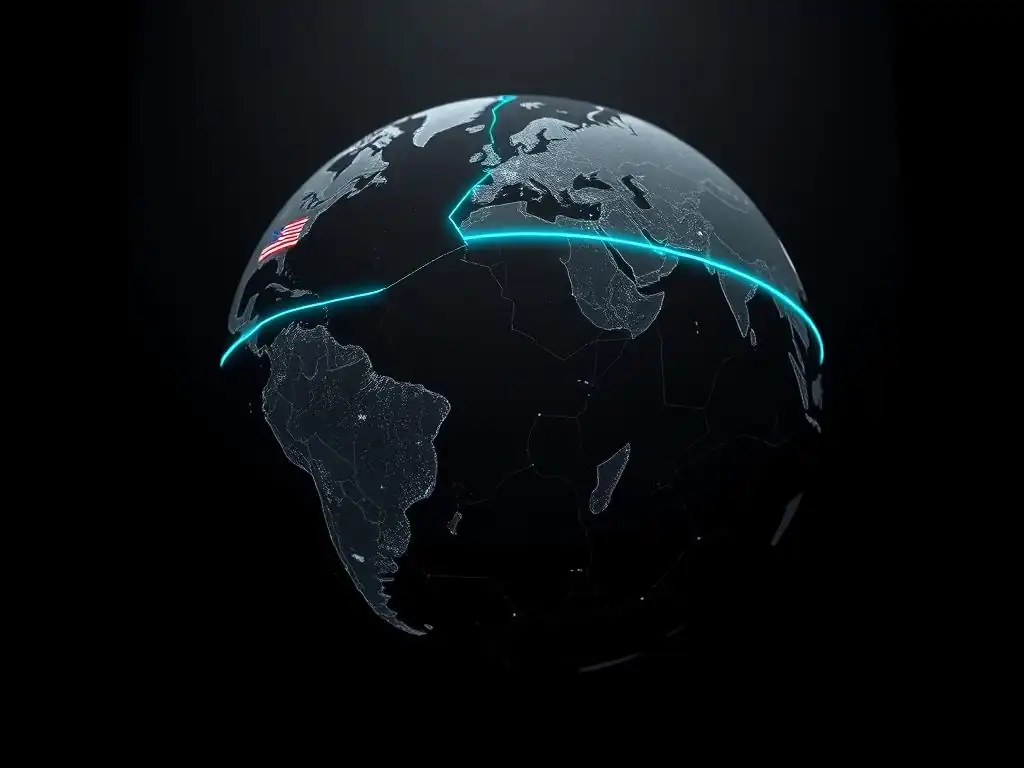
A pervasive theme underlying many blockchain tokenization legal challenges is the significant regulatory fragmentation across jurisdictions. Different countries are adopting vastly different approaches to regulating tokenized assets and activities. Some have introduced specific, comprehensive legal frameworks (e.g., Liechtenstein's Token and TT Service Provider Act). Others are attempting to fit tokens into existing laws (e.g., applying securities or financial services regulations). Still others have taken a more cautious or even restrictive stance. This uncoordinated approach creates inconsistencies and makes it incredibly difficult for global tokenization projects to operate legally and efficiently.
This fragmentation leads to regulatory arbitrage, where businesses may choose to locate in jurisdictions with more favorable rules, potentially creating risks elsewhere. More significantly, it creates compliance headaches and increases costs for legitimate businesses trying to operate across borders. A token offering structure that is legal in one country might be deemed illegal in another. A platform complying with AML/KYC rules in its home country may find those rules insufficient for users in other regions. The lack of a harmonized global approach is perhaps the single biggest impediment to the widespread, secure, and compliant adoption of cross-border tokenization.
The Lack of Uniformity in Global Tokenization Regulations
The lack of uniformity in global tokenization regulations is stark and contributes significantly to blockchain tokenization legal challenges. Definitions of key terms like "token," "virtual asset," or "security token" vary from country to country. Regulatory requirements for token offerings (public vs. private, utility vs. security) are inconsistent. Rules around operating token trading platforms (exchanges, DEXs) differ in terms of licensing, capital requirements, and operational rules. Taxation of tokens is a patchwork of national rules.
This regulatory disparity forces businesses to navigate a complex matrix of potentially conflicting rules. For example, the EU's Markets in Crypto-Assets (MiCA) regulation provides a comprehensive framework for crypto-assets within EU member states, but its classifications and requirements may not align perfectly with regulations in the US, UK, or Asian markets. This forces global players to adapt their business models and legal strategies on a region-by-region basis, increasing complexity and cost. The absence of a unified global standard makes it challenging to build truly scalable, compliant cross-border tokenization solutions.
Efforts Towards International Regulatory Cooperation and Standardization
Recognizing the inherent cross-border nature of blockchain and tokenization, there are growing efforts towards international regulatory cooperation and standardization, aiming to alleviate some blockchain tokenization legal challenges. International bodies like the Financial Stability Board (FSB), the Bank for International Settlements (BIS), and the International Organization of Securities Commissions (IOSCO) are studying the implications of digital assets and publishing recommendations for their member jurisdictions. The Financial Action Task Force (FATF) has issued guidance on a risk-based approach to virtual assets and VASPs, which many countries are adopting.
These efforts, while promising, face challenges due to differing national priorities, legal traditions, and levels of technological adoption. Progress towards legally binding international standards is slow. However, increased dialogue and information sharing between national regulators are helping to build a shared understanding of the risks and opportunities. Regional initiatives, like the EU's MiCA, also contribute by creating a unified framework within a large economic bloc, which can serve as a model or influence approaches elsewhere. Continued collaboration is essential to reduce fragmentation and create a more predictable legal environment for cross-border tokenization.
The Role of International Organizations in Shaping Tokenization Laws
International organizations play a crucial role in shaping the future of tokenization laws and addressing blockchain tokenization legal challenges, even without direct legislative power. Bodies like the FATF set global standards for AML/CFT that influence national legislation worldwide. IOSCO develops principles and recommendations for securities regulators that can be applied to security tokens. The Basel Committee on Banking Supervision (BCBS) is developing prudential standards for banks' exposure to crypto-assets.
These organizations provide forums for national regulators to share experiences, identify best practices, and develop common approaches to emerging risks. Their reports and recommendations serve as influential guidance for policymakers designing new regulations or adapting existing ones. While they cannot eliminate regulatory fragmentation entirely, their work helps to promote a degree of consistency and prevent the most egregious forms of regulatory arbitrage. Their ongoing engagement is vital for building a more coherent global legal framework for cross-border tokenization.
Case Studies: Examining Real-World Examples
Examining real-world case studies helps illustrate the practical blockchain tokenization legal challenges faced by projects operating across borders. These examples, while often complex, highlight how the theoretical legal issues manifest in practice and the strategies employed (or sometimes neglected) to navigate them. They underscore the necessity of rigorous legal due diligence from the outset of any cross-border tokenization initiative.
These cases demonstrate that even well-intentioned projects can run afoul of regulations in jurisdictions they did not fully anticipate or understand. They also show that successful cross-border tokenization requires not just technical innovation but also sophisticated legal structuring and compliance efforts across multiple legal systems, emphasizing the multi-faceted nature of blockchain tokenization legal challenges.
Case Study: Security Token Offering (STO) Across US and EU Jurisdictions
Consider a hypothetical case where a company based in Germany (EU) wants to conduct a Security Token Offering (STO) to raise capital, targeting investors in both Germany and the United States. This scenario immediately triggers significant blockchain tokenization legal challenges related to securities laws in both regions. In Germany and the EU, the token would likely be classified under MiFID II or national securities laws, potentially requiring a prospectus approved by a national regulator (like BaFin in Germany) and compliance with investor protection rules under MiFID II.
Simultaneously, offering tokens to U.S. investors, even if the issuer is German, triggers U.S. securities laws. The tokens would likely be considered securities under the Howey Test.
Unless an exemption is available (e.g., Regulation D for accredited investors, Regulation S for offshore offerings), the offering would require registration with the U.S. SEC, a costly and complex process. The company would need to implement strict measures to prevent unqualified U.S. persons from participating, potentially using geo-blocking and identity verification, while ensuring compliance with both EU and US regulations, illustrating the overlapping and sometimes conflicting nature of cross-border blockchain tokenization legal challenges.
Case Study: Tokenized Real Estate Investment with International Investors
Another illustrative case involves a project tokenizing ownership of a commercial property located in, say, Australia, and offering these real estate tokens to investors in Singapore, the UK, and Canada. This scenario brings forth a range of blockchain tokenization legal challenges. Firstly, the tokens must be legally structured to represent valid ownership or economic rights in the Australian property under Australian law – this might involve specific trust structures or fractional ownership models recognized locally.
Secondly, the offering of these tokens to investors in Singapore, the UK, and Canada triggers securities regulations in each of those countries. Singapore has specific rules for tokenized assets under the Securities and Futures Act, requiring licensing for platforms. The UK applies its financial promotion and securities rules, while Canada has provincial securities regulators with varying requirements.
The project must navigate compliance with potentially four different sets of securities, consumer protection, and potentially even property laws. Furthermore, tax implications for investors in each country based on income or capital gains from holding or selling the tokens, and potential withholding taxes in Australia, add further complexity to these cross-border blockchain tokenization legal challenges.
Future Trends and Emerging Legal Issues in Global Tokenization
The legal landscape for blockchain tokenization is not static; it is constantly evolving. Future trends and emerging technologies will introduce new blockchain tokenization legal challenges that regulators and legal professionals must address. Understanding these potential developments is crucial for anticipating future legal hurdles and developing proactive compliance strategies for cross-border tokenization projects.
Areas like decentralized autonomous organizations (DAOs), Central Bank Digital Currencies (CBDCs), and the continued growth of Decentralized Finance (DeFi) are pushing the boundaries of existing legal frameworks. The interaction of these trends with cross-border activities will create novel legal questions related to liability, governance, regulation, and the intersection of code and law on a global scale.
The Impact of Decentralized Autonomous Organizations (DAOs) on Cross-Border Regulation
Decentralized Autonomous Organizations (DAOs), governed by code and member consensus rather than traditional corporate structures, pose significant blockchain tokenization legal challenges, particularly in a cross-border context. The legal status of a DAO is highly uncertain. Is it a partnership, a company, an unincorporated association, or something entirely new? The answer varies depending on the jurisdiction, and some countries currently have no legal framework to accommodate DAOs.
This legal ambiguity creates problems for cross-border interactions. If a DAO enters into an agreement with a traditional company in another country, who has the legal capacity to contract? Who is liable if something goes wrong? Are the individual token holders (members) of the DAO personally liable for the DAO's actions, potentially across multiple jurisdictions? Some US states (like Wyoming) and other jurisdictions are enacting specific DAO legal entity laws, but there is no international consensus. Navigating the legal identity and liability of DAOs operating with global participants is a major emerging area of blockchain tokenization legal challenges.
Legal Implications of Central Bank Digital Currencies (CBDCs) and Tokenization
The potential introduction of Central Bank Digital Currencies (CBDCs) by national governments could have profound legal implications for private cross-border tokenization. While CBDCs are digital forms of a country's fiat currency, their design and implementation (e.g., wholesale vs. retail, account-based vs. token-based) will interact with existing financial regulations and potentially influence the legal treatment of other tokenized assets.
A token-based CBDC could provide a legally certain, risk-free settlement asset for transactions involving private tokens across borders, potentially simplifying some payment-related legal hurdles. However, the legal framework governing CBDCs themselves, including privacy implications, smart contract capabilities, and cross-border interoperability, is still being developed. The interaction between national CBDC laws and the regulations governing private tokens and stablecoins will be a critical area to watch, adding a layer of state-level complexity to future blockchain tokenization legal challenges.
The Evolving Regulatory Landscape for Decentralized Finance (DeFi) and Cross-Border Tokenization
Decentralized Finance (DeFi), which utilizes smart contracts and blockchain to offer financial services (lending, trading, insurance) without traditional intermediaries, is closely intertwined with cross-border tokenization and presents rapidly evolving blockchain tokenization legal challenges. Many DeFi protocols involve the tokenization of assets or yield, and their users and operations are inherently global. Regulators are increasingly scrutinizing DeFi, attempting to determine how existing financial regulations (securities, banking, derivatives, AML/KYC) apply to decentralized protocols and their participants.
Key legal questions include identifying who is responsible for compliance in a decentralized protocol, how to regulate lending or trading pools, and how to apply consumer protection rules. The borderless nature of DeFi means that a protocol developed in one country can be accessed and used by individuals worldwide, potentially subjecting developers, liquidity providers, or even users to regulations in numerous jurisdictions. The ongoing efforts by regulators globally to understand and regulate DeFi will significantly shape the future legal environment for cross-border tokenization, particularly concerning financial applications of the technology.
Cross-border tokenization offers transformative potential for global commerce and finance, but its widespread adoption is contingent on effectively navigating a complex and evolving global legal landscape. The blockchain tokenization legal challenges are numerous and interconnected, spanning issues of jurisdiction, securities regulation, data privacy, intellectual property, taxation, and the enforceability of smart contracts across diverse legal systems. Regulatory fragmentation remains a significant hurdle, requiring businesses to perform extensive legal analysis and implement robust compliance frameworks tailored to multiple jurisdictions.
Addressing these challenges requires proactive engagement from all stakeholders – issuers, platforms, investors, legal professionals, and regulators. Legal clarity and international harmonization are crucial for unlocking the full potential of cross-border tokenization while mitigating risks.
Key Takeaways and Best Practices for Cross-Border Tokenization Compliance
Navigating cross-border blockchain tokenization legal challenges effectively requires adhering to several key best practices. Firstly, conduct thorough legal due diligence in all relevant jurisdictions where the token is issued, offered, traded, or where investors/users are located. Do not assume that compliance in one country is sufficient. Secondly, seek expert legal counsel with specific knowledge of digital asset laws in the target regions. General corporate or financial law expertise may not be enough.
Thirdly, design the token structure and platform architecture with compliance in mind from the outset, considering issues like securities classification, data privacy, and AML/KYC requirements. Implement robust technical and procedural controls, such as identity verification, geo-blocking, and transaction monitoring, even if the system is designed to be decentralized. Clearly define the legal terms and conditions associated with the tokens and smart contracts, including governing law and dispute resolution mechanisms, ensuring they are enforceable across borders where possible. Transparency with users about the risks and legal status of the tokens is also paramount.
The Importance of Legal Due Diligence in a Rapidly Evolving Regulatory Environment.
Given the rapid pace of technological innovation and the constantly shifting regulatory landscape, rigorous and ongoing legal due diligence is not merely a formality but an absolute necessity for any cross-border tokenization project. The legal status of a token or platform might change as new laws are enacted or regulatory guidance is updated in relevant jurisdictions. What was compliant yesterday might not be today.
This means legal due diligence must be an iterative process, not a one-off exercise. Projects must stay abreast of regulatory developments in all countries where they operate or have a significant user base. Building strong relationships with legal counsel in key jurisdictions and participating in industry dialogue with regulators can help anticipate changes and adapt compliance strategies accordingly. The investment in thorough legal due diligence is critical for mitigating the significant blockchain tokenization legal challenges and building sustainable, compliant cross-border ventures in the digital economy.
Frequently Asked Questions
What are the primary legal hurdles facing cross-border blockchain tokenization?
The primary hurdles involve navigating conflicting jurisdictional laws regarding securities, data privacy, and regulatory compliance. Differences in legal definitions of tokens and varying enforcement approaches also create significant challenges.
How does the varying regulatory landscape across different countries impact blockchain tokenization projects?
The varying landscape necessitates customized legal strategies for each jurisdiction. Projects must comply with local securities laws, KYC/AML regulations, and data protection requirements, which can increase complexity and costs.
What are the key data privacy concerns associated with cross-border blockchain tokenization?
Data privacy regulations like GDPR impose strict rules on collecting, processing, and transferring personal data. Tokenization projects must ensure compliance to avoid significant penalties and maintain user trust.
How can blockchain tokenization projects mitigate the risk of non-compliance with international laws?
Mitigation involves conducting thorough legal due diligence in each relevant jurisdiction. Implementing robust compliance frameworks and seeking expert legal advice are also crucial.
What role does international cooperation play in addressing the legal challenges of cross-border blockchain tokenization?
International cooperation is essential for harmonizing regulations and establishing clear legal frameworks. This collaboration can foster greater certainty and facilitate the growth of cross-border tokenization initiatives.
The exploration of cross-border tokenization's legal challenges reveals a landscape ripe with both opportunity and uncertainty. The intersection of blockchain technology and international law presents a complex puzzle that demands careful consideration and proactive solutions. As digital assets increasingly transcend geographical boundaries, understanding these legal hurdles becomes paramount for fostering innovation and ensuring responsible growth within the global digital economy.
The impact of tokenization extends far beyond mere technological advancement; it fundamentally alters the way we perceive and interact with ownership, value, and exchange. This shift necessitates a re-evaluation of existing legal frameworks and a commitment to developing harmonized international standards. As we navigate this evolving landscape, it's crucial to remember the human element at the heart of this technological revolution. The future is already here – it's just not evenly distributed.
- William Gibson. This quote underscores the urgency of addressing the legal disparities that hinder equitable access to the benefits of tokenization across borders.
Now, as you reflect on the intricacies of cross-border tokenization, consider your role in shaping its future. How can you contribute to fostering a more transparent, secure, and legally sound environment for digital assets? Embrace the challenge of understanding these complexities, advocate for responsible innovation, and actively participate in the ongoing dialogue that will define the future of the global digital economy. The power to shape this future lies within each of us.
Unlock the Future: Become a Tokenization Pioneer!
Thank you for exploring the complex world of cross-border tokenization and its legal challenges. We hope this article has provided clarity and guidance as you navigate this rapidly evolving field. Now is the time to take action and help shape the future of digital finance.
Ready to make an impact? Here's how:
- Research the specific regulations governing tokenization in your jurisdiction. Ensuring compliance is essential for sustainable innovation.
- Share this article with your network to foster discussion about the global legal landscape surrounding tokenization. Let’s build an informed community!
- Consider participating in upcoming blockchain webinars to share your insights and connect with industry leaders.
What innovative tokenization strategies are you considering in response to these legal challenges? Share your thoughts in the comments below!
Leave a Reply