
The Interoperability of Decentralized Social Media Networks


Welcome to Blockchain Trends, your compass in the rapidly evolving world of decentralized technologies. Beyond the hype, we delve into the real-world applications and transformative potential of blockchain. Intrigued by the future of social connection? This week, we're unpacking the promise and challenges of decentralized social media interoperability. Explore how independent platforms can connect and empower users in unprecedented ways, and discover what it means for the future of online interaction. Dive in to uncover the building blocks of a truly connected, decentralized social web.
- Decentralized Social Media Interoperability: Connecting the Future of Social Networking
- Exploring the Technical Aspects of DeSo Interoperability
- Benefits of Interoperable Decentralized Social Media Platforms
- Use Cases and Examples of Interoperable Decentralized Social Networks
- The Future of Decentralized Social Media Interoperability
- Overcoming the Hurdles to Decentralized Social Media Interoperability
-
Frequently Asked Questions
- What is decentralized social media interoperability and why is it important?
- How does blockchain technology facilitate decentralized social media interoperability?
- What are some potential benefits of increased decentralized social media interoperability for users?
- What are the main challenges hindering the widespread adoption of decentralized social media interoperability?
- How might regulations impact the development of decentralized social media interoperability?
- Final Reflection: Embracing the Interconnected Future
- Ignite the Decentralized Revolution!
Centralized social media platforms, while connecting billions globally, operate under a model that presents several inherent limitations. These platforms, such as Meta (Facebook, Instagram, Threads), X (formerly Twitter), and TikTok, are controlled by single entities. This centralized control gives them immense power over user data, content moderation policies, and algorithmic curation.
Users are essentially tenants on these digital estates, subject to the platform's terms of service, which can change arbitrarily and without user consent. For instance, in 2023, X, under new ownership, dramatically altered its API access, impacting third-party apps and research efforts, demonstrating the fragility of relying on centralized infrastructure. Furthermore, data breaches and privacy scandals, like the Cambridge Analytica affair involving Facebook, highlight the risks of consolidating vast amounts of personal information in the hands of a few corporations.
Another significant limitation is the potential for censorship and algorithmic bias. Centralized platforms act as gatekeepers, deciding what content is amplified or suppressed. While content moderation is necessary, the lack of transparency and accountability in these processes raises concerns about censorship, particularly when political or social narratives are involved.
Algorithms, designed to maximize engagement, often prioritize sensational or polarizing content, contributing to echo chambers and the spread of misinformation. A study by the Pew Research Center in 2020 found that a majority of Americans believe social media companies have too much power and influence in politics and news, reflecting a growing unease with the centralized control of information dissemination. This concentration of power underscores the inherent vulnerabilities and limitations of the current centralized social media paradigm.
Decentralized Social Networks (DeSo) emerge as a compelling alternative, promising to address the shortcomings of their centralized counterparts by leveraging blockchain technology and decentralized principles. At their core, DeSo platforms aim to return control to users, shifting away from platform-centric models to user-centric ecosystems. This paradigm shift is achieved through several key features inherent in decentralization. Firstly, data ownership is transferred to users. Instead of platforms holding and monetizing user data, individuals control their profiles, content, and social graphs, often stored on decentralized ledgers or distributed storage solutions. This empowers users with agency over their digital identities and information.
Secondly, DeSo platforms are designed to be censorship-resistant. By distributing content across a network of nodes, rather than relying on a central server, they become significantly harder to censor or shut down. This resilience is crucial for fostering free speech and open dialogue, particularly in regions where information access is restricted.
Projects like Mastodon, with its federated structure, exemplify this principle, demonstrating a network where no single entity can unilaterally dictate content policy. Furthermore, decentralized governance models, often implemented through DAOs (Decentralized Autonomous Organizations), can allow users to participate in platform decision-making, fostering a more democratic and community-driven approach to social networking. The promise of DeSo lies in creating social media spaces that are more transparent, equitable, and resilient, where users are empowered rather than exploited.
While Decentralized Social Networks offer a significant improvement over centralized platforms, their full potential remains constrained without interoperability. In the current fragmented DeSo landscape, users are often siloed within individual networks. Imagine having to create separate profiles and build distinct social graphs for each DeSo platform you wish to use – one for microblogging, another for video sharing, and yet another for professional networking.
This lack of interconnectedness mirrors the early days of the internet before standardized protocols allowed seamless communication between different networks. This fragmentation hinders user experience, limits network effects, and impedes the growth of the decentralized social media ecosystem as a whole.
Decentralized social media interoperability is crucial to overcome these limitations. Interoperability, in this context, refers to the ability of different DeSo platforms to seamlessly communicate and interact with each other. This means users should be able to access content, engage with communities, and maintain their social identities across various DeSo networks, regardless of the underlying technology or platform.
For instance, a user on a decentralized microblogging platform should be able to follow and interact with a user on a decentralized video-sharing platform, without needing separate accounts or navigating complex technical barriers. This seamless interaction is essential to replicate and even surpass the network effects of centralized social media giants. Without interoperability, the DeSo space risks becoming a collection of isolated islands, failing to achieve the scale and impact necessary to truly challenge the dominance of centralized platforms and realize the full vision of a user-owned and open social web.
Exploring the Technical Aspects of DeSo Interoperability
Blockchain Technology and Cross-Chain Communication
Blockchain technology forms the foundational layer for most Decentralized Social Networks, providing the infrastructure for data immutability, transparency, and user ownership. However, achieving decentralized social media interoperability requires going beyond single blockchains and enabling seamless communication between different blockchain networks and platforms. This is where cross-chain communication technologies become paramount. Cross-chain solutions aim to bridge the gap between disparate blockchains, allowing for the transfer of data and assets between them. Several approaches are being developed to facilitate this cross-chain interaction.
One prominent approach involves the use of bridges. Bridges act as intermediaries, enabling the transfer of tokens or data between two distinct blockchains. For example, a bridge might allow a user's profile information stored on one blockchain to be accessed and utilized by a DeSo application built on a different blockchain. Another approach focuses on protocols that facilitate cross-chain messaging.
These protocols, such as Polkadot's XCM or Cosmos's IBC, enable blockchains to directly communicate and exchange data in a more native and secure manner. These technologies are crucial for building interoperable DeSo platforms as they lay the groundwork for users to maintain a unified social identity and access content across diverse decentralized networks, irrespective of the underlying blockchain infrastructure powering each platform. The ongoing development and refinement of these cross-chain communication technologies are essential for unlocking the true potential of a truly interoperable decentralized social web.
Beyond cross-chain communication infrastructure, the establishment of common standards and protocols is vital for achieving decentralized social media interoperability. Standards define the rules and formats for data exchange, ensuring that different platforms can understand and process information from each other. Protocols, on the other hand, outline the procedures and conventions for communication and interaction between systems.
In the context of DeSo, these standards and protocols are necessary to enable seamless data portability, identity management, and content sharing across different decentralized social networks. Without agreed-upon standards, each DeSo platform would operate in isolation, hindering interoperability and recreating the siloed experience of centralized platforms, albeit in a decentralized context.
Several initiatives are underway to develop and promote standards for decentralized social media. These efforts range from defining data schemas for user profiles and posts to establishing communication protocols for social interactions.
The adoption of open standards is crucial to ensure that DeSo platforms are not only decentralized but also truly interoperable, fostering a more open and collaborative social media ecosystem. These standards are not just technical specifications; they represent a commitment to openness and collaboration within the DeSo space, paving the way for a future where users can seamlessly navigate and interact across a diverse landscape of decentralized social networks.
ActivityPub and its Role in Decentralized Social Media
ActivityPub stands out as a prominent example of a protocol designed to facilitate decentralized social media interoperability. It is an open, decentralized protocol for social networking, standardized by the World Wide Web Consortium (W3C). ActivityPub enables the creation of federated social networks, where independent servers (instances) can communicate and share information with each other.
This federation model is exemplified by the Mastodon network, a popular decentralized microblogging platform that utilizes ActivityPub. Mastodon instances, run by different individuals and organizations, can interoperate, allowing users on one instance to follow and interact with users on other instances, even if they are hosted on different servers and governed by different community rules.
The strength of ActivityPub lies in its ability to enable interoperability without requiring all platforms to be built on the same blockchain or use the same underlying technology. As a protocol, it focuses on standardizing the communication layer, allowing diverse platforms to connect and exchange social activities, such as posts, likes, and follows, in a consistent and interoperable manner.
Beyond Mastodon, other decentralized social media platforms like Pleroma and PeerTube also implement ActivityPub, further expanding the federated social web. ActivityPub's adoption demonstrates a practical approach to achieving decentralized social media interoperability, showcasing how open protocols can foster a more connected and user-centric social networking landscape, moving away from the walled gardens of centralized platforms.
AT Protocol: A New Approach to Social Media Interoperability
The AT Protocol, developed by Bluesky, presents another notable approach to achieving decentralized social media interoperability. Unlike ActivityPub's federation model, the AT Protocol focuses on a more modular and composable architecture. It aims to create a "protocol of protocols," allowing for greater flexibility and customization in how decentralized social networks are built and how they interoperate.
A key component of the AT Protocol is the concept of "Personal Data Servers" (PDS). Users can choose their own PDS, giving them control over their data and identity. Different social applications can then be built on top of the AT Protocol, accessing user data from their chosen PDS.
This architecture is designed to promote interoperability at multiple levels. Firstly, different applications built on the AT Protocol can seamlessly interact with each other, as they all share a common protocol and can access user data from PDSs. Secondly, the AT Protocol is designed to be extensible and adaptable, allowing for the integration of new features and functionalities over time.
Bluesky, the first social application built on the AT Protocol, serves as a concrete example of this approach. While still in its early stages, the AT Protocol offers a promising alternative model for decentralized social media interoperability, emphasizing user agency and platform composability, and potentially paving the way for a more diverse and interconnected decentralized social web.
Addressing Technical Challenges in DeSo Interoperability
While the vision of decentralized social media interoperability is compelling, several technical challenges need to be addressed to realize its full potential. These challenges range from scalability limitations inherent in blockchain technology to complexities in data portability and user identity management across disparate networks. Overcoming these hurdles is crucial to ensure that interoperable DeSo platforms can provide a user experience that is both seamless and robust.
Scalability Issues in Blockchain-Based Social Networks
Scalability remains a significant challenge for blockchain-based social networks. Blockchains, particularly those employing proof-of-work consensus mechanisms, often face limitations in transaction throughput and processing speed. Social media platforms, especially those aiming for mass adoption, require handling a high volume of interactions in near real-time – posts, likes, shares, comments, and more. If the underlying blockchain cannot scale to accommodate this demand, it can lead to slow performance, high transaction fees (gas fees), and a poor user experience. For instance, during periods of high network activity on Ethereum, gas fees can spike significantly, making even simple social interactions prohibitively expensive.
Solutions to scalability challenges are actively being researched and developed. Layer-2 scaling solutions, such as rollups and sidechains, aim to offload transaction processing from the main blockchain, increasing throughput and reducing fees. Sharding, a technique to divide a blockchain into smaller, more manageable pieces, is another approach to enhance scalability.
Furthermore, some DeSo platforms are exploring alternative blockchain architectures or even hybrid approaches that combine on-chain and off-chain components to optimize for both decentralization and scalability. Addressing these scalability issues is paramount to ensuring that interoperable decentralized social media interoperability can support a large user base and deliver a smooth and responsive social networking experience.
Data Portability and User Identity Management
Data portability and user identity management present further technical complexities in achieving decentralized social media interoperability. In a truly interoperable DeSo landscape, users should be able to seamlessly move their data – profiles, social graphs, content – between different platforms. This requires standardized data formats and mechanisms for exporting and importing data across various DeSo networks. Currently, data portability is often limited or non-existent in both centralized and decentralized social media. Users are typically locked into a platform’s ecosystem, making it difficult to migrate to a different service without losing their social connections and content history.
Furthermore, managing user identity across interoperable DeSo platforms poses unique challenges. Users need a way to establish and maintain a consistent digital identity that can be recognized and utilized across different networks, without relying on centralized identity providers. Decentralized identity solutions, leveraging technologies like self-sovereign identity (SSI) and verifiable credentials, offer potential solutions.
These technologies empower users to control their own digital identities and selectively share verified information with different platforms. However, widespread adoption and standardization of decentralized identity solutions are still needed to facilitate seamless and secure user identity management in an interoperable DeSo ecosystem. Addressing data portability and user identity management is crucial for empowering users and fostering a truly open and user-centric decentralized social web.
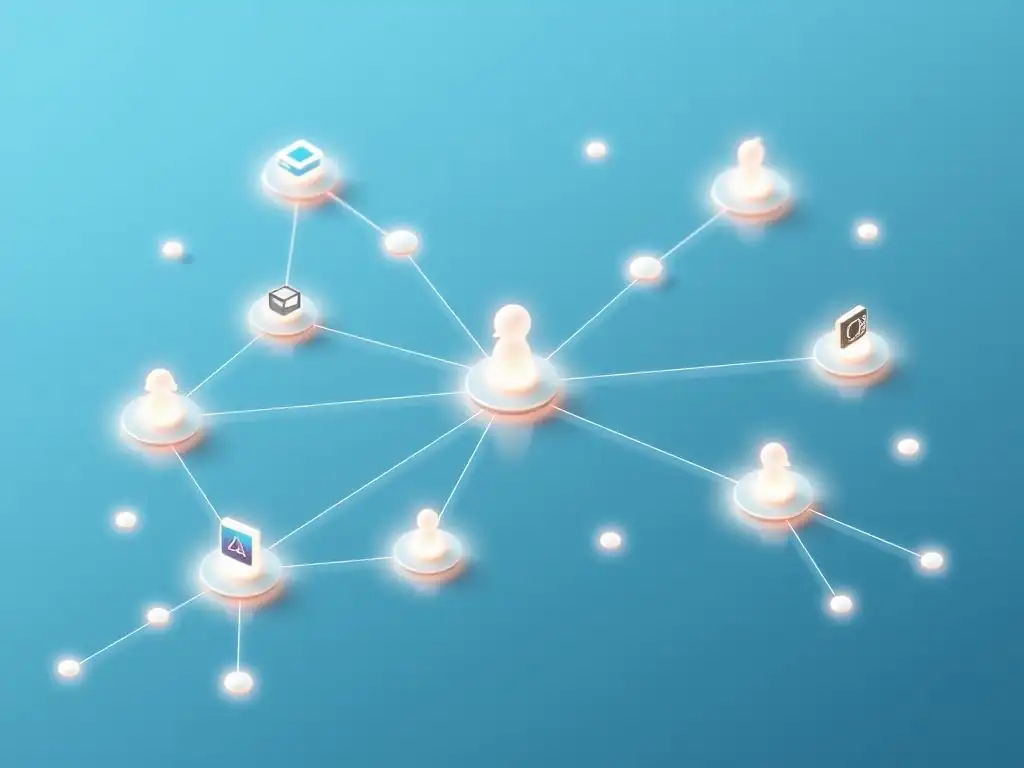
Enhanced User Experience and Control
Decentralized social media interoperability promises to significantly enhance user experience and control compared to both centralized and siloed decentralized platforms. For users accustomed to centralized social media, interoperability would mean breaking free from walled gardens and gaining greater agency over their social data and online presence. Instead of being confined to a single platform's ecosystem, users would be able to navigate a diverse landscape of interconnected DeSo networks, choosing platforms that best suit their needs and preferences, while maintaining a unified social identity and accessing their social graph across these networks.
This interoperability translates to a more seamless and user-friendly experience. Imagine being able to curate a personalized social media experience by combining features from different DeSo platforms – perhaps using one platform for microblogging, another for video content, and yet another for professional networking – all while maintaining a single profile and social graph that seamlessly connects these diverse activities. Furthermore, interoperability enhances user control over their data.
With standardized data portability mechanisms, users can easily migrate their data between platforms, ensuring they are not locked into any single ecosystem. This increased control and flexibility empowers users to shape their online social experience according to their own terms, fostering a more user-centric and less platform-dominated social web.
Increased Network Effects and Content Discoverability
Interoperability is a catalyst for increased network effects and enhanced content discoverability within the decentralized social media space. Network effects, the phenomenon where the value of a network increases as more users join, are crucial for the growth and adoption of social media platforms. Centralized platforms have leveraged strong network effects to achieve massive scale. However, in a fragmented DeSo landscape, individual platforms struggle to build comparable network effects, limiting their reach and impact. Decentralized social media interoperability can overcome this fragmentation by connecting disparate networks, creating a larger, more interconnected social graph.
This interconnectedness amplifies network effects across the entire DeSo ecosystem. As more platforms become interoperable, the overall value proposition for users increases, attracting more users and content creators to the decentralized social web. Furthermore, interoperability enhances content discoverability.
Instead of content being siloed within individual platforms, it can flow more freely across the interoperable network, reaching a wider audience. This increased discoverability benefits both content creators and consumers, fostering a more vibrant and dynamic decentralized social media environment. By breaking down silos and connecting networks, interoperability unlocks the power of network effects and content discoverability, driving the growth and adoption of decentralized social media.
Decentralized social media interoperability is a key driver of innovation and competition within the social media landscape. In the current centralized environment, a few dominant platforms control the vast majority of the social media market, limiting innovation and stifling competition. These platforms often operate as walled gardens, making it difficult for new entrants to compete and for users to switch platforms. Interoperability disrupts this status quo by lowering barriers to entry and fostering a more open and competitive ecosystem.
With interoperable platforms, developers can focus on building specialized features and functionalities, knowing that their applications can seamlessly integrate with other DeSo networks and access a broader user base. This fosters innovation by encouraging experimentation and the development of diverse social media applications catering to different needs and communities. Furthermore, interoperability promotes competition by empowering users to choose platforms based on their merits, rather than being locked into a single ecosystem.
If a new platform offers a better user experience or more innovative features, users can easily migrate and bring their social graph with them, increasing competitive pressure on existing platforms to innovate and improve. By fostering a more open, competitive, and innovative environment, interoperability accelerates the evolution of social media and drives the development of more user-centric and beneficial social networking experiences.
Mastodon and Pleroma: Federated Microblogging
Mastodon and Pleroma are prime examples of interoperable decentralized social networks in the microblogging space. Both platforms utilize the ActivityPub protocol, enabling them to federate and interoperate seamlessly. Mastodon, launched in 2016, has gained significant traction as a decentralized alternative to Twitter (now X), boasting millions of users across thousands of independent servers, known as instances. Pleroma, another ActivityPub-based platform, offers a lighter-weight alternative with a focus on customization and resource efficiency.
The interoperability between Mastodon and Pleroma, facilitated by ActivityPub, allows users on either platform to follow and interact with each other. A user on a Mastodon instance can seamlessly follow and engage with a user on a Pleroma instance, and vice versa, as if they were on the same platform. This federation model creates a larger, interconnected network, while still maintaining the decentralized nature of each instance.
Each instance can have its own moderation policies and community guidelines, allowing for diverse social spaces tailored to different interests and values. The success of Mastodon and Pleroma demonstrates the viability and benefits of decentralized social media interoperability through open protocols, showcasing a working model for a federated social web.
Lens Protocol represents a different approach to decentralized social media interoperability, focusing on the concept of a composable social graph. Developed by Aave, Lens Protocol is a decentralized, open-source social graph built on the Polygon blockchain. Instead of building a complete social media platform, Lens Protocol provides the underlying infrastructure for users to own and control their social connections and content. Applications can then be built on top of the Lens Protocol, leveraging this shared social graph.
The key to Lens Protocol's interoperability lies in its composable nature. Users own their profiles as NFTs (Non-Fungible Tokens), giving them full control and portability. Applications built on Lens Protocol can access and utilize these user-owned social graphs, creating a network effect across different applications.
For example, a user could use one application for posting text updates, another for sharing images, and yet another for engaging in discussions, all while using the same Lens Protocol profile and social graph. This composability fosters interoperability by enabling different applications to seamlessly integrate and share user data, creating a more unified and user-centric social media experience. Lens Protocol exemplifies a modular approach to decentralized social media interoperability, focusing on building reusable social graph infrastructure that can be leveraged by diverse applications.
RSS Feeds and Decentralized Content Aggregation
While often overlooked in the context of modern social media, RSS (Really Simple Syndication) feeds offer a foundational example of decentralized content aggregation and interoperability. RSS feeds, a web feed format used to publish frequently updated content, have been a cornerstone of the open web for decades. They allow users to subscribe to content from various websites and aggregate it in a single reader application, without relying on centralized platforms.
RSS feeds embody the principles of decentralized social media interoperability by enabling content to flow freely between different websites and applications. Users can use RSS readers to aggregate content from blogs, news sites, podcasts, and even some decentralized social media platforms that offer RSS feed support.
This decentralized aggregation empowers users to curate their own content streams and control their information consumption, rather than being subject to algorithmic curation by centralized platforms. While RSS feeds may not be a complete solution for all aspects of social media interoperability, they demonstrate the power of open standards and decentralized content syndication, offering valuable lessons for building a more interoperable and user-controlled social web.
Emerging Trends and Technologies
The future of decentralized social media interoperability is being shaped by several emerging trends and technologies. Advancements in blockchain technology, particularly in cross-chain communication and layer-2 scaling solutions, are laying the groundwork for more seamless and scalable interoperability. Furthermore, the development and adoption of open standards and protocols, like ActivityPub and the AT Protocol, are fostering a more collaborative and interoperable DeSo ecosystem.
Beyond these foundational technologies, other innovations are poised to play a significant role in the future of DeSo interoperability. Decentralized identity solutions, based on self-sovereign identity principles, are becoming increasingly important for enabling users to control their digital identities and seamlessly navigate across interoperable networks. Furthermore, advancements in privacy-preserving technologies, such as zero-knowledge proofs, are being explored to enhance privacy and security in interoperable DeSo platforms. These emerging trends and technologies are converging to create a more robust, scalable, and user-centric future for decentralized social media interoperability.
The Role of Zero-Knowledge Proofs in Privacy-Preserving Interoperability
Zero-knowledge proofs (ZKPs) are emerging as a powerful cryptographic tool with the potential to enhance privacy in decentralized social media interoperability. ZKPs allow one party to prove to another party that a statement is true, without revealing any information beyond the validity of the statement itself. In the context of DeSo, ZKPs can be used to enable privacy-preserving data sharing and interoperability between platforms.
For example, ZKPs could allow a user to prove to a DeSo platform that they meet certain criteria, such as having a certain reputation score or belonging to a specific community, without revealing their actual reputation score or community membership details. This can enable interoperability based on reputation or social credentials while preserving user privacy.
Furthermore, ZKPs can be used to enable private data sharing between interoperable platforms, allowing for richer social experiences without compromising user privacy. Research and development in ZKP technology are rapidly advancing, and their application in decentralized social media interoperability holds significant promise for building privacy-preserving and user-empowering social networks.
Decentralized Autonomous Organizations (DAOs) and Social Media Governance
Decentralized Autonomous Organizations (DAOs) are increasingly being explored as a governance mechanism for decentralized social media platforms and, potentially, for governing decentralized social media interoperability. DAOs are community-led entities governed by rules encoded on a blockchain, enabling transparent and decentralized decision-making. In the context of DeSo, DAOs can be used to govern platform protocols, content moderation policies, and resource allocation, empowering users and communities to participate in platform governance.
Looking ahead, DAOs could also play a role in governing interoperability standards and protocols. A DAO could be established to oversee the development and maintenance of interoperability standards, ensuring that they are open, community-driven, and aligned with the principles of decentralization.
This could foster a more collaborative and transparent approach to decentralized social media interoperability governance, preventing any single entity from controlling the direction of interoperability standards and ensuring that they serve the interests of the broader DeSo ecosystem and its users. The integration of DAOs into DeSo governance and interoperability standards represents a significant step towards building more user-owned and community-driven social networks.
The Impact on Content Creators and Consumers
Decentralized social media interoperability is poised to have a profound impact on both content creators and consumers. For content creators, interoperability offers the potential to reach a wider audience and monetize their content more effectively. Instead of being confined to a single platform's audience, interoperable networks allow creators to distribute their content across multiple platforms and reach users across the entire decentralized social web. This increased reach can lead to greater visibility and monetization opportunities.
For consumers, interoperability translates to a more diverse and user-centric social media experience. Users gain access to a wider range of content and communities, breaking free from the filter bubbles and algorithmic biases of centralized platforms. Interoperability also empowers users with greater control over their data and online presence, enabling them to curate a personalized social media experience across different platforms.
Furthermore, interoperability can foster innovation and competition, leading to the development of more diverse and user-friendly social media applications. Overall, decentralized social media interoperability promises to create a more equitable and empowering social media landscape for both creators and consumers.
Challenges and Opportunities for Widespread Adoption of Interoperable DeSo
While the benefits of decentralized social media interoperability are significant, widespread adoption faces both challenges and opportunities. One key challenge is the technical complexity of building and maintaining interoperable systems. Developing robust and scalable interoperability solutions requires significant technical expertise and ongoing collaboration among developers and communities. Another challenge is user adoption. Educating users about the benefits of interoperability and providing user-friendly interfaces for navigating interoperable networks is crucial for driving widespread adoption.
However, the opportunities for interoperable DeSo are immense. As user concerns about data privacy, censorship, and platform control grow, the demand for decentralized alternatives is increasing. Interoperability addresses many of these concerns by empowering users and fostering a more open and user-centric social web. Furthermore, the ongoing innovation in blockchain technology and decentralized protocols is creating new tools and frameworks for building interoperable DeSo platforms. By overcoming the technical and user adoption challenges, decentralized social media interoperability has the potential to reshape the social media landscape and create a more open, equitable, and user-empowering future for social networking.
Addressing Regulatory Concerns and Legal Frameworks
The development and adoption of decentralized social media interoperability also need to navigate regulatory concerns and evolving legal frameworks. The decentralized nature of these platforms and their cross-border interoperability present unique challenges for regulators accustomed to centralized entities and jurisdictional boundaries. Issues such as data privacy, content moderation, and liability need to be addressed in a way that is compatible with the decentralized and interoperable nature of DeSo networks.
Regulatory clarity and the development of appropriate legal frameworks are crucial for fostering trust and encouraging the responsible growth of decentralized social media interoperability. This requires dialogue and collaboration between regulators, developers, and the DeSo community to develop approaches that balance innovation and user protection. Self-regulatory initiatives and industry standards can also play a vital role in addressing regulatory concerns and promoting responsible practices within the interoperable DeSo ecosystem. Navigating the regulatory landscape effectively is essential for ensuring the long-term sustainability and widespread adoption of interoperable decentralized social media.
Building trust and ensuring security are paramount for the success of interconnected decentralized social media interoperability. In an interoperable environment, where data and interactions flow across different platforms, security vulnerabilities and trust issues can be amplified. Robust security measures are needed to protect user data, prevent malicious activities, and maintain the integrity of interoperable networks. This includes addressing potential risks such as cross-chain exploits, identity spoofing, and data breaches that could arise in an interconnected ecosystem.
Furthermore, building user trust is crucial for fostering adoption and engagement. Users need to be confident that interoperable DeSo platforms are secure, reliable, and respect their privacy. Transparency in platform operations, clear communication about security measures, and user-friendly interfaces that empower users to manage their privacy and security settings are essential for building trust. Ongoing security audits, vulnerability assessments, and community-driven security initiatives can also contribute to building a more secure and trustworthy interoperable DeSo ecosystem. Prioritizing trust and security is fundamental to realizing the full potential of decentralized social media interoperability.
Fostering Collaboration Among Developers and Communities
Ultimately, the success of decentralized social media interoperability hinges on fostering collaboration among developers and communities within the DeSo space. Interoperability is not a feature that can be built in isolation; it requires a collective effort to develop open standards, protocols, and shared infrastructure. Collaboration is essential for overcoming technical challenges, promoting best practices, and ensuring that interoperability solutions are user-centric and aligned with the principles of decentralization.
Open-source development, community-driven governance, and cross-platform collaboration initiatives are crucial for fostering a collaborative ecosystem. Developers from different DeSo projects need to work together to define and implement interoperability standards, share knowledge, and build bridges between different platforms. Furthermore, engaging with the broader DeSo community, including users, researchers, and policymakers, is essential for ensuring that interoperability efforts are aligned with the needs and values of the decentralized social web. By fostering a culture of collaboration and open innovation, the DeSo community can collectively build a more interoperable, user-empowering, and thriving decentralized social media landscape.
Frequently Asked Questions
It refers to the ability of different decentralized social media platforms to seamlessly communicate and exchange data with each other. This interoperability is crucial for creating a more open and user-centric social media experience.
Blockchain provides a shared and immutable ledger for verifying data and transactions across different platforms. This helps establish trust and transparency, which are essential for interoperable systems, allowing platforms to easily share user identity data.
Users could enjoy a more unified social media experience, accessing content and interacting with communities across multiple platforms. It would also empower users with greater control over their data and reduce dependence on centralized platforms.
Challenges include the lack of standardized protocols for data exchange, governance issues related to coordinating across different platforms, and the scalability limitations of current blockchain technologies.
Regulations could either foster or hinder its development depending on their approach to data privacy, security, and cross-border data transfer. Clear and consistent regulations are needed to encourage innovation while protecting users.
Final Reflection: Embracing the Interconnected Future
The exploration of decentralized social media interoperability underscores a crucial point: the future of online interaction hinges on the ability of disparate platforms to seamlessly connect. The fragmented landscape we currently navigate, dominated by walled gardens, stifles innovation and limits user agency. By embracing interoperability, we unlock the potential for a more vibrant, democratic, and user-centric social web.
This journey towards interconnectedness is not merely a technological challenge; it's a cultural shift. The ability to move freely between platforms, carrying our data and connections with us, empowers individuals and fosters a more resilient and diverse online ecosystem. The power of the Web is in its universality. Access by everyone regardless of disability is an essential aspect.
- Tim Berners-Lee. This quote reminds us that inclusivity and accessibility are paramount, and interoperability is a key step in achieving a truly universal and empowering online experience.
Now, consider the implications of this interconnected future for yourself. How can you support the development and adoption of interoperable solutions? How can you advocate for a social web that prioritizes user control and data portability? Let us all strive to build a future where online interaction is not confined by artificial barriers, but rather thrives on the principles of openness, collaboration, and shared ownership. The power to shape this future lies within each of us.
Ignite the Decentralized Revolution!
Thank you for exploring the exciting potential of interoperable decentralized social media! We hope this article has shed light on how we can build a more connected and user-controlled online world. Now, let's put this knowledge into action and contribute to the future of social networking:
- Start exploring different decentralized social media platforms like Mastodon, Lens Protocol, or Nostr to experience interoperability firsthand. This is your primary action — get your hands dirty!
- Share this article with your network to spark conversations about the importance of interoperability and help others understand its potential impact. Let's spread the word!
- Experiment with creating and sharing content across multiple platforms. See how seamlessly your posts transfer and provide feedback to the platforms you use. Your experiences can help shape future development.
How will you contribute to building a more open and connected decentralized social web today? Share your thoughts in the comments below!
Leave a Reply