
The Rise of Serverless DApps: Simplifying Deployment and Scaling for Decentralized Applications


Welcome to Blockchain Trends, your guide to navigating the evolving world of blockchain technology. Beyond the hype surrounding cryptocurrencies, we delve into the real-world applications shaping industries and redefining trust. Are you ready to explore the cutting edge of decentralized applications? In this article, we tackle a critical question for developers: Can serverless architectures truly unlock the full potential of decentralized application deployment, or are there hidden challenges lurking beneath the surface? Read on to discover the opportunities and obstacles in this exciting frontier.
The Rise of Serverless DApps: Simplifying Deployment and Scaling for Decentralized Applications
- Introduction: Embracing Serverless for Next-Generation DApps
- Understanding Serverless Architecture and its Benefits for DApp Development
- Addressing Serverless Decentralized Application Deployment Challenges
- Serverless DApp Architecture: Components and Best Practices
- Serverless DApp Examples and Use Cases
- The Future of Serverless DApp Development
- Conclusion: Serverless as a Catalyst for DApp Innovation
-
Frequently Asked Questions
- What are the primary advantages of using a serverless architecture for deploying Decentralized Applications (DApps)?
- What are some common Serverless Decentralized Application Deployment Challenges related to data storage in a blockchain environment?
- How does the serverless model impact the security of DApps, particularly regarding access control and authentication?
- What role do smart contracts play in serverless DApp architectures, and how are they integrated?
- How does the regulatory landscape impact the development and deployment of Serverless Decentralized Applications and what are the key considerations?
- Final Reflection: Embracing the Decentralized Future
- Embrace the Future: Build Your First Serverless DApp Today!
Introduction: Embracing Serverless for Next-Generation DApps
Decentralized applications, or DApps, represent a fundamental shift in how software is built and deployed, moving away from centralized servers towards distributed networks. This paradigm offers enhanced security, transparency, and censorship resistance. However, developing and deploying DApps often presents unique challenges, particularly concerning infrastructure management, scalability, and cost efficiency. Traditionally, DApps required developers to manage complex server infrastructure for off-chain components, such as user interfaces, APIs, and data storage, which contradicted the decentralized ethos and introduced operational overhead.
As the DApp ecosystem matures, the need for more efficient and scalable development practices becomes paramount. This is where serverless computing emerges as a powerful enabler. By abstracting away server management, serverless architectures allow DApp developers to focus on writing code and smart contracts, significantly simplifying the deployment process and enabling dynamic scaling based on demand. This convergence of serverless and decentralized technologies is paving the way for a new generation of DApps that are not only more robust and scalable but also more cost-effective to operate, directly impacting how we address serverless decentralized application deployment challenges.
Understanding Serverless Architecture and its Benefits for DApp Development
What is Serverless Computing? A Primer
Serverless computing is a cloud execution model where the cloud provider dynamically manages the allocation and provisioning of servers. Developers write and deploy code, typically in functions, and the cloud provider runs the code in response to events, automatically scaling the underlying infrastructure. While the term "serverless" is somewhat misleading, as servers are still used, the key distinction is that the developer is not responsible for managing, provisioning, or scaling these servers. This includes tasks like operating system maintenance, capacity planning, and patching.
In a serverless model, developers pay only for the compute time consumed by their code, usually measured in milliseconds. This contrasts sharply with traditional cloud models where users pay for provisioned server instances, regardless of usage. Serverless platforms handle everything from scaling up during peak demand to scaling down to zero when idle, offering significant operational advantages and cost efficiencies, making it an attractive model for components of a decentralized application architecture.
Key Advantages of Serverless for Decentralized Applications
Reduced Operational Overhead and Infrastructure Management
One of the most significant burdens in traditional DApp development is the management of off-chain infrastructure. Developers often spend considerable time provisioning, configuring, and maintaining servers, databases, and load balancers for components like front-end hosting, API gateways, and data caching layers. This requires specialized expertise and detracts from core DApp development tasks like smart contract logic and user experience design.
Serverless computing eliminates this burden entirely. Cloud providers take responsibility for all infrastructure management tasks, including server patching, scaling, and maintenance. This allows DApp teams, often lean startups or open-source projects, to allocate their limited resources more effectively, focusing on building features and improving the decentralized aspects of their application rather than grappling with server configurations or unexpected downtimes.
Enhanced Scalability and Elasticity for DApps
DApps, especially those gaining traction, can experience highly variable traffic patterns. A sudden surge in users interacting with a DeFi protocol or minting NFTs on a marketplace can quickly overwhelm fixed infrastructure, leading to performance degradation or even service outages. Traditional scaling requires manual intervention or complex auto-scaling configurations, which can be slow and inefficient.
Serverless platforms are inherently designed for automatic and rapid scaling. When demand increases, the provider automatically spins up more instances of the serverless function to handle the load. When demand subsides, instances are scaled down. This elasticity ensures that the DApp's off-chain components can handle fluctuating user traffic seamlessly and cost-effectively, providing a responsive experience even during peak periods and directly addressing serverless decentralized application deployment challenges related to unpredictable load.
Cost Optimization through Pay-Per-Use Model
Traditional server hosting models typically involve paying for allocated resources on an hourly or monthly basis, regardless of actual usage. This can result in significant wasted expenditure during periods of low activity, which are common for nascent DApps or specific features within a DApp. Managing infrastructure costs effectively is a critical aspect of any software project, and DApps are no exception.
The pay-per-use model of serverless computing aligns costs directly with actual consumption. Developers pay only for the number of requests processed and the compute time consumed by their functions. For many DApps, particularly in their early stages or for functions that are triggered sporadically (e.g., processing a blockchain event notification), this can lead to substantial cost savings compared to maintaining always-on servers. Estimates suggest cost reductions of 30-50% or more for workloads suited to the serverless model.
Faster Deployment Cycles and Time to Market
Setting up and configuring traditional server environments for DApp components can be a time-consuming process involving provisioning servers, installing dependencies, configuring web servers, and setting up deployment pipelines. This can significantly slow down the iteration cycle and delay the release of new features or updates, which is crucial in the fast-paced blockchain space.
Serverless platforms abstract away much of this complexity. Developers can deploy function code directly to the platform, often through simple command-line interfaces or integrated development environments. The platform handles the underlying infrastructure setup. This streamlined deployment process allows development teams to build, test, and deploy new features much faster, accelerating the time to market for decentralized applications and enabling quicker responses to user feedback or market changes.
Addressing Serverless Decentralized Application Deployment Challenges
The Traditional DApp Deployment Model: Limitations and Bottlenecks
Deploying a DApp traditionally involves managing both the on-chain smart contracts and the off-chain infrastructure necessary for the user interface, data caching, APIs interacting with the blockchain, and potentially off-chain data storage. The on-chain part, while complex in smart contract development, has a relatively standard deployment process (compiling and deploying to a blockchain network). However, the off-chain components require provisioning and managing servers (physical or virtual), databases, storage, load balancers, and networking configurations.
This dual requirement introduces significant limitations and bottlenecks. Developers must possess expertise in both blockchain development and traditional system administration or DevOps. Scaling the off-chain infrastructure to match the potential viral growth of a DApp is complex and often reactive. Furthermore, the fixed cost of maintaining this infrastructure can be prohibitive for projects without significant funding. These factors represent some of the primary serverless decentralized application deployment challenges faced by developers.
Overcoming DApp Deployment Challenges with Serverless Frameworks
Serverless frameworks and platforms offer a compelling solution to many of the serverless decentralized application deployment challenges inherent in the traditional model. By offloading infrastructure management to the cloud provider, developers can focus on the unique aspects of DApp development – smart contracts, blockchain interactions, and decentralized logic. This shift simplifies the deployment pipeline and reduces the technical burden on development teams.
Using serverless architectures for DApp components like API gateways interacting with blockchain nodes, front-end hosting, or off-chain data processing tasks allows developers to leverage the scalability and cost-efficiency benefits discussed earlier. Frameworks like the Serverless Framework or specialized blockchain-focused serverless platforms abstract away cloud provider specifics, making it easier to define, deploy, and manage serverless functions that interact with decentralized networks, thereby directly addressing serverless decentralized application deployment challenges.
Security Considerations for Serverless DApps
While serverless platforms handle infrastructure security, specific security considerations arise when using them for DApps. Serverless functions typically have fine-grained permissions, and misconfigurations can lead to vulnerabilities, such as allowing excessive access to cloud resources or sensitive data. Furthermore, handling private keys or sensitive blockchain-related information within serverless functions requires careful management using secure secrets management services provided by the cloud platform.
Ensuring the integrity of the data flowing between the serverless function and the blockchain is also critical. This involves validating data inputs and outputs, implementing proper authentication and authorization mechanisms, and being mindful of potential oracle attacks or data manipulation if the serverless component acts as an intermediary for off-chain data. Developers must follow best practices for secure coding within the serverless environment, including input validation, least privilege principle for permissions, and regular security audits.
Latency and Performance Optimization Strategies
Serverless functions can sometimes introduce latency, particularly due to "cold starts" – the delay experienced when a function that hasn't been used recently needs to be initialized. While often measured in milliseconds (e.g., 100-500ms), this can be noticeable in performance-sensitive DApps. Another challenge is managing state across stateless serverless function executions, which requires external data stores.
Strategies to mitigate latency include using provisioned concurrency for critical functions that need low latency, structuring code for fast initialization, and optimizing function memory allocation. Performance optimization also involves minimizing the amount of data transferred between the serverless function and the blockchain or off-chain data stores. Utilizing caching layers, potentially also implemented serverlessly, can significantly improve response times for frequently accessed data.
Data Storage and Management in Serverless DApps
DApps often require storing data off-chain, such as user profiles, historical transaction data, or media files associated with NFTs. While the blockchain provides a secure ledger for core transaction data, storing large or complex data structures on-chain is prohibitively expensive and inefficient. Managing this off-chain data in a serverless architecture presents its own set of challenges.
Serverless DApps typically integrate with various serverless database solutions (like AWS DynamoDB, Azure Cosmos DB, or Google Cloud Firestore) or object storage services (like AWS S3, Azure Blob Storage, or Google Cloud Storage). The challenge lies in designing the data model to be efficient for serverless function access and ensuring data consistency, especially when interacting with immutable blockchain data. Implementing event-driven architectures where serverless functions react to blockchain events to update off-chain data stores is a common pattern.
Serverless DApp Architecture: Components and Best Practices
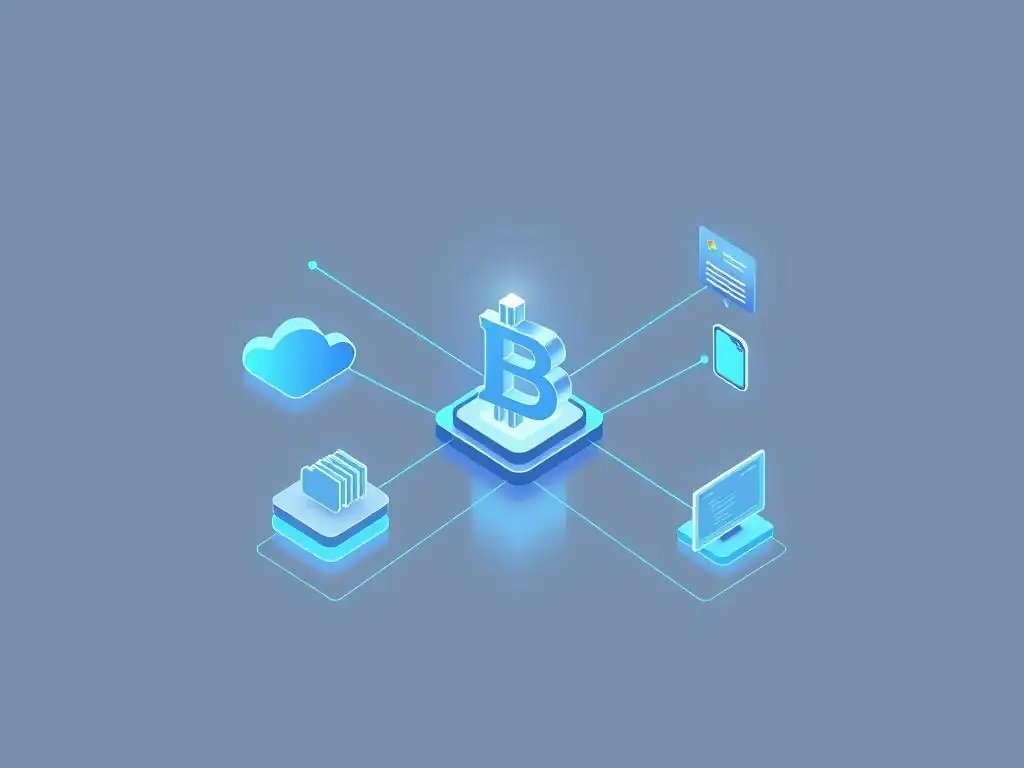
Choosing the Right Serverless Platform for Your DApp
Selecting a serverless platform is a crucial decision for DApp developers. The choice often depends on existing cloud infrastructure, specific service needs, pricing models, and developer familiarity. The major cloud providers offer robust serverless computing services, each with its strengths and ecosystem.
Key factors to consider include the available programming languages supported, integration with other cloud services (databases, storage, API gateways), pricing structure (per request, per duration, free tier limits), regional availability, and the ease of integrating with blockchain nodes or services. Evaluating these aspects against the specific requirements of the DApp is essential for making an informed choice.
AWS Lambda for DApps: Use Cases and Considerations
AWS Lambda is a popular choice for building serverless backends, including components for DApps. It supports a wide range of programming languages and integrates seamlessly with other AWS services like API Gateway, S3, DynamoDB, and EventBridge. Lambda functions can be triggered by various events, such as HTTP requests (via API Gateway), changes in S3 buckets, or messages in SQS queues.
For DApps, Lambda can power the user interface's backend API, process transactions submitted off-chain before relaying them to the blockchain, handle user authentication, serve static website assets from S3, or react to blockchain events forwarded via a bridge service. Considerations include managing the AWS ecosystem's complexity, potential vendor lock-in, and optimizing function execution for performance and cost.
Azure Functions for DApps: Exploring the Possibilities
Azure Functions is Microsoft's serverless computing service, offering similar capabilities to AWS Lambda. It supports multiple languages and integrates well with Azure's ecosystem, including Azure API Management, Azure Cosmos DB (a globally distributed, multi-model database), and Azure Blob Storage. Azure Functions can be triggered by HTTP requests, database changes, queue messages, and more.
Azure Functions can be used in DApp architectures for tasks such as providing an API for front-end interactions, processing off-chain computations related to smart contracts, managing user data in Cosmos DB, or handling file uploads to Blob Storage. Its strengths lie in its strong integration with the Microsoft ecosystem and enterprise-focused features, which might be appealing for DApps developed by organizations already using Azure.
Google Cloud Functions for DApps: A Comparative Analysis
Google Cloud Functions provides a serverless execution environment for building and connecting cloud services and APIs. It supports Node.js, Python, Go, Java, .NET, and Ruby. It integrates with Google Cloud services like Cloud Storage, Cloud Firestore (a NoSQL database), and Cloud Pub/Sub (a messaging service). Functions can be triggered by HTTP requests, events from Cloud Storage, Pub/Sub messages, and more.
For DApps, Google Cloud Functions can power API backends, process off-chain data, interact with Cloud Firestore for user data or application state, and handle events from Pub/Sub which could potentially be linked to blockchain events. Its competitive pricing, strong integration with Google's data analytics tools, and developer-friendly environment make it a viable option for DApp teams already invested in the Google Cloud ecosystem.
Serverless Database Solutions for Decentralized Applications
While the blockchain serves as the immutable ledger for core decentralized transactions and state, DApps invariably require off-chain databases for managing user profiles, application settings, cached blockchain data, historical records not stored on-chain, or large files. Serverless databases align well with the serverless compute model, offering scalability and pay-per-use pricing.
Examples include AWS DynamoDB (NoSQL key-value and document database), Azure Cosmos DB (multi-model, globally distributed database), and Google Cloud Firestore (NoSQL document database). These databases automatically scale capacity based on demand and offer high availability. Choosing the right database depends on the DApp's data structure requirements (document, key-value, graph, etc. ), performance needs, and the chosen serverless compute platform.
Integrating Serverless Functions with Blockchain Networks
A core aspect of building serverless DApps is enabling serverless functions to interact with blockchain networks. This involves reading data from the blockchain (e.g., checking token balances, querying smart contract state) and writing data to the blockchain (e.g., submitting transactions). Serverless functions act as the bridge between the traditional web interface or backend logic and the decentralized ledger.
Integration is typically achieved by including blockchain interaction libraries (like Web3.js, Ethers.js for Ethereum-compatible chains, or specific SDKs for other protocols) within the serverless function code. The function uses these libraries to connect to a blockchain node (either a public node, a node managed by a service like Infura or Alchemy, or a self-hosted node), sign transactions (using securely managed private keys or a transaction relay service), and send them to the network. Reading data is simpler, involving calling read-only methods on smart contracts or querying blockchain state.
Serverless DApp Examples and Use Cases
Real-World Applications of Serverless DApps
Serverless architectures are increasingly being adopted for various components of DApps across different sectors. While the core smart contract logic remains on the blockchain, serverless computing provides the scalable and cost-effective infrastructure for the surrounding application layers. This approach allows developers to build more complex and user-friendly decentralized applications without the burden of managing traditional servers.
Examples span decentralized finance (DeFi), non-fungible token (NFT) marketplaces, decentralized autonomous organizations (DAOs), and blockchain-based gaming. By leveraging serverless functions for tasks like processing user requests, handling data storage, triggering notifications, or orchestrating complex workflows, developers can overcome many serverless decentralized application deployment challenges and focus on the unique value proposition of their DApp.
Serverless DeFi Applications: Lending and Borrowing Platforms
In DeFi, serverless functions can be used to power the front-end APIs that interact with lending and borrowing smart contracts on the blockchain. For instance, a serverless function triggered by an HTTP request could query a smart contract for a user's loan position or available collateral. Another function could process a user's request to deposit collateral or withdraw funds, prepare the transaction, and submit it to the blockchain via a transaction relay service, managing aspects of serverless decentralized application deployment challenges related to transaction handling.
Furthermore, serverless functions can monitor blockchain events, such as loan liquidations or interest rate changes, and trigger off-chain actions like sending notifications to users or updating off-chain dashboards. Using serverless databases like DynamoDB, the platform can store user interface state, cached protocol data, or historical performance metrics, providing a responsive user experience without overloading blockchain nodes with read requests.
Serverless NFT Marketplaces: Streamlining Transactions and Storage
NFT marketplaces involve complex interactions, including displaying digital assets, handling auctions or fixed-price sales, processing bids, and managing metadata and media files associated with NFTs. While ownership and core sale logic are on-chain, the user-facing platform requires significant off-chain infrastructure. Serverless computing is well-suited for these components.
Serverless functions can serve as APIs for browsing NFTs, filtering collections, displaying user profiles, and managing shopping carts. When a user initiates a purchase or places a bid, a serverless function can interact with the relevant smart contracts. Off-chain data storage for NFT metadata (often stored as JSON files) and associated media (images, videos) can leverage serverless object storage like S3, with metadata potentially indexed in a serverless database like Firestore for fast querying. This approach simplifies the management of potentially millions of assets and transactions, addressing serverless decentralized application deployment challenges related to scale.
Serverless Gaming DApps: Enhancing User Experience and Scalability
Blockchain gaming often involves managing in-game assets as NFTs or tokens and handling game logic that might interact with smart contracts (e.g., for item ownership, crafting, or battle outcomes). Serverless architectures can significantly improve the user experience and scalability of the off-chain components of these games.
Serverless functions can handle user authentication, manage game state not stored on-chain, process game logic that doesn't require blockchain finality, and provide APIs for the game client. For instance, a function could handle matchmaking, track player statistics in a serverless database, or process in-game actions that update off-chain state before eventually committing results to the blockchain. This allows for faster, more responsive gameplay while still leveraging blockchain for asset ownership and critical game mechanics, mitigating serverless decentralized application deployment challenges associated with high-frequency interactions.
Case Study: A Serverless DApp for Supply Chain Tracking
Consider a decentralized supply chain tracking DApp where product information, ownership changes, and location updates are recorded on a blockchain. A traditional approach would require dedicated servers to host the web application, manage user accounts, store additional product details (like photos or certifications), and provide an API for supply chain participants to interact with the system.
A serverless approach transforms this. The user interface could be hosted on serverless static website hosting (like S3/CloudFront). User authentication and profile management could use a serverless identity service. Serverless functions (e.g., Lambda) would provide APIs for users to query the blockchain for product history or submit new events (like a location scan), securely signing and relaying transactions to the network.
Additional data, like product photos or scanned documents, could be stored in serverless object storage (S3). A serverless database (DynamoDB) could cache frequently accessed blockchain data or store off-chain metadata and user-specific information. This architecture drastically reduces operational costs, scales automatically with the number of products and participants, and simplifies development, directly tackling several serverless decentralized application deployment challenges.
The Future of Serverless DApp Development
Emerging Trends in Serverless DApp Architecture
The convergence of serverless computing and decentralized applications is still evolving, with several trends shaping the future architecture. One key trend is the development of more sophisticated event-driven patterns where serverless functions are triggered directly by blockchain events (e.g., a specific smart contract event being emitted), potentially via specialized blockchain middleware services or enhanced node capabilities. This allows for real-time reactions to on-chain activity.
Another trend is the increased focus on developer experience, with frameworks and tools emerging to simplify the deployment and management of complex serverless DApp architectures. This includes better local development environments, improved debugging capabilities for serverless functions interacting with blockchains, and integrated solutions for managing secrets and identities across decentralized and serverless components. Furthermore, we may see cloud providers offering more blockchain-specific triggers and integrations natively within their serverless platforms.
The Role of Serverless in the Evolution of Web3
Web3 envisions a decentralized internet built on blockchain technology, emphasizing user ownership of data and digital assets, and peer-to-peer interactions. While the core of Web3 is decentralized, the user experience layer often requires efficient and scalable infrastructure. Serverless computing is poised to play a crucial role in bridging the gap between the decentralized backend and the user-friendly front-end.
Serverless architectures can provide the necessary infrastructure for Web3 applications that require off-chain computation, data storage, or API layers without relying on monolithic, centrally managed servers. They enable developers to build responsive, scalable, and cost-effective applications that interact with decentralized protocols, accelerating the adoption of Web3 technologies by making them more accessible and performant for end-users. This helps overcome practical serverless decentralized application deployment challenges that might otherwise hinder Web3 adoption.
Serverless DApps and the Democratization of Blockchain Technology
One of the goals of blockchain technology is democratization – enabling broader access and participation in digital systems. However, the technical complexity and infrastructure requirements of building and deploying DApps can be a barrier to entry for many developers and organizations. Serverless computing helps lower this barrier significantly.
By abstracting away infrastructure management, serverless platforms allow developers to focus on the core logic of their decentralized application. This reduces the need for specialized DevOps expertise and lowers the initial investment required to launch a DApp. This democratization of the development process enables a wider range of individuals and teams to build innovative decentralized applications, fostering greater experimentation and growth within the blockchain ecosystem and making it easier to overcome serverless decentralized application deployment challenges.
Conclusion: Serverless as a Catalyst for DApp Innovation
The rise of serverless DApps marks a significant step forward in the evolution of decentralized applications. By leveraging the benefits of serverless computing – including reduced operational overhead, enhanced scalability, cost optimization, and faster deployment cycles – developers can build more robust, efficient, and user-friendly DApps. While serverless decentralized application deployment challenges related to security, performance, and data management exist, they are addressable with careful design and best practices.
Serverless architectures provide a powerful framework for bridging the gap between the decentralized blockchain layer and the necessary off-chain components, making DApps more practical and accessible. As serverless platforms continue to evolve and integrate more deeply with blockchain services, they will serve as a key catalyst for innovation in the DApp space, accelerating the development and adoption of decentralized technologies and contributing to the broader vision of Web3.
Frequently Asked Questions
What are the primary advantages of using a serverless architecture for deploying Decentralized Applications (DApps)?
Serverless DApps offer reduced operational overhead by eliminating server management, improved scalability and cost-efficiency, and faster deployment cycles. This allows developers to focus on application logic rather than infrastructure.
Data immutability and storage limitations on blockchains require careful consideration. Solutions often involve using off-chain storage solutions like IPFS or decentralized databases, leading to complex data management.
How does the serverless model impact the security of DApps, particularly regarding access control and authentication?
While serverless provides inherent infrastructure security, DApp developers must still implement robust authentication and authorization mechanisms. Properly managing API keys and secrets is crucial to prevent unauthorized access.
What role do smart contracts play in serverless DApp architectures, and how are they integrated?
Smart contracts serve as the backbone of DApp logic, handling transactions and data verification on the blockchain. Serverless functions often interact with smart contracts through blockchain APIs, enabling off-chain computation.
How does the regulatory landscape impact the development and deployment of Serverless Decentralized Applications and what are the key considerations?
Regulatory uncertainty surrounding blockchain and decentralized systems requires developers to stay informed about compliance requirements. Data privacy regulations and jurisdictional differences need careful consideration during development and deployment.
Final Reflection: Embracing the Decentralized Future
The journey through the rise of serverless DApps highlights a crucial shift in the landscape of decentralized application development. The simplification of deployment and scaling, while addressing serverless decentralized application deployment challenges, is not merely a technological advancement; it's a democratization of access to the decentralized web. This paradigm shift empowers developers to focus on innovation rather than infrastructure, paving the way for a more vibrant and accessible ecosystem.
The impact of serverless DApps extends far beyond code and deployment scripts. It represents a fundamental change in how we think about building and deploying applications, fostering a more agile and responsive development cycle. This evolution is critical for the continued growth and adoption of decentralized technologies. The future of decentralized applications lies in their ability to seamlessly integrate into our daily lives, and serverless architectures are a key enabler of that vision.
As we stand at the cusp of this new era, it's time to reflect on the potential of serverless DApps to reshape our digital world. Consider how you can leverage these advancements to build more resilient, scalable, and accessible decentralized applications. Embrace the challenge of overcoming serverless decentralized application deployment challenges and contribute to a future where decentralized technologies empower individuals and communities around the globe.
Embrace the Future: Build Your First Serverless DApp Today!
Thanks for diving into the world of serverless DApps with us! We hope you now understand how this technology can revolutionize your development process, making it easier and cheaper to build and scale decentralized applications. Ready to put that knowledge to work?
Here are a few ways you can take the next step:
- Dive in headfirst and start building! Choose a simple DApp idea and try deploying it using a serverless architecture like AWS Lambda or Google Cloud Functions. There are tons of tutorials out there, so pick one that suits your favorite blockchain.
- Explore different serverless blockchain frameworks. Check out resources and code snippets on blockchaintrends.org.
- Share this article with fellow developers who are struggling with DApp deployment. Let them discover the power of serverless!
What's the first serverless DApp idea that springs to your mind, and what blockchain are you most excited to build on? Share your thoughts below!
Leave a Reply