
Scalability Challenges in Decentralized Metaverses: Can They Handle Mass Adoption?

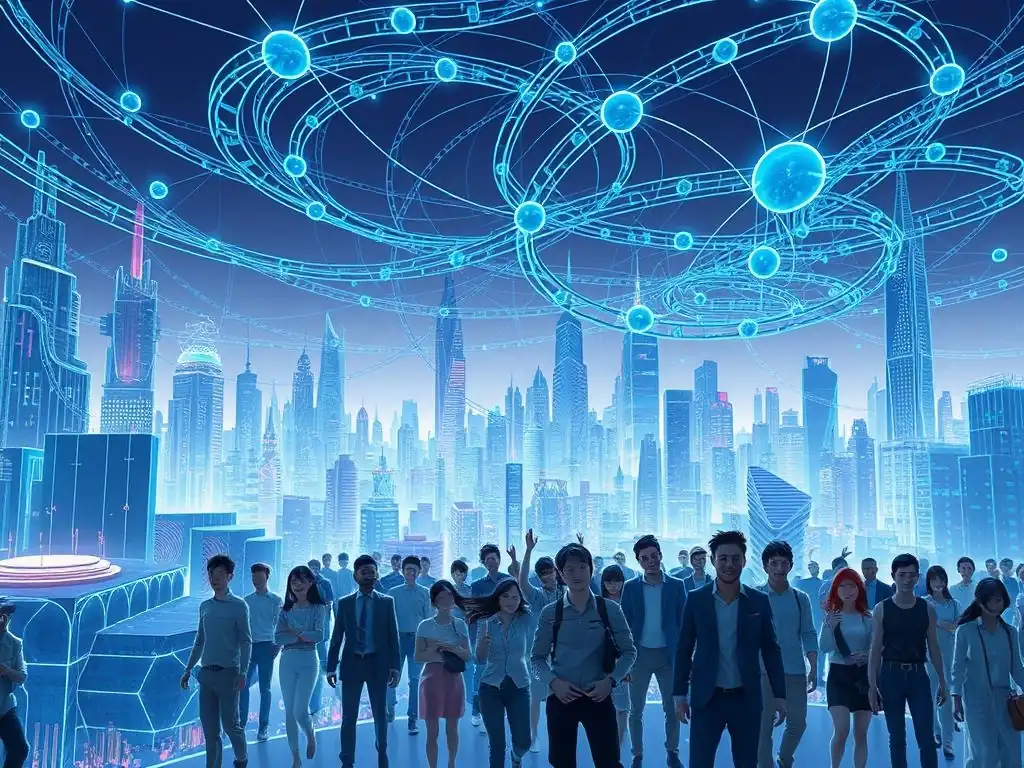
Welcome to Blockchain Trends, your guide to navigating the evolving world of decentralized technologies.
Delve into the exciting, yet complex, landscape of blockchain applications beyond cryptocurrencies. We're exploring DeFi, enterprise solutions, regulation, and the future of decentralized systems. Are decentralized metaverses truly ready for mainstream adoption? In this article, we unpack the pressing decentralized metaverse scalability issues that could shape the future of these immersive virtual worlds. Discover the challenges and potential solutions as we examine how these platforms can overcome their limitations and prepare for the next wave of users. Read on to uncover the critical factors determining the metaverse's success!
Scalability Challenges in Decentralized Metaverses: Can They Handle Mass Adoption?
- Introduction: The Promise and Peril of Decentralized Metaverse Scalability
- Understanding Decentralized Metaverse Architectures and Their Scalability Bottlenecks
-
Key Scalability Issues Facing Decentralized Metaverse Platforms
- Transaction Throughput: Handling High Volumes of Metaverse Interactions
- Latency and Responsiveness: Ensuring Seamless User Experiences in Virtual Worlds
- Data Storage and Management: Scaling Decentralized Metaverse Data Infrastructure
- Network Congestion: Avoiding Performance Degradation During Peak Metaverse Usage
- Cost of Transactions: Making Decentralized Metaverse Interactions Affordable
-
Exploring Scalability Solutions for Decentralized Metaverses
- Sharding for Decentralized Metaverse Data and Computation
- Optimized Consensus Mechanisms: Improving Blockchain Efficiency for Metaverse Applications
- Content Delivery Networks (CDNs) for Decentralized Metaverse Assets
- Decentralized Autonomous Organizations (DAOs) for Scalable Metaverse Governance
- Edge Computing for Enhanced Metaverse Performance and Scalability
- Case Studies: Examining Scalability in Existing Decentralized Metaverse Projects
- The Future of Decentralized Metaverse Scalability: Trends and Predictions
- Conclusion: Overcoming Scalability Hurdles for a Thriving Decentralized Metaverse Ecosystem
-
Frequently Asked Questions
- What are the primary scalability challenges facing decentralized metaverses?
- How does blockchain architecture contribute to scalability problems in metaverses?
- What are some potential solutions being explored to address decentralized metaverse scalability issues?
- How might regulation impact the development and scalability of decentralized metaverses?
- Beyond technical solutions, what other factors are crucial for achieving mass adoption of decentralized metaverses?
- Final Reflection: Navigating the Future of Decentralized Worlds
- Ignite Your Metaverse Journey: Build, Connect, Thrive!
Introduction: The Promise and Peril of Decentralized Metaverse Scalability
The Allure of Decentralized Metaverses: A Vision of User-Owned Worlds
Decentralized metaverses represent a paradigm shift from centralized virtual worlds, promising users genuine ownership and control over their digital assets and experiences. Built on blockchain technology, these platforms aim to distribute power away from corporations and into the hands of individuals. This vision is compelling, offering creators and users the ability to monetize their contributions directly, participate in governance, and truly own their virtual land, avatars, and in-world items as NFTs.
Imagine a digital realm where your creations are permanently yours, tradable across different metaverses, and contribute to a community-driven economy, fostering innovation and creativity in unprecedented ways. This user-centric approach contrasts sharply with traditional gaming and social media platforms, where user data and assets are often controlled and monetized by centralized entities.
The appeal extends beyond individual ownership to the creation of more resilient and censorship-resistant digital spaces. Decentralization inherently makes these metaverses less susceptible to single points of failure or control. Content moderation and platform policies are intended to be governed by the community, theoretically leading to fairer and more transparent systems.
This promise of digital autonomy and economic empowerment is a major driving force behind the growing interest in decentralized metaverses, attracting users who are seeking alternatives to the limitations and control exerted by Web2 platforms. The potential to build truly open and interoperable virtual worlds, governed by their users, is a powerful draw, fueling the aspiration for a more democratic and equitable digital future.
The Looming Scalability Problem: A Threat to Metaverse Mass Adoption
While the vision of decentralized metaverses is captivating, a significant hurdle stands in the way of mass adoption: scalability. Current blockchain technology, upon which most decentralized metaverses are built, faces inherent limitations in handling the massive transaction volumes and data loads required to support millions, or even billions, of users interacting in real-time within virtual worlds.
Imagine thousands of users simultaneously buying virtual land, trading NFTs, participating in events, and interacting with each other within a metaverse. The underlying blockchain infrastructure needs to process all these actions efficiently and affordably, without causing network congestion, exorbitant transaction fees, or unacceptable latency.
The scalability challenge is not merely a technical issue; it directly impacts user experience and the viability of decentralized metaverses. Slow transaction times, high gas fees, and laggy interactions can severely diminish the immersive and engaging nature of these virtual worlds. If users experience constant delays or find it prohibitively expensive to participate in the metaverse economy, mass adoption will remain a distant dream.
Therefore, addressing "decentralized metaverse scalability issues" is paramount. Overcoming these limitations is critical to realizing the full potential of decentralized metaverses and ensuring they can truly handle the influx of users necessary to become mainstream digital spaces.
Understanding Decentralized Metaverse Architectures and Their Scalability Bottlenecks
Layer 1 Limitations: Blockchain Throughput and Transaction Costs in Metaverses
Decentralized metaverses primarily rely on Layer 1 blockchains like Ethereum, Solana, or Polygon for core functionalities such as asset ownership, transaction recording, and governance. These blockchains, while foundational for decentralization, have inherent limitations in their throughput – the number of transactions they can process per second (TPS). For instance, Ethereum's mainnet, even post-Merge, can handle around 15-30 TPS.
Solana, designed for higher throughput, can theoretically reach thousands of TPS, but its performance can fluctuate under heavy load, and it has experienced periods of network congestion. Polygon, as a Layer-2 solution, improves upon Ethereum's base layer but still ultimately depends on Ethereum's capacity for settlement.
This limited throughput becomes a major bottleneck in metaverse environments where a vast number of micro-transactions and interactions occur constantly. Every in-world action, from a simple avatar movement to a complex NFT trade, could potentially translate into a blockchain transaction, especially in fully decentralized models. If a metaverse with even moderate user activity generates hundreds or thousands of transactions per second, a Layer 1 blockchain with limited TPS will quickly become congested.
This congestion leads to slower transaction confirmation times, impacting user experience, and dramatically increased transaction costs, known as "gas fees" on Ethereum. High gas fees make basic metaverse interactions, like buying a virtual item or participating in a game, prohibitively expensive for many users, effectively hindering mass adoption.
Layer 2 Solutions: Scaling Decentralized Metaverses with Off-Chain Technologies
To overcome Layer 1 scalability constraints, decentralized metaverses are increasingly exploring Layer 2 scaling solutions. These solutions operate "off-chain," meaning they process transactions and computations outside the main Layer 1 blockchain, and then periodically settle the results on the Layer 1. This approach significantly reduces the load on the main chain, increasing transaction throughput and lowering costs. Layer 2 solutions are crucial for enabling the high-volume, low-cost transactions necessary for a smooth and accessible metaverse experience. They allow metaverses to handle a much larger number of users and interactions without being limited by the base blockchain's capacity.
Several types of Layer 2 solutions are being considered and implemented in the metaverse context, each with its own trade-offs and suitability for different use cases. Two prominent categories are state channels and rollups. State channels offer direct, off-chain communication and transaction pathways between users, ideal for frequent interactions between a defined set of participants.
Rollups, on the other hand, bundle multiple transactions together into a single transaction on the Layer 1, significantly increasing throughput and reducing gas fees. Choosing the right Layer 2 solution, or combination of solutions, is a critical decision for decentralized metaverse platforms aiming for scalability.
State Channels for Metaverse Interactions: Benefits and Drawbacks
State channels create direct communication pathways between users or between users and the metaverse platform, allowing them to conduct multiple transactions off-chain without immediately involving the main blockchain. Imagine two users frequently trading virtual items within a metaverse. Instead of recording each trade on the Layer 1, they can open a state channel, conduct numerous trades within that channel, and only record the final net state of their assets on the blockchain when they close the channel.
This drastically reduces the number of on-chain transactions, improving speed and lowering fees for these frequent interactions. State channels are particularly beneficial for scenarios involving repeated interactions between a limited number of participants, such as in-game battles, virtual auctions, or ongoing collaborations within a metaverse.
However, state channels have limitations. They typically require participants to lock up funds initially, and they are best suited for interactions between a known set of parties. Scaling state channels to accommodate a massive influx of new users dynamically joining and leaving the metaverse can be complex.
Furthermore, dispute resolution mechanisms in state channels can sometimes be more intricate than on-chain disputes. While offering a valuable scaling solution for specific types of metaverse interactions, state channels are unlikely to be a complete solution for all "decentralized metaverse scalability issues". They often need to be combined with other Layer 2 technologies to address the broader scalability demands of a large-scale metaverse.
Rollups in the Metaverse: Optimistic and ZK-Rollups for Scalable Experiences
Rollups are a powerful Layer 2 scaling solution that processes transactions off-chain and then "rolls them up" into a single transaction on the Layer 1 blockchain. This significantly reduces the gas cost per transaction and increases the overall throughput. There are two main types of rollups: Optimistic Rollups and Zero-Knowledge (ZK) Rollups. Optimistic Rollups assume transactions are valid by default and only require fraud proofs if a transaction is challenged.
This approach offers high scalability but comes with a challenge period for fraud proofs, which can delay finality. ZK-Rollups, on the other hand, use cryptographic proofs to verify transaction validity off-chain, providing faster finality and enhanced security. However, ZK-Rollups are generally more computationally intensive to implement.
In the context of metaverses, rollups can be used to scale various aspects of the platform, including NFT transactions, in-world interactions, and even computation. Imagine a large-scale virtual concert in a metaverse. Thousands of users might be simultaneously purchasing virtual merchandise or tipping artists. Rollups could bundle these transactions off-chain and settle them on the Layer 1 in batches, ensuring low fees and fast processing even during peak activity.
Both Optimistic and ZK-Rollups offer promising avenues for scaling decentralized metaverse experiences. Choosing between them depends on the specific requirements of the metaverse, balancing factors like finality speed, security, and development complexity. As the technology matures, rollups are expected to play a critical role in enabling metaverses to handle mass user adoption.
Interoperability Challenges: Connecting Scalable Decentralized Metaverses
Beyond scaling within a single metaverse platform, interoperability between different decentralized metaverses presents another layer of scalability challenges. If each metaverse operates in isolation with its own scaling solutions and data silos, the vision of a truly interconnected and open metaverse ecosystem is hindered. Users would be restricted to specific platforms, and the potential for seamless asset transfer and cross-metaverse experiences would be limited. Achieving interoperability requires not only technical solutions for cross-chain communication but also standardized protocols for data exchange, asset representation, and identity management across different metaverse platforms.
Scalability solutions themselves can sometimes complicate interoperability. If different metaverses adopt diverse Layer 2 technologies or sharding approaches, bridging these disparate systems becomes more complex. For instance, transferring an NFT from a metaverse using Optimistic Rollups to one using ZK-Rollups may require intricate cross-rollup bridges and could introduce delays or security considerations. Therefore, the development of scalable and interoperable decentralized metaverses necessitates a holistic approach. Standardization efforts, open protocols, and collaborative development are crucial to ensure that scaling solutions not only enhance individual metaverse performance but also facilitate the creation of a truly interconnected and scalable metaverse ecosystem.
Key Scalability Issues Facing Decentralized Metaverse Platforms
Transaction Throughput: Handling High Volumes of Metaverse Interactions
Transaction throughput remains a central scalability challenge for decentralized metaverses. As user populations grow and metaverse activities become more complex, the number of transactions needing processing per second will skyrocket. Consider a popular decentralized metaverse attracting hundreds of thousands of concurrent users.
Even if each user performs only a few actions per minute – buying items, interacting with objects, participating in events – the aggregate transaction volume can quickly overwhelm current blockchain capacities. For example, during peak hours, a popular NFT drop in a metaverse could generate thousands of transactions within minutes, potentially leading to network congestion and failed transactions if the platform's throughput is insufficient.
This issue is further exacerbated by the nature of metaverse interactions. Unlike typical blockchain applications with less frequent transactions, metaverses demand near real-time responsiveness and high transaction frequency. Avatars moving, objects being manipulated, and in-world events unfolding all generate a continuous stream of transactions.
To support a truly immersive and dynamic metaverse experience for millions of users, decentralized platforms need to achieve transaction throughput orders of magnitude greater than what current Layer 1 blockchains can offer. Addressing this "decentralized metaverse scalability issue" requires a combination of Layer 2 solutions, optimized blockchain architectures, and potentially even novel consensus mechanisms specifically tailored for metaverse applications.
Latency and Responsiveness: Ensuring Seamless User Experiences in Virtual Worlds
Latency, or delay in data transfer, is a critical factor impacting user experience in metaverses. In virtual worlds, users expect near-instantaneous responses to their actions. If there's a noticeable delay between a user's input (e.g., moving their avatar or clicking a button) and the metaverse's reaction, the immersion is broken, and the experience becomes frustrating.
High latency can manifest as laggy avatar movements, delayed object interactions, and unresponsive in-world events. For example, if a user clicks to open a virtual door and it takes several seconds for the door to open, the sense of presence and immediacy in the metaverse is significantly diminished.
Decentralized architectures, particularly those relying on blockchain consensus, can inherently introduce latency. Transaction propagation and block confirmation times on blockchains can add delays to even simple actions within a metaverse. While Layer 2 solutions help improve transaction speed, they don't entirely eliminate latency, especially in complex, real-time interactions.
Furthermore, network congestion, server bottlenecks, and geographical distance between users and metaverse servers can all contribute to latency. Minimizing latency and ensuring responsiveness are paramount for creating engaging and enjoyable decentralized metaverse experiences. This requires optimized network infrastructure, efficient data processing, and potentially edge computing solutions to bring computation closer to users.
Data Storage and Management: Scaling Decentralized Metaverse Data Infrastructure
Metaverses generate vast amounts of data, including 3D world data, user-generated content, transaction history, avatar information, and more. Decentralized metaverses aim to store and manage this data in a decentralized manner, ensuring transparency, immutability, and user ownership. However, scaling decentralized data storage to accommodate the massive data volumes of a popular metaverse presents significant challenges. Storing all metaverse data directly on a blockchain is prohibitively expensive and inefficient due to blockchain's inherent limitations in data storage capacity. For instance, storing high-resolution 3D models and textures for a large virtual world directly on-chain would be astronomically costly and impractical.
Decentralized storage solutions like IPFS (InterPlanetary File System) and Arweave offer alternatives to on-chain storage. IPFS allows for content-addressable storage, where data is accessed based on its content rather than its location, enabling efficient distribution and resilience. Arweave provides permanent and decentralized data storage, ideal for preserving metaverse assets and history.
However, even these decentralized storage solutions face scalability challenges when dealing with petabytes or exabytes of metaverse data. Efficient data retrieval, indexing, and management in a decentralized environment require sophisticated infrastructure and optimized data structures. Furthermore, ensuring data availability, durability, and security in a decentralized storage network at metaverse scale remains an ongoing area of research and development.
Network Congestion: Avoiding Performance Degradation During Peak Metaverse Usage
Network congestion is a common problem in online platforms, and decentralized metaverses are not immune. During peak usage times, such as during popular events, NFT drops, or holidays, the influx of users can overwhelm the metaverse's network infrastructure, leading to performance degradation. Network congestion can manifest as slow loading times, increased latency, transaction delays, and even temporary service outages.
Imagine a highly anticipated virtual concert in a metaverse attracting millions of users simultaneously. If the network is not designed to handle this peak load, users may experience significant lag, disconnections, and an overall degraded experience, undermining the event and damaging user satisfaction.
Decentralized metaverses, particularly those relying on public blockchains, are susceptible to network congestion on both the application layer and the underlying blockchain layer. Increased transaction volume can congest the blockchain network, leading to higher gas fees and slower transaction confirmation times. Simultaneously, the metaverse's own network infrastructure, including servers, content delivery networks, and peer-to-peer networks, can become overloaded with user traffic.
Mitigating network congestion requires robust infrastructure planning, efficient load balancing mechanisms, and potentially dynamic scaling capabilities to adapt to fluctuating user demand. Content Delivery Networks (CDNs) play a crucial role in distributing metaverse assets and reducing server load, but effective congestion management remains a key challenge for ensuring consistent performance during peak metaverse usage.
Cost of Transactions: Making Decentralized Metaverse Interactions Affordable
The cost of transactions, often referred to as "gas fees" on blockchains like Ethereum, is a significant barrier to mass adoption of decentralized metaverses. High gas fees can make even simple metaverse interactions, such as buying a virtual item or sending a message, prohibitively expensive for many users, especially in regions with lower average incomes.
During periods of network congestion, gas fees can spike dramatically, making metaverse participation economically unviable for casual users. For example, during a popular NFT sale in a metaverse, gas fees for minting or purchasing NFTs can reach hundreds or even thousands of dollars, effectively excluding a large segment of potential users.
The high cost of transactions stems from the limited throughput of Layer 1 blockchains and the demand for block space. As more users and applications compete for limited blockchain resources, gas fees increase as users bid higher to have their transactions processed quickly. While Layer 2 solutions aim to reduce transaction costs, they may not entirely eliminate them, and they can sometimes introduce their own complexities or trade-offs.
Making decentralized metaverse interactions affordable is crucial for achieving mass adoption and ensuring inclusivity. This requires continued innovation in Layer 2 scaling solutions, optimized blockchain architectures, and potentially alternative fee mechanisms that are more sustainable and user-friendly for metaverse applications.
Exploring Scalability Solutions for Decentralized Metaverses

Sharding is a database partitioning technique that can be applied to blockchains to improve scalability. In a sharded blockchain, the network is divided into multiple "shards," each of which processes a subset of transactions and data. This parallel processing significantly increases the overall throughput of the blockchain.
In the context of decentralized metaverses, sharding can be applied to both data and computation. Data sharding can distribute the massive metaverse world data across multiple shards, reducing the storage and processing burden on any single node. Computation sharding can parallelize the processing of metaverse interactions and transactions, allowing the platform to handle a higher volume of user activity concurrently.
For example, a metaverse world could be divided into geographical shards, with each shard responsible for managing the data and interactions within a specific region of the virtual world. Users interacting within a particular region would primarily interact with the shard responsible for that region, reducing network congestion and improving responsiveness.
Sharding is a complex technology to implement securely and effectively in a decentralized environment, but it holds significant potential for scaling decentralized metaverses. Research and development in sharding techniques tailored for metaverse applications are ongoing, and sharding is expected to play a crucial role in enabling metaverses to handle massive user populations and complex virtual worlds in the future.
Optimized Consensus Mechanisms: Improving Blockchain Efficiency for Metaverse Applications
Consensus mechanisms are the algorithms that blockchains use to agree on the validity of transactions and maintain the integrity of the ledger. Traditional consensus mechanisms like Proof-of-Work (PoW), used by Bitcoin and initially by Ethereum, are computationally intensive and energy-consuming, limiting transaction throughput and contributing to high latency. Proof-of-Stake (PoS) and its variations offer more energy-efficient and potentially faster alternatives. Furthermore, novel consensus mechanisms specifically designed for metaverse applications are being explored to further optimize blockchain efficiency.
For example, Delegated Proof-of-Stake (DPoS) allows users to delegate their staking power to a smaller set of validators, potentially increasing transaction speed and reducing latency. Byzantine Fault Tolerance (BFT) based consensus mechanisms, like Tendermint, offer faster finality and higher throughput compared to PoW. Hybrid consensus mechanisms that combine different approaches are also being investigated to balance security, scalability, and decentralization. Choosing and optimizing the consensus mechanism for a decentralized metaverse is a critical design decision that directly impacts its scalability and performance. Exploring and implementing more efficient and metaverse-optimized consensus mechanisms is essential for overcoming "decentralized metaverse scalability issues".
Content Delivery Networks (CDNs) for Decentralized Metaverse Assets
Content Delivery Networks (CDNs) are geographically distributed networks of servers that cache content closer to users, reducing latency and improving loading times. CDNs are widely used in Web2 to deliver websites, videos, and other online content efficiently. In decentralized metaverses, CDNs can play a crucial role in distributing metaverse assets, such as 3D models, textures, audio files, and other static content. By caching these assets on CDN servers located closer to users geographically, metaverses can significantly reduce latency when users access and load these assets, improving the overall user experience.
Decentralized CDNs (dCDNs) are emerging as a natural extension of traditional CDNs for decentralized applications. dCDNs leverage blockchain technology and decentralized storage to create censorship-resistant and more resilient content delivery networks. By using a dCDN, a decentralized metaverse can ensure that its assets are readily available to users globally, even during peak usage times or network disruptions.
dCDNs can also enhance privacy and security by distributing content across a decentralized network, making it more difficult to censor or tamper with. Integrating CDNs, and especially dCDNs, is a crucial scalability solution for decentralized metaverses, enabling them to deliver rich and immersive experiences to users worldwide with low latency and high availability.
Decentralized Autonomous Organizations (DAOs) for Scalable Metaverse Governance
Decentralized Autonomous Organizations (DAOs) are community-led entities governed by rules encoded on a blockchain, enabling decentralized and transparent decision-making. In the context of metaverses, DAOs can be used to scale governance and community management. As metaverses grow and user populations expand, centralized governance structures can become bottlenecks and may not effectively represent the diverse interests of the community. DAOs can distribute governance power to metaverse users, allowing them to participate in decision-making processes related to platform development, content moderation, resource allocation, and more.
DAOs can implement various governance mechanisms, such as token-based voting, reputation systems, and quadratic voting, to ensure fair and representative decision-making. By decentralizing governance through DAOs, metaverses can scale their decision-making processes more effectively, adapt to evolving community needs, and foster a more democratic and user-centric environment. However, DAO governance also presents challenges, including voter apathy, "whale" dominance, and the complexity of implementing effective and secure DAO structures. Despite these challenges, DAOs are a promising approach for scaling governance in decentralized metaverses and empowering users to shape the future of these virtual worlds.
Edge Computing for Enhanced Metaverse Performance and Scalability
Edge computing brings computation and data storage closer to the source of data generation, reducing latency and improving responsiveness. In the context of metaverses, edge computing can be used to process metaverse interactions and render virtual environments closer to users, minimizing network latency and enhancing the real-time responsiveness of the metaverse experience. Instead of relying solely on centralized servers or cloud infrastructure, edge computing leverages distributed computing resources located closer to users, such as local servers, user devices, or edge nodes.
For example, a metaverse could utilize edge servers located in various geographical regions to process user interactions and render virtual environments locally. This would reduce the distance data needs to travel between users and metaverse servers, significantly lowering latency and improving responsiveness. Edge computing can also improve scalability by distributing the computational load across a network of edge nodes, rather than concentrating it on centralized servers.
Furthermore, edge computing can enhance privacy and security by processing user data locally, reducing the need to transmit sensitive data over long distances. Integrating edge computing into decentralized metaverse architectures is a promising approach for enhancing performance, scalability, and user experience, particularly for latency-sensitive metaverse applications.
Case Studies: Examining Scalability in Existing Decentralized Metaverse Projects
Decentraland: Addressing Scalability Through Layer-2 Solutions and Content Distribution
Decentraland, one of the pioneering decentralized metaverse platforms, has actively addressed scalability challenges through various strategies. Initially built on Ethereum, Decentraland has explored Layer-2 solutions to mitigate gas fees and improve transaction throughput. While not fully migrated to Layer-2 at the time of writing, Decentraland has indicated intentions to further leverage scaling solutions. Furthermore, Decentraland utilizes a content distribution system that is partially decentralized, relying on a network of servers to host and deliver world content. This approach helps to distribute the load and improve loading times for users accessing the metaverse from different geographical locations.
Decentraland's LAND system, where virtual land parcels are represented as NFTs, is a core element of its decentralized architecture. While LAND ownership is recorded on the Ethereum blockchain, the metaverse itself relies on a more hybrid approach for content delivery and user interactions. Decentraland's experience highlights the ongoing evolution of scalability solutions in decentralized metaverses and the need for a combination of Layer-2 technologies, optimized infrastructure, and architectural design choices to address "decentralized metaverse scalability issues". As the platform continues to evolve and attract more users, further scalability enhancements will be crucial for ensuring a seamless and accessible experience.
The Sandbox: Exploring Scalability with LAND Sales and User-Generated Content
The Sandbox, another prominent decentralized metaverse platform, also faces scalability considerations as its user base and content ecosystem grow. The Sandbox utilizes LAND NFTs, similar to Decentraland, to represent virtual land ownership on the blockchain. The platform emphasizes user-generated content, empowering creators to build and monetize their own experiences within the metaverse. This user-generated content model can contribute to scalability challenges, as the platform needs to handle a diverse and constantly evolving range of assets and interactions.
The Sandbox has explored various scaling strategies, including partnerships with Layer-2 solutions and optimized content delivery mechanisms. The platform's approach to LAND sales, where limited parcels of virtual land are released in batches, can also be seen as a form of implicit scalability management, controlling the rate of metaverse expansion and user onboarding.
The Sandbox's focus on gaming and user-generated content presents unique scalability requirements compared to more purely social or virtual world metaverses. As The Sandbox continues to expand its ecosystem and attract more creators and players, addressing scalability will remain a key priority for ensuring a smooth and engaging metaverse experience.
The Future of Decentralized Metaverse Scalability: Trends and Predictions
The Rise of Hybrid Solutions: Combining Centralized and Decentralized Approaches
The future of decentralized metaverse scalability is likely to involve hybrid solutions that strategically combine centralized and decentralized elements. Fully decentralized metaverses, relying solely on blockchain for all aspects of operation, may face inherent scalability limitations in the near term. Hybrid approaches can leverage the strengths of both centralized and decentralized technologies to optimize performance, scalability, and user experience. For example, a metaverse could use a centralized infrastructure for computationally intensive tasks like rendering and physics simulations, while leveraging blockchain for core functionalities like asset ownership, transaction recording, and governance.
This hybrid model allows metaverses to achieve higher performance and lower latency for real-time interactions, while still retaining the core benefits of decentralization for ownership and control. The specific balance between centralized and decentralized components will likely vary depending on the metaverse's use case, target audience, and scalability requirements. Hybrid solutions offer a pragmatic and adaptable path forward for addressing "decentralized metaverse scalability issues" and enabling metaverses to reach mass adoption without compromising performance or user experience. The key will be to carefully design these hybrid architectures to maximize scalability while preserving the essential principles of decentralization.
The Development of New Blockchain Technologies Designed for Metaverses
The increasing demand for scalable decentralized metaverses is driving innovation in blockchain technology itself. New blockchain protocols and architectures are being specifically designed to address the unique scalability requirements of metaverse applications. These "metaverse-native" blockchains may incorporate features such as higher transaction throughput, lower latency, optimized data storage, and enhanced support for complex virtual world interactions. Examples include blockchains focusing on gaming and metaverse applications, exploring novel consensus mechanisms, sharding techniques, and data management solutions tailored for virtual environments.
These metaverse-focused blockchains aim to overcome the limitations of general-purpose blockchains and provide a more efficient and scalable foundation for decentralized metaverses. They may prioritize features like real-time transaction processing, low gas fees, and support for high-frequency micro-transactions, which are essential for immersive metaverse experiences. The development and adoption of these specialized blockchain technologies are expected to play a significant role in shaping the future of decentralized metaverse scalability. As the metaverse space matures, we can anticipate further innovation and specialization in blockchain technologies, specifically catering to the unique demands of virtual worlds and decentralized applications.
The Impact of Scalability on User Adoption and Metaverse Growth
Scalability is not merely a technical challenge; it is a critical factor determining the pace of user adoption and overall growth of decentralized metaverses. If scalability issues are not effectively addressed, users will experience slow performance, high fees, and a degraded metaverse experience, hindering mass adoption. Conversely, successful scalability solutions will pave the way for wider user adoption, enabling metaverses to handle millions or even billions of users seamlessly. Scalability directly impacts the accessibility and usability of decentralized metaverses, influencing their ability to compete with centralized platforms and attract mainstream users.
As decentralized metaverses become more scalable, we can expect to see increased user engagement, more complex and immersive virtual world experiences, and a thriving metaverse economy. Scalability will unlock the full potential of decentralized metaverses, enabling them to become truly mass-market digital spaces.
The ability to handle high transaction volumes, low latency interactions, and massive data loads will be crucial for attracting a broad user base and fostering a vibrant and sustainable decentralized metaverse ecosystem. Therefore, overcoming "decentralized metaverse scalability issues" is not just a technical imperative but a strategic necessity for the long-term success and widespread adoption of decentralized metaverses.
Conclusion: Overcoming Scalability Hurdles for a Thriving Decentralized Metaverse Ecosystem
Decentralized Metaverse Scalability: A Critical Factor for Widespread Adoption
Decentralized metaverse scalability is undeniably a critical factor determining the widespread adoption and long-term viability of these virtual worlds. The promise of user ownership, decentralized governance, and open, interoperable metaverse experiences hinges on the ability to overcome current scalability limitations. Without effective scalability solutions, decentralized metaverses risk being relegated to niche communities, unable to handle the demands of mass user populations and complex, real-time interactions. Addressing "decentralized metaverse scalability issues" is not just a technical challenge but a fundamental prerequisite for realizing the transformative potential of decentralized metaverses.
The challenges are multifaceted, encompassing transaction throughput, latency, data storage, network congestion, and transaction costs. Each of these areas requires innovative solutions and ongoing development to ensure that decentralized metaverses can deliver seamless, affordable, and engaging experiences at scale. The success of decentralized metaverses in becoming mainstream digital spaces depends heavily on the industry's collective ability to overcome these scalability hurdles and build robust, scalable infrastructure.
The Path Forward: Collaborative Efforts and Technological Innovation
The path forward for achieving scalable decentralized metaverses requires collaborative efforts across the blockchain and metaverse communities, coupled with continuous technological innovation. Developers, researchers, and metaverse platforms need to work together to explore, implement, and optimize various scalability solutions. This includes further development and adoption of Layer-2 technologies, sharding, optimized consensus mechanisms, decentralized CDNs, edge computing, and metaverse-native blockchain architectures. Open collaboration, knowledge sharing, and standardization efforts are crucial to accelerate progress and ensure interoperability across different metaverse platforms and scaling solutions.
Furthermore, ongoing research and development are essential to push the boundaries of blockchain technology and create even more scalable and efficient solutions specifically tailored for metaverse applications. Innovation in cryptography, distributed systems, and metaverse-specific protocols will be key to unlocking the full potential of decentralized metaverses. By embracing a collaborative and innovation-driven approach, the decentralized metaverse ecosystem can overcome scalability hurdles and pave the way for a thriving and widely adopted metaverse future, realizing the vision of open, user-owned, and interconnected virtual worlds.
Frequently Asked Questions
What are the primary scalability challenges facing decentralized metaverses?
The main challenges revolve around transaction throughput, high gas fees, and data storage limitations. These issues can hinder the smooth user experience and mass adoption of these platforms.
How does blockchain architecture contribute to scalability problems in metaverses?
The inherent design of many blockchains, particularly those using proof-of-work consensus, limits the number of transactions per second. This bottleneck becomes a major issue when handling the complex and frequent interactions within a metaverse.
What are some potential solutions being explored to address decentralized metaverse scalability issues?
Solutions include layer-2 scaling solutions like rollups, sharding, and alternative consensus mechanisms such as proof-of-stake. These aim to increase throughput and reduce transaction costs.
How might regulation impact the development and scalability of decentralized metaverses?
Unclear or restrictive regulations could hinder innovation and limit access to funding. Conversely, well-defined regulations could provide a clearer legal framework and foster responsible growth.
Beyond technical solutions, what other factors are crucial for achieving mass adoption of decentralized metaverses?
Beyond technical solutions, user experience improvements, simplified onboarding processes, and strong community building are essential for attracting and retaining a large user base in decentralized metaverses.
The exploration of decentralized metaverse scalability issues reveals a critical juncture in the evolution of virtual worlds. While the promise of user-owned, immersive experiences is compelling, the technical hurdles to achieving true mass adoption remain significant. The challenges outlined – from transaction throughput and data storage to interoperability and user experience – are not merely academic exercises, but rather real-world obstacles that must be overcome to unlock the full potential of the decentralized metaverse.
The ongoing struggle to address these scalability limitations profoundly impacts the cultural and social landscape of emerging digital spaces. The success of decentralized metaverses hinges on their ability to provide seamless and engaging experiences for millions, if not billions, of users. Without scalable solutions, the dream of a truly open and accessible metaverse risks becoming fragmented and exclusive. The future is already here – it's just not evenly distributed.
- William Gibson. This quote underscores the urgency of addressing these technical disparities to ensure that the benefits of the decentralized metaverse are accessible to all.
As we stand on the cusp of a new era of digital interaction, it is imperative that we continue to push the boundaries of technological innovation and collaborative development. Consider how you can contribute to shaping a more scalable, inclusive, and vibrant decentralized metaverse. Whether through supporting open-source initiatives, advocating for interoperability standards, or simply engaging in thoughtful discussions about the future of virtual worlds, your participation is vital in building a metaverse that truly empowers its users.
Ignite Your Metaverse Journey: Build, Connect, Thrive!
Thanks for exploring the fascinating world of metaverse scalability! Now that you're equipped with insights into the challenges and potential solutions, it's time to turn knowledge into action. Here are a few ways to dive deeper and contribute to the evolution of decentralized metaverses:
- Champion Your Vision: Delve into your favorite decentralized metaverse platform and actively participate in governance discussions focused on scalability improvements. Let your voice be heard and shape the future!
- Experiment & Explore:Discover emerging Layer-2 solutions and test how they enhance performance and user experience within existing metaverse environments. Your feedback can drive innovation!
- Share Your Metaverse Story: Document your experiences, challenges, and insights regarding metaverse performance on social media using the hashtag #MetaverseScalability. Contribute to the community's collective understanding!
What specific scaling solution do you believe holds the most promise for unleashing the full potential of decentralized metaverses? Share your thoughts in the comments below!
Leave a Reply