
The Environmental Impact of PlaytoEarn Crypto Gaming: Myths vs. Reality


Welcome to Blockchain Trends, your guide to understanding the real-world applications of blockchain technology. Delve beyond the hype as we explore its transformative potential across industries. Intrigued by the convergence of gaming and blockchain? Our featured article tackles a critical question: What's the true environmental impact of PlaytoEarn crypto gaming? Uncover the myths and realities, and join the conversation about a sustainable future for decentralized gaming. Read on and discover more!
The Environmental Impact of PlaytoEarn Crypto Gaming: Myths vs. Reality
- Introduction: Understanding the PlaytoEarn Crypto Gaming Environmental Debate
- Myth 1: All PlaytoEarn Games Are Inherently Environmentally Damaging
- Reality: Proof-of-Work Blockchains and Energy Consumption in P2E
- Myth 2: PlaytoEarn Gaming Has No Potential for Sustainability
- Reality: Sustainable Blockchain Solutions for PlaytoEarn Games
- Myth 3: The Environmental Cost Outweighs the Economic Benefits of PlaytoEarn
- Reality: Balancing Economic Growth with Environmental Responsibility in P2E
- The Future of Sustainable PlaytoEarn Gaming
- Conclusion: Separating Fact from Fiction in the Environmental Impact of PlaytoEarn
-
Frequently Asked Questions
- How does PlaytoEarn crypto gaming typically impact the environment?
- Are all PlaytoEarn crypto games equally harmful to the environment?
- What are some common misconceptions about the environmental impact of PlaytoEarn crypto gaming?
- What measures are being taken to reduce the environmental impact of PlaytoEarn crypto gaming?
- What is the future outlook for PlaytoEarn crypto gaming and its environmental impact?
- Final Reflection: Navigating the Green Frontier of PlaytoEarn
- Ignite Your Eco-Consciousness: Take Action on Play-to-Earn Gaming!
Introduction: Understanding the PlaytoEarn Crypto Gaming Environmental Debate
The Rise of PlaytoEarn and Environmental Concerns
The PlaytoEarn (P2E) gaming sector has experienced explosive growth, transforming the gaming landscape by integrating blockchain technology and cryptocurrencies. This innovative model allows players to earn real-world value through gameplay, fostering new economic opportunities and engaging millions globally. However, alongside its rapid ascent, P2E gaming has faced increasing scrutiny regarding its environmental impact, particularly in the context of climate change and the energy consumption associated with blockchain networks. Concerns have been raised about the carbon footprint of these games, leading to debates about their long-term sustainability and ethical implications.
This environmental discourse is crucial as it questions the very foundation of certain blockchain technologies that underpin many P2E games. Critics point to the energy-intensive processes, like mining in Proof-of-Work (PoW) blockchains, as inherently unsustainable. The narrative often paints all P2E games with the same brush, suggesting that the entire sector is contributing significantly to environmental degradation. Understanding the nuances of these concerns is essential to discern fact from fiction and to navigate the path towards a more sustainable future for blockchain gaming.
Defining the Scope: Focusing on PlaytoEarn's Environmental Footprint
To effectively analyze the environmental impact of PlaytoEarn crypto gaming, it's important to define the specific scope of our investigation. We are primarily concerned with the energy consumption and carbon emissions directly or indirectly attributable to the operation of P2E games. This encompasses the blockchain networks they utilize for transactions, token minting, and in-game asset management. It is crucial to distinguish between different types of blockchain technologies, as their energy footprints vary significantly.
Furthermore, the analysis should focus on the specific activities within P2E games that contribute to environmental impact. This includes the energy used for processing transactions, securing the network, and the overall infrastructure required to support these gaming ecosystems. By clearly defining the scope, we can move beyond generalized criticisms and delve into the specific mechanisms and technologies that drive the environmental impact of PlaytoEarn crypto gaming, allowing for a more nuanced and informed discussion.
Myth 1: All PlaytoEarn Games Are Inherently Environmentally Damaging
The Blanket Statement Fallacy: Why Generalizations Are Inaccurate
A common misconception is that all PlaytoEarn games are inherently environmentally damaging due to their association with cryptocurrency and blockchain technology. This statement is a fallacy arising from overgeneralization. It fails to recognize the diverse landscape of blockchain technologies and the varying approaches taken by different P2E games. Attributing a uniform environmental impact to all P2E games is akin to claiming all forms of transportation are equally polluting – ignoring the difference between a bicycle and a gas-guzzling truck.
The reality is that the environmental footprint of a PlaytoEarn game is heavily dependent on the underlying blockchain technology it employs. Some blockchains, particularly those utilizing Proof-of-Work (PoW) consensus mechanisms, are indeed energy-intensive. However, a growing number of P2E games are leveraging more energy-efficient alternatives, such as Proof-of-Stake (PoS) blockchains or Layer-2 scaling solutions. Therefore, judging the entire P2E sector based on the characteristics of a subset is inaccurate and misleading.
Differentiating Blockchain Technologies: Proof-of-Work vs. Proof-of-Stake
The core of the environmental debate surrounding PlaytoEarn crypto games lies in the fundamental differences between blockchain consensus mechanisms, primarily Proof-of-Work (PoW) and Proof-of-Stake (PoS). Proof-of-Work, pioneered by Bitcoin and initially adopted by Ethereum, requires significant computational power to validate transactions and secure the network. This process, known as mining, consumes vast amounts of electricity as miners compete to solve complex cryptographic puzzles. The energy expenditure is directly proportional to the network's security in PoW systems.
In contrast, Proof-of-Stake relies on validators staking or locking up a certain amount of cryptocurrency to participate in transaction validation and network security. Instead of energy-intensive computation, PoS selects validators based on the amount they stake and other factors, drastically reducing energy consumption. Estimates suggest that PoS blockchains can be thousands of times more energy-efficient than PoW blockchains. Understanding this fundamental technological difference is crucial to accurately assess the environmental impact of individual PlaytoEarn games.
Reality: Proof-of-Work Blockchains and Energy Consumption in P2E
Examining the Energy Intensity of Bitcoin and Ethereum-Based Games
PlaytoEarn games built on Proof-of-Work blockchains, such as early iterations on Ethereum, inherently inherit the energy intensity associated with these networks. Bitcoin, the first and most well-known PoW cryptocurrency, consumes an estimated 707 kilowatt-hours (kWh) per transaction according to recent studies. Ethereum, prior to its transition to Proof-of-Stake, also had a significant energy footprint, though generally lower than Bitcoin per transaction. Games operating directly on these blockchains or utilizing them for core functionalities like NFT minting and trading contribute to this energy consumption.
For instance, early PlaytoEarn games built on Ethereum, while offering innovative gameplay and earning opportunities, were part of an ecosystem with a substantial carbon footprint. The cumulative energy consumption of all transactions related to these games, including buying NFTs, claiming rewards, and in-game actions recorded on-chain, contributed to the overall environmental impact of the Ethereum network at that time. It's important to note that the energy consumption is not solely attributable to gaming, but rather a shared resource across all applications and transactions on the PoW blockchain.
Axie Infinity's Early Ethereum-Based Transactions and Gas Fees
Axie Infinity, one of the most prominent early PlaytoEarn games, initially relied heavily on the Ethereum blockchain for its core functionalities. Transactions within the Axie Infinity ecosystem, such as breeding Axies, trading NFTs on marketplaces, and claiming SLP (Smooth Love Potion) rewards, were processed on the Ethereum mainnet. This resulted in users experiencing high gas fees, particularly during periods of network congestion, and contributed to the overall energy consumption of the Ethereum network. While gas fees are a separate economic concern, they are a direct consequence of the computational demand on the PoW Ethereum network.
The high gas fees and slower transaction times on Ethereum prompted Axie Infinity developers to seek scaling solutions, ultimately leading to the creation of Ronin, a sidechain specifically designed for Axie Infinity. This move was partially driven by the need to improve user experience and reduce transaction costs, but it also indirectly addressed environmental concerns by shifting a significant portion of Axie Infinity's transaction volume away from the energy-intensive Ethereum mainnet. This example illustrates how the limitations and environmental impact of PoW blockchains can drive innovation and the adoption of more sustainable solutions within the P2E gaming space.
Myth 2: PlaytoEarn Gaming Has No Potential for Sustainability
The Assumption of Inevitable Environmental Harm
Another prevalent myth is that PlaytoEarn gaming, by its very nature, is inherently unsustainable and cannot be reconciled with environmental responsibility. This perspective assumes that the energy-intensive practices of some blockchain applications are an unavoidable and permanent feature of the P2E model. It overlooks the rapid advancements in blockchain technology, the growing awareness of environmental concerns within the crypto space, and the proactive efforts being made to develop more sustainable solutions.
This pessimistic view fails to acknowledge the dynamic nature of the blockchain industry and the increasing emphasis on eco-friendly alternatives. The transition of Ethereum to Proof-of-Stake, for example, demonstrates a major shift towards sustainability within a major blockchain ecosystem. Furthermore, the emergence of numerous energy-efficient blockchains and scaling solutions specifically designed to minimize environmental impact directly contradicts the notion that P2E gaming is inherently destined to be environmentally harmful.
The Growing Trend of Eco-Conscious Blockchain Gaming Initiatives
Contrary to the myth of inevitable environmental harm, there is a significant and growing trend of eco-conscious initiatives within the blockchain gaming space. Developers, players, and blockchain platforms are increasingly recognizing the importance of sustainability and are actively working towards reducing the environmental footprint of PlaytoEarn games. This trend is manifested in various forms, including the adoption of energy-efficient blockchains, the development of carbon offsetting programs, and the promotion of responsible gaming practices.
Numerous projects are emerging that prioritize sustainability as a core value. These initiatives range from utilizing Proof-of-Stake blockchains and Layer-2 solutions to implementing in-game mechanisms that incentivize eco-friendly behavior and contribute to environmental conservation efforts. The increasing awareness and proactive steps being taken within the P2E gaming community demonstrate a clear commitment to building a more sustainable future for blockchain gaming, challenging the myth that environmental responsibility is incompatible with the PlaytoEarn model.
Reality: Sustainable Blockchain Solutions for PlaytoEarn Games
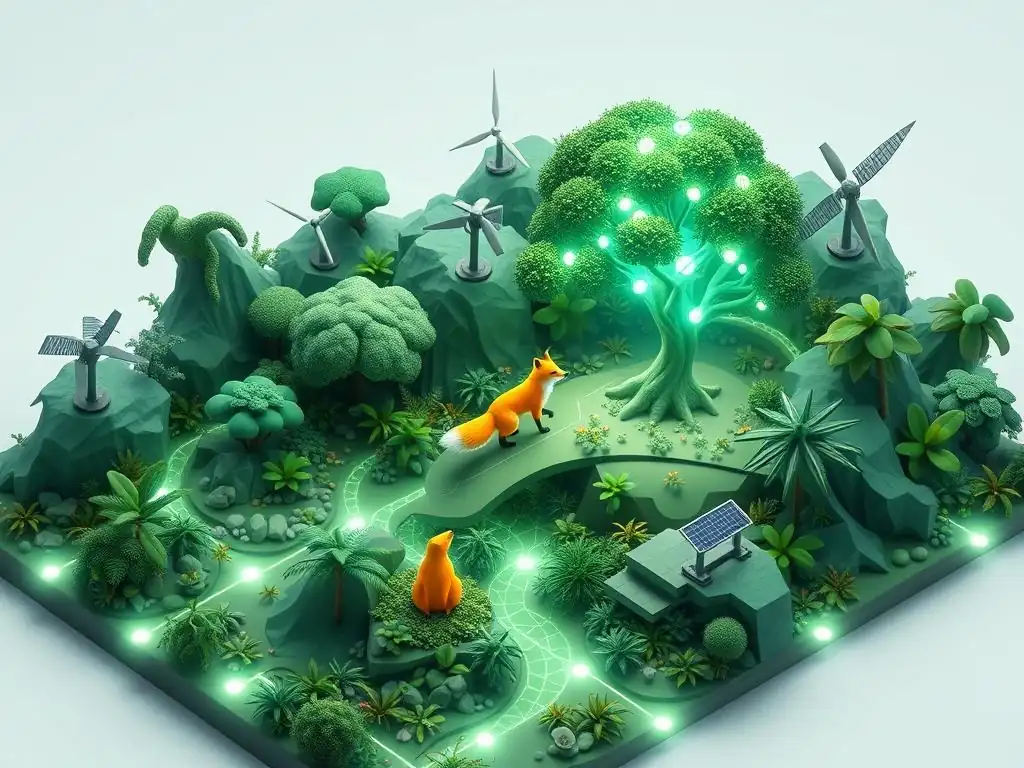
Exploring Proof-of-Stake (PoS) and Its Lower Energy Footprint
Proof-of-Stake (PoS) blockchains represent a significantly more sustainable alternative to Proof-of-Work (PoW) for PlaytoEarn gaming. As previously discussed, PoS drastically reduces energy consumption by replacing energy-intensive mining with staking and validation based on cryptocurrency holdings. This fundamental shift in consensus mechanism translates to a dramatically lower environmental footprint for P2E games built on PoS blockchains. The energy savings can be orders of magnitude compared to PoW systems, making PoS a crucial technology for sustainable blockchain applications.
The environmental benefits of PoS are substantial. For example, the Ethereum network's transition to PoS, known as "The Merge," is estimated to have reduced its energy consumption by over 99.9%. This massive reduction highlights the transformative potential of PoS for creating eco-friendly blockchain ecosystems. PlaytoEarn games leveraging PoS blockchains directly benefit from this energy efficiency, contributing to a more sustainable and environmentally responsible gaming experience.
Polygon, Solana, and Other Eco-Friendly Blockchain Alternatives for P2E
Beyond Ethereum's transition, several other blockchain platforms are inherently designed with energy efficiency in mind, offering viable and sustainable alternatives for PlaytoEarn game development. Polygon, for example, is a Layer-2 scaling solution for Ethereum that utilizes Proof-of-Stake, providing faster and cheaper transactions with a significantly lower environmental impact compared to transacting directly on the Ethereum mainnet before the Merge. Solana is another high-performance blockchain that employs a combination of Proof-of-Stake and Proof-of-History, achieving high transaction throughput with relatively low energy consumption.
Other eco-friendly blockchain alternatives gaining traction in the P2E space include Avalanche, Cardano, and Tezos, each employing PoS or similar energy-efficient consensus mechanisms. These platforms offer developers a range of options to build PlaytoEarn games that minimize their environmental footprint while still providing the benefits of blockchain technology, such as decentralization, transparency, and digital asset ownership. The availability of these alternatives demonstrates that sustainable PlaytoEarn gaming is not just a possibility but an increasingly accessible reality.
Layer-2 Scaling Solutions and Reduced On-Chain Transactions
Layer-2 scaling solutions play a vital role in mitigating the environmental impact of PlaytoEarn gaming, particularly for games initially built on or interacting with Layer-1 blockchains like Ethereum. These solutions, such as Polygon, Optimism, and Arbitrum, process transactions off the main chain, bundling them and periodically submitting them to the Layer-1 for final settlement. This off-chain processing significantly reduces congestion and energy consumption on the main Layer-1 blockchain.
By utilizing Layer-2 solutions, PlaytoEarn games can drastically decrease the number of on-chain transactions required for gameplay and asset management. This not only lowers transaction fees and improves scalability but also directly reduces the overall energy footprint associated with the game. For instance, a game migrating a significant portion of its in-game transactions and NFT activities to a Layer-2 PoS chain can achieve substantial environmental benefits compared to relying solely on a Layer-1 PoW blockchain. Layer-2 scaling solutions are thus a crucial tool for creating more sustainable and environmentally conscious PlaytoEarn gaming ecosystems.
Myth 3: The Environmental Cost Outweighs the Economic Benefits of PlaytoEarn
The Argument Against P2E's Value Proposition
A critical argument against PlaytoEarn gaming, particularly from an environmental perspective, posits that the environmental costs associated with certain blockchain technologies outweigh the economic benefits and value proposition of P2E. This argument suggests that the potential economic gains and entertainment value derived from these games are not justified when considering the environmental damage they may contribute to, especially if they rely on energy-intensive blockchains.
Critics argue that the energy consumption of PoW-based P2E games is a significant negative externality that is not adequately accounted for in the perceived economic benefits. They question whether the financial opportunities and entertainment provided by these games are worth the environmental price, especially in the context of pressing global climate concerns. This perspective often frames P2E gaming as a potentially frivolous or even harmful activity from an environmental standpoint.
While environmental considerations are paramount, a holistic assessment of PlaytoEarn gaming requires acknowledging its potential economic opportunities and social impact, particularly in developing economies. For many individuals in regions with limited traditional income sources, P2E gaming offers a tangible pathway to earning income and improving their livelihoods. This economic empowerment can be particularly significant in areas where traditional employment opportunities are scarce.
Furthermore, P2E gaming can foster new digital economies and communities, creating opportunities for skill development, entrepreneurship, and financial inclusion. The economic benefits extend beyond individual players, potentially contributing to broader economic growth and innovation within the digital space. Therefore, a balanced perspective must consider both the environmental impact and the potential socio-economic benefits of PlaytoEarn gaming, rather than solely focusing on the environmental costs in isolation.
Reality: Balancing Economic Growth with Environmental Responsibility in P2E
PlaytoEarn as a Catalyst for Financial Inclusion in Developing Countries
PlaytoEarn gaming has emerged as a significant catalyst for financial inclusion, particularly in developing countries where traditional banking and employment opportunities may be limited. In regions like Southeast Asia, Latin America, and Africa, P2E games have provided individuals with new avenues for income generation and economic empowerment. For example, during the COVID-19 pandemic, Axie Infinity became a vital source of income for many in the Philippines and Venezuela, offering a lifeline when traditional economies were disrupted.
The accessibility of P2E games, often requiring only a smartphone and internet access, lowers the barrier to entry for individuals seeking economic opportunities. This inclusivity can be particularly impactful for marginalized communities and those lacking access to formal financial systems. While concerns about environmental impact are valid, it is crucial to recognize the real-world economic benefits and poverty alleviation potential that PlaytoEarn gaming offers to millions globally, especially in regions where these opportunities are most needed.
The Potential for Green Crypto Investments within the P2E Ecosystem
The PlaytoEarn ecosystem, while facing environmental challenges, also presents opportunities for driving green crypto investments and promoting environmental responsibility within the broader crypto space. As awareness of environmental concerns grows, there is increasing demand for sustainable crypto assets and projects. P2E games that actively prioritize sustainability and utilize eco-friendly blockchain technologies can attract environmentally conscious investors and players, fostering a positive feedback loop.
Furthermore, P2E platforms can integrate green crypto initiatives directly into their ecosystems. This could include incorporating carbon offsetting mechanisms, rewarding players for environmentally friendly in-game actions, or investing a portion of game revenue in renewable energy projects or environmental conservation efforts. By actively embracing sustainability, the PlaytoEarn sector can not only mitigate its environmental impact but also become a driver for positive environmental change within the broader crypto and gaming industries.
Splinterlands: A Case Study of Economic Opportunity and Environmental Considerations on Hive
Splinterlands, a popular PlaytoEarn collectible card game, provides a relevant case study of balancing economic opportunity with environmental considerations. Splinterlands is built on the Hive blockchain, which utilizes Delegated Proof-of-Stake (DPoS), a highly energy-efficient consensus mechanism. DPoS is significantly less energy-intensive than Proof-of-Work, resulting in a much lower environmental footprint for transactions and operations on the Hive network.
By choosing Hive, Splinterlands benefits from the blockchain's speed, low transaction fees, and environmental sustainability. Players can engage in trading, battles, and earning activities with minimal environmental impact compared to games built on PoW blockchains. Splinterlands demonstrates that PlaytoEarn games can offer significant economic opportunities and engaging gameplay while operating on eco-friendly blockchain infrastructure, showcasing a pathway towards sustainable P2E gaming.
The Future of Sustainable PlaytoEarn Gaming
Innovations in Blockchain Technology for Environmental Mitigation
The future of sustainable PlaytoEarn gaming is intrinsically linked to ongoing innovations in blockchain technology aimed at environmental mitigation. Research and development efforts are continuously advancing energy-efficient consensus mechanisms, scaling solutions, and infrastructure improvements. Further refinements in Proof-of-Stake, the exploration of alternative consensus mechanisms like Proof-of-History and Proof-of-Authority, and advancements in Layer-2 and Layer-3 scaling technologies are all contributing to a more sustainable blockchain landscape.
Emerging technologies like sharding, which divides a blockchain into smaller, more manageable pieces, and zero-knowledge proofs, which enhance privacy and efficiency, also hold promise for reducing the environmental impact of blockchain operations. Continued innovation in these areas will be crucial for enabling PlaytoEarn gaming to scale sustainably and minimize its carbon footprint in the long term. The technological trajectory points towards a future where blockchain technology can power P2E games with increasingly minimal environmental consequence.
The Role of Developers in Creating Eco-Friendly P2E Games
Game developers play a pivotal role in shaping the sustainability of the PlaytoEarn gaming sector. Developers have the agency to choose blockchain technologies, implement energy-efficient game designs, and integrate sustainability considerations into their game mechanics. Selecting Proof-of-Stake blockchains or Layer-2 solutions is a fundamental step towards reducing the environmental footprint of a P2E game. Furthermore, developers can optimize in-game processes to minimize on-chain transactions and energy consumption.
Beyond technology choices, developers can also incorporate eco-conscious elements into gameplay. This could include rewarding players for sustainable actions within the game, partnering with environmental organizations, or donating a portion of game revenues to environmental causes. By actively prioritizing sustainability in their development processes and game design, developers can lead the way in creating a more environmentally responsible PlaytoEarn gaming industry.
The Importance of Community Awareness and Responsible Gaming Practices
Community awareness and responsible gaming practices are essential for fostering a sustainable PlaytoEarn gaming ecosystem. Players, as active participants in these ecosystems, have the power to influence the direction of the industry by supporting eco-friendly games and advocating for sustainability. Increased awareness of the environmental impact of different blockchain technologies can empower players to make informed choices about the games they play and the platforms they support.
Responsible gaming practices extend to energy consumption associated with gaming devices and internet usage. While the blockchain component is a significant factor, the overall environmental footprint also includes the energy used to power computers, consoles, and network infrastructure. Promoting energy-efficient gaming habits and encouraging community discussions about sustainability can contribute to a more environmentally conscious PlaytoEarn gaming culture.
Conclusion: Separating Fact from Fiction in the Environmental Impact of PlaytoEarn
Moving Towards a More Sustainable and Responsible PlaytoEarn Future
The environmental impact of PlaytoEarn crypto gaming is a complex issue often clouded by myths and generalizations. While some P2E games, particularly those reliant on Proof-of-Work blockchains, have contributed to environmental concerns, it is inaccurate to portray the entire sector as inherently unsustainable. The rapid evolution of blockchain technology, the emergence of eco-friendly alternatives like Proof-of-Stake, and the growing awareness within the gaming and crypto communities are paving the way for a more sustainable future for PlaytoEarn gaming.
Separating fact from fiction requires a nuanced understanding of blockchain technologies, their energy consumption profiles, and the proactive efforts being made to mitigate environmental impact. The transition of Ethereum to PoS, the rise of eco-friendly blockchains, and the development of Layer-2 solutions demonstrate a clear trend towards greater sustainability. The future of PlaytoEarn gaming hinges on continued innovation, responsible development practices, and informed community engagement to ensure that economic opportunities and entertainment value are balanced with environmental responsibility.
The Need for Ongoing Research and Transparency in P2E Environmental Practices
Moving forward, ongoing research and transparency are crucial for accurately assessing and addressing the environmental impact of PlaytoEarn gaming. Independent studies and transparent reporting on the energy consumption of different blockchain platforms and P2E games are essential for informed decision-making and accountability. Standardized metrics and reporting frameworks can help provide clarity and facilitate comparisons between different P2E projects in terms of their environmental footprint.
Furthermore, continued research into energy-efficient blockchain technologies and sustainable gaming practices is vital for driving innovation and progress. Transparency from P2E developers regarding their chosen blockchain technologies, energy mitigation strategies, and environmental commitments will be essential for building trust and fostering a more responsible and sustainable PlaytoEarn gaming industry. By embracing transparency and supporting ongoing research, the P2E community can work collaboratively towards a future where economic and environmental sustainability coexist.
Frequently Asked Questions
How does PlaytoEarn crypto gaming typically impact the environment?
The environmental impact stems primarily from the energy consumption of the underlying blockchain networks, particularly those using Proof-of-Work (PoW) consensus mechanisms like some older versions of Ethereum. This energy is used to validate transactions and secure the network.
Are all PlaytoEarn crypto games equally harmful to the environment?
No, the environmental impact varies greatly. Games built on Proof-of-Stake (PoS) blockchains or layer-2 scaling solutions generally have a much smaller carbon footprint compared to those relying on energy-intensive PoW blockchains.
What are some common misconceptions about the environmental impact of PlaytoEarn crypto gaming?
A common myth is that all crypto games are inherently environmentally devastating. In reality, many new projects are actively seeking sustainable blockchain solutions and implementing eco-friendly practices to minimize their impact.
What measures are being taken to reduce the environmental impact of PlaytoEarn crypto gaming?
Developers are exploring alternative blockchain technologies like PoS, using carbon offsetting programs, and designing games with lower transaction volumes to reduce energy consumption.
What is the future outlook for PlaytoEarn crypto gaming and its environmental impact?
The future involves a shift towards more sustainable blockchain solutions, increased environmental awareness within the gaming community, and the development of eco-conscious gaming practices to minimize the negative impact.
The exploration of PlaytoEarn crypto gaming's environmental impact reveals a complex landscape, far removed from simplistic narratives. The reality is nuanced, demanding a critical assessment of both the potential benefits and the undeniable challenges presented by this emerging technology. Understanding this duality is crucial as we navigate the intersection of gaming, finance, and environmental responsibility in an increasingly digital world.
The rise of PlaytoEarn gaming has undeniably sparked conversations about sustainability within the blockchain space, forcing developers and players alike to confront the ecological footprint of their activities. This awareness, however nascent, represents a significant step towards a more conscious and responsible approach to digital entertainment. We do not inherit the earth from our ancestors; we borrow it from our children.
This ancient proverb resonates deeply as we consider the long-term implications of our choices in the digital realm, urging us to prioritize sustainable practices and minimize our environmental impact.
As we stand at the cusp of a new era in gaming, let us not shy away from the difficult questions. Let us embrace innovation while remaining mindful of our planet's delicate balance. Consider how you, as a player, developer, or investor, can contribute to a more sustainable future for PlaytoEarn gaming. The power to shape this future lies within each of us. Let us choose wisely, creating a world where entertainment and environmental stewardship can coexist harmoniously.
Ignite Your Eco-Consciousness: Take Action on Play-to-Earn Gaming!
Thanks for exploring the environmental impact of play-to-earn crypto gaming. We hope this article has shed light on the myths and realities surrounding this evolving industry and empowered you with a more informed perspective. Now, let's turn that knowledge into action!
- Dive deeper: Start by researching games that prioritize sustainable practices. Look for projects committed to carbon offsetting or utilizing energy-efficient blockchain solutions.
- Share your insights: Spark a conversation! Share this article with fellow gamers and crypto enthusiasts on social media and encourage a thoughtful discussion about responsible gaming.
- Explore alternative blockchains: Investigate eco-friendly blockchains such as Algorand or Cardano, and actively support P2E games building on these platforms.
What steps will you take to promote a more sustainable future for play-to-earn crypto gaming?
Leave a Reply