
Smart Contracts and Property Tax Automation: Streamlining Payments and Compliance

Welcome to Blockchain Trends, your guide to the revolutionary world of blockchain technology!
Imagine a future where property tax payments are seamless and transparent, powered by the efficiency of smart contracts. Our latest article delves into the fascinating potential of blockchain property tax automation, exploring how this innovative approach can streamline processes, reduce errors, and enhance compliance. Intrigued? Discover how this technology is reshaping the real estate landscape and learn about the future of decentralized property management. Read on to unlock the possibilities!
Smart Contracts and Property Tax Automation: Streamlining Payments and Compliance
- Introduction: The Intersection of Smart Contracts and Property Tax
- Understanding Property Tax Challenges and Inefficiencies
- How Smart Contracts Enable Property Tax Automation
- Benefits of Blockchain Property Tax Automation
- Implementing Blockchain Property Tax Automation: A Step-by-Step Approach
- Use Cases and Real-World Examples of Smart Contract Property Tax
- Overcoming Challenges and Addressing Concerns
- The Future of Property Tax: Blockchain and Beyond
- Conclusion: Embracing Blockchain for a More Efficient Property Tax Landscape
-
Frequently Asked Questions
- How can smart contracts automate property tax payments?
- What are the potential benefits of using blockchain for property tax administration?
- What role does DeFi (Decentralized Finance) play in property tax automation?
- What are the regulatory considerations for implementing blockchain-based property tax systems?
- How does Blockchain property tax automation impact traditional property tax systems?
- Final Reflection: Embracing the Future of Property Tax
- Unlock the Future: Automate Your Property Taxes Today!
Introduction: The Intersection of Smart Contracts and Property Tax
Blockchain Trends in Real Estate: Beyond Cryptocurrency
Blockchain technology, initially popularized by cryptocurrencies like Bitcoin, is rapidly expanding its footprint across various sectors, including real estate. This evolution goes far beyond simple digital currency transactions, touching upon asset tokenization, fractional ownership, and streamlined property management. The inherent characteristics of blockchain – decentralization, transparency, and immutability – offer compelling advantages for an industry historically plagued by bureaucracy, lack of transparency, and manual processes. As the real estate sector explores digital transformation, the potential for blockchain to revolutionize areas like title transfers, land registries, and property tax administration is becoming increasingly evident.
The shift towards blockchain in real estate is driven by a desire for greater efficiency, reduced costs, and enhanced security. Pilot programs and initiatives in various jurisdictions are demonstrating the feasibility of using distributed ledger technology (DLT) for recording property deeds, managing escrow, and even facilitating secure communication between parties. This broader trend sets the stage for more specific applications, such as leveraging smart contracts to automate complex processes like property tax payments, moving the industry toward a more digital and trust-minimized future.
The Promise of Smart Contracts in Automating Property Tax
Smart contracts, self-executing agreements stored on a blockchain, hold significant promise for automating the often-cumbersome process of property tax collection and payment. By embedding the rules and logic of tax obligations directly into code, these contracts can automatically trigger actions, such as initiating a payment when a due date arrives or calculating a penalty for late payment. This eliminates the need for manual intervention in many steps, reducing the potential for human error and increasing the speed and reliability of transactions.
The application of smart contracts to property tax automation aims to create a system that is not only more efficient but also more transparent and auditable. Taxpayers can have clear visibility into their obligations and payment history recorded on an immutable ledger, while taxing authorities can streamline collection efforts and reduce administrative overhead. This potential for a more seamless and less contentious interaction between property owners and tax bodies represents a significant step forward in modernizing civic financial systems through blockchain technology.
Understanding Property Tax Challenges and Inefficiencies
Traditional Property Tax Systems: A Pain Point for Homeowners and Governments
Traditional property tax systems, while fundamental to local government funding, are often characterized by significant pain points for both taxpayers and administering bodies. Homeowners frequently face complex assessment processes, confusing payment schedules, and a lack of clarity regarding how their tax funds are utilized. This can lead to frustration, missed deadlines, and disputes over assessed values or payable amounts. According to some municipal reports, a notable percentage of property owners incur late payment penalties annually, highlighting a systemic issue with timely compliance.
For governments, managing property tax involves substantial administrative costs associated with sending out notices, processing payments, tracking delinquencies, and handling appeals. Manual data entry and disparate legacy systems can lead to errors, delays, and difficulties in reconciling accounts. A 2018 study estimated that administrative costs for property tax collection in some U.S. jurisdictions could range from 1% to 5% of the total revenue collected, representing a significant overhead that could potentially be reduced through automation.
Common Issues: Late Payments, Errors, and Compliance Hurdles
Late payments are a pervasive issue in traditional property tax systems, resulting in lost revenue for governments and penalty fees for taxpayers. Reasons range from simple forgetfulness and cash flow issues to confusion about due dates or payment methods. Errors in assessment, billing, or payment processing also occur, leading to time-consuming correction processes and potential financial discrepancies. For instance, data entry errors can result in incorrect billing amounts or payments being misapplied.
Compliance hurdles extend beyond timely payment. Taxpayers need to navigate complex rules regarding exemptions, deductions, and appeals processes. Governments face the challenge of ensuring fair and accurate assessments across all properties and enforcing collection efficiently. The lack of real-time data sharing between different government departments (e.g., assessment, collection, land registry) further exacerbates these issues, creating silos that impede a holistic view of a property's tax status and ownership history.
The Need for Transparency and Efficiency in Property Tax Administration
There is a clear and pressing need to enhance transparency and efficiency within property tax administration. Taxpayers desire a clearer understanding of their tax obligations, the assessment process, and the flow of their tax dollars. A lack of transparency can erode public trust in government institutions. Reports often cite public demand for more accessible information regarding property valuations and tax rates.
Efficiency gains are crucial for reducing the administrative burden on government agencies and lowering the overall cost of collection. Automating repetitive tasks, improving data accuracy, and providing streamlined payment options can free up resources and improve service delivery. Blockchain property tax automation offers a potential pathway to achieve these goals by providing a shared, immutable ledger for property and tax data and enabling automated execution of tax-related processes via smart contracts.
How Smart Contracts Enable Property Tax Automation
Defining Smart Contracts: Self-Executing Agreements on the Blockchain
Smart contracts are programs stored on a blockchain that automatically execute when predetermined conditions are met. They are essentially digital agreements where the terms are written directly into lines of code. Unlike traditional contracts which rely on legal frameworks and human enforcement, smart contracts are self-enforcing – the code is the agreement. Once deployed on a blockchain, they operate autonomously and immutably, meaning they cannot typically be altered.
This self-executing nature makes smart contracts ideal for automating processes that involve clear rules and triggers. For instance, a simple smart contract could be programmed to release funds from escrow once two parties have digitally signed a document. In the context of property tax, a smart contract could be designed to understand property ownership data, tax rates, due dates, and payment statuses, triggering actions based on this information without manual intervention.
The Role of Smart Contracts in Automated Property Tax Payments
In a blockchain property tax automation system, smart contracts would serve as the core engine for managing tax obligations and payments. When a property's tax assessment is finalized and recorded on the blockchain (or linked to it), a corresponding smart contract could be created or updated for that specific property. This contract would contain all relevant tax data: the amount due, the due date, acceptable payment methods (likely cryptocurrency or stablecoins linked to fiat), and rules for penalties or discounts.
The smart contract would then monitor the blockchain for incoming payments associated with that property's tax obligation. On the due date, if payment is not received, the contract could automatically calculate and apply a late fee according to predefined rules. Upon successful payment, the contract would record the transaction on the blockchain, updating the property's tax status to 'paid'. This automation removes the need for manual billing cycles, payment tracking, and penalty calculations, significantly streamlining the process.
Key Features: Transparency, Security, and Immutability
Smart contracts deployed on a public or permissioned blockchain offer critical features for property tax automation. Transparency is inherent because the code of the smart contract and the history of its execution (i.e., payment records) can be publicly verifiable on the ledger (depending on the blockchain's privacy settings). This allows taxpayers and auditors to see exactly how taxes are calculated and processed.
Security is enhanced through cryptographic principles underpinning blockchain technology. Transactions recorded via smart contracts are secured by the network's consensus mechanisms, making them resistant to fraud and tampering. The immutability of blockchain ensures that once a tax payment or status update is recorded by the smart contract, it cannot be retrospectively altered, providing a reliable and permanent audit trail. These features collectively build a foundation of trust and reliability that is often lacking in traditional, siloed property tax systems.
Benefits of Blockchain Property Tax Automation
Streamlined Payments and Reduced Late Fees
Blockchain property tax automation offers a significant advantage in streamlining the payment process. Smart contracts can be programmed to accept payments automatically from linked digital wallets on or near the due date, potentially via recurring payment setups authorized by the property owner. This reduces the burden on taxpayers to remember deadlines and manually initiate payments.
A more convenient and automated payment process is likely to lead to a decrease in late payments. For instance, if a system could reduce late payments by just 10% annually, it would mean substantial savings in penalty fees for taxpayers and more predictable revenue streams for municipalities.
Furthermore, the clarity provided by the smart contract regarding the exact amount due and the payment deadline minimizes confusion, another common cause for late payments. The system could even incorporate features for partial payments or payment plans managed directly by the smart contract based on predefined eligibility rules, offering flexibility while maintaining automated compliance tracking.
Enhanced Transparency and Auditability
One of the most compelling benefits of blockchain property tax automation is the enhanced transparency it provides. Every transaction and status update executed by the smart contract is recorded on the blockchain, creating a permanent, immutable, and verifiable ledger. Taxpayers can easily view their complete tax history, including assessments, payments, and any penalties, directly on the blockchain explorer.
For government auditors, this creates an unparalleled level of auditability. The entire history of property tax collection for a jurisdiction could be traced on the blockchain, making it significantly harder for errors or fraudulent activities to occur unnoticed. This level of transparency can help build trust between citizens and government, as the process is no longer a "black box" but an open, verifiable system.
Improved Compliance and Reduced Errors
Smart contracts enforce compliance automatically based on the coded rules. This eliminates the potential for human error in calculating amounts, applying penalties, or processing payments incorrectly. The smart contract system ensures that the correct tax amount is associated with the correct property and owner, and that payments are accurately recorded against the outstanding balance. Studies on digital government services often show that automation can reduce processing errors by over 50% compared to manual methods.
By automating the calculation of taxes, penalties, and discounts, the system ensures consistency and accuracy across all properties. This leads to fewer disputes arising from billing errors and frees up administrative staff to focus on more complex tasks, such as handling appeals or addressing unique property situations, rather than routine data entry and reconciliation.
Cost Savings for Both Taxpayers and Governments
Implementing blockchain property tax automation has the potential to generate significant cost savings. For taxpayers, reduced late fees and potentially lower administrative costs passed down from the government can lead to direct savings. For governments, the automation of manual processes like billing, payment processing, tracking delinquencies, and reconciliation can drastically cut administrative overhead.
Estimates for the potential cost savings of digitizing government services often range from 10% to 40% of operational costs. While specific figures for blockchain property tax automation are still emerging, the reduction in labor required for routine tasks, the elimination of paper-based processes, and the decreased need for manual error correction contribute to a strong case for cost efficiency. Furthermore, faster and more reliable collection improves government cash flow.
Increased Efficiency in Property Tax Collection
Beyond cost savings, blockchain property tax automation leads to increased overall efficiency in the collection process. Payments can be processed instantly or near-instantly on the blockchain, unlike traditional methods that might involve bank processing times. Tracking delinquent accounts becomes automated, with smart contracts potentially triggering automated reminders or initiating predefined collection procedures based on the rules.
The time saved in processing payments, reconciling accounts, and managing delinquencies allows tax departments to operate more leanly and effectively. This improved efficiency means that tax revenues can be collected more quickly and reliably, providing governments with the necessary funds to support public services without delay. The entire lifecycle of property tax, from assessment linkage to final payment recording, becomes faster and more streamlined.
Implementing Blockchain Property Tax Automation: A Step-by-Step Approach
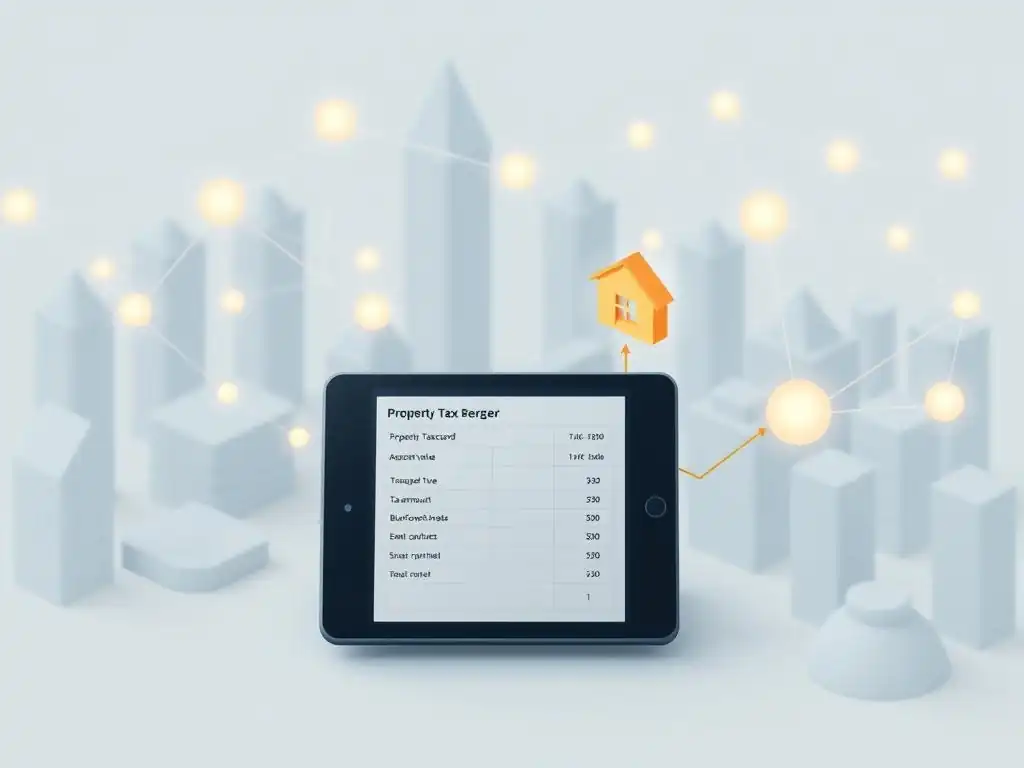
Data Integration: Connecting Property Records to the Blockchain
Implementing blockchain property tax automation requires a robust strategy for integrating existing property data with the blockchain platform. This is often the most complex step, as government property records are typically stored in disparate, legacy databases. The process involves identifying key data points – property identifiers, ownership details, assessed values, historical tax data – and designing a secure method to link or migrate this information to the blockchain or make it accessible to smart contracts.
This integration could involve building APIs (Application Programming Interfaces) to allow the blockchain system to query existing databases, or it might necessitate a more significant data migration effort. Ensuring data accuracy during this phase is paramount; errors in the source data will propagate into the automated system. Establishing a single source of truth for property data, potentially leveraging the blockchain itself as a secure, shared ledger for verified property information, is a critical component.
Smart Contract Development: Defining Payment Schedules and Rules
The core of the automation lies in the development of the smart contracts. This involves translating complex property tax laws and regulations into executable code. Legal experts and smart contract developers must collaborate closely to define the precise logic for tax calculations, payment due dates, acceptable payment methods (e.g., specific stablecoins or government-issued digital currency), penalty structures for late payments, and rules for discounts or exemptions.
For example, a smart contract might include functions like calculateTaxAmount(propertyId), setDueDate(propertyId, date), and processPayment(propertyId, amount, payerAddress). It would also contain state variables to track the current tax year, outstanding balance, and payment status for each property. The rules for triggering actions, such as automatically adding a 5% penalty if payment is not received within 30 days of the due date, must be meticulously coded and audited to prevent unintended consequences.
Security Considerations: Ensuring Data Integrity and Protection
Security is a paramount concern when dealing with sensitive property and financial data. While blockchain technology inherently offers strong security features like cryptographic hashing and decentralization (depending on the network type), the implementation must address potential vulnerabilities. This includes securing the data integration layer, protecting the private keys used to interact with the smart contracts, and ensuring the smart contract code itself is free from bugs or exploits.
Rigorous security audits of the smart contract code are essential before deployment. Furthermore, access controls for who can deploy or update contracts (in permissioned environments) and who can access sensitive linked data must be strictly defined and enforced. Protecting taxpayer privacy, especially on public blockchains, requires careful consideration of data architecture, potentially using techniques like zero-knowledge proofs or storing sensitive data off-chain with hashed references on the blockchain.
Testing and Deployment: Pilot Programs and Scalability
Before a full-scale rollout, extensive testing and pilot programs are crucial. Testing should cover various scenarios, including timely payments, late payments, partial payments, incorrect amounts, and edge cases related to exemptions or special assessments. Simulating real-world transaction volumes is necessary to assess the system's performance and scalability. A pilot program, perhaps in a specific neighborhood or for a subset of property types, allows for testing in a live environment with real users (taxpayers and administrators) on a smaller scale.
Lessons learned from pilot programs can inform necessary adjustments to the smart contracts, integration processes, and user interfaces. Once the system proves stable and effective in a pilot, a phased deployment strategy can be developed for scaling up to cover the entire jurisdiction. This phased approach helps manage risks and ensures a smoother transition from traditional systems to blockchain property tax automation.
Use Cases and Real-World Examples of Smart Contract Property Tax
Dubai Land Department's Blockchain Strategy for Real Estate Transactions
The Dubai Land Department (DLD) has been a pioneer in exploring blockchain technology for real estate. While their most publicized efforts focus on creating a blockchain-powered platform for real estate transactions, including buying, selling, and registering properties, their strategy lays the groundwork for adjacent applications like property tax. The DLD's platform aims to record all real estate agreements on blockchain, linking parties including tenants, developers, and potentially service providers.
While a fully automated blockchain property tax system isn't yet cited as live and comprehensive in Dubai, their initiative demonstrates a governmental commitment to integrating real estate processes onto a distributed ledger. This creates the necessary digital infrastructure – verified property identities, linked ownership records, and a platform for smart contracts – upon which a blockchain property tax automation system could be built, potentially integrating with their existing payment gateways and digital identity solutions. Their progress signifies a major governmental step towards a digitized, blockchain-enabled real estate ecosystem that can eventually encompass tax.
Propy's Use of Smart Contracts for Title Transfer and Tax Implications
Propy is a real estate transaction platform that utilizes blockchain and smart contracts to streamline the process of buying and selling property. Their platform focuses on automating steps like offer submission, escrow management, and title transfer using smart contracts. While their primary focus is the transaction itself, the process of transferring ownership inherently involves updating records that are crucial for property tax assessment and billing.
Propy's smart contracts facilitate the secure and transparent transfer of title deeds recorded on the blockchain. As part of this process, relevant property data is updated. This update can trigger notifications or data feeds to relevant authorities, including tax departments.
Although Propy's platform doesn't collect property taxes directly through smart contracts, its automation of the ownership transfer process on the blockchain provides a foundational layer. By updating ownership records instantly and immutably, it ensures that tax authorities have access to the most current information needed for accurate billing, reducing delays and errors that occur with traditional paper-based transfers. This demonstrates how smart contracts in related real estate processes can indirectly improve the efficiency and accuracy of property tax systems.
Case Studies: Demonstrating the Impact of Automation
While comprehensive, live case studies of full-scale blockchain property tax automation are still emerging, examples from related government or financial processes offer insights into potential impacts. For instance, pilot programs using blockchain for supply chain finance have demonstrated reductions in processing time from weeks to days and significant cuts in administrative costs. Similarly, blockchain trials for cross-border payments have shown the ability to reduce transaction fees and increase speed compared to traditional banking systems.
Applying these observed benefits to property tax suggests similar outcomes. A pilot by a municipal government exploring blockchain for land registry updates reported a significant reduction in the time taken to record transfers, from several days to under an hour.
While not directly tax collection, this speed and efficiency in updating core property data are vital for accurate tax billing. These related case studies indicate that the core benefits of blockchain – efficiency, transparency, and security – are transferable to complex governmental processes like property tax administration, paving the way for successful blockchain property tax automation implementations in the future.
Overcoming Challenges and Addressing Concerns
Regulatory Hurdles and Legal Frameworks
One of the most significant challenges for blockchain property tax automation is the absence of clear regulatory frameworks and legal recognition for smart contracts in the context of taxation. Property tax laws are deeply embedded in traditional legal systems that often require physical documents, wet signatures, and established administrative procedures. For a smart contract to legally constitute a binding tax agreement or for a blockchain record to be the sole proof of payment, existing laws may need to be amended or new legislation enacted.
Governments need to define how smart contracts are treated legally, particularly concerning enforcement, dispute resolution, and auditing for tax purposes. The slow pace of legislative change compared to technological advancement poses a significant hurdle. Establishing legal clarity is essential to build trust among taxpayers and provide a solid foundation for implementing blockchain property tax automation on a large scale.
Data Privacy and Security Considerations
While blockchain offers inherent security features, implementing a system that handles sensitive property ownership and financial data raises significant privacy concerns. On public blockchains, transaction data is often transparent, which could expose sensitive information about individuals' property holdings and tax payments. Ensuring compliance with data protection regulations, such as GDPR or similar local laws, is critical.
Solutions might involve using permissioned blockchains where access is restricted, employing privacy-enhancing technologies like zero-knowledge proofs to verify information without revealing the underlying data, or storing sensitive personal data off-chain while using the blockchain for immutable records of transactions and statuses. Robust security measures to protect against cyber threats, secure data integration points, and manage cryptographic keys are also paramount to prevent data breaches or system manipulation.
Public Perception and Adoption Barriers
Public perception and user adoption are crucial for the success of any new government system. Taxpayers may be unfamiliar with blockchain technology and smart contracts, leading to skepticism or resistance to change. Concerns about the complexity of the new system, potential errors, or lack of technical support can hinder adoption. Bridging the digital divide and ensuring equitable access for all taxpayers, regardless of their technical proficiency, is also a challenge.
Addressing these barriers requires clear communication, education campaigns, and user-friendly interfaces. Governments need to demonstrate the benefits of the new system – increased convenience, transparency, and reduced errors – and provide adequate support and training. Building trust through successful pilot programs and involving the community in the transition process can help overcome resistance and encourage widespread adoption of blockchain property tax automation.
The Importance of Education and Collaboration
Overcoming the challenges associated with implementing blockchain property tax automation requires a concerted effort focused on education and collaboration. Educating government officials, legal professionals, and the public about the capabilities and limitations of blockchain and smart contracts is fundamental. This includes explaining how the technology works, its security features, and the specific benefits it brings to property tax administration.
Collaboration between government agencies, technology providers, legal experts, and potentially financial institutions is also vital. Governments need to work with experienced blockchain developers to design and implement robust systems. Legal experts are needed to navigate regulatory complexities. Collaboration ensures that the developed solution is technically sound, legally compliant, and meets the needs of all stakeholders, paving the way for successful and widely accepted blockchain property tax automation.
The Future of Property Tax: Blockchain and Beyond
Emerging Trends in Smart Contract Technology
The field of smart contract technology is continuously evolving, with emerging trends promising even greater capabilities for property tax automation. One such trend is the development of more sophisticated, potentially AI-enhanced smart contracts that can handle more complex logic and adapt to changing regulations (within predefined parameters). Another is the rise of interoperability solutions that allow smart contracts on different blockchains to interact, which could be crucial for integrating property data from various sources or enabling payments across different digital asset networks.
Furthermore, advancements in privacy-preserving technologies for blockchain, such as zero-knowledge proofs, are making it more feasible to handle sensitive tax data on-chain while maintaining confidentiality. These technological advancements will likely lead to more flexible, secure, and powerful smart contract applications for property tax, capable of handling a wider range of scenarios and integrating more seamlessly with other digital government services.
Potential for Integration with Other Government Services
Blockchain property tax automation has significant potential for integration with other government services, creating a more cohesive digital civic infrastructure. For instance, a blockchain-based property registry could be directly linked to the tax system, ensuring that ownership changes automatically update tax records in real-time. Integration with digital identity systems could streamline the verification of property owners.
Furthermore, linking property tax payments recorded on the blockchain with utility billing, permitting processes, or even local voting systems could create a unified digital experience for citizens interacting with their local government. This interconnectedness, facilitated by shared blockchain data and interoperable smart contracts, could drastically improve efficiency, reduce redundancy across departments, and provide citizens with a single point of access for managing their property-related civic obligations.
The Long-Term Vision: A Fully Automated and Transparent Property Tax System
The long-term vision for blockchain property tax is a fully automated and transparent system where the entire lifecycle of property tax – from assessment linkage and billing to payment and delinquency management – is handled primarily by smart contracts on a distributed ledger. In this future state, manual processes would be minimized, errors would be drastically reduced, and the potential for fraud would be significantly lower due to the immutable and verifiable nature of the blockchain.
Taxpayers would benefit from unparalleled transparency into how their taxes are calculated and processed, with access to their full payment history on a public ledger. Governments would gain efficiency, cost savings, and more predictable revenue collection. While achieving this vision requires overcoming substantial technical, legal, and social hurdles, the foundational technology for blockchain property tax automation exists today, pointing towards a future of more efficient, equitable, and transparent civic finance.
Conclusion: Embracing Blockchain for a More Efficient Property Tax Landscape
Blockchain Property Tax Automation: A Game Changer for Real Estate
Blockchain property tax automation represents a significant opportunity to transform a fundamental, yet often inefficient, aspect of real estate ownership and government administration. By leveraging the power of smart contracts, governments can automate complex tax calculations, streamline payment processing, and ensure timely collection, moving away from error-prone manual systems. The inherent transparency and immutability of blockchain technology offer unprecedented auditability and build trust by providing clear, verifiable records for both taxpayers and authorities.
While challenges related to regulation, data privacy, and public adoption remain, the potential benefits – reduced costs, improved efficiency, enhanced compliance, and greater transparency – make blockchain property tax automation a compelling prospect. Early initiatives in digitizing real estate processes with blockchain demonstrate the feasibility and advantages of this technology.
Call to Action: Exploring the Potential for Your Community or Business
The journey towards widespread blockchain property tax automation is just beginning. For government bodies, exploring pilot programs and collaborating with technology experts and legal professionals is the crucial next step. Understanding the specific needs and challenges of your jurisdiction and assessing how blockchain and smart contracts can provide tailored solutions is key.
For businesses in the real estate, proptech, or blockchain sectors, there are opportunities to develop the platforms, tools, and services needed to facilitate this transition. This includes building secure data integration solutions, developing robust and compliant smart contract templates, and creating user-friendly interfaces for taxpayers. Embracing blockchain property tax automation is not just about adopting a new technology; it's about building a more efficient, transparent, and trustworthy system for the future of civic finance and real estate.
Frequently Asked Questions
How can smart contracts automate property tax payments?
Smart contracts can automate payments by triggering fund transfers from a designated wallet when taxes are due. This eliminates the need for manual intervention and reduces the risk of late payment penalties. They also provide a transparent audit trail.
What are the potential benefits of using blockchain for property tax administration?
Blockchain offers several benefits, including enhanced transparency, improved data security, and reduced administrative costs. It also facilitates faster processing times and reduces the likelihood of fraud.
What role does DeFi (Decentralized Finance) play in property tax automation?
DeFi protocols can enable new ways to finance property tax payments, such as leveraging tokenized assets or accessing decentralized lending platforms. This provides greater flexibility and accessibility for taxpayers.
What are the regulatory considerations for implementing blockchain-based property tax systems?
Regulatory frameworks need to address issues such as data privacy, security, and legal validity of smart contracts. Clear guidelines are essential for widespread adoption and public trust.
How does Blockchain property tax automation impact traditional property tax systems?
Blockchain property tax automation aims to modernize and streamline traditional systems by introducing greater efficiency and transparency. It offers potential for reduced errors and improved taxpayer compliance.
Final Reflection: Embracing the Future of Property Tax
The promise of blockchain property tax automation is no longer a distant dream, but a tangible solution poised to revolutionize how governments and citizens interact. As we've explored the potential of smart contracts to streamline payments and ensure compliance, it's clear that this technology offers a pathway to greater efficiency, transparency, and trust in a system often plagued by complexity and opacity. The shift towards decentralized, automated processes represents a fundamental reimagining of civic engagement.
This innovation has the power to reshape the very fabric of our communities. Imagine a world where property tax payments are seamless, secure, and automatically reconciled, freeing up valuable resources for both taxpayers and government agencies. This isn't just about technological advancement; it's about fostering a more equitable and efficient society. The best way to predict the future is to create it.
- Peter Drucker. This quote resonates deeply as we consider the transformative potential of blockchain in reshaping our civic infrastructure.
Now, consider how you can contribute to this evolution. How can you, as a citizen, advocate for the adoption of blockchain solutions in your local government? How can you, as a developer or entrepreneur, contribute to the creation of innovative tools that empower communities? The future of property tax automation is not just about technology; it's about collaboration, innovation, and a shared commitment to building a more efficient and transparent world for all. Let us embrace this opportunity and work together to realize the full potential of blockchain in shaping a brighter future.
Unlock the Future: Automate Your Property Taxes Today!
Thank you for exploring the potential of smart contracts to transform property tax automation. We hope you now have a better understanding of how this innovative technology can simplify payments and enhance compliance. It’s time to turn knowledge into action!
Here are some steps to get started:
- Research smart contract solutions designed for property tax management to see how they can benefit you.
- Join the discussion on the Blockchain Trends forum—share your insights and learn from others interested in property tax automation.
- Attend a local blockchain meetup to connect with experts and discover how smart contracts are influencing your community.
What challenges in property tax management do you think smart contracts could help solve in your area? Share your thoughts below!
Leave a Reply