
Residential Real Estate and Blockchain: A Match Made in Decentralization?


Welcome to Blockchain Trends, your go-to source for understanding the revolutionary impact of blockchain technology beyond the hype. Curious about how this groundbreaking technology is reshaping industries?
This week, we're diving deep into the world of Blockchain in Real Estate, exploring a fascinating concept: the Blockchain Real Estate Investment Trust (REIT). Could this be the key to democratizing property investment and unlocking unprecedented liquidity? Read on to discover how blockchain is poised to revolutionize residential real estate and what the future holds for this exciting intersection of technology and finance.
- Blockchain's Impact on Residential Real Estate
- Tokenization: Democratizing Real Estate Investment
- Blockchain REITs: A New Investment Model
- Smart Contracts: Automation and Security in Agreements
- Challenges and Regulations in Blockchain Real Estate
- The Future of Residential Real Estate: Decentralization
-
Frequently Asked Questions
- What is a Blockchain Real Estate Investment Trust (REIT)?
- How does blockchain enhance traditional REITs?
- What are the potential benefits of investing in Blockchain REITs?
- What regulatory hurdles do Blockchain REITs currently face?
- How might Blockchain REITs disrupt the traditional real estate market?
- Final Reflection: Embracing Decentralized Real Estate
Blockchain's Impact on Residential Real Estate
Key Benefits for Homeowners and Investors
Blockchain technology promises significant advantages for both homeowners and investors in the residential real estate market. For homeowners, the potential lies in streamlining the selling process, reducing the reliance on traditional intermediaries like brokers and lawyers, which can significantly lower transaction costs. Estimates suggest that traditional real estate fees can range from 5% to 10% of the property value; blockchain could potentially cut these costs substantially by automating processes and reducing paperwork. Furthermore, the immutable nature of the blockchain ledger ensures a secure and transparent record of ownership and transaction history, minimizing disputes and verifying authenticity.
Investors, on the other hand, stand to gain from increased market accessibility and liquidity. Blockchain enables fractional ownership, allowing individuals to invest in portions of high-value properties, democratizing access that was previously limited to wealthy individuals or large institutions. This is particularly relevant for models like a Blockchain real estate investment trust, where tokens representing shares of a property portfolio can be easily bought and sold on digital exchanges, offering liquidity far beyond traditional property sales. The transparency of the blockchain also allows investors to verify asset details and transaction history directly, fostering greater confidence in their investments.
Solving Existing Problems in Property Transactions
The current residential real estate transaction process is often plagued by inefficiencies, lack of transparency, and potential for fraud. Lengthy closing periods, sometimes extending over several months, are common due to complex paperwork, title searches, and coordination between multiple parties. Blockchain can drastically reduce this timeline by providing a single, secure, and instantly verifiable digital ledger for all relevant documents and ownership records. Smart contracts can automate many steps, such as fund release upon title transfer, cutting down processing time significantly.
Another persistent issue is the risk of title fraud or disputes arising from inaccurate or incomplete public records. By recording property titles and transaction histories on an immutable blockchain, a transparent and tamper-proof chain of ownership is created. This digital record is accessible to authorized parties, making it much harder to falsify documents or claim fraudulent ownership. The reduction in manual processes and the enhanced security features inherent in blockchain technology address fundamental pain points, making property transactions more secure, faster, and less prone to errors.
Tokenization: Democratizing Real Estate Investment
Understanding Real Estate Tokenization
Real estate tokenization is the process of issuing digital tokens on a blockchain that represent ownership or economic rights in a specific property or a portfolio of properties. Each token can represent a fraction of the property's value, effectively converting illiquid real estate assets into divisible, digital tokens. This process involves creating a legal framework that links the physical asset to the digital tokens, ensuring that token holders have legitimate claims or rights associated with the underlying property.
The technical process typically involves verifying the property's legal status, value, and ownership, and then issuing tokens on a chosen blockchain platform (like Ethereum, Stellar, or others). These tokens are then managed and traded digitally. For instance, a property valued at $1 million could be represented by 1 million tokens, each worth $1. This allows investors to buy tokens corresponding to their desired investment amount, rather than needing the full capital to purchase the entire property. This digital representation facilitates easier transfer and management of ownership stakes.
Enhanced Liquidity and Accessibility Through Tokenization
One of the most significant benefits of tokenizing residential real estate is the dramatic increase in liquidity. Traditionally, selling a property is a time-consuming and complex process involving finding a buyer, negotiations, inspections, and lengthy closing procedures, often taking months. Tokenized real estate, however, can be traded on secondary markets or digital exchanges much like stocks or other digital assets. This allows investors to buy or sell their stake in a property relatively quickly, converting their investment back into cash with greater ease than selling a physical asset.
Furthermore, tokenization enhances accessibility by lowering the barrier to entry for real estate investment. Instead of needing hundreds of thousands or millions of dollars to buy a property outright or invest in a large traditional Real Estate Investment Trust (REIT), individuals can purchase tokens representing small fractions of properties. This democratization allows a broader range of investors, including those with limited capital or located internationally, to participate in the real estate market. This improved accessibility is a key driver behind the potential for innovative structures like a Blockchain real estate investment trust.
Fractional Ownership in the Tokenized Market
Fractional ownership, enabled by tokenization, transforms real estate investment from an all-or-nothing proposition into a divisible asset class. By issuing multiple tokens representing a single property, the ownership is split among all token holders according to the number of tokens they possess. For example, an apartment building could be tokenized into 10,000 tokens, allowing 100 different investors to own 1% each by holding 100 tokens.
This model is particularly appealing for high-value residential properties or portfolios, enabling investors to diversify their real estate holdings across multiple properties without requiring substantial capital for each investment. It allows individuals to build a diversified portfolio of real estate assets, potentially spread across different geographical locations or property types, by acquiring tokens from various tokenized projects or a Blockchain real estate investment trust. This diversification capability helps mitigate risks associated with investing heavily in a single property.
Blockchain REITs: A New Investment Model
Enhancing Traditional REITs with Blockchain
Traditional Real Estate Investment Trusts (REITs) allow investors to pool capital to invest in income-producing real estate, offering dividends from rental income and capital gains. While successful, they involve intermediaries, administrative costs, and trading limitations based on traditional stock market hours and settlement times. A Blockchain real estate investment trust (REIT) leverages distributed ledger technology to potentially improve upon this model.
By tokenizing shares of a REIT portfolio on a blockchain, a Blockchain real estate investment trust can offer enhanced transparency regarding the underlying assets and transactions. The immutable ledger provides a clear record of property holdings, income distribution, and share transfers, which can be audited more easily than traditional structures. Furthermore, the use of smart contracts can automate dividend payments and other distributions directly to token holders, reducing administrative overhead and potentially increasing efficiency compared to manual or less automated processes in traditional REITs.
Transparency and Efficiency in Blockchain-Based REITs
Transparency is a cornerstone benefit of a Blockchain real estate investment trust. The entire portfolio of assets and all transactions related to the REIT's operations – from rental income collection to dividend payouts and token trades – can be recorded on a public or permissioned blockchain. This provides investors with an unprecedented level of visibility into the REIT's activities, fostering trust and accountability. Unlike traditional structures where detailed asset information might be less accessible, a blockchain-based model can link tokens directly to verifiable property data on the ledger.
Efficiency gains stem from the automation potential of smart contracts and the reduced need for intermediaries. Managing shareholder registries, processing trades, and distributing income can be significantly streamlined. For example, a smart contract could be programmed to automatically distribute rental income proportionally to token holders on a set schedule, reducing administrative effort and ensuring timely payouts. The peer-to-peer nature of blockchain transactions can also potentially lower trading costs compared to traditional brokerage fees associated with buying and selling REIT shares on conventional exchanges.
Smart Contracts: Automation and Security in Agreements
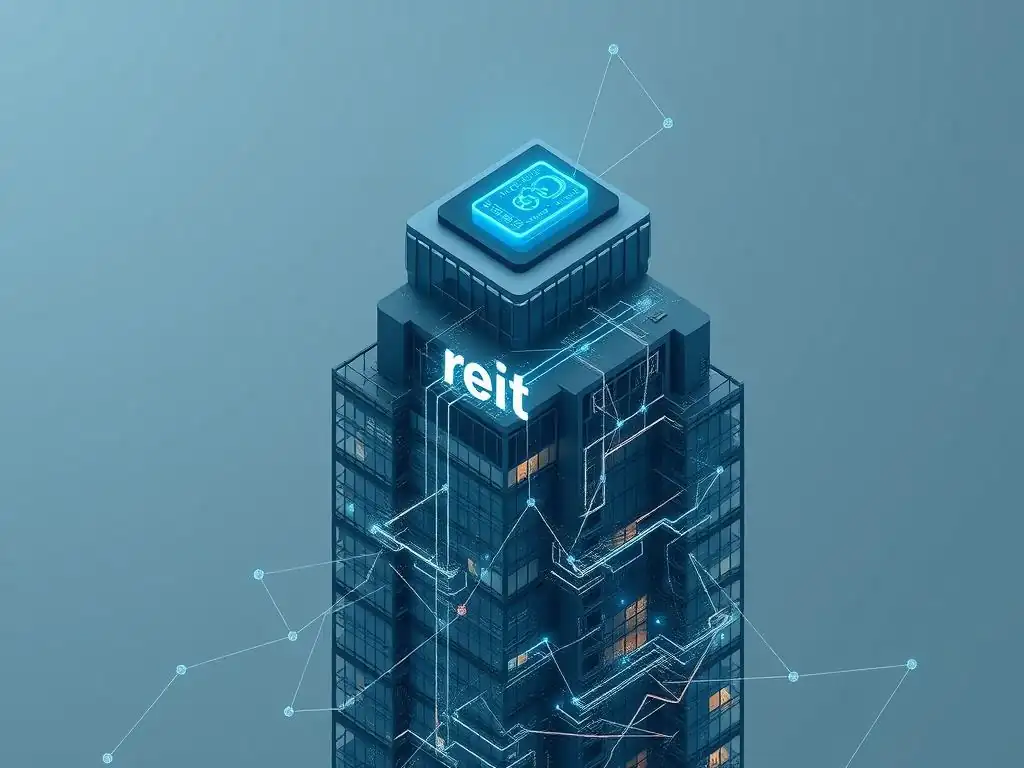
Simplifying Rental Agreements with Smart Contracts
Smart contracts, self-executing contracts with the terms of the agreement directly written into code, can significantly simplify and automate residential rental agreements. Instead of relying solely on paper contracts and manual processes, key terms like rent amount, due date, lease duration, and even conditions for security deposit release can be coded into a smart contract deployed on a blockchain.
When the conditions specified in the code are met – for instance, the due date arrives – the smart contract can automatically trigger actions, such as transferring the rent payment from the tenant's digital wallet to the landlord's. This reduces the need for manual tracking and payment processing, minimizing late payments and administrative hassle. Furthermore, the terms are transparently recorded on the blockchain, providing a secure and verifiable record for both parties, reducing potential disputes over payment history or lease terms.
Streamlining Property Management with Blockchain
Beyond rental collection, blockchain and smart contracts can streamline various aspects of property management. Maintenance requests, service provider payments, and record-keeping can all be integrated into a blockchain-based system. For example, a smart contract could be set up to automatically pay a pre-approved contractor upon verification (perhaps through a multi-signature process involving the landlord and a tenant representative) that a repair job has been completed satisfactorily.
Maintaining transparent and accessible records of maintenance history, expenses, and tenant communications on a blockchain provides a single source of truth for property managers, owners, and even tenants. This enhances accountability and makes auditing or resolving disputes easier. For large portfolios, including those managed by a Blockchain real estate investment trust, this level of automated record-keeping and payment processing can lead to considerable operational efficiencies and cost savings.
Secure and Transparent Escrow Services
Escrow services are crucial in residential real estate transactions to hold funds or assets securely until all conditions of the sale agreement are met. Traditional escrow involves third-party intermediaries, which can add costs and time to the process. Smart contracts offer a compelling alternative by acting as automated, secure, and transparent digital escrow agents.
In a blockchain-based transaction, the buyer's funds can be placed into a smart contract. The contract is coded to release the funds to the seller only when predefined conditions are immutably recorded on the blockchain – for example, the successful transfer of the property title (represented digitally) to the buyer's wallet. If the conditions are not met within a specified timeframe, the contract can be programmed to automatically return the funds to the buyer. This removes the need for a human intermediary, reduces fees, speeds up the process, and provides cryptographic security and transparency over the escrowed funds.
Challenges and Regulations in Blockchain Real Estate
Addressing Legal and Regulatory Uncertainty
One of the most significant hurdles for the widespread adoption of blockchain in residential real estate is the current legal and regulatory landscape. Property law is deeply rooted in centuries-old concepts of physical ownership, deeds, and centralized registries. Integrating digital tokens and blockchain records into this existing framework requires significant legal innovation and clarity. Many jurisdictions lack specific laws addressing the legal status of tokenized real estate or how blockchain records interact with traditional land registries.
For a Blockchain real estate investment trust or a tokenized property sale, there's uncertainty about how regulators will classify the tokens (e.g., as securities, commodities, or a new asset class) and what rules will apply regarding issuance, trading, and investor protection. Different countries and even states within countries are taking varying approaches, creating a fragmented and unpredictable environment. Overcoming this requires engagement with policymakers to develop clear, consistent, and supportive legal frameworks that recognize and facilitate blockchain-based property transactions and ownership.
Mitigating Security Risks and Ensuring Data Privacy
While blockchain is inherently secure due to its cryptographic nature, implementing it in real estate is not without security risks. Smart contract vulnerabilities, if exploited, could lead to loss of funds or incorrect execution of terms. The security of private keys used to access and manage tokenized property assets is paramount; loss or theft of keys could result in permanent loss of ownership access. Furthermore, integrating off-chain data (like property appraisals or identity verification) into the blockchain requires secure oracles to prevent manipulation.
Data privacy is another concern. While transaction history on a public blockchain is transparent, sensitive personal information related to property owners and buyers must be handled in compliance with data protection regulations like GDPR. Solutions might involve using permissioned blockchains, zero-knowledge proofs, or storing sensitive data off-chain while using the blockchain only for verifiable hashes or proofs of data existence. Ensuring robust security measures and compliance with evolving privacy laws is critical for building trust in blockchain real estate platforms, including those for a Blockchain real estate investment trust.
Interoperability and Standardization
The lack of widespread interoperability and standardization across different blockchain platforms and real estate data systems presents another challenge. Multiple blockchain protocols exist, and a token issued on one platform might not be easily transferable or compatible with a system built on another. For the real estate industry, which relies on interconnected systems (land registries, banks, escrow services, etc. ), seamless data flow is essential.
Achieving broad adoption requires developing common standards for tokenizing real estate assets, defining data models for property information on the blockchain, and creating bridges or protocols that allow different systems and blockchains to communicate effectively. Without standardization, the ecosystem risks fragmentation, hindering the potential for a truly liquid global market for tokenized properties or shares in a Blockchain real estate investment trust. Collaborative efforts among industry participants, technology providers, and standards bodies are needed to overcome this challenge.
The Future of Residential Real Estate: Decentralization
Long-Term Impact on Property Ownership
The long-term impact of blockchain on residential real estate points towards a future characterized by increased decentralization and democratization of ownership. The ability to represent property rights as digital tokens on a distributed ledger fundamentally shifts power dynamics away from traditional gatekeepers like centralized registries, banks, and large institutions. Individuals could have more direct control and verifiable proof of their ownership stake, stored securely on the blockchain.
This shift could lead to more fluid and dynamic property markets. Fractional ownership via tokenization means that investing in real estate could become as easy as buying shares online, allowing individuals to build and manage diversified property portfolios with relative ease. The concept of owning a home might evolve to include holding a majority stake in a tokenized property alongside other investors, or participating in the collective ownership of multiple properties through mechanisms akin to a decentralized Blockchain real estate investment trust. This could make real estate investment more accessible globally and potentially stabilize markets through increased participation.
Emerging Trends in Blockchain-Enabled Platforms
Several trends are emerging in the development of blockchain-enabled platforms for residential real estate. One key trend is the focus on creating marketplaces specifically for tokenized properties and real estate assets. These platforms aim to provide the infrastructure for issuing, managing, and trading real estate tokens, offering features like investor onboarding, compliance checks (like KYC/AML), and integrated smart contract functionalities for transactions and distributions.
Another trend involves the development of platforms facilitating the creation and management of Blockchain real estate investment trust-like structures. These platforms leverage tokenization to represent shares in a portfolio of residential properties, offering investors the benefits of pooled real estate investment with the added transparency, liquidity, and fractional ownership capabilities of blockchain. These emerging platforms are crucial for translating the theoretical benefits of blockchain into practical, accessible solutions for both property owners looking to tokenize assets and investors seeking new ways to engage with the real estate market.
Frequently Asked Questions
What is a Blockchain Real Estate Investment Trust (REIT)?
A Blockchain REIT is essentially a traditional REIT that leverages blockchain technology to manage and distribute shares, and potentially manage properties. This allows for increased transparency and fractional ownership.
How does blockchain enhance traditional REITs?
Blockchain can streamline processes like property management, rent collection, and investment distribution. It also enables tokenization of assets, making it easier for smaller investors to participate.
What are the potential benefits of investing in Blockchain REITs?
Benefits include lower transaction costs, greater accessibility for smaller investors, and increased liquidity compared to traditional REITs. This is due to the ease of trading fractionalized shares on blockchain platforms.
What regulatory hurdles do Blockchain REITs currently face?
The regulatory landscape is still evolving, with questions surrounding security token offerings (STOs) and compliance with existing REIT regulations. Clarity is needed regarding tax implications and legal frameworks.
How might Blockchain REITs disrupt the traditional real estate market?
Blockchain REITs could democratize real estate investment, making it more accessible and affordable. They could also lead to greater efficiency in property management and transactions, ultimately reshaping the industry.
Final Reflection: Embracing Decentralized Real Estate
The exploration of blockchain's potential within residential real estate, particularly through Blockchain Real Estate Investment Trusts (REITs), reveals a paradigm shift poised to reshape how we invest in and interact with property. The promise of increased transparency, efficiency, and accessibility is not merely theoretical; it represents a tangible opportunity to democratize real estate investment for a broader audience.
This journey into the intersection of blockchain and real estate has profoundly underscored the importance of innovation in traditional sectors. Witnessing the potential for fractional ownership and streamlined transactions has solidified my belief that technology can empower individuals and foster greater financial inclusion. The future of real estate is not just about bricks and mortar; it's about the technology that connects people to places and opportunities.
This sentiment encapsulates the transformative power of blockchain in creating a more equitable and efficient real estate landscape.
As we stand on the cusp of this decentralized revolution, I urge you to consider the implications of blockchain technology in your own investment strategies. Explore the possibilities, embrace the innovation, and become an active participant in shaping the future of real estate. The opportunity to build a more transparent, accessible, and equitable property market is within our grasp – let us seize it together.
Residential Real Estate and Blockchain: A Match Made in Decentralization?
The integration of blockchain technology into the residential real estate sector is transforming the way properties are bought, sold, and managed. By leveraging blockchain's decentralized and transparent nature, stakeholders can streamline transactions, reduce fraud, and increase trust across the industry. Smart contracts automate complex processes, ensuring secure and efficient transfers of ownership without the need for intermediaries. Additionally, blockchain enables the creation of immutable property records, simplifying due diligence and enhancing data integrity.
As the real estate market evolves, innovative platforms are emerging that utilize blockchain to facilitate fractional ownership, tokenization of assets, and global investment opportunities. These advancements open new avenues for investors and homeowners alike, fostering a more accessible, efficient, and trustworthy ecosystem. Embracing blockchain in residential real estate not only addresses longstanding challenges but also paves the way for a more decentralized and democratized property market.
Leave a Reply