
Healthcare Smart Contracts: Securing Patient Data and Streamlining Processes


Welcome to Blockchain Trends, your compass in the rapidly evolving world of decentralized innovation. Beyond the hype of cryptocurrencies, we delve into the real-world applications that are reshaping industries. Ever wondered how blockchain can revolutionize patient care? Dive in to discover how healthcare smart contracts are poised to redefine data security and streamline processes in the medical field, and unlock the transformative potential of this groundbreaking technology.
- Blockchain Healthcare Data Security: A Deep Dive
-
Frequently Asked Questions
- What role do smart contracts play in enhancing blockchain healthcare data security?
- How can blockchain technology streamline processes within the healthcare industry, beyond just blockchain healthcare data security?
- What are the key benefits of using blockchain for blockchain healthcare data security compared to traditional database systems?
- What are some of the regulatory challenges associated with implementing blockchain solutions for blockchain healthcare data security?
- Beyond blockchain healthcare data security, what is the future outlook for blockchain adoption in the healthcare sector?
- Final Reflection: Embracing Trust in Healthcare's Future
- Reimagine Healthcare: Embrace the Future of Smart Contracts!
Blockchain Healthcare Data Security: A Deep Dive
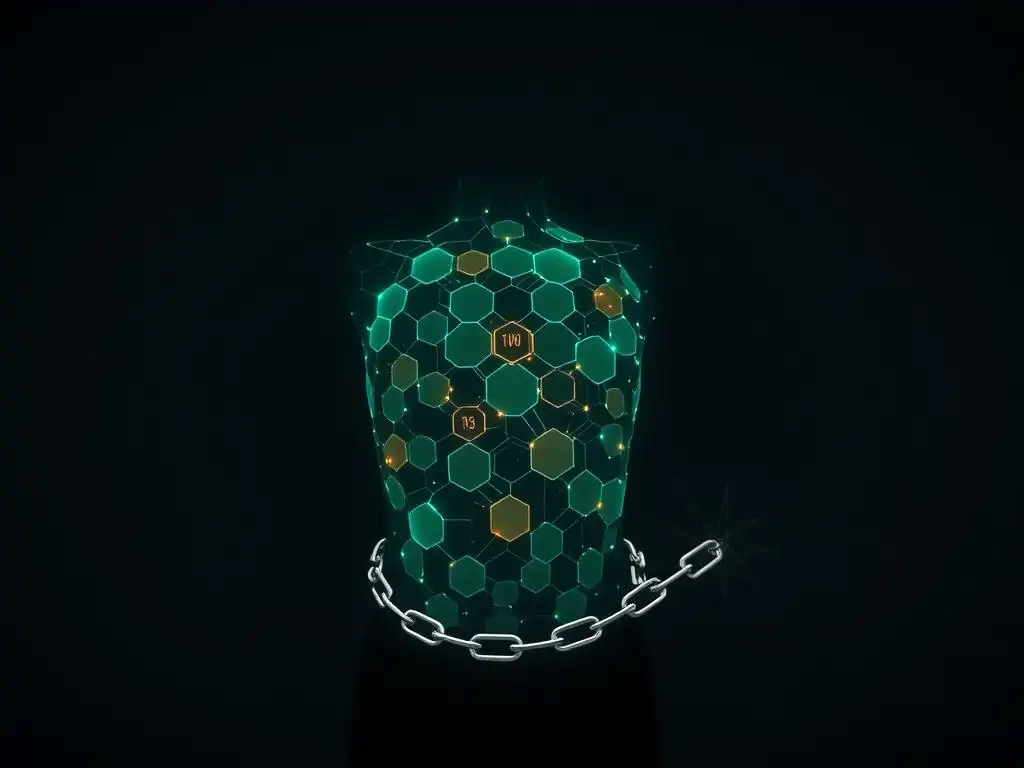
Enhancing Data Security with Decentralized Ledger Technology (DLT)
Traditional healthcare data systems often rely on centralized databases, making them vulnerable single points of failure for cyberattacks. Breaches in these systems can expose millions of sensitive patient records, including medical histories, diagnoses, and personal identifiers. For instance, the healthcare sector consistently ranks among the most targeted industries by cybercriminals due to the high value of medical data on the black market.
The cost of a data breach in healthcare is significantly higher than in other sectors, estimated to be around $10.93 million on average in 2023, according to some industry reports. This highlights the urgent need for more robust security frameworks.
Decentralized Ledger Technology (DLT), the underlying technology behind blockchain, offers a powerful alternative. By distributing data across a network of nodes rather than storing it in one location, DLT significantly reduces the risk associated with single points of failure. Each transaction or data entry is cryptographically linked to the previous one, forming an immutable chain.
This inherent design makes it extremely difficult and computationally expensive for malicious actors to alter or delete data without being detected by the network participants. This foundational layer of security is critical for protecting sensitive patient information and forms the basis for enhanced blockchain healthcare data security.
Smart Contracts for Access Control and Data Permissions in Healthcare
Smart contracts provide a programmable layer on top of the blockchain, enabling automated execution of predefined rules. In healthcare, this translates into sophisticated and granular control over who can access specific patient data and under what conditions.
Unlike traditional access control lists that are managed centrally and can be prone to errors or tampering, smart contracts enforce permissions based on immutable code deployed on the distributed ledger. For example, a patient could use a smart contract to grant a specific physician access to their allergy information for 24 hours, or allow a researcher access to anonymized data related to a specific condition for a limited period, all without needing an intermediary.
This level of fine-grained control is paramount for maintaining patient privacy and adhering to regulations like HIPAA or GDPR. Smart contracts can be designed to automatically revoke access after a set time, require explicit digital consent from the patient for each access request, or even log every single data access attempt on the blockchain, creating an indisputable audit trail.
This moves beyond simple read/write permissions to context-aware access based on roles, time, and explicit patient consent, dramatically improving blockchain healthcare data security by putting the patient in greater control of their own sensitive information. The logic is transparent and verifiable on the blockchain, building trust among all parties involved.
Ensuring Data Integrity and Auditability with Blockchain
Maintaining the integrity of healthcare data is non-negotiable. Errors or malicious alterations in patient records, lab results, or treatment plans can have life-threatening consequences. Blockchain's core principle of immutability ensures that once data is recorded on the ledger, it cannot be retrospectively changed or deleted without invalidating subsequent blocks, which would be immediately apparent to the network. Each data entry is timestamped and cryptographically hashed, and this hash is included in the next block. Any attempt to alter the data in a previous block would change its hash, breaking the chain and signaling tampering.
This cryptographic integrity provides a high degree of confidence that the data is accurate and has not been altered since it was recorded. Furthermore, the distributed nature of the ledger means that multiple copies of the data exist across the network, making it virtually impossible for a single entity to corrupt the entire system.
This inherent auditability is invaluable for compliance, dispute resolution, and forensic analysis. Regulators and auditors can trust the timestamped, immutable record on the blockchain to verify data entries, track data flows, and investigate incidents, significantly enhancing blockchain healthcare data security and accountability compared to easily modifiable centralized logs.
Frequently Asked Questions
What role do smart contracts play in enhancing blockchain healthcare data security?
Smart contracts automate and enforce access control policies, ensuring that patient data is only accessible to authorized parties. This enhances data security and privacy by minimizing the risk of unauthorized access or data breaches.
How can blockchain technology streamline processes within the healthcare industry, beyond just blockchain healthcare data security?
Blockchain enables the creation of immutable audit trails for medical records, improving transparency and accountability. This can streamline processes like claims processing, supply chain management, and clinical trial data management.
What are the key benefits of using blockchain for blockchain healthcare data security compared to traditional database systems?
Blockchain offers enhanced security through its decentralized and cryptographic nature, making it more resistant to tampering and single points of failure. Traditional databases are more vulnerable to cyberattacks and data manipulation.
What are some of the regulatory challenges associated with implementing blockchain solutions for blockchain healthcare data security?
Navigating existing data privacy regulations like HIPAA and GDPR is a significant challenge. Ensuring compliance with these regulations while leveraging the benefits of blockchain requires careful planning and data governance.
Beyond blockchain healthcare data security, what is the future outlook for blockchain adoption in the healthcare sector?
The future includes wider adoption of decentralized applications (dApps) for patient-centric healthcare, improved interoperability between healthcare systems, and increased use of blockchain for supply chain transparency of pharmaceuticals.
Final Reflection: Embracing Trust in Healthcare's Future
The exploration of healthcare smart contracts reveals a powerful convergence of technology and ethics, highlighting the urgent need for enhanced data security and streamlined processes within the medical field. The potential of blockchain to revolutionize healthcare is no longer a futuristic fantasy, but a tangible solution to the pressing challenges of data breaches, administrative inefficiencies, and a lack of patient control over their own medical information.
This journey into blockchain healthcare data security underscores the profound impact technology has on our most vulnerable moments. The ability to ensure the integrity and privacy of patient data, while simultaneously simplifying complex administrative tasks, is not just a technological advancement, but a moral imperative. The future of healthcare is not just about treating illness, but about empowering individuals to take control of their health journey.
This quote encapsulates the transformative potential of smart contracts to shift the power dynamic, placing patients at the center of their own care.
As we conclude this exploration, I invite you to consider the role you can play in shaping the future of healthcare. Reflect on the importance of data security and the potential of blockchain to create a more transparent, efficient, and patient-centric system. Embrace the opportunity to advocate for responsible innovation and contribute to a future where healthcare is not only advanced but also deeply rooted in trust and ethical principles.
Okay, here's a CTA designed for the end of a web article on "Healthcare Smart Contracts: Securing Patient Data and Streamlining Processes" for the website "Blockchain Trends" (blockchaintrends.org):
Reimagine Healthcare: Embrace the Future of Smart Contracts!
Thank you for exploring the transformative potential of smart contracts in healthcare. We hope this article has illuminated how blockchain technology can revolutionize patient data security and operational efficiency. Now, let's put that knowledge into action!
Here are a few ways you can dive deeper and contribute to this exciting evolution:
- Start researching available open-source smart contract templates suitable for healthcare applications. Understanding these foundations is key to future development and implementation.
- Join the conversation! Share this article on LinkedIn and tag colleagues interested in healthcare innovation and blockchain technology. Let's spark a discussion!
- Uncover a local healthcare initiative. Contact an organization in your area who you think might benefit and offer a free presentation on how smart contracts could streamline one small part of their business.
What pressing healthcare challenge do you believe smart contracts are best positioned to address, and what initial steps would you suggest to implement them within your local community? Share your thoughts in the comments below!
Leave a Reply