
Hyperledger's Modular Architecture: Understanding the Flexibility for Enterprise Customization


Welcome to Blockchain Trends, your guide to navigating the evolving landscape of blockchain technology. Delve into the transformative potential extending far beyond cryptocurrencies. Are you curious about how enterprises are leveraging blockchain for real-world solutions? Our feature article explores the Hyperledger modular architecture customization benefits, revealing how businesses are tailoring this powerful platform for their specific needs. Uncover the flexibility and advantages this approach offers and discover how it's shaping the future of decentralized systems. Keep reading to unlock the secrets of Hyperledger's adaptability and its impact on the enterprise world!
Hyperledger's Modular Architecture: Enabling Enterprise Blockchain Solutions
- Introduction to Hyperledger's Flexible Design for Business Needs
- Decoding Hyperledger's Modular Architecture
- Benefits of Hyperledger Modular Architecture Customization
- Use Cases: Hyperledger's Modular Architecture in Various Industries
- Hyperledger Frameworks and Their Modular Implementations
- Implementing Customizations: A Practical Guide
- The Future of Hyperledger and its Modular Architecture
- Conclusion: Embracing Hyperledger's Modular Design for Innovation
-
Frequently Asked Questions
- What is Hyperledger's modular architecture?
- How does Hyperledger's modularity benefit enterprise customization?
- What are some examples of customizable modules in Hyperledger?
- What are the potential cost savings associated with Hyperledger's modular architecture?
- How does Hyperledger's modularity impact scalability and performance?
- Final Reflection: Embracing the Power of Modular Blockchain
- Unleash Your Blockchain Potential with Hyperledger!
Introduction to Hyperledger's Flexible Design for Business Needs
The Demand for Customizable Blockchain Solutions in Enterprises
Enterprises today face a diverse range of challenges and requirements when considering blockchain adoption. Unlike public blockchains designed for broad, open participation, enterprise blockchain solutions often need to address specific industry regulations, data privacy concerns, and existing infrastructure integrations. A one-size-fits-all approach simply doesn't work in the complex landscape of modern business.
For instance, a financial institution dealing with sensitive customer data requires stringent access control and compliance mechanisms that might be unnecessary for a logistics company tracking shipping containers. This disparity in needs necessitates blockchain platforms that can be tailored to fit the unique operational and strategic goals of each organization.
The increasing demand for customizable blockchain solutions stems from the need to optimize performance, security, and cost-effectiveness. Enterprises are not just looking to implement blockchain for the sake of innovation; they are seeking tangible business value. Customization allows businesses to select only the components they need, avoiding unnecessary overhead and complexity.
For example, a private consortium blockchain may not require the energy-intensive Proof-of-Work consensus mechanism used in public cryptocurrencies. Instead, they might opt for a more efficient consensus algorithm suited for a permissioned environment, leading to significant energy savings and faster transaction processing. This targeted approach to blockchain implementation is crucial for driving real-world adoption and realizing the full potential of distributed ledger technology in the enterprise sector.
Hyperledger: A Platform Designed for Enterprise-Grade Customization
Hyperledger stands out as an open-source collaborative effort, hosted by the Linux Foundation, specifically designed to advance cross-industry blockchain technologies. From its inception, Hyperledger has recognized the diverse needs of enterprises and has architected its platforms with modularity as a core principle. This design philosophy allows businesses to select and configure the components that best align with their specific use cases, regulatory environments, and technical infrastructure. Instead of being forced into a rigid, pre-defined blockchain model, enterprises using Hyperledger can build solutions that are precisely tailored to their operational requirements.
The modular architecture of Hyperledger is not just a theoretical concept; it is a practical framework that empowers developers and businesses to create highly customized and efficient blockchain solutions. Hyperledger offers a collection of frameworks, tools, and libraries, each designed with modularity in mind. For example, Hyperledger Fabric, one of the most prominent frameworks, allows for pluggable consensus mechanisms, membership service providers, and data storage options.
This flexibility is crucial for enterprises operating in regulated industries like healthcare or finance, where compliance with specific data handling and security protocols is paramount. By providing this granular level of control, Hyperledger enables organizations to harness the benefits of blockchain technology without compromising on their unique business needs and operational constraints.
Decoding Hyperledger's Modular Architecture
Core Components and Their Interoperability
At the heart of Hyperledger's modular architecture lies a set of core components designed to work seamlessly together while maintaining independence. This interoperability is crucial for building complex, yet adaptable blockchain solutions. Think of it as building with LEGO bricks; each brick (module) has a specific function, but they can be combined in countless ways to create diverse structures.
In Hyperledger, these core components typically include modules for consensus, smart contracts (often referred to as chaincode), membership services, and data storage. These modules are not monolithic blocks but are designed with well-defined interfaces, allowing developers to swap out or customize individual components without disrupting the entire system.
The beauty of this design is that it fosters innovation and adaptability. For instance, an enterprise might initially choose a simple consensus mechanism for a proof-of-concept project. As their network scales or their security requirements evolve, they can easily switch to a more robust and sophisticated consensus algorithm without needing to overhaul their entire blockchain application.
Similarly, the modularity extends to data storage, allowing businesses to choose the type of database that best suits their data volume, query patterns, and performance needs. This plug-and-play approach to blockchain componentry is a key differentiator of Hyperledger, making it a powerful platform for enterprise innovation and long-term blockchain strategy.
Key Modules in Hyperledger
Hyperledger's modularity is best understood by examining its key modules, each addressing a critical aspect of blockchain functionality. These modules are designed to be interchangeable and customizable, allowing developers to fine-tune their blockchain solutions for optimal performance and alignment with business needs. The primary modules include consensus mechanisms, smart contract execution environments, membership services, and data storage options. Each of these areas offers a range of choices and configuration possibilities, empowering enterprises to build blockchain networks that are precisely tailored to their requirements.
Understanding these key modules is essential for leveraging the full potential of Hyperledger's modular architecture. By carefully selecting and configuring these components, businesses can optimize their blockchain solutions for specific use cases, industries, and regulatory landscapes. The following subsections will delve into each of these modules, highlighting their adaptability and the customization options available within the Hyperledger ecosystem.
Consensus Mechanisms: Adaptable Consensus Algorithms
Consensus mechanisms are the engines of any blockchain network, responsible for ensuring agreement among participants on the validity of transactions and the state of the ledger. Hyperledger's modular architecture offers a range of adaptable consensus algorithms, allowing enterprises to choose the mechanism that best fits their network size, trust model, and performance requirements. Unlike public blockchains with often fixed consensus protocols, Hyperledger frameworks like Fabric support pluggable consensus, meaning different algorithms can be implemented and even swapped out as needed.
For example, in a permissioned enterprise network where participants are known and trusted, a computationally intensive Proof-of-Work algorithm would be inefficient and unnecessary. Instead, Hyperledger allows for the implementation of more efficient consensus mechanisms like Raft or Kafka-based ordering services. Raft, for instance, is a leader-based consensus protocol that provides crash fault tolerance and high throughput, suitable for consortium blockchains with a moderate number of participants.
Conversely, for scenarios requiring Byzantine fault tolerance, algorithms like BFT-Smart or HoneyBadgerBFT can be integrated. This adaptability in consensus mechanisms is a significant advantage, enabling enterprises to optimize their blockchain network for speed, security, and resource utilization based on their specific operational context.
Smart Contract Execution: Chaincode Flexibility
Smart contracts, or chaincode in Hyperledger terminology, are the business logic of blockchain applications. They define the rules and conditions under which transactions are validated and executed. Hyperledger's modular design extends to smart contract execution, providing flexibility in both the languages used to write chaincode and the execution environments in which they operate. This "chaincode flexibility" is crucial for enterprises that may have existing development expertise in specific programming languages or require specialized execution environments for performance or security reasons.
Hyperledger Fabric, for example, supports chaincode written in Go, Node.js, and Java, three widely used programming languages. This broad language support lowers the barrier to entry for developers and allows enterprises to leverage their existing talent pool. Furthermore, Hyperledger allows for different chaincode execution environments, including Docker containers, which provide isolation and portability.
This modularity extends beyond language and execution environment to the very lifecycle of chaincode. Enterprises can customize how chaincode is installed, instantiated, and upgraded, providing granular control over the deployment and management of their business logic on the blockchain network. This adaptability ensures that Hyperledger can accommodate a wide range of enterprise application requirements and development preferences.
Membership Services: Identity and Access Management
Membership services are critical for permissioned blockchains, ensuring that only authorized participants can access and transact on the network. Hyperledger's modular architecture provides robust and customizable membership services, allowing enterprises to implement sophisticated identity and access management policies. This is particularly important in regulated industries where strict control over data access and user permissions is mandatory. Hyperledger frameworks offer pluggable Membership Service Providers (MSPs) that handle user authentication, authorization, and identity management.
MSPs in Hyperledger can be configured to integrate with existing enterprise identity management systems, such as LDAP or Active Directory, streamlining user onboarding and access control. Furthermore, Hyperledger supports various types of MSP implementations, including those based on X.509 certificates and blockchain-based identities. This modularity allows enterprises to tailor their membership services to their specific security policies and compliance requirements.
For instance, a financial institution might implement a highly restrictive MSP with multi-factor authentication and role-based access control, while a supply chain consortium might opt for a less stringent but still secure MSP based on digital certificates. The flexibility in membership services ensures that Hyperledger can meet the diverse security and governance needs of enterprise blockchain deployments.
Data Storage: Ledger Options for Diverse Needs
The ledger, the distributed database that stores transaction history and world state, is a fundamental component of any blockchain platform. Hyperledger's modular architecture recognizes that different enterprise use cases have diverse data storage requirements. Therefore, it offers various ledger options and customization capabilities to optimize data storage for performance, scalability, and specific data management needs. This "ledger options" approach allows enterprises to choose the underlying database technology that best suits their application's data volume, query patterns, and performance expectations.
Hyperledger Fabric, for example, supports pluggable state databases, allowing enterprises to choose between LevelDB and CouchDB for storing the world state. LevelDB is a key-value store optimized for high-throughput read and write operations, suitable for many blockchain applications. CouchDB, on the other hand, is a document database that offers richer querying capabilities and support for complex data structures, beneficial for applications requiring sophisticated data analysis or reporting.
Beyond state databases, Hyperledger also provides flexibility in how the transaction history (blockchain) is stored and managed. Enterprises can customize ledger pruning policies, data archiving strategies, and even integrate with external storage systems for long-term data retention. This adaptability in data storage ensures that Hyperledger can handle the varying data management challenges of diverse enterprise blockchain applications.
Benefits of Hyperledger Modular Architecture Customization
Adaptability to Specific Business Requirements
The primary benefit of Hyperledger's modular architecture is its unparalleled adaptability to specific business requirements. Enterprises rarely have identical needs, and a rigid blockchain solution can force them to compromise on critical aspects of their operations. Hyperledger's modularity eliminates this constraint by allowing businesses to tailor their blockchain networks to precisely match their unique operational context, regulatory landscape, and strategic objectives. This adaptability translates directly into more effective and efficient blockchain deployments that deliver tangible business value.
Consider a scenario where a food manufacturer needs to implement blockchain for supply chain traceability. They might prioritize data privacy and provenance verification. With Hyperledger's modularity, they can select a consensus mechanism optimized for speed and security within their permissioned network, choose a membership service provider that aligns with their existing identity management system, and configure data storage options to meet their data retention policies. Another example is a healthcare provider implementing blockchain for secure patient data sharing.
They would prioritize stringent access control and compliance with HIPAA regulations. Hyperledger enables them to customize membership services for granular access control, select encryption modules for data protection, and choose a ledger configuration that ensures auditability and data integrity. These examples illustrate how Hyperledger’s modular architecture empowers businesses across various industries to build blockchain solutions that are perfectly aligned with their specific needs, maximizing the return on their blockchain investment.
Cost Optimization through Targeted Module Selection
Beyond adaptability, Hyperledger's modular architecture offers significant cost optimization benefits through targeted module selection. Traditional, monolithic blockchain platforms often come with a fixed set of features and functionalities, many of which might be unnecessary for specific enterprise use cases. This "feature bloat" can lead to increased infrastructure costs, higher development overhead, and unnecessary complexity. Hyperledger's modular design allows businesses to avoid this inefficiency by selecting and implementing only the modules they truly need for their blockchain application. This targeted approach minimizes resource consumption, reduces development effort, and ultimately lowers the total cost of ownership.
For instance, a small consortium of companies implementing a private blockchain for document sharing might not require a highly complex consensus mechanism or extensive data analytics capabilities. With Hyperledger, they can opt for a lightweight consensus algorithm like Raft, choose a basic membership service provider, and select a cost-effective data storage solution. This streamlined configuration significantly reduces the infrastructure footprint and computational resources required to operate the network, leading to substantial cost savings compared to deploying a feature-rich but largely underutilized blockchain platform.
Furthermore, by focusing development efforts only on the necessary modules, enterprises can accelerate their time to market and reduce the overall development budget. This cost-effectiveness, achieved through modularity, makes Hyperledger an attractive option for businesses of all sizes looking to leverage blockchain technology without incurring excessive expenses.
Enhanced Security and Control
Security and control are paramount concerns for enterprises considering blockchain adoption, particularly in regulated industries. Hyperledger's modular architecture directly addresses these concerns by offering enhanced security and control through customization. Modularity allows businesses to implement security measures that are precisely tailored to their risk profile and compliance requirements. Instead of relying on generic security protocols of a monolithic platform, enterprises using Hyperledger can fine-tune security settings at a granular level, choosing specific encryption algorithms, access control mechanisms, and auditing features that align with their security policies.
For example, in a highly regulated financial institution, data encryption is critical. Hyperledger allows enterprises to select specific cryptographic modules and configure encryption protocols for data at rest and in transit. They can also customize membership services to implement multi-factor authentication, role-based access control, and granular permissioning policies, ensuring that only authorized users can access sensitive data and perform specific transactions.
Furthermore, the modular nature of Hyperledger facilitates easier auditing and compliance. Businesses can choose modules that provide detailed logging and monitoring capabilities, enabling them to track network activity, identify potential security breaches, and demonstrate compliance with regulatory requirements. This enhanced security and control, achieved through modular customization, makes Hyperledger a robust and trustworthy platform for enterprises operating in security-sensitive environments.
Streamlined Integration with Existing Systems
Integrating new technologies with existing IT infrastructure is a major challenge for enterprises. Hyperledger's modular architecture significantly streamlines integration with existing systems by offering flexibility and interoperability. Modularity allows businesses to build blockchain solutions that can seamlessly interact with their current databases, applications, and business processes. This avoids the need for costly and disruptive "rip and replace" approaches and enables a more gradual and efficient adoption of blockchain technology.
For example, enterprises often have existing identity management systems, such as Active Directory or LDAP, already in place. Hyperledger's modular membership services can be configured to integrate directly with these systems, allowing for seamless user authentication and authorization within the blockchain network. Similarly, Hyperledger's data storage options can be chosen to complement existing database infrastructure.
Businesses can select ledger configurations that facilitate data exchange between their blockchain network and their existing databases, enabling data synchronization and interoperability. Furthermore, Hyperledger's support for standard APIs and protocols simplifies integration with existing applications and middleware. This streamlined integration, facilitated by modularity, reduces the complexity and cost of blockchain adoption, making it easier for enterprises to incorporate blockchain technology into their existing IT ecosystem and realize its benefits without disrupting their current operations.
Use Cases: Hyperledger's Modular Architecture in Various Industries
Supply Chain Management: Tracking and Traceability Solutions
Supply chain management is a prime use case for blockchain technology, and Hyperledger's modular architecture is particularly well-suited for building sophisticated tracking and traceability solutions. The complexity and global nature of modern supply chains demand solutions that can provide transparency, efficiency, and security across multiple stakeholders. Hyperledger's modularity allows businesses to customize blockchain networks to address the specific challenges of their supply chains, from tracking goods from origin to consumer to verifying product authenticity and ensuring ethical sourcing.
For example, a food and beverage company can use Hyperledger Fabric to build a blockchain network for tracking the journey of their products from farm to shelf. They can customize the consensus mechanism for optimal throughput in their network, implement chaincode to record key events like harvesting, processing, and shipping, and utilize membership services to control access for different stakeholders, including farmers, processors, distributors, and retailers.
By leveraging Hyperledger's modular data storage options, they can choose a database that efficiently handles the large volume of tracking data generated across their supply chain. This customized blockchain solution enhances transparency, reduces fraud, improves product safety, and builds consumer trust.
Another example is in the pharmaceutical industry, where Hyperledger can be used to track drugs through the supply chain, combating counterfeiting and ensuring the integrity of medications. The adaptability of Hyperledger's modular architecture makes it a powerful tool for building robust and effective supply chain management solutions across diverse industries.
Healthcare: Secure Data Sharing and Interoperability
The healthcare industry faces significant challenges in secure data sharing and interoperability, often hampered by fragmented systems and stringent privacy regulations like HIPAA. Hyperledger's modular architecture provides a robust foundation for building blockchain solutions that address these challenges, enabling secure and efficient data exchange between healthcare providers, patients, and other stakeholders while maintaining patient privacy and regulatory compliance. The ability to customize security and access control mechanisms is paramount in this sensitive sector, making Hyperledger's modularity a key advantage.
Consider a scenario where a network of hospitals and clinics wants to create a secure platform for sharing patient medical records. Using Hyperledger, they can build a permissioned blockchain network where access to patient data is strictly controlled. They can customize membership services to implement granular role-based access control, ensuring that only authorized doctors and nurses can access specific patient records.
They can choose encryption modules to protect patient data at rest and in transit, complying with HIPAA requirements. Furthermore, Hyperledger's modularity allows for the integration of different types of healthcare data, from electronic health records (EHRs) to medical images and lab results. By leveraging smart contracts, they can automate data sharing workflows and ensure data integrity.
This customized blockchain solution improves data interoperability, enhances patient care coordination, and strengthens data security in the healthcare ecosystem. Another example is using Hyperledger for managing clinical trial data, ensuring data integrity and transparency throughout the research process.
Financial Services: Streamlining Payments and Regulatory Compliance
The financial services industry is undergoing rapid transformation, and blockchain technology offers significant potential for streamlining payments, enhancing transparency, and improving regulatory compliance. Hyperledger's modular architecture is particularly well-suited for building enterprise-grade financial blockchain solutions that address the specific needs of banks, insurance companies, and other financial institutions. The industry's stringent regulatory requirements and focus on security necessitate the customization capabilities offered by Hyperledger's modular design.
For instance, a consortium of banks could use Hyperledger Fabric to create a blockchain-based payment network for cross-border transactions. They can customize the consensus mechanism for high throughput and low latency, crucial for efficient payment processing. They can implement smart contracts to automate payment workflows and enforce regulatory rules.
Hyperledger's modular membership services allow for secure onboarding of participating banks and granular control over transaction authorization. By leveraging Hyperledger's security modules, they can ensure the confidentiality and integrity of financial transactions, complying with regulations like KYC (Know Your Customer) and AML (Anti-Money Laundering). This customized blockchain solution can significantly reduce transaction costs, speed up payment settlement times, and enhance transparency in cross-border payments.
Another example is using Hyperledger for trade finance, streamlining processes and reducing risks associated with international trade. The flexibility of Hyperledger's modular architecture empowers financial institutions to innovate and build secure, compliant, and efficient blockchain solutions tailored to their specific needs.
Hyperledger Frameworks and Their Modular Implementations
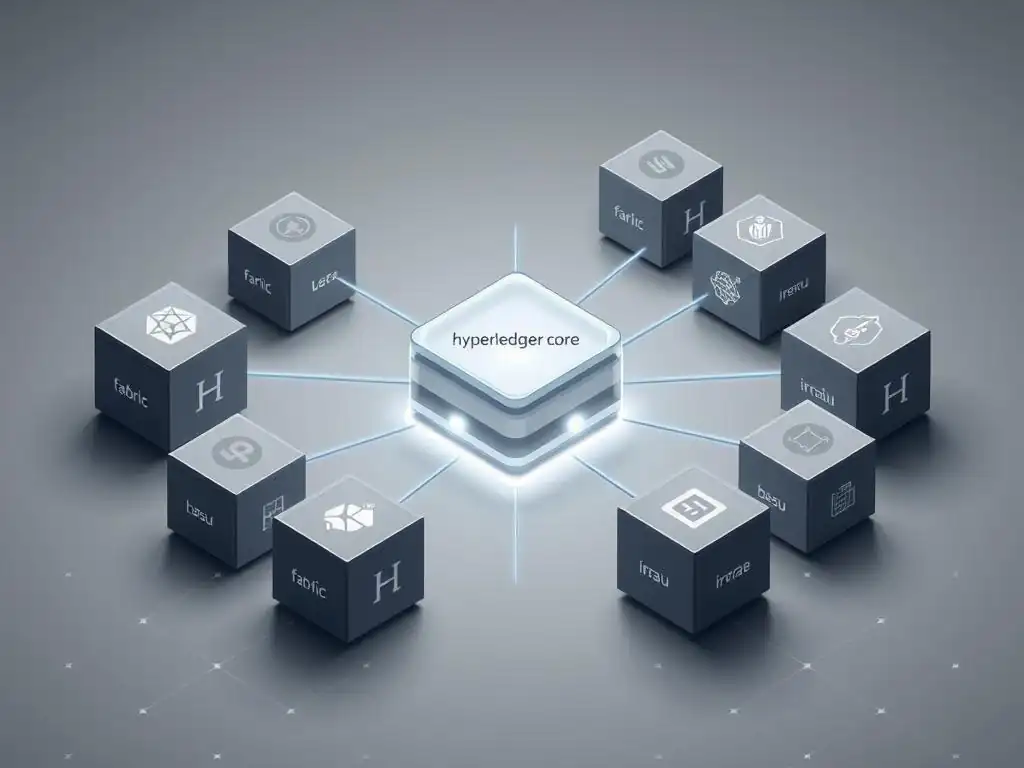
Hyperledger Fabric: Customizable Components for Enterprise Networks
Hyperledger Fabric is arguably the most widely adopted framework within the Hyperledger ecosystem, known for its highly modular and customizable architecture. Fabric is specifically designed for building enterprise-grade permissioned blockchain networks, offering a rich set of configurable components that allow businesses to tailor their blockchain solutions to a wide range of use cases. Its modularity is not just a design principle; it is deeply embedded in its architecture, making it a powerful platform for creating bespoke blockchain networks.
The modularity of Hyperledger Fabric is evident in its key components, including: pluggable consensus mechanisms, allowing for the selection of algorithms like Raft, Kafka, or BFT-based solutions; flexible membership service providers (MSPs), enabling integration with various identity management systems and customizable access control policies; interchangeable state databases, supporting options like LevelDB and CouchDB for different data storage needs; and modular chaincode execution environments, supporting multiple programming languages like Go, Node.js, and Java. This component-based architecture allows developers to pick and choose the modules that best suit their requirements, optimizing their Fabric network for performance, security, and scalability.
For example, enterprises can start with a Raft-based consensus for a smaller network and later transition to a more robust BFT-based algorithm as their network grows and security needs evolve. The customizable nature of Fabric makes it a versatile and future-proof platform for enterprise blockchain innovation.
Hyperledger Besu: Flexibility for Permissioned Ethereum Networks
Hyperledger Besu stands out as a unique framework within Hyperledger, being an enterprise-grade, permissioned Ethereum client. While rooted in Ethereum technology, Besu is designed with modularity and enterprise needs in mind. It offers a flexible architecture that allows businesses to build permissioned blockchain networks compatible with the Ethereum ecosystem, while also providing customization options for enterprise-specific requirements. This "flexibility for permissioned Ethereum networks" makes Besu an attractive option for organizations wanting to leverage the vast Ethereum developer community and toolset within a controlled and customizable environment.
Besu's modularity is reflected in its architecture, which includes: pluggable consensus algorithms, supporting options like Proof-of-Authority (PoA) and IBFT 2.0, suitable for permissioned networks; flexible smart contract execution environments, compatible with the Ethereum Virtual Machine (EVM) and supporting Solidity smart contracts; customizable privacy features, including transaction privacy using technologies like Orion; and modular monitoring and logging capabilities, allowing for integration with enterprise monitoring tools. This modular design allows businesses to tailor their Besu networks to their specific needs.
For instance, enterprises can choose a PoA consensus mechanism for a consortium network and implement privacy features to protect sensitive data within the Ethereum-compatible environment. Besu's modularity bridges the gap between the public Ethereum ecosystem and the specific requirements of enterprise blockchain deployments.
Hyperledger Sawtooth: Dynamic Consensus Mechanisms
Hyperledger Sawtooth is another prominent framework within Hyperledger, distinguished by its innovative approach to consensus and its emphasis on dynamic consensus mechanisms. Sawtooth's modular architecture is particularly focused on providing flexibility in consensus algorithms, allowing networks to adapt and evolve their consensus protocols over time. This "dynamic consensus mechanisms" capability makes Sawtooth a compelling option for scenarios where consensus requirements might change or where different parts of the network might benefit from different consensus algorithms.
Sawtooth's modularity is centered around its pluggable consensus engine, which allows for the implementation of various consensus algorithms, including Proof of Elapsed Time (PoET) and Simplified Byzantine Fault Tolerance (SBFT). PoET, in particular, is designed to be fair and energy-efficient, while SBFT provides Byzantine fault tolerance. Sawtooth's architecture also supports dynamic consensus algorithm selection, meaning different transaction families (applications) within the same Sawtooth network can use different consensus mechanisms.
This fine-grained control over consensus allows for optimization based on application requirements and network conditions. Furthermore, Sawtooth's modularity extends to its transaction processors, which handle the execution of smart contracts and can be written in various languages like Python and Go. The dynamic and modular nature of Sawtooth's consensus engine provides a unique level of adaptability and control for enterprise blockchain networks, especially in complex or evolving environments.
Implementing Customizations: A Practical Guide
Planning Your Customization Strategy
Implementing customizations in Hyperledger requires a strategic approach, starting with careful planning. A well-defined customization strategy is crucial for ensuring that the resulting blockchain solution effectively addresses business needs, remains cost-efficient, and is maintainable over time. This planning phase should involve a thorough assessment of business requirements, technical constraints, and long-term objectives. Without a clear strategy, customizations can become ad-hoc, leading to increased complexity, security vulnerabilities, and difficulty in managing the blockchain network.
The first step in planning your customization strategy is to clearly define your business objectives for implementing blockchain. What specific problems are you trying to solve? What outcomes are you hoping to achieve? Once the objectives are clear, identify the specific requirements for your blockchain solution. This includes defining the functional requirements (e.g., transaction types, data management needs), non-functional requirements (e.g., performance, scalability, security), and regulatory compliance requirements (e.g., data privacy, industry-specific regulations).
Next, assess your existing IT infrastructure and identify potential integration points and constraints. Consider your team's technical skills and expertise with Hyperledger and blockchain technologies. Finally, develop a phased implementation plan, starting with a proof-of-concept and gradually expanding the network as needed. This iterative approach allows for continuous learning and adaptation as you implement customizations. A well-thought-out customization strategy is the foundation for a successful and sustainable Hyperledger blockchain deployment.
Selecting Modules for Specific Needs
Once you have a clear customization strategy, the next step is selecting the appropriate modules for your specific needs. Hyperledger's modular architecture offers a wide range of choices for consensus mechanisms, membership services, data storage, and other components. Choosing the right modules is critical for optimizing performance, security, and cost-effectiveness. This selection process should be guided by the business requirements and technical constraints identified in the planning phase. A mismatch between selected modules and actual needs can lead to suboptimal performance, security vulnerabilities, or unnecessary complexity.
To effectively select modules, thoroughly understand the characteristics and trade-offs of each available module option. For example, when choosing a consensus mechanism, consider the network size, trust model, performance requirements, and security needs. Raft is suitable for smaller consortium networks with high throughput requirements, while BFT-based algorithms are more appropriate for larger networks requiring Byzantine fault tolerance.
Similarly, when selecting membership services, consider your identity management infrastructure and access control requirements. Evaluate the pros and cons of different state database options like LevelDB and CouchDB based on your data volume and query patterns. Leverage Hyperledger documentation and community resources to gain a deeper understanding of each module's capabilities and limitations.
Consider conducting proof-of-concept testing with different module combinations to evaluate their performance and suitability for your use case. The module selection process should be iterative and data-driven, ensuring that you choose the components that best align with your specific needs and objectives.
Best Practices for Integrating Modules
Integrating customized modules into a Hyperledger network requires adherence to best practices to ensure stability, security, and maintainability. While Hyperledger's modular architecture promotes flexibility, improper integration can lead to compatibility issues, performance bottlenecks, and security vulnerabilities. Following established best practices is essential for building robust and reliable customized blockchain solutions. These best practices encompass development, testing, deployment, and ongoing maintenance.
During development, adhere to Hyperledger's API specifications and interface guidelines when implementing custom modules. Ensure that custom modules are well-documented and follow coding standards for readability and maintainability. Conduct thorough unit testing and integration testing of custom modules to identify and resolve any bugs or compatibility issues early in the development cycle. Before deployment, perform performance testing and security audits of the integrated system to validate its performance under load and identify any potential security vulnerabilities. For deployment, follow Hyperledger's recommended deployment architectures and configurations. Implement robust monitoring and logging to track the performance and health of the customized network. Establish version control and change management processes for managing module updates and customizations. Finally, engage with the Hyperledger community for support, best practices, and knowledge sharing. By following these best practices for module integration, enterprises can build customized Hyperledger solutions that are secure, scalable, and maintainable over the long term.
The Future of Hyperledger and its Modular Architecture
Emerging Trends in Enterprise Blockchain
The enterprise blockchain landscape is constantly evolving, driven by emerging trends and technological advancements. Understanding these trends is crucial for businesses planning their blockchain strategies and leveraging platforms like Hyperledger effectively. Several key trends are shaping the future of enterprise blockchain, including increased focus on interoperability, growing demand for privacy-preserving technologies, and the rise of hybrid blockchain solutions. These trends are pushing blockchain platforms to become even more flexible, customizable, and enterprise-ready.
Interoperability is becoming increasingly important as enterprises seek to connect different blockchain networks and integrate with existing systems. Cross-chain communication and data exchange are essential for realizing the full potential of blockchain in complex business ecosystems. Privacy-preserving technologies, such as zero-knowledge proofs and secure multi-party computation, are gaining traction as enterprises grapple with data privacy regulations and the need to protect sensitive information on blockchain networks.
Hybrid blockchain solutions, combining the benefits of public and private blockchains, are emerging as a way to balance transparency and control. Furthermore, sustainability and energy efficiency are becoming critical considerations, driving demand for more environmentally friendly consensus mechanisms and blockchain architectures. Hyperledger, with its modular architecture and open-source nature, is well-positioned to adapt to these emerging trends and continue to be a leading platform for enterprise blockchain innovation.
Hyperledger's Role in Blockchain Adoption
Hyperledger plays a pivotal role in driving blockchain adoption across various industries. Its open-source, enterprise-focused approach, coupled with its modular architecture, makes it a compelling platform for businesses seeking to leverage blockchain technology for real-world applications. Hyperledger's commitment to collaboration, innovation, and community building fosters a vibrant ecosystem that accelerates the development and deployment of enterprise blockchain solutions. As blockchain technology matures and adoption expands, Hyperledger's role in the ecosystem is set to become even more significant.
Hyperledger's modular architecture directly addresses the diverse needs of enterprises, enabling them to build customized blockchain solutions that are tailored to their specific requirements. Its open-source nature promotes transparency, collaboration, and innovation, attracting a large community of developers, contributors, and adopters. Hyperledger's focus on enterprise-grade features, such as security, scalability, and interoperability, makes it a trusted platform for businesses operating in regulated industries.
The Hyperledger Foundation's collaborative model brings together industry leaders, technology providers, and end-users to drive the evolution of blockchain technology and foster its adoption. Looking ahead, Hyperledger is expected to continue to be a driving force in enterprise blockchain adoption, empowering businesses to innovate, transform their operations, and unlock the full potential of distributed ledger technology.
Conclusion: Embracing Hyperledger's Modular Design for Innovation
Key Takeaways on Hyperledger Customization Benefits
Hyperledger's modular architecture stands as a testament to the power of flexible design in addressing the diverse and evolving needs of enterprise blockchain adoption. Its core strength lies in empowering businesses with unparalleled customization capabilities, allowing them to build blockchain solutions that are not only technically robust but also strategically aligned with their unique business objectives. The benefits of embracing Hyperledger's modular design are manifold, spanning adaptability, cost optimization, enhanced security, and streamlined integration.
Adaptability is paramount, enabling enterprises to tailor blockchain networks to specific industry regulations, operational contexts, and evolving business requirements. Cost optimization is achieved through targeted module selection, avoiding unnecessary features and reducing infrastructure overhead. Enhanced security and control are realized through granular customization of security modules and access control mechanisms.
Streamlined integration with existing systems is facilitated by modularity and interoperability features, reducing complexity and accelerating adoption. By embracing Hyperledger's modular design, businesses can unlock a new era of blockchain innovation, building bespoke solutions that drive efficiency, transparency, and transformative change across industries. The future of enterprise blockchain is undoubtedly intertwined with the continued evolution and adoption of modular platforms like Hyperledger, paving the way for a more decentralized, secure, and interconnected business world.
Frequently Asked Questions
What is Hyperledger's modular architecture?
Hyperledger's modular architecture refers to its design that allows developers to choose and integrate specific components based on their needs. This plug-and-play approach contrasts with monolithic systems.
How does Hyperledger's modularity benefit enterprise customization?
Modularity enables enterprises to tailor Hyperledger to their specific requirements. They can select and customize only the necessary modules, reducing complexity and improving performance. This leads to more efficient and targeted solutions.
What are some examples of customizable modules in Hyperledger?
Examples include the consensus mechanism (e.g., Raft, Kafka), membership service provider (MSP), and data storage options. Enterprises can choose the most suitable modules for their use case.
What are the potential cost savings associated with Hyperledger's modular architecture?
By only implementing necessary modules, enterprises can reduce development and maintenance costs. The modular design allows for targeted resource allocation and avoids unnecessary overhead.
How does Hyperledger's modularity impact scalability and performance?
The ability to optimize and selectively deploy modules enhances scalability. By focusing on relevant components, enterprises can improve overall system performance and handle increased transaction volumes more effectively.
Final Reflection: Embracing the Power of Modular Blockchain
The exploration of Hyperledger's modular architecture reveals more than just technical specifications; it highlights the critical need for adaptable and customizable blockchain solutions in today's rapidly evolving enterprise landscape. The ability to tailor blockchain networks to specific business requirements, as demonstrated by Hyperledger's design, is no longer a luxury but a necessity for organizations seeking to leverage the technology's full potential and gain a competitive edge.
The impact of this modularity extends far beyond mere technical convenience. It shapes the very way businesses approach blockchain adoption, fostering innovation and enabling the creation of truly bespoke solutions. Witnessing the evolution of blockchain from a monolithic concept to a collection of interchangeable components underscores the importance of adaptability in the face of technological advancement. The measure of intelligence is the ability to change.
- Albert Einstein. This quote perfectly encapsulates the essence of Hyperledger's modularity: its inherent capacity to evolve and adapt to the ever-changing needs of the enterprise.
As we conclude this exploration, I invite you to consider the implications of modular design in your own endeavors. How can you embrace flexibility and customization to create solutions that are not only effective today but also resilient and adaptable for the challenges of tomorrow? Let the principles of Hyperledger's modular architecture inspire you to build systems that are not just functional, but truly transformative.
Unleash Your Blockchain Potential with Hyperledger!
Thank you for exploring Hyperledger's modular architecture and discovering how it can transform your enterprise solutions. You've gained insights into the power of customization and flexibility within blockchain technology. Are you ready to put that knowledge into practice?
Here are some steps to get you started:
- Develop a prototype of a tailored Hyperledger solution that addresses your specific business needs. Start small, experiment, and learn from the process. This approach will help you understand the true potential of its flexibility.
- Explore Hyperledger's comprehensive documentation and active community resources to uncover lesser-known modules and explore how they can be applied to your unique business challenges.
- Share this article with your colleagues and engage in online forums to discuss innovative ways to leverage Hyperledger's modular design.
What unique challenge are you eager to solve with Hyperledger's adaptable framework, and which modules will you explore first?
Leave a Reply