
The Power of Distributed Ledgers: Driving Financial Inclusion Through Blockchain Technology


Welcome to Blockchain Trends, your gateway to understanding the revolutionary impact of blockchain technology beyond the headlines.
Are you ready to discover how distributed ledgers are transforming lives? Our latest article delves into the fascinating realm of blockchain financial inclusion opportunities, revealing how this technology is empowering underserved communities and reshaping the financial landscape. Uncover the potential, explore the challenges, and join us as we navigate the future of decentralized systems and their power to create a more equitable world. Read on to learn more and see how blockchain is breaking down barriers.
The Power of Distributed Ledgers: Driving Financial Inclusion Through Blockchain Technology
- Introduction: Unlocking Blockchain Financial Inclusion Opportunities
- Blockchain's Role in Expanding Financial Access
- Key Applications of Blockchain for Financial Inclusion
- Use Cases: Blockchain Driving Financial Inclusion in Kenya
- Overcoming the Challenges to Blockchain Adoption for Financial Inclusion
- The Future of Financial Inclusion Through Blockchain Technology
- Conclusion: Realizing the Potential of Blockchain for Inclusive Financial Systems
-
Frequently Asked Questions
- How can blockchain technology specifically contribute to financial inclusion?
- What are some key "Blockchain financial inclusion opportunities" being explored right now?
- How does blockchain help mitigate the risks associated with lending to individuals with limited credit history?
- What role does regulation play in fostering or hindering the growth of blockchain-based financial inclusion?
- Beyond just access to finance, what other benefits can blockchain bring to financially excluded communities?
- Final Reflection: Embracing Blockchain's Inclusive Potential
- Ignite Financial Empowerment: Join the Blockchain Revolution!
Introduction: Unlocking Blockchain Financial Inclusion Opportunities
The Promise of Blockchain Technology for Underserved Communities
Globally, an estimated 1.7 billion adults remain outside the formal financial system, lacking access to basic services like bank accounts, credit, and insurance. This financial exclusion disproportionately affects vulnerable populations in developing countries, trapping them in cycles of poverty and limiting economic participation. Traditional financial infrastructure often requires significant capital investment, struggles with identity verification in areas without formal records, and imposes high transaction costs, particularly for small amounts or cross-border transfers. These barriers create a significant gap, preventing billions from accessing the tools needed to save, invest, build credit, and protect against risks.
Blockchain technology, with its inherent characteristics of decentralization, transparency, security through cryptography, and peer-to-peer transaction capabilities, offers a compelling potential solution to these long-standing challenges. By removing the need for costly intermediaries and providing a secure, immutable ledger for recording transactions and identities, blockchain presents unique blockchain financial inclusion opportunities. It can drastically lower the cost of providing financial services, reach individuals in remote areas without physical branches, and enable the creation of new, accessible financial products tailored to the needs of the unbanked and underbanked. Exploring these possibilities is crucial for unlocking economic potential worldwide.
Understanding Financial Inclusion: Bridging the Gap
Financial inclusion means that individuals and businesses have access to useful and affordable financial products and services—transactions, payments, savings, credit, and insurance—delivered in a responsible and sustainable way. It is not just about having a bank account; it's about the ability to use financial services effectively to manage money, cope with financial shocks, invest in opportunities, and improve overall quality of life. For instance, access to savings mechanisms allows individuals to build reserves for emergencies, while access to credit can enable small business owners to expand operations or farmers to purchase necessary supplies.
The lack of financial inclusion is a major impediment to economic development and poverty reduction. When people are excluded, they often rely on informal, expensive, or insecure methods for managing their finances, such as storing cash at home or using high-cost money lenders. Bridging this gap requires innovative approaches that can overcome the infrastructure, cost, and trust barriers inherent in traditional systems. Blockchain technology is increasingly recognized as a powerful enabler in this regard, offering a pathway to create more accessible, affordable, and secure financial systems, thereby expanding blockchain financial inclusion opportunities for those previously left behind.
Blockchain's Role in Expanding Financial Access
Reducing Barriers to Entry in Traditional Finance with Blockchain
Traditional financial systems often impose significant barriers that exclude low-income individuals and those in remote areas. These include requirements for formal identification documents, minimum account balances, proof of address, and physical presence at bank branches. The cost of building and maintaining traditional banking infrastructure, especially in sparsely populated or hard-to-reach regions, makes it economically unviable for banks to serve these populations. Furthermore, the fees associated with small transactions or maintaining accounts can be prohibitive for those with limited income, effectively pricing them out of the system.
Blockchain technology inherently reduces many of these barriers. Decentralized identity solutions built on blockchain can provide individuals with a secure, verifiable digital identity that doesn't rely on government-issued documents or traditional credit history, making it easier to access services. Peer-to-peer transaction capabilities bypass costly intermediary networks, significantly lowering fees for payments and transfers.
Furthermore, blockchain platforms can operate without physical branches, requiring only a mobile device and internet connection (or even offline solutions in some cases), drastically reducing the infrastructure costs associated with reaching underserved populations. This direct approach unlocks substantial blockchain financial inclusion opportunities by making services more accessible and affordable.
How Distributed Ledgers Enable Secure and Transparent Transactions
The security and transparency features of distributed ledgers are foundational to their potential in driving financial inclusion. Every transaction recorded on a blockchain is cryptographically secured and linked to the previous one, creating an immutable chain. Once a transaction is confirmed, it is extremely difficult, if not impossible, to alter or delete it. This immutability provides a high level of security and trust, as users can be confident that their transaction history is accurate and tamper-proof. This is particularly valuable in environments where trust in traditional institutions may be low or where records are prone to loss or manipulation.
Transparency is another key feature. While not all blockchains are public (private or permissioned blockchains exist), public blockchains allow anyone to view the ledger and verify transactions. This transparency, often coupled with pseudonymity (users are identified by wallet addresses, not personal names on the public ledger), allows for oversight and reduces opportunities for corruption or fraud compared to opaque traditional systems.
For individuals and businesses, this means greater confidence in the financial system. Knowing that transactions are securely recorded and verifiable builds trust, which is essential for widespread adoption of financial services and for realizing the full scope of blockchain financial inclusion opportunities.
Key Applications of Blockchain for Financial Inclusion
Blockchain-Based Microfinance Platforms: Empowering Small Businesses
Microfinance plays a crucial role in providing small loans and financial services to low-income individuals and micro-enterprises that lack access to traditional banking. However, traditional microfinance models often face challenges, including high operational costs, difficulty in assessing creditworthiness for borrowers without formal records, and limited scalability. Interest rates can also be high due to the costs associated with managing numerous small loans. These factors can limit the reach and effectiveness of microfinance initiatives.
Blockchain technology offers innovative solutions to these challenges. By using distributed ledgers, microfinance platforms can create transparent and immutable records of loan disbursements and repayments. Smart contracts can automate parts of the loan process, reducing administrative overhead and potentially lowering interest rates.
Decentralized identity and reputation systems built on blockchain can help assess creditworthiness based on alternative data or group lending dynamics, even without traditional credit scores. Platforms like these can connect borrowers directly with lenders globally, opening up new sources of capital and empowering small businesses and entrepreneurs with accessible and affordable financing – a significant area for blockchain financial inclusion opportunities.
Decentralized Identity Solutions: Providing Access to Financial Services
A fundamental barrier to accessing financial services for billions is the lack of formal identification. Without government-issued IDs, individuals cannot open bank accounts, receive remittances through formal channels, or access credit. This lack of verifiable identity keeps them locked out of the formal economy and limits their participation in financial markets. Creating and managing traditional identity systems is also costly and challenging, particularly in developing regions.
Decentralized Identity (DID) solutions built on blockchain technology offer a promising alternative. In a DID model, users own and control their digital identities. Verifiable credentials (like proof of address, professional qualifications, or even transaction history) issued by trusted parties can be stored securely and privately, often on a blockchain or linked to it.
Users can then selectively share these verified credentials with financial service providers without revealing excessive personal information. This empowers individuals with a portable, secure, and verifiable digital identity, enabling them to prove who they are and access essential services like opening accounts, getting loans, or receiving payments, thereby unlocking critical blockchain financial inclusion opportunities.
Streamlining Remittances with Blockchain: Lowering Costs and Increasing Efficiency
Remittances, money sent by migrant workers back to their home countries, are a lifeline for millions of families in developing nations. However, sending money across borders using traditional methods (like money transfer operators or banks) is often expensive and slow. Fees can consume a significant portion of the sent amount, sometimes exceeding 7-10%, and transfers can take several days to settle. These costs reduce the effective income received by families and limit their ability to use the funds efficiently.
Blockchain technology can dramatically streamline the remittance process. By facilitating peer-to-peer transfers and bypassing traditional correspondent banking networks, blockchain-based remittance services can offer significantly lower transaction fees, often reduced to a fraction of a percentage point or a small flat fee. Transfer speeds can also be accelerated from days to minutes or even seconds, depending on the network used. This efficiency and cost reduction mean that more money reaches the intended recipients, providing immediate financial relief and increasing the economic impact of remittances. This application represents one of the most tangible and impactful blockchain financial inclusion opportunities available today.
Blockchain for Insurance: Protecting Vulnerable Populations
Access to affordable insurance is crucial for vulnerable populations to manage risks related to health, crops, property, and natural disasters. However, traditional insurance models often struggle to serve low-income communities. Premiums can be too high, policy terms complex, claims processes opaque and slow, and reaching remote populations for sales and claims adjustment is costly. As a result, many go without this essential safety net, making them highly susceptible to financial ruin from unexpected events.
Blockchain technology, particularly through the use of smart contracts, enables new models for providing insurance, such as parametric insurance. With parametric insurance, payouts are triggered automatically by pre-defined, verifiable events (e.g., rainfall levels falling below a certain threshold for crop insurance, or an earthquake of a specific magnitude). This removes the need for lengthy claims assessment processes, making payouts faster and more transparent.
Blockchain can also facilitate peer-to-peer insurance pools or microinsurance schemes with lower administrative costs and increased transparency regarding premium usage and payouts. These innovations provide a more accessible and trustworthy way for vulnerable populations to protect themselves against risks, expanding blockchain financial inclusion opportunities in the realm of risk management.
Use Cases: Blockchain Driving Financial Inclusion in Kenya
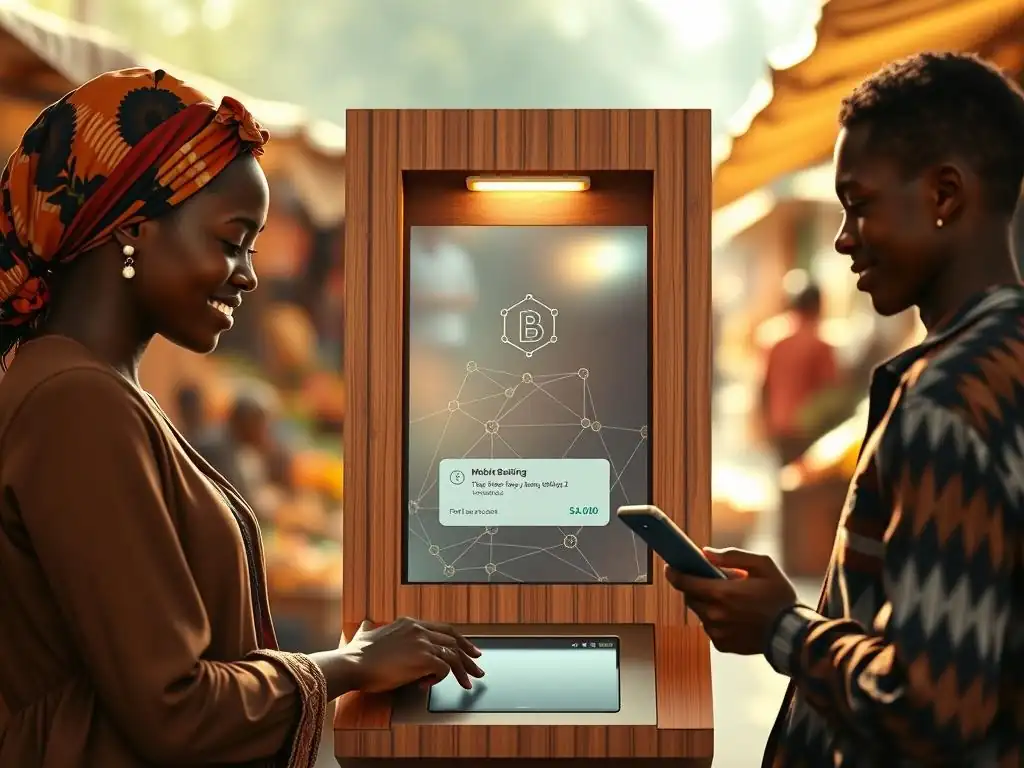
Case Study 1: BitPesa - Facilitating Cross-Border Payments for Businesses
BitPesa, which was later acquired by Valereum, was a pioneering company in utilizing blockchain technology to improve cross-border payments in Africa. Founded in Nairobi, Kenya, BitPesa initially focused on using Bitcoin as a rail to transfer value across different African currencies and internationally. The traditional process for businesses sending money across African borders involved multiple correspondent banks, leading to high fees, unfavorable exchange rates, and significant delays, often taking several days for funds to arrive.
BitPesa's blockchain-powered platform allowed businesses to send and receive payments more quickly and at a lower cost than traditional methods. By converting local currency to cryptocurrency (initially Bitcoin) for transfer and then converting it back to the destination local currency, they bypassed the complex and expensive traditional banking routes. This enabled small and medium-sized enterprises (SMEs) in Kenya and other African countries to engage more effectively in regional and international trade, improving their cash flow and competitiveness. This demonstrated a clear and practical application of blockchain financial inclusion opportunities for the business sector.
Case Study 2: Twiga Foods - Providing Access to Finance for Farmers
Twiga Foods is a mobile-based supply platform in Kenya that connects small and medium-sized vendors with fair-priced, high-quality produce from farmers. A significant challenge for many smallholder farmers in Kenya is accessing formal credit or financial services because they lack traditional collateral, formal business records, or credit histories required by banks. This limits their ability to invest in better seeds, fertilizers, or equipment needed to increase yields and improve their livelihoods.
Twiga Foods has explored leveraging the data generated on its platform to address this financial exclusion. By recording farmers' consistent supply history and transaction data on the platform (potentially using blockchain or similar distributed ledger technology for verification and immutability), they can build a digital footprint for these farmers. This verifiable transaction history serves as an alternative form of creditworthiness assessment.
Based on this data, Twiga, or partners integrated with their platform, can offer farmers access to short-term credit, input financing, or other financial products, directly linked to their participation in the supply chain. This innovative approach uses technology to unlock financial services for a historically underserved group, showcasing further blockchain financial inclusion opportunities.
Overcoming the Challenges to Blockchain Adoption for Financial Inclusion
Regulatory Hurdles and Compliance Issues
Despite the immense potential, the widespread adoption of blockchain for financial inclusion faces significant regulatory challenges. Many countries lack clear legal and regulatory frameworks specifically addressing cryptocurrencies, stablecoins, and other blockchain-based financial instruments. This uncertainty creates risks for both service providers and users. Financial service providers using blockchain must also navigate existing regulations, such as Know Your Customer (KYC) and Anti-Money Laundering (AML) rules, which were designed for traditional systems and can be difficult to apply directly to decentralized or pseudonymous blockchain environments.
Developing appropriate regulations is crucial for fostering trust and enabling scale. Regulations need to protect consumers, prevent illicit activities, and ensure financial stability without stifling innovation. Finding the right balance is complex, often requiring collaboration between regulators, technology experts, and financial service providers. The lack of international regulatory harmonization further complicates cross-border blockchain financial inclusion initiatives. Addressing these hurdles through clear, risk-based, and innovation-friendly policies is essential for unlocking the full potential of blockchain financial inclusion opportunities.
Addressing Scalability and Interoperability Concerns
While blockchain technology offers many advantages, some networks face technical limitations that can hinder their use for mass-market financial services. Scalability is a key concern; some public blockchains can only process a limited number of transactions per second compared to traditional payment networks like Visa, which handle thousands. High transaction fees and slow confirmation times can also become issues on some networks during peak usage, making them less suitable for frequent, low-value transactions common in financial inclusion contexts.
Interoperability, the ability for different blockchain networks and traditional financial systems to communicate and exchange value seamlessly, is another challenge. For blockchain financial inclusion solutions to be truly effective, they need to interact with existing infrastructure, such as mobile money networks, bank accounts, and identity databases. Significant research and development are underway to address these issues through solutions like layer-2 scaling protocols, sharding, and cross-chain bridges. Improving scalability and interoperability is vital for building robust and connected financial ecosystems that can deliver blockchain financial inclusion opportunities at scale.
Ensuring Digital Literacy and Accessibility
Access to technology and the knowledge to use it effectively remain significant barriers in many underserved communities. While mobile phone penetration is high in many developing regions, consistent internet access, particularly reliable broadband, is not universal. Furthermore, using blockchain-based applications, which often involve managing private keys or navigating digital wallets, requires a certain level of digital literacy that may not be present among target populations. Complex interfaces and technical jargon can deter potential users.
Overcoming these challenges requires more than just building the technology. It necessitates a strong focus on user-centric design, creating simple, intuitive interfaces tailored for mobile devices and potentially for low-bandwidth environments. Equally important are comprehensive education and training programs to build digital literacy and financial awareness among potential users. This includes teaching them how to use digital wallets securely, understand transaction details, and protect themselves from scams. Ensuring accessibility and usability is paramount to translating the potential of blockchain financial inclusion opportunities into tangible benefits for marginalized groups.
The Importance of Data Privacy and Security in Blockchain Financial Solutions
While blockchain offers transparency and immutability, which can enhance security, concerns around data privacy persist, especially when handling sensitive financial information. Public blockchains, by design, record transactions visible to anyone, which might not be suitable for all types of financial data or meet privacy regulations like GDPR in certain contexts. Ensuring the security of users' digital assets and personal information is also paramount; losing a private key can mean irreversible loss of funds, and users in financially excluded communities may be particularly vulnerable to phishing attacks or scams.
Developing blockchain financial inclusion solutions requires careful consideration of privacy-enhancing technologies, such as zero-knowledge proofs or the use of permissioned ledgers where appropriate, to balance transparency with the need for confidentiality. Robust security measures must be built into applications, and user education on best practices for securing wallets and private keys is critical. Building trust in these new systems depends heavily on the ability to protect users' data and assets from breaches or loss, reinforcing the need for strong security frameworks to support blockchain financial inclusion opportunities.
The Future of Financial Inclusion Through Blockchain Technology
Emerging Trends in Blockchain-Based Financial Services
The landscape of blockchain-based financial services is rapidly evolving, driven by innovation aimed at improving usability, scalability, and regulatory compliance. One significant trend is the increasing use of stablecoins, cryptocurrencies pegged to stable assets like the US dollar, which mitigate the volatility risks associated with traditional cryptocurrencies. Stablecoins are proving particularly useful for payments, remittances, and savings, offering a more reliable store of value than volatile national currencies in some regions.
Another trend is the tokenization of real-world assets, such as real estate or commodities, into digital tokens on a blockchain. This could potentially lower the barrier to entry for investment, allowing individuals to own fractional shares of valuable assets with small amounts of capital, opening up new blockchain financial inclusion opportunities.
Furthermore, there is a growing focus on developing mobile-first blockchain applications with user-friendly interfaces designed specifically for populations with limited digital literacy or access to high-end devices. These applications are simplifying complex blockchain interactions, making it easier for users to send/receive payments, access loans, or purchase insurance. Innovations in scalability solutions, like layer-2 networks, are also making blockchain transactions faster and cheaper, addressing key limitations for mass adoption. These emerging trends are paving the way for more practical and accessible blockchain financial inclusion solutions.
The Potential of DeFi for Inclusive Finance
Decentralized Finance (DeFi) refers to a suite of financial applications built on blockchain (primarily Ethereum currently) that aim to replicate traditional financial services like lending, borrowing, trading, and asset management without relying on intermediaries like banks. DeFi protocols operate through smart contracts, accessible to anyone with an internet connection and a compatible digital wallet, regardless of their location, income level, or credit history (though collateral is often required for lending). This permissionless nature presents a radical potential for inclusive finance.
While DeFi is still nascent and carries significant risks (volatility, smart contract bugs, complexity), its underlying principles could offer powerful blockchain financial inclusion opportunities. For instance, decentralized lending protocols could potentially offer more competitive interest rates than traditional lenders. Yield farming and staking could provide alternative ways for individuals to earn passive income on their digital assets. As DeFi infrastructure matures, becomes more user-friendly, and addresses current risks, it could provide a global, open financial system accessible to billions, offering services previously available only through traditional institutions.
Collaborations and Partnerships for Scalable Impact
Achieving widespread financial inclusion through blockchain technology requires more than just technological innovation; it necessitates robust collaboration among various stakeholders. No single entity can solve the complex challenges of financial exclusion alone. Partnerships between blockchain companies developing the technology, local financial institutions, mobile network operators (which often have extensive reach in developing regions), non-governmental organizations (NGOs) working on the ground, and government bodies are crucial for scaling initiatives.
These collaborations can leverage the strengths of each party: blockchain companies provide the technology, local partners offer market knowledge and trust, mobile operators provide infrastructure and distribution channels, and NGOs facilitate community engagement and education. Governments play a vital role in creating supportive regulatory environments. Successful blockchain financial inclusion initiatives often involve pilot programs developed in partnership with local communities to ensure solutions are tailored to their specific needs and contexts. Such collaborations are essential for building sustainable ecosystems that can deliver and scale blockchain financial inclusion opportunities effectively to those who need them most.
Conclusion: Realizing the Potential of Blockchain for Inclusive Financial Systems
Blockchain's Transformative Power in Bridging the Financial Gap
Blockchain technology holds significant transformative potential in addressing the global challenge of financial exclusion. By offering features such as decentralization, security, transparency, and reduced reliance on intermediaries, distributed ledgers provide a compelling alternative to traditional financial infrastructure that has historically failed to reach billions of people. From lowering the cost and increasing the speed of remittances to enabling accessible microfinance, secure digital identity, and innovative insurance products, blockchain is creating new pathways for individuals and small businesses in underserved communities to access essential financial services.
The use cases highlighted, such as improving cross-border payments for businesses and providing credit access to farmers through verifiable transaction histories, demonstrate that blockchain financial inclusion opportunities are not merely theoretical but are being realized in practice. These applications are helping to dismantle the barriers of cost, distance, and lack of identity that have long prevented economic participation for marginalized populations. The technology is proving to be a powerful tool in building more open, efficient, and inclusive financial systems.
The Road Ahead: Scaling and Sustaining Blockchain Financial Inclusion Initiatives
While the potential of blockchain for financial inclusion is clear and early successes are promising, realizing this potential at scale requires overcoming significant hurdles. Addressing regulatory uncertainty, improving the scalability and interoperability of blockchain networks, enhancing digital literacy, and ensuring robust data privacy and security are critical challenges that need continuous effort and innovation. The future success of blockchain financial inclusion initiatives depends on developing user-friendly, accessible, and secure solutions that are genuinely tailored to the needs and contexts of the target populations.
The path forward involves continued technological advancement, particularly in areas like stablecoins, tokenization, and DeFi, while simultaneously focusing on education, infrastructure development, and supportive regulatory frameworks. Crucially, it requires sustained collaboration between technology providers, governments, NGOs, and local communities. By working together, stakeholders can build trust, facilitate adoption, and ensure that the blockchain financial inclusion opportunities identified are translated into sustainable, impactful financial systems that empower individuals and foster economic development globally. The journey to a truly inclusive financial world is ongoing, with blockchain poised to play a pivotal role.
Frequently Asked Questions
How can blockchain technology specifically contribute to financial inclusion?
Blockchain offers secure and transparent platforms for digital identity and payment systems, enabling access to financial services for the unbanked and underbanked populations who often lack traditional documentation.
What are some key "Blockchain financial inclusion opportunities" being explored right now?
Current opportunities include decentralized lending platforms, microfinance solutions, and cross-border remittance services that bypass traditional banking infrastructure, reducing costs and increasing accessibility.
How does blockchain help mitigate the risks associated with lending to individuals with limited credit history?
Blockchain can create immutable records of transactions and alternative credit scores based on on-chain activity, allowing lenders to assess risk more accurately and offer tailored financial products.
What role does regulation play in fostering or hindering the growth of blockchain-based financial inclusion?
Clear and supportive regulations are crucial for establishing trust and legitimacy, encouraging innovation, and protecting consumers. Uncertainty or overly restrictive regulations can stifle development and adoption.
Beyond just access to finance, what other benefits can blockchain bring to financially excluded communities?
Blockchain can facilitate secure land registries, supply chain transparency, and direct access to markets, empowering communities and fostering economic growth beyond just traditional banking services.
Final Reflection: Embracing Blockchain's Inclusive Potential
The exploration of distributed ledgers and their capacity to foster financial inclusion culminates in a crucial realization: blockchain technology represents a tangible pathway to democratizing access to financial services for billions worldwide. This isn't merely a technological advancement; it's a paradigm shift that challenges traditional financial structures and offers a more equitable landscape for those historically marginalized.
The transformative power of blockchain in this context extends far beyond simple transactions. It's about building trust, reducing costs, and empowering individuals with greater control over their financial lives. Witnessing the nascent stages of this revolution fills me with hope, knowing that the potential for positive change is immense. The future of finance is decentralized, and it's coming faster than most people realize.
- Andreas Antonopoulos. This quote encapsulates the urgency and the profound implications of embracing blockchain for financial inclusion.
Now, as we stand at the cusp of this technological revolution, let us not be passive observers. Let us actively explore, innovate, and advocate for the responsible implementation of blockchain solutions. Consider how you can contribute to this movement, whether through supporting blockchain-based initiatives, educating others about its potential, or simply embracing a more open and inclusive financial mindset. The power to shape a more equitable financial future lies within each of us.
Ignite Financial Empowerment: Join the Blockchain Revolution!
Thank you for exploring how distributed ledgers are transforming access to financial services. Now that you've discovered the potential of blockchain technology, it's time to take action and become part of the movement!
Here's how you can contribute:
- Explore the Decentralized Finance (DeFi) ecosystem. Begin by researching lending platforms built on blockchain and find ways to support accessible financial services. This is a crucial first step toward understanding real-world applications.
- Share your knowledge. Educate friends and colleagues about how blockchain can promote financial inclusion. Start conversations and challenge misconceptions.
- Support open source projects. Many blockchain initiatives depend on community input. Identify a project focused on expanding financial access and see how you can contribute your skills.
What is one small step you can take today to promote blockchain-enabled financial inclusion in your community?
Leave a Reply