
Navigating the Legal Maze: Understanding the Regulatory Landscape for Social Impact DAOs Globally


Welcome to Blockchain Trends, your compass in the ever-evolving world of decentralized technologies!
Are you ready to decode the complexities surrounding Blockchain DAOs? This article delves into the nuanced and often perplexing Blockchain DAOs regulatory landscape, particularly for those dedicated to social impact. We'll navigate the legal maze, exploring global perspectives and uncovering the challenges and opportunities that lie ahead. Prepare to be informed and intrigued; the future of decentralized governance is unfolding, and understanding its regulatory framework is key.
Navigating the Legal Maze: Understanding the Regulatory Landscape for Social Impact DAOs Globally
- Introduction: The Rise of Social Impact DAOs and the Need for Clarity
- Global Perspectives on DAO Regulation: A Comparative Analysis
-
Key Regulatory Considerations for Social Impact DAOs
- Legal Personhood and Liability: Addressing the Challenges of Decentralized Organizations
- Securities Laws: Determining Whether DAO Tokens Constitute Securities
- Anti-Money Laundering (AML) and Know Your Customer (KYC) Compliance: Obligations for DAOs Handling Funds
- Data Privacy and Protection: GDPR and Similar Regulations Affecting DAOs
- Taxation: Navigating the Complexities of DAO Taxation
- Challenges and Opportunities in the Regulatory Landscape
- Best Practices for Social Impact DAOs: Ensuring Legal Compliance
- Case Studies: Examples of Social Impact DAOs Navigating the Regulatory Landscape
- The Future of DAO Regulation: Trends and Predictions
- Conclusion: Embracing the Regulatory Landscape for Sustainable Growth of Social Impact DAOs
-
Frequently Asked Questions
- How are Social Impact DAOs typically defined and regulated differently from other types of DAOs?
- What are the primary legal challenges faced by Social Impact DAOs operating across multiple jurisdictions?
- What role do regulatory sandboxes play in fostering innovation and compliance within the Social Impact DAO space?
- How can Social Impact DAOs ensure transparency and accountability to their stakeholders, including beneficiaries and regulators?
- What are the potential implications of the evolving Blockchain DAOs regulatory landscape on the future of Social Impact DAOs?
- Final Reflection: Embracing the Future of Impactful Governance
- Unveil Your DAO's Future: Take Action Now!
Social Impact Decentralized Autonomous Organizations (DAOs) represent a burgeoning application of blockchain technology, moving beyond purely financial use cases. These entities leverage decentralized governance structures and blockchain-based mechanisms to pursue social, environmental, or philanthropic goals. Unlike traditional non-profits or corporations, Social Impact DAOs operate through smart contracts and community consensus, aiming for greater transparency, efficiency, and direct participation from stakeholders in decision-making processes related to resource allocation and project execution.
The core idea behind Social Impact DAOs is to align incentives and empower a global community to contribute to positive change. Examples range from funding climate action initiatives and supporting open-source public goods to facilitating decentralized aid distribution and democratizing access to impact investing. This model seeks to overcome some limitations of traditional hierarchical organizations, such as administrative overhead and potential for centralized control, by distributing power and responsibility across a network of participants. Understanding the unique characteristics of these blockchain DAOs is crucial when examining their regulatory landscape.
The Regulatory Vacuum: Challenges in Applying Existing Legal Frameworks to Blockchain DAOs
The rapid evolution of DAOs, especially those focused on social impact, has largely outpaced the development of specific legal and regulatory frameworks. Existing laws designed for traditional corporate structures, partnerships, or non-profits often struggle to accommodate the decentralized, pseudonymous, and code-governed nature of DAOs. This creates a significant regulatory vacuum, leaving participants uncertain about their legal status, liabilities, and compliance obligations.
Applying legacy regulations to blockchain DAOs can lead to ambiguity and potential legal risks. For instance, questions arise regarding legal personhood – is a DAO a legal entity capable of entering contracts or owning assets? Who is liable if a DAO's actions cause harm or violate laws? How do securities regulations apply to governance tokens used within social impact initiatives? This lack of clarity in the blockchain DAOs regulatory landscape poses substantial challenges for these organizations seeking to operate legitimately and scale their impact globally.
Global Perspectives on DAO Regulation: A Comparative Analysis
The United States presents a complex and fragmented regulatory landscape for blockchain DAOs, involving both state-level initiatives and potential federal oversight. Different states are exploring various approaches to accommodate DAOs, while federal agencies like the SEC and CFTC keep a close watch on activities that might fall under their jurisdiction, particularly concerning token classification and financial activities. This dual layer of potential regulation adds significant complexity for DAOs operating within or interacting with the U.S. market.
At the federal level, the primary concern revolves around whether DAO tokens constitute securities under the Howey Test. If a token is deemed a security, the DAO and its participants could face registration requirements and compliance obligations under federal securities laws. The CFTC might also assert jurisdiction if DAO activities involve commodities trading. This uncertainty significantly impacts the operational models and fundraising strategies for many blockchain DAOs, including those focused on social impact.
Wyoming's DAO Law: A Pioneer in Legalizing Decentralized Autonomous Organizations
Wyoming has emerged as a frontrunner in providing a legal framework for DAOs within the U.S. In 2021, the state passed legislation allowing DAOs to register as limited liability companies (LLCs), specifically designating them as "decentralized autonomous organizations." This law, effective from July 1, 2021, provides DAOs with legal personhood, enabling them to enter contracts, own property, and potentially limit the liability of individual members.
The Wyoming DAO LLC structure offers two primary flavors: member-managed or algorithmically-managed. The latter acknowledges the role of smart contracts in governance. While this law provides a potential safe harbor for DAOs seeking legal clarity, it's important to note that federal regulations (like securities laws) still apply, and DAOs registered in Wyoming must still navigate the broader U.S. blockchain DAOs regulatory landscape. As of early 2023, dozens of DAOs had reportedly explored or completed registration under this framework.
Delaware's Approach: Utilizing LLC Structures for DAO Formation
Delaware, a traditional hub for corporate formation in the U.S., has taken a different, more incremental approach compared to Wyoming. Instead of enacting specific DAO legislation, Delaware amended its existing Limited Liability Company Act to explicitly permit the use of distributed ledger technology (DLT) in LLC agreements. This amendment, effective August 1, 2021, allows LLCs to incorporate blockchain-based governance mechanisms, including those characteristic of DAOs, within their operating agreements.
This approach allows DAOs to potentially gain legal recognition by forming as a Delaware LLC, leveraging the state's well-established corporate law framework. While it doesn't create a distinct DAO legal structure like Wyoming's law, it provides flexibility for existing legal entities to adopt decentralized governance. This strategy relies on fitting DAO operations within existing legal definitions, which can be simpler for some organizations but might not fully address the unique challenges of truly decentralized blockchain DAOs.
Federal Securities Laws: Potential Implications for Social Impact DAOs
Federal securities laws, primarily enforced by the Securities and Exchange Commission (SEC), pose a significant challenge for many blockchain DAOs, including those with social impact goals. The core issue is whether governance tokens or other tokens issued by a DAO constitute "investment contracts" under the Howey Test, which defines a security. An investment contract exists if there is (1) an investment of money, (2) in a common enterprise, (3) with an expectation of profits, (4) derived solely from the efforts of others.
While Social Impact DAOs may argue that their tokens are primarily for governance or participation in social initiatives rather than profit-seeking investments, the SEC has taken a broad view of what constitutes an investment contract. The Ooki DAO case, where the SEC pursued enforcement action against the DAO itself for alleged violations of commodities trading laws, highlighted the agency's willingness to target decentralized entities. This creates significant uncertainty and requires careful legal analysis for any Social Impact DAO issuing tokens in the U.S. blockchain DAOs regulatory landscape.
European Union: The Evolving Regulatory Landscape for Blockchain and DAOs
The European Union is actively developing a comprehensive regulatory framework for crypto-assets and related services, which will inevitably impact blockchain DAOs operating within or serving EU residents. The Markets in Crypto-Assets Regulation (MiCA) is the most significant piece of legislation in this regard, aiming to create a harmonized legal environment across all member states. While MiCA primarily focuses on issuers of crypto-assets and crypto-asset service providers, its broad scope means DAOs may fall under certain provisions depending on their activities.
Beyond MiCA, individual EU member states are also grappling with how to address DAOs under their national laws. This leads to a patchwork of approaches, as some countries may try to fit DAOs into existing legal categories like associations or partnerships, while others may await further EU guidance or consider specific legislation. Navigating this multi-layered EU blockchain DAOs regulatory landscape requires careful attention to both supranational and national rules.
MiCA Regulation and its Impact on DAOs Operating in the EU
The Markets in Crypto-Assets Regulation (MiCA), set to become fully applicable in phases starting in late 2024, provides rules for the issuance and trading of various crypto-assets and regulates crypto-asset service providers (CASPs). While DAOs are not explicitly defined or regulated as a distinct category under MiCA, certain activities performed by a DAO or its participants could trigger MiCA requirements. For example, if a DAO issues tokens that qualify as 'utility tokens,' 'asset-referenced tokens,' or 'e-money tokens' under MiCA definitions, the DAO or the entity facilitating the issuance might need to comply with whitepaper requirements or authorization procedures.
Furthermore, if a DAO offers services that fall under the definition of CASP activities (e.g., exchange services, custody, advice), the entity or individuals providing those services on behalf of the DAO could be subject to authorization and prudential requirements. The decentralized nature of DAOs makes assigning responsibility challenging, but regulators are likely to look for identifiable parties who control or significantly influence the DAO's operations. This means Social Impact DAOs involved in token issuance or service provision must analyze their structure and activities against MiCA provisions to ensure compliance within the EU blockchain DAOs regulatory landscape.
National Approaches: Examining Regulations in Germany, France, and other EU Member States
While MiCA provides a degree of harmonization, national legal interpretations and existing laws continue to shape the blockchain DAOs regulatory landscape in individual EU countries. Germany, for instance, has a relatively clear framework for crypto-asset custody and trading under the supervision of BaFin (the Federal Financial Supervisory Authority), but DAOs themselves do not have a specific legal status. They might be treated as partnerships or associations depending on their structure and purpose, which could entail different legal obligations and liabilities.
France has also been proactive in regulating crypto-assets, with the PACTE Act providing a framework for initial coin offerings (ICOs) and digital asset service providers (DASPs). Similar to Germany, DAOs lack explicit legal recognition. French law might view participants in a DAO as members of an association or société (company) depending on the characteristics, potentially subjecting them to corresponding legal requirements. Other member states like Malta and Estonia have shown interest in blockchain technology but have not yet established specific legal frameworks for DAOs, leaving them in a state of legal uncertainty within their national blockchain DAOs regulatory landscape.
Asia-Pacific: A Diverse Regulatory Landscape for Blockchain DAOs
The Asia-Pacific region presents a highly varied approach to blockchain technology and DAOs, ranging from jurisdictions actively fostering innovation with clear guidelines to those maintaining a cautious stance or even imposing restrictions. This diversity reflects different national priorities regarding technological advancement, financial stability, and consumer protection. Social Impact DAOs operating in this region must navigate this complex tapestry of regulations, understanding that what is permissible in one country may be prohibited in another.
Key financial hubs in the region, such as Singapore and Japan, have taken steps to provide clarity for certain aspects of the crypto ecosystem, which indirectly impacts DAOs. Other countries like South Korea are still grappling with how to effectively regulate rapidly evolving decentralized technologies. This fragmented approach means that a DAO with global ambitions must conduct thorough legal due diligence for each specific country within the Asia-Pacific blockchain DAOs regulatory landscape where it intends to operate or interact with users.
Singapore: A Favorable Environment for Blockchain Innovation and DAO Development
Singapore has actively positioned itself as a leading hub for blockchain and crypto innovation in Asia. The Monetary Authority of Singapore (MAS) has implemented a clear regulatory framework under the Payment Services Act (PSA) for digital payment token (DPT) services, providing licenses for exchanges and other service providers. While Singapore does not have specific legislation for DAOs as legal entities, the general pro-innovation stance and clear rules for crypto activities create a more favorable environment compared to many other jurisdictions.
DAOs operating in Singapore may need to consider whether their activities fall under the PSA or other existing laws. For example, if a Social Impact DAO facilitates payments or remittances using DPTs, it might require a license. The legal status of a DAO itself would likely be determined by its structure and purpose, potentially being treated as a partnership or unincorporated association. While not explicitly catering to DAOs, Singapore's progressive approach to crypto regulation provides a degree of certainty beneficial for blockchain DAOs exploring the region.
Japan: Regulatory Sandboxes and the Acceptance of DAOs
Japan was one of the first countries to recognize Bitcoin as legal tender and has established regulations for crypto exchanges under the Payment Services Act. The Financial Services Agency (FSA) oversees the crypto industry. While there is no specific DAO law, Japan has shown interest in exploring how existing legal structures can accommodate decentralized organizations. Discussions have included the possibility of fitting DAOs under existing concepts like kumiai (partnerships or associations).
Furthermore, Japan has utilized regulatory sandboxes to allow innovative technologies, including those potentially related to DAOs, to be tested under controlled environments. This indicates a willingness by regulators to understand and potentially adapt to new organizational forms. While the specific legal status and obligations of blockchain DAOs in Japan remain somewhat ambiguous, the general regulatory approach is characterized by a desire to balance innovation with investor protection, contributing to the evolving blockchain DAOs regulatory landscape in the region.
South Korea: Regulatory Uncertainty and Ongoing Debates
South Korea is a major market for cryptocurrency trading and blockchain development, but its regulatory approach to decentralized entities like DAOs is still evolving and marked by significant uncertainty. While the country has implemented regulations for virtual asset service providers (VASPs) under the Act on Reporting and Using Specified Financial Transaction Information, providing a framework for exchanges and wallets, DAOs themselves do not have a defined legal status.
There are ongoing debates within government and legal circles about how to classify and regulate DAOs. Concerns often revolve around accountability, liability, and potential use for illicit activities. The lack of specific legal recognition means DAOs might be treated as informal associations, potentially exposing participants to unlimited liability depending on the circumstances. This regulatory uncertainty poses challenges for Social Impact DAOs seeking to establish a stable and legally compliant presence in the South Korean blockchain DAOs regulatory landscape.
Legal Personhood and Liability: Addressing the Challenges of Decentralized Organizations
One of the most fundamental challenges in the blockchain DAOs regulatory landscape is the lack of clear legal personhood. Traditional legal systems are built around identifiable entities (corporations, foundations, individuals) that can enter contracts, own assets, sue, and be sued. DAOs, by design, often lack this centralized structure and identifiable body, making it difficult to determine who is legally responsible for the DAO's actions or obligations.
Without legal personhood, DAOs may face practical difficulties, such as opening bank accounts, entering formal agreements, or hiring employees. More critically, the lack of a defined legal entity can expose individual DAO members to unlimited liability for the DAO's debts or actions. If a DAO is treated as a general partnership, for example, each member could potentially be held personally liable for the entire organization's obligations.
This risk profile is a major barrier for Social Impact DAOs seeking to operate responsibly and attract broader participation. Solutions being explored include registering as a legal entity (like a Wyoming DAO LLC) or utilizing wrapper legal entities (e.g., foundations or companies) to interact with the traditional legal system.
Securities Laws: Determining Whether DAO Tokens Constitute Securities
A critical regulatory hurdle for many blockchain DAOs, including those with social impact goals, is the potential classification of their native tokens as securities. As discussed earlier, in jurisdictions like the U.S., the Howey Test is applied to determine if a token is an investment contract. Other jurisdictions have similar tests or definitions for financial instruments. If a DAO's governance token, utility token, or any other token is deemed a security, the DAO and potentially its core contributors could face stringent requirements related to registration, disclosure, and trading restrictions.
For Social Impact DAOs, the argument is often made that their tokens are primarily for participation, voting, or accessing specific social goods or services, rather than for speculative investment with an expectation of profit derived from the efforts of others. However, if tokens are traded on secondary markets and their value is perceived to be linked to the success of the DAO's initiatives or the efforts of a core team, regulators may still classify them as securities.
Navigating this aspect of the blockchain DAOs regulatory landscape requires careful legal analysis of the token's characteristics, distribution method, and the expectations of token holders.
Anti-Money Laundering (AML) and Know Your Customer (KYC) Compliance: Obligations for DAOs Handling Funds
As DAOs increasingly manage significant pools of capital and engage in financial transactions, they face potential obligations related to Anti-Money Laundering (AML) and Know Your Customer (KYC) regulations. These regulations are designed to prevent financial systems from being used for illicit activities like money laundering and terrorist financing. Entities that qualify as "virtual asset service providers" (VASPs) under frameworks like those from the Financial Action Task Force (FATF) are typically required to implement AML/KYC controls.
The challenge for DAOs lies in identifying who is responsible for implementing these controls in a decentralized structure. If a DAO facilitates the exchange of tokens, manages a treasury that receives and sends funds, or provides services that fall under VASP definitions, regulators may expect some party within the DAO ecosystem to perform due diligence on participants and report suspicious activities.
While truly decentralized protocols may argue they have no identifiable VASP, regulators are increasingly scrutinizing interfaces, front-ends, and core contributors who may exert control. Social Impact DAOs handling donations or managing funds for projects must consider how to meet AML/KYC expectations within the complex blockchain DAOs regulatory landscape.
Data Privacy and Protection: GDPR and Similar Regulations Affecting DAOs
DAOs that collect, process, or store personal data of their members or users must comply with data privacy and protection regulations, such as the General Data Protection Regulation (GDPR) in the European Union, the California Consumer Privacy Act (CCPA) in the U.S., and similar laws globally. GDPR, for instance, imposes strict requirements on how personal data is collected, used, and protected, and grants individuals significant rights over their data.
The decentralized and often pseudonymous nature of DAOs presents unique challenges for GDPR compliance. Identifying the "data controller" or "data processor" responsible for compliance can be difficult. How can a DAO fulfill data subject requests (like the right to erasure) if data is immutably stored on a blockchain? While technical solutions like zero-knowledge proofs or off-chain data storage linked to blockchain identifiers can help, ensuring full compliance requires careful design and consideration from the outset. Social Impact DAOs handling sensitive information about beneficiaries or participants must prioritize data protection within the broader blockchain DAOs regulatory landscape.
Taxation is another complex area for blockchain DAOs and their participants. The tax treatment of DAOs themselves, the tokens they issue, and the activities they conduct (like grants, investments, or service provision) varies significantly across jurisdictions. Without clear legal entity status, a DAO might be treated as a partnership for tax purposes, meaning profits and losses are passed through to individual members, who then report them on their personal tax returns.
The tax implications for receiving DAO tokens (e.g., as compensation, grants, or for participation) or for engaging in DAO activities (e.g., providing services, voting) are often unclear. For Social Impact DAOs, the tax treatment of donations received or grants distributed needs careful consideration. Some jurisdictions may recognize DAOs as non-profit entities if they meet specific criteria, offering tax exemptions, while others may treat them as taxable businesses. Navigating the tax aspects of the blockchain DAOs regulatory landscape requires expert advice and careful record-keeping.
Challenges and Opportunities in the Regulatory Landscape
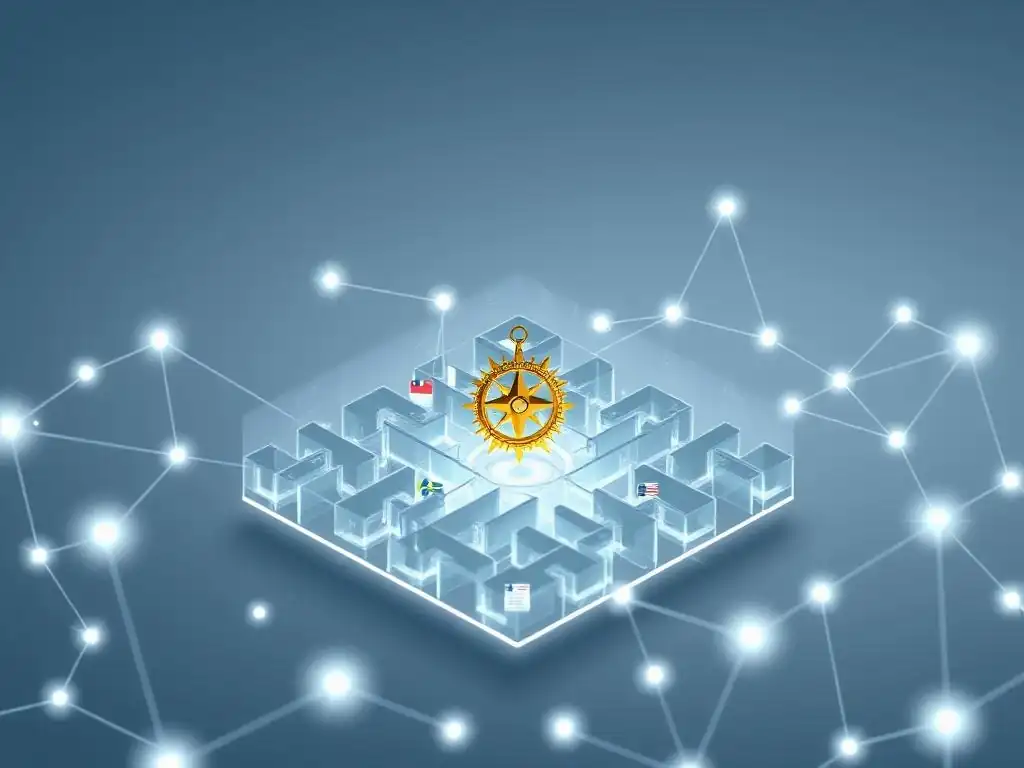
The Challenge of Decentralization: How to Regulate Organizations Without Central Control
The fundamental challenge for regulators grappling with blockchain DAOs is their decentralized nature. Traditional regulation assumes a central point of control or responsibility – a board of directors, a CEO, a registered legal entity. DAOs, in their purest form, aim to distribute control across a network of token holders or participants, with decisions often made through on-chain voting and enforced by smart contracts. This makes it difficult to identify a single party responsible for legal compliance or liable for wrongdoing.
Regulators are exploring various approaches to this challenge. Some may attempt to identify key individuals or entities who exert significant influence over the DAO (e.g., core developers, large token holders, foundation members) and hold them accountable. Others may focus on the interfaces or service providers that interact with the DAO. The inherent tension lies between preserving the benefits of decentralization (resilience, censorship resistance) and ensuring accountability and compliance with public interest regulations (consumer protection, financial stability, AML). This remains a core dilemma in the evolving blockchain DAOs regulatory landscape.
Finding the right balance between fostering innovation and implementing necessary regulation is crucial for the growth of Social Impact DAOs. Overly strict or ill-fitting regulations can stifle experimentation and prevent these organizations from realizing their potential for positive change. Conversely, a complete lack of regulation can lead to scams, instability, and harm to participants or beneficiaries, undermining public trust in the technology.
Regulators have an opportunity to develop tailored frameworks that understand the unique characteristics and potential benefits of Social Impact DAOs. This could involve creating specific legal statuses that recognize decentralized governance, providing clarity on token classification for non-profit purposes, or establishing proportionate compliance requirements based on the DAO's activities and risk profile. A supportive regulatory environment could unlock significant capital and human potential for social good initiatives leveraging blockchain DAOs.
The Role of Self-Regulation: Developing Industry Standards for DAO Governance
Given the challenges of top-down regulation for rapidly evolving decentralized technologies, self-regulation within the DAO community can play a vital role in shaping the blockchain DAOs regulatory landscape. Developing and adhering to industry best practices for governance, transparency, security, and accountability can build trust and demonstrate a commitment to responsible operation.
This includes establishing clear processes for proposal submission and voting, implementing robust smart contract audits, disclosing relevant information about the DAO's treasury and activities, and creating mechanisms for dispute resolution. For Social Impact DAOs, this might also involve developing standards for measuring and reporting impact, ensuring inclusivity in governance, and protecting beneficiary data. Proactive self-regulation can inform regulators, demonstrate maturity in the space, and potentially influence the development of more favorable external regulations.
Implementing Robust Governance Structures: Mitigating Legal Risks
A key best practice for Social Impact DAOs navigating the blockchain DAOs regulatory landscape is to implement robust and transparent governance structures. While decentralization is a core principle, clear rules and processes for decision-making, treasury management, and conflict resolution are essential for both operational efficiency and legal compliance. Vague or poorly defined governance can lead to disputes, make accountability impossible, and increase regulatory scrutiny.
This includes clearly articulating the DAO's mission and purpose, defining membership and voting rights, establishing procedures for proposing and enacting changes, and specifying how the DAO's assets will be managed and allocated. Using battle-tested governance frameworks and conducting security audits of governance smart contracts are also critical. A well-defined governance structure can help demonstrate legitimate intent and provide a clearer basis for interacting with the traditional legal system, potentially through a legal wrapper.
Seeking Legal Counsel: Obtaining Expert Advice on Regulatory Compliance
Given the complexity and evolving nature of the blockchain DAOs regulatory landscape, seeking expert legal counsel is not optional but essential for Social Impact DAOs. Legal professionals specializing in blockchain, securities law, non-profit law, and relevant jurisdictional regulations can provide tailored advice on structuring the DAO, issuing tokens, managing the treasury, and ensuring compliance with applicable laws.
Legal counsel can help assess the risk of tokens being classified as securities, advise on potential legal entity structures (like Wyoming DAO LLCs or Delaware LLCs), guide AML/KYC considerations, and help draft clear legal disclaimers and terms of service. While legal advice can be costly, it is an indispensable investment to avoid potentially crippling legal challenges, fines, or personal liability for contributors and members. Relying solely on community consensus or online forums for legal guidance is highly risky.
Transparency and Accountability: Building Trust with Stakeholders
Transparency and accountability are not only core tenets of the DAO philosophy but also crucial for navigating the blockchain DAOs regulatory landscape and building trust with stakeholders, including regulators, participants, beneficiaries, and the public. Operating in a transparent manner involves making information about the DAO's governance processes, treasury holdings, project progress, and impact metrics publicly available and easily accessible.
Accountability mechanisms, such as clear reporting lines (even in a decentralized context, identifying roles and responsibilities is key), audit trails on the blockchain, and mechanisms for recourse or dispute resolution, demonstrate responsible operation. For Social Impact DAOs, transparent reporting on how funds are used and the impact achieved is particularly important for maintaining credibility and attracting support. Proactive transparency can also help address regulatory concerns and distinguish legitimate projects from speculative or fraudulent ones.
Hypothetical Case Study: Impact Finance DAO was created with the mission to provide decentralized funding to social enterprises in underserved communities globally. It issues governance tokens allowing members to vote on which projects receive funding from the DAO's treasury. The DAO has faced challenges related to legal entity status and securities classification for its token.
To address this, Impact Finance DAO is exploring registering as a hybrid structure, potentially utilizing a non-profit foundation wrapper in a favorable jurisdiction like Switzerland or the Netherlands to handle traditional legal and financial interactions, while maintaining decentralized governance for project selection and funding decisions via the DAO smart contracts.
They are also carefully structuring their token issuance and communications to emphasize governance and utility within the impact ecosystem rather than speculative investment, seeking ongoing legal counsel to navigate the complex blockchain DAOs regulatory landscape related to securities laws in different jurisdictions where token holders reside or projects are funded.
Climate Action DAO: Utilizing Blockchain for Environmental Sustainability Initiatives
Hypothetical Case Study: Climate Action DAO focuses on funding and coordinating decentralized environmental projects, such as reforestation, renewable energy microgrids, and carbon offsetting initiatives. Participants contribute funds (crypto or fiat) and vote on project proposals. The DAO utilizes a utility token that grants voting rights and can be redeemed for specific environmental services or credits generated by funded projects.
Climate Action DAO has encountered regulatory questions regarding AML/KYC for contributions and the potential tax implications of funding distributions to project teams. To mitigate these, they implemented a tiered contribution system where larger contributions require identity verification through a third-party service provider integrated into their front-end interface.
For tax purposes, they are working with international tax advisors to understand reporting requirements for funds distributed as grants or payments in various countries. They are also exploring the possibility of forming a legal entity in a jurisdiction like Singapore that has clear rules for digital payment tokens, to manage the treasury and interface with traditional finance, thereby addressing specific challenges within the blockchain DAOs regulatory landscape.
The Future of DAO Regulation: Trends and Predictions
The Rise of DAO-Specific Regulations: Expecting Tailored Legal Frameworks
Given the increasing prominence and diversity of DAOs, it is highly probable that jurisdictions will move beyond trying to fit DAOs into existing legal boxes and begin developing DAO-specific regulations. The pioneering efforts in Wyoming are an early example of this trend. Future frameworks are likely to consider the unique governance mechanisms of DAOs, potentially offering specific legal statuses that recognize decentralized control while also establishing clearer lines of accountability and liability.
These tailored regulations might differentiate between types of DAOs based on their purpose (e.g., social impact vs. DeFi), their degree of decentralization, and the types of activities they undertake. The goal would be to provide legal certainty for legitimate DAOs while establishing safeguards against misuse. This shift towards bespoke legislation would represent a significant evolution in the blockchain DAOs regulatory landscape globally.
The Importance of International Cooperation: Harmonizing Regulations Across Jurisdictions
The inherently global nature of blockchain technology and DAOs highlights the critical need for international cooperation and harmonization of regulations. Conflicting or inconsistent rules across different countries create significant compliance burdens for DAOs and can hinder their ability to operate effectively on a global scale. Organizations like the Financial Stability Board (FSB) and the International Organization of Securities Commissions (IOSCO) are already discussing crypto-asset regulation, which will likely extend to DAOs.
Increased dialogue and collaboration among national regulators, potentially guided by international bodies like FATF for AML/KYC or UN agencies for social impact applications, could lead to more aligned approaches. While full global harmonization may be a distant goal, reducing major inconsistencies would greatly benefit the development of the DAO ecosystem, particularly for Social Impact DAOs seeking to address global challenges. This collaborative effort is essential for shaping a coherent global blockchain DAOs regulatory landscape.
The Potential for DAOs to Shape the Future of Governance
Beyond simply being subject to regulation, DAOs, particularly Social Impact DAOs, have the potential to influence and shape the future of governance itself, both within their own structures and potentially in broader societal contexts. The principles of transparency, direct participation, and rule-based execution inherent in DAOs offer potential models for more accountable and efficient collective decision-making.
As regulators gain a better understanding of DAOs, they may learn from the innovative governance mechanisms being developed within these communities. The success and responsible operation of Social Impact DAOs can serve as compelling examples of how decentralized governance can be leveraged for public good, potentially inspiring new approaches to managing public resources, coordinating international aid, or facilitating community-led initiatives. This ongoing interaction between decentralized innovation and traditional regulatory frameworks will continue to define the blockchain DAOs regulatory landscape.
The Importance of Proactive Engagement with Regulators
For Social Impact DAOs to achieve sustainable growth and widespread adoption, proactively engaging with the regulatory landscape is paramount. Ignoring or attempting to circumvent regulations poses significant risks, including legal challenges, reputational damage, and the inability to interact with traditional financial systems or partners. Instead, DAOs should seek to understand applicable rules, consult with legal experts, and, where possible, engage in constructive dialogue with policymakers.
This proactive approach can help shape future regulations, educate authorities about the unique nature and benefits of Social Impact DAOs, and demonstrate a commitment to operating responsibly. Participating in industry associations, responding to regulatory consultations, and sharing best practices can all contribute to fostering a more favorable and clear blockchain DAOs regulatory landscape.
Despite the significant regulatory challenges, the potential of Social Impact DAOs to drive positive change remains immense. By leveraging blockchain for transparency, efficiency, and decentralized coordination, these organizations can unlock new models for philanthropy, impact investing, community development, and global problem-solving. From funding clean energy projects with greater accountability to enabling direct aid distribution without intermediaries, the use cases are compelling.
Navigating the complex and evolving blockchain DAOs regulatory landscape is a necessary step towards realizing this potential. By prioritizing legal compliance, adopting robust governance, seeking expert advice, and championing transparency, Social Impact DAOs can build trust, attract broader participation, and ultimately scale their efforts to create meaningful and lasting positive impact in the world.
Frequently Asked Questions
Social Impact DAOs are distinguished by their mission-driven focus, aiming to create positive social or environmental change. Regulation varies widely, with some jurisdictions treating them like traditional non-profits while others struggle to fit them into existing frameworks.
Key challenges include establishing legal personhood, navigating differing regulatory requirements related to impact measurement, and ensuring compliance with international laws concerning fund transfers and charitable activities.
Regulatory sandboxes offer a controlled environment for DAOs to experiment with novel governance models and technologies. This allows regulators to observe their operations and develop evidence-based policies that support innovation while mitigating risks.
Transparency can be achieved through on-chain data visibility, regular reporting on impact metrics, and establishing clear governance procedures. Accountabilty is strengthened by decentralized decision-making processes and mechanisms for addressing stakeholder concerns.
The regulatory landscape will significantly shape the future of Social Impact DAOs, potentially influencing their scalability, adoption, and overall effectiveness. Clear and supportive regulations could unlock their potential, while restrictive measures could hinder their growth and impact.
Final Reflection: Embracing the Future of Impactful Governance
The exploration of the Blockchain DAOs regulatory landscape reveals a critical juncture in the evolution of social impact initiatives. Understanding the nuances of legal frameworks across the globe is not merely an academic exercise; it is a fundamental requirement for ensuring the sustainable and ethical deployment of decentralized autonomous organizations dedicated to positive change. The potential of DAOs to revolutionize governance and resource allocation for social good hinges on our ability to navigate these complex legal waters effectively.
The rise of Social Impact DAOs represents a profound shift in how we approach collective action and problem-solving. This movement, driven by transparency and community empowerment, holds immense promise for addressing some of the world's most pressing challenges. As we continue to witness the transformative power of blockchain technology, it becomes increasingly vital to foster a regulatory environment that supports innovation while safeguarding against potential risks. The future of governance is not about replacing institutions, but about augmenting them with decentralized, transparent, and community-driven systems.
As you reflect on the insights shared within this article, consider the role you can play in shaping the future of Social Impact DAOs. Let us all strive to become informed advocates, contributing to a regulatory landscape that empowers these organizations to flourish and ultimately, to create a more just and equitable world for all.
Here's a CTA designed for the end of a web article titled "Navigating the Legal Maze: Understanding the Regulatory Landscape for Social Impact DAOs Globally" on the website Blockchain Trends (blockchaintrends.org):
Unveil Your DAO's Future: Take Action Now!
Thanks for diving deep into the complex world of legal regulations surrounding Social Impact DAOs! You've now got a better understanding of the challenges and opportunities that lie ahead. Now, let's put that knowledge to work and shape the future of decentralized impact.
Here are a few actionable steps you can take right now:
- Define and document your DAO's impact model. Clarity here is crucial when working with global legal systems.
- Explore potential legal jurisdictions that align with your DAO's mission and structure. Consider factors like regulatory clarity and ease of operation.
- Share this article with fellow DAO enthusiasts and spark a discussion about best practices for navigating the global regulatory landscape.
Ready to start building a legally sound and impactful DAO? What's the first step you'll take to ensure your DAO is compliant and making a real difference?
Leave a Reply