
Blockchain and IoT Integration: Building a Smarter, More Connected World


Welcome to Blockchain Trends, your compass in the rapidly evolving world of decentralized innovation. Are you ready to unlock the true potential of blockchain, moving beyond digital currencies? Dive in to discover how the synergistic power of Blockchain IoT integration benefits industries worldwide, creating a smarter, more connected world. This is just the beginning – explore the article below to understand how this powerful combination is reshaping the future.
- Secure and Efficient Data Management in Healthcare: Integrating Blockchain and IoT
- Understanding the Core Technologies: Blockchain and IoT Explained
-
Healthcare Blockchain IoT Integration Benefits: Transforming Patient Care
- Enhanced Security: Protecting Patient Data and Medical Devices from Cyber Threats
- Increased Transparency and Traceability in Healthcare Data Exchange
- Improved Data Integrity and Reliability for Accurate Medical Records
- Automated Data Sharing and Smart Contracts for Efficient Workflows
- Reduced Costs Through Streamlined Processes and Fraud Prevention
- Enhanced Supply Chain Management for Pharmaceuticals and Medical Equipment
-
Real-World Applications of Blockchain and IoT Integration in Healthcare
- Remote Patient Monitoring: Secure and Real-Time Health Data Collection
- Pharmaceutical Supply Chain: Tracking Drugs from Manufacturing to Dispensing
- Clinical Trial Management: Ensuring Data Integrity and Patient Privacy
- Medical Device Security: Protecting Devices from Unauthorized Access
- Electronic Health Records (EHR): Secure and Interoperable Patient Data Management
-
Challenges and Considerations for Blockchain IoT Implementation in Healthcare
- Scalability Limitations for Handling Massive Amounts of Healthcare Data
- Interoperability Issues Between Different Healthcare Systems and Blockchain Platforms
- Regulatory and Compliance Hurdles (HIPAA, GDPR) in Blockchain IoT Integration
- Data Privacy Concerns Regarding Patient Information in Decentralized Systems
- Security Risks Associated with Smart Contracts in Healthcare IoT Environments
-
Overcoming the Challenges: Solutions and Best Practices
- Layer 2 Scaling Solutions for Efficient Data Processing in Healthcare
- Developing Interoperable Healthcare Data Standards and APIs
- Addressing Data Privacy with Encryption, Anonymization, and Access Controls
- Implementing Robust Smart Contract Security Audits and Testing
- Navigating Regulatory Frameworks (HIPAA, GDPR) for Compliance
-
The Future of Blockchain and IoT in Healthcare: A Vision of Personalized and Secure Care
- The Rise of Decentralized Healthcare Data Marketplaces
- Edge Computing and Blockchain: Powering Intelligent Medical Devices at the Point of Care
- Blockchain-Based Identity Management for Patients and Healthcare Providers
- The Role of Blockchain in Securing Telemedicine and Remote Consultations
- Personalized Medicine and Data-Driven Healthcare through Blockchain IoT Integration
- Conclusion: Embracing the Transformative Potential of Blockchain and IoT in Healthcare
-
Frequently Asked Questions
- What are the main benefits of Blockchain IoT integration?
- How does Blockchain enhance the security of IoT devices?
- Can Blockchain be used to improve supply chain management with IoT?
- What are some potential challenges in implementing Blockchain IoT solutions?
- How might regulation impact the future of Blockchain IoT integration?
- Final Reflection: Embracing the Decentralized Future
- Unearth the Future: Secure Your IoT Today!
Secure and Efficient Data Management in Healthcare: Integrating Blockchain and IoT
Exploring the Integration of Blockchain and IoT in Healthcare
Healthcare is experiencing a digital transformation driven by interconnected devices and data. The Internet of Medical Things (IoMT), a subset of IoT, includes everything from wearable fitness trackers and remote patient monitoring devices to hospital asset management sensors and smart infusion pumps. These devices generate vast amounts of sensitive health data, which needs to be collected, transmitted, stored, and analyzed securely and efficiently. Traditional centralized systems often struggle with the volume, velocity, and vulnerability of this data, leading to significant security risks and interoperability challenges.
Integrating blockchain technology with IoT in healthcare offers a promising solution to these issues. Blockchain, as a decentralized and immutable ledger, can provide the necessary trust layer for the often-untrusted data streams from IoT devices. By recording device identities, data timestamps, and transaction histories on a blockchain, healthcare providers can ensure the integrity and provenance of patient data. This convergence creates a robust framework for managing sensitive health information, enabling more secure data exchange, improved patient care coordination, and enhanced operational efficiency across the healthcare ecosystem.
Why Blockchain is Essential for Secure Healthcare IoT Ecosystems
Healthcare IoT devices are prime targets for cyberattacks due to the sensitive nature of the data they handle and their often-limited processing power and security features. A compromised medical device or data breach can have severe consequences, ranging from privacy violations and financial losses to direct harm to patient safety. Centralized databases storing this aggregated IoT data represent single points of failure that are attractive targets for malicious actors. For example, a 2023 report estimated the average cost of a healthcare data breach at over $11 million, highlighting the critical need for enhanced security measures.
Blockchain addresses these vulnerabilities by providing a decentralized security model. Instead of relying on a single authority, data transactions and device interactions can be cryptographically signed and distributed across a network of nodes. This makes it incredibly difficult for an attacker to tamper with data or impersonate a device without being detected by the network consensus mechanism.
Furthermore, blockchain's immutability ensures that once data is recorded, it cannot be altered or deleted, providing an tamper-proof audit trail essential for compliance and accountability in healthcare. This fundamental shift from centralized vulnerability to decentralized resilience makes blockchain a critical component for building trustworthy and secure healthcare IoT ecosystems.
Understanding the Core Technologies: Blockchain and IoT Explained
Blockchain Technology: A Decentralized Ledger for Trust and Security
Blockchain is a distributed ledger technology that records transactions across many computers so that the record cannot be altered retroactively without the alteration of all subsequent blocks and the consensus of the network. Think of it as a chain of blocks, where each block contains a list of transactions, and once a block is completed, it is added to the end of the chain.
Each new block contains a cryptographic hash of the previous block, linking them together in a secure sequence. This structure inherently prevents tampering with historical data because changing any block would require re-calculating the hashes of all subsequent blocks, a computationally intensive task that is practically impossible for an attacker to perform across the entire distributed network.
The key features of blockchain that make it suitable for sensitive applications like healthcare include decentralization, immutability, transparency (of transactions, though identities can be pseudonymous), and cryptographic security. Decentralization means there is no single point of control or failure. Immutability ensures data integrity. Transparency allows for auditing and verification. Cryptography secures transactions and data. These properties collectively build a foundation of trust that is often lacking in traditional, siloed healthcare data systems, providing a robust framework for handling everything from patient records to supply chain movements.
Internet of Things (IoT): Connecting Medical Devices and Patient Data
The Internet of Things (IoT) refers to the network of physical objects—"things"—that are embedded with sensors, software, and other technologies for the purpose of connecting and exchanging data with other devices and systems over the internet. In healthcare, this translates into a vast array of connected devices, often referred to as the Internet of Medical Things (IoMT). Examples include continuous glucose monitors, smart pill dispensers, remote patient monitoring wearables that track heart rate, activity levels, and sleep patterns, as well as hospital equipment like connected MRI machines or smart beds.
These IoT devices collect real-time data directly from patients or their environment, offering unprecedented opportunities for personalized medicine, remote care, and proactive health management. However, managing the sheer volume and variety of data generated by potentially millions of connected devices presents significant challenges.
Data formats can vary widely, device security can be weak, and the infrastructure required to reliably collect, transmit, and store this data centrally is complex and expensive. Furthermore, ensuring the privacy and security of this highly sensitive patient information as it travels from device to cloud and eventually to healthcare providers is paramount, highlighting the need for a secure and reliable underlying data management layer.
Healthcare Blockchain IoT Integration Benefits: Transforming Patient Care
Enhanced Security: Protecting Patient Data and Medical Devices from Cyber Threats
One of the most significant healthcare Blockchain IoT integration benefits is the dramatic enhancement of security. Traditional centralized systems storing sensitive patient data collected by IoT devices are vulnerable to breaches, ransomware attacks, and insider threats. By utilizing blockchain, healthcare organizations can move away from these single points of failure. Each data point transmitted from an IoT device can be cryptographically signed and recorded as a transaction on a distributed ledger, making it extremely difficult to alter or forge. This creates an immutable audit trail of all data movements and device interactions.
Beyond data, blockchain can also play a role in securing the devices themselves. Device identities can be registered on the blockchain, allowing for secure authentication and access control. Only authorized devices and users, verified through the blockchain, can interact with the network or transmit data. This layered security approach significantly reduces the risk of unauthorized access, data manipulation, and denial-of-service attacks targeting critical medical infrastructure. The security benefits of Blockchain IoT integration help safeguard patient privacy and maintain the integrity of medical information, which is crucial in preventing potentially life-threatening consequences of data breaches or device compromises.
Increased Transparency and Traceability in Healthcare Data Exchange
Blockchain's inherent transparency (within the network) and immutability provide a level of traceability in healthcare data exchange that is difficult to achieve with traditional systems. When data from an IoT device, such as a remote patient monitor, is recorded on a blockchain, a permanent, verifiable record of that data point's existence and origin is created. This record can include timestamps, device IDs, and even the identity of the entity accessing or using the data (while potentially maintaining patient anonymity on the public ledger itself).
This enhanced transparency and traceability are invaluable for auditing, compliance, and building trust among different stakeholders in the healthcare ecosystem – from patients and providers to payers and regulators. For example, a patient could potentially verify that the data from their wearable was accurately transmitted and recorded. Healthcare providers can track the journey of patient data through different systems or across different care settings. Regulators can audit data access logs with confidence, knowing they haven't been tampered with. This increased visibility is a core healthcare Blockchain IoT integration benefit, fostering accountability and improving the overall integrity of healthcare operations.
Improved Data Integrity and Reliability for Accurate Medical Records
Maintaining the integrity of patient data is paramount for accurate diagnoses, effective treatment plans, and patient safety. Data collected from IoT devices, if not properly secured, can be susceptible to accidental errors during transmission or storage, or worse, malicious tampering. A single inaccurate data point, such as a false vital sign reading or an incorrect medication dosage recorded by a smart dispenser, could have serious consequences. Blockchain technology directly addresses this challenge by ensuring data integrity from the point of origin.
When data from an IoT device is anchored to a blockchain, it becomes part of an immutable record. Any attempt to alter this data after it has been added to the chain would be immediately evident to the network, invalidating the block and preventing the change.
This means that healthcare professionals can rely on the data recorded on the blockchain as a single source of truth, knowing it has not been altered since its initial entry. The reliability of data enhanced by Blockchain IoT integration benefits clinical decision-making, reduces medical errors, and builds greater confidence in electronic health records (EHRs) and other digital health platforms that utilize IoT data.
Automated Data Sharing and Smart Contracts for Efficient Workflows
Integrating blockchain with healthcare IoT enables automated data sharing and process execution through smart contracts. Smart contracts are self-executing contracts with the terms of the agreement directly written into code. They run on the blockchain, automatically triggering actions when predefined conditions are met. For example, a smart contract could be programmed to automatically share specific patient data from a remote monitoring device with an emergency service provider if certain critical vital signs are detected.
This automation streamlines workflows, reduces administrative overhead, and speeds up critical processes. Instead of relying on manual data requests and permissions, smart contracts can facilitate secure, condition-based data exchange between authorized parties. This capability is a significant healthcare Blockchain IoT integration benefit, enabling use cases like automated insurance claims processing based on objective health data from wearables, or triggering alerts to care teams when a patient's condition changes based on real-time IoT readings. The efficiency gained through automated data flow and smart contract execution can lead to faster interventions and improved patient outcomes.
Reduced Costs Through Streamlined Processes and Fraud Prevention
The healthcare industry is burdened by high administrative costs, inefficient data exchange processes, and significant losses due to fraud. Blockchain and IoT integration offers potential pathways to reduce these costs. By automating data sharing and workflows using smart contracts, healthcare organizations can decrease the need for manual data entry, verification, and reconciliation across disparate systems. This streamlining of operations can lead to substantial savings in administrative expenses.
Furthermore, the transparency and immutability of blockchain are powerful tools for fraud prevention. Tracking pharmaceuticals through the supply chain using IoT sensors and blockchain, for example, can verify the authenticity of drugs and prevent the infiltration of counterfeit medications, a problem estimated to cost billions annually worldwide. Similarly, using blockchain to record patient interactions and services verifiable by IoT data can help detect and prevent fraudulent claims. The reduced costs achieved through enhanced efficiency and robust fraud prevention are tangible healthcare Blockchain IoT integration benefits that can contribute to a more sustainable healthcare system.
Enhanced Supply Chain Management for Pharmaceuticals and Medical Equipment
Managing the healthcare supply chain, from raw materials and manufacturing to distribution and dispensing pharmaceuticals and medical devices, is complex and prone to issues like counterfeiting, diversion, and inefficiencies. Integrating IoT sensors on products and shipments with a blockchain ledger can provide unprecedented visibility and control over the entire process. IoT sensors can track temperature, humidity, location, and other critical conditions during transit, ensuring product quality.
Recording this sensor data and every transfer of ownership on a blockchain creates an immutable, shared ledger accessible to authorized parties. This allows manufacturers, distributors, pharmacies, and even regulators to trace a product's journey from its origin to the end consumer with certainty. This enhanced traceability helps verify the authenticity of products, quickly identify the source of issues like expired or recalled goods, and optimize logistics. The result is a more secure, efficient, and transparent healthcare supply chain, representing a key healthcare Blockchain IoT integration benefit that protects patient safety and reduces financial losses.
Real-World Applications of Blockchain and IoT Integration in Healthcare
Remote Patient Monitoring: Secure and Real-Time Health Data Collection
Remote patient monitoring (RPM) is a rapidly growing area in healthcare, utilizing wearable devices and home-based sensors (IoT) to collect patient data outside of traditional clinical settings. Conditions like chronic heart failure, diabetes, and hypertension can be effectively managed using RPM. However, the sensitive nature of real-time health data necessitates robust security. Integrating blockchain with RPM devices ensures that the data collected – such as blood pressure readings, glucose levels, or activity data – is securely transmitted and immutably recorded.
For example, a patient's wearable device could send data to a blockchain node, where it's timestamped, cryptographically signed, and added to a private or consortium chain. This guarantees the data's integrity and provides a verifiable history for healthcare providers. Companies are exploring solutions where patients control access to their data on the blockchain via private keys, giving them agency over their health information while enabling secure sharing with authorized clinicians. This application highlights how Blockchain IoT integration benefits both data security and patient empowerment in modern healthcare delivery.
Pharmaceutical Supply Chain: Tracking Drugs from Manufacturing to Dispensing
Counterfeit drugs are a major global health threat, and supply chain opacity makes it difficult to combat. Blockchain and IoT integration offers a powerful solution. Manufacturers can embed IoT sensors (like temperature or tamper-evident sensors) into drug packaging and record unique serial numbers on a blockchain at the point of production. As the drugs move through distributors, wholesalers, and pharmacies, each transfer of ownership and relevant sensor data can be recorded as transactions on the blockchain.
This creates an end-to-end, verifiable trail of each drug package. Pharmacists or patients could potentially scan a QR code on the packaging, querying the blockchain to verify the drug's authenticity and journey. Pilot programs, like those exploring compliance with regulations such as the US Drug Supply Chain Security Act (DSCSA), are using blockchain to improve traceability. This application demonstrates how Blockchain IoT integration benefits supply chain integrity, helping to ensure that patients receive safe and legitimate medications.
Clinical Trial Management: Ensuring Data Integrity and Patient Privacy
Clinical trials generate vast amounts of data from various sources, including patient-reported outcomes, lab results, and increasingly, data from wearable IoT devices tracking patient activity or vital signs. Ensuring the integrity, transparency, and security of this data is paramount for the validity of trial results and regulatory approval. Centralized databases are susceptible to data manipulation or breaches that could compromise the trial.
By using blockchain, data captured from IoT devices and other sources can be timestamped and immutably recorded. Each data point, or a hash of it, can be added to a blockchain, creating a verifiable record of its existence at a specific time. Smart contracts can automate consent management, ensuring data is only accessed according to patient permissions.
For instance, a smart contract could automatically grant researchers access to specific, anonymized data from a patient's wearable after they provide digital consent recorded on the blockchain. This application of Blockchain IoT integration benefits clinical trials by enhancing data integrity, improving auditability, and strengthening patient privacy protections.
The increasing connectivity of medical devices introduces significant security risks. Pacemakers, insulin pumps, and hospital equipment connected to networks can be vulnerable to hacking, potentially jeopardizing patient safety. Blockchain can enhance medical device security by managing device identities and access permissions in a decentralized manner. Each authorized device can have a unique identity registered on a blockchain.
When a device attempts to connect to a network or transmit data, its identity can be authenticated against the blockchain ledger. Smart contracts can define and enforce access control rules, ensuring that only authorized users or systems can interact with a specific device or receive data from it.
This decentralized authentication and authorization framework makes it much harder for attackers to compromise devices or inject malicious data, contrasting with traditional systems where a single compromised server could affect many devices. This is a critical area where Blockchain IoT integration benefits patient safety directly by securing the devices they rely on.
Electronic Health Records (EHR): Secure and Interoperable Patient Data Management
Electronic Health Records (EHRs) are foundational to modern healthcare, yet interoperability and security remain major challenges. Patient data is often fragmented across different providers and systems, making it difficult for clinicians to get a complete view of a patient's health history. Storing sensitive EHR data in centralized systems also poses significant security risks. Integrating blockchain and IoT can revolutionize EHR management.
IoT devices like wearables collect real-time patient data, which can be securely recorded on a blockchain, potentially linked to a patient's decentralized identity. Instead of storing the entire EHR on a single blockchain (which has scalability and privacy challenges), the blockchain can store metadata, hashes of the actual data (stored off-chain in secure, encrypted databases), and logs of data access.
Patients could control access to their records via private keys, granting specific providers or researchers temporary access through smart contracts. This approach enhances security, provides an immutable audit trail of access, and facilitates interoperability by creating a standardized, secure layer for data exchange, showcasing key healthcare Blockchain IoT integration benefits for managing patient information.
Challenges and Considerations for Blockchain IoT Implementation in Healthcare
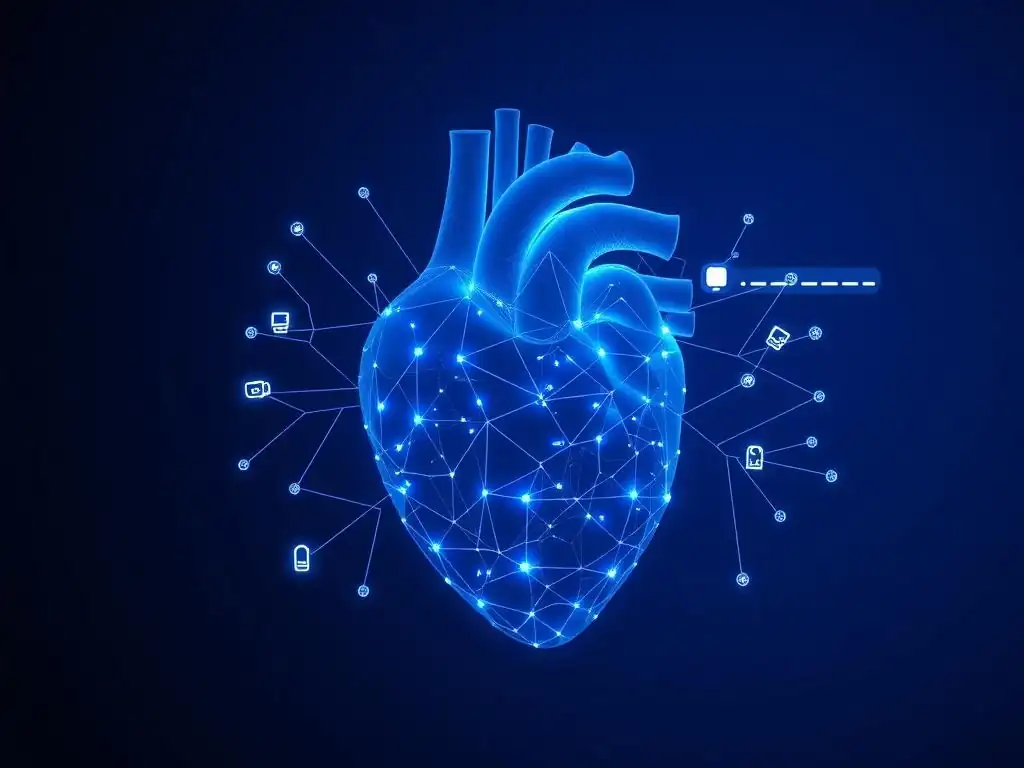
Scalability Limitations for Handling Massive Amounts of Healthcare Data
One of the significant challenges in implementing Blockchain IoT integration in healthcare is the scalability limitation of many current blockchain platforms. IoT devices in healthcare generate vast amounts of data – from continuous vital sign monitoring to detailed sensor data from complex medical equipment. A single hospital or a network of RPM devices could generate millions of data points daily. Traditional public blockchains, like Bitcoin or Ethereum (prior to Eth2), are designed for security and decentralization but have limited transaction throughput, often processing only tens or hundreds of transactions per second.
Handling the immense volume and velocity of IoT data would quickly overwhelm these networks. While enterprise and consortium blockchains offer higher throughput, they may still face limitations when dealing with data from potentially millions of devices. Storing raw, high-frequency IoT data directly on a blockchain is often impractical due to storage costs and network congestion. Therefore, strategies are needed to filter, aggregate, or process data off-chain, only recording critical events, summaries, or data hashes on the blockchain, requiring careful architectural design to maintain the integrity benefits of blockchain while addressing scalability.
Interoperability Issues Between Different Healthcare Systems and Blockchain Platforms
Healthcare is notorious for its fragmented IT landscape, with disparate systems, data formats, and communication protocols (e.g., HL7, FHIR). Introducing blockchain and IoT adds another layer of complexity regarding interoperability. IoT devices use a variety of protocols (e.g., MQTT, CoAP), and data formats. Furthermore, different blockchain platforms (e.g., Hyperledger Fabric, Ethereum, Corda) have their own standards and APIs, making it challenging to integrate data seamlessly across various devices, legacy healthcare systems (like existing EHRs), and different blockchain networks or layers.
Achieving true interoperability requires developing standardized data models for healthcare IoT data and creating robust integration layers or middleware that can translate data between IoT protocols, healthcare data standards, and blockchain formats. Without effective interoperability solutions, the data recorded on a blockchain may remain siloed and difficult to access or utilize by existing healthcare applications and workflows. This lack of seamless data flow hinders the realization of the full healthcare Blockchain IoT integration benefits, necessitating significant effort in developing common standards and integration frameworks.
Regulatory and Compliance Hurdles (HIPAA, GDPR) in Blockchain IoT Integration
Healthcare operates under strict regulatory frameworks designed to protect patient privacy and data security, such as the Health Insurance Portability and Accountability Act (HIPAA) in the United States and the General Data Protection Regulation (GDPR) in Europe. Integrating blockchain and IoT into healthcare workflows introduces complex questions regarding compliance with these regulations. For example, regulations like GDPR grant individuals the "right to be forgotten," allowing them to request the deletion of their personal data. However, the immutable nature of blockchain makes deleting data extremely difficult, if not impossible, once it's recorded on the ledger.
Addressing these regulatory hurdles requires careful consideration of architectural choices. Storing sensitive Protected Health Information (PHI) directly on a public or even a permissioned blockchain might violate privacy regulations. Solutions often involve storing PHI off-chain in compliant databases, while using the blockchain to store encrypted pointers, hashes, or metadata, along with access control permissions managed by smart contracts. Furthermore, ensuring that IoT data collection and transmission practices comply with privacy-by-design principles and obtaining necessary patient consents for data handling on decentralized systems are critical legal and ethical considerations that must be navigated for successful Blockchain IoT integration in healthcare.
Data Privacy Concerns Regarding Patient Information in Decentralized Systems
While blockchain offers security benefits through decentralization and cryptography, it also introduces unique data privacy concerns, particularly in the context of sensitive patient information collected by IoT devices. Public blockchains offer transparency, where transactions are visible to all participants, even if identities are pseudonymous. While patient names wouldn't be directly on a public chain, linking pseudonymous data streams from IoT devices could potentially lead to re-identification, especially when combined with other information. Even on permissioned blockchains, access control needs to be meticulously managed to ensure only authorized individuals or applications can view specific data.
The challenge lies in balancing the transparency and auditability benefits of blockchain with the strict privacy requirements for PHI. Strategies include storing sensitive data off-chain in encrypted databases, using zero-knowledge proofs to verify data attributes without revealing the data itself, and implementing robust access control mechanisms enforced by smart contracts based on granular permissions. Patients must also have control over their data and be informed about how it is being collected by IoT devices and managed on a blockchain. Addressing these privacy concerns is crucial for building trust and ensuring ethical data handling in healthcare Blockchain IoT integration.
Security Risks Associated with Smart Contracts in Healthcare IoT Environments
Smart contracts are a powerful feature of blockchain, enabling automated execution of agreements based on predefined conditions. In healthcare IoT, smart contracts could automate data sharing, trigger alerts, or manage device interactions. However, smart contracts are code, and like any software, they can contain bugs or vulnerabilities. A flawed smart contract in a healthcare setting could have severe consequences, such as incorrectly sharing sensitive patient data, malfunctioning medical devices connected via smart contracts, or executing fraudulent transactions.
Given the critical nature of healthcare applications, security vulnerabilities in smart contracts are not merely financial risks but potentially life-threatening. Rigorous testing, formal verification, and independent security audits of smart contract code are absolutely essential before deployment in a healthcare environment. Furthermore, updating or modifying smart contracts on a blockchain can be complex, and mechanisms for handling errors or unforeseen circumstances need to be carefully designed. Mitigating the security risks associated with smart contracts is a vital consideration for realizing the safe and effective healthcare Blockchain IoT integration benefits.
Overcoming the Challenges: Solutions and Best Practices
Layer 2 Scaling Solutions for Efficient Data Processing in Healthcare
To overcome the scalability challenges posed by the high volume of healthcare IoT data, Layer 2 scaling solutions are being explored and developed. These solutions operate on top of the main blockchain (Layer 1) to handle a large number of transactions off-chain, only submitting summary data or proofs back to the main chain. Examples include state channels, plasma, and rollups. State channels allow parties to conduct numerous transactions off-chain, only interacting with the blockchain to open and close the channel. Rollups bundle many off-chain transactions into a single transaction on the main chain.
For healthcare IoT, this means high-frequency data streams from devices could be processed and aggregated off-chain using Layer 2 solutions, with only critical alerts, aggregated summaries (e.g., daily averages), or cryptographic proofs of data integrity being settled on the main blockchain. This significantly reduces the load on the main chain while still leveraging its security and immutability properties. Implementing such scaling solutions is crucial for making Blockchain IoT integration benefits in healthcare feasible for real-world, high-throughput applications like continuous patient monitoring.
Developing Interoperable Healthcare Data Standards and APIs
Addressing interoperability issues requires a concerted effort towards developing and adopting standardized data formats and APIs for healthcare IoT data and blockchain interactions. Building upon existing healthcare standards like FHIR (Fast Healthcare Interoperability Resources) is a promising approach. FHIR provides a flexible framework for exchanging healthcare information, which can be extended to include data from IoT devices. Creating FHIR profiles specifically for common healthcare IoT data types (e.g., blood pressure, glucose, activity) would promote consistency.
Furthermore, standardized APIs (Application Programming Interfaces) are needed to facilitate secure and seamless communication between IoT platforms, legacy EHR systems, and blockchain networks. These APIs should define how data is formatted, authenticated, and transmitted to and from the blockchain layer. Industry-wide collaboration is essential to establish these standards and encourage their adoption across device manufacturers, healthcare providers, and technology vendors. Establishing robust interoperability frameworks is key to unlocking the full potential of healthcare Blockchain IoT integration benefits, allowing data to flow securely and efficiently across the ecosystem.
Addressing Data Privacy with Encryption, Anonymization, and Access Controls
Effectively addressing data privacy concerns in healthcare Blockchain IoT integration requires a multi-faceted approach combining encryption, anonymization, and granular access controls. Sensitive patient data collected by IoT devices should ideally be encrypted both at rest (when stored) and in transit (when transmitted). Homomorphic encryption, which allows computations to be performed on encrypted data without decrypting it, is a promising, albeit computationally intensive, technology for future use cases.
Anonymization and pseudonymization techniques should be applied to obfuscate patient identities, especially when data or metadata is stored or referenced on the blockchain. For instance, instead of storing a patient's medical record directly, a hash of the record could be stored on the blockchain, linked to a pseudonymous identifier. Access control, managed via smart contracts, is critical.
Patients or data owners should have the ability to grant and revoke specific permissions for accessing their data, defining who can access what data and for how long. Implementing these privacy-preserving measures is paramount for building patient trust and ensuring compliance with regulations like HIPAA and GDPR in Blockchain IoT environments.
Implementing Robust Smart Contract Security Audits and Testing
Given the potential risks associated with vulnerable smart contracts in healthcare, robust security audits and testing are non-negotiable. Before deploying any smart contract code that interacts with sensitive patient data or critical medical devices, it must undergo rigorous security reviews. This includes static analysis (checking code for known vulnerabilities), dynamic analysis (testing the contract's behavior during execution), and formal verification (mathematically proving that the code behaves as intended under all possible conditions).
Independent third-party security firms specializing in blockchain and smart contract security should be engaged to conduct comprehensive audits. Furthermore, extensive testing in simulated healthcare environments is necessary to identify potential issues before deploying to production. Establishing clear protocols for handling potential smart contract bugs or exploits, including mechanisms for pausing or upgrading contracts where possible, is also vital. Prioritizing smart contract security is fundamental to realizing the safe and reliable healthcare Blockchain IoT integration benefits.
Navigating the complex regulatory landscape of healthcare (HIPAA, GDPR, etc.) is a critical step for successful Blockchain IoT integration. Organizations must engage legal and compliance experts early in the design phase to ensure that the proposed architecture and data handling practices align with all relevant regulations. This involves understanding how concepts like "patient data," "consent," "right to be forgotten," and "data security" are defined within these frameworks and how they apply to decentralized, immutable systems.
Developing compliance-by-design strategies is essential. This means building regulatory requirements directly into the system architecture and smart contract logic from the outset, rather than trying to retrofit them later. For example, implementing mechanisms for managing patient consent via smart contracts and ensuring that data storage solutions (on-chain or off-chain) meet security and privacy standards are key. Staying updated on evolving regulations and engaging with regulatory bodies to potentially clarify how existing rules apply to novel blockchain and IoT technologies in healthcare is also important for fostering innovation while maintaining compliance.
The Future of Blockchain and IoT in Healthcare: A Vision of Personalized and Secure Care
The Rise of Decentralized Healthcare Data Marketplaces
The integration of blockchain and IoT is paving the way for the emergence of decentralized healthcare data marketplaces. In this future vision, patients, empowered by control over their IoT-generated health data via blockchain, could choose to share anonymized or pseudonymized data with researchers, pharmaceutical companies, or AI developers. Smart contracts could facilitate these exchanges, ensuring data is only shared under specific conditions and potentially allowing patients to be compensated for the use of their data, creating a new economic model for health information.
These marketplaces, built on decentralized infrastructure, could accelerate medical research, enable the development of more personalized treatments, and provide valuable real-world data for public health initiatives. By providing a secure, transparent, and consent-driven mechanism for data sharing, decentralized marketplaces powered by Blockchain IoT integration benefits both patients and the broader healthcare innovation ecosystem, moving away from centralized data silos towards a more collaborative and data-driven future.
Edge Computing and Blockchain: Powering Intelligent Medical Devices at the Point of Care
Integrating edge computing with blockchain and IoT holds significant promise for healthcare. Edge computing involves processing data closer to the source of generation – in this case, the IoT medical device itself or a local gateway – rather than sending all raw data to a centralized cloud or blockchain. This reduces latency, conserves bandwidth, and enables faster decision-making at the point of care. For example, initial processing or analysis of vital sign data could occur on an edge device.
Blockchain can then be used to secure the integrity of the processed data or the results of edge analytics before they are transmitted or stored more permanently. Smart contracts running on the edge or a local blockchain could enable intelligent, automated responses based on real-time data, such as adjusting an insulin pump's dosage or triggering an immediate alert to a clinician if a patient's condition deteriorates.
This combination of edge computing for speed, IoT for data collection, and blockchain for security and trust represents a powerful paradigm for intelligent, responsive, and secure medical devices, enhancing the healthcare Blockchain IoT integration benefits.
Blockchain-Based Identity Management for Patients and Healthcare Providers
Secure and verifiable digital identity is fundamental to healthcare interactions, from patient registration and access to medical records to provider credentialing and prescribing. Blockchain can serve as a decentralized platform for managing digital identities for patients, healthcare professionals, and even IoT devices. Patients could have a self-sovereign identity recorded on a blockchain, giving them control over their personal information and who can access it.
This identity could be linked to their medical records and data streams from IoT devices, allowing them to manage permissions via smart contracts. Similarly, healthcare providers could have their credentials and licenses verified and recorded on the blockchain, streamlining credentialing processes and preventing fraud. This decentralized approach enhances security, reduces administrative burden, and improves trust in identity verification across the healthcare ecosystem, representing a crucial foundational element for realizing many future healthcare Blockchain IoT integration benefits.
The Role of Blockchain in Securing Telemedicine and Remote Consultations
Telemedicine and remote consultations have become increasingly important, but they rely on secure transmission and storage of sensitive patient data and video streams. While communication channels are typically encrypted, the endpoints and the management of patient data exchanged during consultations can still pose security risks. Blockchain can enhance the security and integrity of telemedicine by providing a secure layer for managing patient consent, identity verification, and the audit trail of consultation data.
For instance, a patient's consent for a telemedicine consultation could be recorded on the blockchain. Metadata about the consultation, such as the participants, time, and duration, could also be immutably logged. While the video stream itself wouldn't be on the blockchain, hashes or pointers to the encrypted recording (stored off-chain) could be. Blockchain-based identity management can also securely verify the identities of both the patient and the healthcare provider before the consultation begins. This application demonstrates how Blockchain IoT integration benefits remote healthcare delivery by ensuring trust, security, and accountability.
Personalized Medicine and Data-Driven Healthcare through Blockchain IoT Integration
The ultimate vision for Blockchain and IoT integration in healthcare is to enable truly personalized and data-driven medicine. IoT devices collect granular, real-time data about individual patients' health, lifestyle, and environment. When this data is securely managed and aggregated using blockchain, it creates a rich, reliable dataset that can be used for personalized diagnostics, treatment plans, and preventative care.
By combining diverse data streams – from genomics and electronic health records to continuous data from wearables and home sensors – and securing their integrity on a blockchain, healthcare providers can gain a holistic view of a patient's health. Smart contracts and AI algorithms, operating on this secure, verifiable data layer, can provide tailored recommendations, predict health risks, and optimize treatment efficacy for individual patients. This future where data from IoT devices, secured and managed by blockchain, directly informs personalized care represents a transformative healthcare Blockchain IoT integration benefit, moving towards a more proactive, predictive, and patient-centric healthcare model.
Conclusion: Embracing the Transformative Potential of Blockchain and IoT in Healthcare
Key Takeaways: Benefits and Future Outlook for Blockchain IoT in Healthcare
The convergence of Blockchain and IoT holds immense transformative potential for the healthcare industry. The key healthcare Blockchain IoT integration benefits center around enhancing security, improving data integrity and reliability, increasing transparency and traceability, enabling automated workflows through smart contracts, reducing costs through efficiency and fraud prevention, and optimizing supply chain management. These advantages collectively address many of the critical challenges facing modern healthcare, particularly concerning the secure and efficient management of vast amounts of sensitive patient data generated by connected devices.
Looking ahead, the future outlook for Blockchain and IoT in healthcare is promising, envisioning decentralized data marketplaces, intelligent edge computing applications powering medical devices, secure blockchain-based identity management, enhanced security for telemedicine, and ultimately, the realization of truly personalized and data-driven medicine. While significant challenges related to scalability, interoperability, regulatory compliance, and privacy remain, ongoing technological advancements and collaborative efforts are paving the way for overcoming these hurdles.
Promoting Collaboration and Innovation in Blockchain IoT Healthcare Solutions
Realizing the full transformative potential of Blockchain and IoT integration in healthcare requires close collaboration among all stakeholders. This includes technology providers developing secure and scalable blockchain platforms and IoT solutions, medical device manufacturers building security and interoperability into their products, healthcare providers piloting and adopting these new technologies, regulators providing clear guidance and frameworks, and researchers exploring novel applications and addressing technical challenges.
Innovation is key, particularly in developing solutions that effectively balance the security and immutability benefits of blockchain with the need for scalability, privacy, and interoperability in a highly regulated environment. Investing in research and development, fostering partnerships between tech companies and healthcare organizations, and creating sandboxes for testing new solutions in a compliant manner are crucial steps. By promoting collaboration and continuous innovation, the healthcare industry can effectively leverage Blockchain IoT integration benefits to build a smarter, more connected, and fundamentally more secure system that ultimately improves patient care and outcomes worldwide.
Frequently Asked Questions
What are the main benefits of Blockchain IoT integration?
The primary benefits include enhanced data security, improved transparency and trust in IoT networks, and increased operational efficiency through automation and streamlined processes.
How does Blockchain enhance the security of IoT devices?
Blockchain's immutable ledger helps prevent unauthorized access and tampering with IoT data. Its decentralized nature reduces single points of failure, making the system more resilient against cyberattacks.
Can Blockchain be used to improve supply chain management with IoT?
Yes, Blockchain can provide end-to-end visibility and traceability in supply chains using IoT sensors. This improves transparency, reduces fraud, and ensures product authenticity.
What are some potential challenges in implementing Blockchain IoT solutions?
Challenges include scalability issues, the high cost of implementation, and the need for interoperability standards between different Blockchain and IoT platforms.
How might regulation impact the future of Blockchain IoT integration?
Regulation can significantly impact the adoption of Blockchain IoT by providing legal clarity and addressing concerns about data privacy and security. Clear guidelines are crucial for fostering innovation and trust.
Final Reflection: Embracing the Decentralized Future
The exploration of Blockchain IoT integration benefits reveals more than just technological advancements; it unveils a paradigm shift in how we perceive trust, security, and efficiency in our increasingly connected world. The potential for enhanced data integrity, automated processes, and secure device communication is not merely theoretical; it's actively shaping industries and redefining the boundaries of what's possible.
The fusion of blockchain and IoT is not just a technological trend; it's a cultural and social evolution. Witnessing the tangible impact of this integration, from streamlined supply chains to secure smart homes, underscores its profound importance in building a more transparent and reliable future. The future of IoT is not just about connecting devices; it's about connecting them securely and intelligently, and blockchain is the key to unlocking that potential.
This quote encapsulates the transformative power of this integration, highlighting its ability to foster trust and collaboration in a decentralized ecosystem.
As we stand at the cusp of this technological revolution, let us not only marvel at the potential of Blockchain IoT integration but also actively engage in shaping its future. Consider how you can leverage these technologies to create more secure, efficient, and transparent solutions in your own life and work. The power to build a smarter, more connected world lies within each of us.
Unearth the Future: Secure Your IoT Today!
Thanks for diving into the fascinating world of Blockchain and IoT! We hope you've gained valuable insights into how these technologies are revolutionizing connectivity and security. Ready to move from theory to action?
Here's how you can start building a smarter, more connected world:
- Implement a proof-of-concept project: Identify a small-scale IoT application in your personal or professional life and explore how blockchain could enhance its security or efficiency. This is your chance to get hands-on experience with the integration.
- Share this article with your network: Help spread awareness about the potential of Blockchain and IoT integration by sharing this article on LinkedIn, Twitter, or your preferred social media platform.
- Research available blockchain platforms for IoT: Delve into platforms like IOTA, Streamr, or Hedera Hashgraph to understand their specific features and applicability to IoT solutions.
What innovative IoT solution can you imagine building with the power of blockchain? Share your ideas in the comments below!
Leave a Reply