
Unlocking Transparency: Blockchain's Role in Building Trustworthy Voting Systems


Welcome to Blockchain Trends, your gateway to understanding the revolutionary impact of blockchain beyond the hype. In a world demanding transparency and accountability, can blockchain truly revolutionize our voting processes? Explore our in-depth analysis on Blockchain Voting Systems Security, uncovering the opportunities and challenges of implementing this cutting-edge technology. But that's just the beginning. Dive in to discover how blockchain is reshaping industries and paving the way for a more decentralized future. What secrets does this transformative technology hold? Let's unlock them together.
- Introduction: The Need for Secure and Transparent Voting
- Understanding Blockchain Voting Systems: A Deep Dive
- Blockchain Voting Systems Security: Addressing Key Concerns
- Benefits of Blockchain Voting Systems: Building Trust and Efficiency
- Real-World Applications of Blockchain in Voting
- The Future of Blockchain Voting: Trends and Predictions
- Blockchain Voting Security: A Comparative Analysis
- Addressing Concerns and Misconceptions about Blockchain Voting
- Conclusion: Blockchain's Potential to Revolutionize Voting
-
Frequently Asked Questions
- How can blockchain technology improve the security of voting systems?
- What are the key benefits of using blockchain in voting besides security?
- What are some potential challenges or drawbacks of implementing blockchain voting systems?
- How can blockchain voting systems address concerns about voter privacy?
- What are the regulatory considerations surrounding the use of blockchain in voting?
- Final Reflection: Embracing Trust Through Decentralization
- Reimagine Democracy: Secure Your Voice!
Introduction: The Need for Secure and Transparent Voting
Ensuring the integrity and trustworthiness of election processes is fundamental to democratic societies. Traditional voting methods, whether paper-based or electronic, often face significant challenges related to security, accessibility, and public confidence. Issues such as potential fraud, errors in ballot counting, low voter turnout, and a lack of transparency in the tabulation process can erode trust in the electoral system and its outcomes. These vulnerabilities highlight a critical need for innovative solutions that can provide a more secure, transparent, and verifiable voting experience for all citizens.
The increasing reliance on digital technologies in various aspects of life has naturally led to explorations of digital solutions for voting. However, simply digitizing traditional processes inherits many of the same security risks, while potentially introducing new ones, such as cyberattacks, data manipulation, and system failures. The demand for a voting system that is not only efficient and accessible but also demonstrably secure and auditable from end-to-end is growing. This is where distributed ledger technology, particularly blockchain, presents a compelling alternative, offering inherent properties that could address some of the most persistent problems in election security and transparency.
Addressing the Challenges of Traditional Voting Systems
Traditional paper-based voting, while often perceived as reliable, is susceptible to issues like ballot stuffing, miscounts during manual tabulation, lost ballots, and challenges in managing absentee or overseas voting. The logistical overhead is substantial, involving printing, distribution, secure storage, and manual counting, which can be costly and time-consuming. For example, a major national election might involve distributing tens of millions of ballots and require thousands of personnel for counting, increasing the potential for human error or malicious activity at various points in the chain.
Electronic voting machines (EVMs), introduced to increase efficiency and reduce manual errors, have their own set of vulnerabilities. These include potential software glitches, lack of a verifiable paper trail for auditing, susceptibility to hacking or tampering, and concerns about the proprietary nature of the technology used. Reports and studies have highlighted potential security flaws in certain EVM models, demonstrating that digital systems, without proper safeguards and transparency, can be just as, if not more, vulnerable than manual processes. The lack of public visibility into the electronic counting process can fuel distrust, regardless of the system's actual integrity.
Blockchain as a Solution for Enhanced Voting Integrity
Blockchain technology offers a fundamentally different approach to managing and verifying data, one that is inherently designed for security, transparency, and immutability. By creating a distributed, tamper-evident ledger where each transaction (in this case, a vote) is recorded chronologically and linked cryptographically to the previous one, blockchain can provide a robust foundation for a trustworthy voting system. Once a vote is cast and added to the blockchain, it is virtually impossible to alter or remove it without consensus from the network, providing a high degree of integrity.
The potential of blockchain to enhance voting integrity lies in its ability to create a single, shared source of truth for all cast ballots, accessible for auditing by authorized parties. This transparency, combined with the cryptographic security and distributed nature of the ledger, can significantly reduce the risks associated with centralized databases or manual processes. Exploring blockchain voting systems security involves understanding how these core properties translate into practical safeguards against common election threats, offering a pathway towards elections that are not only more efficient but also inspire greater public confidence in their outcome.
Understanding Blockchain Voting Systems: A Deep Dive
Blockchain voting systems leverage the core principles of distributed ledger technology to record and manage the voting process. Unlike traditional methods that rely on centralized databases or physical records, blockchain creates a decentralized, immutable, and transparent ledger of all votes cast. This distributed nature means that the voting data is not stored in a single location vulnerable to a single point of failure or attack. Instead, copies of the ledger are maintained and validated by multiple participants (nodes) in the network.
In a typical blockchain voting setup, each eligible voter might be assigned a unique, anonymous identifier linked to their identity through a secure verification process (often off-chain for privacy). When a vote is cast, it is encrypted and submitted to the blockchain network as a transaction. This transaction is then verified by the network's participants according to a predefined consensus mechanism (like Proof-of-Stake or a custom consensus model for permissioned networks).
Once verified, the vote is added as a new block to the chain, becoming a permanent and unalterable record. This process ensures that every valid vote is recorded accurately and transparently.
What is Blockchain Voting and How Does it Work?
Blockchain voting refers to the application of blockchain technology to facilitate and secure the process of casting, recording, and counting votes. At its core, it involves creating a digital representation of each vote and adding it as a transaction to a blockchain ledger. This ledger serves as a public or permissioned database that is distributed across numerous computers, making it highly resilient to tampering. The 'blocks' in the chain contain batches of vote transactions, and each new block is cryptographically linked to the previous one, forming an unbroken chain of records.
The operational flow typically begins with voter registration and identity verification, often using existing secure government databases or digital identity solutions. Once verified, the voter is enabled to cast their ballot, usually through a secure application or web interface. The voter's choice is encrypted to maintain ballot secrecy and then broadcast to the blockchain network.
Network nodes validate the transaction based on pre-defined rules (e.g., ensuring the voter hasn't already voted, the vote is valid for the specific election). Upon successful validation and consensus, the encrypted vote transaction is added to the blockchain. The final tally is then derived by decrypting and counting the valid votes recorded on the immutable ledger, with the entire process auditable by election officials and potentially the public.
Key Features of Blockchain-Based Voting Platforms
Blockchain-based voting platforms offer several key features that distinguish them from traditional or standard electronic voting systems, primarily centered around enhancing the security, transparency, and auditability of the election process. These features are derived directly from the underlying properties of blockchain technology. The immutability of the ledger ensures that once a vote is recorded, it cannot be changed or deleted, providing a strong safeguard against fraud.
Another critical feature is the distributed nature of the blockchain, which eliminates a single point of failure. This decentralization makes the system more resilient to denial-of-service attacks or physical tampering that could affect a centralized server. Furthermore, the cryptographic linking of blocks ensures the integrity of the entire chain; any attempt to alter a past record would break the chain and be immediately detectable by the network participants. These foundational elements contribute significantly to the overall blockchain voting systems security posture.
Immutability and Auditability
Immutability is perhaps the most touted feature of blockchain for voting. Once a vote transaction is validated and added to a block, and that block is added to the chain, it becomes exceptionally difficult, if not computationally infeasible, to alter or remove that record. This is because each block contains a cryptographic hash of the previous block, creating a dependency chain. Changing a transaction in an old block would require recalculating the hash for that block and every subsequent block, a task that becomes exponentially harder the deeper the block is in the chain, especially on large, active networks.
This immutability directly enables high auditability. Every recorded vote transaction remains permanently on the ledger. Election officials, auditors, and potentially even the public (depending on the system's design and privacy considerations) can audit the entire chain of votes to verify that all valid votes were counted and that no votes were altered or removed. This transparent record-keeping contrasts sharply with systems where audit trails might be incomplete or susceptible to manipulation, significantly enhancing trust in the final count.
Enhanced Security Against Fraud
Blockchain's architecture inherently provides enhanced security against various forms of electoral fraud compared to traditional systems. The distributed ledger makes it extremely difficult for a single malicious actor or group to manipulate vote totals. Unlike centralized databases, which can be compromised by gaining access to a single server, altering the blockchain requires controlling a significant portion of the network's computing power (in Proof-of-Work systems) or stake (in Proof-of-Stake systems) to override the consensus mechanism.
Cryptographic techniques, including public-key cryptography, are used to secure individual votes and voter identities (while maintaining ballot secrecy). Each vote can be encrypted and signed by the voter, ensuring authenticity and protecting privacy. The process of adding transactions to the blockchain involves rigorous validation by multiple independent nodes, reducing the likelihood of fraudulent votes being accepted into the official tally. This multi-layered approach to blockchain voting systems security addresses concerns about ballot stuffing, vote alteration, and unauthorized access.
Increased Transparency and Voter Verification
Blockchain technology offers a level of transparency in the voting process that is often lacking in traditional or standard electronic systems. While individual ballot secrecy must be maintained, the process of vote aggregation and the final count can be made transparent and verifiable on the blockchain. Observers can monitor the real-time addition of encrypted votes to the ledger and verify that the final count accurately reflects the recorded transactions.
Some blockchain voting implementations allow voters to verify that their encrypted vote was successfully cast and recorded on the blockchain, often using a unique confirmation code or identifier provided after casting their ballot. This voter verification step is crucial for building trust, as it gives individuals assurance that their voice was heard and accurately captured by the system. This combination of public auditability of the ledger and private verification for the voter significantly boosts confidence in the integrity and transparency of the election results.
Blockchain Voting Systems Security: Addressing Key Concerns
While blockchain offers significant advantages for voting security, it is not a silver bullet and introduces its own set of security considerations that must be carefully addressed. The design and implementation of blockchain voting systems security require meticulous attention to potential vulnerabilities inherent in distributed systems and cryptographic applications. Simply using blockchain does not automatically guarantee a secure election; the specific architecture, consensus mechanism, smart contract implementation, and integration with off-chain processes all play a critical role in the overall security posture.
Concerns range from the theoretical possibility of network attacks to practical issues like securing voter identities and ensuring the integrity of the software used. A comprehensive approach to blockchain voting systems security involves proactive risk assessment, robust technical safeguards, and continuous monitoring. It's essential to understand that the security of a blockchain voting system is not just about the blockchain itself but also about all the components interacting with it, including voter registration systems, voting interfaces, and decryption/counting mechanisms.
Mitigating Risks: Security Considerations in Blockchain Voting
Implementing a secure blockchain voting system requires mitigating various risks. One major area of concern is the integrity of the voter registration process and the secure issuance of voting credentials. If this initial stage is compromised, invalid votes could enter the system regardless of the blockchain's security. Robust identity verification and authentication mechanisms, potentially using multi-factor authentication or secure digital IDs, are crucial first steps in securing the process.
Another significant security consideration is the protection of ballot secrecy while enabling verifiability. Cryptographic techniques like homomorphic encryption or zero-knowledge proofs are being explored to allow vote aggregation and counting without revealing individual votes. Furthermore, securing the infrastructure hosting the blockchain nodes and the applications voters use to cast ballots is paramount to prevent tampering or denial-of-service attacks. A well-designed blockchain voting systems security framework must encompass all these layers, from voter authentication to final tally decryption.
Common Security Vulnerabilities and How to Prevent Them
Like any complex software system, blockchain voting platforms can be susceptible to various security vulnerabilities. Understanding these potential points of failure is key to designing and implementing robust safeguards. While the blockchain ledger itself is highly resistant to tampering, vulnerabilities can exist in the surrounding infrastructure, the smart contracts governing the voting process, or the consensus mechanism of the network.
Preventing these vulnerabilities requires a multi-pronged strategy involving rigorous testing, secure coding practices, and continuous monitoring. For instance, vulnerabilities in smart contracts could allow for votes to be miscounted or for unauthorized actions to be performed. Regular, independent security audits of all code, particularly smart contracts, are essential. Similarly, protecting the network against attacks requires choosing an appropriate consensus mechanism and ensuring the network is sufficiently decentralized and robust.
51% Attacks and Consensus Mechanisms
A "51% attack" is a theoretical risk in some blockchain consensus mechanisms, particularly Proof-of-Work (PoW), where a single entity or group gains control of more than 50% of the network's total computing power (hash rate). With this level of control, they could potentially manipulate the ledger, such as preventing transactions from being confirmed or even reversing previously confirmed transactions. While difficult and expensive to execute on large public blockchains like Bitcoin or Ethereum (though less so on smaller or private chains), it remains a concern for any blockchain implementation, including voting systems.
To prevent 51% attacks in blockchain voting systems, careful consideration must be given to the choice of consensus mechanism and network design. Permissioned blockchains, where participation is restricted to known, trusted entities (like election officials or accredited organizations), can mitigate this risk by controlling who can operate nodes and participate in consensus.
Alternative consensus mechanisms like Proof-of-Stake (PoS), Delegated Proof-of-Stake (DPoS), or specialized consensus algorithms designed for enterprise or consortium use can offer higher security and faster transaction finality with less risk of a 51% attack compared to public PoW chains, provided they are implemented correctly and the network is sufficiently distributed among trustworthy participants.
Smart Contract Audits and Security Best Practices
Smart contracts are self-executing contracts with the terms of the agreement directly written into code. In blockchain voting, smart contracts would automate crucial aspects of the election, such as managing voter eligibility, handling the casting of encrypted ballots, enforcing voting rules (e.g., one person, one vote), and potentially facilitating the decryption and counting process. Given their central role, vulnerabilities in smart contracts represent a significant security risk. Bugs or malicious code could compromise the entire election outcome.
Ensuring the security of smart contracts is paramount for robust blockchain voting systems security. This involves rigorous security audits by independent third parties specializing in smart contract security. Audits should identify potential flaws such as reentrancy attacks, integer overflows, denial-of-service vulnerabilities, and access control issues. Following secure coding best practices specific to the smart contract language (e.g., Solidity for Ethereum-based platforms) and using formal verification methods can help prevent many common vulnerabilities. Continuous monitoring and the ability to securely upgrade or patch smart contracts (if the system design allows for controlled upgrades) are also important considerations.
The Role of Cryptography in Securing Blockchain Voting
Cryptography is the bedrock of blockchain technology and plays a vital role in ensuring blockchain voting systems security and privacy. Public-key cryptography allows voters to securely sign their transactions (votes), proving their authenticity while maintaining their anonymity on the public ledger. Encryption is used to protect the secrecy of the ballot content itself, ensuring that only authorized parties (typically after the polls close) can decrypt and count the votes.
Advanced cryptographic techniques are being explored to enhance privacy and security further. Homomorphic encryption, for example, could potentially allow calculations (like summing up votes) to be performed on encrypted data without needing to decrypt it first, offering maximum ballot secrecy while enabling a verifiable tally. Zero-knowledge proofs could allow a voter to prove they are eligible to vote without revealing their identity, or for the system to prove the tally is correct without revealing individual votes. The effective application of these cryptographic tools is fundamental to building truly secure and private blockchain-based voting systems.
Benefits of Blockchain Voting Systems: Building Trust and Efficiency
Beyond the technical aspects of blockchain voting systems security, the technology offers several compelling benefits that can address long-standing issues in election management and public perception. These advantages stem from the inherent properties of blockchain – transparency, immutability, and decentralization – and can lead to more accessible, cost-effective, and ultimately, more trusted electoral processes.
The potential to increase voter turnout by providing more convenient and accessible voting methods, coupled with the reduction in administrative burden and associated costs, makes blockchain voting an attractive proposition for election officials. Crucially, the enhanced transparency and auditability offered by the technology have the potential to significantly improve public trust in election outcomes, a vital component of a healthy democracy.
Enhancing Voter Turnout and Accessibility
One of the potential benefits of blockchain voting is its ability to make voting more accessible, potentially increasing voter turnout. By enabling secure remote voting via mobile devices or computers, it could eliminate barriers like long queues at polling stations, distance for overseas or military personnel, and difficulties for individuals with disabilities or those unable to take time off work. A study on the Voatz platform's pilots for military and overseas voters reported positive feedback on the convenience and ease of use compared to traditional absentee methods.
While concerns about digital inclusion and potential coercion in remote voting environments need careful consideration and mitigation, the ability to cast a ballot from anywhere with internet access could significantly expand participation. This increased accessibility, built upon a foundation of robust blockchain voting systems security, could empower more citizens to exercise their right to vote, leading to a more representative outcome.
Reducing Voting Costs and Administrative Overhead
Traditional elections involve significant logistical and administrative costs, including printing and distributing millions of ballots, securing numerous polling locations, hiring and training polling staff, and managing the complex process of transporting and counting ballots. A shift to a well-implemented blockchain voting system could potentially reduce many of these expenses. The need for physical ballots and polling stations could be drastically reduced or eliminated for remote voting.
Automation handled by smart contracts could streamline processes like voter eligibility checks and vote tabulation, reducing the need for extensive manual labor and minimizing human error. While initial investment in technology and security infrastructure would be necessary, the long-term operational costs could be significantly lower. For example, estimates for the cost per vote in traditional elections can range from a few dollars to over ten dollars, depending on the location and election type. Blockchain systems, once established, could potentially lower this cost per vote, making elections more economically viable, especially for smaller jurisdictions or frequent polls.
Improving Public Trust in Election Outcomes
Perhaps the most significant potential benefit of blockchain voting is its capacity to improve public trust in election results. The inherent transparency and auditability of the blockchain ledger mean that the entire voting process, from ballot casting (in its encrypted form) to the final tally, can be publicly verifiable. Anyone can potentially audit the immutable record to confirm that votes were recorded accurately and that the final count corresponds to the votes on the chain.
This level of verifiable transparency can combat skepticism and allegations of fraud or manipulation that often plague traditional systems. By providing a clear, tamper-evident trail of every vote, blockchain technology can offer a higher degree of assurance to voters, candidates, and observers that the election was conducted fairly and the results are accurate. Building this trust is paramount for the legitimacy of democratic processes, and robust blockchain voting systems security is the foundation upon which this trust is built.
Real-World Applications of Blockchain in Voting
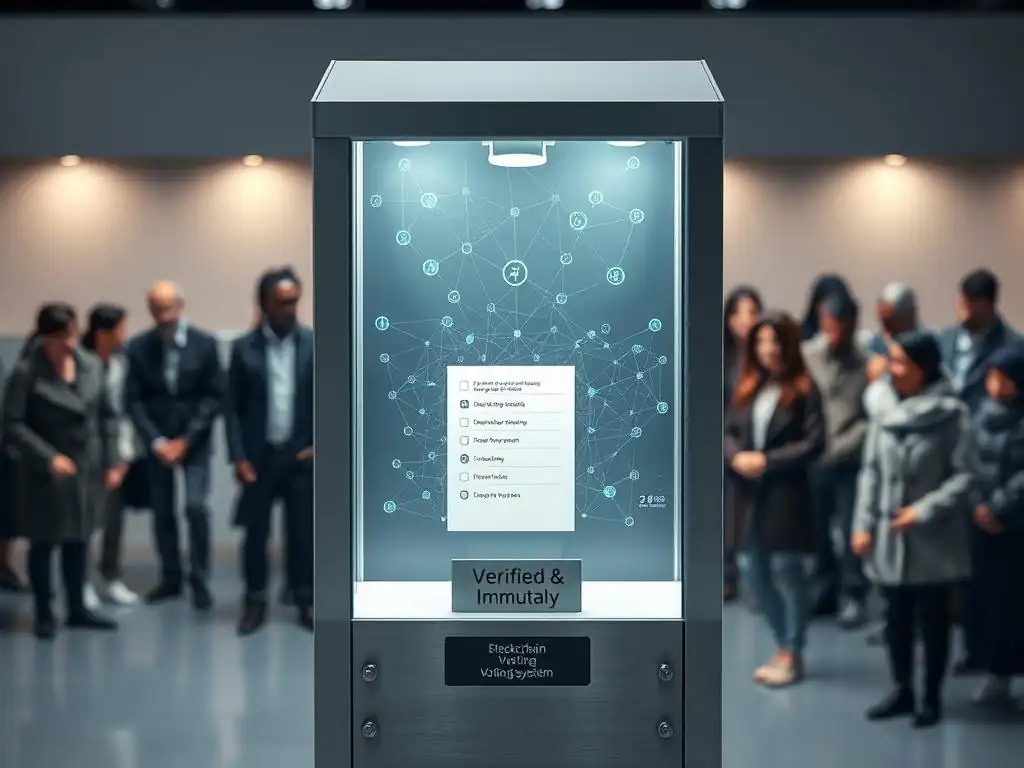
While widespread national adoption is still in early stages, several pilot projects and smaller-scale implementations have explored the practical application of blockchain technology in voting. These real-world examples provide valuable insights into the potential benefits and challenges of deploying blockchain voting systems security in practice. They demonstrate that the technology is moving beyond theoretical discussions into actual trials, albeit with varying degrees of success and scrutiny.
These case studies highlight different approaches to integrating blockchain into the voting process, from mobile-based solutions for specific populations to exploring blockchain for broader national elections. Examining these implementations allows us to learn from their experiences, understand the technical and logistical hurdles encountered, and refine the approach to building secure and effective blockchain voting systems.
Case Study 1: Voatz - Implementing Blockchain Voting for Mobile Elections
Voatz is one of the most prominent examples of a company that has piloted blockchain-based mobile voting for specific populations, primarily military personnel and overseas citizens, in a number of US states. The platform utilizes a private, permissioned blockchain combined with biometric authentication (like fingerprint or facial recognition) and paper audit trails to allow eligible voters to cast ballots securely using their smartphones. Pilots have been conducted in states like West Virginia, Denver, Colorado, and Utah for municipal or primary elections.
In a 2018 pilot in West Virginia, approximately 140 overseas military personnel from 31 countries successfully voted using the Voatz app in a primary election. Subsequent pilots have involved hundreds or a few thousand voters. While proponents highlight the increased accessibility and ease of voting for a population that traditionally faces significant barriers to participation, the Voatz platform has also faced scrutiny regarding its proprietary nature, the security of the mobile device endpoint, and the specifics of its blockchain implementation, raising important questions about blockchain voting systems security in a mobile context.
Case Study 2: Sierra Leone - Exploring Blockchain for National Elections
In 2018, the West African nation of Sierra Leone attracted global attention when a Swiss-based startup, Agora, claimed to have used blockchain technology to record votes in a portion of its presidential election. Agora stated they recorded results from approximately 280 polling stations on their blockchain platform alongside the official count. While this was not the official method of voting or counting for the entire nation, and the National Electoral Commission of Sierra Leone later clarified it did not officially use blockchain for the tally, the initiative highlighted international interest in leveraging the technology for national elections.
The Sierra Leone example, despite the controversy surrounding its scope and official status, served as an early exploration into how blockchain might be applied on a larger scale in developing nations, where traditional infrastructure challenges exist. It underscored the potential for increased transparency and potentially faster, more auditable results, while also revealing challenges related to regulatory clarity, technological readiness, and ensuring public understanding and trust in the process. It emphasized that blockchain integration requires careful planning and official endorsement to impact blockchain voting systems security and adoption meaningfully.
Challenges and Lessons Learned from Early Implementations
Early blockchain voting pilots, including those by Voatz and the initiative in Sierra Leone, have provided valuable lessons. A major challenge is ensuring end-to-end security, particularly the security of the voter's device and the process of securely linking a voter's identity to their anonymous blockchain vote. The risk of malware on a voter's phone or computer compromising their vote or exposing their choice remains a significant concern for remote blockchain voting systems security.
Another lesson is the importance of transparency not just in the ledger but in the entire system design and implementation. Proprietary systems, even if blockchain-based, can face skepticism. Open-source approaches, rigorous third-party audits, and clear explanations of the technology and processes are crucial for building public trust. Finally, these pilots highlight the need for clear regulatory frameworks and close collaboration with election officials to integrate blockchain technology effectively and legitimately into electoral processes.
The Future of Blockchain Voting: Trends and Predictions
The development of blockchain voting technology is ongoing, driven by a desire for more secure, transparent, and accessible elections. Several key trends and predictions are shaping the future of this field. As the technology matures and pilot programs yield more data and lessons learned, the focus is shifting towards addressing the practical challenges that stand in the way of widespread adoption, particularly scalability, integration with existing systems, and navigating complex regulatory environments.
Future advancements in cryptography, consensus mechanisms, and blockchain architecture are expected to enhance the feasibility and robustness of blockchain voting systems security. The conversation is moving from 'if' blockchain can be used for voting to 'how' it can be implemented securely, efficiently, and inclusively on a large scale.
Scalability Solutions for Widespread Adoption
One of the primary technical hurdles for deploying blockchain voting systems in large-scale national elections is scalability. Public blockchains like Bitcoin and Ethereum, in their current forms, process a relatively limited number of transactions per second compared to the volume required for a national election involving millions of voters casting ballots within a short timeframe. For example, a national election might require processing votes from 100 million voters or more over a day or two, potentially thousands of transactions per second during peak hours.
Future blockchain voting systems will require scalable solutions. This could involve using faster, more efficient blockchain architectures, such as directed acyclic graphs (DAGs), or implementing Layer 2 scaling solutions on existing blockchains. Permissioned or consortium blockchains, designed for higher throughput and specific use cases, might also be more suitable for the controlled environment of an election. Developing and proving the scalability of these systems while maintaining robust blockchain voting systems security and decentralization properties is crucial for enabling widespread adoption.
Interoperability with Existing Voting Infrastructure
Integrating blockchain voting systems with existing electoral infrastructure is another critical aspect of future development. Elections involve numerous components, including voter registration databases, polling station equipment (even for auditing or provisional ballots), and results reporting systems. A new blockchain system cannot operate in isolation; it must interface securely and reliably with these established systems.
Achieving interoperability requires developing standards and protocols for data exchange and system interaction. It also involves careful planning on how to transition from or integrate with current processes, such as verifying voter eligibility against existing rolls or incorporating paper audit trails alongside the blockchain record for added security layers and public confidence. The future of blockchain voting likely involves hybrid models that leverage blockchain's strengths while integrating seamlessly with proven elements of existing infrastructure.
The Impact of Regulation on Blockchain Voting Development
Regulatory frameworks and legal acceptance are perhaps the most significant non-technical factors influencing the future of blockchain voting. Election laws are often deeply entrenched and vary significantly between jurisdictions. Introducing a new voting technology requires navigating complex legal requirements related to security standards, audit procedures, ballot secrecy, and accessibility.
Government bodies and election commissions need to understand blockchain technology, assess its risks and benefits, and establish clear guidelines and certifications for its use in elections. Without regulatory approval and legal clarity, widespread implementation is not possible. The pace of development and adoption of blockchain voting systems security will heavily depend on how quickly and effectively policymakers address these regulatory challenges and build a legal foundation for the technology.
Blockchain Voting Security: A Comparative Analysis
Understanding the security advantages and disadvantages of blockchain voting systems requires comparing them to existing voting technologies. This comparative analysis helps to highlight where blockchain offers improvements and where potential new risks or challenges emerge. Traditional paper-based systems, standard electronic voting machines (EVMs), and internet voting systems each have their own security profiles, vulnerabilities, and trust models.
Comparing blockchain voting systems security involves looking at factors like resistance to tampering, auditability, transparency, and susceptibility to various types of attacks. It also necessitates considering the different types of blockchain platforms themselves, as their underlying architectures and consensus mechanisms can significantly impact their suitability and security for electoral use cases.
Comparing Blockchain Voting to Traditional Electronic Voting Systems
Compared to standard electronic voting machines (EVMs) or centralized online voting systems, blockchain voting offers distinct security advantages. EVMs often store votes in centralized databases, which are single points of failure and potential targets for hackers. The proprietary nature of some EVMs can also make independent security audits difficult, leading to a "black box" perception. Centralized online voting systems face similar risks of database breaches and denial-of-service attacks, and ensuring end-to-end security from the voter's device to the central server is a significant challenge.
Blockchain voting, conversely, distributes the ledger, making it much harder to tamper with vote records collectively. The immutability of the chain provides a permanent audit trail that is difficult to alter. While the security of the voter's device and the process of submitting the vote remain challenges similar to other online systems, the security and transparency of the counting and storage of votes on the blockchain represent a significant improvement over centralized electronic methods. The cryptographic security and consensus mechanisms inherent in blockchain provide a different, potentially more robust, foundation for blockchain voting systems security.
Advantages and Disadvantages of Different Blockchain Platforms for Voting
Not all blockchain platforms are created equal, and the choice of platform significantly impacts blockchain voting systems security and performance. Public, permissionless blockchains (like early Bitcoin or Ethereum) offer high decentralization but may struggle with scalability, transaction costs, and the need for identity management (as they are typically pseudonymous). The risk of 51% attacks, though often theoretical on very large chains, is also a consideration.
Permissioned or private blockchains, where participation is restricted to authorized nodes (e.g., run by election officials, political parties, or accredited observers), can offer higher transaction speeds, lower costs, and better control over identity and access. However, they trade off some degree of decentralization, potentially concentrating power among a few entities, which could raise trust concerns if not managed transparently. Consortium blockchains, involving multiple trusted organizations, offer a middle ground. The specific consensus mechanism (PoW, PoS, BFT variants, etc.) also impacts speed, energy consumption, and vulnerability to attack, directly affecting the overall blockchain voting systems security profile.
Choosing the Right Blockchain for Your Voting Needs: Decentralization, Security, and Scalability
Selecting the appropriate blockchain platform for a voting system requires balancing several critical factors: decentralization, security, and scalability. For a national election, a high degree of decentralization is desirable to prevent any single entity from controlling the outcome, which might lean towards a consortium or a highly distributed permissioned model rather than a purely private chain.
Robust security is non-negotiable and depends on the platform's underlying cryptography, consensus mechanism, smart contract capabilities, and resistance to known attacks. Scalability must meet the demands of processing potentially millions of votes efficiently within a limited timeframe. Additionally, factors like auditability, privacy features (e.g., support for zero-knowledge proofs), ease of integration, and the expertise required to manage the platform are crucial. The decision must carefully weigh these technical attributes against the specific requirements and trust model needed for the particular electoral context to ensure the best possible blockchain voting systems security and functionality.
Addressing Concerns and Misconceptions about Blockchain Voting
Despite the potential benefits, blockchain voting faces significant skepticism and is often subject to misconceptions. Addressing these concerns with factual information and demonstrating practical solutions is vital for public acceptance and progress in the field. Common worries revolve around the complexity of the technology for the average voter and doubts about its security compared to established methods.
It's important to differentiate between the underlying technical complexity and the user experience presented to the voter. Similarly, while no system is perfectly secure, blockchain offers specific security properties that can address vulnerabilities present in other systems, provided it is implemented correctly and rigorously tested. Open dialogue, education, and transparent pilot programs are key to dispelling myths and building confidence in blockchain voting systems security.
Myth: Blockchain Voting is Too Complex for Voters
A common misconception is that voters would need to understand the intricate technical details of blockchain, cryptography, or distributed ledgers to cast a vote. This is generally not the case. The user interface for a blockchain voting system should be designed to be as simple and intuitive as possible, ideally resembling familiar online banking or e-commerce interfaces.
The underlying complexity of the technology should be abstracted away from the end-user. Just as a person doesn't need to understand how the internet's routing protocols work to send an email, a voter should be able to cast a secure vote via a user-friendly application without needing blockchain expertise. The focus for voters should be on simple steps: verifying identity, selecting choices, and confirming their vote submission.
Reality: User-Friendly Interfaces and Education Initiatives
Successful implementation of blockchain voting systems relies heavily on developing user-friendly interfaces and investing in comprehensive voter education initiatives. The voting application or website must be accessible across various devices and designed with diverse user needs in mind, including those with disabilities or limited technical literacy. Clear instructions and support channels are essential.
Alongside intuitive design, widespread education campaigns are necessary to inform the public about how the system works, how their vote is secured and counted, and how they can verify their participation (while maintaining ballot secrecy). Explaining the role of blockchain in ensuring transparency and blockchain voting systems security in simple terms can help build confidence and demystify the technology. Pilot programs can also serve as valuable opportunities for public demonstration and feedback.
Myth: Blockchain Voting is Not Secure Enough
Another significant misconception is that blockchain voting is inherently insecure or more vulnerable than traditional methods. This often stems from a misunderstanding of blockchain's security features or focusing solely on the risks without considering the mitigation strategies and the vulnerabilities of existing systems. While no voting system can be absolutely immune to all forms of attack, blockchain offers unique security properties.
For example, while centralized databases can be altered by a single insider or external hacker gaining access, changing records on a distributed blockchain requires overcoming the network's consensus mechanism, a task that is computationally or economically prohibitive on a well-designed system. The immutability provides a stronger guarantee against post-election alteration of results than systems relying on easily modifiable digital records or potentially corruptible physical ones.
Reality: Rigorous Security Audits and Continuous Improvement
The reality is that achieving robust blockchain voting systems security is an ongoing process requiring rigorous design, implementation, and auditing. Secure systems are built through meticulous code review, penetration testing, and independent security audits by experts. Smart contracts must be audited for vulnerabilities, and the underlying blockchain network must be configured securely.
Furthermore, security is not a static state. Systems must be continuously monitored for potential threats, and there must be a plan for responding to incidents and implementing necessary updates or patches securely. The development community is constantly working on improving blockchain protocols, cryptographic techniques, and smart contract security practices. By adhering to the highest standards of software development and security engineering, blockchain voting systems can be built to be significantly more secure and transparent than many existing electoral methods.
Conclusion: Blockchain's Potential to Revolutionize Voting
Blockchain technology holds significant potential to revolutionize electoral processes by enhancing security, transparency, and accessibility. While not a panacea, its core properties – immutability, distribution, and cryptographic security – offer compelling solutions to some of the most persistent challenges facing traditional and electronic voting systems. By providing a tamper-evident ledger of votes, blockchain can foster greater trust in the integrity of election outcomes and streamline administrative processes.
The journey towards widespread adoption of blockchain voting is still in its early stages, marked by pilot programs and ongoing research. Addressing technical hurdles like scalability, ensuring robust blockchain voting systems security from end-to-end, and navigating complex regulatory landscapes are critical steps that lie ahead. However, the promise of more secure, transparent, and accessible elections makes this a vital area of exploration for the future of democratic participation.
The Path Towards Secure, Transparent, and Accessible Elections
Achieving the vision of secure, transparent, and accessible elections through blockchain requires a concerted effort involving technologists, election officials, policymakers, and the public. Development must focus on building systems that are not only cryptographically secure and scalable but also user-friendly, auditable, and compliant with democratic principles like ballot secrecy and universal suffrage. Rigorous testing, independent audits, and transparent communication about how the systems work are essential for building public confidence.
The path forward involves continued research into advanced cryptographic techniques (like homomorphic encryption for privacy), developing robust and decentralized network architectures, and creating clear standards and best practices for implementation. It also necessitates addressing the digital divide to ensure equitable access and developing secure methods for voter authentication in a digital realm.
Blockchain Voting Systems Security: A Call to Action for Innovation and Collaboration
Ensuring the security of blockchain voting systems is paramount and requires continuous innovation and collaboration. Cybersecurity experts, cryptographers, blockchain developers, and election administrators must work together to design, test, and deploy systems that can withstand sophisticated attacks and maintain the integrity of the vote. This collaboration should extend to developing open-source solutions and sharing knowledge gained from pilot programs and research.
The focus on blockchain voting systems security should drive development, prioritizing safeguards against tampering, ensuring end-to-end verifiability, and protecting voter privacy above all else. By fostering a collaborative environment focused on rigorous security standards and transparent implementation, we can harness the transformative potential of blockchain technology to build electoral systems that are not only technologically advanced but also genuinely trustworthy and accessible to all citizens.
Frequently Asked Questions
How can blockchain technology improve the security of voting systems?
Blockchain offers enhanced security through its immutable and transparent ledger. This makes it extremely difficult to tamper with votes, ensuring accurate and auditable results. It also provides a mechanism for voter verification.
What are the key benefits of using blockchain in voting besides security?
Beyond security, blockchain promotes transparency by allowing voters to verify their votes were recorded correctly. It can also potentially reduce costs associated with traditional voting methods and increase voter participation.
What are some potential challenges or drawbacks of implementing blockchain voting systems?
Scalability is a significant challenge, as blockchain networks need to handle a large volume of transactions efficiently. Security vulnerabilities related to smart contracts and private key management are also concerns. Finally, user accessibility and digital literacy are hurdles to overcome.
How can blockchain voting systems address concerns about voter privacy?
Zero-knowledge proofs and other cryptographic techniques can allow voters to verify their votes without revealing their identity. Anonymization techniques can be implemented at various stages to protect voter privacy while maintaining verifiability.
What are the regulatory considerations surrounding the use of blockchain in voting?
Clear legal frameworks are needed to define the legal validity of blockchain votes. Standards for auditability and security must be established. Furthermore, data privacy regulations like GDPR need to be carefully considered to ensure compliance.
Final Reflection: Embracing Trust Through Decentralization
The exploration of blockchain's potential to revolutionize voting systems underscores a critical need in our modern world: restoring faith in democratic processes. The vulnerabilities of traditional voting methods, coupled with increasing concerns about manipulation and security, demand innovative solutions. Blockchain, with its inherent transparency and immutability, offers a compelling path towards building voting systems that are not only secure but also inspire public confidence.
The impact of secure and transparent voting extends far beyond the ballot box. It touches the very foundation of our societies, influencing civic engagement, political discourse, and the legitimacy of governance. The ability to verify the integrity of an election, to know that every vote is accurately counted and protected from fraud, is paramount to a healthy democracy. Democracy cannot succeed unless those who express their choice are prepared to choose wisely. The real safeguard of democracy, therefore, is education.
- Franklin D. Roosevelt. This quote highlights the importance of informed participation, which is directly enhanced by the transparency blockchain can provide.
As we look to the future, let us embrace the potential of blockchain to transform our voting systems and, in doing so, strengthen the pillars of democracy. Consider how you can advocate for the exploration and implementation of these technologies in your own communities. Your voice, your participation, and your commitment to transparency are essential in building a future where every vote truly counts.
Reimagine Democracy: Secure Your Voice!
Thank you for exploring how blockchain technology can transform voting systems. You now see how it can improve transparency and security. Let's take the next step toward building a more trustworthy electoral process.
Here's how you can get involved:
- Advocate for pilot programs using blockchain-based voting in your local elections. Reach out to your representatives and share this information to start the conversation.
- Learn more about blockchain security protocols. Investigate various consensus mechanisms to understand their advantages and challenges in ensuring election integrity.
- Share your thoughts! Post on social media about which aspects of the current voting system could benefit most from blockchain technology. Tag friends to encourage a broader discussion.
What change to the voting process, secured by blockchain, would most restore your confidence in democracy? Share your insights below!
Leave a Reply