
Smart Contracts for Gaming: Creating Immersive and Decentralized Experiences

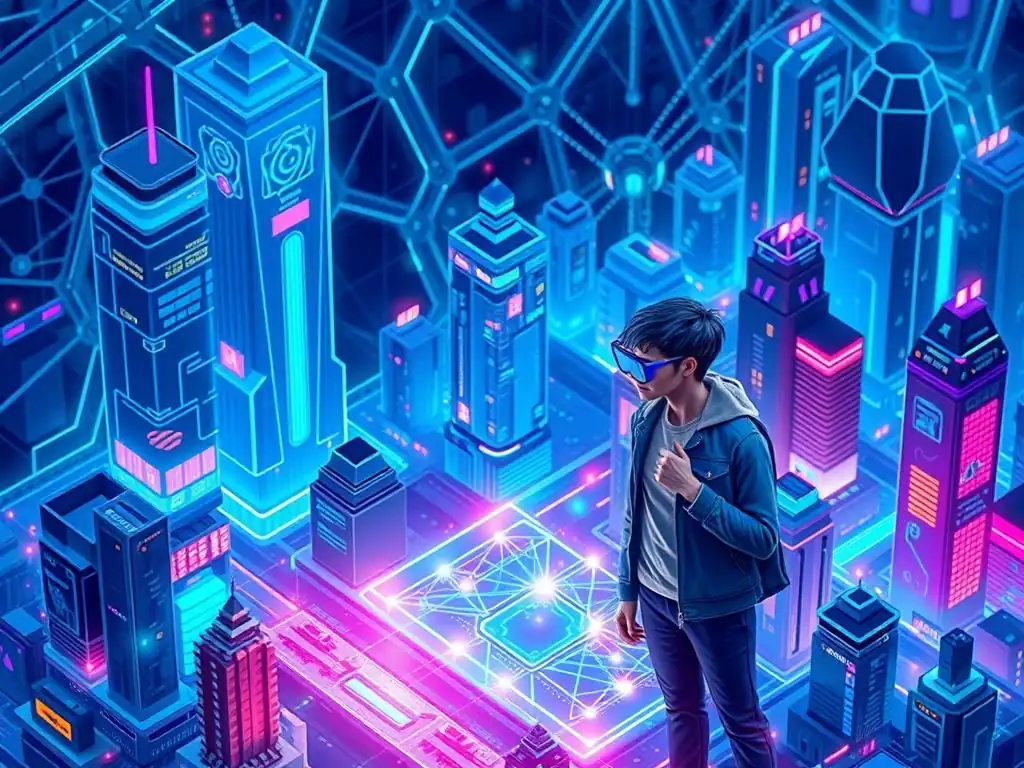
Welcome to Blockchain Trends, your compass in the rapidly evolving world of decentralized technology. Beyond the headlines of cryptocurrency, lies a universe of innovation waiting to be explored.
Ever wondered how blockchain is revolutionizing the gaming industry? This week, we delve into the intricacies of decentralized gaming smart contract design with insights from leading experts. Discover how these contracts are not just about transactions, but about creating immersive and truly player-owned experiences. Ready to unlock the future of gaming? Let's begin!
- Smart Contracts for Gaming: Creating Immersive and Decentralized Experiences
- Understanding Smart Contracts in Decentralized Gaming
- Decentralized Gaming Smart Contract Design: Core Principles
- Developing Immersive Gaming Experiences with Smart Contracts
- Challenges and Considerations for Smart Contract-Based Games
- Real-World Examples of Smart Contract Gaming Implementations
- The Role of Blockchain Developers in Shaping the Future of Gaming
- Future Trends in Decentralized Gaming Smart Contract Design
- Conclusion: The Transformative Power of Smart Contracts in Gaming
-
Frequently Asked Questions
- What are the primary advantages of using smart contracts in game development?
- How does decentralized gaming smart contract design differ from traditional game development?
- What are some common challenges developers face when designing smart contracts for gaming?
- Can you provide examples of successful use cases for smart contracts in gaming?
- What is the future outlook for decentralized gaming smart contract design?
- Final Reflection: Building Worlds Beyond Trust
- Level Up Your Gaming Future Now!
Smart Contracts for Gaming: Creating Immersive and Decentralized Experiences
Introduction: The Future of Gaming with Blockchain Technology
Blockchain technology is poised to revolutionize the gaming industry, moving beyond traditional models to create experiences that are more immersive, transparent, and player-centric. At the heart of this transformation are smart contracts – self-executing agreements with the terms directly written into code. These digital contracts operate on a decentralized ledger, offering unprecedented opportunities for innovation in game mechanics, asset ownership, and economic models. The integration of blockchain allows for a fundamental shift in how games are built and played, empowering players with true ownership and enabling new forms of interaction within virtual worlds.
This evolution promises a future where game economies are open, assets are truly owned and tradable across platforms, and game rules are enforced transparently by code rather than centralized entities. The concept of decentralized gaming, powered by robust smart contract design, is unlocking new possibilities, from play-to-earn ecosystems that reward players financially for their time and skill, to persistent virtual worlds where digital assets hold real-world value. Understanding how smart contracts function within this context is crucial for developers, players, and investors alike.
Understanding Smart Contracts in Decentralized Gaming
What are Smart Contracts and How Do They Work?
Smart contracts are programs stored on a blockchain that run when predetermined conditions are met. They are typically written in languages like Solidity (for Ethereum and compatible networks) or Rust (for Solana).
In the context of gaming, a smart contract can govern various aspects, such as the creation and transfer of in-game items, the rules for winning or losing a game round, the distribution of rewards, or the management of decentralized autonomous organizations (DAOs) within the game. Once deployed to the blockchain, a smart contract's code is immutable, meaning its rules cannot be changed unless specifically designed with upgradeability features (which themselves are governed by code).
When an action occurs in a blockchain game – for example, a player acquiring a unique item or winning a battle – the relevant smart contract is triggered. The contract verifies that the conditions for the action are met (e.g., the player defeated the opponent, the item was paid for) and then automatically executes the outcome, such as transferring ownership of an NFT asset to the player's wallet or distributing game tokens as a reward. This execution is transparent and verifiable on the blockchain, removing the need for a central authority to mediate or enforce game rules and transactions.
Key Benefits of Using Smart Contracts in Gaming
Smart contracts bring several significant advantages to the gaming landscape, fundamentally altering the relationship between players, developers, and the game itself. These benefits stem from the inherent properties of blockchain technology: decentralization, transparency, and immutability.
- Enhanced Transparency and Fairness
- Secure and Immutable Asset Ownership
- New Economic Models (e.g., Play-to-Earn)
- Interoperability of Assets (potential)
- Community Governance via DAOs
Enhanced Transparency and Fairness in Games
One of the primary benefits of using smart contracts is the unprecedented level of transparency they introduce into games. Game logic, rules, and transaction histories can be recorded on a public ledger, allowing players to verify the fairness of outcomes and the integrity of the game mechanics.
For instance, a smart contract governing loot box probabilities can be audited by anyone, proving that the stated drop rates are accurate and not manipulated. This builds significant trust within the player community, as they can see that the game is operating according to its programmed rules, free from hidden adjustments or biases.
This transparency is particularly impactful in competitive games or those involving valuable assets. Players can verify that matchmaking algorithms are fair (if partially on-chain), that random number generation is verifiable (using techniques discussed later), and that rewards are distributed correctly. This contrasts sharply with traditional games where the internal workings are opaque, requiring players to trust the developer's server and database. Smart contracts shift the trust model from trusting a central company to trusting the verifiable code on a decentralized network.
Secure and Immutable Game Asset Ownership
Smart contracts, particularly those implementing token standards like ERC-721 (for unique non-fungible tokens or NFTs) and ERC-20 (for fungible tokens), enable true digital ownership of in-game assets. When a player acquires an item represented by an NFT, the ownership is recorded immutably on the blockchain in their personal wallet, not within a game developer's database. This means the player genuinely owns the asset, just like owning physical property. The developer cannot arbitrarily remove, alter, or confiscate the asset.
This immutable ownership empowers players to use, trade, or sell their assets freely outside the confines of the specific game, on decentralized marketplaces. For example, a rare sword or a unique character skin, represented as an NFT, can be sold to another player on a platform like OpenSea or integrated into another compatible game if designed for interoperability. This level of security and permanence for digital items was previously impossible in traditional gaming, where assets were merely licensed to the player and controlled entirely by the game publisher.
New Revenue Models for Game Developers and Players
Smart contracts facilitate innovative economic models that can benefit both developers and players. The most prominent is the "play-to-earn" (P2E) model, where players can earn valuable assets (like tokens or NFTs) through gameplay, which they can then sell or trade on open markets. This creates a symbiotic relationship where player activity generates value within the game's ecosystem. Developers can earn revenue not just from initial sales or in-game purchases, but also from transaction fees on secondary market sales of their assets, often programmed directly into the smart contract (e.g., a 5% royalty fee every time an NFT is resold).
Furthermore, smart contracts enable decentralized finance (DeFi) elements within games, such as staking game tokens to earn rewards, yield farming within game ecosystems, or even lending game assets. This opens up diverse income streams for players beyond traditional in-game achievements. For developers, these models can foster stronger community engagement, incentivize long-term participation, and create self-sustaining economies that grow with the player base. The decentralized gaming smart contract design is key to implementing these complex economic interactions securely and automatically.
Decentralized Gaming Smart Contract Design: Core Principles
Designing effective and secure smart contracts for decentralized games requires careful consideration of blockchain constraints and opportunities. The core principles revolve around balancing on-chain transparency and security with off-chain efficiency and scalability.
Designing Secure and Efficient Game Logic on the Blockchain
Putting game logic directly onto the blockchain offers transparency but faces significant challenges related to cost and performance. Complex game calculations or real-time interactions are often too expensive and slow to execute directly via smart contracts due to gas fees and block times. Therefore, a crucial aspect of decentralized gaming smart contract design is determining which parts of the game logic must reside on-chain for security and trust, and which can be handled off-chain. Typically, core mechanics involving ownership, critical state changes, and value transfer are on-chain, while complex physics, rendering, or non-critical calculations are off-chain.
Secure design dictates thorough testing and auditing. Smart contracts are immutable, meaning bugs or vulnerabilities can be permanent and potentially exploited, leading to loss of assets or game integrity. Developers must adhere to best practices like using established libraries, writing clean and modular code, and conducting extensive unit testing, integration testing, and formal verification. Furthermore, engaging professional security auditors to review the smart contracts before deployment is a critical step, significantly reducing the risk of exploits that could undermine the entire game ecosystem.
Implementing Verifiable Randomness in Smart Contracts for Games
Randomness is a fundamental element in many games, from card draws and dice rolls to loot drops and critical hits. However, generating truly random numbers in a deterministic environment like a blockchain is challenging. Standard pseudo-random number generators are predictable and can be exploited by malicious actors who can front-run transactions or manipulate inputs. Verifiable Random Functions (VRFs) and oracle services like Chainlink VRF provide a secure and transparent solution. These services generate random numbers off-chain but provide cryptographic proof on-chain that the number was generated fairly and could not have been manipulated.
Implementing verifiable randomness is essential for ensuring fairness in decentralized games. Players need confidence that chance-based outcomes are genuinely random and not predetermined or exploitable. A well-designed decentralized gaming smart contract incorporates a secure VRF mechanism for any game event where randomness is critical, such as minting rare NFT assets with random traits, determining winners in a lottery system, or influencing in-game events based on chance. This prevents players or even the developer from predicting or influencing the outcome, preserving the integrity of the gameplay.
Managing Game State and Data on the Blockchain
Storing all game state and data directly on the blockchain is often impractical due to storage costs and limitations. A common approach in decentralized gaming smart contract design is to store only essential, security-critical data on-chain, such as asset ownership, player balances, and perhaps key game parameters or checkpoints. More dynamic or voluminous data, like detailed player statistics, inventory contents (if not NFTs), or complex world states, are typically stored off-chain in traditional databases or decentralized storage solutions like IPFS.
The smart contract then acts as a bridge and a validator. It references the off-chain data but enforces rules and state transitions for the critical on-chain elements. For example, a smart contract might verify that a player owns a specific NFT weapon on-chain before allowing them to use it in an off-chain battle simulation, and then update the player's on-chain token balance based on the battle outcome validated by the contract. This hybrid approach leverages the blockchain's security for critical components while maintaining the performance and scalability needed for complex game experiences.
Developing Immersive Gaming Experiences with Smart Contracts
Smart contracts are not just for backend mechanics; they are powerful tools for creating engaging and immersive front-end experiences that leverage the unique properties of blockchain.
Creating Unique In-Game Assets with NFTs
Non-Fungible Tokens (NFTs) are the cornerstone of digital ownership in blockchain gaming. Using smart contracts that adhere to standards like ERC-721 or ERC-1155, developers can mint unique or semi-unique in-game items, characters, land plots, or collectibles. Each NFT has a distinct identity recorded on the blockchain, making it verifiable and truly owned by the player. The smart contract defines the properties of the NFT, such as its metadata (linking to artwork, stats, description) and its behavior (tradability, usability within the game).
The ability to create provably unique and scarce digital assets transforms in-game economies. Players can collect, use, and trade these assets with confidence in their authenticity and ownership. Developers can design intricate systems where NFT assets level up, evolve, or gain new traits based on player actions, with these changes recorded immutably on the blockchain via smart contract interactions. This fosters deeper player investment and creates rich, dynamic economies driven by player-to-player interaction.
Building Decentralized Marketplaces for Game Items
Smart contracts enable the creation of decentralized marketplaces where players can buy, sell, and trade their in-game assets (NFTs and fungible tokens) peer-to-peer, without needing a centralized exchange controlled by the game developer. A marketplace smart contract facilitates these transactions, ensuring that when a buyer sends cryptocurrency or tokens, the seller's NFT is automatically transferred to the buyer's wallet, and the funds are sent to the seller. This process is automated, transparent, and trustless.
Decentralized marketplaces offer numerous advantages. They provide players with liquidity and control over their assets, allowing them to realize value from their gameplay. For developers, they can generate revenue through automated royalties embedded in the NFT smart contract whenever an asset is resold. Furthermore, these marketplaces can be open, allowing third-party tools and platforms to interface with the game's ecosystem, fostering a vibrant community around the game's assets. Effective decentralized gaming smart contract design is crucial for building secure and efficient marketplace functionalities.
Implementing Player Interaction and Rewards Using Smart Contracts
Smart contracts can power a wide array of player interactions and reward systems directly on the blockchain. This includes implementing game mechanics like quests, achievements, and competitive ladders where rewards (tokens, NFTs) are automatically distributed by the smart contract upon completion or victory, verified by on-chain data or secure oracles. Loyalty programs, staking mechanisms for earning passive income on game tokens, and even decentralized governance systems (DAOs) where players vote on game updates or treasury allocation can all be managed by smart contracts.
Using smart contracts for these interactions ensures that the rules for earning rewards are transparent and enforced automatically. Players can see exactly what is required to earn a reward and are guaranteed to receive it once the conditions are met, removing any potential for developer discretion or delay. This fosters trust and encourages active participation. Furthermore, complex systems like crafting items by combining multiple NFTs or breeding digital creatures can be encoded into smart contracts, creating intricate and engaging gameplay loops that leverage the unique capabilities of blockchain assets.
Challenges and Considerations for Smart Contract-Based Games
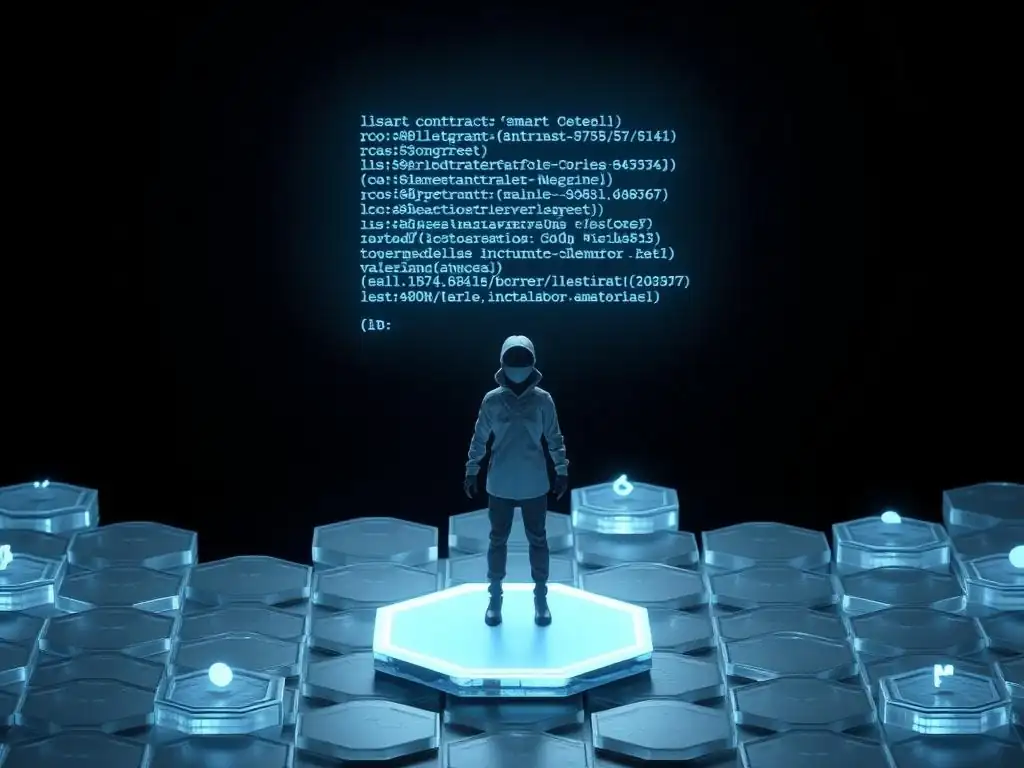
Despite the immense potential, developing games using smart contracts presents several significant challenges that must be addressed for widespread adoption.
- Scalability Issues
- Managing Transaction Costs
- Ensuring Security
- Complexity of Development
- User Experience (Wallet integration, gas fees abstraction)
Addressing Scalability Issues in Blockchain Gaming
One of the most significant hurdles for decentralized gaming is the inherent scalability limitations of many popular blockchains, particularly Layer 1 networks like Ethereum (though this is improving with upgrades). Blockchains process transactions sequentially, and the number of transactions per second (TPS) can be relatively low compared to the volume required for a fast-paced, real-time multiplayer game. High network activity can lead to congestion, slow transaction confirmation times, and increased costs.
Developers are actively exploring and implementing solutions to address this. Layer 2 scaling solutions (like rollups – Optimistic and Zero-Knowledge, and sidechains) process transactions off the main chain but periodically settle them on Layer 1, drastically increasing throughput and reducing latency. Building games on blockchains specifically designed for gaming or high throughput (like Flow, Solana, Immutable X on Ethereum Layer 2) is another approach. Effective decentralized gaming smart contract design increasingly involves structuring the game to minimize on-chain transactions or leveraging these scaling technologies.
Managing Transaction Costs
Executing smart contract functions and transferring assets on a blockchain typically requires paying a transaction fee, often referred to as "gas" (on Ethereum-compatible networks). These costs can fluctuate significantly based on network congestion and can be prohibitive for frequent, low-value in-game actions. A player shouldn't have to pay a fee every time they swing a sword or pick up a coin.
Developers must carefully design their smart contracts and game architecture to minimize on-chain transactions or abstract away gas costs for players. This can involve:
- Batching multiple actions into a single transaction.
- Using Layer 2 solutions where transaction costs are significantly lower, often fractions of a cent.
- Employing meta-transactions, where the game developer or a third party pays the gas fees on behalf of the player (subsidized).
- Designing gameplay loops so that only critical, infrequent actions (like trading a high-value NFT or withdrawing tokens) require on-chain transactions paid by the player.
Ensuring Security and Preventing Exploits
The immutable nature of smart contracts is a double-edged sword. While it ensures rules are enforced, it also means that any vulnerability or bug in the code can be permanently exploited by malicious actors, potentially leading to the loss of millions of dollars in assets or crippling the game's economy. The history of DeFi and blockchain gaming is unfortunately marked by numerous incidents of smart contract hacks.
Ensuring robust security is paramount in decentralized gaming smart contract design. This involves:
- Writing secure, audited code from the ground up.
- Following established security patterns and avoiding common pitfalls.
- Performing extensive internal testing and code reviews.
- Engaging reputable third-party security audit firms to conduct thorough vulnerability assessments before deployment.
- Implementing monitoring systems to detect suspicious activity.
- Considering upgradeability mechanisms (if necessary) that are themselves secure and perhaps governed by a DAO to allow for bug fixes or feature updates.
Real-World Examples of Smart Contract Gaming Implementations
Examining successful blockchain games provides insight into how smart contracts are being used to create engaging and economically viable experiences.
Case Study 1: Axie Infinity - Play-to-Earn Mechanics
Axie Infinity is a prime example of a game built around the play-to-earn model, heavily reliant on smart contracts. The core of the game involves digital creatures called Axies, which are NFTs (ERC-721 tokens). Players use these Axies to battle, breed, and collect resources. The game utilizes multiple smart contracts:
- Contracts for the Axie NFTs themselves, managing ownership and transfers.
- Contracts for the game's fungible tokens, Smooth Love Potion (
SLP) and Axie Infinity Shards (AXS), which are earned through gameplay and used for breeding and governance, respectively (ERC-20 tokens). - Contracts governing breeding mechanics, requiring
AXSandSLPtokens and resulting in new Axie NFTs. - Marketplace contracts facilitating the buying and selling of Axies and land plots.
At its peak, Axie Infinity boasted millions of daily active players and generated significant transaction volume, demonstrating the power of decentralized gaming smart contract design to support a large-scale, player-owned economy. The game's success highlighted the potential for players in developing nations to earn a living wage by playing, although it also exposed challenges related to tokenomics stability and accessibility.
Case Study 2: Decentraland - Virtual Land Ownership
Decentraland is a decentralized virtual world built on the Ethereum blockchain, where users can buy, build on, and monetize virtual parcels of land. The land parcels, known as LAND, are represented as non-fungible tokens (ERC-721). This means users have verifiable, immutable ownership of their digital real estate. Other in-world assets, such as wearables and unique creations, are also represented as NFTs.
Decentraland uses smart contracts extensively:
- The LAND contract manages the ownership and coordinates of all land parcels.
- The MANA token contract (ERC-20) is the game's native cryptocurrency used for purchasing LAND, goods, and services within the world.
- Smart contracts govern the marketplace where users trade LAND and other assets.
- DAO contracts manage the governance of the Decentraland platform, allowing
MANAandLANDholders to vote on proposals and treasury allocation.
Decentraland showcases how smart contracts can create persistent, player-owned virtual worlds where digital scarcity and ownership drive economic activity and user engagement. It illustrates a different facet of decentralized gaming smart contract design focused on virtual property rights and world-building.
The Role of Blockchain Developers in Shaping the Future of Gaming
Blockchain developers are at the forefront of this revolution, translating the potential of smart contracts into tangible gaming experiences.
Insights on Smart Contract Gaming Development
Developing games with smart contracts requires a unique blend of traditional game development skills and specialized blockchain knowledge. Developers need to understand the nuances of smart contract languages like Solidity, the architecture of blockchain networks, and the implications of decentralization on game design. This includes grappling with concepts like gas optimization, state management on a distributed ledger, and building secure interfaces between off-chain game engines and on-chain contracts.
Insights from experienced developers highlight the iterative nature of this field. Early decentralized gaming smart contract design often faced issues with performance and cost. Through experimentation and the development of new tools and Layer 2 solutions, the capabilities have expanded significantly. Developers are constantly innovating on how to use smart contracts for complex game mechanics while ensuring a smooth and responsive player experience that rivals traditional games where possible. The learning curve is steep, but the potential for creating entirely new genres and economies is a powerful motivator.
Best Practices for Building Secure and Engaging Blockchain Games
Building successful blockchain games hinges on adhering to rigorous best practices in smart contract development and overall game design.
- Prioritize Security: Conduct multiple audits, use formal verification, and follow secure coding standards. Assume contracts will be targeted by attackers.
- Optimize Gas Usage: Design contract interactions to be as efficient as possible to minimize player costs. Leverage Layer 2 solutions or gas abstraction.
- Keep Critical Logic On-Chain: Only put game mechanics requiring trustlessness and verifiable state changes on the blockchain.
- Use Established Token Standards: Utilize ERC-20, ERC-721, and ERC-1155 for fungible and non-fungible assets to ensure compatibility with wallets and marketplaces.
- Design for Scalability: Build with Layer 2 or high-throughput chains in mind from the outset.
- Focus on Gameplay: Blockchain elements should enhance, not detract from, the fun of the game. Avoid making the blockchain aspects overly complex for the average player.
- Plan Tokenomics Carefully: Design the game's economy and token distribution model to be sustainable and resistant to inflation or speculation bubbles.
- Engage the Community: Involve players in the development process and consider decentralized governance models.
Future Trends in Decentralized Gaming Smart Contract Design
The field of blockchain gaming and smart contract design is rapidly evolving, driven by technological advancements and growing user adoption.
Exploring Layer-2 Solutions for Scalable Gaming
The future of decentralized gaming smart contract design is inextricably linked to the advancement and adoption of Layer-2 scaling solutions. Networks like Polygon (a sidechain/L2 hybrid), Immutable X (an Ethereum-specific ZK-rollup for NFTs), and various Optimistic and ZK-rollup technologies are providing the necessary infrastructure for games with high transaction volumes and low latency requirements. These solutions allow developers to execute thousands, sometimes millions, of game-related transactions off-chain at minimal cost, settling only the final state changes or critical asset transfers onto the main chain.
This shift enables more complex and dynamic game mechanics that were previously infeasible due to Layer 1 limitations. Real-time interactions, frequent item usage, and large-scale multiplayer events become viable when the underlying smart contract logic can operate on a high-throughput Layer 2. The continued development and specialization of Layer 2s for specific use cases, like gaming, will be a major driver for the next generation of blockchain games.
Integrating Cross-Chain Functionality for Interoperable Assets
Currently, blockchain games often exist in silos on specific networks. A key trend in decentralized gaming smart contract design is the exploration of cross-chain interoperability. This involves enabling assets (like NFTs) or even player identities and progress to potentially move or be recognized across different blockchain networks. Bridges and cross-chain protocols are being developed to facilitate the secure transfer of assets between chains, allowing players to use their items in multiple games or ecosystems regardless of the underlying blockchain.
True cross-chain interoperability requires sophisticated smart contract design that can interact with bridging mechanisms securely and maintain asset integrity across different environments. While complex and still in relatively early stages, achieving seamless cross-chain functionality could unlock unprecedented potential for digital asset utility and create a more interconnected metaverse where items aren't confined to a single game world.
The Metaverse and Smart Contract-Based Gaming Experiences
The concept of the metaverse – a persistent, interconnected set of virtual spaces – aligns perfectly with the capabilities offered by smart contracts and decentralized gaming. Smart contracts can define the ownership and behavior of assets, land, and even virtual identities within the metaverse. They can govern interactions between users, facilitate commerce, and enforce rules across different virtual environments that are built on compatible blockchain standards.
Decentralized gaming smart contract design will be fundamental to building the infrastructure of the open metaverse. This includes creating standards for interoperable avatars and assets, developing smart contracts for dynamic virtual environments that react to user actions and external data, and implementing decentralized governance structures that allow users to have a say in how the metaverse evolves. Games built on smart contracts are effectively building the foundational layers of these future immersive, decentralized digital worlds.
Conclusion: The Transformative Power of Smart Contracts in Gaming
Smart contracts are not merely a technological add-on for games; they represent a paradigm shift in how games are conceived, developed, and played. By enabling true digital ownership, verifiable fairness, and innovative economic models like play-to-earn, smart contracts empower players and create entirely new opportunities for developers. While challenges related to scalability, cost, and security remain, ongoing advancements in decentralized gaming smart contract design, Layer 2 solutions, and cross-chain technology are rapidly addressing these hurdles. The future of gaming is increasingly decentralized, and smart contracts are the essential building blocks for creating these more immersive, equitable, and player-centric experiences.
Frequently Asked Questions
What are the primary advantages of using smart contracts in game development?
Smart contracts enable decentralized ownership of in-game assets, ensure provably fair gameplay, and facilitate transparent transactions between players.
How does decentralized gaming smart contract design differ from traditional game development?
Traditional development relies on centralized servers, while decentralized gaming uses smart contracts on a blockchain for game logic and asset management, creating a trustless environment. This shifts control to the players.
What are some common challenges developers face when designing smart contracts for gaming?
Challenges include high gas fees, scalability issues, and the complexity of writing secure and efficient smart contract code. Optimizing for performance is crucial.
Can you provide examples of successful use cases for smart contracts in gaming?
Examples include play-to-earn games where players earn cryptocurrency for their in-game achievements, and NFT-based games where in-game items are represented as unique, tradable tokens.
What is the future outlook for decentralized gaming smart contract design?
The future involves greater adoption as blockchain technology matures, leading to more sophisticated and immersive gaming experiences. Expect advancements in scalability solutions and user-friendly interfaces.
Final Reflection: Building Worlds Beyond Trust
The exploration of smart contracts in gaming, as we've seen, isn't just about technological advancement; it's about redefining the very nature of ownership and trust within virtual worlds. The potential for truly decentralized gaming experiences, where players have verifiable control over their assets and interactions, is no longer a distant dream, but a rapidly approaching reality.
This shift towards decentralized gaming is profoundly impacting the cultural landscape, fostering a sense of community and shared ownership that traditional gaming models often lack. The ability to directly influence the game's economy and even its rules, through decentralized governance, empowers players in unprecedented ways. The future of gaming is not just about better graphics or more immersive gameplay, it's about giving players real ownership and control over their digital experiences.
This quote encapsulates the core principle driving the adoption of smart contracts in gaming, and its potential to reshape the industry.
As we conclude this journey into the realm of decentralized gaming smart contract design, I invite you to consider the implications for your own engagement with the digital world. How can you leverage the principles of transparency, ownership, and community to build more meaningful and equitable experiences, not just in gaming, but in all aspects of your life? Embrace the power of decentralization and become an architect of a future where trust is built into the very fabric of our digital interactions.
Level Up Your Gaming Future Now!
Thank you for exploring the potential of smart contracts in gaming with us! We hope you've gained a clear understanding of how blockchain technology can create more immersive and decentralized experiences. Now it's time to take your knowledge to the next level!
Here are a few ways to get started:
- Start building your own simple game using a smart contract platform! Experiment with creating decentralized in-game assets or verifiable random number generation for a truly unique gaming experience.
- Explore existing blockchain-based games and actively participate in their communities. Share your thoughts, provide feedback, and contribute to the evolution of decentralized gaming.
- Research innovative use cases of NFTs beyond simple ownership. Consider how NFTs can enable dynamic character progression or support truly player-owned economies within games.
Ready to transform gaming with the power of smart contracts? What kind of innovative game mechanics will you create first? Let us know in the comments below!
Leave a Reply