
State Management in DApps: Handling Data Persistency in Decentralized Applications


Welcome to Blockchain Trends, your compass in the ever-evolving world of decentralized technology! Beyond the buzz of cryptocurrencies lies a universe of innovation, from revolutionizing finance with DeFi to reshaping industries with enterprise applications. But how do we ensure data integrity in these decentralized ecosystems? Dive in to explore crucial Blockchain data persistence strategies and unlock the secrets to building robust and reliable DApps. Discover how state management is reshaping the future of decentralized application development and what it means for the future of the web.
-
Blockchain Data Persistence Strategies for DApps: A Comprehensive Guide
- Introduction to State Management in Decentralized Applications (DApps)
- The Challenge of Data Persistency in Blockchain Applications
- Blockchain Data Persistence Strategies: An In-Depth Comparison
- Exploring Different Off-Chain Storage Solutions for DApps
- Choosing the Right Data Persistence Strategy for Your DApp
- Implementing Blockchain Data Persistence: Practical Examples
- Advanced Techniques for Managing State in DApps
- Security Considerations for Blockchain Data Persistence
- The Future of Data Persistency in Decentralized Applications
- Conclusion: Mastering Blockchain Data Persistence Strategies for Successful DApp Development
-
Frequently Asked Questions
- What are some common blockchain data persistence strategies used in DApps?
- Why is data persistency a crucial consideration when developing decentralized applications (DApps)?
- How does on-chain storage contribute to data immutability in DApps?
- What are the trade-offs between using on-chain versus off-chain storage for DApp data?
- How can hybrid approaches to data persistence optimize DApp performance and cost-effectiveness?
- Final Reflection: Embracing Decentralized Data Integrity
- Unlock the Power of Persistency: Dive Deeper into DApp Development!
Blockchain Data Persistence Strategies for DApps: A Comprehensive Guide
Introduction to State Management in Decentralized Applications (DApps)
Decentralized applications (DApps) operate on blockchain networks, inheriting many of their core characteristics, including immutability and decentralization. However, managing the state – the dynamic data that changes as users interact with the application – presents unique challenges compared to traditional centralized applications.
While the blockchain is excellent for storing immutable transaction records and smart contract logic, it is often impractical or prohibitively expensive for storing large amounts of application-specific data, such as user profiles, media files, or extensive historical logs. Effective state management is critical for the functionality and user experience of any DApp, requiring careful consideration of where and how data is stored and accessed.
The state of a DApp encompasses all the information necessary for its current operation and future execution. This includes variables within smart contracts, balances of tokens, ownership records, and any other data the application relies upon. As DApps become more complex and handle larger volumes of data, implementing robust blockchain data persistence strategies becomes paramount. Developers must navigate the trade-offs between relying solely on the blockchain's inherent persistence and leveraging external storage solutions to achieve scalability, performance, and cost-efficiency, all while striving to maintain the principles of decentralization that underpin the DApp architecture.
The Challenge of Data Persistency in Blockchain Applications
Understanding Immutable Data on the Blockchain
One of the fundamental properties of blockchain technology is immutability. Once data is recorded in a block and that block is added to the chain, altering or deleting that data becomes virtually impossible due to cryptographic hashing and the distributed nature of the ledger. This characteristic is ideal for ensuring the integrity and auditability of transactions, ownership records, and smart contract code.
For example, a transaction recording the transfer of 10 ETH from address A to address B is permanently etched onto the Ethereum blockchain, providing an unalterable history. This immutability is a cornerstone of trust in decentralized systems, ensuring that past states and actions cannot be retrospectively changed.
While immutability guarantees data integrity, it poses challenges for managing dynamic application data. Storing large, frequently changing datasets directly on the blockchain would lead to excessive storage costs and network congestion. Consider a social media DApp where users upload photos or videos.
Storing these files directly on-chain is economically unfeasible; storing even a modest 1MB file on Ethereum could potentially cost hundreds or thousands of dollars in gas fees, depending on network conditions and the specific storage operation. Furthermore, the immutability means that updating a user's profile picture or editing a post isn't a simple overwrite operation; it typically involves adding new data that supersedes the old, further increasing the chain's size and cost. This inherent limitation necessitates alternative blockchain data persistence strategies for the bulk of DApp data.
The Need for Off-Chain Storage Solutions for DApps
Given the limitations of storing all data directly on the blockchain, off-chain storage solutions become essential components of most DApp architectures. These solutions involve storing certain types of data outside the main blockchain ledger, typically on centralized servers or decentralized storage networks. This approach significantly reduces the data load on the blockchain, leading to lower transaction costs (gas fees) and improved application performance and scalability. For instance, a decentralized file-sharing DApp would store the actual files off-chain, only recording hashes or pointers to these files on the blockchain to maintain a verifiable link and ownership record.
The necessity for off-chain storage is driven by practical considerations like data volume, cost, and access speed. Storing gigabytes or terabytes of application data on a public blockchain is simply not viable from a cost perspective, with average storage costs on Layer 1 blockchains like Ethereum being orders of magnitude higher per gigabyte than traditional cloud storage. Accessing large datasets directly from the blockchain can also be slow and cumbersome, requiring traversing blocks.
By utilizing off-chain storage, DApps can handle rich media, extensive user-generated content, and large historical archives efficiently, while still leveraging the blockchain for critical, immutable data like ownership proofs, access permissions, or state roots that verify the integrity of the off-chain data. This hybrid approach is a common element in effective blockchain data persistence strategies.
Blockchain Data Persistence Strategies: An In-Depth Comparison
On-Chain Data Storage: Advantages and Limitations
On-chain data storage refers to embedding data directly within the blockchain itself, typically within transaction inputs, event logs, or smart contract state variables. The primary advantage of this method is inheriting the blockchain's core properties: immutability, transparency (on public blockchains), censorship resistance, and the guarantee that the data exists as long as the network exists. Data stored on-chain is part of the globally replicated ledger, accessible to anyone and verified by the network's consensus mechanism.
This is ideal for storing critical, small pieces of data that require the highest level of trust and security, such as token balances, ownership records, digital signatures, or critical configuration parameters for a smart contract. A simple example is storing the total supply of an ERC-20 token or the owner address of an NFT directly in the token's smart contract state.
However, the limitations of on-chain storage are significant and often prohibitive for large-scale DApps. The cost per unit of storage is extremely high compared to traditional or decentralized off-chain alternatives. For example, storing 256 bits (32 bytes) of data in an Ethereum smart contract state costs 20,000 gas, which translates to a variable monetary cost based on gas prices, often several dollars or more for even a small amount of data.
This cost increases with the amount of data stored and the frequency of updates. Furthermore, blockchains have limited throughput, meaning storing and retrieving large amounts of data can clog the network and slow down transactions.
Querying complex or large datasets directly from the chain is also inefficient and often requires specialized indexing services (like The Graph) built off-chain. These factors make exclusive reliance on on-chain storage impractical for most data-intensive DApps, highlighting the need for comprehensive blockchain data persistence strategies.
Off-Chain Data Storage: Advantages and Limitations
Off-chain data storage involves storing data outside the blockchain network, with a reference (like a hash or pointer) potentially stored on-chain for verification or linking purposes. The main advantages are significantly lower storage costs, higher capacity, and faster read/write operations compared to on-chain storage. This allows DApps to handle large files, multimedia content, and extensive databases that would be impossible to store on the blockchain.
For instance, storing a 1GB video file on a decentralized storage network like Filecoin might cost a fraction of a cent per month (based on typical market rates, subject to change), a stark contrast to the potentially millions of dollars it could cost on-chain. Off-chain storage also doesn't directly contribute to blockchain bloat, helping to keep the ledger size manageable and transaction fees lower for core operations.
The primary limitation of off-chain storage is the potential compromise of some blockchain-native properties, particularly decentralization and immutability, depending on the specific off-chain solution used. If data is stored on a single centralized server, it introduces a single point of failure and censorship risk, contradicting the decentralized ethos of DApps. Even with decentralized storage networks, ensuring the data's long-term availability and resistance to tampering relies on the economic incentives and cryptographic guarantees of that specific network, which differ from the blockchain's consensus.
Additionally, maintaining a verifiable link between the on-chain record (the hash) and the off-chain data requires careful implementation; if the off-chain data is altered without updating the on-chain hash, the link is broken, and the on-chain record no longer verifies the current data. Therefore, while essential for scalability, off-chain solutions require careful selection and implementation as part of robust blockchain data persistence strategies.
Exploring Different Off-Chain Storage Solutions for DApps
Centralized Servers: Trade-offs in Decentralization
Using centralized servers, such as traditional cloud storage providers like Amazon S3, Google Cloud Storage, or Microsoft Azure Blobs, is a common and often pragmatic off-chain storage solution for DApps. These services offer high performance, reliability (backed by service level agreements, often 99.9% uptime or higher), virtually unlimited scalability, and relatively low costs (e.g., AWS S3 standard storage costs around $0.023 per GB per month). Developers are familiar with these technologies, making implementation straightforward.
Many DApps use centralized servers to store large assets like images, videos, or application front-end files, while only storing hashes or references on the blockchain. For example, a DApp might store user profile pictures on AWS S3 and store the S3 URL or a content hash on-chain linked to the user's address.
However, relying on centralized servers introduces significant trade-offs regarding decentralization and censorship resistance. The data is controlled by a single entity (the cloud provider), which could theoretically censor, alter, or lose the data. There's also a single point of failure; if the provider's service is interrupted or the DApp developer's account is suspended, the off-chain data becomes inaccessible.
This contradicts the core principles of decentralization that DApps are built upon. While cost-effective and performant, this approach means the DApp is not fully decentralized and is susceptible to external control or failure points inherent in traditional web infrastructure. Therefore, while sometimes used for practical reasons, this is often seen as a less ideal component of a fully decentralized blockchain data persistence strategy.
Decentralized Storage Networks: IPFS, Arweave, Filecoin
Decentralized storage networks aim to provide off-chain storage solutions that align more closely with the decentralized ethos of blockchain technology. These networks distribute data across multiple nodes operated by different entities, reducing single points of failure and censorship risk. Data integrity is typically protected using cryptographic hashing, and data availability is often incentivized through economic mechanisms. Prominent examples include the InterPlanetary File System (IPFS), Arweave, and Filecoin, each offering distinct models for data storage and persistence, providing more decentralized blockchain data persistence strategies.
These networks offer varying degrees of persistence and decentralization. IPFS provides content-addressable storage, where files are identified by a hash of their content, ensuring that if the content changes, the address changes. However, IPFS itself doesn't guarantee permanent storage; data must be "pinned" by nodes willing to store it.
Arweave offers a model for permanent, one-time-payment data storage. Filecoin, built on IPFS, adds an incentive layer using cryptocurrency to encourage nodes to store data reliably over time. Choosing among these depends on the DApp's specific needs regarding data permanence, cost model, and required level of decentralization, forming key components of advanced blockchain data persistence strategies.
IPFS for DApp Data Storage: Concepts and Implementation
IPFS (InterPlanetary File System) is a distributed system for storing and accessing files, websites, applications, and data. Unlike traditional web addresses (URLs) that point to where data is located (on a specific server), IPFS uses content addressing, meaning data is retrieved based on what it is (its cryptographic hash). When you add a file to IPFS, it's broken into chunks, cryptographically hashed, and given a unique Content Identifier (CID). To retrieve the file, you ask the IPFS network for the data associated with that CID, and the network finds peers holding those chunks. Storing a 1MB file on IPFS generates a CID (e.g., Qm...), which can then be stored on-chain in a smart contract. This on-chain CID acts as an immutable, verifiable pointer to the off-chain data.
Implementing IPFS in a DApp typically involves using client libraries (like ipfs-http-client in JavaScript) to add and retrieve files from an IPFS node (which can be a local node, a public gateway, or a pinning service). For example, an NFT platform might store the NFT's image or metadata file on IPFS, storing the resulting CID in the NFT contract's tokenURI. While IPFS itself is decentralized, guaranteeing data availability requires "pinning" the data, which means ensuring that one or more nodes are committed to storing it. DApps often use dedicated IPFS pinning services (like Pinata or Infura IPFS) or run their own IPFS nodes to ensure that the data remains accessible. This introduces a dependency, though the data itself is still content-addressed and distributed across nodes holding it. IPFS is a popular choice for storing static assets, media, and larger datasets linked from the blockchain as part of various blockchain data persistence strategies.
Arweave for Permanent Data Storage in Blockchain Applications
Arweave is a decentralized storage network designed to provide permanent data storage with a single upfront payment. Its core technology, the "Blockweave," is a data structure similar to a blockchain but optimized for storing data rather than just transactions. Arweave aims to provide "permaweb" – a permanent, decentralized web.
When you store data on Arweave, you pay a one-time fee that is calculated to fund the storage of that data for 200 years or more, based on projections of future storage costs and network endowment. This payment model and technical architecture make Arweave particularly suitable for archiving data that needs to be accessible indefinitely, such as historical records, academic papers, or the provenance data for digital assets.
A DApp could use Arweave to permanently archive important historical data, logs, or even the application's front-end code. For instance, a decentralized governance DApp might store the full text of proposals and voting results on Arweave, with the Arweave transaction ID stored on-chain in the governance contract. This ensures that the complete, detailed history of governance decisions is permanently accessible and verifiable.
While the upfront cost can be higher than other storage options for the same amount of data initially, the promise of permanence without recurring fees is a unique value proposition. As of early 2024, storing 1GB on Arweave costs approximately 80 AR (Arweave tokens), which fluctuates with market price, representing a significant upfront investment for large datasets but guaranteeing long-term availability. This focus on permanence distinguishes Arweave within the landscape of blockchain data persistence strategies.
Filecoin: Incentivized Decentralized Storage for DApps
Filecoin is a decentralized storage network that provides a marketplace for storage using the IPFS protocol. It allows users to pay storage providers to store their data, and providers earn Filecoin (FIL) tokens for storing data and proving they are doing so over time. Filecoin leverages IPFS for content addressing and data distribution but adds a layer of economic incentives to ensure data is stored reliably and persistently. Storage providers must prove they are storing the data through mechanisms like Proof-of-Replication and Proof-of-Spacetime. This creates a decentralized market for storage, with prices determined by supply and demand.
DApps can use Filecoin to store larger datasets that require verifiable, persistent storage but might not need the "permanent" guarantee of Arweave or where a pay-as-you-go or time-limited storage model is preferred. For example, a decentralized video streaming DApp could use Filecoin to store video files, paying storage providers to host the content. A decentralized cloud storage DApp could use Filecoin as its backend storage layer. The DApp would interact with the Filecoin network to make storage deals, retrieve data, and potentially verify storage proofs. As of early 2024, the cost to store 1GiB on Filecoin for a year can be as low as $0.000001 to $0.000002 (in FIL), depending on the deal and market conditions, making it very competitive with traditional cloud storage for bulk data, while offering decentralized verification. Filecoin offers a robust, economically incentivized option among blockchain data persistence strategies for data that needs reliable long-term storage.
Choosing the Right Data Persistence Strategy for Your DApp
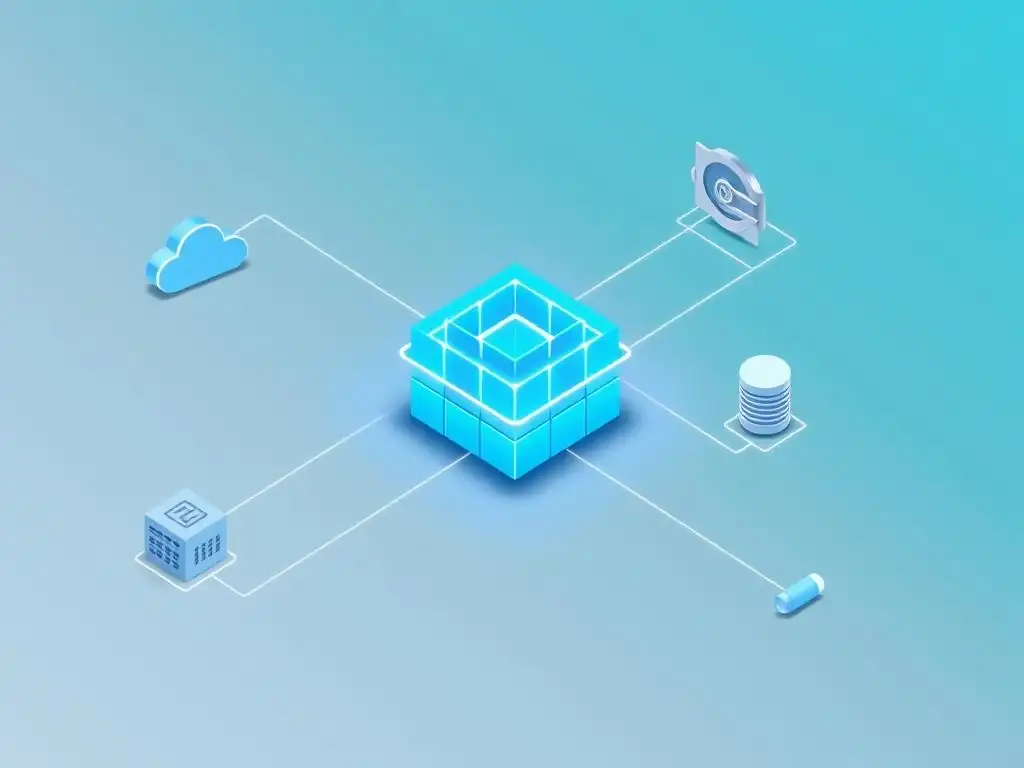
Factors to Consider: Scalability, Cost, Security, and Decentralization
Selecting the appropriate blockchain data persistence strategies for a DApp involves balancing several critical factors. Scalability is paramount; the chosen solution must be able to handle the anticipated volume of data and user activity without becoming prohibitively expensive or slow. Costs vary significantly between on-chain, centralized off-chain, and decentralized off-chain options – storing metadata on-chain might be acceptable, but storing high-resolution images for millions of users requires a cost-effective off-chain solution. Security is non-negotiable; data must be protected from unauthorized access, tampering, and loss, utilizing encryption and access control where necessary, whether data is on-chain or off-chain.
Finally, the desired level of decentralization is a core consideration. A DApp aiming for maximum censorship resistance and trustlessness will prioritize decentralized storage solutions over centralized ones, even if it means higher complexity or different cost models.
A hybrid approach, combining on-chain storage for critical state and ownership proofs with off-chain storage (centralized or decentralized) for bulk data, is often the most practical strategy. Developers must analyze the nature of the data their DApp handles – its size, frequency of access/modification, sensitivity, and how critical it is for the DApp's core function – to determine the optimal combination of blockchain data persistence strategies.
Data Sensitivity and Compliance Considerations
The sensitivity of the data a DApp handles significantly impacts the choice of storage solution and required security measures. Personal identifiable information (PII), financial data, or health records require robust privacy and security protections, often necessitating encryption and strict access control. Storing highly sensitive data directly on a public, transparent blockchain is generally not advisable due to its public nature, unless it's encrypted end-to-end such that only authorized parties can decrypt it. Off-chain storage, particularly with strong encryption and access management, is typically preferred for sensitive data.
Furthermore, DApps operating in regulated industries or handling user data from specific jurisdictions must consider compliance requirements such as GDPR (General Data Protection Regulation) or CCPA (California Consumer Privacy Act). These regulations often mandate data privacy, the right to erasure, and specific data handling practices that can be challenging to reconcile with the immutable nature of blockchain and the decentralized nature of some storage solutions.
While the blockchain provides immutability for records, managing the actual sensitive data off-chain in a way that allows for updates or deletion (if legally required) becomes crucial. Implementing appropriate access controls, encryption, and potentially using permissioned storage solutions are vital aspects of blockchain data persistence strategies when dealing with sensitive or regulated data.
Implementing Blockchain Data Persistence: Practical Examples
Example 1: Using IPFS for Storing User Profile Data in a DApp
Consider a decentralized social networking DApp where users want to upload profile pictures and cover photos. Storing these image files (which can range from a few KB to several MB) directly on a Layer 1 blockchain like Ethereum would be economically impossible. A practical blockchain data persistence strategy here involves using IPFS.
When a user uploads an image, the DApp front-end or a backend service adds the image file to IPFS via a pinning service (like Pinata or Infura IPFS). IPFS returns a unique Content Identifier (CID) for the file. This CID is then stored on-chain, perhaps in a user's smart contract profile or a registry contract, linked to their blockchain address.
When another user views the profile, the DApp retrieves the CID from the blockchain. It then uses an IPFS gateway (either public or the DApp's own) to fetch the image file associated with that CID from the IPFS network. The integrity of the image can be verified by hashing the retrieved file and comparing it to the CID (which is a hash of the original content).
This approach keeps the high-cost, limited-capacity blockchain free of bulk media data while using it as a verifiable, immutable index pointing to the off-chain content stored on a decentralized network. This is a common pattern in many DApps handling user-generated content.
Example 2: Utilizing Arweave for Archiving Transaction History
Imagine a decentralized finance (DeFi) DApp that processes a high volume of transactions (swaps, loans, etc.). While the core transaction records are on the blockchain, the DApp might generate detailed logs, audit trails, or user-friendly summaries of these transactions that are too large or complex to store on-chain indefinitely. To ensure these detailed records are permanently accessible for users, auditors, or compliance purposes, Arweave can be used as an archival layer.
After a transaction or a batch of transactions is processed and confirmed on the main blockchain (e.g., Ethereum or Polygon), the DApp's backend service compiles a detailed log file containing all relevant information – timestamps, specific parameters, internal calculations, etc. This log file is then uploaded to Arweave with a single payment. The resulting Arweave transaction ID is stored on the originating blockchain, linked to the relevant on-chain transaction or block number.
Users or auditors can then use the Arweave transaction ID retrieved from the blockchain to access the comprehensive, permanently stored log file on the Arweave network via an Arweave gateway. This provides a robust blockchain data persistence strategy for ensuring long-term availability of critical historical records.
Example 3: Combining On-Chain and Off-Chain Storage for Optimal Performance
Many DApps employ a hybrid blockchain data persistence strategy that intelligently combines on-chain and off-chain storage to leverage the strengths of each. A decentralized gaming DApp, for example, might store ownership of game assets (NFTs) on-chain using smart contracts, providing immutable proof of ownership. Core game state, such as character levels, inventory items (if not NFTs), or progress within a specific game session, might be updated frequently and doesn't necessarily require the highest level of on-chain immutability or global consensus for every change.
In this scenario, the critical ownership data resides on-chain. Less critical, frequently changing game state could be stored off-chain on a decentralized storage network like Filecoin or even a permissioned database, with occasional "checkpoints" or state roots hashed and committed to the blockchain. For instance, after a gaming session, the final state of the player's character might be saved to Filecoin, and the hash of this state file is stored on-chain.
This on-chain hash proves that the off-chain state data hasn't been tampered with since the last checkpoint. This hybrid model balances the need for verifiable, secure on-chain records with the performance and cost requirements of dynamic, high-volume application data, representing a sophisticated approach to blockchain data persistence strategies.
Advanced Techniques for Managing State in DApps
State Channels: Enhancing Scalability and Reducing On-Chain Transactions
State channels are a Layer-2 scaling technique that allows participants to conduct multiple transactions or state updates off-chain, with only the initial setup and final state settlement transactions recorded on the blockchain. Imagine two users playing a decentralized card game. Instead of recording every move (which changes the game's state) on the blockchain, they open a state channel by locking a small amount of cryptocurrency in a multi-signature contract on-chain.
All subsequent game moves and state changes occur off-chain, with participants cryptographically signing each state update. Only when the game ends, or if a dispute arises, is the final state (or the state at the point of dispute) broadcast and settled on the main chain.
This significantly reduces the number of on-chain transactions required, lowering gas costs and increasing transaction speed. For a game with hundreds of moves, only two or three on-chain transactions might be needed instead of hundreds.
While state channels are primarily a scaling solution, they are also a blockchain data persistence strategy for managing rapid, peer-to-peer state changes off-chain, ensuring the integrity of the off-chain interactions through cryptographic proofs and the ability to fall back to the main chain for enforcement. They are particularly useful for applications requiring high-frequency interactions between a limited set of participants, like payment channels or real-time gaming.
Sidechains and Layer-2 Solutions for Data Scalability
Sidechains and other Layer-2 scaling solutions (like Optimistic Rollups and zk-Rollups) offer alternative approaches to handling larger volumes of data and transactions off the main chain while inheriting some of its security properties. Sidechains are independent blockchains that are pegged to a main chain, allowing assets to be transferred between them. They can have different consensus mechanisms and data structures, potentially offering higher throughput and lower transaction costs, making them suitable for DApps with significant data needs. Data and state changes occur on the sidechain, with periodic checkpoints or summaries potentially committed back to the main chain.
Rollups (Optimistic and Zk-Rollups) execute transactions and manage state off-chain but post transaction data or validity proofs back to the main chain (e.g., Ethereum). Optimistic Rollups assume transactions are valid by default and run a fraud-proving period where anyone can challenge an invalid state transition. Zk-Rollups use zero-knowledge cryptography to generate validity proofs for off-chain state transitions, which are then verified on-chain.
Both methods drastically increase transaction throughput and data capacity compared to the main chain, as the bulk of computation and state storage occurs off-chain. The main chain acts as a highly secure, albeit more expensive, data availability layer and verifier for the off-chain state. These Layer-2 solutions represent advanced blockchain data persistence strategies that abstract away much of the data handling from the base layer.
Security Considerations for Blockchain Data Persistence
Protecting Off-Chain Data from Tampering and Data Loss
While off-chain storage offers scalability and cost benefits, it introduces security risks not present with on-chain data. Data stored off-chain is susceptible to tampering, unauthorized access, and data loss if not properly secured. Unlike the blockchain's inherent immutability and distributed redundancy, off-chain solutions require explicit security measures.
Encryption is a fundamental protection against unauthorized access; sensitive data should be encrypted before being stored off-chain, ensuring that only parties with the decryption key can read it. Access control mechanisms, whether managed by smart contracts on-chain or by the off-chain storage provider, are necessary to restrict who can read, write, or delete data.
To mitigate data loss, especially with decentralized storage networks, understanding the network's redundancy and reliability guarantees is crucial. Services like Filecoin and Arweave have built-in mechanisms and incentives to ensure data persistence, but developers must configure storage deals appropriately (e.g., replicating data across multiple providers on Filecoin). When using centralized storage, standard backup and disaster recovery practices are essential.
A critical aspect of blockchain data persistence strategies involving off-chain data is maintaining the link between the on-chain record (like a hash or CID) and the off-chain data; if the off-chain data is compromised or lost, the on-chain record becomes a pointer to invalid or missing data. Therefore, ensuring the integrity and availability of the off-chain data is as important as securing the on-chain components.
Encryption and Access Control Mechanisms
Implementing robust encryption and access control is paramount when using off-chain storage for DApps, especially for sensitive data. Data should be encrypted at the client-side before being sent to the storage layer, ensuring that the storage provider (whether centralized or decentralized) cannot access the plaintext. Techniques like symmetric encryption (using a shared secret key) or asymmetric encryption (using public/private key pairs) can be employed. Key management becomes critical; how are encryption keys generated, stored, and shared securely among authorized users? Decentralized key management solutions or integrating with decentralized identity systems can help manage this complexity.
Access control determines who can read, write, or modify the off-chain data. This can be managed on-chain via smart contracts. For example, a smart contract could store encrypted data and decryption keys, releasing the key only to addresses meeting certain criteria (e.g., owning a specific NFT, possessing a certain token balance, or being part of a predefined list).
Alternatively, access control can be managed via the off-chain storage provider's permissions system, though this reintroduces a degree of centralization. Combining on-chain logic for permissioning with off-chain encrypted storage provides a powerful blockchain data persistence strategy that balances decentralization for critical access rules with flexible, scalable off-chain storage for the data itself.
The Future of Data Persistency in Decentralized Applications
Emerging Technologies and Trends in Blockchain Storage
The field of blockchain data persistence strategies is continuously evolving with new technologies and approaches. Layer-2 solutions are becoming more sophisticated, offering greater scalability and abstracting more data handling off the main chain. Projects are exploring specialized blockchains optimized specifically for data storage (sometimes referred to as Layer-0 or data availability layers). There's increasing interest in confidential computing and trusted execution environments (TEEs) to perform computations on encrypted off-chain data without revealing the data itself, enhancing privacy for sensitive information.
Another trend is the development of decentralized databases that offer more structured querying capabilities than simple file storage systems like IPFS or Arweave, while maintaining decentralized properties. Graph databases built on decentralized storage are also emerging to handle complex relationships within DApp data. Integration between different decentralized storage networks is also improving, potentially allowing DApps to store data on one network and use another for processing or archiving. These advancements promise more flexible, performant, and truly decentralized options for managing the ever-growing data needs of DApps, pushing the boundaries of blockchain data persistence strategies.
The Role of Data Governance in DApps
As DApps mature and handle more complex data, the importance of data governance increases. This involves defining policies and procedures for managing the lifecycle of data within the DApp – how it's created, stored, accessed, updated, and eventually archived or potentially deleted (where feasible and compliant). In a decentralized context, data governance decisions might be managed through decentralized autonomous organizations (DAOs), where token holders vote on proposals related to data handling, privacy policies, or the choice of storage providers.
Data governance is particularly critical for DApps dealing with user data or sensitive information. It ensures transparency in how data is handled and provides a mechanism for the community or users to have a say in data-related decisions. Establishing clear governance rules around data persistence strategies, including how off-chain data is secured, who has access, and how compliance with regulations is maintained, is essential for building trust and ensuring the long-term viability of decentralized applications. Effective data governance frameworks, often facilitated by on-chain mechanisms, are becoming a key component of comprehensive blockchain data persistence strategies.
Conclusion: Mastering Blockchain Data Persistence Strategies for Successful DApp Development
Developing successful decentralized applications requires a deep understanding of blockchain data persistence strategies. While the blockchain provides unparalleled immutability and security for critical, small state data, its limitations in terms of cost, speed, and capacity necessitate the use of off-chain storage solutions for most application data. Developers must carefully weigh the trade-offs between centralized and decentralized off-chain options, considering factors like scalability, cost, security, and the required level of decentralization.
Hybrid architectures, combining on-chain pointers with off-chain data storage on platforms like IPFS, Arweave, or Filecoin, or leveraging Layer-2 scaling solutions, are common and effective approaches. Implementing robust security measures like encryption and access control is paramount for protecting off-chain data. As the DApp ecosystem evolves, new storage technologies and governance models will continue to enhance the capabilities and options available for managing data persistently in a decentralized manner. Mastering these diverse blockchain data persistence strategies is crucial for building DApps that are not only decentralized but also scalable, performant, and user-friendly.
Frequently Asked Questions
What are some common blockchain data persistence strategies used in DApps?
Common strategies include using on-chain storage (directly on the blockchain), off-chain storage solutions (like IPFS or centralized databases), and hybrid approaches that combine both for optimal performance and cost.
Why is data persistency a crucial consideration when developing decentralized applications (DApps)?
Without proper data persistency, DApps are vulnerable to data loss, integrity issues, and inability to function reliably. Persistent data ensures consistent application state and functionality.
How does on-chain storage contribute to data immutability in DApps?
On-chain storage leverages the inherent immutability of blockchain. Once data is written to the blockchain, it cannot be altered, providing a high degree of data integrity and transparency.
What are the trade-offs between using on-chain versus off-chain storage for DApp data?
On-chain storage offers immutability and decentralization but is expensive and has limited capacity. Off-chain storage is cheaper and more scalable but introduces centralization risks and reliance on external providers.
How can hybrid approaches to data persistence optimize DApp performance and cost-effectiveness?
Hybrid approaches combine the benefits of both on-chain and off-chain storage. Sensitive or critical data is stored on-chain for security, while larger, less sensitive data is stored off-chain for cost and performance gains.
Final Reflection: Embracing Decentralized Data Integrity
The journey through the intricacies of state management in DApps reveals a crucial truth: blockchain data persistence strategies are no longer a niche concern, but a foundational pillar for the future of decentralized applications. As we witness the burgeoning growth of Web3, the ability to reliably and securely manage data on the blockchain becomes paramount, shaping the user experience, scalability, and overall viability of these innovative platforms.
The impact of robust data persistence extends far beyond mere technical implementation. It influences the very fabric of trust and transparency that decentralized systems aim to establish. The ability to verify and audit data immutably, to ensure that information remains consistent and accessible, is what ultimately empowers users and fosters confidence in the decentralized ecosystem. Data is the new oil, but in the decentralized world, it's also the new soil – the foundation upon which trust and innovation can flourish.
This quote encapsulates the profound responsibility we bear in designing and implementing effective blockchain data persistence strategies.
As you navigate the evolving landscape of DApps, remember that the choices you make regarding state management will have a lasting impact. Consider the trade-offs between on-chain and off-chain solutions, explore the potential of innovative technologies like IPFS and Arweave, and always prioritize the security and integrity of your data. Embrace the challenge of building resilient and trustworthy decentralized applications, and contribute to a future where data empowers, rather than controls.
Unlock the Power of Persistency: Dive Deeper into DApp Development!
Thank you for exploring the intricacies of state management in decentralized applications with us! Now that you understand how to effectively handle data persistency, it's time to put that knowledge into action and build something amazing. Let's move from theory to creation!
Here are a few next steps you can take:
- Start building! Experiment with implementing the discussed state management patterns in a small, personal DApp project. This hands-on experience will help solidify your understanding.
- Explore different blockchain platforms and their unique approaches to data storage. Compare their strengths and weaknesses to determine the best fit for your future projects.
- Share this article with fellow developers interested in blockchain and decentralized applications. Together, we can grow a community of skilled DApp creators!
Ready to develop the next groundbreaking decentralized application? Share your favorite state management technique in the comments below!
Leave a Reply