
NFT Market Trends: What's Hot, What's Not, and What's Next

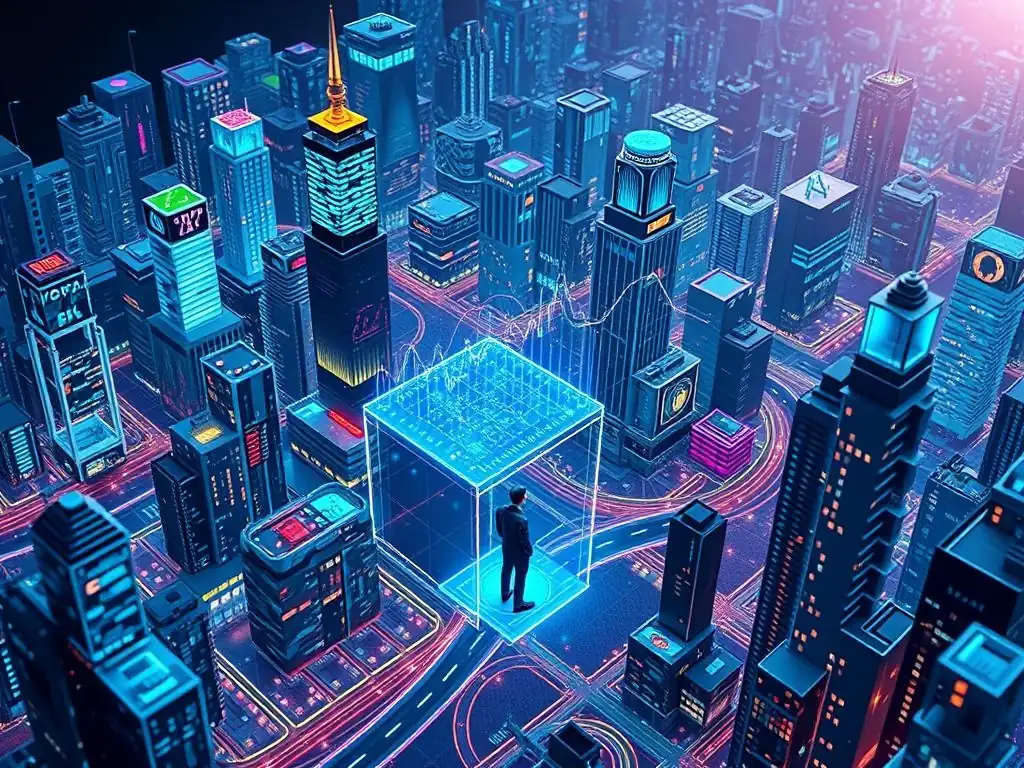
Welcome to Blockchain Trends, your compass in the ever-evolving landscape of decentralized technology. Beyond the hype of cryptocurrencies lies a universe of transformative applications. Dive into our NFT market trends analysis and discover the forces shaping this dynamic sector. Are you ready to unravel the latest shifts, predict future patterns, and understand what these trends mean for the future of blockchain itself? Let's explore!
- Introduction to NFT Market Trends Analysis in 2024
- What's Hot in the NFT Market Right Now
- What's Not: NFT Market Segments Facing Challenges
- NFT Market Trends Analysis: Key Factors Driving Change
- What's Next for the NFT Market: Future Predictions
- NFT Market Trends 2024: Investment Strategies and Considerations
- Conclusion: Navigating the Future of NFTs
-
Frequently Asked Questions
- What are some of the hot trends currently dominating the NFT market?
- What NFT sectors are currently experiencing a decline or aren't performing as well as before?
- Beyond art and collectibles, what are some emerging non-traditional applications of NFTs?
- How is regulation impacting the NFT market, and what can we expect in the future?
- What are some future predictions for the NFT market, considering current trends and technological advancements?
- Final Reflection: Navigating the Evolving NFT Landscape
- Ignite Your NFT Journey!
Introduction to NFT Market Trends Analysis in 2024
Understanding the Evolving NFT Landscape
The non-fungible token (NFT) market has undergone significant transformation since its explosion into mainstream consciousness in 2021. Initially dominated by digital art and collectibles, the landscape has rapidly diversified, encompassing everything from in-game assets and music rights to real estate and tokenized credentials. Performing an effective NFT market trends analysis in 2024 requires looking beyond headline-grabbing sales and understanding the underlying technological shifts, market dynamics, and evolving use cases. The initial speculative frenzy has subsided, giving way to a more mature, albeit still volatile, environment where utility and long-term value proposition are increasingly prioritized over pure hype.
This evolution is reflected in trading volumes and market capitalization. While the peak daily trading volume in 2021 occasionally surpassed $100 million on major marketplaces like OpenSea, 2023 and early 2024 saw daily volumes often fluctuating between $10 million and $30 million, with occasional spikes driven by specific launches or market movements.
This indicates a cooling of broad speculative interest but also suggests a consolidation around projects with perceived intrinsic value or strong community backing. Understanding these shifts is crucial for anyone conducting an NFT market trends analysis today, highlighting the need to look at specific niches rather than the overall market alone.
The Importance of Tracking NFT Trends for Investors and Creators
For both investors and creators, keeping a pulse on current NFT market trends is paramount. The rapid pace of innovation means that successful strategies from yesterday may be obsolete tomorrow. Investors need to identify emerging sectors with growth potential, understand which types of NFTs are gaining traction, and recognize market segments that are cooling off. This involves analyzing trading data, community sentiment, technological advancements, and regulatory developments. A thorough NFT market trends analysis helps in making informed decisions, mitigating risks in a highly speculative market, and identifying potential opportunities before they become widely known.
Similarly, creators—whether artists, musicians, game developers, or brands—must track trends to understand where audiences are congregating, what types of NFT experiences are valued, and how to best leverage the technology for their specific goals. Understanding the nuances of utility NFTs, the viability of different blockchain networks, and the effectiveness of various launch strategies can significantly impact the success of an NFT project. Ignoring current trends can lead to launching into an oversaturated or uninterested market, whereas a keen understanding can open doors to innovative monetization models and direct audience engagement.
What's Hot in the NFT Market Right Now
PFP (Profile Picture) NFTs: Are They Still Relevant?
Profile Picture (PFP) NFTs, epitomized by collections like CryptoPunks and Bored Ape Yacht Club (BAYC), were arguably the driving force behind the initial NFT boom. These collections offered digital identity, community membership, and speculative value. While the peak mania and astronomical floor prices of 2021-2022 have largely receded for many collections, PFP NFTs remain a relevant, albeit changed, segment of the market.
Established blue-chip collections still command significant value, albeit lower than their all-time highs, and continue to act as status symbols within the crypto community. For instance, the floor price of Bored Ape Yacht Club, which peaked well over 100 ETH (equivalent to hundreds of thousands of USD at the time), has seen substantial fluctuations, trading in a range significantly lower in 2023 and 2024, yet still representing a considerable investment.
The relevance of PFP NFTs in 2024 lies less in guaranteed short-term flips and more in the enduring power of brand, community, and utility. Projects that have successfully built strong communities and provided ongoing value—such as access to exclusive events, merchandise, or intellectual property rights—continue to see engagement and hold value better than those that were purely speculative.
New PFP projects entering the market often need to demonstrate clear utility or a unique artistic vision to gain traction, moving beyond the simple collectible model. This indicates a maturation where community and utility are now key components in the success of PFP-style launches, influencing the overall NFT market trends analysis for this category.
Generative Art NFTs: Innovation and Artistic Expression
Generative art, where algorithms and code are used to create unique artistic outputs, has found a natural home in the NFT space. Platforms like Art Blocks pioneered this segment, offering collectors the ability to mint unique pieces generated from a pre-defined algorithm upon purchase.
This combines the artist's initial vision with the randomness inherent in the code execution, resulting in diverse and often visually striking collections. Projects within this space, such as those by artists like Dmitri Cherniak ("Ringers") or Tyler Hobbs ("Fidenza"), have achieved significant critical acclaim and secondary market value, with individual pieces trading for millions of dollars during the market peak.
The appeal of generative art NFTs lies in their blend of technology and artistry, offering collectors a direct connection to the artist's process and the uniqueness of each generated piece. This segment continues to innovate, with artists exploring increasingly complex algorithms and visual styles.
Furthermore, the rise of AI-assisted art creation is beginning to intersect with generative art NFTs, pushing the boundaries of what's possible and raising new questions about authorship and creativity. While speculative prices have moderated, the appreciation for the artistic and technical merit of high-quality generative art remains strong, making it a significant component in any comprehensive NFT market trends analysis focused on artistic innovation.
Gaming NFTs: Integrating NFTs into Play-to-Earn Models
Gaming is widely considered one of the most promising areas for NFT adoption, offering tangible benefits for both players and developers. The integration of NFTs into gaming primarily revolves around enabling true ownership of in-game assets, such as characters, skins, weapons, and virtual land.
This ownership model underpins the "Play-to-Earn" (P2E) movement, where players can earn cryptocurrency or NFTs through gameplay, which can then be traded or sold on secondary markets. Axie Infinity was an early and prominent example, demonstrating the potential for players in certain regions to earn a livelihood through gaming, although its economic model faced challenges and saw a significant decline from its peak user base and token value.
Despite the challenges faced by some early P2E models, the concept of in-game asset ownership remains a powerful driver for NFT adoption. Newer gaming projects are exploring more sustainable economic models and focusing on integrating NFTs in ways that enhance gameplay and player engagement rather than solely focusing on earning potential.
This includes using NFTs for unique cosmetic items, verifiable achievements, access to exclusive game content, or even player governance. Major gaming companies are also exploring the space, albeit cautiously due to community backlash concerns, signaling a long-term view on the potential of NFTs to create more vibrant and player-centric game economies.
Exploring the Popularity of In-Game NFT Assets
The popularity of in-game NFT assets stems from the fundamental shift they represent: moving from a model where players merely license digital items within a game to one where they truly own them. This ownership allows players to trade, sell, or even rent out their digital possessions outside the confines of the game itself, creating entirely new economies.
For instance, in games like The Sandbox or Decentraland, virtual land parcels represented as NFTs have been bought and sold for significant sums, with brands and individuals developing experiences on them. Similarly, rare character skins or powerful weapons in blockchain-based games can fetch high prices on secondary markets, driven by both utility within the game and collector demand.
The appeal is particularly strong in games where assets provide a competitive advantage or offer unique customization options. Players invest time and potentially money into acquiring these assets, and the ability to retain their value or even profit from them adds a new dimension to the gaming experience. While the overall NFT market saw a downturn, the gaming NFT segment has shown resilience, with continued development and investment in blockchain-based games. Data from analytics firms often shows gaming accounting for a significant portion of blockchain activity, including NFT transactions, indicating sustained interest in this specific application of the technology.
Music NFTs: Empowering Artists and Revolutionizing Music Ownership
Music NFTs offer a compelling alternative for artists to connect directly with their fans, distribute their work, and monetize their creativity, bypassing traditional record labels and streaming platforms. Artists can sell limited editions of songs, albums, artwork, or even royalty rights directly to fans as NFTs. This model allows artists to capture a much larger percentage of revenue compared to traditional streaming royalties, which are notoriously low (often fractions of a cent per stream). Platforms like Sound.xyz, Catalog, and Royal enable artists to issue music NFTs, creating exclusive listening experiences, fan clubs, or even fractional ownership of streaming royalties.
This segment is gaining traction as artists look for more equitable and engaging ways to interact with their audience. A notable early example includes DJ 3LAU, who sold an NFT album collection for over $11 million in early 2021, demonstrating the significant revenue potential.
While not all artists will see such figures, many are finding success selling smaller editions of tracks or exclusive content, building a core group of dedicated fans who also become stakeholders. This direct-to-fan model fosters a stronger community and provides artists with greater creative and financial control, positioning music NFTs as a key area for growth in the broader NFT market trends analysis.
Case Study: Successful Music NFT Launches
One compelling case study in the music NFT space is the artist Latasha. Known for her innovative approach, she has successfully leveraged NFTs to release music and build her community. In one instance, she released a single as an NFT collection, offering different tiers that included the track itself, exclusive artwork, and even unique experiences like a virtual listening party. This approach allowed her to generate significant revenue directly from her fans, far exceeding what she might have earned from traditional streaming platforms for the same track in a similar timeframe.
Another example, albeit on a larger scale, involves artists like Snoop Dogg or Steve Aoki, who have experimented with releasing music or collectibles as NFTs, often integrating them with metaverse experiences or exclusive access passes. While these larger artists benefit from existing fame, their participation validates the technology and brings wider attention to the potential of music NFTs. These cases highlight how artists, from independent creators to global stars, are using NFTs not just as a new revenue stream but as a tool for community building, fan engagement, and redefining the relationship between artist and listener.
Utility NFTs: Beyond Collectibles, Offering Real-World Benefits
Moving beyond static art or collectibles, utility NFTs are gaining significant traction by offering holders tangible benefits or access. These NFTs function less as pure speculative assets and more as digital keys or membership cards that unlock specific privileges. Examples include:
- Membership Tokens: Granting access to exclusive online communities (e.g., token-gated Discord servers), private events, or premium content. The Bored Ape Yacht Club, for instance, provides access to exclusive parties and merchandise drops for holders.
- Event Tickets: Tokenizing event tickets can reduce fraud, enable seamless secondary market trading with creator royalties, and offer additional perks to attendees. While still in early stages, companies like Ticketmaster have explored using NFTs for ticketing.
- Digital Twins: Representing ownership of a physical item in the digital world. This can be used for luxury goods, real estate, or supply chain verification.
- Loyalty Programs: Rewarding customers with NFTs that unlock tiered benefits or exclusive offers based on their engagement or purchase history.
This focus on utility represents a significant shift in the NFT market, indicating a maturation beyond the initial hype cycle. Buyers are increasingly looking for NFTs that provide ongoing value or access, rather than just a digital image. This trend is crucial for the long-term sustainability of the market and is a key factor in current NFT market trends analysis, pointing towards a future where NFTs are integrated into everyday services and experiences.
Examples of Utility NFTs: Memberships, Access, and More
One prominent example of a utility NFT is the access token provided by certain decentralized autonomous organizations (DAOs) or exclusive online communities. Holding a specific NFT might be the only way to join a private Discord server where founders and community members share insights, participate in governance decisions, or collaborate on future projects. This token-gating model ensures that only committed members (those who hold the NFT) have access, fostering a stronger and more engaged community.
Another practical application is in the realm of events. Imagine an NFT concert ticket that not only grants entry but also unlocks exclusive digital content from the artist, provides a discount on merchandise, or even offers priority access to future ticket sales. This adds layers of value beyond simple admission.
Furthermore, luxury brands are exploring utility NFTs as digital certificates of authenticity for physical goods, combating counterfeiting and providing a digital history of the item, which can be valuable for resale. These examples demonstrate how utility NFTs are weaving themselves into various aspects of digital and physical life, highlighting their potential beyond the art world.
What's Not: NFT Market Segments Facing Challenges
The Decline of Speculative NFT Trading
The peak of the NFT market in 2021 and early 2022 was heavily fueled by speculative trading, where individuals bought NFTs with the primary goal of selling them quickly for a profit, often within days or weeks. This led to inflated prices for many collections, driven by hype and the fear of missing out (FOMO).
However, as the broader crypto market entered a downturn in 2022 and macroeconomic conditions became less favorable, the speculative frenzy around NFTs significantly diminished. Trading volumes plummeted from their highs, and the floor prices of countless NFT collections, particularly those lacking strong community or utility, saw drastic declines, often by 80% or more from their peak values.
This decline indicates a market correction where the initial unsustainable speculation has largely exited. While some speculative trading still occurs, it is not the dominant force it once was. Buyers are generally more cautious and discerning, performing greater due diligence before investing. This shift away from pure speculation means that projects relying solely on hype and rapid price appreciation are finding it much harder to succeed. Any NFT market trends analysis today must acknowledge this fundamental change in market behavior and investor sentiment.
Over-Hyped NFT Projects That Failed to Deliver
During the peak bull market, numerous NFT projects launched with significant hype, often promising extensive roadmaps, exclusive benefits, or ambitious metaverse integrations. However, many of these projects ultimately failed to deliver on their promises, leading to disappointment among holders and a collapse in their market value. Reasons for failure include inexperienced teams, unrealistic goals, insufficient funding post-mint, or simply being unable to build and sustain a community once the initial hype faded. These failures have made the market more skeptical of projects that lack a clear vision, a track record, or demonstrable progress.
The prevalence of projects that didn't follow through has eroded trust in certain parts of the NFT ecosystem. Investors who lost significant sums on projects that rug-pulled (where creators abandon the project after selling out) or simply faded into obscurity are now more cautious. This has raised the bar for new projects, which must now demonstrate credibility, transparency, and a tangible plan for providing value to their holders beyond just the initial sale. This increased scrutiny is a healthy sign of market maturation, filtering out low-effort or deceptive projects.
The Impact of Market Saturation on NFT Value
The relative ease of creating and launching an NFT collection led to a massive influx of new projects during the market boom. By early 2022, millions of different NFT collections existed across various blockchains. This sheer volume resulted in significant market saturation, making it incredibly difficult for new projects to stand out and gain visibility among the flood of options. With limited buyer demand compared to the supply of new NFTs, the vast majority of collections see minimal trading volume and struggle to maintain any significant floor price.
This saturation means that discoverability is a major challenge. Even well-intentioned projects with artistic merit or potential utility can get lost in the noise. For collectors, navigating this crowded landscape to find valuable or interesting pieces requires significant effort. The impact is a bifurcated market: a small percentage of established collections and highly innovative new projects capture most of the attention and trading volume, while the vast majority languish. This dynamic is a critical factor in understanding current NFT market trends and highlights the difficulty faced by average new projects.
NFT Market Trends Analysis: Key Factors Driving Change
Regulatory Scrutiny and its Impact on the NFT Market
Regulatory bodies around the world are increasingly turning their attention to the NFT market. The primary concern is often whether certain NFTs should be classified as securities, which would subject them to stringent financial regulations. Factors that might lead to an NFT being considered a security include promises of future profits based on the efforts of others (the project team), fractional ownership, or characteristics that resemble traditional investment contracts. Different jurisdictions are taking varied approaches, creating a complex and uncertain legal landscape for NFT projects and marketplaces.
This regulatory uncertainty has a chilling effect on the market. Projects are cautious about making claims that could attract regulatory attention, and potential institutional investors may hesitate to enter the space until there is greater legal clarity. For example, the U.S. Securities and Exchange Commission (SEC) has taken action against crypto projects that they deem unregistered securities, and while specific actions against purely collectible NFTs have been less common, the potential remains for utility or investment-focused NFTs. Navigating this evolving regulatory environment is crucial for the future growth and stability of the NFT market.
The Role of Institutional Investment in NFTs
While the initial NFT market was largely driven by retail investors and crypto-native individuals, there is growing interest from institutional players. This includes venture capital firms investing in NFT infrastructure and companies, brands launching their own NFT collections, and potentially, investment funds exploring NFTs as an alternative asset class. Major brands like Nike, Adidas, Starbucks, and luxury houses such as Gucci and Louis Vuitton have launched NFT initiatives, ranging from digital collectibles to utility-focused experiences.
Institutional involvement brings increased capital, legitimacy, and potentially wider adoption. However, institutions typically require greater regulatory certainty and market maturity than early retail adopters. Their investment often focuses on established "blue-chip" collections, platforms, or specific utility-driven use cases rather than the broader, more speculative market. The increasing, albeit cautious, entry of institutional capital is a significant factor shaping current NFT market trends and could provide a foundation for future market growth, distinct from the retail-driven boom of the past.
The Influence of Metaverse Development on NFT Demand
The concept of the metaverse – persistent, interconnected virtual worlds – is deeply intertwined with the future of NFTs. In these digital environments, NFTs can serve as the building blocks for ownership, identity, and interaction. Digital land, avatars, wearables, in-game assets, and even experiences within the metaverse can be represented and owned as NFTs. As development continues on various metaverse platforms (e.g., Decentraland, The Sandbox, spatial.io), the demand for interoperable digital assets is expected to grow.
The potential for NFTs to be used across different virtual worlds enhances their utility and value. An NFT wearable purchased in one metaverse could potentially be used on an avatar in another, creating a more persistent and valuable digital identity. While the fully realized metaverse is still years away, ongoing development in this space is a significant driver for innovation and demand in the NFT market, particularly for assets related to digital identity, virtual real estate, and gaming. This symbiotic relationship is a critical aspect of future NFT market trends analysis.
The Impact of Layer-2 Scaling Solutions on NFT Accessibility
Transaction costs and network congestion on blockchain networks like Ethereum, where many early NFTs were minted, have been significant barriers to entry for casual users. High "gas fees" (the cost of performing a transaction) could sometimes exceed the price of the NFT itself, making small transactions or frequent trading impractical. Layer-2 scaling solutions, such as Polygon, Arbitrum, Optimism, and others, process transactions off the main blockchain (Layer-1) and then bundle them together, significantly reducing costs and increasing transaction speed.
The increasing adoption of Layer-2 solutions and alternative blockchains like Flow, Solana, and Tezos, which offer lower fees and faster transactions, is making NFTs more accessible to a broader audience. This reduces the friction involved in buying, selling, and minting NFTs, potentially attracting users who were previously priced out by high gas fees. This improved accessibility is vital for fostering mainstream adoption and is a key factor enabling new types of utility-focused NFTs that require more frequent interaction, influencing overall NFT market trends.
What's Next for the NFT Market: Future Predictions
The Rise of Fractionalized NFTs: Democratizing Ownership
Fractionalization allows a single high-value NFT to be split into multiple, smaller, tradable tokens (often ERC-20 tokens). This process makes expensive NFTs, such as rare CryptoPunks or high-value digital art pieces, accessible to a wider pool of investors who cannot afford the full price. Instead of buying an entire piece for hundreds of thousands or millions of dollars, an investor could buy a small percentage of it for a much lower cost. Platforms like Fractional.art (now part of tessera) have facilitated this process.
Fractionalization democratizes ownership, allowing more people to gain exposure to blue-chip NFTs and potentially increasing liquidity for the underlying assets. It also creates new possibilities for portfolio diversification within the NFT space. While regulatory clarity around fractionalized NFTs is still evolving (as they resemble securities), the concept holds significant potential to expand the investor base and change how high-value digital assets are traded, marking it as a significant trend to watch in future NFT market trends analysis.
NFTs and the Metaverse: A Symbiotic Relationship
The integration of NFTs into the metaverse is expected to deepen significantly. Beyond avatars and wearables, NFTs could represent deeds to virtual property, licenses for digital businesses, access keys to exclusive metaverse experiences, and even components of interactive digital environments. Imagine owning an NFT that represents a unique building or a piece of interactive art within a virtual world that anyone can visit and interact with.
As metaverse platforms evolve and become more sophisticated, the utility and value of NFTs within them will likely increase. Interoperability standards that allow assets to move between different virtual worlds will be crucial for unlocking the full potential of metaverse-bound NFTs. This symbiotic relationship means that progress in metaverse development will likely fuel demand and innovation in the NFT space, and vice versa, making this a central theme in predicting future NFT market trends.
AI-Generated NFTs: The Next Frontier of Digital Art?
The rapid advancements in artificial intelligence models capable of generating unique images and art from text prompts (e.g., Midjourney, DALL-E) are intersecting with the NFT market. Artists and creators are experimenting with using AI tools to create digital art, which is then minted as NFTs. This raises fascinating questions about authorship, creativity, and the role of the artist when the genesis of the artwork involves significant AI input.
While still a nascent area, AI-generated NFTs could significantly impact the digital art market. They offer the potential for rapid creation of unique pieces and could lower the technical barrier to entry for individuals without traditional artistic skills. However, challenges remain regarding originality, copyright, and establishing value for art created through AI. Despite these questions, the exploration of AI in NFT art is a compelling trend that could shape the future landscape of digital collectibles.
The Evolution of NFT Standards and Interoperability
The current NFT ecosystem is somewhat fragmented, with different blockchains using varying standards (primarily ERC-721 and ERC-1155 on Ethereum, but also standards on Solana, Flow, Tezos, etc.) and limited interoperability between them. The future is likely to see the development of more advanced and standardized protocols that facilitate the seamless transfer and use of NFTs across different blockchains and platforms.
Efforts are underway to create bridges between networks and develop universal standards that could allow an NFT purchased on one chain to be used or traded on another. This increased interoperability would unlock greater liquidity, utility, and flexibility for NFT holders and creators. As the market matures, the focus on robust, widely adopted standards and cross-chain compatibility will be crucial for enabling mass adoption and complex use cases, significantly influencing the long-term trajectory of NFT market trends.
Enterprise NFTs: Applications Beyond Art and Collectibles
While much of the public attention has focused on consumer-facing NFTs like art and collectibles, the potential for enterprise adoption of non-fungible tokens is vast and could dwarf the current market. Businesses are exploring using NFTs for a wide range of applications that leverage their unique characteristics (verifiable ownership, uniqueness, transparency).
Exploring Use Cases in Supply Chain, Ticketing, and More
In supply chain management, NFTs can serve as unique digital identities for physical goods, tracking their origin, movements, and ownership history transparently on a blockchain. This can help combat counterfeiting, improve traceability, and streamline logistics. For instance, an NFT attached to a luxury handbag could verify its authenticity and provide a digital passport documenting its journey from manufacturer to owner.
Beyond the event ticketing mentioned earlier, enterprises are exploring NFTs for managing digital licenses for software or digital assets, creating verifiable digital credentials (like academic degrees or professional certifications), tokenizing real-world assets like real estate or intellectual property for easier fractional ownership and transfer, and building advanced loyalty and rewards programs. These enterprise use cases, while less visible to the average consumer, represent a significant area of potential growth and are increasingly factored into a comprehensive NFT market trends analysis for the coming years.
NFT Market Trends 2024: Investment Strategies and Considerations
Diversifying Your NFT Portfolio
Given the volatility and varied nature of the NFT market, diversification is a prudent strategy for investors. Instead of concentrating all funds into a single project or type of NFT, consider spreading investments across different categories (e.g., PFP, generative art, gaming assets, utility tokens) and potentially different blockchain networks. This can help mitigate risk, as different segments of the market may perform differently depending on evolving trends and external factors. Diversification should be based on a thorough NFT market trends analysis, identifying promising sectors and avoiding overexposure to speculative or unproven areas.
For instance, an investor might allocate a percentage of their portfolio to a blue-chip PFP for long-term holding, another portion to promising gaming assets with real in-game utility, and a smaller amount to experimental generative art or music NFTs. This approach acknowledges that some segments might underperform while others thrive, providing a more balanced exposure to the overall market dynamics.
Due Diligence: Researching NFT Projects Before Investing
Investing in NFTs requires rigorous due diligence, perhaps even more so than traditional assets due to the nascent and often unregulated nature of the market. Before investing in any NFT project, it is crucial to thoroughly research the team behind it, their track record, and their ability to execute on their roadmap. Examine the project's whitepaper, community engagement (e.g., on Discord and Twitter), and the clarity of its vision and utility.
Furthermore, analyze the project's market metrics: trading volume, floor price history, number of holders, and distribution of ownership. Be wary of projects with anonymous teams, vague roadmaps, or excessive reliance on hype without substance. Checking for security audits of smart contracts is also important. A comprehensive NFT market trends analysis for personal investment involves not just identifying hot sectors but also evaluating individual projects within those sectors based on fundamental factors.
Risk Management in the Volatile NFT Market
The NFT market remains highly volatile and speculative. Prices can rise and fall dramatically in short periods, and many projects will ultimately fail. Investors should only invest funds they can afford to lose and should be prepared for significant price fluctuations. Setting clear investment goals and risk tolerance levels before entering the market is essential.
Consider strategies like dollar-cost averaging if investing over time, or setting stop-loss orders if your platform supports them. Be wary of leverage or borrowing to invest in NFTs. Stay informed about broader market conditions, regulatory news, and specific project updates. Effective risk management, guided by continuous NFT market trends analysis, is key to navigating this dynamic asset class and protecting capital.
Key Takeaways from the Current NFT Market Trends
The NFT market in 2024 is a complex and evolving landscape, far removed from the speculative frenzy of its peak. Key takeaways from the current NFT market trends analysis include a shift towards utility and community value over pure speculation, the continued resilience and innovation within specific niches like gaming and music, and the growing influence of enterprise adoption and regulatory considerations.
The market is consolidating, with increased scrutiny on new projects and a greater focus on long-term viability. While overall trading volumes have decreased significantly from their highs, underlying technological development and exploration of new use cases continue apace.
The decline in speculative trading has filtered out some of the noise, potentially creating a more sustainable environment for projects with genuine value propositions. The increasing involvement of brands and institutions, alongside ongoing technical improvements like Layer-2 scaling, suggests a market maturing beyond early adopters. However, significant risks remain, including regulatory uncertainty, market saturation, and the inherent volatility of digital assets.
Preparing for the Next Wave of NFT Innovation
Preparing for the next wave of NFT innovation requires staying informed and maintaining a long-term perspective. The future of NFTs is likely to be deeply integrated with other emerging technologies like the metaverse and AI, and will extend into broader enterprise and real-world applications beyond art and collectibles. Investors and creators should focus on understanding the underlying technology, identifying projects that solve real-world problems or offer unique value propositions, and recognizing the importance of community and sustainable economic models.
The focus of NFT market trends analysis is shifting from identifying the next viral collectible to understanding how non-fungible tokens can fundamentally change ownership, access, and interaction in digital and physical spaces. As standards evolve and interoperability improves, the potential use cases for NFTs will continue to expand. Navigating this future successfully will require adaptability, diligent research, and a focus on the long-term transformative potential of blockchain technology and digital ownership.
Frequently Asked Questions
What are some of the hot trends currently dominating the NFT market?
The hot trends include utility-driven NFTs offering real-world benefits, increased adoption in the gaming sector, and the rise of fractionalized NFTs allowing broader access.
What NFT sectors are currently experiencing a decline or aren't performing as well as before?
Sectors experiencing a decline include speculative profile picture (PFP) projects without strong community or utility, and oversaturated digital art collections lacking uniqueness.
Beyond art and collectibles, what are some emerging non-traditional applications of NFTs?
Emerging applications include NFTs for supply chain management, digital identity verification, and tokenized real-world assets like real estate or intellectual property.
How is regulation impacting the NFT market, and what can we expect in the future?
Increasing regulation aims to address concerns like money laundering and consumer protection, likely leading to greater transparency and standardization in the NFT space.
What are some future predictions for the NFT market, considering current trends and technological advancements?
Future predictions include greater integration with the metaverse, increased use of dynamic NFTs adapting to real-world events, and a focus on sustainable and eco-friendly NFT solutions.
The volatile nature of the NFT market, as explored throughout this analysis, underscores a fundamental truth: innovation and speculation are inextricably linked. While the "what's hot" and "what's not" may shift with dizzying speed, the underlying drive to create, collect, and connect within the digital realm remains a powerful force shaping the future of ownership and community.
The rise and fall of specific NFT trends, and the subsequent analysis of those trends, has profoundly impacted the cultural perception of digital assets. This constant evolution reminds us that the true value of NFTs lies not just in their monetary worth, but in their ability to foster creativity, build communities, and redefine ownership in the digital age. The future of NFTs is not just about collectibles; it's about creating new forms of digital identity, community, and ownership.
- Unknown.
As we look ahead, let us not be swayed solely by the hype or the fear of missing out. Instead, let us approach the NFT space with a critical eye, a spirit of innovation, and a commitment to building a more equitable and sustainable digital future. Consider how you can contribute to the evolution of this technology, not just as a consumer, but as a creator, a builder, and a responsible participant in this exciting new frontier.
Ignite Your NFT Journey!
Thank you for diving into the exciting world of NFT market trends! We hope this article has shed light on the current landscape and equipped you with valuable insights. Now, it's time to put that knowledge into action and make your mark in the NFT space.
Here's how you can get started:
- Dive deep into the realm of digital assets by researching projects aligned with your interests. Explore emerging artists, gaming NFTs, or metaverse land to find the perfect fit.
- Join the conversation! Connect with other NFT enthusiasts on social media, sharing your insights and asking questions to expand your understanding.
- Think outside the box: Create your own unique NFT! Whether it's digital art, music, or a collectible item, share your talent with the world.
What unique NFT trend are you most excited to explore this week?
Leave a Reply