
Exploring the Synergy Between Blockchain and Traditional Gaming Companies

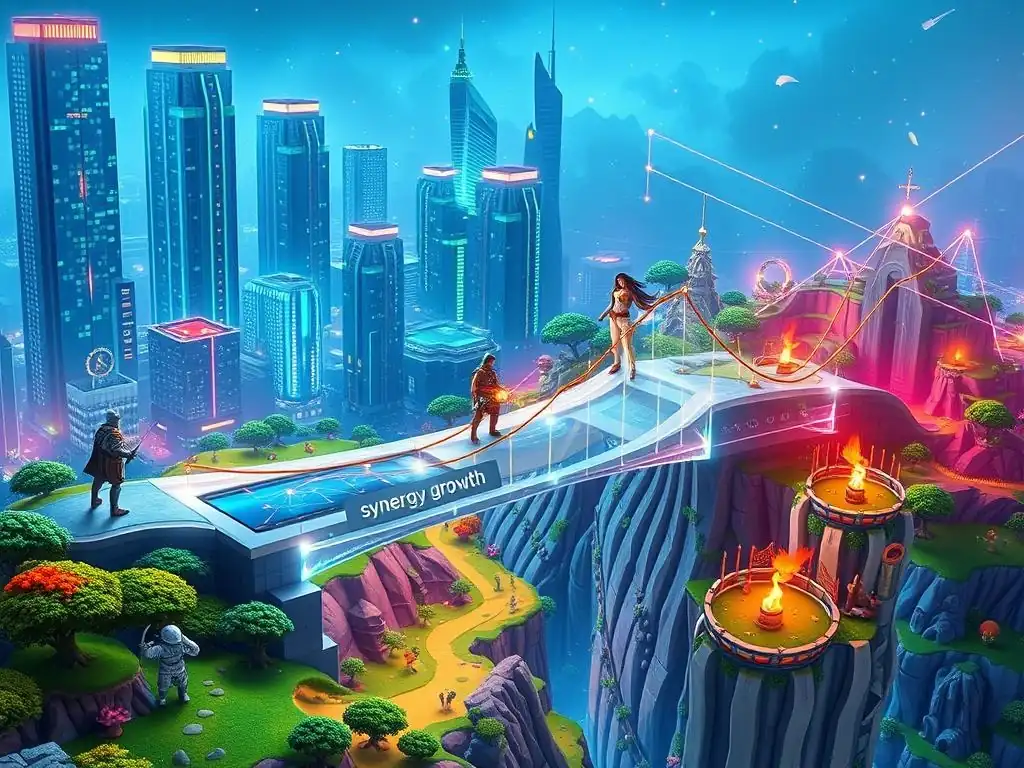
Welcome to Blockchain Trends, your guide to navigating the ever-evolving world of decentralized technologies. Dive into our latest exploration of how blockchain is reshaping industries beyond just cryptocurrencies, from DeFi to enterprise solutions. Intrigued by the possibilities? Our featured article delves into the exciting blockchain gaming synergy opportunities poised to revolutionize the gaming landscape. Discover how traditional gaming giants and blockchain innovators are merging to create immersive and rewarding experiences. Read on to unlock the potential of this dynamic partnership!
Exploring the Synergy Between Blockchain and Traditional Gaming Companies
- Introduction: The Untapped Potential of Blockchain Gaming Synergy
- Understanding the Current Landscape: Traditional Gaming vs. Blockchain Gaming
- Key Areas of Blockchain Gaming Synergy
- Case Studies: Successful Integrations of Blockchain in Gaming
- Overcoming the Challenges of Blockchain Integration
- The Future of Blockchain Gaming: Predictions and Trends
- Conclusion: Embracing Blockchain Gaming for Long-Term Growth
-
Frequently Asked Questions
- What are the main ways traditional gaming companies can benefit from adopting blockchain technology?
- How does blockchain address issues like fraud and asset duplication in the gaming industry?
- What are some examples of successful blockchain gaming synergy opportunities we've seen so far?
- What are the regulatory hurdles and challenges that traditional gaming companies face when incorporating blockchain?
- What is the long-term vision for the synergy between blockchain and traditional gaming, and how will it impact the gaming landscape?
- Final Reflection: Embracing the Blockchain Gaming Revolution
- Unleash Your Gaming Future: Discover the Blockchain Advantage!
Introduction: The Untapped Potential of Blockchain Gaming Synergy
Bridging the Gap: How Blockchain Can Revolutionize Traditional Gaming
Traditional gaming, a multi-billion dollar industry, has long captivated audiences with immersive experiences and competitive gameplay. However, certain aspects, such as player ownership of in-game assets and the potential for real-world value, have remained largely untapped. This is where blockchain technology emerges as a transformative force, presenting unique blockchain gaming synergy opportunities that could redefine the gaming landscape.
By integrating blockchain, traditional gaming companies can address existing limitations and unlock new dimensions of player engagement, monetization, and security. Imagine players truly owning their digital assets, participating in player-driven economies, and benefiting from enhanced security measures – blockchain makes these possibilities a tangible reality, bridging the gap between traditional gaming and a more decentralized, player-centric future.
The integration of blockchain is not merely about adding cryptocurrency to games; it's about fundamentally altering the dynamics between players, developers, and the games themselves. Blockchain's inherent characteristics – decentralization, transparency, and immutability – offer solutions to long-standing issues in traditional gaming, such as the lack of player ownership, centralized control by game publishers, and opaque in-game economies.
For instance, the concept of in-game items being tradable NFTs (Non-Fungible Tokens) empowers players with true ownership, allowing them to buy, sell, and trade these assets outside the confines of the game, creating real-world value and fostering a more robust player-driven ecosystem. This shift towards blockchain gaming synergy promises to unlock new levels of player engagement and create more sustainable and rewarding gaming experiences.
Defining Blockchain Gaming: Key Concepts and Benefits
Blockchain gaming, at its core, leverages blockchain technology to enhance or fundamentally redesign game mechanics and economies. Key concepts within this space include NFTs, cryptocurrencies, decentralized autonomous organizations (DAOs), and play-to-earn (P2E) models. NFTs represent unique digital assets, such as in-game items, characters, or virtual land, and their existence on a blockchain ensures verifiable scarcity and ownership.
Cryptocurrencies act as in-game currencies or rewards, facilitating transactions and economic activity within the game ecosystem and beyond. DAOs can introduce decentralized governance, allowing players to participate in decision-making processes related to game development and management. The play-to-earn model, a significant innovation driven by blockchain, rewards players with cryptocurrency or NFTs for their time and skills invested in the game, creating potential income streams for players and shifting the power dynamic towards the player base.
The benefits of integrating blockchain into gaming are multifaceted and appeal to both players and developers. For players, blockchain gaming synergy offers true ownership of digital assets, enhancing the value proposition of their in-game efforts and investments. It also introduces new avenues for earning, potentially transforming gaming from a purely leisure activity to a source of income. Decentralization and transparency, inherent to blockchain, foster fairer and more trustworthy gaming environments, reducing the risk of fraud and manipulation.
For developers, blockchain can unlock new monetization strategies beyond traditional in-app purchases, such as NFT sales and transaction fees within player-driven marketplaces. Moreover, blockchain can foster stronger community engagement and loyalty by empowering players and giving them a greater stake in the game's success. This synergy between blockchain and gaming presents a compelling value proposition for the future of interactive entertainment.
Understanding the Current Landscape: Traditional Gaming vs. Blockchain Gaming
The Strengths and Weaknesses of Traditional Gaming Models
Traditional gaming models, dominant for decades, have achieved immense success by focusing on captivating gameplay, compelling narratives, and polished user experiences. Strengths include well-established development pipelines, massive player bases accustomed to familiar mechanics, and robust marketing and distribution channels. Games like Fortnite, League of Legends, and Call of Duty exemplify the success of traditional models, generating billions in revenue through in-app purchases of cosmetic items, battle passes, and downloadable content. These models are proficient at creating engaging gameplay loops and scaling to millions of players, leveraging centralized servers and established payment systems.
However, traditional gaming models also exhibit weaknesses that blockchain aims to address. Player ownership of in-game assets is virtually non-existent; accounts and purchased items are tied to the game publisher's platform and can be revoked or altered at their discretion. In-game economies are often opaque and controlled by the game company, lacking transparency and fairness.
Furthermore, the play-to-win dynamic, prevalent in many free-to-play games, can create imbalances and frustration for players who are unwilling or unable to spend significant amounts of money. The lack of interoperability between games and platforms also confines players and their digital assets to specific ecosystems, hindering the potential for a more open and interconnected gaming world. These limitations highlight the areas where blockchain gaming synergy can offer significant improvements.
The Emerging Blockchain Gaming Ecosystem: Decentralization and Player Ownership
The blockchain gaming ecosystem is rapidly evolving, characterized by its core principles of decentralization and player ownership. Unlike traditional gaming, blockchain games often operate on decentralized networks, distributing control and reducing reliance on centralized authorities. This decentralization extends to in-game assets, represented as NFTs on blockchains like Ethereum, Polygon, or Solana. Player ownership is a paradigm shift; NFTs grant players verifiable and immutable ownership of their digital assets, allowing them to trade, sell, or even use these assets across different games or platforms within the same blockchain ecosystem, fostering true digital property rights.
This emerging ecosystem is attracting both established gaming developers and new entrants focused exclusively on blockchain-native games. Projects range from play-to-earn RPGs and strategy games to blockchain-integrated versions of classic genres. Examples include games built on platforms like Immutable X and Enjin, which are specifically designed to facilitate blockchain gaming.
While still in its early stages compared to traditional gaming, the blockchain gaming ecosystem is witnessing significant growth in user adoption and investment. The promise of player ownership and decentralized economies is attracting a new generation of gamers and developers eager to explore the blockchain gaming synergy opportunities and create more engaging and rewarding gaming experiences.
Contrasting Business Models: From Pay-to-Win to Play-to-Earn
Traditional gaming business models are predominantly either pay-to-play (requiring upfront purchase) or free-to-play (relying on in-app purchases). Within the free-to-play space, the pay-to-win model is often criticized, where players who spend more money gain significant in-game advantages, creating an uneven playing field. While these models have been financially successful, they can be perceived as extractive and prioritize monetization over player empowerment. In contrast, blockchain gaming introduces the play-to-earn (P2E) model, offering a fundamentally different approach.
The play-to-earn model, facilitated by blockchain technology, rewards players for their time and skill investment in a game. Players can earn cryptocurrency or NFTs through gameplay activities, such as winning battles, completing quests, or contributing to the game ecosystem. These earned assets can then be traded or sold on cryptocurrency exchanges or NFT marketplaces, creating potential income streams for players.
While still evolving, the P2E model aims to create a more equitable and sustainable gaming economy where players are not just consumers but also participants in the value creation process. Examples like Axie Infinity initially showcased the potential of P2E, although the model's long-term sustainability is still under scrutiny and development. The shift from pay-to-win to play-to-earn represents a significant change in the relationship between game developers and players, driven by the blockchain gaming synergy.
Key Areas of Blockchain Gaming Synergy
Enhanced Player Engagement Through Tokenized Rewards and Incentives
Implementing In-Game Currencies and NFTs for Deeper Engagement
Blockchain technology allows for the seamless integration of in-game currencies and NFTs, transforming how players interact with games and their digital assets. In-game currencies, powered by cryptocurrencies, can provide a more versatile and liquid form of reward compared to traditional in-game points or tokens. These cryptocurrencies can be earned through gameplay, traded on exchanges, and potentially used across different games within the same blockchain ecosystem.
NFTs, representing unique in-game items, characters, or land parcels, introduce verifiable scarcity and ownership. For example, a rare sword in a blockchain game, represented as an NFT, can be verifiably unique and owned by a specific player, enhancing its desirability and value.
The implementation of in-game currencies and NFTs fosters deeper player engagement by providing tangible rewards for player effort and skill. Players are more invested when their in-game achievements translate into assets with real-world value. NFTs, in particular, can create a sense of prestige and exclusivity, driving player competition and engagement in acquiring rare and valuable items.
Furthermore, the ability to trade and sell NFTs and in-game currencies outside of the game creates a player-driven economy, incentivizing participation and fostering a stronger sense of community ownership. This blockchain gaming synergy enhances player motivation and creates more immersive and rewarding gaming experiences.
Creating Player-Owned Economies Within Existing Games
Blockchain technology facilitates the creation of player-owned economies within existing games, shifting the control and benefits of in-game marketplaces from developers to players. Traditional games often have in-game marketplaces, but these are typically centralized and controlled by the game publisher, who takes a significant cut of transactions and dictates the rules. Blockchain enables the creation of decentralized marketplaces where players can directly trade NFTs and in-game currencies with each other, peer-to-peer, without intermediaries. Smart contracts automate these transactions, ensuring transparency and security.
By empowering players to participate in and benefit from the in-game economy, blockchain gaming synergy fosters a more vibrant and sustainable gaming ecosystem. Players become active participants in the economy, driving value creation and benefiting from the growth of the game. This can lead to increased player retention and engagement as players feel a greater sense of ownership and control over their in-game assets and economic activities.
For example, players might be able to earn income by crafting and selling rare items, providing services to other players, or participating in in-game guilds and economies. This player-centric economic model can create a more robust and engaging gaming experience compared to traditional centralized models.
New Revenue Streams and Monetization Strategies with Blockchain
Exploring NFT Sales, Staking, and DeFi Integration in Games
Blockchain opens up novel revenue streams and monetization strategies for gaming companies beyond traditional in-app purchases and game sales. NFT sales represent a significant opportunity; game developers can sell unique in-game assets as NFTs, generating revenue from initial sales and potentially from secondary market transactions. These NFTs can range from cosmetic items and weapons to virtual land and characters, offering diverse revenue streams based on asset scarcity and desirability.
Staking mechanisms, common in decentralized finance (DeFi), can also be integrated into games. Players can stake their in-game cryptocurrency holdings to earn rewards, providing a source of passive income and incentivizing long-term holding and participation in the game ecosystem.
DeFi integration further expands monetization opportunities. Games can incorporate DeFi protocols, allowing players to earn interest on their in-game assets, participate in yield farming, or access decentralized lending and borrowing platforms within the game ecosystem. For example, players could lend their in-game NFTs to other players and earn interest, or use their NFTs as collateral for loans. These DeFi integrations create sophisticated in-game economies and offer players new ways to generate value from their digital assets. This blockchain gaming synergy allows developers to diversify revenue streams, create more engaging player experiences, and tap into the growing DeFi space.
Utilizing Blockchain for Transparent and Fair In-Game Economies
Blockchain technology inherently brings transparency and fairness to in-game economies, addressing concerns about opaque and potentially manipulative systems in traditional gaming. Transactions on a blockchain are recorded on a public ledger, making them verifiable and auditable. This transparency can be applied to in-game item distribution, currency issuance, and marketplace transactions, ensuring that all players have visibility into the game's economic mechanisms. Smart contracts can automate and enforce the rules of the in-game economy, eliminating the potential for developer manipulation or arbitrary changes.
By building in-game economies on blockchain, developers can foster trust and fairness among players. Transparent item drop rates, verifiable scarcity of NFTs, and auditable transaction histories can build player confidence in the integrity of the game economy. This increased trust can lead to greater player engagement, retention, and willingness to participate in the in-game economy. For example, players can be assured that rare NFTs are genuinely scarce and not artificially inflated in supply. This blockchain gaming synergy creates a more level playing field and a more trustworthy gaming environment, benefiting both players and developers in the long run.
Increased Security and Transparency in Gaming Operations
Combating Fraud and Cheating with Blockchain Technology
Blockchain technology offers powerful tools to combat fraud and cheating in gaming, issues that have plagued the industry for years. The transparency and immutability of blockchain make it significantly more difficult to engage in fraudulent activities such as item duplication, account hacking, and unauthorized modifications. NFT ownership on a blockchain provides verifiable proof of asset legitimacy, making it harder to counterfeit or steal in-game items. Smart contracts can automate game rules and prevent manipulation, reducing the potential for exploits and unfair advantages.
By leveraging blockchain, gaming companies can enhance the security and integrity of their game operations. For example, blockchain-based anti-cheat systems can detect and prevent cheating more effectively than traditional methods. The decentralized nature of blockchain also reduces the single point of failure vulnerability associated with centralized game servers, making games more resilient to attacks and downtime. This improved security and reduced incidence of fraud create a fairer and more enjoyable gaming experience for all players, fostering trust and long-term engagement. Blockchain gaming synergy offers a significant advantage in combating these persistent issues in the gaming industry.
Enhancing Data Security and Privacy for Players
Blockchain can enhance data security and privacy for players in the gaming world. Traditional gaming companies often collect and store vast amounts of player data, raising concerns about privacy and security breaches. Blockchain can enable decentralized identity solutions, giving players greater control over their personal data. Players can own and manage their game identities and data using blockchain-based wallets, reducing their reliance on centralized game servers and minimizing the risk of data breaches affecting large numbers of players.
Furthermore, blockchain can facilitate privacy-preserving gaming experiences. Zero-knowledge proofs and other cryptographic techniques can be used to enable secure and private transactions and interactions within games, without revealing sensitive player information. By adopting blockchain-based data security and privacy measures, gaming companies can build trust with players and comply with increasingly stringent data privacy regulations. This blockchain gaming synergy addresses growing player concerns about data security and privacy in the digital age, creating a more responsible and player-centric gaming environment.
Case Studies: Successful Integrations of Blockchain in Gaming
Sky Mavis' Axie Infinity: Pioneering Play-to-Earn
Axie Infinity, developed by Sky Mavis, stands as a prominent example of blockchain gaming synergy and a pioneer of the play-to-earn model. Launched in 2018, Axie Infinity is a Pokémon-inspired game built on the Ethereum blockchain, where players collect, breed, and battle digital creatures called Axies, represented as NFTs.
The game's economy is driven by two main cryptocurrencies: AXS (Axie Infinity Shards), a governance token, and SLP (Smooth Love Potion), earned through gameplay and used for breeding Axies. Axie Infinity gained significant traction, particularly in regions like Southeast Asia, during the pandemic, demonstrating the potential for P2E to provide income opportunities.
The success of Axie Infinity lies in its robust play-to-earn mechanics and its player-owned economy. Players can earn SLP by playing the game, which can then be exchanged for fiat currency or other cryptocurrencies. Axies themselves are NFTs and can be bought and sold on marketplaces, creating a vibrant player-driven economy.
At its peak in late 2021, Axie Infinity boasted millions of daily active users and generated billions of dollars in NFT trading volume. While the game faced economic challenges in 2022 due to token inflation and security breaches, Axie Infinity remains a landmark case study demonstrating the potential of blockchain gaming synergy and the P2E model, highlighting both its opportunities and the challenges of maintaining long-term economic sustainability.
Mythical Games' NFL Rivals: Bridging the Gap with NFTs
Mythical Games' NFL Rivals represents a different approach to blockchain gaming synergy, focusing on integrating NFTs into a more traditional sports gaming experience. Launched in 2022, NFL Rivals is an NFL-licensed mobile game where players collect and upgrade digital player cards, represented as NFTs, to build their dream football teams. Unlike Axie Infinity, NFL Rivals is not strictly play-to-earn, but it incorporates NFT ownership to enhance player engagement and create new forms of digital collectible value within a familiar sports gaming context.
NFL Rivals aims to bridge the gap between traditional gaming and blockchain by appealing to both traditional sports fans and crypto-savvy players. The game utilizes NFTs to provide players with true ownership of their digital player cards, which can be traded on the Mythical Marketplace.
While the earning potential is not as central to the gameplay as in P2E games, NFL Rivals demonstrates how NFTs can be integrated into established gaming genres to enhance player experience and create new revenue streams for developers. It represents a more cautious and mainstream approach to blockchain gaming synergy, focusing on enhancing ownership and collectibility within a familiar and accessible gaming format, rather than solely on play-to-earn mechanics.
Analyzing the Results: Lessons Learned and Best Practices
Analyzing the case studies of Axie Infinity and NFL Rivals, along with other blockchain gaming projects, reveals key lessons and best practices for successful blockchain gaming synergy. Firstly, a well-designed and engaging core gameplay loop remains crucial. Blockchain integration should enhance, not overshadow, the fundamental fun and entertainment value of the game. Secondly, sustainable tokenomics are essential for P2E models. Balancing token supply and demand, incentivizing long-term player participation, and managing inflation are critical challenges that require careful design and ongoing adjustments. Axie Infinity's economic downturn highlights the importance of robust and adaptable tokenomics.
Thirdly, user experience and accessibility are paramount. Onboarding traditional gamers to blockchain gaming requires simplified interfaces, clear explanations of blockchain concepts, and seamless integration. Technical complexities should be abstracted away as much as possible. NFL Rivals' focus on a familiar gaming genre and user-friendly NFT integration demonstrates this approach. Fourthly, community building and governance are vital.
Blockchain gaming thrives on strong communities and player participation. Decentralized governance mechanisms, such as DAOs, can empower players and foster a sense of ownership and collective decision-making. Finally, regulatory compliance and security are non-negotiable. Navigating the evolving regulatory landscape for cryptocurrencies and NFTs and implementing robust security measures to protect player assets are crucial for the long-term success and sustainability of blockchain gaming projects. These lessons provide valuable guidance for gaming companies exploring blockchain gaming synergy opportunities.
Overcoming the Challenges of Blockchain Integration
Regulatory Hurdles and Compliance Considerations
Integrating blockchain into gaming is not without its challenges, and regulatory hurdles and compliance considerations are significant among them. The regulatory landscape for cryptocurrencies and NFTs is still evolving globally, with varying degrees of clarity and enforcement across jurisdictions. Gaming companies venturing into blockchain need to navigate complex and often ambiguous regulations related to digital assets, securities laws, and financial transactions. Compliance with anti-money laundering (AML) and know your customer (KYC) regulations is also crucial, particularly for games involving in-game currencies and NFT marketplaces.
The lack of uniform global regulations creates uncertainty and complexity for blockchain gaming projects operating internationally. Different jurisdictions may have different classifications of NFTs and cryptocurrencies, impacting tax implications and legal obligations. Gaming companies need to conduct thorough legal due diligence and engage with regulatory bodies to ensure compliance and mitigate legal risks. Furthermore, the potential for regulatory crackdowns or changes in policy adds an element of uncertainty to the blockchain gaming space. Addressing these regulatory hurdles and ensuring compliance are essential for the sustainable and responsible growth of blockchain gaming synergy opportunities.
Technical Integration Challenges and Scalability Issues
Technical integration presents another set of challenges for traditional gaming companies adopting blockchain. Integrating blockchain technology into existing game architectures can be complex and require significant technical expertise. Choosing the right blockchain platform, designing secure and efficient smart contracts, and developing user-friendly interfaces for blockchain interactions are all technical hurdles. Scalability is also a major concern. Many existing blockchain networks have limitations in transaction throughput and speed, which can be problematic for games with large numbers of concurrent players and frequent in-game transactions.
Addressing scalability issues often requires adopting layer-2 scaling solutions or utilizing blockchain platforms specifically designed for gaming, such as Immutable X or Polygon. Optimizing smart contract code for efficiency and minimizing gas fees (transaction costs on blockchains like Ethereum) is also crucial for creating a smooth and cost-effective player experience. Furthermore, ensuring the security of smart contracts and preventing vulnerabilities is paramount to protect player assets and maintain the integrity of the game economy. Overcoming these technical integration challenges and achieving scalability are critical for the widespread adoption of blockchain gaming synergy in the mainstream gaming industry.
Educating Players and Addressing Skepticism
Educating players and addressing skepticism are crucial for the successful integration of blockchain into gaming. Many traditional gamers are unfamiliar with blockchain technology, NFTs, and cryptocurrencies, and may view these concepts with skepticism or confusion. Concerns about the environmental impact of certain blockchains, the volatility of cryptocurrencies, and the perceived complexity of blockchain interactions can create resistance among players. Gaming companies need to effectively communicate the benefits of blockchain gaming synergy to their player base, addressing concerns and highlighting the value proposition.
Clear and accessible educational materials, tutorials, and in-game guides are essential for onboarding new players to blockchain gaming. Focusing on the player benefits, such as true ownership, earning potential, and enhanced security, can help overcome skepticism and build player trust. Transparency about the underlying blockchain technology and addressing environmental concerns through the use of more energy-efficient blockchains or layer-2 solutions are also important. Building a strong community and fostering positive player experiences within blockchain games can help dispel skepticism and drive wider adoption. Effective player education and communication are key to unlocking the full potential of blockchain gaming synergy.
The Future of Blockchain Gaming: Predictions and Trends
The Metaverse and the Convergence of Gaming and Blockchain
The metaverse, envisioned as immersive, interconnected virtual worlds, is increasingly seen as a natural convergence point for gaming and blockchain technology. Blockchain gaming synergy is poised to play a crucial role in building and powering the metaverse. NFTs are fundamental for establishing ownership and interoperability of digital assets within metaverse environments, allowing users to own avatars, virtual land, and in-world items across different metaverse platforms. Cryptocurrencies will serve as the native currencies of the metaverse, facilitating transactions and economic activity within these virtual worlds.
The metaverse promises to blur the lines between gaming, social interaction, commerce, and entertainment, creating persistent and interconnected digital experiences. Blockchain gaming will be a core component of this evolution, providing the infrastructure for decentralized ownership, player-driven economies, and interoperability across different metaverse platforms. As the metaverse develops, blockchain gaming synergy is expected to drive innovation in virtual world design, user-generated content, and decentralized governance, shaping the future of digital interaction and entertainment.
The Rise of Decentralized Gaming Platforms and DAOs
Decentralized gaming platforms and DAOs (Decentralized Autonomous Organizations) are emerging as significant trends in the blockchain gaming space, further empowering players and decentralizing game development and governance. Decentralized gaming platforms aim to create open and permissionless ecosystems where developers can build and launch blockchain games without relying on centralized gatekeepers. These platforms often utilize blockchain technology to facilitate game distribution, asset trading, and community governance.
DAOs are revolutionizing game governance by enabling players to participate in decision-making processes related to game development, updates, and economic policies. Through DAO governance, players can have a direct say in the direction of the game, fostering a more democratic and community-driven approach to game development. The rise of decentralized gaming platforms and DAOs represents a significant shift towards player empowerment and decentralization within the gaming industry. This trend is expected to accelerate blockchain gaming synergy and foster a more open, collaborative, and player-centric gaming ecosystem in the future.
Blockchain Gaming as a Catalyst for Innovation
Blockchain gaming is not just a niche within the gaming industry; it is emerging as a catalyst for broader innovation, pushing the boundaries of game design, economic models, and player engagement. The introduction of play-to-earn mechanics has challenged traditional gaming business models and sparked new thinking about player incentives and value creation. NFTs and decentralized ownership are redefining digital property rights and creating new forms of digital collectibles and virtual economies. The integration of DeFi principles into gaming is opening up new avenues for financial innovation within virtual worlds.
Blockchain gaming synergy is driving experimentation and innovation across the entire gaming ecosystem. Traditional gaming companies are increasingly exploring blockchain integration to enhance player engagement and monetization. New blockchain-native gaming studios are pushing the boundaries of game design and economic models. The convergence of gaming and blockchain is fostering a wave of creativity and innovation that is reshaping the future of interactive entertainment. Blockchain gaming is not just about adding cryptocurrency to games; it's about fundamentally rethinking the relationship between games, players, and the digital world.
Conclusion: Embracing Blockchain Gaming for Long-Term Growth
The Path Forward: How Gaming Companies Can Leverage Blockchain's Potential
The path forward for gaming companies to leverage blockchain's potential lies in strategic and thoughtful integration, focusing on enhancing player experience and creating long-term value. Rather than simply adding blockchain as a superficial feature, companies should explore how blockchain gaming synergy can address existing limitations and unlock new opportunities within their games. This includes exploring NFT integration for in-game assets, implementing blockchain-based in-game currencies, and considering play-to-earn mechanics to reward player engagement.
Gaming companies should prioritize user experience and accessibility when integrating blockchain. Making blockchain interactions seamless and intuitive for players who may be unfamiliar with the technology is crucial for widespread adoption. Focusing on the core benefits of blockchain gaming – true ownership, enhanced security, and player empowerment – and communicating these benefits effectively to players will be key to driving success.
Experimentation and iteration are also important. The blockchain gaming space is still evolving, and companies should be prepared to adapt and refine their blockchain strategies based on player feedback and market trends. Embracing a strategic and player-centric approach to blockchain integration is essential for gaming companies seeking long-term growth and innovation in the evolving gaming landscape.
Investing in Blockchain Gaming: A Strategic Imperative
Investing in blockchain gaming is becoming a strategic imperative for gaming companies seeking to remain competitive and innovative in the long term. The potential for blockchain gaming synergy to enhance player engagement, unlock new revenue streams, and create more sustainable gaming ecosystems is significant. Early adopters of blockchain gaming are positioning themselves to capitalize on the growth of this emerging market and attract a new generation of players who are increasingly interested in decentralized and player-owned gaming experiences.
Ignoring blockchain gaming risks falling behind as the industry evolves. While challenges remain, the long-term potential of blockchain to transform gaming is undeniable. Gaming companies that proactively explore blockchain integration, invest in blockchain gaming talent and infrastructure, and develop innovative blockchain-based gaming experiences will be best positioned to thrive in the future of gaming. Investing in blockchain gaming is not just about following a trend; it's about embracing a fundamental shift in the gaming paradigm and securing a strategic advantage in the evolving digital entertainment landscape.
Frequently Asked Questions
What are the main ways traditional gaming companies can benefit from adopting blockchain technology?
Traditional gaming companies can benefit from new revenue streams through NFT sales and play-to-earn models. They can also enhance player engagement with true ownership of in-game assets, and improve transparency and fairness within their games.
How does blockchain address issues like fraud and asset duplication in the gaming industry?
Blockchain's immutable ledger prevents asset duplication by creating unique, verifiable tokens (NFTs) for in-game items. Its decentralized nature reduces the risk of fraudulent activities and ensures the provenance of digital assets.
What are some examples of successful blockchain gaming synergy opportunities we've seen so far?
Some examples include partnerships focused on integrating NFT-based characters into existing games and platforms that allow players to earn cryptocurrency while playing. The creation of decentralized marketplaces for in-game items is another example.
What are the regulatory hurdles and challenges that traditional gaming companies face when incorporating blockchain?
Regulatory uncertainty surrounding NFTs and cryptocurrency can create challenges. Concerns regarding data privacy and potential securities regulations also need to be carefully addressed.
What is the long-term vision for the synergy between blockchain and traditional gaming, and how will it impact the gaming landscape?
The long-term vision involves a more decentralized and player-centric gaming ecosystem. This includes true digital ownership, player-driven economies, and new forms of interactive and immersive experiences.
Final Reflection: Embracing the Blockchain Gaming Revolution
The exploration of the synergy between blockchain technology and traditional gaming companies reveals not just a potential partnership, but a fundamental shift in the power dynamics of the gaming industry. The opportunities outlined throughout this article highlight a future where players are not just consumers, but active participants in the value creation process, owning digital assets and contributing to the evolution of their favorite games.
This burgeoning intersection has profoundly influenced the cultural landscape of gaming, moving it towards a more decentralized and equitable model. The potential for true digital ownership and player empowerment is undeniable, and it's something that resonates deeply with my own belief in the power of technology to democratize access and opportunity. The future of gaming isn't just about playing; it's about owning, creating, and participating in a shared digital economy.
This shift represents a significant step towards a more immersive and rewarding gaming experience for everyone.
As we stand on the cusp of this blockchain gaming revolution, I invite you to consider the implications of this synergy. How can you, as a player, developer, or investor, contribute to the growth of this exciting new frontier? Explore the possibilities, embrace the innovation, and become a part of shaping the future of gaming, where ownership, community, and creativity converge to create truly unforgettable experiences.
Unleash Your Gaming Future: Discover the Blockchain Advantage!
Thank you for exploring the exciting possibilities at the intersection of blockchain and traditional gaming. We hope this article has highlighted the potential benefits and introduced you to the innovative changes shaping the industry. Now, it’s time to take action and become part of this revolution.
Here’s how you can get involved:
- Invest confidently in blockchain-based gaming platforms or projects that align with your interests. This is your opportunity to support and benefit from the future of gaming.
- Join discussions on blockchain and gaming in online forums; share your insights and ideas for improvement.
- Challenge your friends who share your passion for blockchain gaming by sharing this article on social media and inviting them to join the conversation below.
What is one blockchain gaming feature you believe will revolutionize the gaming experience? Share your thoughts in the comments!
Leave a Reply