
BlockchainBased Health Credentials: Verifying Medical Professionals and Patient Identities


Welcome to Blockchain Trends, your gateway to understanding the revolution beyond Bitcoin. Delve into the transformative potential of blockchain across industries.
Are you ready to explore how blockchain is revolutionizing healthcare? This article unveils the groundbreaking advancements in blockchain health credentials verification, exploring how this technology is enhancing trust and security in the medical field. Discover how it's being used to verify medical professionals and patient identities, and what this means for the future of healthcare. Intrigued? Read on to unlock the future of secure and verifiable healthcare records.
Blockchain-Based Health Credentials: Verifying Medical Professionals and Patient Identities
- Introduction: Revolutionizing Healthcare with Blockchain Health Credentials Verification
- Understanding Blockchain Health Credentials
- Verifying Medical Professionals with Blockchain
- Blockchain for Patient Identity Management and Verification
- Use Cases of Blockchain Health Credentials Verification
- Implementing Blockchain Health Credentials: Key Considerations
- Benefits of Blockchain Health Credentials Verification
- Challenges and Future Trends in Blockchain Health Credentials
- Conclusion: The Future of Healthcare is Secure and Verifiable
-
Frequently Asked Questions
- What are blockchain-based health credentials, and how do they work?
- How does blockchain enhance the verification process for medical professionals?
- What are the benefits of using blockchain for patient identity verification?
- What are the regulatory considerations surrounding blockchain-based health credentials?
- What is the future of blockchain in healthcare, particularly regarding credentials verification?
- Final Reflection: Securing Trust in Healthcare's Future
Introduction: Revolutionizing Healthcare with Blockchain Health Credentials Verification
The Growing Need for Secure and Verifiable Health Credentials
The healthcare industry faces persistent challenges in ensuring the security, accuracy, and accessibility of sensitive health information. Traditional methods for managing medical credentials for professionals and identifying patients often rely on disparate, siloed databases susceptible to errors, fraud, and breaches. This lack of a unified, secure, and verifiable system impedes efficient healthcare delivery, compromises patient safety, and leads to significant administrative overhead. The increasing complexity of healthcare systems, coupled with rising concerns over data privacy and regulatory compliance, underscores the urgent need for a robust solution for verifying health credentials.
The global healthcare sector generates vast amounts of data daily, from patient records and treatment histories to professional licenses and certifications. Ensuring the integrity and trustworthiness of this data is paramount. Estimates suggest that healthcare data breaches impact millions of records annually, leading to substantial financial losses and erosion of patient trust.
For instance, a single large-scale breach can cost an organization millions of dollars in remediation, fines, and reputational damage. The reliance on manual processes or fragmented digital systems for verifying professional licenses and patient identities creates vulnerabilities that can be exploited, highlighting the critical necessity for a more secure and reliable method like blockchain health credentials verification.
How Blockchain Technology Enhances Health Data Security and Trust
Blockchain technology offers a decentralized, immutable, and transparent ledger system that is inherently resistant to tampering, making it an ideal candidate for enhancing health data security and building trust. By distributing data across a network of computers rather than storing it in a single location, blockchain eliminates central points of failure that are often targeted in cyberattacks. Each transaction or data entry on the blockchain is cryptographically linked to the previous one, forming a chain that is virtually impossible to alter without detection. This immutability ensures the integrity and authenticity of health credentials once recorded.
Furthermore, the transparent nature of public or permissioned blockchains allows authorized parties to verify the existence and validity of credentials without exposing sensitive underlying data. Smart contracts, self-executing contracts with the terms of the agreement directly written into code, can automate the verification process, ensuring that credentials meet specific criteria before access is granted or transactions are processed. This combination of decentralization, immutability, transparency, and automation significantly enhances the security and trustworthiness of health data, laying a foundation for effective blockchain health credentials verification.
Understanding Blockchain Health Credentials
What are Blockchain-Based Medical Credentials?
Blockchain-based medical credentials represent a digital, cryptographically secured record of a healthcare professional's qualifications, licenses, certifications, or a patient's identity attributes, stored and verified on a distributed ledger. Unlike traditional paper certificates or centralized digital databases, these credentials leverage blockchain's inherent security features to ensure they are verifiable, tamper-proof, and persistent. They can include details such as medical degrees, board certifications, state licenses, continuing education credits for professionals, or verified demographic and identity information for patients.
These credentials are often issued by trusted authorities (like medical boards, universities, or identity verification services) and recorded as transactions on a blockchain network. The actual sensitive data might not reside directly on the public ledger but could be stored off-chain with secure links or hashes stored on the blockchain, providing a verifiable pointer to the data while maintaining privacy. This system fundamentally changes how health credentials are managed and verified, moving towards a system where verification is decentralized, faster, and more trustworthy.
Key Features of Blockchain Health Credentials: Security, Transparency, and Immutability
The core strength of blockchain health credentials lies in their key features: security, transparency, and immutability. Security is enhanced through cryptographic hashing and decentralization; each credential record is uniquely identified and linked, making unauthorized modification extremely difficult. The decentralized nature means there's no single point of attack for hackers. Transparency, in the context of permissioned healthcare blockchains, allows relevant parties (e.g., hospitals verifying a doctor's license, or insurers verifying a patient's identity) to access and verify the necessary information efficiently and reliably, without needing to trust a single intermediary.
Immutability ensures that once a credential record is added to the blockchain, it cannot be retrospectively altered or deleted. This provides an unchangeable audit trail of all credentialing activities, which is crucial for regulatory compliance and building trust among stakeholders. For example, a medical board revoking a license would record this action on the blockchain, creating a permanent, verifiable record accessible to all authorized entities performing blockchain health credentials verification. This combination of features addresses many of the vulnerabilities present in current credentialing systems.
Verifying Medical Professionals with Blockchain
Challenges of Traditional Medical Credentialing Processes
Traditional medical credentialing is a notoriously slow, expensive, and labor-intensive process. It often involves manual verification of documents, communication with multiple issuing authorities (universities, state boards, certification bodies), and reliance on outdated or disparate databases. This can take weeks or even months, delaying the onboarding of qualified medical professionals and impacting healthcare delivery. The process is also prone to human error and the potential for fraudulent credentials, posing risks to patient safety.
Furthermore, the lack of a standardized, interoperable system means that healthcare organizations must repeat much of the verification process even if a professional has been credentialed elsewhere. Sharing credential information between institutions is cumbersome and often requires manual data transfer, increasing administrative costs and inefficiencies. The estimated cost of credentialing per provider can range significantly, reflecting the administrative burden involved. This highlights the need for a streamlined, secure, and efficient system for blockchain health credentials verification.
Blockchain Solutions for Streamlining Medical License Verification
Blockchain technology offers a transformative solution for streamlining medical license verification. By creating a decentralized ledger where issuing authorities (like state medical boards or certification bodies) can record and update professional credentials, healthcare organizations can instantly verify the authenticity and current status of a license directly on the blockchain. This eliminates the need for extensive manual checks and communication with multiple entities. Smart contracts can automate the verification process, checking for criteria such as active status, disciplinary history, or specific certifications in real-time.
Several initiatives are exploring or piloting blockchain-based systems for professional credentialing. For example, some projects aim to allow universities to issue degrees as blockchain tokens, and licensing boards to issue licenses similarly. A hospital looking to hire a doctor could request access to their verified credentials via a secure decentralized application, and the system could automatically confirm the validity of their license by querying the blockchain.
This approach drastically reduces the time and cost associated with verification, potentially cutting the process down from months to days or even hours, thereby accelerating the onboarding of essential medical staff. This efficiency is a key benefit of blockchain health credentials verification.
Benefits of Blockchain for Healthcare Provider Credentialing
Implementing blockchain for healthcare provider credentialing yields numerous benefits. Firstly, it significantly enhances security and reduces the risk of fraud by providing an immutable and verifiable record of credentials. Secondly, it drastically improves efficiency by automating manual processes and providing instant verification capabilities. This leads to substantial cost savings in administrative overhead. Thirdly, it improves data accuracy by creating a single source of truth for credential information, updated by authorized issuers.
Moreover, blockchain can enhance portability and interoperability. Professionals could potentially manage their own digital portfolio of credentials, granting access to potential employers or regulatory bodies as needed, without relying on intermediaries. This empowers the professional while simplifying verification for organizations across different states or even countries, assuming regulatory frameworks and standards align. The increased speed, reduced cost, enhanced security, and improved data integrity make blockchain health credentials verification a compelling solution for modernizing medical credentialing.
Blockchain for Patient Identity Management and Verification
The Problem of Patient Identity Theft and Medical Fraud
Patient identity theft and medical fraud are significant and growing problems in healthcare globally. Identity theft can occur when a perpetrator uses another person's identity to receive medical services, obtain prescription drugs, or submit fraudulent insurance claims. This not only leads to financial losses for providers, insurers, and patients (due to incorrect billing, damaged credit, or higher premiums) but also poses serious risks to patient safety. Incorrect medical history recorded under the wrong identity can lead to improper diagnoses or treatments.
Estimates suggest that medical identity theft impacts hundreds of thousands, potentially millions, of individuals annually in countries like the United States, resulting in billions of dollars in losses. For example, a report might indicate financial losses from medical identity theft reaching into the billions each year, impacting a significant percentage of the population. Traditional identity verification methods, often relying on paper forms, static IDs, or vulnerable centralized databases, are insufficient to combat sophisticated fraud schemes. A more secure and verifiable system is desperately needed.
How Blockchain Secures Patient Data and Prevents Identity Fraud
Blockchain technology offers a robust framework for securing patient data and preventing identity fraud. Instead of storing sensitive patient data directly on the blockchain, a common approach is to store a unique identifier or cryptographic hash linked to the patient's data, which is stored securely off-chain. This hash acts as a verifiable pointer on the blockchain. When identity verification is required, the system can use the blockchain record to confirm the existence and integrity of the patient's identity credentials without exposing the sensitive details themselves.
Decentralized identity solutions built on blockchain allow individuals to control their own digital identity. Patients can selectively share verified attributes (like age, blood type, or confirmed identity) with healthcare providers, pharmacies, or insurers using cryptographic proofs, without revealing their full identity or other unnecessary information. This model significantly reduces the risk of identity theft as there is no single honeypot of sensitive data for attackers to target. The immutability of the blockchain record also prevents malicious alteration of identity verification logs, enhancing accountability and security in blockchain health credentials verification.
Enhancing Patient Privacy and Control with Blockchain-Based Health Records
One of the most compelling aspects of using blockchain for patient identity and records management is the potential to significantly enhance patient privacy and control. In a blockchain-based system, patients can be given granular control over who can access their health information and under what conditions. Using private keys, patients can grant or revoke access permissions to healthcare providers, specialists, or researchers, with every access request and permission change recorded immutably on the blockchain for transparency and auditing.
This contrasts sharply with current systems where patients often have limited visibility or control over how their data is shared. By putting the patient at the center of data control, blockchain empowers individuals and builds trust in the healthcare system. This self-sovereign identity model ensures that while necessary parties can perform blockchain health credentials verification for identity or access, the ultimate decision-making authority rests with the patient, aligning with global privacy regulations like GDPR and HIPAA while fostering a more patient-centric approach to healthcare data management.
Use Cases of Blockchain Health Credentials Verification
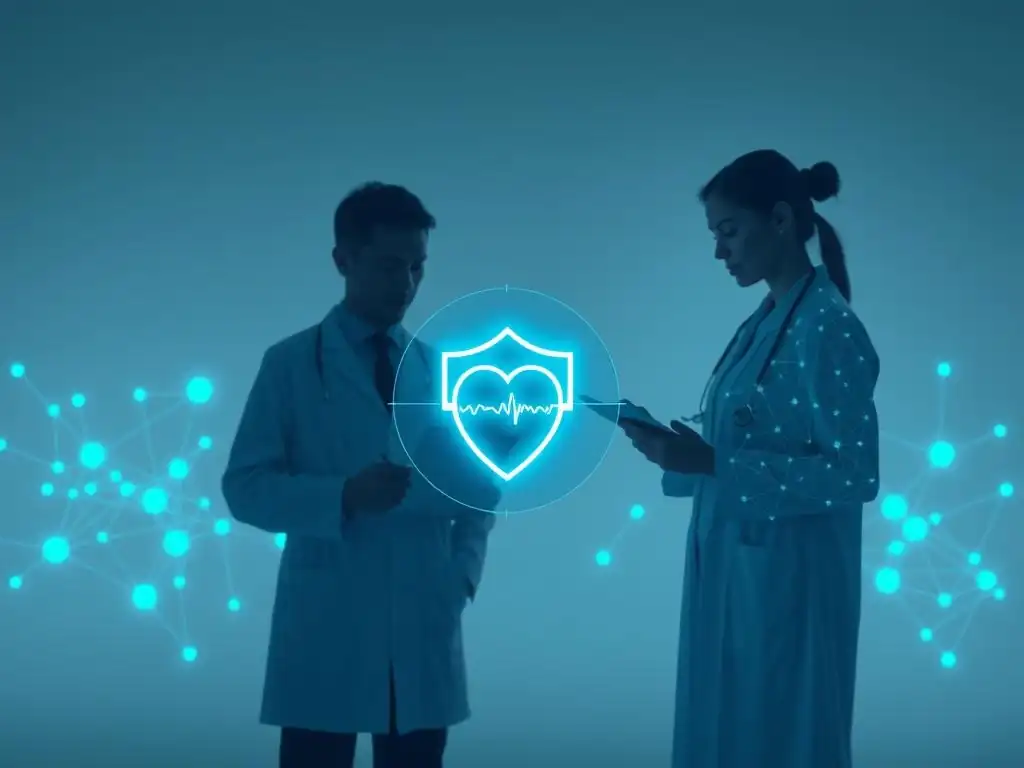
Streamlining Insurance Claims Processing with Verified Credentials
Insurance claims processing is often burdened by delays, manual verification steps, and the potential for fraudulent claims, partly due to difficulties in quickly and reliably verifying the credentials of both providers and patients. Blockchain health credentials verification can significantly streamline this process. By allowing insurers to instantly verify the license and certifications of a healthcare provider submitting a claim, and the identity and eligibility of the patient receiving care, the system can automate many checks.
For example, a smart contract could automatically approve a claim if it verifies that the service was provided by a currently licensed professional (verified via blockchain) to a patient whose identity and insurance eligibility are also confirmed via linked blockchain records or verifiable credentials. This reduces manual review, accelerates payout times, and minimizes fraudulent claims submitted by unlicensed individuals or using stolen patient identities. Studies or pilot programs might show potential reductions in processing time by X% and fraud detection improvements by Y% when leveraging verifiable credentials.
Improving Interoperability of Health Records Across Different Systems
A major hurdle in healthcare is the lack of interoperability between different electronic health record (EHR) systems used by various hospitals, clinics, and labs. This fragmentation makes it difficult to share patient information seamlessly, leading to delays, repeated tests, and potential errors in care. Blockchain health credentials verification, particularly in the context of patient identity and access control, can be a key enabler for improving interoperability.
By providing a universal, verifiable patient identity layer on the blockchain, different EHR systems can securely link patient records without needing to migrate data or establish complex point-to-point integrations. The patient, controlling their identity via the blockchain, can grant temporary access to specific health records stored off-chain to a new provider, regardless of the EHR system they use. This approach facilitates secure data exchange, allowing providers to access critical patient history quickly and efficiently, ultimately improving coordinated care and patient outcomes.
Facilitating Telemedicine and Remote Patient Monitoring with Secure Authentication
The rise of telemedicine and remote patient monitoring requires robust identity verification and authentication mechanisms to ensure that care is delivered securely to the correct patient by a qualified professional. Traditional authentication methods can be vulnerable. Blockchain health credentials verification provides a strong foundation for secure access in these remote care scenarios.
Before a telemedicine consultation begins, a blockchain-based system can instantly verify the identity of both the patient logging in and the medical professional providing the service, ensuring they are licensed and qualified. For remote patient monitoring, blockchain can secure the transmission of data from devices, linking it immutably to the verified patient identity. This ensures that data is not tampered with and is correctly attributed to the patient, enhancing the reliability and security of remote healthcare services and expanding access to care.
Implementing Blockchain Health Credentials: Key Considerations
Choosing the Right Blockchain Platform for Healthcare Applications
Selecting the appropriate blockchain platform is a critical first step in implementing blockchain health credentials verification. Healthcare applications have specific requirements, including high security, data privacy, scalability, and often, the need for permissioned access. Public blockchains like Ethereum or Bitcoin might offer high decentralization but can present challenges regarding transaction costs, speed, and privacy for sensitive health data. Permissioned blockchains (like Hyperledger Fabric, R3 Corda, or private Ethereum instances) allow organizations to control who can participate in the network and validate transactions, offering better privacy and throughput, which is often more suitable for enterprise healthcare use cases.
The chosen platform must also support smart contracts for automating verification processes and have a robust ecosystem for development and integration. Evaluating factors such as consensus mechanism (Proof-of-Work, Proof-of-Stake, Practical Byzantine Fault Tolerance), transaction speed, cost per transaction, data privacy features, and the maturity of the development community is essential. A thorough analysis balancing decentralization needs with performance and privacy requirements is necessary to make an informed decision for blockchain health credentials verification.
Addressing Data Privacy and Compliance Regulations (HIPAA, GDPR)
Implementing blockchain health credentials verification must strictly adhere to stringent data privacy and compliance regulations like HIPAA in the United States and GDPR in Europe. These regulations mandate how sensitive health information (Protected Health Information - PHI) must be handled, stored, and protected. Storing PHI directly on many public blockchains is non-compliant due to the immutability and public nature of the ledger.
Therefore, solutions must employ strategies like storing PHI off-chain in encrypted databases, with only cryptographic hashes or pointers stored on the blockchain. Access control mechanisms, often managed by blockchain-based decentralized identities and smart contracts, must ensure that PHI is only accessible to authorized parties with the patient's consent, in accordance with regulations. Implementing strong encryption, managing access permissions through verifiable credentials, and ensuring the 'right to be forgotten' (for data stored off-chain) are paramount to achieving regulatory compliance while leveraging blockchain for health credentials verification.
Technical Considerations for Integration with Existing Healthcare Systems
Integrating blockchain health credentials verification solutions with existing legacy healthcare systems, such as Electronic Health Records (EHRs), Hospital Information Systems (HIS), and Laboratory Information Systems (LIS), presents significant technical challenges. These legacy systems often use outdated technologies, have complex architectures, and lack standardized APIs for seamless data exchange.
Integration typically requires developing middleware or using integration engines to translate data formats and protocols between the blockchain network and existing systems. Designing APIs that allow secure querying of credential status from the blockchain or enabling legacy systems to issue credentials onto the ledger are necessary steps. Ensuring data consistency between on-chain credential status and off-chain patient records, managing private keys securely, and handling potential data synchronization issues are critical technical considerations that require careful planning and execution to ensure the success of blockchain health credentials verification initiatives.
Benefits of Blockchain Health Credentials Verification
Enhanced Security and Trust in Healthcare Data
One of the most significant benefits of blockchain health credentials verification is the substantial enhancement of security and trust in healthcare data. The decentralized and immutable nature of blockchain makes it extremely difficult for unauthorized parties to tamper with credential records or patient identity information. Each transaction is cryptographically secured and linked, creating a tamper-evident audit trail.
This inherent security reduces the risk of fraud, identity theft, and data breaches compared to traditional centralized systems. For healthcare providers, it means they can trust that the licenses and certifications of their staff are authentic and current. For patients, it provides assurance that their identity is protected and their health information is linked to them accurately and securely. This increased trust is fundamental for building a reliable and safe healthcare ecosystem.
Reduced Administrative Costs and Improved Efficiency
Blockchain health credentials verification offers the potential for significant reductions in administrative costs and improvements in operational efficiency. Automating the verification of medical licenses, certifications, and patient identities using smart contracts and decentralized ledgers eliminates many manual steps involved in traditional processes.
This automation speeds up processes like provider credentialing (potentially reducing weeks to days), patient registration, and insurance claims processing. Reduced manual effort translates directly into lower labor costs. Furthermore, minimizing errors associated with manual data entry and verification reduces the need for costly rework. While initial implementation costs exist, the long-term operational savings from improved efficiency and reduced fraud can be substantial, making blockchain health credentials verification a cost-effective solution.
Improved Patient Outcomes and Enhanced Healthcare Delivery
Ultimately, the benefits of blockchain health credentials verification extend to improved patient outcomes and enhanced healthcare delivery. By ensuring that medical professionals are properly credentialed and that patient identities are accurately verified, the risk of medical errors due to unqualified staff or incorrect patient information is significantly reduced.
Faster and more reliable access to verified patient identity and potentially linked health records (with patient consent) through interoperable systems enables better-coordinated care, especially for patients seeing multiple specialists or transitioning between care settings. Streamlined administrative processes free up healthcare professionals to focus more on patient care. The overall result is a safer, more efficient, and more patient-centric healthcare system, where trust in data and credentials directly contributes to higher quality care.
Challenges and Future Trends in Blockchain Health Credentials
Scalability and Interoperability Challenges
Despite the promising benefits, implementing blockchain health credentials verification faces significant challenges, particularly regarding scalability and interoperability. Current blockchain technologies, especially public ones, can have limitations in processing a high volume of transactions quickly and cost-effectively, which is a requirement for large-scale healthcare systems. While permissioned blockchains offer better performance, scaling them across a complex ecosystem of diverse healthcare organizations remains a challenge.
Achieving true interoperability between different blockchain platforms and existing legacy systems is also complex. Different blockchain networks may not easily communicate with each other, creating new data silos. Developing standards and protocols for cross-chain communication and seamless integration with existing EHRs and other systems is crucial but requires industry-wide collaboration and technical development.
Regulatory Landscape and Adoption Barriers
Navigating the complex and evolving regulatory landscape is another major challenge for blockchain health credentials verification. While blockchain offers tools to enhance privacy and security, ensuring full compliance with HIPAA, GDPR, and other regional health data regulations requires careful architectural design and operational procedures. Legal clarity on the status of data stored on-chain (even hashes) and the implications for patient rights (like the right to be forgotten) is still developing in some jurisdictions.
Beyond regulation, significant adoption barriers exist. These include the need for substantial initial investment in technology and infrastructure, the challenge of integrating with entrenched legacy systems, and the requirement for extensive training and change management within healthcare organizations. Building consensus and collaboration among diverse stakeholders – including hospitals, clinics, insurers, regulatory bodies, and patients – is essential for widespread adoption but is often slow and difficult.
Future Trends: Decentralized Identity and Self-Sovereign Identity in Healthcare
Looking ahead, the future of blockchain health credentials verification is closely tied to the broader trends of decentralized identity (DID) and self-sovereign identity (SSI). These models empower individuals to own and control their digital identities and verified credentials, rather than relying on central authorities. In healthcare, this means patients could manage their own identity attributes and health records, sharing them selectively using cryptographic proofs stored on a blockchain.
Future developments will likely focus on building robust SSI frameworks specifically for healthcare, allowing for granular control over data sharing while ensuring compliance with privacy regulations. We may see the emergence of industry-specific blockchain networks or standards focused on health credentials and identity. As technology matures and regulatory clarity increases, blockchain health credentials verification is poised to become a foundational element of secure, efficient, and patient-centric healthcare systems.
Conclusion: The Future of Healthcare is Secure and Verifiable
Blockchain Health Credentials: A Paradigm Shift in Healthcare Data Management
Blockchain health credentials verification represents a significant paradigm shift in how healthcare data, particularly professional qualifications and patient identities, is managed and trusted. By moving away from fragmented, vulnerable centralized systems towards a decentralized, immutable, and transparent ledger, healthcare can achieve unprecedented levels of security, efficiency, and patient empowerment. The ability to instantly verify the credentials of medical professionals reduces administrative burdens and enhances patient safety. Similarly, securing patient identities on the blockchain combats fraud and gives patients greater control over their sensitive information.
While challenges related to scalability, interoperability, and regulatory adaptation remain, the foundational benefits offered by blockchain health credentials verification are compelling. As the technology matures and collaborative efforts address current hurdles, blockchain is set to become an indispensable tool for building a more secure, efficient, and trustworthy healthcare ecosystem. The journey towards widespread adoption is ongoing, but the potential for transformation in healthcare data management is clear and significant.
Frequently Asked Questions
What are blockchain-based health credentials, and how do they work?
Blockchain-based health credentials are digital records of a person's medical qualifications or patient identity, stored on a decentralized blockchain. This allows for secure and verifiable access to this information by authorized parties. The technology utilizes cryptography to ensure data integrity and prevent tampering.
How does blockchain enhance the verification process for medical professionals?
Blockchain provides an immutable and transparent record of a medical professional's qualifications and licenses. This allows hospitals and other organizations to quickly and reliably verify their credentials, reducing the risk of fraud and improving patient safety.
What are the benefits of using blockchain for patient identity verification?
Blockchain can create a unique and secure digital identity for patients, preventing identity theft and improving data privacy. It also allows patients to control access to their medical records and share them securely with healthcare providers.
What are the regulatory considerations surrounding blockchain-based health credentials?
Regulations are still evolving, but compliance with data privacy laws like HIPAA is crucial. Interoperability standards and guidelines for data governance and security are also important considerations for widespread adoption.
What is the future of blockchain in healthcare, particularly regarding credentials verification?
The future holds potential for greater interoperability between different healthcare systems using blockchain. We can anticipate increased adoption for streamlined credential verification and improved patient data management, fostering trust and efficiency.
Final Reflection: Securing Trust in Healthcare's Future
The promise of blockchain health credentials verification is no longer a distant possibility, but a rapidly approaching necessity. As we've explored, the ability to securely and transparently verify medical professionals and patient identities is paramount to building trust and efficiency within a healthcare system increasingly reliant on digital interactions. The vulnerabilities of current systems, coupled with the growing threat of data breaches and fraud, demand a robust and decentralized solution, and blockchain offers precisely that.
The impact of this technology extends far beyond mere efficiency gains; it fundamentally reshapes the patient-provider relationship. Imagine a world where patients have complete control over their medical data, granting access only to verified professionals, fostering a sense of security and empowerment. This paradigm shift is crucial for building a more equitable and patient-centric healthcare ecosystem. The future of healthcare is about empowering individuals to take control of their health data and make informed decisions.
- John Halamka, President of the Mayo Clinic Platform.
Now, consider the implications of this technology in your own life. How might the secure verification of your doctor's credentials impact your peace of mind? How would the ability to control your medical records empower you to make better healthcare choices? The future of healthcare is being built today, and the adoption of blockchain-based solutions hinges on our collective understanding and advocacy. Let us embrace this technology, not just as a technical innovation, but as a powerful tool for building a healthier, more trustworthy future for all.
Empower Your Health Journey: Secure & Verify!
Thank you for exploring the world of blockchain-based health credentials. We hope you now have a clearer understanding of how this technology can transform trust and transparency in healthcare. It's time to turn knowledge into action.
You can help create a more secure and verifiable future for healthcare by:
- Encouraging your healthcare provider to support blockchain-based credentials—taking this step can have a significant impact on protecting your medical information.
- Sharing this information with friends, family, and healthcare professionals to promote awareness about the importance of verifiable health data.
- Exploring additional resources on digital identity and security to discover innovative solutions and emerging trends.
What practical steps can you take today to motivate local healthcare providers to adopt blockchain credentials for better security and trust?
Leave a Reply