
Securing Patient Data with Blockchain: A Revolution in Healthcare Privacy?

Welcome to Blockchain Trends, your guide to understanding the profound impact of blockchain technology beyond the realm of cryptocurrencies. Dive into the world of decentralized finance, enterprise solutions, and the ever-evolving regulatory landscape.
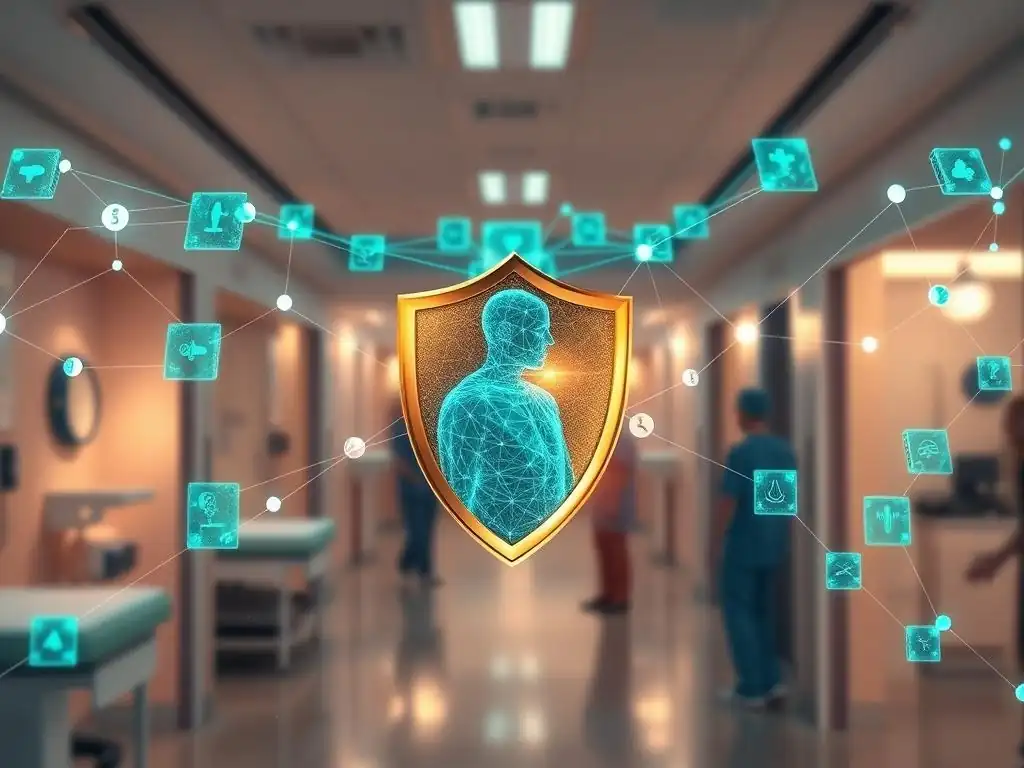
But what if blockchain could revolutionize an industry as vital as healthcare? In this article, we explore the groundbreaking potential of blockchain healthcare data security, examining how it can transform patient data privacy and security. Is this the future of safeguarding sensitive medical information? Let's unravel the possibilities...
Securing Patient Data with Blockchain: A Revolution in Healthcare Privacy?
- Introduction: The Urgent Need for Enhanced Healthcare Data Security
- Blockchain Technology: A Paradigm Shift for Patient Data Management
- Blockchain Healthcare Data Security: Key Benefits and Advantages
- Blockchain Use Cases in Healthcare Data Protection
- Overcoming Challenges and Barriers to Blockchain Adoption in Healthcare
- The Future of Blockchain in Healthcare: Trends and Predictions
- Case Studies: Real-World Examples of Blockchain for Healthcare Data Security
- Conclusion: Blockchain's Transformative Potential for Healthcare Privacy and Security
-
Frequently Asked Questions
- How does blockchain enhance healthcare data security?
- What are the benefits of using blockchain for managing patient identity?
- Can blockchain help with regulatory compliance in healthcare?
- What are some potential challenges to adopting blockchain in healthcare?
- Beyond security, what other applications of blockchain exist in healthcare?
- Final Reflection: Embracing Trust in a Decentralized Future
- Unleash the Power of Blockchain for Healthcare Privacy!
Introduction: The Urgent Need for Enhanced Healthcare Data Security
The Growing Threat of Data Breaches in Healthcare
The healthcare sector faces an escalating crisis of data breaches, making robust blockchain healthcare data security solutions increasingly critical. Sensitive patient information, including electronic health records (EHRs), insurance details, and billing information, is a prime target for cybercriminals due to its value on the black market. These breaches can result in severe financial penalties, loss of patient trust, and even compromise patient safety if critical medical history is altered or inaccessible.
Recent years have seen alarming statistics regarding healthcare data breaches. In 2022 alone, over 50 million healthcare records in the United States were reportedly impacted by security incidents, according to various industry analyses. This trend continued into 2023, with breaches affecting millions more individuals and costing the industry billions of dollars annually in recovery efforts, fines, and reputational damage. The sheer volume and sensitivity of the data make healthcare organizations particularly vulnerable, highlighting the urgent need for innovative approaches to protect this information.
Why Traditional Security Measures Fall Short
Traditional healthcare data security relies primarily on centralized databases protected by firewalls, access controls, and encryption. While essential, these measures often create single points of failure that, once compromised, can expose vast amounts of data. Attackers who gain access to a central server or database can potentially access records for millions of patients, as seen in numerous high-profile breaches involving large hospital systems or insurance providers.
Moreover, data within healthcare is often siloed across different providers, clinics, and systems. This fragmentation, combined with varying levels of security implementation, creates vulnerabilities. Data shared between institutions might pass through less secure channels or be stored redundantly in multiple, potentially less protected locations. This inherent structure of traditional systems makes achieving comprehensive, end-to-end blockchain healthcare data security challenging without a fundamentally different approach to data management and access.
Blockchain Technology: A Paradigm Shift for Patient Data Management
Understanding Blockchain Fundamentals for Healthcare Applications
At its core, blockchain is a distributed, immutable ledger that records transactions across many computers. In the context of healthcare, this means patient data or, more commonly, cryptographically secure hashes of patient data and records of access/transactions, can be stored in blocks linked together chronographically. Each new block is added to the chain only after a consensus mechanism validates the transactions it contains, making it extremely difficult to tamper with past entries.
This decentralized and consensus-driven nature provides a fundamentally different security model than traditional databases. Instead of a single point of control or failure, the data's integrity is maintained by the collective network. For blockchain healthcare data security, this translates into a system where unauthorized changes are virtually impossible to make without being detected by the network participants, significantly enhancing trust and transparency in data handling.
How Blockchain Ensures Data Integrity and Immutability in Healthcare
Blockchain ensures data integrity through cryptographic hashing. Each block contains a hash of the previous block, creating a chain. If any data within a block is altered, its hash changes, breaking the link to the next block and immediately signaling tampering to the network. This makes the ledger effectively immutable; once data is recorded, it cannot be retrospectively changed without invalidating subsequent blocks, a task requiring impractical computational power to execute across a distributed network.
For healthcare, this immutability is crucial for maintaining accurate patient histories, ensuring the integrity of clinical trial data, or verifying the authenticity of prescriptions and medical devices. While patient data itself may not always be stored directly on the public chain due to privacy concerns and data size, blockchain can be used to securely record metadata, transaction logs (like who accessed a record and when), or hashes pointing to data stored off-chain in more private, compliant systems. This approach leverages blockchain's integrity features to build a robust layer of blockchain healthcare data security and auditability around sensitive information.
Blockchain Healthcare Data Security: Key Benefits and Advantages
Enhanced Data Security and Protection Against Cyberattacks
Blockchain's decentralized and cryptographic nature inherently enhances data security compared to centralized systems. Data is not stored in a single, vulnerable location. Instead, the ledger is distributed across multiple nodes, meaning there is no single point of failure for attackers to target. To compromise the data, an attacker would theoretically need to control a majority of the network's nodes, a feat that becomes exponentially more difficult and expensive as the network grows.
Furthermore, the use of advanced cryptography to link blocks and verify transactions adds a robust layer of protection. While traditional systems rely on perimeter defenses, blockchain provides security through its very architecture and the mathematical principles underpinning it. This structural resilience is a major advantage for blockchain healthcare data security, making it significantly harder for malicious actors to breach the system and tamper with sensitive patient information.
Improved Interoperability and Data Sharing Among Healthcare Providers
Healthcare data is notoriously fragmented, residing in disparate systems that often cannot easily communicate with one another. Blockchain offers a potential solution by providing a secure, standardized layer for tracking and sharing access to patient data across different institutions. Patients could grant specific providers access to their records stored or referenced on a blockchain-based platform, facilitating seamless and secure information exchange while maintaining a clear audit trail.
This enhanced interoperability could drastically improve care coordination, especially for patients seeing multiple specialists or transitioning between different levels of care. Instead of relying on faxes, emails, or physical records, authorized healthcare providers could access a patient's comprehensive medical history quickly and securely, leading to more informed diagnoses and treatment plans. Implementing blockchain healthcare data security in this way could reduce administrative burdens and improve the efficiency of data sharing, ultimately benefiting patient outcomes.
Increased Patient Control and Ownership of Medical Records
One of the most compelling benefits of blockchain in healthcare is its potential to empower patients with greater control over their own medical data. In a blockchain-based system, patients could potentially manage who has access to their records, revoking or granting permissions as needed. This shifts the paradigm from institutions holding and controlling data to patients having agency over their most sensitive personal information.
By using blockchain healthcare data security models, platforms can be designed where patients use private keys to authorize access requests from healthcare providers, researchers, or even third-party applications. Every access request and approval would be immutably recorded on the ledger, providing patients with a transparent history of who has viewed their information. This level of control and transparency is largely absent in current healthcare systems and represents a significant step towards patient-centric healthcare.
Streamlined Healthcare Processes and Reduced Administrative Costs
Beyond security and interoperability, blockchain can streamline various administrative processes in healthcare, potentially leading to significant cost reductions. Managing patient records, verifying insurance information, processing claims, and tracking the supply chain of pharmaceuticals are all areas that involve multiple parties, manual processes, and potential for errors or fraud.
By providing a single, shared, and immutable ledger for these transactions, blockchain can automate verification steps, reduce the need for intermediaries, and create a clear, auditable trail. For instance, processing insurance claims could be accelerated by providing payers with secure, real-time access to verified treatment records. While precise figures vary, some industry estimates suggest that blockchain adoption could reduce administrative costs in healthcare by billions of dollars annually through improved efficiency and reduced fraud, bolstering overall blockchain healthcare data security and operational integrity.
Blockchain Use Cases in Healthcare Data Protection
Secure Electronic Health Records (EHR) Management with Blockchain
Managing Electronic Health Records (EHRs) is a primary area where blockchain healthcare data security can make a significant impact. Instead of storing all EHR data directly on the chain (which is often too large and sensitive), blockchain can be used to create a secure index or pointer to the data, along with an immutable log of all access attempts and modifications. This approach leverages blockchain's strengths—security, transparency, and immutability—without requiring the storage of vast amounts of sensitive data on a public or permissioned ledger.
Patients could control access to their records via private keys, granting temporary or permanent permissions to doctors, hospitals, or specialists. Every instance of access, modification, or data sharing would be recorded on the blockchain, creating an auditable trail that cannot be altered. This ensures that the integrity of the patient's medical history is preserved and provides patients with unprecedented visibility into who is accessing their most sensitive information, a key aspect of enhancing blockchain healthcare data security.
Blockchain-Based Identity Management for Patients and Providers
Verifying the identity of both patients and healthcare providers is crucial for preventing fraud and ensuring that medical records are accessed by authorized individuals. Blockchain can facilitate the creation of secure, decentralized digital identities. Patients could have a unique, self-sovereign digital identity linked to their medical records, controlled by their private key. This identity could be used to authenticate themselves when accessing services or granting data permissions.
Similarly, healthcare providers and institutions could have verified identities on the network, ensuring that only licensed and authenticated professionals are interacting with patient data or prescribing medications. This layer of identity verification, built on the trust and immutability of the blockchain, significantly reduces the risk of identity theft and unauthorized access, contributing directly to robust blockchain healthcare data security measures. The use of decentralized identifiers (DIDs) and verifiable credentials (VCs) based on blockchain technology is an emerging standard in this space.
Supply Chain Management of Pharmaceuticals Using Blockchain
Ensuring the authenticity and safety of pharmaceuticals from manufacture to patient is a critical public health concern. Counterfeit drugs are a significant problem globally, estimated to account for billions of dollars in illegal trade annually and posing serious health risks. Blockchain can provide an immutable and transparent ledger to track the entire journey of a drug through the supply chain.
Each step, from manufacturing batch creation to distribution center transfers and final pharmacy delivery, can be recorded on the blockchain. This creates a verifiable history for every package, making it easy to detect counterfeit products or identify points of diversion. Implementing blockchain healthcare data security within the pharmaceutical supply chain not only combats counterfeiting but also improves recall efficiency and provides regulators with better oversight, ensuring patient safety. Pilot programs have demonstrated the feasibility of tracking pharmaceuticals using blockchain, showing promising results in reducing fraud and improving transparency.
Clinical Trial Data Security and Integrity Maintained with Blockchain
Maintaining the integrity and security of data generated during clinical trials is paramount for the approval of new treatments and ensuring patient safety. Data manipulation or errors can have serious consequences, leading to flawed research outcomes and potentially harmful medical decisions. Blockchain can be used to record clinical trial protocols, patient consent, and data generated throughout the trial in an immutable ledger.
This ensures that once data is recorded, it cannot be altered retroactively, providing a trustworthy and verifiable record for regulatory bodies like the FDA. Using blockchain for clinical trial data management enhances transparency, auditability, and overall data reliability. It helps prevent data tampering, ensures that results are based on accurate information, and streamlines the audit process, thereby strengthening the integrity of medical research and contributing to robust blockchain healthcare data security practices in this vital area.
Overcoming Challenges and Barriers to Blockchain Adoption in Healthcare
Scalability Issues and Performance Considerations
One significant challenge facing widespread blockchain adoption in healthcare is scalability. Public blockchains, like Bitcoin or Ethereum (before recent updates), process a relatively low number of transactions per second compared to the volume required by large healthcare systems handling millions of patient interactions daily. Storing or referencing vast amounts of healthcare data also presents storage and processing challenges for distributed ledgers.
Solutions are being developed, including permissioned or private blockchains designed for enterprise use, layer-2 scaling solutions, and sharding techniques. These aim to increase transaction throughput and reduce latency. For blockchain healthcare data security to become a reality for large-scale applications like national EHR systems, these scalability issues must be effectively addressed, allowing the technology to handle the immense data volume and transaction speed necessary for modern healthcare operations.
Regulatory Compliance and Legal Frameworks for Blockchain in Healthcare
Navigating the complex landscape of healthcare regulations, such as HIPAA in the United States or GDPR in Europe, is a major hurdle for blockchain implementation. These regulations impose strict requirements on how patient data is stored, accessed, and protected, including the "right to be forgotten" under GDPR, which can conflict with blockchain's immutable nature.
While blockchain's immutability is key for security, the direct storage of protected health information (PHI) on many types of blockchains may violate these regulations. Solutions involve storing PHI off-chain in compliant databases and using the blockchain only for hashes, metadata, and access logs, combined with robust access controls. Legal frameworks are still evolving to specifically address blockchain technology in healthcare, requiring careful consideration and legal expertise to ensure compliance while leveraging blockchain healthcare data security features.
Interoperability with Existing Healthcare Systems
Integrating new blockchain-based systems with the vast array of legacy IT systems currently used in hospitals, clinics, and labs presents a significant technical and logistical challenge. Many existing systems use outdated technologies and data formats, making seamless data exchange difficult. Building interfaces and middleware to connect these disparate systems to a blockchain platform requires substantial development effort and investment.
Achieving true interoperability requires not just technical interfaces but also standardization of data formats and protocols across the industry. Without effective integration, blockchain healthcare data security solutions risk becoming another siloed system, limiting their potential benefits. Collaborative efforts involving healthcare providers, technology vendors, and standards bodies are essential to bridge the gap between existing infrastructure and new blockchain capabilities.
Addressing Privacy Concerns and Data Governance
While blockchain enhances security through decentralization and immutability, it also introduces unique privacy challenges. On public blockchains, transaction data (even if anonymized or hashed) is visible to all participants, which can raise privacy concerns. Even on permissioned blockchains, careful design is needed to ensure that sensitive information is not exposed.
Determining who has authority over data on a decentralized network and establishing clear governance models are critical. This includes defining rules for adding data, managing identities, and handling data access requests in a way that complies with privacy regulations and maintains patient trust. Robust data governance frameworks are necessary to ensure that blockchain healthcare data security is implemented responsibly, balancing transparency with the strict privacy requirements of healthcare information.
The Future of Blockchain in Healthcare: Trends and Predictions
The Rise of Decentralized Healthcare Applications
The future of blockchain in healthcare is expected to see a rise in decentralized healthcare applications (dApps). These applications, built on blockchain platforms, could offer a range of services directly to patients, from managing their health records and appointments to participating in clinical trials and accessing personalized health insights. Decentralized applications can provide greater transparency and control compared to traditional centralized health portals.
Imagine a dApp where a patient securely stores their health wearable data, genetic information, and medical history, granting permission to their doctor or a wellness program via a smart contract. This level of patient-centricity and data control, underpinned by robust blockchain healthcare data security, is a key trend. As blockchain technology matures and becomes more user-friendly, these decentralized applications have the potential to transform how patients interact with the healthcare system.
Integration of Blockchain with AI and IoT in Healthcare
The convergence of blockchain with other cutting-edge technologies like Artificial Intelligence (AI) and the Internet of Medical Things (IoMT) holds significant promise for healthcare. IoMT devices (like wearable health trackers, remote monitoring systems) generate vast amounts of health data. Blockchain can provide a secure and immutable ledger for storing and verifying the integrity of this data stream.
AI algorithms can then analyze this verified data to identify trends, predict health risks, and personalize treatments. Blockchain ensures that the data fed into AI models is trustworthy and untampered, enhancing the reliability of AI-driven insights. This integration creates a powerful synergy: secure, verifiable data from IoMT devices, analyzed by AI, all underpinned by the trust and transparency of blockchain healthcare data security, potentially leading to more proactive and personalized care.
The Potential for Personalized Medicine and Precision Healthcare
Blockchain's ability to securely manage and share diverse datasets—including genomic data, lifestyle information, and detailed medical histories—is foundational for the advancement of personalized medicine and precision healthcare. By allowing patients to securely share their comprehensive health profile with researchers or specialized clinics, while maintaining control and privacy, blockchain can accelerate the discovery of targeted therapies.
Researchers could access large, anonymized (or consent-based) datasets across different institutions via a blockchain platform, overcoming traditional data silos. This access to richer, more complete datasets, validated through blockchain healthcare data security mechanisms, is crucial for developing treatments tailored to individual genetic makeup and lifestyle factors. The potential to unlock the full value of health data for personalized medicine is one of the most exciting long-term prospects for blockchain in healthcare.
Case Studies: Real-World Examples of Blockchain for Healthcare Data Security
Guardtime's KSI Blockchain for Healthcare Data Integrity
Guardtime is a company that has implemented its Keyless Signature Infrastructure (KSI) blockchain technology in healthcare, notably in Estonia's national health system. Estonia, a digital pioneer, uses KSI blockchain to ensure the integrity of its citizens' health records. The system doesn't store the health records themselves on the blockchain but rather immutable hash links of the records stored in existing databases.
This implementation focuses specifically on data integrity and auditability. Any attempt to tamper with a health record would break the cryptographic link on the blockchain, immediately alerting the system to the unauthorized modification. This provides an unprecedented level of assurance that patient data, even when stored in traditional systems, remains unaltered and trustworthy, showcasing a practical application of blockchain healthcare data security at a national level. The system processes millions of transactions annually, demonstrating scalability for critical infrastructure.
MediBloc: Patient-Centric Healthcare Data Platform
MediBloc is a blockchain-based platform focused on creating a patient-centric healthcare data ecosystem. Their goal is to empower patients by giving them control and ownership over their medical records, which can be fragmented across various hospitals and clinics. MediBloc utilizes a blockchain to securely store and manage patient identities and metadata, while sensitive health information is stored encrypted off-chain.
Patients can aggregate their health records from different providers onto the MediBloc platform and grant access permissions to healthcare professionals or researchers using their private keys. This approach aims to improve data accessibility for both patients and providers while maintaining strong privacy and security through blockchain healthcare data security principles. MediBloc has partnered with various healthcare institutions in South Korea and elsewhere to pilot and implement its platform, demonstrating the feasibility of patient-controlled data access.
Conclusion: Blockchain's Transformative Potential for Healthcare Privacy and Security
Blockchain as a Catalyst for a More Secure and Patient-Centric Healthcare System
Blockchain technology holds significant promise as a catalyst for transforming healthcare into a more secure, transparent, and patient-centric system. By addressing fundamental weaknesses in traditional data management—namely, centralization, fragmentation, and lack of patient control—blockchain offers a robust framework for enhancing data security and privacy. Its inherent features of decentralization, immutability, and cryptography provide powerful tools to protect sensitive patient information from breaches and unauthorized access.
Beyond security, blockchain enables improved data interoperability, streamlined administrative processes, and empowers patients to become active participants in managing their health data. While challenges related to scalability, regulation, and integration remain, the potential benefits of implementing blockchain healthcare data security solutions are substantial, paving the way for a healthcare ecosystem built on trust and patient empowerment.
The Importance of Collaboration and Innovation in Blockchain Healthcare
Realizing the full transformative potential of blockchain in healthcare requires collaborative effort and continued innovation. Healthcare providers, technology developers, regulators, and patients must work together to build solutions that are not only technically sound but also compliant with privacy regulations and user-friendly. Pilots and real-world implementations, like those by Guardtime and MediBloc, are crucial for demonstrating feasibility and identifying best practices.
Investing in research and development to overcome technical hurdles, developing clear regulatory guidelines, and fostering industry-wide standards are essential steps. As the healthcare industry embraces digital transformation, blockchain healthcare data security stands out as a key enabler for building a future where patient data is truly secure, accessible when needed, and ultimately, serves to improve health outcomes for all.
Frequently Asked Questions
How does blockchain enhance healthcare data security?
Blockchain provides a decentralized and immutable ledger, making it extremely difficult for hackers to alter or steal patient records. This enhances data integrity and auditability.
What are the benefits of using blockchain for managing patient identity?
Blockchain can create a secure and verifiable digital identity for patients, reducing the risk of identity theft and improving patient data management across different healthcare providers. This allows for better access control.
Can blockchain help with regulatory compliance in healthcare?
Yes, blockchain's transparent and auditable nature can assist healthcare organizations in meeting regulatory requirements like HIPAA, by providing a clear record of data access and modifications. Facilitating compliance and accountability.
What are some potential challenges to adopting blockchain in healthcare?
Challenges include scalability limitations, the need for interoperability between different blockchain systems, and the lack of widespread understanding and acceptance of the technology within the healthcare industry.
Beyond security, what other applications of blockchain exist in healthcare?
Blockchain can facilitate supply chain management for pharmaceuticals, improve clinical trial data integrity, and enable secure sharing of research data among institutions.
Final Reflection: Embracing Trust in a Decentralized Future
The exploration of blockchain technology's potential to revolutionize healthcare data security reveals a critical truth: the future of patient privacy hinges on our ability to embrace decentralized trust. As we've seen, the current centralized systems are vulnerable, and blockchain offers a compelling alternative, promising enhanced security, transparency, and patient control. The promise of a future where patients truly own and manage their health information is no longer a distant dream, but a tangible possibility within our grasp.
This shift towards patient-centric data management is not just a technological advancement; it's a fundamental reshaping of the healthcare landscape. The implications for patient empowerment and the doctor-patient relationship are profound, fostering a sense of ownership and collaboration that has been historically lacking. The key to successful leadership today is influence, not authority.
- Ken Blanchard. This quote resonates deeply with the potential of blockchain, where influence over one's data replaces the authority of centralized institutions, fostering a more equitable and transparent system.
As we stand at the cusp of this technological revolution, I invite you to consider your own role in shaping the future of healthcare. How can you advocate for the adoption of secure, patient-centric technologies like blockchain? How can you empower yourself and others to take control of your health data? The answers lie in our collective willingness to embrace change, to champion innovation, and to demand a future where patient privacy is not just a promise, but a reality. Let us work together to build a healthcare system that truly prioritizes the well-being and autonomy of every individual.
Unleash the Power of Blockchain for Healthcare Privacy!
Thank you for exploring how blockchain can revolutionize the security of patient data. You've gained valuable insights into how this technology can transform healthcare privacy. Now, it's time to put that knowledge into action.
Consider taking these steps to deepen your understanding and make an impact:
- Advocate for the adoption of blockchain technology within your healthcare organization. Engage with colleagues and leadership to discuss its benefits and the possibilities for enhancing data security.
- Explore innovative projects and initiatives that utilize blockchain to protect patient information. Attend webinars or online courses related to blockchain applications in healthcare to expand your expertise.
- Share this article to raise awareness about the importance of blockchain in securing sensitive medical data and building trust within the healthcare community.
What specific actions will you take to promote the use of blockchain for safeguarding patient data privacy in your practice or organization?
Leave a Reply