
Decentralized Identity: How Blockchain is Revolutionizing Digital Ownership


Welcome to Blockchain Trends, your guide to understanding the revolutionary impact of blockchain beyond the hype!
Ready to unlock a future where digital ownership is truly yours? Dive in as we explore the transformative potential of blockchain, focusing today on the groundbreaking benefits of blockchain identity management solutions. This is just the beginning – discover how decentralized systems are reshaping industries and redefining trust in the digital age. Keep reading to uncover the future of blockchain!
- Benefits of Decentralized Identity: A Detailed Look
-
Frequently Asked Questions
- What are the primary benefits of blockchain identity management solutions compared to traditional methods?
- How does blockchain technology enable decentralized identity?
- Beyond cryptocurrencies, what are some real-world applications of blockchain identity management solutions?
- What role does regulation play in the adoption and development of blockchain identity management solutions?
- What is the future outlook for blockchain identity management solutions, considering the evolving landscape of decentralized systems?
- Final Reflection: Embracing the Future of Digital Sovereignty
- Unleash Your Digital Freedom: Start Owning Your Identity!
Benefits of Decentralized Identity: A Detailed Look
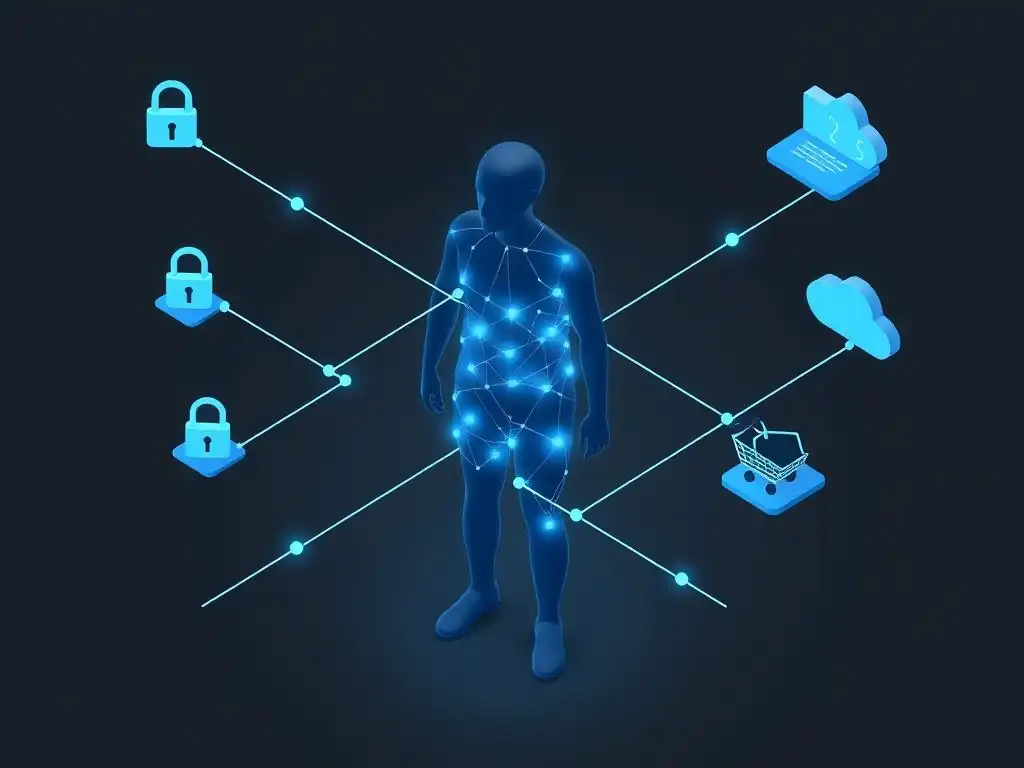
Enhanced Security and Privacy with DIDs
One of the most compelling advantages of decentralized identity is the significant enhancement in security and privacy it offers compared to traditional, centralized systems. In conventional models, vast databases of personal information are stored by organizations, creating attractive targets for cybercriminals. When a breach occurs, as seen in major incidents affecting hundreds of millions or even billions of records globally over the past decade, the consequences for individuals are severe, including identity theft and financial fraud.
Decentralized identity management solutions built on blockchain technology inherently reduce this risk by distributing data or giving control directly to the user. Instead of storing sensitive data in honeypot databases, DIDs link cryptographic identifiers to individuals, with verifiable claims about those individuals issued and verified without exposing the underlying data unnecessarily.
This shift minimizes the attack surface dramatically. Users maintain control of their private keys, which are essential for managing their identity and interacting with services. Verification processes often involve presenting cryptographically signed credentials directly from the user's wallet to a verifier, without a third party intermediary holding a copy of the user's full identity profile.
This selective disclosure capability means a user can prove they are over 18, for example, without revealing their exact date of birth or any other personal details. The cryptographic security underpinning blockchain ensures the integrity and authenticity of these interactions. These inherent features represent significant blockchain identity management solutions benefits, moving away from vulnerable centralized systems towards a more resilient, privacy-preserving architecture.
Increased User Control and Data Ownership
Decentralized identity fundamentally empowers individuals by shifting control and ownership of their digital identity and associated data from corporations and governments back to the user. In the current paradigm, users often surrender significant privacy rights and control over their personal information simply to access online services or participate in digital transactions. This has led to a landscape where a few large entities hold and monetize vast amounts of user data, often without explicit or granular consent for specific uses.
Estimates suggest the global digital identity market is worth tens of billions of dollars, yet the value generated from personal data rarely accrues to the individual whose data it is. Decentralized identity challenges this model directly.
With a DID, the user is the central authority for their identity. They manage their own identifiers and decide which verifiable credentials (digital proofs of attributes like age, qualifications, or address) to accept, store, and share. This granular control means users can choose exactly what information to disclose, to whom, and for what purpose.
For instance, proving employment history to a potential landlord no longer requires sharing a full resume or contacting a previous employer; instead, a user could present a verifiable credential issued by their former employer. This level of autonomy ensures that users are not merely data points but active participants in managing their digital persona, unlocking significant blockchain identity management solutions benefits related to personal agency and privacy.
Improved Interoperability and Portability of Digital Identities
The current digital landscape is characterized by fragmented, siloed identity systems. Each online service, financial institution, or government agency often requires users to create and manage a separate account and identity profile. This results in identity fragmentation, requiring users to remember multiple usernames, passwords, and often undergo repeated, cumbersome verification processes. Transferring identity or reputation built in one domain to another is often impossible. This lack of interoperability creates friction for users and limits the potential for seamless digital interactions across different platforms and services.
Decentralized identity frameworks, built on open standards like those defined by the W3C (World Wide Web Consortium), are designed from the ground up for interoperability and portability. A DID is globally unique and resolvable across different systems. Verifiable credentials issued by one entity can be accepted and verified by any other entity that supports the same standards, regardless of the underlying blockchain or network used (as long as it supports the DID method).
This means a user's digital identity, along with their verified credentials, can be easily used across a multitude of services, from banking and healthcare to social media and e-commerce, without needing to recreate a profile or undergo redundant verification steps. This portability is one of the key blockchain identity management solutions benefits that promises to streamline digital life and foster innovation across diverse sectors.
Reduced Costs and Efficiencies in Identity Verification
Traditional identity verification processes are often manual, time-consuming, and expensive. Businesses across various sectors, particularly in finance (Know Your Customer/Anti-Money Laundering - KYC/AML), healthcare, and hiring, spend considerable resources on verifying customer or user identities. The costs include staffing for manual review, fees for third-party verification services, data storage, and the overhead associated with maintaining compliance with complex regulations. For example, onboarding a new customer in a financial institution can cost anywhere from a few dollars to hundreds of dollars, depending on the required level of verification and jurisdiction, with a significant portion attributed to identity checks.
Decentralized identity offers the potential for substantial cost reductions and efficiency gains. Once a user has a verified credential issued by a trusted issuer (e.g., a government agency issuing a digital driver's license credential), they can reuse that credential multiple times with different verifiers. Verifiers can cryptographically verify the authenticity of the credential and the issuer almost instantly, without needing to perform a full identity check from scratch or rely on expensive third-party databases every time.
This streamlines onboarding processes, reduces manual effort, and lowers the per-transaction cost of identity verification. The automation and trust enabled by blockchain infrastructure contribute significantly to these blockchain identity management solutions benefits, making digital interactions faster and more cost-effective for both individuals and organizations.
Frequently Asked Questions
What are the primary benefits of blockchain identity management solutions compared to traditional methods?
Blockchain identity management offers enhanced security and privacy through decentralization. It also provides user control over personal data and reduces reliance on centralized authorities.
How does blockchain technology enable decentralized identity?
Blockchain uses a distributed ledger to record identity information, eliminating single points of failure. This allows individuals to own and manage their digital identities directly.
Beyond cryptocurrencies, what are some real-world applications of blockchain identity management solutions?
These solutions can be used for secure digital credentials in education and employment, streamlining KYC/AML processes in finance, and enabling verifiable supply chain tracking.
What role does regulation play in the adoption and development of blockchain identity management solutions?
Clear and consistent regulations are crucial for building trust and fostering innovation. This includes addressing data privacy concerns and establishing legal frameworks for digital identities.
What is the future outlook for blockchain identity management solutions, considering the evolving landscape of decentralized systems?
The future involves increased adoption across various industries, with a focus on interoperability and user-friendly interfaces. We can expect to see more sophisticated identity verification and management tools.
Final Reflection: Embracing the Future of Digital Sovereignty
The journey through decentralized identity and its potential, as explored in this article, culminates in a crucial realization: the power to control our digital selves is no longer a distant dream, but a tangible possibility. The benefits of blockchain identity management solutions, from enhanced security to increased user autonomy, are not just theoretical advantages; they are the cornerstones of a future where individuals, not corporations, dictate the terms of their online existence.
This shift towards self-sovereign identity has profound implications for the cultural and social landscape. It's about reclaiming ownership in a world increasingly dominated by centralized systems that often exploit our data without our explicit consent. The ability to manage our identities securely and privately, without relying on intermediaries, is not just a technological advancement; it's a fundamental human right. As Andreas Antonopoulos eloquently stated: The internet is the first thing that humanity has built that humanity doesn't understand, the largest experiment in anarchy that we have ever seen. And the only way it works is on layers of trust.
Decentralized identity builds upon this foundation of trust, but shifts the power dynamic, empowering individuals to participate in a more equitable and transparent digital ecosystem.
Now, as you reflect on the potential of blockchain identity management solutions, consider your own role in shaping this future. How can you advocate for greater data privacy and control? How can you support the development and adoption of decentralized identity technologies? The future of digital ownership is not predetermined; it is being built, brick by brick, by individuals like you who are willing to embrace the power of self-sovereignty. Let us all strive to create a digital world where identity is not a commodity, but a fundamental expression of our individual autonomy.
Unleash Your Digital Freedom: Start Owning Your Identity!
Thank you for exploring the concept of decentralized identity. You've seen how blockchain technology can empower individuals to take control of their digital lives. Are you ready to experience this transformative power?
Here are some actionable steps to get started:
- Claim your first decentralized identity by choosing a reputable DID provider. Begin building a secure, portable digital identity that puts you in control.
- Dive deeper into real-world applications of decentralized identity in sectors like healthcare, finance, and voting. Consider how this technology could address challenges within your industry.
- Share this article with your network to spark conversations about the future of digital ownership and help raise awareness of the benefits of decentralized identity.
Which aspect of managing your digital identity excites you most? Share your thoughts in the comments below!
Leave a Reply