
Decentralized Finance (DeFi) 2.0: Innovations and Advancements


Welcome to Blockchain Trends, your gateway to understanding the revolutionary power of blockchain technology. Delve beyond the hype and explore its real-world applications, from reshaping industries to powering decentralized systems. Intrigued by the potential of a new financial landscape? This week, we're diving deep into DeFi innovations future advancements, uncovering the key trends and breakthroughs shaping the future of decentralized finance and what it means for you. Prepare to unlock the transformative potential of DeFi 2.0 and discover how it's poised to redefine the future of finance.
- Core Innovations Driving DeFi 2.0's Future Advancements
-
Frequently Asked Questions
- What are some key DeFi innovations being explored beyond the initial wave of decentralized finance?
- How is DeFi 2.0 addressing the issue of impermanent loss, a major challenge in earlier DeFi platforms?
- What future advancements can we expect in the realm of DeFi regulation, and how might this impact the space?
- How are enterprise applications leveraging DeFi technologies, and what are the benefits?
- What role do decentralized systems play in the future advancements of DeFi, and how will they shape the landscape?
- Final Reflection: Embracing the Future of Decentralized Finance
- Reimagine Your Financial Future: Dive Deeper into DeFi 2.0!
Core Innovations Driving DeFi 2.0's Future Advancements
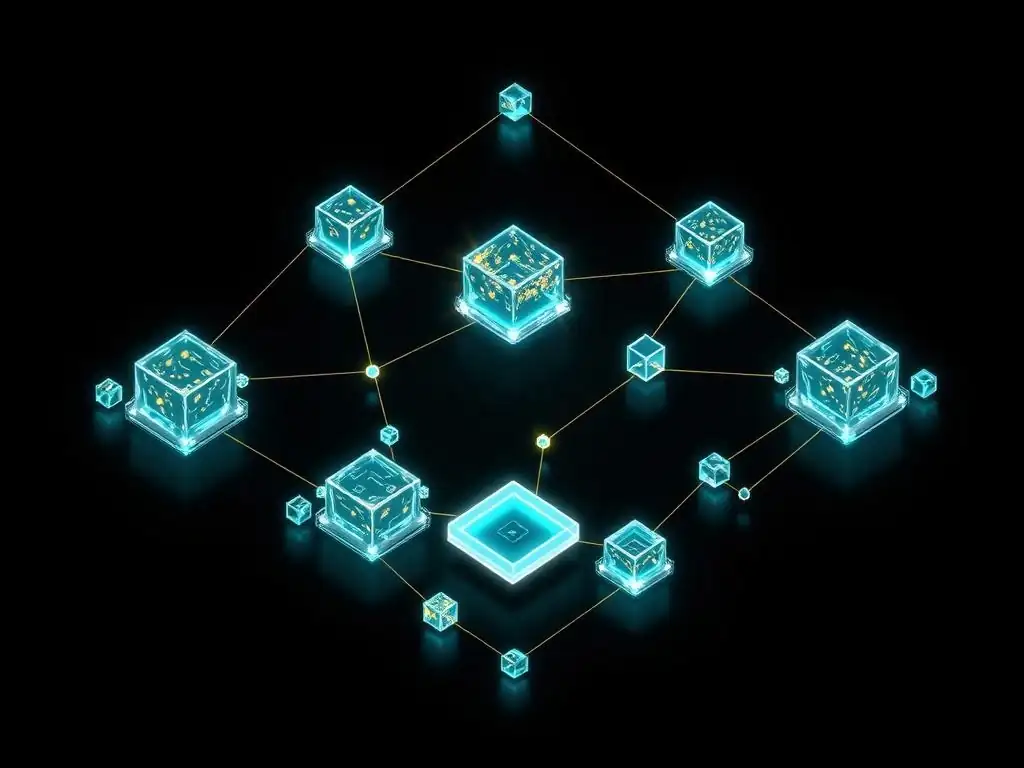
Decentralized Finance (DeFi) is undergoing a significant transformation, pushing beyond the foundational concepts established in its initial phase. This evolution, often referred to as DeFi 2.0, is marked by a suite of core innovations aimed at addressing the limitations of DeFi 1.0, enhancing user experience, and paving the way for broader adoption. These advancements are not merely incremental updates but represent fundamental shifts in how decentralized protocols operate, manage risk, and interact with users and other blockchain networks. The focus is on creating more sustainable, efficient, and secure financial ecosystems.
The drive towards DeFi 2.0 is fueled by the rapid growth and challenges encountered during the DeFi summer of 2020 and subsequent periods. Issues like high transaction costs on mainnet Ethereum, impermanent loss for liquidity providers, limited capital efficiency, and security vulnerabilities highlighted the need for significant improvements. These core innovations are essential for realizing the full potential of decentralized finance and driving its future advancements into the mainstream.
Improved Capital Efficiency in DeFi Platforms
A primary objective of DeFi 2.0 is to dramatically improve capital efficiency within decentralized protocols. In DeFi 1.0, liquidity provision often required users to deposit significant capital across various pools, much of which could remain idle. This inefficiency limited the potential returns for users and increased the cost of liquidity for protocols. DeFi 2.0 seeks to optimize how capital is utilized, ensuring that staked or deposited assets work harder and generate better yields for participants, thereby making DeFi more attractive and competitive.
Enhancing capital efficiency is crucial for the long-term sustainability and growth of the decentralized finance ecosystem. By allowing users to achieve more with less deposited capital, protocols can reduce the need for excessive token inflation to incentivize liquidity, leading to healthier tokenomics and less sell pressure. This focus on efficiency is a key driver of current DeFi innovations and future advancements.
Protocol-Controlled Liquidity (PCL): A Game Changer
Protocol-Controlled Liquidity (PCL) represents a significant innovation in how liquidity is managed within DeFi. Instead of relying solely on external liquidity providers who are incentivized with inflationary token emissions, PCL involves the protocol owning and managing a portion of its own liquidity. This is typically achieved through bonding mechanisms, where users sell assets like ETH or stablecoins to the protocol in exchange for discounted protocol tokens, vesting over time.
This shift provides the protocol with a stable, long-term source of liquidity that it controls, reducing dependence on fickle external providers who might withdraw capital during market volatility. For example, some early implementations saw protocols acquire tens or even hundreds of millions of dollars in assets like ETH and stablecoins, using these assets to provide liquidity on DEXs.
This owned liquidity generates trading fees for the protocol itself, creating a sustainable revenue stream and allowing for more strategic liquidity deployment. This model fundamentally changes the dynamics of liquidity provisioning and is a key aspect of DeFi innovations aimed at long-term stability.
Innovative Staking and Tokenomics Models
DeFi 2.0 introduces more sophisticated staking and tokenomics models designed to align user incentives with the long-term success of the protocol and improve capital efficiency. Traditional staking often involves locking tokens for a fixed period for a simple yield. Newer models, such as vote-escrowed (ve) token models, require users to lock tokens for extended periods (sometimes up to 4 years) to gain governance rights and boosted yield on liquidity provision. This encourages long-term commitment and reduces short-term speculation.
Another innovation involves mechanisms like "bonding" where users provide assets directly to the protocol treasury in exchange for discounted tokens, or models that allow staked tokens to be used simultaneously as collateral in other DeFi applications. These approaches ensure that staked capital remains productive, contributing to the protocol's liquidity or treasury while also being usable elsewhere, thereby enhancing overall capital efficiency within the DeFi ecosystem. These innovative models are central to driving DeFi innovations and securing future advancements.
Enhanced Security and Risk Management in DeFi
Security remains paramount in the decentralized finance space, and DeFi 2.0 places a much stronger emphasis on robust risk management and mitigation strategies. The DeFi 1.0 era saw numerous exploits, hacks, and vulnerabilities that resulted in significant financial losses for users and protocols, estimated to be billions of dollars across various incidents. Addressing these security gaps is critical for building trust and enabling wider adoption of decentralized financial services.
DeFi 2.0 protocols are incorporating more rigorous security audits, formal verification methods for smart contracts, and proactive monitoring systems. Beyond preventing attacks, there's a growing focus on managing inherent financial risks like impermanent loss, liquidation risk, and oracle failures. These enhanced security and risk management frameworks are fundamental to the stability and reliability required for DeFi innovations to flourish and for the ecosystem to achieve its future advancements.
Addressing Impermanent Loss and Smart Contract Exploits
Impermanent loss (IL) has been a major deterrent for liquidity providers in DeFi 1.0 automated market makers (AMMs). IL occurs when the price of deposited assets changes compared to when they were deposited, leading to a financial loss compared to simply holding the assets.
DeFi 2.0 is tackling this through innovations like concentrated liquidity, which allows LPs to provide liquidity within specific price ranges, increasing capital efficiency and reducing IL risk in certain scenarios, although it introduces complexity. For example, Uniswap v3 implemented concentrated liquidity, leading to significantly higher capital efficiency compared to its v2 counterpart, with LPs potentially earning much higher fees on the same amount of capital if prices stay within their range.
Smart contract exploits, ranging from reentrancy attacks to flash loan manipulations and logic errors, have plagued DeFi. DeFi 2.0 protocols are increasingly investing in multiple independent security audits from reputable firms, implementing bug bounty programs to leverage the expertise of the white-hat hacker community, and exploring formal verification methods to mathematically prove the correctness of critical code sections. While no system is entirely hack-proof, these measures significantly reduce the attack surface and build resilience, which is vital for protecting the DeFi innovations and supporting future advancements.
Insurance Protocols and Decentralized Risk Mitigation
Decentralized insurance protocols are emerging as a crucial layer of risk mitigation within the DeFi 2.0 landscape. These protocols allow users to purchase coverage against specific risks, such as smart contract failure, stablecoin de-pegging, or even oracle failures. For instance, protocols like Nexus Mutual or Immunefi facilitate community-based risk sharing, where members contribute capital to cover potential losses and assess claims.
Beyond explicit insurance, DeFi 2.0 is integrating other forms of decentralized risk management. This includes dynamic fee structures based on protocol risk levels, circuit breakers to pause operations during extreme volatility or suspicious activity, and improved oracle designs to ensure accurate and tamper-proof price feeds, which are critical for lending and derivatives protocols. These layers of protection are essential for building a more robust and trustworthy decentralized financial system, underpinning the reliability of DeFi innovations and enabling their future advancements.
Scalability Solutions for a More Accessible DeFi Ecosystem
High transaction costs and slow confirmation times on congested base layers, particularly Ethereum L1, have been significant barriers to mainstream DeFi adoption. These issues make small transactions economically unviable and create a poor user experience. DeFi 2.0 places a strong emphasis on scalability solutions to make decentralized finance faster, cheaper, and accessible to a global user base, regardless of transaction size.
Achieving scalability is not just about processing more transactions; it's about creating an environment where users can interact with DeFi protocols frictionlessly and affordably. This includes everything from swapping tokens and providing liquidity to participating in complex strategies without being priced out by gas fees. Scalability is a foundational requirement for the widespread adoption of DeFi innovations and the realization of their future advancements.
Layer-2 Scaling Solutions: Optimistic and ZK-Rollups
Layer-2 (L2) scaling solutions are perhaps the most prominent answer to the scalability challenges faced by DeFi on Ethereum. These technologies process transactions off the main Ethereum chain (Layer 1) and then batch them together, posting summarized data back to L1. Optimistic Rollups, like Arbitrum and Optimism, assume transactions are valid by default and use a fraud proof system where anyone can challenge an invalid transaction within a time window. ZK-Rollups, such as zkSync and StarkNet, use complex cryptographic proofs (Zero-Knowledge proofs) to instantly verify the validity of batched transactions on L1 without needing to re-execute them.
Both approaches drastically reduce transaction costs and increase throughput compared to L1. For example, a token swap on Ethereum L1 might cost tens or even hundreds of dollars in gas fees during peak times, while the same operation on a popular L2 rollup can cost cents or a few dollars. Transaction speeds also improve significantly. While ZK-Rollups offer faster finality on L1, Optimistic Rollups typically have a withdrawal delay. The adoption of these L2 solutions is rapidly expanding, moving significant DeFi volume and users off L1 and making DeFi innovations more practical and accessible.
Cross-Chain Interoperability for Seamless Asset Transfer
The decentralized finance ecosystem is no longer confined to a single blockchain. Assets and protocols exist across numerous chains like Binance Smart Chain, Polygon, Solana, Avalanche, Polkadot, and many others. Cross-chain interoperability is crucial for allowing users to seamlessly move assets and interact with protocols across these different environments without relying on centralized exchanges or risky custodial solutions. This capability is vital for unlocking the full potential of DeFi innovations by aggregating liquidity and enabling complex strategies across multiple chains.
Interoperability is being addressed through various methods, including decentralized bridges that facilitate the secure transfer of tokens between chains, and protocols building native cross-chain capabilities. For example, some protocols are designing their architecture to exist simultaneously on multiple chains, while others are focusing on creating secure and efficient bridging mechanisms that minimize trust assumptions. Improving cross-chain communication and asset transfer is essential for creating a truly interconnected and robust decentralized financial system, driving the next wave of DeFi innovations and future advancements.
Frequently Asked Questions
What are some key DeFi innovations being explored beyond the initial wave of decentralized finance?
DeFi 2.0 explores innovations like insurance protocols, decentralized autonomous organizations (DAOs) for governance, and cross-chain interoperability to enhance functionality.
How is DeFi 2.0 addressing the issue of impermanent loss, a major challenge in earlier DeFi platforms?
New liquidity provision mechanisms and insurance solutions are being developed to mitigate impermanent loss, making participation in DeFi more attractive and sustainable.
What future advancements can we expect in the realm of DeFi regulation, and how might this impact the space?
Expect increased regulatory scrutiny focusing on consumer protection, systemic risk, and AML/KYC compliance. This could lead to greater legitimacy but also potentially stifle innovation.
How are enterprise applications leveraging DeFi technologies, and what are the benefits?
Enterprises are exploring DeFi for supply chain finance, tokenized assets, and decentralized identity management. This can lead to increased efficiency, transparency, and reduced costs.
What role do decentralized systems play in the future advancements of DeFi, and how will they shape the landscape?
Decentralized systems enhance security, transparency, and censorship resistance in DeFi. They promote a more equitable and permissionless financial ecosystem, fostering innovation and wider adoption.
Final Reflection: Embracing the Future of Decentralized Finance
The exploration of DeFi 2.0 innovations and future advancements reveals more than just technological progress; it highlights a fundamental shift in how we perceive and interact with financial systems. The promise of a more equitable, transparent, and accessible financial landscape is no longer a distant dream, but a rapidly approaching reality. The advancements discussed throughout this article demonstrate the potential of DeFi to reshape the global economy, empowering individuals and fostering a more inclusive financial ecosystem.
The ongoing evolution of DeFi continues to influence the cultural and social landscape, challenging traditional financial institutions and sparking a global conversation about the future of money. Witnessing this transformation firsthand underscores the importance of understanding and engaging with these innovations, not just as investors or technologists, but as active participants in shaping a more democratic financial future. The future of finance is decentralized, and the future is now.
This quote encapsulates the urgency and opportunity that DeFi presents, urging us to embrace the potential for positive change.
As we stand on the cusp of this new era, it is crucial to reflect on the lessons learned and the challenges that lie ahead. Consider how you can contribute to the responsible development and adoption of DeFi technologies. Explore the possibilities, engage in thoughtful discussions, and advocate for a future where financial freedom and opportunity are accessible to all. The future of finance is being built today, and your participation is essential in shaping a more equitable and prosperous world.
Reimagine Your Financial Future: Dive Deeper into DeFi 2.0!
Thank you for exploring the forefront of decentralized finance with us! We hope this article has shed light on the latest advancements in DeFi 2.0 and their potential to transform the financial industry. Now, it's time to turn that knowledge into action.
Here's how you can continue your DeFi 2.0 journey:
- Boldly Explore New Protocols: Identify and research at least one promising DeFi 2.0 protocol you haven't tried before. Consider factors like security audits, community engagement, and potential returns. This is your first step toward active participation!
- Join the Conversation: Share your thoughts and predictions about the future of DeFi 2.0 on our blog comments or relevant online forums. Let’s build a shared understanding.
- Unexpected Action: Create a simple educational post on your social media platform explaining one key concept from DeFi 2.0, helping to spread awareness and understanding beyond the tech community.
What specific DeFi 2.0 innovation are you most excited to see develop, and how do you plan to incorporate it into your financial strategy? Let’s discuss in the comments below!
Leave a Reply