
Achieving GasEfficient Deployments: Optimizing Code for Minimal Costs


Welcome to Blockchain Trends, your compass in the rapidly evolving world of decentralized technologies. Beyond the hype, lies a transformative power waiting to be unlocked. Are you ready to delve into the intricacies of optimizing blockchain applications? This week, we unravel the secrets to Blockchain Gas Efficient Deployments, exploring how to minimize costs and maximize impact. Discover how strategic coding can revolutionize your smart contracts and unlock their full potential.
Achieving Gas-Efficient Deployments: Optimizing Code for Minimal Costs
- Introduction: Understanding Blockchain Gas Costs and Deployment Efficiency
- Common Gas-Consuming Practices in Smart Contract Development
- Strategies for Optimizing Smart Contract Deployments for Gas Efficiency
- Advanced Gas Optimization Techniques for Blockchain Deployments
- Tools and Resources for Analyzing and Improving Gas Efficiency
- Case Studies: Real-World Examples of Gas-Efficient Deployments
- Testing and Auditing for Gas Efficiency Before Deployment
- The Future of Gas Optimization in Blockchain Development
- Conclusion: Building a Foundation for Sustainable and Cost-Effective Blockchain Deployments
-
Frequently Asked Questions
- How does gas efficiency relate to blockchain deployments?
- What are some common techniques for achieving gas-efficient deployments?
- What role does code auditing play in ensuring gas efficiency?
- How do different blockchain platforms affect gas efficiency?
- What are the potential benefits of gas-efficient blockchain deployments for businesses?
- Final Reflection: Embracing Frugality on the Blockchain
- Unlock Gas Savings: Start Optimizing Your Smart Contracts Today!
Introduction: Understanding Blockchain Gas Costs and Deployment Efficiency
The Importance of Gas Optimization in Smart Contract Deployments
In the realm of blockchain development, particularly on networks like Ethereum, gas represents the unit of computational effort required to execute operations. Every transaction, including smart contract deployment, consumes gas. The cost of gas, denominated in the network's native cryptocurrency (e.g., ETH), fluctuates based on network congestion and demand, measured in Gwei (gigawei, 10^9 wei).
Optimizing smart contract code for gas efficiency is paramount because it directly impacts the cost of deploying and interacting with the contract. A poorly optimized contract can incur prohibitively high gas fees, making it expensive for both the deployer and subsequent users, potentially hindering adoption and usage.
Prioritizing gas optimization during the development lifecycle is not just about saving money; it's about building sustainable and accessible decentralized applications. High gas costs can price out users, especially during periods of peak network activity. By focusing on achieving blockchain gas efficient deployments, developers create contracts that are more economical to deploy and operate, leading to a better user experience and a higher likelihood of success in the competitive decentralized ecosystem. This focus on efficiency is a mark of mature and responsible smart contract development.
How Gas Consumption Impacts Blockchain Project Costs
Gas consumption is a fundamental variable in the total cost structure of any blockchain project involving smart contracts. For developers and project teams, the initial deployment cost is directly proportional to the amount of gas consumed by the contract's creation transaction multiplied by the current gas price. This initial cost can range from a few dollars to thousands or even tens of thousands of dollars for large or complex contracts, especially during high network traffic. Furthermore, every interaction with the contract – function calls, state changes – also costs gas, which is borne by the user initiating the transaction.
Beyond the initial deployment, gas efficiency affects the long-term viability and cost-effectiveness of the project. If core contract functions are expensive to execute due to inefficient code, users will face high transaction fees, potentially reducing engagement. For protocols relying on frequent interactions (like DeFi protocols or NFT marketplaces), minimizing gas costs per operation is critical. Achieving blockchain gas efficient deployments ensures that the ongoing operational costs for users remain reasonable, facilitating broader participation and sustained activity on the platform.
Defining Gas Efficiency: A Key Metric for Successful Blockchain Projects
Gas efficiency, in the context of smart contracts, refers to the ability of the code to perform its intended operations using the least amount of gas possible. It is a measure of how economically the contract utilizes the computational resources of the blockchain network. A gas-efficient contract minimizes unnecessary operations, optimizes data handling, and employs algorithms that execute quickly with minimal overhead on the Ethereum Virtual Machine (EVM). This efficiency translates directly into lower transaction costs for both deployment and subsequent interactions.
Defining and measuring gas efficiency is crucial for the success of blockchain projects. It should be considered a key performance indicator (KPI) alongside security, functionality, and user experience. Developers should aim to reduce the gas cost of critical functions as much as possible, balancing optimization efforts with code readability and maintainability. Tools and testing methodologies exist specifically to measure gas consumption, allowing developers to profile their contracts and identify areas for improvement, thereby achieving more gas-efficient deployments and operations.
Common Gas-Consuming Practices in Smart Contract Development
Inefficient Data Storage and Retrieval: A Major Gas Hog
One of the most significant sources of gas consumption in smart contracts is inefficient handling of state variables stored on the blockchain. Writing to a storage slot ( SSTORE) is one of the most expensive operations on the EVM, costing approximately 20,000 gas for writing to a slot that was previously zero (a "cold" SSTORE) and around 5,000 gas for writing to a slot that already has a value (a "warm" SSTORE). Reading from storage ( SLOAD) is less expensive but still costs around 2,100 gas for a cold read and 100 gas for a warm read. Frequently reading from or writing to storage within loops or frequently called functions can quickly accumulate enormous gas costs.
Developers often fall into the trap of storing more data on-chain than necessary or updating storage variables more frequently than required. For instance, storing large arrays or mapping complex data structures directly in storage can lead to high gas costs when accessing or modifying elements. In contrast, operations involving memory ( MLOAD, MSTORE) or calldata are significantly cheaper, typically costing only a few gas per 32-byte word. Optimizing blockchain gas efficient deployments requires minimizing state changes and storage reads, leveraging memory and calldata for temporary data processing whenever possible.
Looping and Iteration: Optimizing for Reduced Gas Consumption
Loops, especially those iterating over arrays or mappings stored in storage, are notorious gas sinks in smart contracts. Each iteration within a loop that accesses or modifies storage incurs the gas cost of those storage operations.
If the number of iterations is unbounded or can be very large, the total gas cost of the function execution can become prohibitively expensive, potentially exceeding the block gas limit and causing the transaction to fail. For example, iterating over an array of 100 addresses stored in storage to perform an operation on each could cost hundreds of thousands of gas or more, depending on the operation inside the loop.
To achieve gas efficient deployments, developers must be extremely cautious with loops. Avoid iterating over large or unbounded arrays stored in state. Consider alternative patterns, such as using pull payments instead of push payments to multiple recipients, or requiring users to claim their portion from a mapping rather than distributing it in a single transaction. If iteration is unavoidable, ensure the array or mapping size is strictly bounded and reasonably small. Processing data off-chain and only submitting the final, aggregated result to the contract can also drastically reduce looping-related gas costs.
Unnecessary Computations and Complex Logic: Streamlining Smart Contract Code
Complex calculations, redundant operations, and poorly structured logic can significantly increase the gas consumption of a smart contract. Every opcode executed by the EVM costs a specific amount of gas. While individual opcodes might be cheap (e.g., ADD costs 3 gas, MUL costs 5 gas), a sequence of many operations, especially complex mathematical calculations or intricate conditional logic, can add up. Functions that perform extensive computations without state changes can still be expensive.
Streamlining the code to remove any unnecessary computations is vital for achieving blockchain gas efficient deployments. This involves simplifying mathematical expressions, minimizing redundant checks or calculations, and ensuring the code executes the most direct path to achieve its goal. Refactoring complex functions into smaller, more manageable units can sometimes help identify inefficiencies. Developers should strive for the simplest possible logic that fulfills the contract's requirements, always considering the gas cost of each operation sequence.
Strategies for Optimizing Smart Contract Deployments for Gas Efficiency
Code Simplification and Refactoring Techniques for Lower Gas Fees
Simplifying and refactoring smart contract code is a fundamental strategy for reducing gas consumption. This involves reviewing the codebase to identify and eliminate redundant operations, simplify complex logic, and improve the overall clarity and efficiency of the code. For instance, instead of recalculating a value multiple times, calculate it once and store it in a memory variable for reuse within the function. Remove dead code or functions that are no longer necessary.
Another technique is to optimize conditional statements and function calls. Ensure that the most frequently executed paths within a function are the most gas-efficient. Use if/else if/else structures carefully, placing the most likely conditions first. Refactoring also involves choosing appropriate data types; using smaller integer types ( uint8, uint16, etc.) where possible can sometimes lead to minor gas savings during storage packing, although excessive use of small types can occasionally increase complexity without significant gains. Focusing on the high-level logic and ensuring it's as direct and simple as possible is key to achieving blockchain gas efficient deployments through refactoring.
Utilizing Data Structures and Algorithms for Gas Optimization
The choice of data structures and algorithms has a profound impact on gas costs. Using mappings ( mapping(key => value)) for lookups is generally more gas-efficient than iterating through arrays, especially for checking the existence of an element or retrieving a value based on a key. While iterating over a small, fixed-size array in memory might be acceptable, iterating over a large dynamic array in storage is highly inefficient.
Consider how data is organized and accessed. Storing related data in structs and mapping them can sometimes be more gas-efficient than using separate mappings for each field, due to storage packing by the EVM. When dealing with lists of items, consider whether a simple array is sufficient or if a more complex structure, like a linked list or a Merkle tree, might be more gas-efficient for specific operations (e.g., proving membership without storing the entire list on-chain). Selecting algorithms that minimize state access and computation steps is crucial for achieving blockchain gas efficient deployments.
Employing Libraries and Frameworks Designed for Gas Efficiency
Leveraging battle-tested libraries and frameworks can significantly contribute to achieving gas efficient deployments. Libraries like OpenZeppelin Contracts provide highly optimized implementations of common smart contract patterns (e.g., ERC-20, ERC-721, Ownable). These implementations have undergone extensive audits and gas optimization efforts, ensuring that fundamental operations are as efficient as possible. Using these standard libraries reduces the risk of introducing gas inefficiencies through custom, less-optimized code.
Furthermore, development frameworks such as Hardhat and Foundry come with built-in tools for testing and profiling gas consumption. Foundry, in particular, is known for its focus on testing efficiency and includes features like forge test --gas-report which provides a detailed breakdown of gas costs per function. Integrating these tools into the development workflow allows developers to continuously monitor and improve the gas efficiency of their code throughout the development process, leading to more optimized blockchain gas efficient deployments.
Advanced Gas Optimization Techniques for Blockchain Deployments
Proxy Contracts and Delegatecall for Reduced Deployment Costs
Proxy patterns, often utilizing the delegatecall opcode, are a powerful technique for reducing the gas cost of deploying multiple instances of similar logic. Instead of deploying the full implementation logic contract every time a new instance is needed, only a minimal proxy contract is deployed. This proxy contract stores the address of the single, shared implementation contract and forwards all calls to it using delegatecall. The actual execution then happens in the context of the proxy contract (with its storage), but using the code of the implementation contract.
The primary gas saving comes from deploying the potentially large implementation contract only once. Subsequent deployments only involve the much smaller proxy contract, which costs significantly less gas. For projects that require deploying many instances of a contract (e.g., multiple vaults, individual user contracts), this pattern drastically reduces the total deployment cost. While adding complexity to the architecture, proxy patterns are key to achieving blockchain gas efficient deployments at scale for certain types of applications.
Immutable Variables and Constant Values for Gas Savings
Solidity provides keywords like constant and immutable that offer significant gas savings compared to traditional state variables. Variables declared as constant must have their value assigned at compile time and cannot be changed. Their values are embedded directly in the contract's bytecode. Accessing a constant variable costs virtually no gas during execution.
Variables declared as immutable can be assigned a value only during the contract's construction and cannot be changed afterward. Their values are stored in a special part of the contract's bytecode after deployment. Accessing an immutable variable is significantly cheaper than accessing a regular storage variable, typically costing only a few gas (similar to memory reads) compared to thousands for storage reads. Using constant for fixed values (like a contract name or symbol) and immutable for values set during deployment (like the address of a dependency or a configuration parameter) is a simple yet effective way to achieve more gas-efficient deployments and subsequent contract interactions.
Assembly Language Optimization for Critical Smart Contract Functions
For highly performance-critical sections of code where every unit of gas matters, developers can resort to inline assembly ( assembly { ... }) to write low-level EVM instructions directly. Writing in assembly allows for finer-grained control over memory, storage, and execution flow, potentially enabling optimizations that are not possible or not automatically performed by the Solidity compiler. For example, assembly can be used to perform complex memory manipulations more efficiently or to implement custom logic that bypasses some of the compiler's overhead.
However, using assembly comes with significant drawbacks: it is much harder to read, write, and audit, increasing the risk of introducing bugs or vulnerabilities. It requires a deep understanding of the EVM. Therefore, assembly optimization should be used sparingly and only for small, isolated, and thoroughly tested parts of the code where profiling has shown a significant gas bottleneck that cannot be resolved with higher-level Solidity constructs. While powerful, it's an advanced technique not always necessary for achieving reasonably blockchain gas efficient deployments.
Tools and Resources for Analyzing and Improving Gas Efficiency
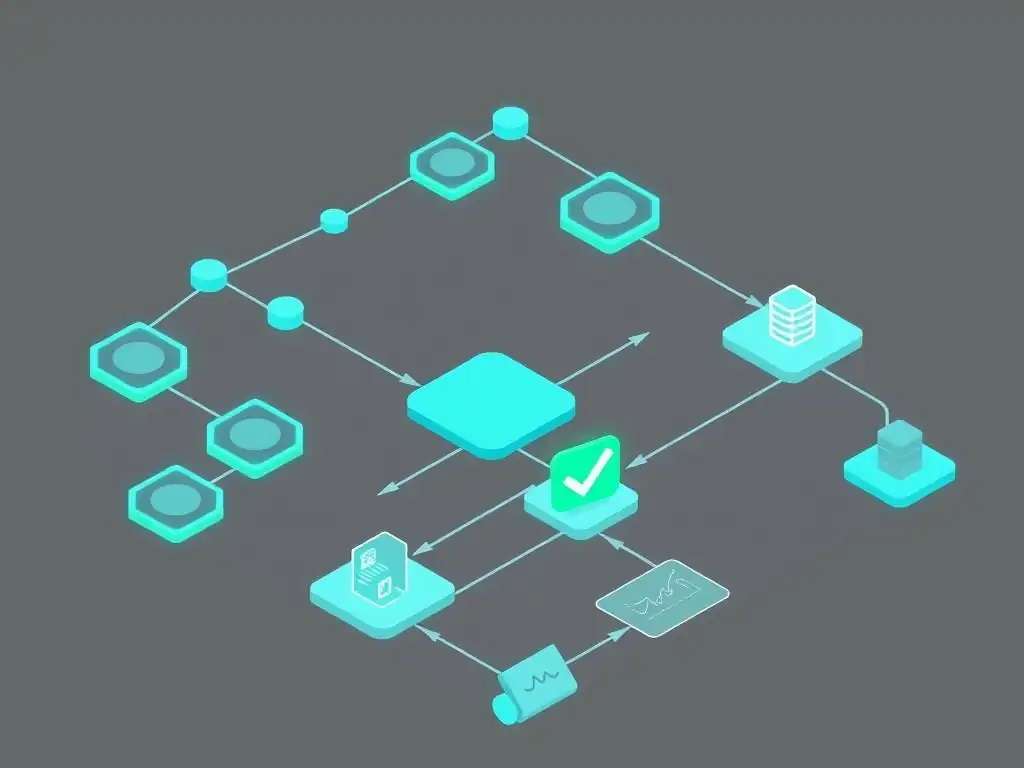
Static Analysis Tools for Identifying Gas Inefficiencies
Static analysis tools play a crucial role in identifying potential gas inefficiencies before deploying a contract. These tools analyze the contract's source code or bytecode without executing it, flagging patterns that are known to be gas-expensive. Examples include identifying loops over dynamic arrays in storage, unnecessary state writes, or complex computations.
Tools like Slither (which has specific gas-related detectors) or the gas analysis features in some IDEs can provide warnings or reports highlighting areas of the code that are likely to consume significant gas. While static analysis cannot give exact gas costs (as costs depend on input data and state), it can point developers towards sections of their code that are candidates for optimization, helping to streamline the process of achieving blockchain gas efficient deployments.
Gas Profilers for Measuring and Optimizing Smart Contract Performance
Gas profilers are essential for measuring the actual gas consumption of smart contract functions with specific inputs. Development frameworks like Hardhat and Foundry integrate gas profiling capabilities. Hardhat's hardhat-gas-reporter plugin provides a detailed summary of gas costs for each function during test execution. Foundry's forge test --gas-report command offers similar, highly detailed gas reports.
These profilers execute the contract's functions (typically within unit tests) and report the gas consumed by each one. This allows developers to identify which functions are the most expensive and pinpoint the specific lines of code within those functions that are contributing most to the gas cost. Iteratively running tests with gas profiling after code changes is a powerful way to verify the effectiveness of optimization efforts and ensures that the final blockchain gas efficient deployments meet performance targets.
Slither: A Deep Dive into Gas Optimization Features
Slither is a powerful static analysis framework for Solidity that includes several detectors specifically aimed at identifying gas optimization opportunities. For instance, Slither can detect when state variables are read multiple times within a function without being cached in a memory variable, or when public functions don't use calldata for read-only arguments, which is less gas-efficient than using memory for such arguments.
Beyond basic patterns, Slither can identify more subtle inefficiencies, such as improper use of storage arrays or potential issues with short-circuiting logic that could save gas. Integrating Slither into the continuous integration (CI) pipeline allows teams to automatically check for common gas pitfalls with every code change. While not a replacement for dynamic analysis and gas profiling, Slither provides a valuable first pass to catch obvious gas inefficiencies and contribute to developing more blockchain gas efficient deployments.
Case Studies: Real-World Examples of Gas-Efficient Deployments
Uniswap V3: Optimizing a DeFi Protocol for Lower Gas Costs
Uniswap V3, a decentralized exchange protocol, is a prominent example of significant gas optimization in a complex DeFi application. Compared to its predecessor, Uniswap V2, V3 introduced concentrated liquidity, allowing liquidity providers to allocate capital within specific price ranges. While adding complexity, the core trading function was heavily optimized. Swaps in Uniswap V3 are designed to be more gas-efficient than in V2 under certain conditions, particularly single-hop swaps within a tick range.
A key area of optimization in V3 was the tick management system. Instead of iterating through all possible price points, V3 uses a sparse data structure (a mapping of tick indices to tick information) and relies on jump-to-tick logic. This significantly reduces the gas cost associated with finding the correct price boundaries during a swap, avoiding expensive loops over potentially large datasets. These optimizations were critical for maintaining reasonable trading costs on the Ethereum mainnet and achieving a more gas-efficient deployment and operation for their high-throughput protocol.
ERC-721A: Reducing Gas Consumption in NFT Minting
ERC-721A is an extension of the ERC-721 standard specifically designed to reduce the gas costs associated with minting multiple non-fungible tokens (NFTs) in a single transaction. The standard, popularized by projects like Azuki, optimizes the _safeMint function to handle batch minting much more efficiently than a standard ERC-721 implementation would.
In a standard ERC-721 contract, minting N tokens typically involves N separate calls to update storage (e.g., updating ownership for each token ID). This results in N expensive SSTORE operations. ERC-721A optimizes this by recognizing that consecutive token IDs minted to the same address don't require individual storage updates for each token. Instead, it uses a clever internal structure that allows recording ownership for a range of tokens with fewer storage writes. This can reduce the gas cost per token minted in a batch significantly, sometimes by 50% or more, making large NFT drops much more affordable and contributing to blockchain gas efficient deployments for NFT projects.
Lessons Learned: Key Takeaways from Successful Gas Optimization Projects
Analyzing successful gas optimization efforts like Uniswap V3 and ERC-721A reveals several key lessons. First, understanding the most expensive EVM operations (especially storage access) is fundamental. Both examples found ways to minimize expensive state writes or reads within critical paths. Second, rethinking data structures and algorithms to be EVM-friendly is crucial; V3 used sparse ticks, and ERC-721A optimized token ownership representation.
Third, specific use cases often require tailored optimization. ERC-721A focused on the minting bottleneck, while Uniswap V3 optimized swaps. Generic optimizations help, but identifying and addressing the biggest gas consumers specific to the application is paramount for achieving truly blockchain gas efficient deployments. Finally, iterative development, profiling, and testing are essential; these projects likely involved extensive testing and refinement to achieve their final gas consumption figures.
Testing and Auditing for Gas Efficiency Before Deployment
Unit Testing for Gas Consumption: Ensuring Efficient Code Execution
Unit testing is a cornerstone of smart contract development, and it's also the primary method for measuring and ensuring gas efficiency. Developers should write unit tests for all critical functions, especially those that are expected to be called frequently or might handle varying amounts of data. Using development frameworks with gas reporting capabilities (like Hardhat or Foundry), these tests can automatically report the gas consumed by each function call.
Writing tests with different input sizes and scenarios (e.g., testing a loop with 1 item, 10 items, and the maximum allowed items) helps understand how gas consumption scales. Setting gas benchmarks within tests can even automate the process, failing a test if a function's gas cost exceeds a predefined limit. This proactive approach ensures that gas inefficiencies are caught early in the development cycle, long before aiming for the final blockchain gas efficient deployments.
Security Audits Focused on Gas Optimization Vulnerabilities
While security audits primarily focus on preventing exploits and ensuring correctness, many reputable auditors also include gas optimization analysis as part of their service. Certain code patterns that lead to high gas costs can sometimes also indicate underlying design flaws or potential denial-of-service vectors (e.g., unbounded loops that could cause transactions to fail or exceed block limits).
Auditors review the codebase with an eye for common gas pitfalls, compare implementations against known best practices, and suggest alternative, more gas-efficient patterns. Their external perspective and experience across numerous projects can uncover optimizations that the development team might have missed. Engaging auditors with expertise in gas optimization is a valuable step in refining code for maximum efficiency and contributing to the goal of blockchain gas efficient deployments.
Trail of Bits: Specialized Gas Optimization Audits
Firms like Trail of Bits are well-known for their deep expertise in smart contract security and performance, including specialized services focused on gas optimization. They employ advanced techniques, including static analysis tools, custom scripts, and manual code review, to identify even subtle gas inefficiencies. Their process often involves profiling the contract under various realistic conditions to pinpoint the most expensive operations.
A specialized gas optimization audit goes beyond standard security checks to provide detailed recommendations on how to refactor code, choose different data structures, or apply advanced EVM techniques to reduce gas costs. While an investment, such audits can be highly beneficial for complex protocols or contracts where gas efficiency is a critical factor for user adoption and economic viability, helping projects achieve truly blockchain gas efficient deployments.
The Future of Gas Optimization in Blockchain Development
Emerging Technologies for Reducing Gas Costs
The blockchain landscape is continuously evolving, with ongoing efforts to reduce transaction costs and improve scalability, which directly impacts gas efficiency. Future EVM upgrades often include opcodes or changes designed to make certain operations cheaper or enable new, more efficient patterns. For example, potential future changes might optimize specific cryptographic operations or improve how data is accessed.
Beyond core protocol upgrades, research into new cryptographic techniques, such as succinct non-interactive arguments of knowledge (SNARKs) and scalable transparent arguments of knowledge (STARKs), is paving the way for zero-knowledge proofs. These proofs can be used to verify large amounts of computation off-chain with a minimal, constant gas cost for verification on-chain. While still complex, these technologies hold promise for enabling highly complex applications with dramatically reduced on-chain computation and thus lower gas costs, contributing to future blockchain gas efficient deployments.
The Role of Layer-2 Solutions in Gas Efficiency
Layer-2 scaling solutions are perhaps the most significant current development impacting gas efficiency. Technologies like optimistic rollups (e.g., Arbitrum, Optimism) and zero-knowledge rollups (e.g., zkSync, StarkNet) process transactions off the main Ethereum chain (Layer 1) and bundle them into a single transaction or proof submitted back to Layer 1. This single Layer 1 transaction then amortizes the gas cost across potentially hundreds or thousands of Layer 2 transactions.
Executing smart contract logic on Layer 2 is orders of magnitude cheaper in terms of gas than on Layer 1. While deploying the Layer 2 bridge and necessary contracts on Layer 1 still incurs costs, the vast majority of user interactions happen off-chain with minimal fees. Developing applications directly on Layer 2 is becoming the standard for many projects, offering a path to achieve highly blockchain gas efficient deployments and operations for end-users, shifting the optimization focus partly from pure EVM opcode cost to efficient Layer 2 design.
Best Practices for Maintaining Gas Efficiency Throughout the Smart Contract Lifecycle
Achieving gas efficient deployments is not a one-time task but an ongoing process throughout the smart contract's lifecycle. Best practices include establishing gas cost targets early in the design phase. Continuously profiling gas usage during development and testing is essential, making gas reports a standard part of the build process. Code reviews should include a focus on identifying potential gas inefficiencies.
Maintaining comprehensive documentation about the gas costs of critical functions and the rationale behind specific optimization choices is also important for future development and upgrades. As the contract evolves and new features are added, developers must remain vigilant about the gas implications of new code. Regularly reviewing and refactoring existing code to incorporate new optimization techniques or benefit from EVM upgrades helps maintain optimal gas efficiency over time.
Conclusion: Building a Foundation for Sustainable and Cost-Effective Blockchain Deployments
The Long-Term Benefits of Prioritizing Gas Efficiency
Prioritizing gas efficiency from the outset of a blockchain project yields significant long-term benefits. Lower deployment costs make initial project launches more economically viable. Reduced transaction fees for users lead to increased adoption and usage, fostering a healthier and more active ecosystem around the smart contract or protocol. Gas-efficient code is often simpler and more streamlined, which can also improve code readability and reduce the likelihood of bugs.
Furthermore, in a competitive decentralized landscape, offering lower transaction costs can be a key differentiator. Projects known for their efficiency are more attractive to users, especially as network activity increases and gas prices fluctuate. Investing time and resources into achieving blockchain gas efficient deployments is an investment in the project's sustainability, accessibility, and overall success.
Resources for Continued Learning and Improvement in Gas Optimization
The field of smart contract gas optimization is constantly evolving. Developers should stay updated with the latest EVM opcodes and gas costs, Solidity compiler updates (which often introduce new optimization features), and emerging patterns and best practices. The Solidity documentation, particularly the section on gas costs, is an invaluable resource.
Community forums, development blogs, and security audit reports often share insights into common gas inefficiencies and novel optimization techniques. Experimenting with different code patterns and using profiling tools extensively in a local development environment or testnet is crucial for hands-on learning. Exploring the source code of well-optimized protocols and libraries can also provide practical examples of efficient implementations, all contributing to the goal of mastering blockchain gas efficient deployments.
Key Considerations for Achieving Blockchain Gas Efficient Deployments
Achieving blockchain gas efficient deployments requires a multi-faceted approach. It starts with a solid understanding of EVM mechanics and the gas costs of different operations. It involves careful code design, prioritizing efficient data structures and algorithms, and minimizing expensive state changes. Leveraging standard libraries and development frameworks with built-in profiling tools is essential for measurement and iteration.
Advanced techniques like proxy patterns or judicious use of assembly can offer further optimizations for specific use cases. Finally, rigorous testing, including gas profiling in unit tests, and professional audits are critical steps before deployment. By integrating gas optimization into every stage of the development lifecycle, developers can build smart contracts that are not only functional and secure but also cost-effective and accessible to users, laying the foundation for successful decentralized applications.
Frequently Asked Questions
How does gas efficiency relate to blockchain deployments?
Gas efficiency directly impacts the cost of deploying and interacting with smart contracts on a blockchain. Lower gas consumption means reduced transaction fees and a more sustainable network.
What are some common techniques for achieving gas-efficient deployments?
Techniques include optimizing code logic, using efficient data structures, minimizing storage usage, and carefully selecting the appropriate data types. Avoiding unnecessary loops and complex calculations also helps.
What role does code auditing play in ensuring gas efficiency?
Code audits by experienced developers can identify potential bottlenecks and areas for optimization in smart contract code. This helps to reduce gas consumption and improve overall efficiency.
How do different blockchain platforms affect gas efficiency?
Different blockchains have varying gas models and execution environments. Understanding these differences is crucial for choosing the right platform and tailoring code for optimal gas efficiency.
What are the potential benefits of gas-efficient blockchain deployments for businesses?
Gas-efficient deployments can lead to significant cost savings, improved scalability, and a more competitive edge for businesses leveraging blockchain technology.
Final Reflection: Embracing Frugality on the Blockchain
The pursuit of blockchain gas efficient deployments is no longer a niche concern, but a critical imperative for the sustainable growth and wider adoption of decentralized technologies. As transaction costs directly impact user experience and overall network viability, optimizing code for minimal gas consumption is paramount to unlocking the true potential of blockchain applications in the real world.
The relentless drive for efficiency has profoundly shaped the development landscape, pushing developers to innovate and refine their approaches to smart contract design. This ongoing evolution is not just about saving money; it's about fostering a more inclusive and accessible ecosystem for everyone. Efficiency is not merely doing things right; it's doing the right things.
- Peter Drucker. This quote resonates deeply as we strive to build blockchain solutions that are both powerful and economical.
Now, we invite you to consider the implications of gas efficiency in your own blockchain endeavors. How can you, as a developer, user, or enthusiast, contribute to a future where blockchain technology is accessible and affordable for all? Let us all commit to embracing the principles of frugality and innovation, ensuring that the blockchain revolution is not only powerful but also sustainable and equitable.
Unlock Gas Savings: Start Optimizing Your Smart Contracts Today!
Thank you for exploring strategies to make your smart contract deployments more gas-efficient! With this knowledge, you can significantly cut costs and enhance the performance of your projects on the blockchain. Are you ready to apply these insights?
Here are some steps you can take right now:
- Conduct an immediate review of your existing smart contracts to identify opportunities for optimizing code and reducing deployment expenses.
- Share this article with fellow blockchain developers and contribute your own tips for gas optimization. Let's learn from each other's experiences!
- Test different data types and storage methods in a development environment to measure their impact on gas consumption—you might be surprised by the results.
What is one small change you plan to make to optimize gas usage in your next smart contract deployment? Share your ideas in the comments below!
Leave a Reply