
The Next Big Thing in Blockchain Investment: Beyond the Current Trends


Welcome to Blockchain Trends, your compass navigating the ever-evolving landscape of decentralized innovation! Ready to look beyond the hype and uncover the real opportunities?
This week, we delve into the Blockchain investment future trends that are shaping the next wave of technological disruption. Are you prepared to position yourself for the future of finance and beyond? Let's explore the possibilities together and unlock the secrets to successful blockchain investment. Learn more and start your journey today!
Blockchain Technology in Supply Chain Management: Enhancing Transparency and Efficiency
- Optimizing Supply Chains with Blockchain: Unlocking New Efficiencies
- Current State of Supply Chain Management: Challenges and Opportunities
- Future Trends in Blockchain-Based Supply Chain Solutions
- Blockchain for Food Supply Chains: Ensuring Safety and Transparency
- Blockchain for Pharmaceutical Supply Chains: Combating Counterfeit Drugs
- Blockchain for Apparel and Textile Supply Chains: Promoting Ethical Sourcing
- Blockchain for Conflict Minerals: Ensuring Responsible Sourcing
- Regulatory Compliance and Blockchain in Supply Chain: Navigating the Landscape
- Sustainable Supply Chains with Blockchain: Reducing Environmental Impact
- Blockchain Implementation Challenges in Supply Chain: Overcoming Barriers
- Measuring the ROI of Blockchain in Supply Chain: Quantifying Benefits
- Case Studies: Successful Implementations of Blockchain in Supply Chain
- Conclusion: The Future of Supply Chain is Decentralized and Transparent
-
Frequently Asked Questions
- What are the key areas of blockchain technology attracting investment beyond cryptocurrencies?
- What are some examples of enterprise blockchain applications that are gaining traction?
- How is regulation shaping the blockchain investment future trends?
- What role does infrastructure play in the blockchain investment future trends?
- What potential risks should investors consider when looking at blockchain investment future trends?
- Final Reflection: Embracing the Decentralized Future
- Unleash Your Blockchain Potential: Invest Smarter Today!
Optimizing Supply Chains with Blockchain: Unlocking New Efficiencies
Blockchain technology, often synonymous with cryptocurrencies, is increasingly being recognized for its profound potential to revolutionize various industries, including supply chain management. The inherent characteristics of blockchain—decentralization, immutability, transparency, and security—directly address many of the long-standing challenges plaguing global supply chains. By creating a shared, tamper-proof ledger accessible to all authorized participants, blockchain can foster unprecedented levels of trust and efficiency throughout complex networks of suppliers, manufacturers, distributors, and retailers. This shift promises not just incremental improvements but a fundamental transformation in how goods move from origin to consumer.
The adoption of blockchain in supply chain operations is driven by the need for greater visibility and accountability. Traditional systems often rely on siloed databases and manual processes, leading to delays, errors, and a lack of end-to-end transparency. Blockchain offers a solution by providing a single source of truth for transaction data, asset movements, and compliance information.
This shared record minimizes disputes, automates verification processes through smart contracts, and allows participants to track products with precision, from raw material sourcing to final delivery. The resulting gains in efficiency can lead to significant cost reductions, faster product delivery, and improved customer satisfaction.
Identifying Key Applications of Blockchain in Supply Chain
Blockchain's versatility allows it to be applied across numerous functions within a supply chain, each offering distinct benefits. One primary application is enhancing traceability and provenance, enabling companies to track the origin and journey of goods with cryptographic certainty. This is crucial for verifying authenticity, complying with regulations, and responding effectively to recalls. For instance, tracking high-value items like diamonds or luxury goods can deter counterfeiting, while tracing agricultural products can improve food safety.
Another vital application lies in automating and securing transactions and contracts. Smart contracts, self-executing agreements with the terms directly written into code, can automate payments upon verification of conditions, such as successful delivery or quality inspection. This reduces administrative overhead, minimizes payment delays, and lowers the risk of fraud. Furthermore, blockchain can secure shared documentation, such as bills of lading or customs forms, ensuring that all parties access the same, verified information, thereby streamlining cross-border trade and reducing bureaucratic bottlenecks.
Current State of Supply Chain Management: Challenges and Opportunities
Global supply chains today are vast, intricate networks characterized by numerous intermediaries, diverse systems, and geographical dispersion. While modern logistics have achieved remarkable feats, they still face significant hurdles. The reliance on fragmented systems and manual data entry often leads to information silos, where different parties hold incomplete or inconsistent data about the same product or shipment. This lack of a unified view hampers coordination, makes it difficult to pinpoint issues quickly, and creates opportunities for errors and fraud.
The increasing demand for speed, transparency, and ethical sourcing from consumers and regulators adds further pressure to existing supply chain models. Companies are challenged to not only deliver products efficiently but also to provide detailed information about their origin, production methods, and environmental impact. Meeting these expectations with current systems often requires extensive auditing, manual data collection, and complex reporting, which can be costly and time-consuming, diverting resources from core business activities.
Understanding Existing Inefficiencies in Traditional Supply Chains
Traditional supply chains are often plagued by inefficiencies stemming from a lack of real-time, shared information. For example, tracking a container shipment across multiple borders might involve dozens of different documents, exchanged via email, fax, or courier, leading to delays and potential data mismatches. A 2018 report by the World Economic Forum estimated that inefficiencies in global supply chains add between 10% and 20% to supply chain costs. This is often due to administrative errors, disputes over shipment details, and delays in customs clearance resulting from paperwork issues.
Furthermore, the lack of transparency makes it difficult to identify bottlenecks or unethical practices deep within the supply chain. A company might struggle to verify labor conditions at a third-tier supplier's factory or confirm the sustainable origin of raw materials. This opacity not only poses ethical risks but can also lead to significant financial and reputational damage if issues are exposed. The manual nature of many verification processes also slows down the flow of goods and capital, impacting overall operational velocity.
Limitations of Current Supply Chain Management Systems
Current supply chain management (SCM) systems, while sophisticated in managing specific functions like warehousing or transportation, often struggle with true end-to-end visibility and trust among disparate parties. Enterprise Resource Planning (ERP) systems and dedicated SCM software typically operate within the boundaries of a single organization or a tightly integrated group of partners, but they lack a neutral, shared ledger that spans the entire chain. Data shared between different systems often requires complex integration layers or manual reconciliation, which is prone to errors and delays.
Moreover, the security of data exchange between different entities in a traditional setup relies on point-to-point connections and trust agreements, which can be vulnerable. A breach in one system can compromise sensitive information across the network. The lack of immutability means that transaction histories can potentially be altered, making it difficult to verify authenticity and resolve disputes definitively. These limitations highlight the need for a more robust, secure, and transparent infrastructure like blockchain to underpin future supply chain operations.
Future Trends in Blockchain-Based Supply Chain Solutions
The trajectory of blockchain adoption in supply chain management points towards increasing sophistication and integration with other cutting-edge technologies. As pilot projects demonstrate tangible benefits, we can expect to see blockchain move from experimental stages to becoming a foundational layer for supply chain operations across various industries. Future solutions will likely focus on creating interconnected blockchain networks that allow seamless data flow and collaboration among a wider array of participants.
One significant trend is the development of industry-specific blockchain consortia and platforms. These initiatives bring together key players within a particular sector (e.g., logistics, agriculture, pharmaceuticals) to establish shared standards and governance models for blockchain implementation. This collaborative approach helps overcome the challenge of network effects, ensuring that enough participants are on board to make the system truly effective and valuable for all involved.
Increased Adoption of Blockchain for Traceability and Provenance
Traceability and provenance are set to remain cornerstone applications for blockchain in supply chains, with adoption projected to grow significantly. A 2020 report by Gartner predicted that by 2023, 50% of large enterprises would be using blockchain for traceability and transparency purposes. This growth is fueled by rising consumer demand for ethical and sustainable products, coupled with stricter regulatory requirements for product tracking, especially in sectors like food and pharmaceuticals.
Future traceability solutions will move beyond simple product tracking to provide granular details about every step of a product's lifecycle. This could include data points such as the farm where ingredients were grown, the factory conditions under which a product was assembled, the temperature during transit, and even the energy consumption involved in manufacturing. This level of detail, secured on an immutable ledger, empowers consumers, regulators, and businesses to make informed decisions and ensure compliance with global standards.
Integrating IoT and AI with Blockchain for Enhanced Visibility
The true power of blockchain in supply chains will be unlocked through its integration with other technologies like the Internet of Things (IoT) and Artificial Intelligence (AI). IoT devices, such as smart sensors, GPS trackers, and environmental monitors, can collect real-time data about the condition, location, and status of goods as they move through the supply chain. This data can then be automatically recorded onto a blockchain ledger via smart contracts, providing an objective, tamper-proof record of events.
AI can analyze the vast amounts of data collected by IoT devices and recorded on the blockchain to identify patterns, predict potential disruptions, optimize routes, and automate quality control checks. For instance, AI could analyze temperature data from IoT sensors on a blockchain to automatically trigger a smart contract that adjusts payment based on whether goods remained within the required temperature range. This integration creates an intelligent, self-optimizing supply chain that reacts dynamically to changing conditions, significantly enhancing visibility and efficiency.
Blockchain for Food Supply Chains: Ensuring Safety and Transparency
The food industry faces unique challenges related to spoilage, contamination, and complex distribution networks, making food safety and transparency paramount. Blockchain offers a powerful tool to address these issues by providing end-to-end visibility from farm to fork. This level of traceability can drastically reduce the time it takes to identify the source of contaminated food during an outbreak, potentially saving lives and minimizing economic losses for businesses.
For example, in 2018, Walmart piloted a blockchain solution for tracking leafy greens. The initiative demonstrated that the time required to trace a product back to its origin farm could be reduced from days or weeks to mere seconds. This capability is invaluable for rapid response during food safety crises and for building consumer trust by providing easily accessible information about where food comes from and how it was handled.
Addressing Food Fraud and Counterfeiting with Blockchain
Food fraud, including mislabeling ingredients, substituting cheaper alternatives, and counterfeiting high-value products like olive oil or seafood, is a multi-billion dollar problem globally. Blockchain can help combat food fraud by creating an immutable record of a product's journey and characteristics. Each batch of food or ingredient can be assigned a unique digital identity on the blockchain, linked to data points such as origin, processing dates, quality certifications, and handling information.
By scanning a QR code on a product, consumers or regulators can access this verified history, making it significantly harder to introduce fraudulent products into the supply chain. The transparency offered by blockchain acts as a deterrent to illicit activities and provides a reliable mechanism for verifying the authenticity and integrity of food products throughout their lifecycle.
Building Trust and Consumer Confidence Through Supply Chain Transparency
Consumers are increasingly demanding transparency about the food they purchase, wanting to know about sourcing practices, ethical treatment of workers, and environmental impact. Blockchain enables companies to provide this information in a verifiable and accessible way. By recording relevant data points on the blockchain, companies can allow consumers to trace their product back to its origin, view certifications (e.g., organic, fair trade), and understand the journey it took.
This level of transparency builds trust between brands and consumers. Instead of relying on marketing claims, consumers can see verifiable data about the product's history. This not only enhances brand reputation but can also command a premium for products that demonstrate superior ethical or sustainable sourcing practices verified by a transparent, blockchain-based system.
Blockchain for Pharmaceutical Supply Chains: Combating Counterfeit Drugs
The pharmaceutical supply chain is particularly vulnerable to counterfeiting, which poses a severe threat to patient safety and results in billions of dollars in losses annually. The World Health Organization (WHO) estimates that up to 10% of medical products in low- and middle-income countries are counterfeit. Blockchain offers a robust solution to track pharmaceuticals throughout their complex journey, ensuring their authenticity and integrity from manufacturing to dispensing.
By creating a secure, shared ledger of every transaction and movement of a drug batch, blockchain can make it virtually impossible for counterfeit products to infiltrate the legitimate supply chain undetected. Each package can be assigned a unique identifier recorded on the blockchain, allowing stakeholders at every point—manufacturers, distributors, pharmacies, and even patients—to verify its legitimacy and track its history.
Enhancing Drug Traceability and Patient Safety
Implementing blockchain for drug traceability allows for granular tracking of each product unit. Data such as manufacturing date, batch number, expiration date, temperature logs during transport, and chain of custody transfers can be recorded on the blockchain. This creates an immutable audit trail that can be accessed and verified by authorized parties.
In the event of a recall, blockchain enables rapid identification and isolation of affected batches, significantly reducing the time and scope of the recall compared to traditional manual or fragmented systems. This enhanced traceability directly contributes to improved patient safety by ensuring that only legitimate, properly handled medications reach consumers.
Streamlining Regulatory Compliance in the Pharmaceutical Industry
The pharmaceutical industry operates under stringent regulatory requirements, such as the U.S. Drug Supply Chain Security Act (DSCSA), which mandates electronic, interoperable systems for tracking and tracing prescription drugs. Blockchain technology is inherently well-suited to meet these requirements. Its ability to provide an immutable, shared record of transactions simplifies reporting and auditing processes.
By leveraging blockchain, pharmaceutical companies can ensure that all required data is captured accurately and shared securely with regulatory bodies and trading partners. This streamlines compliance efforts, reduces the administrative burden of meeting complex regulations, and minimizes the risk of penalties associated with non-compliance.
Blockchain for Apparel and Textile Supply Chains: Promoting Ethical Sourcing
The apparel and textile industry often faces scrutiny regarding labor practices, environmental impact, and the authenticity of materials. Supply chains in this sector can be incredibly complex, involving raw material producers, spinners, weavers, dye houses, cut-and-sew factories, and numerous intermediaries across different countries. Blockchain can bring much-needed transparency to this opaque network, enabling companies to verify ethical sourcing and sustainable production.
By tracking materials and products from the farm (e.g., cotton) or source through each stage of manufacturing, blockchain can create a verifiable record of their journey. This includes recording data about working conditions at factories, certifications (e.g., GOTS for organic textiles, Fair Trade), and the environmental footprint of production processes.
Ensuring Fair Labor Practices and Sustainable Production
Blockchain allows brands to demonstrate accountability for the conditions under which their products are made. By requiring suppliers to record data points related to wages, working hours, safety standards, and environmental certifications on a blockchain, companies can gain visibility into practices deep within their supply chain. Auditing becomes more efficient as verifiable data is readily available on the shared ledger.
This transparency empowers brands to enforce ethical sourcing policies and respond to consumer demand for sustainably produced goods. It also provides a mechanism for workers to potentially record their labor conditions, creating a more equitable and transparent relationship between brands, suppliers, and workers.
Verifying the Authenticity and Origin of Apparel Products
Counterfeiting is a significant issue in the apparel industry, particularly for luxury brands. Blockchain can be used to create a digital twin for each high-value garment or accessory, linking it to its unique identity on the blockchain. This record can include details about the materials used, the manufacturing location, and the entire chain of custody.
Consumers can verify the authenticity of a product by scanning a tag or code linked to the blockchain record. This provides assurance that they are purchasing a genuine item and not a counterfeit. For brands, it protects their reputation and helps combat the economic damage caused by the illegal trade in fake goods.
Blockchain for Conflict Minerals: Ensuring Responsible Sourcing
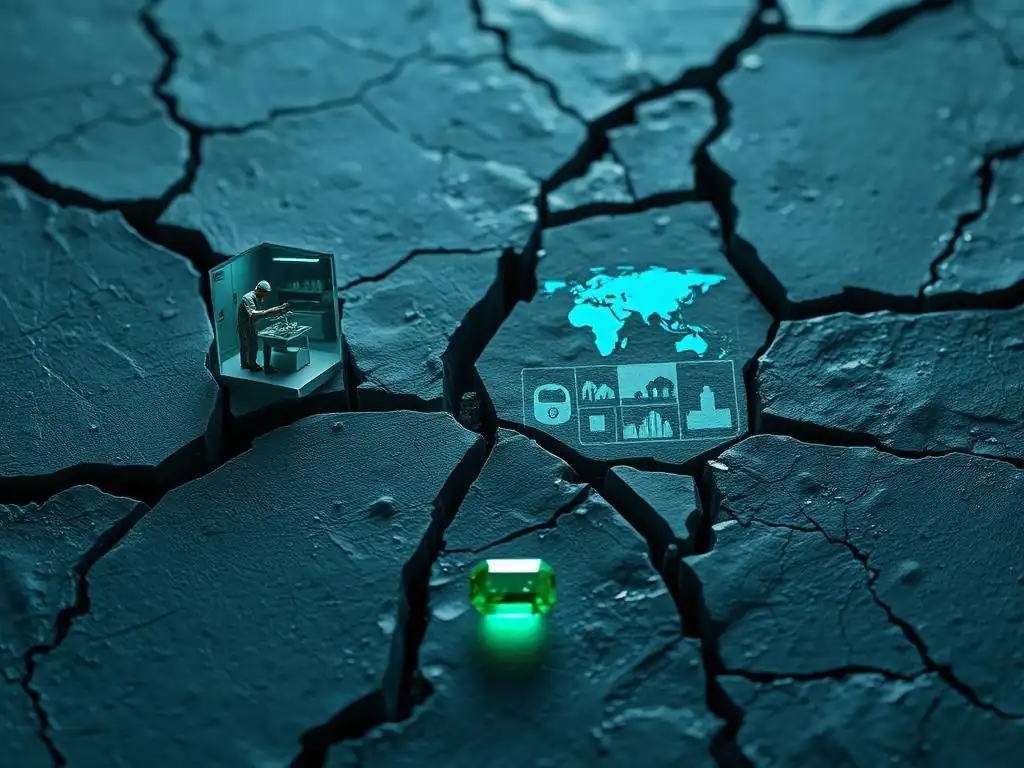
Sourcing minerals like tin, tantalum, tungsten, and gold (3TG) from conflict-affected and high-risk areas presents significant ethical and regulatory challenges. Companies are increasingly required to demonstrate that their supply chains for these minerals do not contribute to conflict financing or human rights abuses, as mandated by regulations like the Dodd-Frank Act in the U.S. and the EU Conflict Minerals Regulation. Traditional paper-based or non-interoperable systems make tracing these minerals from mine to finished product extremely difficult.
Blockchain provides a robust framework for creating a secure and transparent chain of custody for conflict minerals. By assigning a unique digital identity to mineral batches at the point of extraction and recording every transfer and transformation on an immutable ledger, blockchain can provide verifiable proof of origin and ethical sourcing. This enables companies to perform due diligence more effectively and demonstrate compliance to regulators and stakeholders.
Tracking the Origin and Movement of Minerals
Implementing blockchain for conflict minerals involves tagging mineral batches at the mining site and recording initial data points such as GPS coordinates, weight, and responsible sourcing certifications. As the minerals move through smelters, refiners, manufacturers, and eventually into consumer electronics or jewelry, each transaction and process step is added to the blockchain record. This creates a comprehensive, tamper-proof history of the mineral's journey.
This detailed tracking allows companies to identify potential risks associated with specific mines or intermediaries and ensures that minerals from conflict-affected areas are not entering their supply chain undetected. The shared ledger enables collaboration among different actors in the complex mineral supply chain, from small-scale miners to large corporations.
Promoting Ethical and Transparent Mining Practices
Beyond simply tracking origin, blockchain can be used to record data related to ethical mining practices. This could include verifying fair wages paid to miners, ensuring safe working conditions, and documenting environmental impact assessments. By making this data transparent and verifiable on the blockchain, companies can incentivize responsible mining practices and hold suppliers accountable.
The transparency offered by a blockchain-based system for conflict minerals can help build trust among governments, NGOs, and businesses involved in the supply chain. It provides a credible mechanism for demonstrating compliance with responsible sourcing standards and contributes to efforts to break the link between mineral extraction and conflict financing.
The increasing use of blockchain in supply chains operates within a complex and evolving regulatory landscape. While blockchain's transparency and immutability can simplify compliance in many areas (like traceability regulations such as DSCSA), it also introduces new considerations, particularly regarding data privacy, security, and cross-border data flow. Companies implementing blockchain solutions must navigate these legal and regulatory challenges carefully.
Different jurisdictions have varying rules regarding data ownership, storage, and access on distributed ledgers. For instance, the European Union's General Data Protection Regulation (GDPR) grants individuals the "right to erasure," which can be challenging to reconcile with the immutable nature of some blockchain designs. Solutions often involve storing sensitive personal data off-chain while using the blockchain to store hashes or pointers to that data, ensuring privacy while maintaining the integrity of the transaction record.
Understanding Data Privacy and Security Requirements
Implementing blockchain for supply chains requires a deep understanding of data privacy laws relevant to the operational regions. While blockchain enhances security through cryptography and decentralization, the data recorded on the chain, even if pseudonymized, must comply with regulations like GDPR, CCPA (California Consumer Privacy Act), or similar laws globally. Private or permissioned blockchains, where participation and data access are controlled, are often preferred in enterprise supply chains over public, permissionless ones to manage privacy and access rights effectively.
Security on the blockchain itself is high, but the points where data enters or leaves the chain (oracles, APIs) remain potential vulnerabilities. Robust security protocols are needed to ensure data integrity before it is committed to the ledger. Furthermore, managing digital identities and access permissions for participants on the network is critical to maintain control over who can view or submit specific types of data, aligning with security and privacy mandates.
Ensuring Compliance with International Trade Regulations
International trade involves navigating a maze of customs regulations, tariffs, sanctions, and export controls. Blockchain can help streamline compliance by providing a single, verifiable source of truth for all transaction documents, certificates of origin, and customs declarations. This reduces manual checks, speeds up customs clearance, and minimizes errors that can lead to delays or penalties.
However, the regulatory landscape for digital trade documentation and blockchain-based records is still developing. Companies must ensure that their blockchain solution generates records that are legally recognized and accepted by customs authorities and regulatory bodies in all relevant countries. Collaboration with government agencies and participation in industry pilot programs are crucial steps in ensuring that blockchain implementations meet current and future international trade compliance requirements.
Sustainable Supply Chains with Blockchain: Reducing Environmental Impact
Increasingly, companies are under pressure from consumers, investors, and regulators to improve the sustainability of their operations and supply chains. This involves reducing carbon emissions, minimizing waste, conserving resources, and promoting eco-friendly practices. Blockchain technology can play a significant role in enabling sustainable supply chains by providing the transparency and accountability needed to track environmental impact and incentivize greener behaviors.
By recording data related to energy consumption, carbon emissions, waste generation, and resource usage at each stage of the supply chain on a blockchain, companies can gain a clear picture of their environmental footprint. This data, verified and immutable, provides a reliable basis for reporting, setting reduction targets, and demonstrating progress towards sustainability goals.
Tracking Carbon Footprint and Promoting Eco-Friendly Practices
Blockchain can be used to track the carbon emissions associated with the production and transportation of goods. Data from energy meters, fuel consumption logs, and carbon accounting systems can be recorded on the blockchain, providing a transparent and verifiable record of emissions at each step. This allows companies to identify high-emission activities and work with suppliers to implement cleaner processes.
Furthermore, blockchain can facilitate the tracking of sustainable materials, such as recycled content or responsibly sourced wood, ensuring that claims about product composition are verifiable. Smart contracts can even be used to automate incentives for suppliers who meet specific sustainability targets, such as reducing energy consumption or using renewable resources.
Incentivizing Sustainable Production and Consumption
Blockchain and related technologies, such as tokenization, can create mechanisms to incentivize sustainable behaviors throughout the supply chain. For instance, a company could issue tokens to suppliers who achieve specific environmental milestones, which could then be redeemed or traded. This creates a direct financial incentive for adopting greener practices.
For consumers, blockchain-enabled transparency allows them to make informed choices based on a product's environmental credentials. Knowing that a product's sustainability claims are backed by verifiable data on a blockchain can encourage consumers to choose more eco-friendly options, thereby driving demand for sustainable production and completing a positive feedback loop.
Blockchain Implementation Challenges in Supply Chain: Overcoming Barriers
Despite the significant potential, implementing blockchain solutions in complex supply chains is not without its challenges. These barriers range from technical hurdles like interoperability and scalability to organizational issues like getting multiple stakeholders to agree on adopting a new technology and sharing data. Overcoming these challenges requires careful planning, collaboration, and investment.
One major challenge is the initial investment required to develop or adopt blockchain platforms and integrate them with existing legacy systems. Companies also need to invest in training personnel to understand and manage blockchain-based processes. Furthermore, defining clear governance models for shared blockchain networks is crucial, determining who has permission to access, input, and validate data.
Addressing Data Silos and Interoperability Issues
Traditional supply chains are characterized by disparate systems and data silos, where information is fragmented across different companies and departments. Integrating these legacy systems with a blockchain platform is a complex task. Data from existing databases needs to be accurately extracted, transformed, and loaded onto the blockchain, which requires robust APIs and integration layers.
Ensuring interoperability between different blockchain networks or between blockchain networks and traditional systems is also a significant challenge. Standards for data formats and communication protocols are still evolving. Industry consortia and open standards initiatives are working to address these issues, but achieving seamless data flow across a diverse supply chain ecosystem remains a key technical hurdle.
Ensuring Scalability and Security of Blockchain Solutions
Supply chains generate vast amounts of data from numerous transactions, shipments, and events. Blockchain platforms need to be highly scalable to handle this volume of data and the increasing number of participants without compromising performance or incurring excessive transaction costs. While significant progress has been made in improving blockchain scalability (e.g., through layer-2 solutions, different consensus mechanisms), it remains an important consideration for enterprise-level deployments.
Maintaining the security of the blockchain network is paramount. While the cryptographic nature of blockchain makes tampering with recorded data difficult, ensuring the security of the nodes participating in the network, protecting private keys, and guarding against smart contract vulnerabilities are critical. Implementing robust cybersecurity measures and conducting regular security audits are essential to protect the integrity of the supply chain data on the blockchain.
Measuring the ROI of Blockchain in Supply Chain: Quantifying Benefits
Justifying the investment in blockchain technology requires demonstrating a clear return on investment (ROI). Quantifying the benefits of blockchain in supply chain management involves measuring improvements in efficiency, cost savings, risk reduction, and revenue generation. While some benefits, like improved traceability or enhanced trust, can be qualitative, many operational improvements can be translated into measurable financial gains.
Tracking ROI requires establishing baseline metrics before implementation and monitoring key performance indicators (KPIs) afterward. These KPIs might include reduced lead times, lower administrative costs, decreased losses from fraud or counterfeiting, faster dispute resolution, and improved inventory management. Companies need to carefully define what success looks like for their specific blockchain implementation and put systems in place to capture the relevant data.
Tracking Cost Savings and Efficiency Gains
Blockchain implementations can lead to tangible cost savings by reducing administrative overhead associated with manual data entry, paperwork, and reconciliation. Automating processes through smart contracts can decrease transaction costs and speed up payment cycles. For example, reducing the time goods spend in transit or in customs due to streamlined documentation can lower logistics costs.
Efficiency gains are often seen in areas like reduced error rates, faster information sharing among partners, and quicker response times to disruptions or recalls. A more efficient supply chain requires less working capital tied up in inventory and can respond more flexibly to market changes, leading to improved profitability.
Improving Supply Chain Resilience and Responsiveness
While harder to quantify directly in monetary terms initially, improved supply chain resilience and responsiveness are significant long-term benefits that contribute to ROI. A transparent, blockchain-enabled supply chain allows companies to quickly identify the source and extent of a disruption, such as a natural disaster or a supplier failure. This enables faster and more effective mitigation efforts.
By having real-time, verifiable information about the location and status of goods, companies can reroute shipments, find alternative suppliers, and communicate accurate information to customers more rapidly. This ability to respond effectively to unforeseen events minimizes financial losses, protects brand reputation, and ensures business continuity, delivering substantial value over time.
Case Studies: Successful Implementations of Blockchain in Supply Chain
While still relatively early in widespread adoption, several pioneering companies and consortia have successfully implemented blockchain solutions to address specific challenges in their supply chains. These examples demonstrate the practical application and tangible benefits of the technology in real-world scenarios.
These case studies often highlight improvements in traceability, reduction in administrative costs, and enhanced trust among supply chain partners. They serve as valuable blueprints for other companies considering blockchain adoption, illustrating the potential ROI and the steps involved in a successful implementation.
[Company A: Blockchain for Traceability of Coffee Beans]
Imagine a coffee company, let's call them "Aroma Beans Co.", wanting to demonstrate the ethical sourcing and premium quality of their single-origin coffee beans. They implemented a blockchain solution to track the beans from the farm in [Region A, e.g., Colombia] to the consumer's cup. Each batch of beans harvested was assigned a unique digital ID on the blockchain, linked to data points including the farm's location, farmer's name (if permissible), harvest date, fair-trade certification details, and processing methods used.
As the beans moved through washing stations, drying facilities, export partners, shipping lines, and roasters, each transaction and quality check was recorded on the immutable ledger. Consumers could scan a QR code on the final coffee bag to access this verified history, seeing the journey their coffee took and confirming the ethical practices at the farm level. This implementation led to a reported increase in consumer trust and willingness to pay a premium for the transparently sourced coffee, alongside improved internal tracking efficiency.
[Company B: Blockchain for Pharmaceutical Supply Chain Security]
Consider a pharmaceutical distributor, referred to here as "MediFlow Distribution," facing challenges with verifying drug authenticity and complying with traceability regulations. They joined an industry consortium developing a permissioned blockchain network for tracking prescription medications. When receiving drug shipments from manufacturers, MediFlow scanned unique serial numbers on each package. This action recorded the transfer of custody onto the blockchain, linked to the manufacturer's initial entry of the drug batch details.
As MediFlow distributed the drugs to pharmacies and hospitals, each handoff was similarly recorded, creating a comprehensive, verifiable chain of custody. This system significantly reduced the risk of counterfeit drugs entering their distribution network. It also automated the generation of compliance reports required by regulators, reducing the manual effort previously needed. While specific figures vary by implementation, pilot programs in the pharma sector have shown potential for drastically cutting down the time required for drug recalls and improving the accuracy of inventory management across the network.
Conclusion: The Future of Supply Chain is Decentralized and Transparent
The journey of blockchain technology in supply chain management is progressing rapidly from theoretical potential to practical application. The inherent capabilities of blockchain—providing a decentralized, immutable, and transparent ledger—are directly addressing the core inefficiencies and trust deficits that have long characterized global supply chains. While significant challenges remain in terms of integration, scalability, and regulatory clarity, the successful pilot programs and growing industry consortia demonstrate that these barriers are being progressively overcome.
The future of supply chain management is undoubtedly heading towards greater decentralization and transparency, with blockchain serving as a critical enabler. As more companies recognize the substantial benefits in terms of cost reduction, efficiency gains, risk mitigation, and enhanced sustainability, the adoption of blockchain-based solutions is expected to accelerate across diverse industries, from food and pharmaceuticals to apparel and conflict minerals.
Embracing Blockchain to Build More Efficient and Resilient Supply Chains
Embracing blockchain technology is becoming less of an option and more of a strategic imperative for companies seeking to build supply chains that are not only efficient but also resilient, ethical, and trustworthy. The ability to track products with unprecedented precision, verify authenticity, automate transactions, and share information securely among partners creates a foundation for a fundamentally better way of managing the flow of goods and data.
By investing in and implementing blockchain solutions, businesses can unlock new levels of operational excellence, meet increasing demands for transparency from consumers and regulators, and build stronger, more collaborative relationships with their supply chain partners. As the technology matures and integration becomes more seamless, blockchain will be a cornerstone of the next generation of intelligent, sustainable, and highly responsive supply chains, ultimately delivering greater value to businesses and consumers alike.
Frequently Asked Questions
What are the key areas of blockchain technology attracting investment beyond cryptocurrencies?
Investment is shifting towards DeFi (Decentralized Finance), enterprise blockchain solutions, and infrastructure development that supports broader blockchain adoption. These areas offer more tangible, real-world applications.
What are some examples of enterprise blockchain applications that are gaining traction?
Supply chain management, digital identity verification, and secure data sharing are key examples. These applications offer increased transparency, improved efficiency, and enhanced security for businesses.
How is regulation shaping the blockchain investment future trends?
Regulatory clarity is crucial. Clear regulations can foster confidence and attract institutional investment, while uncertainty can hinder growth and innovation in the space.
What role does infrastructure play in the blockchain investment future trends?
Robust and scalable infrastructure is essential for supporting the growing demand for blockchain applications. Investment in layer-2 solutions and cross-chain interoperability is becoming increasingly important.
What potential risks should investors consider when looking at blockchain investment future trends?
Risks include regulatory uncertainty, technological immaturity, and market volatility. Thorough due diligence and a diversified portfolio are crucial for mitigating these risks.
Final Reflection: Embracing the Decentralized Future
The exploration of blockchain investment future trends reveals more than just potential financial gains; it unveils a fundamental shift in how we perceive value, ownership, and trust in the digital age. The insights shared throughout this article highlight the dynamism of this space and the imperative for investors to look beyond fleeting hypes and embrace long-term, transformative potential.
The evolution of blockchain technology continues to reshape our cultural and social landscape, moving from a niche interest to a foundational element of future economies. My own journey in understanding this technology has underscored the profound impact it will have on everything from supply chain management to digital identity. The future of finance is decentralized, and blockchain technology is the key to unlocking it.
- Andreas Antonopoulos. This quote encapsulates the spirit of innovation and the potential for disruption that lies at the heart of blockchain investment.
As you consider the insights shared in this article, I encourage you to reflect on your own role in shaping the decentralized future. How can you leverage your understanding of blockchain investment future trends to not only build wealth but also contribute to a more equitable and transparent world? The opportunity to participate in this revolution is now; embrace the challenge, and let us collectively build a future where technology empowers us all.
Unleash Your Blockchain Potential: Invest Smarter Today!
Thanks for diving into the future of blockchain investment with us! We hope you've gained valuable insights into the exciting possibilities beyond the current hype. Now, it's time to put that knowledge into action and shape your own blockchain success story.
Here's how you can take the next step:
- Dive deep and research emerging Layer 2 solutions focusing on scalability and real-world applications. This is your primary mission!
- Share this article with your network on LinkedIn and start a conversation about the future of blockchain investing. Let's learn together!
- Explore blockchaintrends.org for more insights on cutting-edge projects – and maybe even discover your next big investment!
Ready to redefine your blockchain investment strategy and capitalize on the next wave of innovation?
Leave a Reply