
Unlocking Carbon Neutrality: How Blockchain Can Help Achieve Global Climate Goals


Welcome to Blockchain Trends, your guide to understanding the real impact of blockchain technology. Beyond the hype, discover how this revolutionary technology is reshaping industries and driving innovation. Intrigued by the potential of blockchain carbon offsetting solutions? Dive in to explore how distributed ledger technology can pave the way for a more sustainable future and help us achieve global climate goals. Read on to learn more and see what's possible!
Unlocking Carbon Neutrality: How Blockchain Can Help Achieve Global Climate Goals
- Introduction: The Urgency of Climate Action and the Potential of Blockchain
- Understanding the Problem: Limitations of Traditional Carbon Offset Markets
- Blockchain Carbon Offsetting Solutions: Revolutionizing Climate Action
- Key Benefits of Blockchain-Based Carbon Offset Platforms
- Real-World Applications: Examples of Blockchain Carbon Offset Initiatives
- Challenges and Opportunities in Implementing Blockchain Carbon Offsetting
- The Future of Green Blockchain Tech: Beyond Carbon Offsetting
- Conclusion: Blockchain as a Catalyst for Global Climate Goals
-
Frequently Asked Questions
- How can blockchain technology contribute to carbon offsetting?
- What are some examples of blockchain-based carbon offsetting solutions?
- What are the benefits of using blockchain for carbon offsetting compared to traditional methods?
- What are the potential challenges to adopting blockchain in carbon offsetting?
- How does blockchain help ensure the legitimacy of carbon offsetting projects?
- Final Reflection: Embracing Blockchain for a Sustainable Future
- Ignite Change: Become a Carbon Neutral Champion!
Introduction: The Urgency of Climate Action and the Potential of Blockchain
The Growing Need for Effective Carbon Reduction Strategies
The global scientific consensus underscores the critical need for drastic reductions in greenhouse gas emissions to mitigate the most severe impacts of climate change. International bodies and national governments have set ambitious targets, such as limiting global warming to 1.5°C above pre-industrial levels. Achieving this requires not only transitioning to renewable energy sources and improving energy efficiency but also implementing effective mechanisms to account for and offset unavoidable emissions. The current voluntary carbon market, while growing, faces significant challenges in ensuring the integrity, transparency, and efficacy of carbon reduction efforts.
The Taskforce on Scaling Voluntary Carbon Markets (TSVCM), initiated by Mark Carney, highlighted the potential for the market to grow significantly – potentially reaching \$50 billion by 2030 – but also identified key areas for improvement, including standardization, transparency, and infrastructure. Without robust, verifiable, and widely trusted methods for tracking emissions reductions and managing carbon credits, the goal of global carbon neutrality remains elusive. Innovative approaches are needed to build confidence and scale up climate action effectively across industries and geographical boundaries.
Blockchain Technology: A Novel Approach to Environmental Challenges
Blockchain technology, fundamentally a decentralized, immutable ledger, offers a novel paradigm for addressing some of the most persistent challenges in environmental management, particularly within carbon markets. Its core attributes of transparency, security, and distributed consensus can provide a foundational layer of trust and efficiency previously difficult to achieve. While initially known for cryptocurrencies like Bitcoin, the underlying technology has expanded to encompass a wide range of applications, including supply chain management, digital identity, and increasingly, environmental sustainability initiatives.
The application of Blockchain carbon offsetting solutions leverages these technological strengths to create more reliable and verifiable systems for carbon accounting. By tokenizing carbon credits and recording transactions on a distributed ledger, blockchain can help ensure that each credit represents a real, unique, and retired emission reduction. This potential extends beyond simple tracking to enabling more complex interactions, such as automated compliance and fractional ownership of environmental assets, paving the way for more dynamic and accessible climate action.
Understanding the Problem: Limitations of Traditional Carbon Offset Markets
Lack of Transparency and Traceability in Existing Carbon Credit Systems
Traditional carbon offset markets often suffer from a significant lack of transparency. The journey of a carbon credit, from its origin in a project (like reforestation or renewable energy) through verification, issuance, and eventual retirement, can be difficult to track definitively. Information about project details, verification standards applied, and ownership changes is often scattered across various databases or held by intermediaries, making it challenging for buyers and the public to fully understand what they are purchasing or its real impact. This opaqueness erodes trust and makes the market susceptible to manipulation.
Furthermore, tracing the lifecycle of a specific carbon credit from its creation to its use is cumbersome. Without a single, universally accessible, and tamper-proof record, verifying the authenticity and status of a credit requires navigating complex and often proprietary systems. This lack of end-to-end traceability makes it hard to audit the market effectively and provides opportunities for fraudulent activities or errors to go unnoticed. The opacity inherent in many current systems is a major barrier to scaling the market with integrity.
Issues with Double Counting and Verification of Carbon Offsets
One of the most critical problems in traditional carbon markets is the risk of double counting. This occurs when a single emission reduction or removal is counted more than once – either by the project developer, the buyer, or even across different reporting frameworks or countries.
For instance, a project developer might sell the same credit to two different parties, or a country might count the reduction towards its national climate goals while also allowing a private entity within its borders to use the offset. This undermines the environmental integrity of the offset, as the claimed reduction is not unique.
The verification process itself, while intended to ensure project quality, can also be inconsistent or lack stringent oversight. Verification bodies operate under various standards (like VCS or Gold Standard), but the process relies heavily on manual audits and data reporting, which can be prone to errors or even deliberate misrepresentation. Ensuring that projects genuinely deliver the claimed reductions and that these reductions are verified accurately and uniquely is a persistent challenge that traditional systems struggle to overcome efficiently.
The Challenge of Ensuring Additionality in Carbon Reduction Projects
Additionality is a cornerstone principle in carbon offsetting, requiring that the emission reductions or removals achieved by a project would not have occurred in the absence of the carbon finance provided by the sale of offsets. In simpler terms, the project must be "additional" to business-as-usual activities. Proving additionality can be complex and subjective, often relying on hypothetical scenarios and baseline estimations. For example, a renewable energy project built in a region where such projects are already economically viable without carbon finance might not be truly additional.
Determining and verifying additionality retrospectively is difficult, and flaws in this process can lead to the issuance of credits that do not represent real, new climate benefits. This issue significantly undermines the credibility of carbon offsets, as buyers may inadvertently purchase credits that do not contribute to actual net emission reductions. Strengthening the criteria and verification methods for additionality is crucial for the integrity of any carbon market, and traditional systems face limitations in providing the objective, data-driven proof needed.
Blockchain Carbon Offsetting Solutions: Revolutionizing Climate Action
Blockchain for Transparent Carbon Credit Tracking and Verification
Blockchain technology provides an immutable and transparent ledger for tracking carbon credits throughout their entire lifecycle. From the moment a credit is issued based on verified project data, its unique identity and all subsequent transactions – including ownership transfers and final retirement – can be recorded on the blockchain. This distributed record is visible to all participants (depending on the specific blockchain's permissioning), making it incredibly difficult to tamper with or hide information. Each credit's history, linked directly to the project that generated it, is openly auditable.
This level of transparency directly addresses the opacity issues in traditional markets. Buyers, regulators, and the public can independently verify the origin and status of any carbon credit, ensuring it has not been previously sold or retired. Platforms built using Blockchain carbon offsetting solutions often link the digital credit to detailed project documentation stored off-chain but referenced on-chain, creating a verifiable chain of custody. This transparency is fundamental to building trust and ensuring the integrity of the carbon market.
Enhancing Carbon Offset Integrity with Distributed Ledger Technology (DLT)
Distributed Ledger Technology (DLT), the underlying technology behind blockchain, inherently enhances the integrity of carbon offsetting by creating a single source of truth. Unlike fragmented traditional databases, a DLT ensures that all participants are viewing the same, up-to-date record of carbon credit ownership and status. This distributed nature makes the system highly resilient to errors or malicious attempts to alter records, as any change would need to be agreed upon by a majority of network participants.
The immutability of the ledger, where past transactions cannot be retrospectively changed or deleted, is a powerful tool against double counting. Once a carbon credit is retired on a blockchain, that action is permanently recorded and visible, preventing it from being used again. DLT provides a robust infrastructure for tracking unique digital assets (the carbon credits), ensuring that each tokenized credit corresponds to a verified unit of emission reduction and is retired only once, thus bolstering the overall environmental integrity of Blockchain carbon offsetting solutions.
Utilizing Smart Contracts for Automated Carbon Credit Management
Smart contracts, self-executing contracts with the terms of the agreement directly written into code, are a transformative element within blockchain-based carbon offsetting platforms. These contracts can automate various processes related to carbon credits, reducing the need for intermediaries and minimizing the potential for human error or delay. For example, a smart contract can be programmed to automatically transfer carbon tokens to a buyer upon receipt of payment, or to retire a token once a specific condition is met (e.g., a compliance deadline passes).
Smart contracts can also automate aspects of project monitoring and verification if linked to reliable oracles (data feeds). While complex, future systems could potentially use IoT sensors or satellite data to trigger the issuance of credits based on real-world project performance, automating parts of the verification process. This automation streamlines operations, reduces transaction costs, and enhances trust by ensuring that rules and processes are executed exactly as coded, providing a reliable framework for Blockchain carbon offsetting solutions.
Key Benefits of Blockchain-Based Carbon Offset Platforms
Increased Transparency and Accountability in Carbon Markets
One of the most significant advantages offered by blockchain technology is the inherent transparency it brings to carbon markets. Every transaction, from the issuance of a credit to its sale and eventual retirement, is recorded on a public or permissioned ledger that can be viewed by all participants. This eliminates the "black box" nature of traditional markets, where information is often siloed. Stakeholders can trace the lineage of a carbon credit back to its source project, verify its validity, and confirm its retirement status.
This enhanced transparency fosters greater accountability among project developers, verifiers, and buyers. With records openly accessible and immutable, it becomes significantly harder to engage in fraudulent activities like double-selling credits. Companies purchasing offsets can demonstrate to their stakeholders that they are acquiring legitimate credits from verified projects, thereby increasing confidence in their climate action claims. This fundamental shift towards openness is vital for building a trustworthy global carbon market using Blockchain carbon offsetting solutions.
Improved Efficiency and Reduced Costs for Carbon Credit Transactions
Traditional carbon credit markets involve multiple intermediaries, manual processes, and complex administrative procedures, all of which add costs and inefficiencies. Brokers, registries, and clearinghouses each take a fee, and the time taken to verify and transfer credits can be substantial. Blockchain technology, particularly through the use of smart contracts, can significantly streamline these processes. Transactions can be executed peer-to-peer or through automated smart contracts, reducing reliance on intermediaries and their associated fees.
By digitizing and tokenizing carbon credits, they become easier and faster to trade and manage. The settlement of transactions can occur almost instantaneously on the blockchain, compared to days or weeks in traditional systems. This reduction in friction lowers transaction costs for both buyers and sellers, making the market more accessible and liquid. The operational efficiencies gained through Blockchain carbon offsetting solutions can free up resources that can then be directed back into funding more carbon reduction projects.
Enhanced Trust and Credibility in Carbon Offset Projects
The combination of transparency, immutability, and automated processes provided by blockchain technology fundamentally enhances the trust and credibility of carbon offset projects and the credits they generate. Knowing that the history of each credit is permanently recorded on a distributed ledger that cannot be easily altered provides a level of assurance that is difficult to achieve with centralized databases. Buyers can have higher confidence that the credits they purchase are valid, unique, and represent genuine climate action.
Furthermore, blockchain platforms can potentially integrate more robust and continuous monitoring data streams, linked via oracles, to provide ongoing proof of project performance. This moves beyond periodic manual verification to a more dynamic and verifiable system. This increased trust is essential for attracting more participants to the voluntary carbon market and scaling up investment in crucial climate projects, making Blockchain carbon offsetting solutions a powerful tool for building market integrity.
Democratizing Access to Carbon Offsetting for Individuals and Businesses
Traditional carbon markets often have high barriers to entry, particularly for small businesses or individual consumers looking to offset their footprint. Minimum purchase quantities, complex onboarding processes, and reliance on brokers can make participation difficult. Blockchain-based platforms can significantly lower these barriers by enabling the tokenization of carbon credits into smaller, fractional units. This allows individuals and small businesses to purchase even small amounts of verified carbon offsets directly and easily.
By making carbon credits more accessible and tradable like other digital assets, blockchain opens up the market to a much wider audience. This democratization can drive increased demand for carbon offsets, channeling more finance towards climate positive projects globally. Platforms offering Blockchain carbon offsetting solutions can empower anyone with an internet connection to participate directly in funding emission reduction and removal initiatives, fostering a more inclusive approach to climate action.
Real-World Applications: Examples of Blockchain Carbon Offset Initiatives
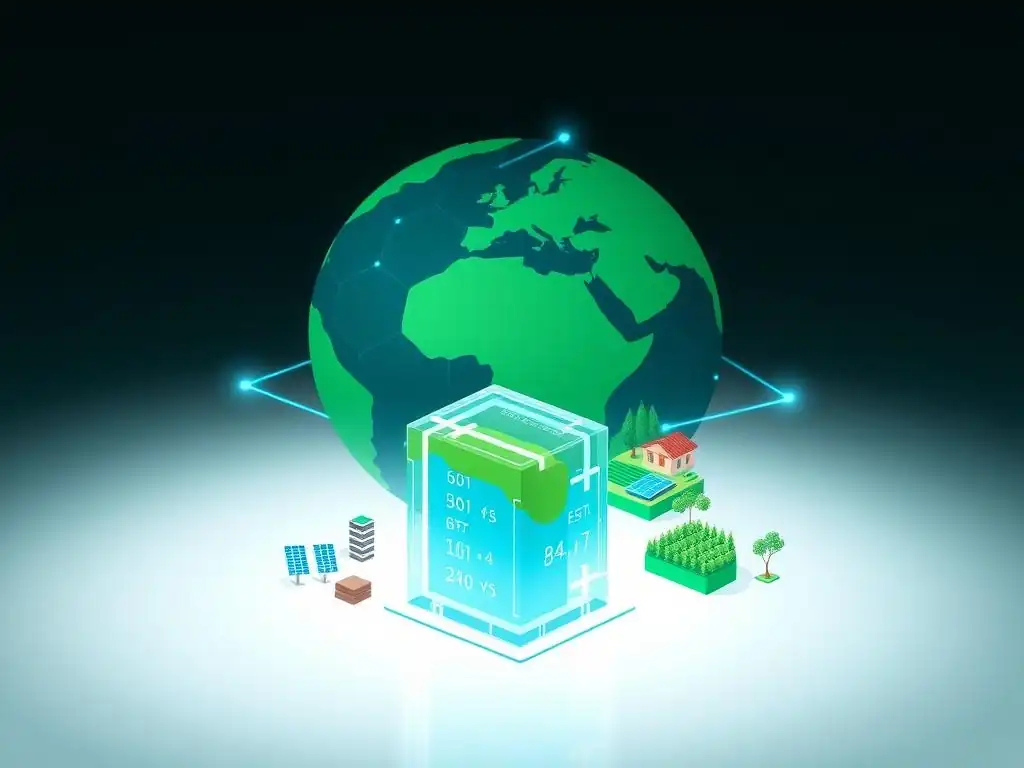
Toucan Protocol: Bridging Traditional Carbon Markets with DeFi
Toucan Protocol is a prominent example of a project leveraging blockchain to bring existing, verified carbon credits onto the blockchain. It acts as a 'bridge' that allows owners of Verified Carbon Units (VCUs) registered under established standards (like Verra's VCS) to deposit these credits into a pool and mint corresponding carbon tokens on the Polygon blockchain. These tokens, such as the Base Carbon Tonne (BCT) or Nature Carbon Tonne (NCT), can then be used within decentralized finance (DeFi) applications or traded more freely.
By tokenizing legacy carbon credits, Toucan increases their liquidity and accessibility, connecting the traditional, often illiquid, carbon market with the dynamic and global DeFi ecosystem. This process involves retiring the underlying traditional credit in the original registry to prevent double counting, ensuring the blockchain token represents a unique claim. Toucan's approach demonstrates how Blockchain carbon offsetting solutions can enhance the usability and reach of existing environmental assets.
KlimaDAO: Decentralized Autonomous Organization for Carbon Offsetting
KlimaDAO is a decentralized autonomous organization (DAO) built on the Polygon blockchain that utilizes the tokenized carbon credits bridged by protocols like Toucan. KlimaDAO aims to drive up the price of carbon offsets, particularly the on-chain carbon tokens, by acquiring and holding a significant amount of these assets in its treasury. The core idea is that by increasing the cost of emitting carbon (represented by the offset price), it creates a stronger financial incentive for businesses and individuals to reduce their emissions directly rather than relying on offsetting.
Holders of the Klima token benefit from the protocol's activities and governance, effectively participating in a collective effort to retire carbon credits and influence the market. KlimaDAO represents a novel, community-driven approach to climate finance, using the mechanisms of DeFi and DAOs to create demand and drive impact within the on-chain carbon market ecosystem. It showcases how Blockchain carbon offsetting solutions can enable new models for collective climate action.
Moss Earth: Tokenizing Carbon Credits from Amazon Rainforest Preservation
Moss Earth is a project that specifically focuses on tokenizing carbon credits generated from rainforest preservation projects, primarily in the Amazon. Moss works with environmental projects that prevent deforestation, verifying the carbon sequestered or emissions avoided. They then issue MCO2 tokens on the blockchain, with each token representing one tonne of CO2 avoided or removed. These tokens are backed by audited credits from certified projects.
Moss Earth provides a direct way for individuals and companies globally to purchase transparently tracked carbon credits associated with critical conservation efforts. By using blockchain, they offer a clear, verifiable record of each MCO2 token and its corresponding offset. This model highlights how Blockchain carbon offsetting solutions can provide direct financial support to specific environmental projects and enable global participation in conservation efforts with increased assurance of impact.
Challenges and Opportunities in Implementing Blockchain Carbon Offsetting
Regulatory Hurdles and Standardization Needs for Blockchain Carbon Credits
One significant challenge for Blockchain carbon offsetting solutions is the lack of clear regulatory frameworks governing digital environmental assets and activities on the blockchain. Jurisdictions worldwide are still developing regulations for cryptocurrencies and tokens, and applying these to carbon credits adds another layer of complexity. Uncertainty around how tokenized carbon credits will be classified (e.g., as securities, commodities, or unique environmental assets) creates legal and operational risks for platforms and users.
Furthermore, there is a pressing need for standardization within the blockchain carbon space itself. Different platforms may use varying methodologies for tokenization, project verification, and retirement. Establishing common standards for issuing, transferring, and retiring on-chain carbon credits, potentially interoperable with traditional registries, is crucial for market liquidity, integrity, and widespread adoption. Collaboration between blockchain innovators, traditional carbon market participants, and regulatory bodies is essential to navigate these hurdles and unlock the full potential.
Scalability and Interoperability of Blockchain Carbon Offset Platforms
The scalability of the underlying blockchain infrastructure is a key consideration. As the demand for carbon offsetting grows, the volume of transactions related to tokenized credits could become substantial. While newer blockchains and Layer 2 solutions offer much higher throughput and lower transaction costs than early networks like Bitcoin or Ethereum's mainnet, ensuring that platforms can handle millions or billions of transactions efficiently and affordably remains important.
Interoperability between different blockchain networks and with existing traditional carbon registries is also a challenge. For Blockchain carbon offsetting solutions to achieve global impact, they need to be able to interact seamlessly. This means developing bridges that reliably connect different blockchain ecosystems and finding ways to synchronize data with established registries to prevent inconsistencies and ensure double-counting is avoided across the entire market landscape. Achieving this level of integration requires significant technical effort and industry cooperation.
Addressing Energy Consumption Concerns Associated with Blockchain Technology
A common criticism of blockchain, particularly proof-of-work networks like Bitcoin, is their high energy consumption. While many newer blockchain platforms utilized for carbon offsetting (like those based on proof-of-stake) consume vastly less energy, the perception and reality of energy use remain a challenge. It's crucial for platforms offering Blockchain carbon offsetting solutions to operate on energy-efficient networks and to clearly communicate their energy footprint.
The environmental benefit of enabling more effective carbon offsetting must demonstrably outweigh the energy cost of the technology itself. As the blockchain space evolves, the trend is towards more sustainable consensus mechanisms. Educating stakeholders about the differences in energy consumption across various blockchain technologies is vital to address this concern and highlight that not all blockchains have the same environmental impact.
Ensuring Data Privacy and Security in Blockchain-Based Carbon Markets
While transparency is a major benefit, certain data within carbon markets, such as commercially sensitive project financials or participant identities in some contexts, might require privacy. Public blockchains offer transparency but may not be suitable for all types of data. Solutions involving permissioned ledgers or zero-knowledge proofs could offer ways to balance transparency with necessary privacy, but implementing these adds complexity.
Security is paramount in any system dealing with valuable assets. While blockchain itself is designed to be secure, the applications built on top of it, including smart contracts and user interfaces, can be vulnerable to bugs or attacks. Ensuring the robust security of platforms implementing Blockchain carbon offsetting solutions through rigorous auditing and secure coding practices is essential to prevent loss of assets or manipulation of data, maintaining user trust and market stability.
The Future of Green Blockchain Tech: Beyond Carbon Offsetting
Blockchain for Renewable Energy Tracking and Trading
Beyond carbon offsetting, blockchain technology holds significant potential for revolutionizing renewable energy markets. It can provide a transparent and immutable way to track the generation of renewable energy from source to consumption. Renewable Energy Certificates (RECs) or similar instruments can be tokenized on a blockchain, allowing for verifiable tracking of renewable energy attributes. This helps prevent double-counting of renewable energy claims and provides a clear audit trail for compliance or voluntary green energy purchases.
Furthermore, blockchain can facilitate peer-to-peer energy trading. Individuals or businesses with rooftop solar panels, for instance, could sell excess renewable energy directly to neighbors via a blockchain-based microgrid. Smart contracts could automate the metering, transaction, and settlement process, creating more efficient and localized energy markets. This application of green blockchain tech empowers consumers and accelerates the adoption of distributed renewable energy sources.
Utilizing Blockchain for Sustainable Supply Chain Management
Blockchain's ability to create a transparent and immutable record of transactions makes it ideal for enhancing sustainability within supply chains. By tracking goods from origin to destination on a blockchain, companies can verify the ethical sourcing of materials, ensure compliance with environmental regulations, and provide consumers with verifiable information about product sustainability. For example, tracking timber to prove it came from sustainably managed forests or tracing minerals to ensure they weren't sourced from conflict zones.
Environmental data, such as carbon emissions associated with transport at each step or certifications of sustainable practices by suppliers, can be recorded on the blockchain alongside product information. This provides an auditable trail of a product's environmental footprint. This application of green blockchain tech drives accountability throughout complex supply chains and enables companies to make genuine claims about the sustainability of their products.
The Role of Blockchain in Promoting Circular Economy Initiatives
The circular economy aims to minimize waste and maximize resource utilization by keeping products and materials in use for as long as possible. Blockchain technology can support circular economy initiatives by providing a transparent system for tracking the lifecycle of products and materials. By assigning a unique digital identity to products, blockchain can record information about their composition, repair history, and potential for recycling or reuse.
This immutable record facilitates sorting and recycling processes by providing accurate information about materials. It can also incentivize product returns for recycling or refurbishment by enabling tokenized rewards based on verifiable product lifecycle data. Furthermore, blockchain can support platforms for sharing or leasing assets, promoting utilization over ownership. By enabling trust and transparency in material flows, green blockchain tech supports the transition from a linear to a more sustainable circular economy model.
Conclusion: Blockchain as a Catalyst for Global Climate Goals
The Potential of Blockchain to Transform Carbon Markets and Accelerate Climate Action
Blockchain technology offers a compelling set of tools to address the fundamental limitations of traditional carbon offset markets. By providing unprecedented levels of transparency, traceability, and integrity, Blockchain carbon offsetting solutions can build trust and credibility in a market that is crucial for achieving global climate goals. The ability to tokenize carbon credits, ensure unique retirement through immutability, and automate processes via smart contracts creates a more efficient, reliable, and accessible system for financing emission reductions and removals.
While challenges related to regulation, standardization, and scalability exist, the potential benefits are substantial. Blockchain can unlock liquidity, reduce costs, and democratize access to carbon offsetting, channeling more finance towards impactful climate projects worldwide. It moves the market away from opaque, centralized systems towards a more verifiable, distributed, and trustworthy infrastructure, accelerating the pace and scale of climate action.
Call to Action: Embracing Blockchain Innovation for a Sustainable Future
Achieving global carbon neutrality requires leveraging every available tool and fostering innovation. Blockchain carbon offsetting solutions represent a significant step forward in creating the robust, transparent, and efficient carbon markets needed to meet ambitious climate targets. It is imperative for policymakers, industry leaders, environmental organizations, and technology developers to collaborate to address the existing challenges and capitalize on the opportunities presented by this technology.
Embracing blockchain innovation means actively exploring, developing, and implementing these solutions while ensuring they are built on energy-efficient infrastructure and adhere to rigorous standards. By doing so, we can unlock the full potential of blockchain to not only transform carbon offsetting but also to drive sustainability across renewable energy, supply chains, and the circular economy, paving the way for a truly sustainable future.
Frequently Asked Questions
How can blockchain technology contribute to carbon offsetting?
Blockchain provides transparency and traceability in carbon offsetting projects. This ensures that carbon credits are accurately tracked and verified, reducing the risk of double counting or fraud.
What are some examples of blockchain-based carbon offsetting solutions?
Platforms are emerging that use blockchain to tokenize carbon credits, making them easier to trade and manage. These systems often include smart contracts to automate the offsetting process and ensure compliance.
What are the benefits of using blockchain for carbon offsetting compared to traditional methods?
Blockchain offers improved data integrity, reduced costs, and increased accessibility to carbon markets. This can lead to more effective and efficient carbon reduction efforts globally.
What are the potential challenges to adopting blockchain in carbon offsetting?
Challenges include the energy consumption of some blockchain networks and the need for standardized protocols for carbon credit verification. Regulatory clarity is also crucial for widespread adoption.
How does blockchain help ensure the legitimacy of carbon offsetting projects?
Blockchain's immutable ledger creates a permanent record of all transactions and project data. This enhances accountability and helps build trust in the credibility of carbon offsets.
Final Reflection: Embracing Blockchain for a Sustainable Future
The exploration of blockchain's potential in achieving carbon neutrality underscores a critical truth: innovation is paramount in addressing the climate crisis. The article has illuminated how blockchain carbon offsetting solutions can provide transparency, efficiency, and accountability in the fight against climate change, moving beyond traditional methods that often lack these crucial elements. This is not just about technology; it's about fundamentally reshaping how we approach environmental responsibility.
The promise of blockchain extends far beyond mere technological advancement; it represents a paradigm shift in how we perceive and interact with environmental markets. This shift is deeply personal, as it empowers individuals and organizations to actively participate in creating a more sustainable future. We are the first generation to feel the effect of climate change and the last generation who can do something about it.
- Barack Obama. This quote resonates profoundly, reminding us of the urgency and the responsibility we bear to leverage every tool at our disposal, including the transformative power of blockchain.
As you reflect on the potential of blockchain carbon offsetting solutions, consider how you can contribute to this evolving landscape. Whether you're an investor, a developer, or simply a concerned citizen, your actions can help accelerate the adoption of these technologies and drive meaningful change. Let us embrace the possibilities that blockchain offers, working together to build a future where carbon neutrality is not just a goal, but a reality.
Ignite Change: Become a Carbon Neutral Champion!
Thank you for exploring how blockchain can revolutionize our approach to achieving carbon neutrality. You've gained valuable insights into the potential of decentralized solutions to address climate change. Now, it's time to turn knowledge into action!
Here's how you can contribute to a greener future:
- Explore blockchain-based carbon offsetting platforms and actively participate in projects that align with your values.
- Share this article with your network to spark conversations and raise awareness about the role of blockchain in climate action.
- Research and suggest innovative ways to use blockchain technology for environmental sustainability in your community.
Which blockchain project are you most excited about contributing to in the pursuit of a carbon-neutral future, and how can you support its development?
Leave a Reply