
The Beginner's Guide to Hardware Wallets: Securing Your Crypto from Exchanges

Welcome to Blockchain Trends, your compass in the rapidly evolving world of decentralized technology!
Ever wondered how to truly own your crypto keys? Dive in to our latest article where we provide a comprehensive guide to " Secure hardware wallets explained." Uncover the essential knowledge to protect your digital assets and understand why relying solely on exchanges might leave you vulnerable. Read on to discover the best practices for safeguarding your cryptocurrency, and take control of your financial future!
-
The Beginner's Guide to Hardware Wallets: Securing Your Crypto from Exchanges
- Introduction to Secure Hardware Wallets
- Why Use Secure Hardware Wallets?
- How Hardware Wallets Work
- Top Secure Hardware Wallets Explained
- Common Misconceptions About Hardware Wallets
- Choosing the Right Secure Hardware Wallet for You
- Best Practices for Securing Your Crypto with Hardware Wallets
- Conclusion: The Future of Secure Hardware Wallets in Crypto
- Additional Resources for Beginners
-
Frequently Asked Questions
- What is a hardware wallet and why is it important?
- How does a hardware wallet differ from a software wallet?
- What types of cryptocurrencies are compatible with hardware wallets?
- Are hardware wallets completely immune to all security threats?
- What is the process for sending and receiving cryptocurrency using a hardware wallet?
- Final Reflection: Empowering Crypto Sovereignty
- Fortify Your Crypto Future!
The Beginner's Guide to Hardware Wallets: Securing Your Crypto from Exchanges
Introduction to Secure Hardware Wallets
Navigating the world of cryptocurrency requires a fundamental understanding of how to protect your digital assets. While centralized exchanges offer convenient platforms for buying and selling, holding significant amounts of crypto on these platforms exposes you to potential risks. This is where the concept of a secure hardware wallet becomes paramount.
Essentially, a hardware wallet is a physical electronic device designed specifically to store the private keys to your cryptocurrency offline, offering a robust layer of security that software wallets or exchange accounts cannot match. Understanding the benefits and functionality of secure hardware wallets explained is a crucial step for anyone serious about crypto security, moving beyond the inherent vulnerabilities of online storage methods.
The importance of security in the crypto space cannot be overstated. High-profile exchange hacks, phishing scams, and malware attacks are constant threats. Unlike traditional banking where institutions hold and recover your funds, in cryptocurrency, you are your own bank, meaning you are solely responsible for the security of your private keys.
Losing access to your private keys means losing access to your crypto, and if your keys are compromised while stored online (like on an exchange or vulnerable software wallet), your funds can be stolen instantly. Secure hardware wallets explained offer a critical solution by keeping your private keys isolated from internet-connected devices, drastically reducing the attack surface for malicious actors.
Why Use Secure Hardware Wallets?
One of the primary reasons to use secure hardware wallets is to protect your cryptocurrency from the risks associated with keeping funds on exchanges. While exchanges are necessary for trading, they are centralized targets for hackers. Holding your crypto on an exchange means you do not control the private keys; the exchange does.
This is often summarized by the crypto adage, "Not your keys, not your coin." A hardware wallet puts control of your private keys back into your hands, severing the direct link between your assets and the online vulnerabilities of exchanges. By moving funds off the exchange and onto a hardware wallet, you mitigate the risk of losing your holdings in the event of an exchange collapse, hack, or regulatory action that freezes funds.
The advantages of using hardware wallets extend beyond simply avoiding exchange risk. They offer enhanced security features specifically designed for crypto. For instance, most hardware wallets require physical confirmation (like pressing a button) for every transaction, making it virtually impossible for remote attackers to authorize transfers.
They also generate and store your private keys in a secure element chip, which is highly resistant to tampering and extraction. Furthermore, the offline storage benefits are immense; your private keys never touch an internet-connected device when signing transactions, only the transaction data is passed to the computer/phone for broadcasting to the network. This air-gapped security model is a cornerstone of why secure hardware wallets explained are considered the gold standard for cold storage.
- Enhanced Security Features:
- Private keys stored in a secure element.
- Physical confirmation required for transactions.
- PIN protection against unauthorized physical access.
- Offline Storage Benefits:
- Private keys never exposed to online threats.
- Immunity to computer viruses and malware designed to steal keys.
- User Control over Private Keys:
- You own your keys, not a third party.
- Ability to recover funds using a seed phrase if the device is lost or damaged.
How Hardware Wallets Work
Understanding the technology behind secure hardware wallets explained involves grasping the concept of private keys and transaction signing. A hardware wallet doesn't actually "store" your cryptocurrency in the sense of holding physical coins. Instead, it securely stores your private keys offline. These private keys are what give you ownership and control over your crypto on the blockchain.
When you want to send cryptocurrency, you create a transaction request on your computer or smartphone. This request is then sent to the hardware wallet. The hardware wallet uses the private key stored within its secure chip to cryptographically "sign" the transaction internally, without ever exposing the private key to the connected device. The signed transaction is then sent back to the computer/phone to be broadcast to the blockchain network.
The step-by-step process of storing and managing crypto with a hardware wallet typically involves initializing the device (setting a PIN, generating a seed phrase), transferring funds from an exchange or another wallet address to the public address provided by your hardware wallet, and then using the device to sign any outgoing transactions. For example, if you want to send Bitcoin from your hardware wallet, you initiate the transfer via the wallet's companion software or a compatible third-party wallet interface on your computer. You specify the recipient address and amount. This unsigned transaction data is sent to the hardware device.
You physically verify the transaction details (address, amount) on the hardware wallet's screen and confirm it by pressing buttons. The device signs the transaction and sends it back to the computer, which broadcasts it to the Bitcoin network. Your private key never leaves the hardware device during this process.
Real-world examples demonstrate the effectiveness of secure hardware wallets explained. Consider the numerous instances of users who have successfully protected their crypto holdings during exchange hacks like the Mt. Gox collapse, Bitfinex hack, or more recently, incidents involving smaller platforms. Users who had moved their funds off these exchanges and onto hardware wallets like a Ledger Nano S or Trezor One were unaffected by the exchange's security breaches. These devices provide a tangible, physical barrier between your valuable private keys and the online world, proving their worth time and time again as a fundamental security tool for cryptocurrency holders.
Top Secure Hardware Wallets Explained
Ledger Nano X
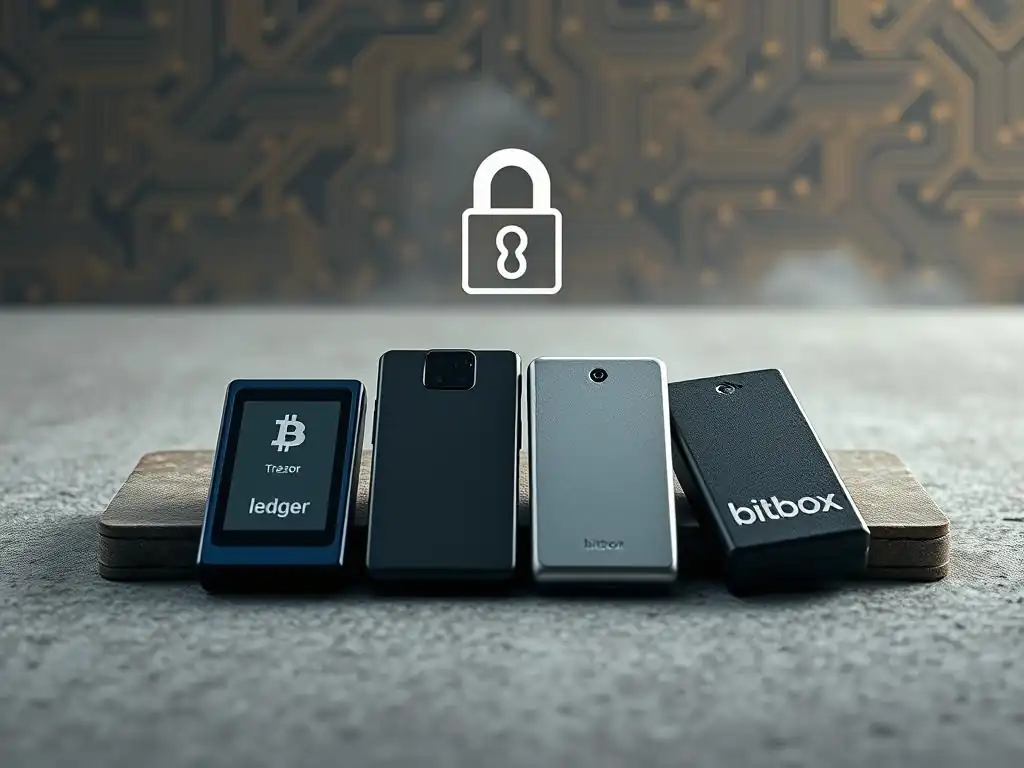
The Ledger Nano X is one of the most popular secure hardware wallets explained in the market, known for its balance of security, features, and ease of use. Key features include Bluetooth connectivity (optional, for use with mobile devices), a larger screen than its predecessors, and support for over 5,500 different cryptocurrencies and tokens. It boasts a certified secure element chip (CC EAL5+) designed to resist sophisticated attacks. The Ledger Live companion app provides a user-friendly interface for managing assets, checking balances, and sending/receiving crypto. The device itself is compact and resembles a USB drive.
Pricing for the Ledger Nano X typically ranges from $100 to $150 USD, depending on promotions and retailers. It is widely available for purchase directly from the Ledger website or authorized resellers. While more expensive than some basic models, its features, particularly the large number of supported assets and mobile compatibility, justify the cost for many users.
The Ledger Nano X is particularly well-suited for beginners who want a premium, user-friendly experience and plan to hold a diverse portfolio of cryptocurrencies. Its ease of setup through the Ledger Live app makes the process of securing crypto straightforward, even for newcomers.
Trezor Model T
The Trezor Model T represents the flagship hardware wallet from SatoshiLabs, one of the pioneers in the secure hardware wallets explained space. Its unique selling points include a full-color touchscreen interface, which enhances usability and security by allowing direct input on the device (like PIN entry), reducing reliance on the connected computer. It supports a wide range of cryptocurrencies, though slightly fewer than Ledger (typically supporting major coins and ERC-20 tokens). Trezor emphasizes open-source software and hardware, which allows the community to audit the code for vulnerabilities, fostering transparency and trust.
When comparing the Trezor Model T with other wallets, its touchscreen is a significant differentiator, offering a more intuitive user experience for some. It competes directly with high-end models like the Ledger Nano X. While generally priced slightly higher than the Nano X, often in the $180 to $250 USD range, its build quality and open-source philosophy appeal to a segment of the market prioritizing transparency.
Recommended security practices when using the Trezor Model T include always verifying transaction details on the device's screen and ensuring the device's firmware is updated via the official Trezor Suite software. As with any hardware wallet, keeping the recovery seed phrase absolutely secure and offline is paramount.
Ellipal Titan
The Ellipal Titan stands out among secure hardware wallets explained due to its air-gapped design, meaning it has no USB, Wi-Fi, or Bluetooth connectivity. Communication is done purely via QR codes scanned between the device and its companion mobile app. This design philosophy aims to eliminate potential attack vectors through physical or wireless connections. It features a large touchscreen and a robust, tamper-proof metal casing. The air-gapped nature makes it an appealing option for users prioritizing maximum isolation from online threats.
Pricing for the Ellipal Titan typically falls in a similar range to the Trezor Model T or slightly higher, often between $120 and $180 USD. Its user experience, while different due to the QR code communication, is generally considered intuitive once users adapt to the workflow. The large touchscreen makes verifying transaction details easy.
Situations where the Ellipal Titan excels include environments where the connected computer or smartphone might be heavily infected with malware, as the device's isolation prevents any interaction beyond scanning encrypted QR codes. It's ideal for users who value an extreme level of security isolation and are comfortable with the QR code-based transaction process.
Common Misconceptions About Hardware Wallets
A prevalent myth about secure hardware wallets explained is that they are too complicated for beginners to use. The reality is that modern hardware wallets have been designed with user-friendliness in mind. Companies like Ledger and Trezor have developed intuitive companion software (Ledger Live, Trezor Suite) that guide users through the setup process step-by-step.
These interfaces allow beginners to manage their assets, send/receive funds, and even participate in activities like staking with relative ease. While there's a learning curve compared to simply keeping funds on an exchange, the process is far less daunting than it was in the early days of crypto, and numerous online guides and tutorials are available to assist new users.
Another common misconception is that using a hardware wallet is prohibitively expensive. While there is an upfront cost associated with purchasing a device (ranging from approximately $50 for basic models to over $200 for premium ones), this is a one-time investment for long-term security. Compared to the potential loss of significant crypto holdings due to a hack or scam, the cost of a hardware wallet is a relatively small price to pay for peace of mind and robust protection.
They represent a cost-effective security solution, especially for anyone holding more than a trivial amount of cryptocurrency. The expense should be viewed as essential security infrastructure rather than a luxury item.
Choosing the Right Secure Hardware Wallet for You
Selecting the appropriate secure hardware wallet explained involves considering several key factors tailored to your specific needs. Security features are paramount; look for devices that use a secure element chip, require physical confirmation for transactions, and have a strong track record. The number and type of supported cryptocurrencies are also crucial – ensure the wallet supports all the assets you currently hold or plan to acquire. While most wallets support major coins like Bitcoin and Ethereum, support for altcoins and specific tokens can vary significantly between manufacturers and models.
- Key Factors to Consider:
- Security Features: Secure element, open source, tamper resistance.
- Supported Cryptocurrencies: Ensure compatibility with your portfolio.
- User Interface and Ease of Use: Companion app quality, device screen.
- Customer Support and Community Feedback: Reputation, available help resources.
- Price: Balance cost with features and security level.
Comparing secure hardware wallets explained often comes down to evaluating the pros and cons of leading models like Ledger and Trezor. Ledger is often praised for its wide altcoin support and user-friendly Ledger Live app, making it accessible for beginners with diverse portfolios.
Trezor is favored by users prioritizing open-source transparency and robust security features, particularly the touchscreen on the Model T. Newer entrants like Ellipal offer unique features like air-gapped communication for enhanced isolation. Evaluating these options requires weighing factors like price, supported assets, preferred interface (buttons vs. touchscreen vs. QR codes), and specific security concerns to find the best fit for your personal crypto security strategy.
Best Practices for Securing Your Crypto with Hardware Wallets
Setting up your secure hardware wallet safely is the critical first step. Always purchase the device directly from the official manufacturer's website or a trusted, authorized reseller to avoid potentially compromised devices. When setting up the wallet, carefully follow the on-screen instructions to generate your recovery seed phrase. Write this phrase down physically on the provided recovery sheet (or multiple copies) and store it in one or more secure, offline locations that are safe from fire, water, and theft. Never store your seed phrase digitally (e.g., photos, cloud storage, text files) and never share it with anyone.
Regular firmware updates are also essential for maintaining the security of your secure hardware wallets explained. Manufacturers periodically release updates to fix bugs, improve security features, and add support for new cryptocurrencies. Always perform these updates using the official companion software provided by the manufacturer and ensure your computer is free of malware. Ignoring updates can leave your device vulnerable to known exploits. Treat firmware updates like software updates on your computer or phone – they are crucial for security.
Strategies for backing up your wallet primarily revolve around the recovery seed phrase. This 12, 18, or 24-word phrase is the master key to your crypto assets. If your hardware wallet is lost, stolen, or damaged, you can use this seed phrase to recover access to your funds on a new compatible hardware wallet or even certain software wallets.
Store multiple copies of your seed phrase in different secure locations (e.g., a home safe, a safety deposit box). Some advanced users engrave their seed phrase onto metal for maximum durability against environmental damage. Regularly confirming the integrity of your stored seed phrase (without entering it into any online device) is also a good practice.
Conclusion: The Future of Secure Hardware Wallets in Crypto
The landscape of crypto security is constantly evolving, with new threats and countermeasures emerging regularly. However, the fundamental principle behind secure hardware wallets explained – keeping private keys offline and isolated – remains a cornerstone of effective crypto security. While software wallets and exchange security are improving, the air-gapped nature of hardware wallets provides a level of protection that is difficult for online solutions to replicate. As blockchain technology matures and integrates into more aspects of finance and enterprise, the need for robust, user-controlled security solutions will only grow.
Secure hardware wallets fit seamlessly into broader blockchain applications beyond just holding speculative assets. They can be used to securely sign transactions for DeFi protocols, interact with decentralized applications (dApps), participate in blockchain governance, and even manage digital identities or NFTs. As the use cases for blockchain expand, the role of a secure, personal key management device becomes increasingly vital for individuals and potentially even small businesses interacting with decentralized systems. They represent the personal security layer in a decentralized world.
Ultimately, while the initial setup and cost might seem like a barrier, investing in a secure hardware wallet explained is one of the most impactful steps you can take to protect your digital wealth. The peace of mind that comes from knowing your private keys are safely offline, under your control, is invaluable in the volatile and sometimes risky world of cryptocurrency. For anyone moving beyond simply experimenting with small amounts on an exchange, a hardware wallet is not just recommended; it's arguably essential for long-term security.
Additional Resources for Beginners
For those looking to acquire a secure hardware wallet explained, the safest places to purchase are the official websites of the manufacturers (e.g., Ledger.com, Trezor.io, Ellipal.com) or their officially listed authorized resellers. Avoid purchasing from generic online marketplaces or second-hand sources, as there is a risk of receiving a tampered device.
Online communities and forums are invaluable resources for beginners learning about secure hardware wallets explained. Subreddits like r/ledgerwallet, r/TREZOR, and general crypto security forums offer places to ask questions, find troubleshooting tips, and learn from the experiences of other users. Always be wary of unsolicited private messages or links within these communities, as scams are prevalent.
Recommended reading on blockchain security trends often covers the latest threats and advancements in self-custody solutions. Look for articles and guides from reputable sources in the blockchain and cybersecurity space. Understanding concepts like seed phrase security, transaction verification, and the different types of crypto storage will further empower you to make informed decisions about protecting your assets with secure hardware wallets explained.
Frequently Asked Questions
What is a hardware wallet and why is it important?
A hardware wallet is a physical device that stores your private keys offline. This protects your crypto from online threats, making it significantly more secure than leaving your funds on an exchange.
How does a hardware wallet differ from a software wallet?
Software wallets store your keys on your computer or phone, making them vulnerable to malware and hacking. Hardware wallets keep your keys offline, providing a much stronger security barrier.
What types of cryptocurrencies are compatible with hardware wallets?
Most popular cryptocurrencies like Bitcoin, Ethereum, and Litecoin are supported. However, it's essential to check compatibility with the specific hardware wallet model before purchasing.
Are hardware wallets completely immune to all security threats?
While highly secure, hardware wallets aren't foolproof. You still need to protect your seed phrase (recovery phrase) and be wary of phishing attempts.
What is the process for sending and receiving cryptocurrency using a hardware wallet?
You connect the hardware wallet to your computer or phone, and the device signs transactions offline. This ensures that your private keys never leave the secure environment of the wallet.
Final Reflection: Empowering Crypto Sovereignty
The journey through understanding and utilizing hardware wallets, as outlined in this guide, culminates in a single, powerful truth: true ownership of cryptocurrency lies in self-custody. In a world increasingly reliant on centralized exchanges, the ability to secure your digital assets independently is no longer a luxury, but a necessity for anyone serious about participating in the decentralized future. This guide serves as a stepping stone towards achieving that sovereignty.
The impact of hardware wallets extends far beyond mere security; it fosters a deeper understanding of the principles underpinning cryptocurrency. By taking control of your private keys, you're not just protecting your investment, you're actively participating in the ethos of decentralization and financial freedom. Not your keys, not your coins.
This simple adage encapsulates the fundamental importance of self-custody in the crypto space, a principle that hardware wallets empower individuals to uphold.
Now, armed with this knowledge, I urge you to reflect on your own crypto journey. Are you truly in control of your assets, or are you entrusting them entirely to third parties? Consider the peace of mind that comes with knowing your digital wealth is secured by your own vigilance. Take the next step, explore the world of hardware wallets, and embrace the power of self-custody. Your financial future, and the future of decentralized finance, depends on it.
Fortify Your Crypto Future!
Thanks for exploring the world of hardware wallets and taking the first step toward truly owning your crypto. You now have the knowledge to take control of your digital assets and move them off exchanges, ensuring greater security and peace of mind. Are you ready to take the next step?
Here are a few ways to strengthen your crypto security:
- Purchase your first hardware wallet and follow a detailed setup guide to ensure it is configured securely. This is the most important action you can take right now!
- Join the community forum to ask questions and share your experience with setting up your wallet. Helping each other makes everyone safer!
- Review the safety tips in the article and share them with a friend or family member new to crypto. Let’s spread awareness and protect our community!
What important questions do you have about hardware wallets that we can help answer in the comments below?
Leave a Reply