
The Future of Smart Contract Audits: AIPowered Tools and Beyond

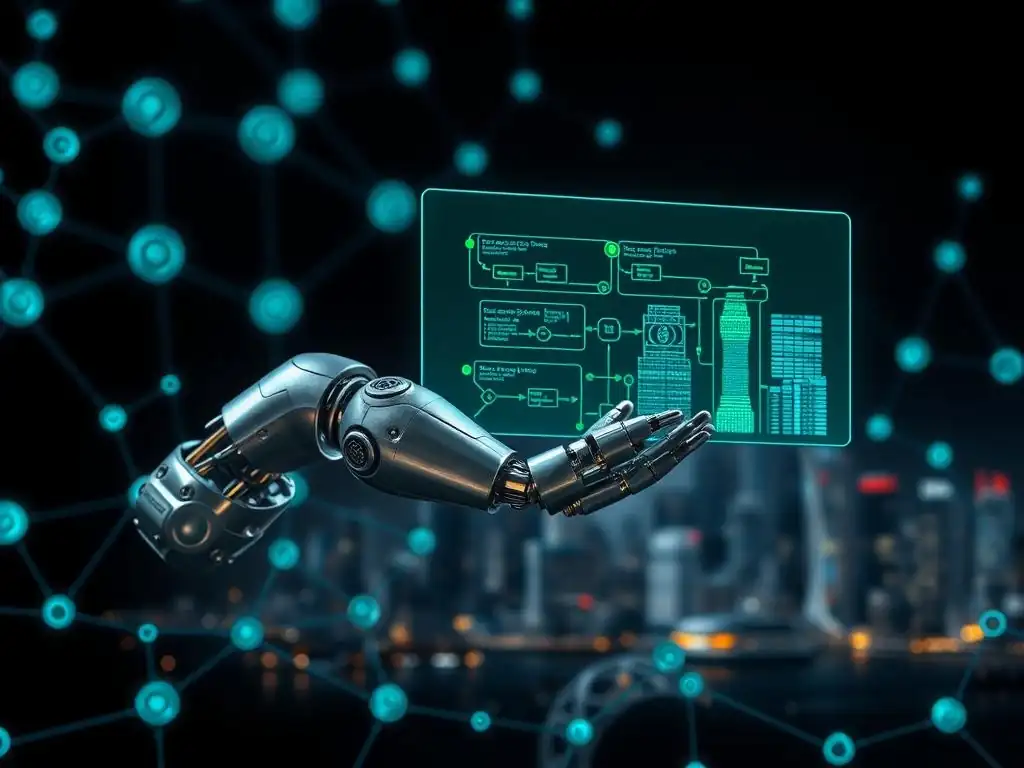
Welcome to Blockchain Trends, your compass in the rapidly evolving world of decentralized technologies. Beyond the hype of cryptocurrencies, we delve into the real-world applications shaping the future. Ready to unravel the next frontier? Then, prepare to discover how AI-powered smart contract audits are revolutionizing security and efficiency, offering a glimpse into the future of blockchain integrity. This article will provide a thorough overview of the subject, but there are a lot more resources for you to explore on this topic. Let's dive in and uncover how these intelligent tools are changing the game!
- The Future of Smart Contract Audits: AI-Powered Tools and Beyond
- The Rise of AI in Smart Contract Security Analysis
- Leading AI-Powered Smart Contract Audit Tools and Platforms
- Key Benefits of Using AI for Smart Contract Audits
- Limitations and Challenges of AI in Smart Contract Audits
-
Frequently Asked Questions
- What are the current limitations of traditional smart contract audits?
- How can AI-powered tools improve smart contract security?
- What is the role of machine learning in AI-powered smart contract audits?
- What are the potential benefits of using AI for smart contract audits beyond security?
- What are some of the challenges and considerations for adopting AI-powered smart contract audits?
- Final Reflection: Securing Tomorrow's Code with AI
- Unleash Your Inner Auditor: Secure the Future of DeFi!
The Future of Smart Contract Audits: AI-Powered Tools and Beyond
The Critical Need for Smart Contract Security Audits
Smart contracts are the backbone of decentralized applications (dApps) and decentralized finance (DeFi) ecosystems. These self-executing contracts automate agreements and transactions on the blockchain, eliminating intermediaries and increasing efficiency. However, their immutability, a core feature of blockchain technology, also presents a significant challenge.
Once deployed, smart contracts cannot be easily altered, meaning vulnerabilities and bugs within their code can lead to irreversible and potentially catastrophic consequences. Therefore, rigorous security audits are paramount before deploying any smart contract to a live blockchain environment. These audits act as a crucial safety net, identifying potential flaws and weaknesses that could be exploited by malicious actors, safeguarding user funds and maintaining the integrity of the entire decentralized system.
The stakes in smart contract security are incredibly high, especially considering the vast sums of value locked within DeFi protocols. A single vulnerability in a widely used smart contract can result in multi-million dollar losses, eroding trust in the technology and hindering broader adoption.
For example, the DAO hack in 2016, resulting in the theft of approximately $50 million worth of Ether, highlighted the devastating consequences of unaudited smart contracts. Similarly, numerous more recent exploits across different blockchains continue to underscore the critical importance of proactive and thorough security measures, with smart contract audits being at the forefront of these defensive strategies.
Understanding Smart Contract Vulnerabilities and Risks
Smart contract vulnerabilities can stem from various sources, ranging from coding errors to logical flaws in the contract's design. Common vulnerabilities include reentrancy attacks, where a malicious contract can recursively call a vulnerable function to drain funds; integer overflows and underflows, which can manipulate financial calculations; and timestamp dependence, where contract logic relies on block timestamps that can be manipulated by miners. These vulnerabilities are often subtle and can be easily overlooked during development, especially in complex contracts with intricate logic and interactions with other contracts.
The risks associated with these vulnerabilities are multifaceted. Beyond direct financial losses from exploits, vulnerabilities can lead to reputational damage for projects and developers, loss of user trust, and even regulatory scrutiny. In the rapidly evolving landscape of blockchain technology, where code is often written and deployed quickly, the pressure to innovate can sometimes overshadow the necessity for robust security practices.
This makes understanding and proactively mitigating smart contract vulnerabilities a continuous and critical process for the sustainable growth and security of the decentralized web. The complexity of distributed systems and the novelty of smart contract programming paradigms further amplify these risks, requiring specialized expertise to identify and address potential weaknesses effectively.
Why Traditional Smart Contract Audits Are Challenging
Traditional smart contract audits, primarily conducted manually by security experts, are a resource-intensive and time-consuming process. Auditors meticulously review the code line by line, trying to identify potential vulnerabilities and logical flaws. While highly valuable, manual audits face inherent limitations. They are susceptible to human error; even the most skilled auditors might miss subtle vulnerabilities, especially in increasingly complex and large smart contract codebases. The demand for skilled smart contract auditors currently outstrips supply, leading to bottlenecks and delays in project deployments, and driving up the cost of audits significantly.
Furthermore, the rapid pace of innovation in the blockchain space means that new vulnerabilities and attack vectors are constantly being discovered. Traditional audit methods, while thorough, can struggle to keep pace with this evolving threat landscape. Manual audits are also not easily scalable, making it challenging to audit the growing number of smart contracts being deployed across various blockchain platforms.
This scalability challenge becomes particularly acute as DeFi and other blockchain applications continue to expand and become more sophisticated. The need for faster, more scalable, and equally thorough audit solutions is driving the exploration and adoption of automated and AI-powered approaches.
The Rise of AI in Smart Contract Security Analysis
How AI and Machine Learning Enhance Code Auditing
Artificial intelligence (AI) and machine learning (ML) are revolutionizing various industries, and smart contract security is no exception. AI-powered tools offer the potential to significantly enhance code auditing by automating repetitive tasks, improving vulnerability detection accuracy, and increasing the speed and scalability of audits. These technologies can analyze vast amounts of code much faster than human auditors, identifying patterns and anomalies that might be easily missed during manual reviews. By leveraging the power of AI, smart contract audits can become more efficient, more comprehensive, and ultimately, more effective in securing decentralized applications.
Machine learning algorithms, in particular, are well-suited to learn from past vulnerabilities and attack patterns. By training AI models on datasets of known smart contract vulnerabilities, these tools can become increasingly adept at identifying similar weaknesses in new code.
This learning capability allows AI-powered systems to continuously improve and adapt to the evolving threat landscape, offering a dynamic and proactive approach to security analysis. Moreover, AI can assist in tasks such as code understanding and semantic analysis, helping auditors to grasp the overall logic and intended behavior of complex smart contracts more quickly, thus making the audit process more efficient and less prone to oversight.
AI-Powered Static Analysis for Vulnerability Detection
Static analysis, a core component of smart contract auditing, involves examining the source code without executing it. AI-powered static analysis tools take this a step further by leveraging machine learning to identify complex vulnerabilities and patterns that traditional static analyzers might miss. These tools can be trained to recognize subtle coding flaws, logical errors, and security weaknesses by analyzing massive datasets of vulnerable and secure smart contracts. This allows for a more nuanced and accurate assessment of code security compared to rule-based static analysis alone.
For instance, AI can be used to improve the detection of reentrancy vulnerabilities, a common and critical flaw in smart contracts. Traditional static analysis might rely on predefined rules to identify potential reentrancy points, but AI can learn to recognize more complex reentrancy patterns that deviate from these rules. Furthermore, AI can assist in identifying vulnerabilities related to access control, authorization logic, and other critical security aspects that require a deeper understanding of the contract's intended behavior. By integrating AI into static analysis, audit tools can provide a more comprehensive and reliable assessment of smart contract security posture.
Leveraging AI for Dynamic Analysis and Fuzz Testing
Dynamic analysis, which involves executing the smart contract code in a simulated environment, is another crucial aspect of security auditing. AI can significantly enhance dynamic analysis techniques like fuzz testing, which involves feeding a smart contract with a large volume of random or semi-random inputs to identify unexpected behaviors and potential crashes. AI-powered fuzzing tools can intelligently generate test cases that are more likely to uncover vulnerabilities compared to purely random fuzzing. This intelligent fuzzing can significantly increase the efficiency and effectiveness of dynamic analysis.
AI can also be used to analyze the execution traces generated during dynamic analysis, identifying patterns and anomalies that might indicate vulnerabilities. For example, AI can learn to recognize execution paths that lead to unexpected state changes or resource exhaustion, flagging them as potential areas of concern for auditors to investigate further. By combining AI with dynamic analysis and fuzz testing, security audits can move beyond simply identifying known vulnerability patterns and proactively discover new and emerging weaknesses in smart contract code, leading to more robust and secure decentralized applications.
AI Assistance in Formal Verification of Smart Contracts
Formal verification is a rigorous technique used to mathematically prove the correctness of a program's behavior against a formal specification. While highly effective, formal verification is often complex and requires specialized expertise. AI can play a crucial role in making formal verification more accessible and practical for smart contract audits. AI-powered tools can assist in automatically generating formal specifications for smart contracts, simplifying the often-tedious process of manually defining contract properties and invariants.
Furthermore, AI can aid in the verification process itself by automating certain steps and providing guidance to auditors. For instance, AI can help to identify relevant properties to verify, suggest verification strategies, and even partially automate the proof generation process. By lowering the barrier to entry for formal verification and making it more efficient, AI can contribute to a more widespread adoption of this powerful technique in smart contract security audits. This integration of AI with formal verification represents a significant step towards achieving a higher level of assurance in the security and reliability of smart contracts.
Leading AI-Powered Smart Contract Audit Tools and Platforms
MythX for Automated Analysis
MythX, developed by ConsenSys Diligence, is a prominent example of an automated security analysis platform that leverages AI and machine learning. MythX employs a combination of static analysis, dynamic analysis, and symbolic execution techniques to identify vulnerabilities in Ethereum smart contracts. Its AI-powered engine is trained on a vast database of known vulnerabilities, allowing it to detect a wide range of security flaws, including reentrancy, gas griefing, and timestamp dependencies. MythX is designed to be user-friendly and easily integrated into development workflows, providing developers with rapid feedback on potential security issues in their code.
One of the key strengths of MythX is its ability to provide detailed and actionable reports, pinpointing the exact lines of code where vulnerabilities are detected and offering recommendations for remediation. This level of detail helps developers quickly understand and address security concerns, streamlining the development and audit process.
MythX's continuous analysis capabilities also allow for ongoing security monitoring of smart contracts throughout their lifecycle, ensuring that newly discovered vulnerabilities or changes in the contract's environment are promptly identified and addressed. This proactive and automated approach to security makes MythX a valuable tool for developers and auditors seeking to enhance the security of their Ethereum-based applications.
CertiK Skynet and AI-Driven Security Oracles
CertiK Skynet is another leading platform that utilizes AI to provide real-time security insights for blockchain projects. Skynet acts as an AI-driven security oracle, continuously monitoring smart contracts and blockchain networks for suspicious activities and potential vulnerabilities. It leverages machine learning algorithms to analyze on-chain data, transaction patterns, and contract behavior to detect anomalies and potential threats in real-time. This proactive monitoring approach goes beyond traditional static audits, providing ongoing security assurance after a smart contract has been deployed.
Skynet's AI engine is trained to identify a wide range of security risks, including economic exploits, governance vulnerabilities, and malicious attacks. It provides alerts and notifications to project teams and users when suspicious activity is detected, allowing for rapid response and mitigation. CertiK also offers AI-powered static analysis tools as part of its broader security platform, complementing Skynet's real-time monitoring capabilities. By combining static analysis with continuous on-chain monitoring, CertiK provides a comprehensive and AI-enhanced security solution for blockchain projects, aiming to prevent exploits before they occur.
How Securify Utilizes AI for Pattern Recognition
Securify, developed by ChainSecurity, is a smart contract security scanner that also incorporates AI and machine learning techniques. Securify focuses on leveraging AI for advanced pattern recognition to identify complex vulnerabilities and logical flaws in smart contract code. It employs symbolic execution and formal verification techniques, enhanced by AI, to provide a deeper and more nuanced analysis compared to traditional static analysis tools. Securify's AI engine is trained to recognize subtle patterns that indicate potential vulnerabilities, even in complex and obfuscated code.
One of Securify's distinguishing features is its focus on providing high precision and minimizing false positives. By using AI to refine its analysis, Securify aims to reduce the noise often associated with automated security scanners, allowing auditors to focus on genuine security concerns. Securify also emphasizes explainability, providing clear and understandable reports that explain why a particular vulnerability was detected and how it can be addressed. This focus on accuracy and clarity makes Securify a valuable tool for professional auditors seeking to enhance their analysis capabilities with AI-powered pattern recognition.
Comparing Features: Automated vs. AI-Enhanced Smart Contract Scanners
While automated smart contract scanners have been available for some time, AI-enhanced scanners represent a significant leap forward in terms of capabilities and effectiveness. Traditional automated scanners often rely on predefined rules and pattern matching, which can be effective at detecting known vulnerability types but may struggle with novel or complex flaws. AI-powered scanners, on the other hand, can learn from data and adapt to new threats, enabling them to detect a wider range of vulnerabilities, including those that might be missed by rule-based systems.
Compared to basic automated scanners, AI-enhanced tools generally offer improved accuracy, reduced false positives, and more comprehensive analysis. They can also provide more detailed and actionable reports, helping developers and auditors to understand and remediate vulnerabilities more effectively. However, it's important to note that even AI-powered scanners are not a silver bullet. They are best used as a complement to, rather than a replacement for, human auditors. The most effective smart contract security strategy often involves a combination of AI-powered tools and expert manual review, leveraging the strengths of both approaches to achieve the highest level of security assurance.
Key Benefits of Using AI for Smart Contract Audits
Increased Speed and Scalability in Audit Processes
One of the most significant benefits of using AI in smart contract audits is the dramatic increase in speed and scalability. AI-powered tools can analyze thousands of lines of code in a fraction of the time it would take a human auditor. This speed advantage is crucial in the fast-paced world of blockchain development, where projects often need to be deployed quickly to capitalize on market opportunities. By automating many of the time-consuming tasks associated with manual audits, AI enables faster development cycles and quicker time-to-market for decentralized applications.
Furthermore, AI-powered audit tools are inherently scalable. They can easily handle the increasing volume of smart contracts being deployed across various blockchain platforms without requiring a proportional increase in human auditor resources. This scalability is essential for addressing the growing demand for smart contract security audits and ensuring that the expanding DeFi ecosystem remains secure. The ability to rapidly and efficiently audit large volumes of code is a key advantage that AI brings to the field of smart contract security, helping to overcome the limitations of traditional manual audit processes.
Detecting Complex and Subtle Vulnerabilities with AI
AI’s ability to identify complex patterns and anomalies makes it particularly well-suited for detecting subtle and intricate vulnerabilities in smart contracts that might be easily overlooked by human auditors or rule-based automated tools. Machine learning models can be trained to recognize nuanced coding flaws, logical errors, and security weaknesses by analyzing vast datasets of code and vulnerability information. This pattern recognition capability allows AI to uncover vulnerabilities that are not immediately apparent and require a deeper understanding of the contract's logic and interactions.
For example, AI can be effective in detecting vulnerabilities arising from complex interactions between multiple smart contracts or subtle flaws in access control mechanisms. These types of vulnerabilities often require a holistic understanding of the entire system and can be challenging for human auditors to identify consistently. By leveraging AI's analytical power, smart contract audits can become more comprehensive and effective in identifying and mitigating even the most elusive security risks, leading to more robust and secure decentralized applications.
Potential Cost Efficiencies of Automated AI Audits
While the initial investment in developing and deploying AI-powered audit tools can be significant, the long-term potential for cost efficiencies is substantial. By automating many aspects of the audit process, AI can reduce the reliance on expensive manual audits, particularly for routine tasks and initial code reviews. This can lead to significant cost savings for projects, especially those that require frequent or large-scale audits. The increased speed and scalability of AI audits also contribute to cost efficiency by reducing the overall time and resources required for security assessments.
Furthermore, by identifying vulnerabilities earlier in the development lifecycle, AI-powered tools can help prevent costly exploits and security incidents down the line. The cost of remediating vulnerabilities in deployed smart contracts is often far greater than the cost of identifying and fixing them during development. By proactively addressing security concerns with the aid of AI, projects can minimize the risk of financial losses, reputational damage, and regulatory penalties associated with smart contract exploits. This preventative approach to security, facilitated by AI, can translate into significant long-term cost savings for blockchain projects and the broader ecosystem.
Enhancing Human Auditor Capabilities with AI Insights
AI is not intended to replace human auditors entirely, but rather to augment and enhance their capabilities. AI-powered tools can serve as valuable assistants to human auditors, providing them with insights, flagging potential vulnerabilities, and automating repetitive tasks. This allows auditors to focus their expertise on the more complex and nuanced aspects of security analysis, such as verifying the overall system design, assessing business logic vulnerabilities, and providing strategic security recommendations. By working in collaboration with AI, human auditors can become more efficient, more effective, and ultimately provide a higher quality of security assurance.
AI can also help to standardize and democratize smart contract audits. By providing readily accessible and user-friendly tools, AI can empower developers and smaller projects to conduct initial security assessments themselves, even without extensive security expertise. This can help to raise the overall security bar across the blockchain ecosystem, making it more resilient and trustworthy. The synergy between human expertise and AI-powered automation represents the future of smart contract audits, combining the strengths of both approaches to achieve a new level of security assurance.
Limitations and Challenges of AI in Smart Contract Audits
Addressing False Positives
One of the key challenges in AI-powered smart contract audits is managing false positives. AI models, particularly those based on machine learning, can sometimes flag code as potentially vulnerable when it is not, leading to unnecessary alerts and wasted auditor time. False positives can arise from various factors, including limitations in the training data, biases in the AI model, or the inherent complexity of smart contract code. Addressing false positives is crucial to ensure that AI-powered tools are trusted and effectively integrated into audit workflows.
Strategies for mitigating false positives include refining the training data used to build AI models, improving the accuracy and precision of the AI algorithms, and incorporating human feedback into the AI learning process. Furthermore, it is essential to design AI-powered tools that provide clear and understandable explanations for their findings, allowing auditors to quickly assess the validity of alerts and distinguish between true vulnerabilities and false positives. The ongoing development and refinement of AI techniques, coupled with careful validation and testing, are essential to minimize false positives and maximize the practical utility of AI in smart contract security audits.
Frequently Asked Questions
What are the current limitations of traditional smart contract audits?
Traditional audits are often manual, time-consuming, and prone to human error. They can also struggle to keep pace with the complexity of modern smart contracts.
How can AI-powered tools improve smart contract security?
AI can automate vulnerability detection, analyze code for security flaws more efficiently, and provide continuous monitoring for potential risks.
What is the role of machine learning in AI-powered smart contract audits?
Machine learning algorithms can be trained on vast datasets of code to identify patterns associated with vulnerabilities. This allows them to predict and prevent future attacks.
What are the potential benefits of using AI for smart contract audits beyond security?
AI can improve audit speed, reduce costs, and enhance the overall efficiency of the auditing process, freeing up human auditors for more complex tasks.
What are some of the challenges and considerations for adopting AI-powered smart contract audits?
Challenges include the need for high-quality training data, the potential for false positives, and the importance of human oversight to validate AI findings.
Okay, here's a final reflection designed to close your article "The Future of Smart Contract Audits: AIPowered Tools and Beyond," optimized for the keyword "AI-powered smart contract audits" and following your specified structure:
Final Reflection: Securing Tomorrow's Code with AI
The evolution of smart contract audits, particularly the integration of AI, is no longer a futuristic concept but a present-day necessity. The increasing complexity and value locked within blockchain applications demand a more robust and efficient security paradigm, and AI-powered smart contract audits are poised to become the cornerstone of this new era, ensuring the integrity and reliability of decentralized systems.
The impact of secure smart contracts extends far beyond the technical realm, influencing trust and adoption across the entire blockchain ecosystem. Witnessing the potential of AI to revolutionize this critical process fills me with a sense of both excitement and responsibility. Security is not a product, but a process,
and AI offers the potential to continuously refine and enhance that process in the ever-evolving landscape of smart contract vulnerabilities.
As we stand at the precipice of this technological leap, let us embrace the power of AI-powered smart contract audits not just as a tool, but as a commitment to building a more secure and trustworthy decentralized future. Reflect on the role you can play in fostering innovation and responsible development within this space, and consider how you can contribute to ensuring that the promise of blockchain is realized without compromising security.
Unleash Your Inner Auditor: Secure the Future of DeFi!
Thanks for diving into the evolving landscape of smart contract audits! You've now got a glimpse into how AI-powered tools are shaping the future of blockchain security. Ready to take that knowledge and put it to good use?
Here's how you can contribute to a safer and more robust DeFi ecosystem:
- Dive into a practical workshop: Sign up for our upcoming hands-on workshop on using AI to identify vulnerabilities in smart contracts. Spaces are limited, so secure your spot now! This is your chance to learn directly from leading experts and apply your newfound knowledge.
- Share your insights: Contribute to the discussion on our Blockchain Trends forum. Share your thoughts on AI-powered audit tools and experiences you've had (or haven't had) with them.
- Explore unconventional auditing techniques: Research the application of formal verification methods and fuzzing techniques to complement AI-powered approaches, finding new avenues for securing blockchain applications.
What steps are you taking today to contribute to the security and reliability of the smart contract space?
Leave a Reply