
Blockchain: A Beginner's Guide to Understanding its Security and Transparency


Welcome to Blockchain Trends, your compass in the rapidly evolving world of decentralized technology! Beyond the hype, blockchain is reshaping industries and redefining trust. Intrigued by how this revolution applies to your business? Our exploration of blockchain security for businesses starts here, unveiling the crucial layers that protect your data and ensure transparency. Let's dive in and discover how blockchain can safeguard your future, one block at a time.
- Introduction to Blockchain Technology: A Secure and Transparent System
- Understanding Blockchain Security for Businesses
- Blockchain Transparency: How it Works and its Benefits
- Blockchain Security Mechanisms Explained
- Blockchain Use Cases: Enterprise Security Solutions
- Addressing Common Concerns About Blockchain Security
- Implementing Blockchain Security for Businesses
- Future Trends in Blockchain Security and Transparency
- Conclusion: Embracing Blockchain's Potential for Secure and Transparent Business Operations
-
Frequently Asked Questions
- How does blockchain technology enhance security for businesses?
- What are the main security benefits of using blockchain beyond cryptocurrencies?
- What are some common security vulnerabilities that businesses should be aware of when implementing blockchain solutions?
- How does blockchain's transparency contribute to increased security for businesses?
- What role does regulation play in ensuring the security and integrity of blockchain applications for businesses?
- Final Reflection: Embracing Trust Through Decentralization
- Unlock Your Blockchain Potential: Start Exploring Now!
Introduction to Blockchain Technology: A Secure and Transparent System
What is Blockchain and Why is it Important?
Blockchain technology, at its core, is a revolutionary digital ledger system designed to record and verify transactions in a secure, transparent, and decentralized manner. Imagine a digital notebook that is duplicated across many computers. Every time a new entry, or "block," is added, it is linked to the previous entry, forming a "chain."
This chain is secured using cryptography, making it incredibly difficult to alter or tamper with past records. Its importance stems from its ability to establish trust and security in digital interactions without relying on a central authority. This is particularly crucial in today's digital age where data breaches and cyber threats are increasingly prevalent, making blockchain security for businesses a paramount concern.
The significance of blockchain extends beyond its initial association with cryptocurrencies. Businesses across various sectors are now recognizing blockchain's potential to revolutionize operations by enhancing security, improving transparency, and streamlining processes. For instance, in supply chain management, blockchain can provide an immutable record of product journey, ensuring authenticity and reducing counterfeiting. In healthcare, it can secure patient data and facilitate secure data sharing among authorized parties. The inherent security and transparency features of blockchain are not just technological advancements but represent a paradigm shift in how businesses can operate more efficiently and build trust with their stakeholders.
The Core Principles: Decentralization, Immutability, and Transparency
Decentralization is a foundational principle of blockchain, distinguishing it from traditional centralized systems. In a decentralized network, data is not stored in a single location but distributed across multiple nodes or computers. This distribution eliminates single points of failure, making the system more resilient to attacks and censorship. For businesses, decentralization translates to reduced vulnerability to data breaches and enhanced operational continuity. If one node fails, the network continues to function seamlessly because the data is replicated across many others. This inherent redundancy significantly strengthens blockchain security for businesses.
Immutability is another cornerstone of blockchain technology. Once a transaction is recorded on the blockchain, it becomes virtually impossible to alter or delete. This is achieved through cryptographic hashing, where each block contains a unique digital fingerprint of the previous block. Any attempt to modify a block would change its hash, consequently breaking the chain and immediately alerting the network.
This immutability is vital for ensuring data integrity and building trust in business transactions. For example, in financial transactions, immutability ensures that transaction records are tamper-proof, providing a reliable audit trail and enhancing blockchain security for businesses in the finance sector. Transparency, the third core principle, refers to the accessibility of blockchain data to network participants.
In many blockchains, all transactions are publicly viewable, although the identities of the participants may be pseudonymized. This transparency fosters accountability and reduces the potential for fraud. Businesses can leverage this transparency to build trust with customers and partners by demonstrating the integrity and traceability of their operations.
Understanding Blockchain Security for Businesses
How Blockchain Enhances Security: A Deep Dive
Blockchain technology inherently enhances security through its fundamental design principles, offering businesses a robust alternative to traditional security measures. Firstly, the decentralized nature of blockchain distributes risk. Unlike centralized databases that present a single point of attack, blockchain's distributed ledger technology (DLT) makes it incredibly challenging for malicious actors to compromise the entire system. To successfully attack a blockchain, a hacker would need to simultaneously control a majority of the network, a feat that becomes exponentially more difficult as the network grows. This distributed architecture is a primary driver of blockchain security for businesses.
Secondly, cryptography plays a crucial role in securing blockchain networks. Advanced cryptographic techniques, such as hashing and digital signatures, are employed to protect data and authenticate transactions. Hashing ensures data integrity by creating unique fingerprints for each block, making tampering immediately detectable.
Digital signatures, on the other hand, verify the authenticity of transactions and ensure that they are initiated by authorized parties. These cryptographic mechanisms, combined with the consensus mechanisms that validate transactions, create a multi-layered security framework that is significantly more secure than many conventional systems. Businesses adopting blockchain technology benefit from this enhanced security, mitigating risks associated with data breaches, fraud, and unauthorized access.
Cryptographic Hashing: The Foundation of Blockchain Security
Cryptographic hashing is a cornerstone of blockchain security, functioning as a one-way function that transforms input data of any size into a fixed-size string of characters, known as a hash. This process is deterministic, meaning that the same input will always produce the same hash, but even a minor change in the input data will result in a drastically different hash.
This sensitivity to input changes is crucial for detecting any unauthorized modifications to data stored on the blockchain. For instance, in Bitcoin, the SHA-256 hashing algorithm is used to hash transaction data and link blocks together, forming the immutable chain.
The security of cryptographic hashing algorithms, like SHA-256, relies on their computational difficulty to reverse. It is computationally infeasible to derive the original input data from its hash, making it extremely difficult for attackers to tamper with blockchain data without being detected. Each block in a blockchain contains the hash of the previous block, creating a cryptographic link between them.
If an attacker were to modify a block, its hash would change, and consequently, the hash in the subsequent block would no longer match. This mismatch would immediately be apparent to the network, effectively preventing data tampering and upholding blockchain security for businesses.
Distributed Ledger Technology (DLT) and Data Integrity
Distributed Ledger Technology (DLT) is the underlying infrastructure of blockchain, characterized by its decentralized and distributed nature. Unlike traditional databases managed by a central authority, DLT replicates and synchronizes data across multiple nodes in a network. This distribution is fundamental to ensuring data integrity in blockchain systems. Because data is not stored in a single vulnerable location, compromising the entire ledger becomes exponentially more complex. Any attempt to alter data would require simultaneously modifying the data across a significant portion of the network, which is practically infeasible in large, well-established blockchains.
Data integrity in DLT is further enhanced by consensus mechanisms, which are protocols used by network participants to agree on the validity of new transactions and the state of the ledger. These mechanisms, such as Proof-of-Work (PoW) and Proof-of-Stake (PoS), ensure that only verified and legitimate transactions are added to the blockchain.
The combination of data distribution and consensus mechanisms provides a robust framework for maintaining data integrity, making blockchain a secure and reliable platform for businesses to manage sensitive information and conduct secure transactions. This inherent data integrity is a key benefit of blockchain security for businesses, particularly in sectors where data accuracy and trustworthiness are paramount.
Blockchain Transparency: How it Works and its Benefits
The Public and Private Aspects of Blockchain Transparency
Blockchain transparency is a nuanced concept, often misunderstood as complete and universal data exposure. In reality, blockchain offers varying degrees of transparency, ranging from fully public to permissioned or private networks. Public blockchains, like Bitcoin and Ethereum, are characterized by their open and permissionless nature. All transaction data is publicly accessible and auditable by anyone with an internet connection. However, while transactions are transparent, the identities of the participants are typically pseudonymized, using public addresses instead of real-world identities. This provides a balance between transparency and privacy, allowing for public scrutiny of transactions while protecting user anonymity.
Private or permissioned blockchains, on the other hand, offer a controlled level of transparency. These networks are typically used by enterprises and consortia where data privacy is paramount. In a private blockchain, access to transaction data is restricted to authorized participants.
While the underlying blockchain technology still provides immutability and cryptographic security, the transparency is limited to those within the network. Permissioned blockchains offer a middle ground, allowing organizations to benefit from blockchain's security and efficiency while maintaining control over data visibility. The choice between public, private, or permissioned blockchains depends on the specific needs and regulatory requirements of the business and the desired level of blockchain transparency for businesses.
Auditability and Traceability: Enhancing Accountability
Blockchain's inherent transparency features, particularly in public and permissioned networks, significantly enhance auditability and traceability. Every transaction recorded on a blockchain is time-stamped and linked to previous transactions, creating an immutable and auditable trail of data. This audit trail is invaluable for businesses seeking to improve accountability and compliance. Auditors can independently verify transactions and track the flow of assets or information across the blockchain network, without relying solely on internal records. This external verifiability is a significant advantage over traditional systems, where audit trails can be more easily manipulated or obscured.
Traceability, enabled by blockchain's transparent ledger, is particularly beneficial in supply chain management and logistics. Businesses can track the provenance and journey of goods from origin to consumer, ensuring authenticity and preventing counterfeiting. For example, in the food industry, blockchain can be used to trace the origin of ingredients, enhancing food safety and building consumer trust. The combination of auditability and traceability not only improves operational efficiency and reduces fraud but also strengthens blockchain security for businesses by providing a clear and verifiable record of all activities, promoting accountability and trust among stakeholders.
Blockchain Security Mechanisms Explained
Consensus Mechanisms: Proof-of-Work (PoW) vs. Proof-of-Stake (PoS)
Consensus mechanisms are fundamental protocols that enable blockchain networks to achieve agreement on the validity of transactions and the state of the distributed ledger. They are crucial for maintaining blockchain security and preventing malicious actors from manipulating the network. Two of the most prominent consensus mechanisms are Proof-of-Work (PoW) and Proof-of-Stake (PoS).
Proof-of-Work, pioneered by Bitcoin, requires participants, known as miners, to solve complex computational puzzles to validate transactions and add new blocks to the blockchain. This process demands significant computational power and energy consumption, making it costly for attackers to amass the resources needed to control the network. The computational effort required in PoW is a key component of blockchain security.
Proof-of-Stake (PoS) offers an alternative approach, aiming to be more energy-efficient. In PoS systems, validators are chosen to create new blocks based on the number of cryptocurrency they "stake" or hold and are willing to lock up in the network. Validators are incentivized to act honestly because if they attempt to validate fraudulent transactions, they risk losing their staked assets.
PoS reduces the computational intensity of PoW and is often considered more environmentally friendly. Both PoW and PoS mechanisms contribute to blockchain security by ensuring that a majority of network participants must agree on the validity of transactions, making it extremely difficult for a single entity to tamper with the blockchain and ensuring robust blockchain security for businesses.
Smart Contracts: Automating Trust and Security
Smart contracts are self-executing contracts with the terms of the agreement directly written into code. They are stored on the blockchain and automatically execute when predefined conditions are met, eliminating the need for intermediaries and automating trust and security in transactions. Once deployed on a blockchain, smart contracts are immutable and transparent, meaning their code and execution logic cannot be altered, and their actions are publicly auditable. This inherent immutability and transparency enhance the security and reliability of agreements executed through smart contracts.
Smart contracts can be used in a wide range of business applications to automate processes and enforce contractual obligations securely. For example, in supply chain management, a smart contract can automatically release payment to a supplier once goods are delivered and verified, based on data from IoT sensors or other verifiable sources.
In financial services, smart contracts can automate escrow services or facilitate secure and transparent lending and borrowing. By automating trust and reducing reliance on intermediaries, smart contracts not only enhance efficiency but also significantly improve blockchain security for businesses by minimizing the risks associated with human error, fraud, and disputes.
Preventing Data Tampering: The Power of Immutable Records
The immutability of blockchain records is a powerful security feature that effectively prevents data tampering. Once data is recorded on a blockchain block and confirmed through the consensus mechanism, it becomes virtually impossible to alter or delete. This immutability is achieved through the cryptographic linking of blocks and the distributed nature of the ledger.
Each block contains a hash of the previous block, creating a chain where each block is cryptographically connected to its predecessor. Any attempt to modify a block would require changing its hash, which would then invalidate the hash in the subsequent block, breaking the chain and immediately making the tampering evident to the network.
This inherent immutability ensures the integrity and reliability of blockchain data. Businesses can rely on blockchain to maintain tamper-proof records for critical data, such as transaction histories, supply chain information, and sensitive documents. For instance, in healthcare, patient medical records stored on a blockchain can be protected from unauthorized alteration, ensuring data integrity and patient privacy. The power of immutable records is a cornerstone of blockchain security for businesses, providing a robust defense against data manipulation and fraud, and building trust in the integrity of digital information.
Blockchain Use Cases: Enterprise Security Solutions
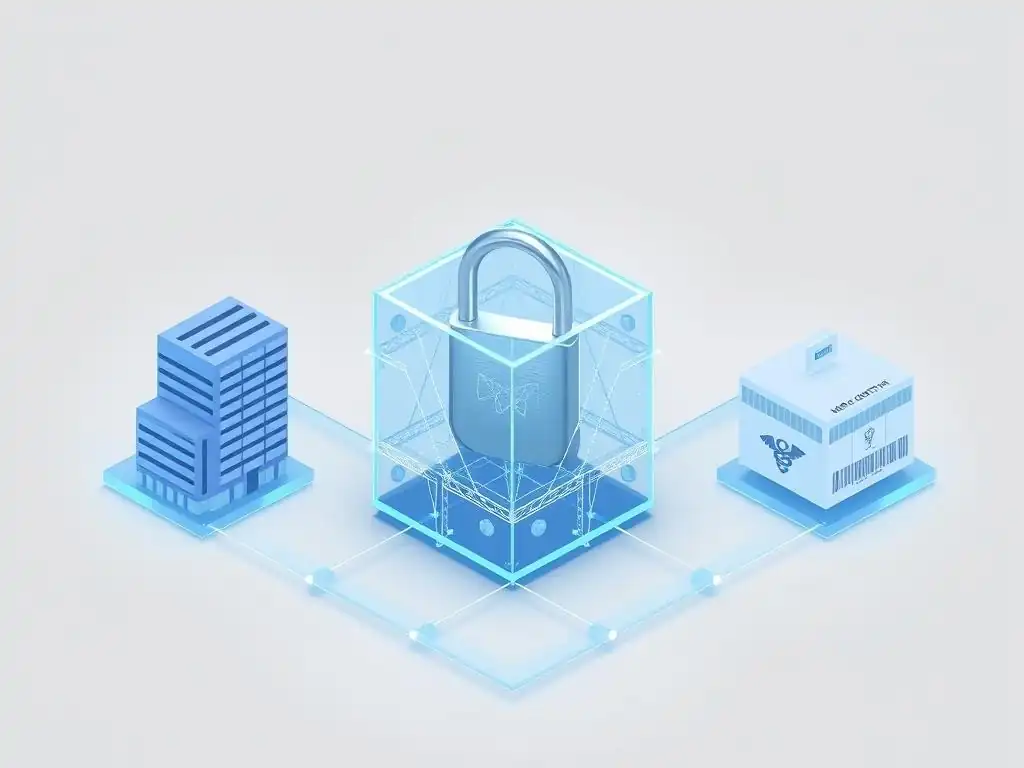
Supply Chain Management: Enhancing Traceability and Security
Blockchain technology offers transformative solutions for enhancing traceability and security in supply chain management. Traditional supply chains often suffer from opacity, inefficiencies, and vulnerabilities to fraud and counterfeiting. By implementing blockchain, businesses can create a transparent and immutable record of product journey, from origin to consumer. Each step in the supply chain, such as manufacturing, shipping, and delivery, can be recorded as a transaction on the blockchain, providing a verifiable and auditable history of the product. This enhanced traceability improves supply chain visibility and accountability, reducing the risk of counterfeit goods entering the market and ensuring product authenticity.
For example, consider the luxury goods industry, which is heavily impacted by counterfeiting. Companies like Arianee are using blockchain to issue digital passports for luxury items. These passports, stored on the blockchain, provide consumers with verifiable proof of authenticity and ownership, directly from the brand.
By scanning a unique identifier on the product, consumers can access the product's history, ensuring they are purchasing genuine goods. Furthermore, blockchain can improve supply chain security by providing real-time tracking of goods, reducing theft and loss, and enabling faster identification and resolution of supply chain disruptions. The enhanced traceability and security offered by blockchain are making supply chains more resilient, transparent, and efficient, strengthening blockchain security for businesses operating in global trade.
Healthcare: Secure Data Storage and Sharing
The healthcare industry handles vast amounts of sensitive patient data, making data security and privacy paramount. Blockchain technology offers a secure and efficient solution for storing and sharing healthcare data, addressing many of the challenges associated with traditional healthcare data management systems. Blockchain's decentralized and encrypted nature provides a robust framework for securing patient records, preventing unauthorized access and data breaches. Patient data can be stored on a blockchain in an encrypted format, with access granted only to authorized healthcare providers and patients themselves, ensuring patient privacy and complying with regulations like HIPAA.
For instance, Estonia has implemented blockchain technology in its healthcare system to secure patient records and enable seamless data sharing among healthcare providers. The Estonian e-Health system uses blockchain to maintain a secure and auditable log of patient data access and modifications, enhancing data integrity and transparency.
Blockchain can also facilitate secure and efficient data sharing for clinical trials and research, enabling researchers to access anonymized patient data securely and accelerate medical advancements. By leveraging blockchain for secure data storage and sharing, healthcare organizations can improve data security, enhance patient privacy, and streamline healthcare operations, significantly boosting blockchain security for businesses in the healthcare sector.
Financial Services: Reducing Fraud and Improving Efficiency
Financial services are particularly vulnerable to fraud and inefficiencies, making blockchain technology an attractive solution for enhancing security and streamlining operations. Blockchain's inherent security and transparency features can help reduce fraud in various financial transactions, from payments and remittances to securities trading and insurance claims. The immutable ledger of blockchain provides a verifiable record of all transactions, making it difficult to manipulate or falsify financial data. Smart contracts can automate and secure financial agreements, reducing the need for intermediaries and minimizing the risk of fraud and disputes.
For example, in cross-border payments, blockchain-based solutions can significantly reduce transaction costs and processing times compared to traditional banking systems. Companies like Ripple are using blockchain to facilitate faster and cheaper international payments, enhancing efficiency and transparency in the financial industry. In securities trading, blockchain can streamline settlement processes, reduce counterparty risk, and improve market transparency. Nasdaq Linq, for example, utilizes blockchain to manage pre-IPO shares, enhancing efficiency and security in private securities markets. By reducing fraud, improving efficiency, and enhancing transparency, blockchain technology is transforming financial services and strengthening blockchain security for businesses in this sector.
Addressing Common Concerns About Blockchain Security
Scalability Challenges and Solutions
Scalability is a significant challenge for some blockchain networks, particularly public blockchains like Bitcoin and Ethereum. Scalability refers to the ability of a blockchain network to handle a growing number of transactions without compromising speed or efficiency. Traditional blockchains, especially those using Proof-of-Work, can experience limitations in transaction throughput, leading to slower transaction times and higher fees during periods of high network activity. This scalability challenge can impact blockchain security for businesses, particularly those requiring high transaction volumes or real-time processing.
However, various scaling solutions are being developed and implemented to address these challenges. Layer-2 scaling solutions, such as Lightning Network for Bitcoin and rollups for Ethereum, are designed to process transactions off-chain, reducing the load on the main blockchain and significantly increasing transaction throughput. Sharding is another promising scaling technique that involves dividing a blockchain into smaller, manageable pieces, or shards, allowing for parallel transaction processing.
Furthermore, the development of more efficient consensus mechanisms, like Proof-of-Stake and its variants, also contributes to improved scalability. As these scaling solutions mature and are widely adopted, the scalability limitations of blockchain are being progressively overcome, making blockchain security for businesses even more robust and adaptable to high-demand applications.
The 51% Attack: Understanding Risks and Mitigation Strategies
The 51% attack is a theoretical vulnerability in Proof-of-Work based blockchains where a single entity or group gains control of more than 50% of the network's hashing power. If successful, attackers could potentially manipulate the blockchain by reversing transactions, preventing new transactions from being confirmed, or double-spending cryptocurrency. While theoretically possible, a successful 51% attack is extremely difficult and costly to execute on large, well-established blockchains like Bitcoin due to their massive network size and distributed nature. The computational resources and coordination required are immense, making it economically and practically prohibitive for most attackers.
Mitigation strategies against 51% attacks include increasing network decentralization, making it harder for any single entity to amass a majority of hashing power. Continuously monitoring network hash rate distribution and implementing rapid response mechanisms to detect and counter potential attacks are also crucial. Furthermore, the economic disincentives for launching a 51% attack are significant.
A successful attack could severely damage the reputation and value of the cryptocurrency, ultimately harming the attacker's own investment. While the 51% attack remains a theoretical risk, the practical barriers and mitigation measures in place make it a low-probability threat for major blockchains, and ongoing research and development continue to enhance blockchain security for businesses against such threats.
Quantum Computing and Blockchain Security: Future-Proofing Strategies
The emergence of quantum computing poses a potential future threat to the cryptographic security of blockchain. Quantum computers, with their vastly superior computational power compared to classical computers, could potentially break some of the cryptographic algorithms currently used to secure blockchains, such as those used in digital signatures and hashing. This is a long-term concern, as fully functional, large-scale quantum computers capable of breaking current cryptographic standards are still under development. However, it is crucial for the blockchain industry to proactively address this potential threat and implement future-proof strategies to maintain blockchain security for businesses in the quantum era.
One key strategy is the transition to quantum-resistant cryptography. Researchers are actively developing new cryptographic algorithms that are believed to be resistant to attacks from both classical and quantum computers. These algorithms, often referred to as post-quantum cryptography, are being considered for integration into blockchain protocols to replace or supplement existing cryptographic methods.
Furthermore, exploring alternative consensus mechanisms and blockchain architectures that are inherently more resistant to quantum attacks is also important. Proactive research, development, and adoption of quantum-resistant cryptography and blockchain designs are essential to ensure the long-term security and viability of blockchain technology in the face of advancing quantum computing capabilities, securing blockchain security for businesses for the future.
Implementing Blockchain Security for Businesses
Identifying Business Needs and Security Requirements
Implementing blockchain security for businesses begins with a thorough assessment of specific business needs and security requirements. Not all business processes are equally suited for blockchain integration, and understanding the specific challenges and opportunities is crucial for successful implementation. Businesses should identify areas where blockchain's security and transparency features can provide tangible benefits, such as supply chain traceability, secure data sharing, or fraud prevention. A clear understanding of the problems blockchain aims to solve and the desired outcomes is the first step.
Next, defining specific security requirements is essential. This includes determining the level of data confidentiality needed, the required degree of transparency, compliance obligations, and the acceptable level of risk. For instance, businesses handling sensitive customer data will have stringent security and privacy requirements, potentially favoring permissioned or private blockchain solutions.
Businesses in regulated industries, such as finance or healthcare, must ensure blockchain implementations comply with relevant regulations. A comprehensive security assessment should also consider potential threats and vulnerabilities specific to the business context. By clearly defining business needs and security requirements, businesses can make informed decisions about blockchain adoption and choose the most appropriate blockchain platform and implementation strategy to enhance blockchain security for businesses.
Choosing the Right Blockchain Platform
Selecting the right blockchain platform is a critical decision that significantly impacts the success of blockchain implementation and blockchain security for businesses. Various blockchain platforms are available, each with its own characteristics, strengths, and weaknesses. The choice of platform should align with the identified business needs and security requirements. Key factors to consider when choosing a platform include the type of blockchain (public, private, or permissioned), consensus mechanism, scalability, security features, development tools, community support, and cost.
Public blockchains, like Ethereum, offer high transparency and decentralization but may have scalability limitations and higher transaction fees. Private and permissioned blockchains, such as Hyperledger Fabric or Corda, provide greater control over data privacy and access, often offering better scalability and lower transaction costs, but with reduced transparency and decentralization. The consensus mechanism employed by the platform impacts its security, energy efficiency, and transaction speed.
Businesses should also evaluate the platform's security features, such as encryption protocols, smart contract security, and vulnerability to attacks. Ease of development, availability of developer tools, and the strength of the platform's community are also important factors for successful implementation and ongoing support. Carefully evaluating these factors and aligning them with business requirements is crucial for choosing the right blockchain platform and ensuring robust blockchain security for businesses.
Integrating Blockchain with Existing Systems
Integrating blockchain technology with existing business systems is often a complex but necessary step for realizing the full potential of blockchain security for businesses. Most businesses already have established IT infrastructure and workflows, and seamless integration of blockchain solutions is crucial for minimizing disruption and maximizing efficiency. Integration can involve connecting blockchain platforms with existing databases, enterprise resource planning (ERP) systems, customer relationship management (CRM) systems, and other applications. This integration requires careful planning and execution to ensure data compatibility, system interoperability, and security.
Challenges in integration can include data migration, system compatibility issues, and the need for custom development to bridge the gap between blockchain and legacy systems. Security considerations are paramount during integration. Ensuring secure data transfer between blockchain and existing systems, protecting APIs and integration points from vulnerabilities, and maintaining data integrity across systems are critical aspects of integration security.
A phased approach to integration, starting with pilot projects and gradually expanding blockchain adoption, can help mitigate risks and ensure a smooth transition. Proper planning, robust security measures, and a well-defined integration strategy are essential for successfully integrating blockchain with existing systems and realizing the benefits of blockchain security for businesses.
Future Trends in Blockchain Security and Transparency
Advancements in Cryptography and Consensus Algorithms
The field of cryptography is continuously evolving, and advancements in cryptographic techniques will play a crucial role in enhancing blockchain security and transparency in the future. Ongoing research and development are focused on creating more robust and efficient cryptographic algorithms that can withstand emerging threats, including quantum computing attacks. Post-quantum cryptography is a key area of focus, with efforts to standardize and implement quantum-resistant algorithms in blockchain protocols. Homomorphic encryption, which allows computations to be performed on encrypted data without decryption, is another promising cryptographic advancement that could enhance data privacy and security in blockchain applications.
Similarly, innovation in consensus algorithms is driving improvements in blockchain scalability, security, and energy efficiency. New consensus mechanisms, such as Delegated Proof-of-Stake (DPoS), Proof-of-Authority (PoA), and various hybrid approaches, are being developed and adopted to address the limitations of traditional PoW and PoS. These advancements aim to create consensus mechanisms that are faster, more scalable, and more energy-efficient while maintaining or even enhancing blockchain security. The continuous evolution of cryptography and consensus algorithms is essential for ensuring the long-term security, scalability, and adaptability of blockchain technology and further strengthening blockchain security for businesses.
Decentralized Identity (DID) and Data Ownership
Decentralized Identity (DID) is an emerging concept that promises to revolutionize digital identity management and enhance data ownership in the blockchain space. DIDs are self-sovereign identities that are controlled by the user, not by centralized authorities. They are based on blockchain technology and cryptographic techniques, allowing individuals and organizations to create and manage their digital identities securely and privately. DIDs empower users with greater control over their personal data and how it is shared, aligning with the growing demand for data privacy and user empowerment.
Blockchain-based DID solutions can enhance security and transparency in various applications, such as digital credentials, access management, and data sharing. For example, individuals can use DIDs to securely store and share verifiable credentials, such as diplomas or professional licenses, without relying on centralized credential issuers.
DIDs can also facilitate secure and privacy-preserving data sharing, allowing users to grant granular access to their data to authorized parties. The adoption of DID technology is expected to significantly enhance data ownership, privacy, and security in the digital realm, contributing to a more user-centric and secure internet and further enhancing blockchain security for businesses by enabling secure and user-controlled identity management.
Blockchain and Cybersecurity: A Synergistic Relationship
Blockchain technology is not only a technology to be secured but also a powerful tool for enhancing cybersecurity in general. Blockchain's inherent security features, such as immutability, cryptography, and decentralization, can be leveraged to improve cybersecurity defenses and address various cybersecurity challenges. For instance, blockchain can be used to create tamper-proof audit logs, enhance data integrity monitoring, and secure communication channels. Decentralized identity solutions based on blockchain can improve authentication and access management, reducing the risk of unauthorized access and identity theft.
Furthermore, blockchain can enhance the security of software supply chains by providing a transparent and auditable record of software components and updates, reducing the risk of supply chain attacks. Blockchain-based platforms can also facilitate secure data sharing and threat intelligence sharing among cybersecurity professionals, improving collective defense against cyber threats.
The synergistic relationship between blockchain and cybersecurity is becoming increasingly recognized, with blockchain being deployed in various cybersecurity applications to enhance security, resilience, and transparency. As blockchain technology matures and its applications expand, its role in enhancing cybersecurity and bolstering blockchain security for businesses is expected to become even more significant.
Conclusion: Embracing Blockchain's Potential for Secure and Transparent Business Operations
Blockchain technology offers a paradigm shift in how businesses can operate securely and transparently. Its core principles of decentralization, immutability, and transparency provide a robust foundation for enhancing security, building trust, and streamlining operations across various industries. From securing supply chains and healthcare data to reducing fraud in financial services, blockchain's use cases are diverse and impactful. While challenges like scalability and quantum computing threats exist, ongoing advancements in cryptography, consensus mechanisms, and scaling solutions are continuously strengthening blockchain security for businesses.
Embracing blockchain's potential requires a strategic approach, starting with identifying specific business needs and security requirements, choosing the right platform, and carefully planning integration with existing systems. As future trends like decentralized identity and the synergistic relationship between blockchain and cybersecurity unfold, the transformative power of blockchain to create more secure, transparent, and efficient business operations will only continue to grow. Businesses that proactively explore and implement blockchain solutions are poised to gain a competitive advantage in an increasingly digital and security-conscious world, leveraging blockchain security for businesses to build trust, enhance resilience, and drive innovation.
Frequently Asked Questions
How does blockchain technology enhance security for businesses?
Blockchain's decentralized nature makes it inherently more secure. Data is distributed across a network, making it significantly harder for a single point of failure to compromise the entire system. This enhances data integrity and prevents unauthorized alterations.
What are the main security benefits of using blockchain beyond cryptocurrencies?
Beyond cryptocurrencies, blockchain offers enhanced supply chain transparency, improved data management for sensitive information (like medical records), and secure voting systems. These applications leverage blockchain's immutability and auditability.
What are some common security vulnerabilities that businesses should be aware of when implementing blockchain solutions?
Despite its security advantages, blockchain is not immune to vulnerabilities. Businesses should be aware of smart contract vulnerabilities, 51% attacks (in certain consensus mechanisms), and potential weaknesses in their own implementation and key management.
How does blockchain's transparency contribute to increased security for businesses?
Blockchain's transparency, through its public ledger, allows for easy auditing and verification of transactions. This increased visibility makes it easier to detect fraudulent activities and ensures accountability within the network. However, businesses must also consider data privacy implications.
What role does regulation play in ensuring the security and integrity of blockchain applications for businesses?
Regulation can help establish industry standards for blockchain security, providing a framework for businesses to follow. Clear regulations can also address legal ambiguities and promote responsible innovation, fostering trust and adoption of secure blockchain solutions.
Final Reflection: Embracing Trust Through Decentralization
The exploration of blockchain technology, particularly its security and transparency, culminates in a crucial understanding: the future of business hinges on trust. In a world increasingly wary of centralized power and data breaches, blockchain offers a compelling alternative – a decentralized, immutable ledger that fosters confidence and accountability. This isn't just about technological advancement; it's about fundamentally reshaping how we interact and transact.
This technology's influence extends far beyond the realm of cryptocurrency. Its potential to revolutionize supply chains, healthcare records, and voting systems is undeniable, promising a more equitable and secure future for all. The shift towards transparency and verifiable data is not merely a trend, but a fundamental change in societal expectations. The blockchain is not only a technology but also a philosophy. It's about decentralization, transparency, and trust.
- William Mougayar
As we stand on the cusp of this technological revolution, consider the implications of blockchain for your own endeavors. What processes could benefit from increased security and transparency? How can you leverage this technology to build stronger relationships with your customers and partners? Embrace the potential of blockchain to create a more trustworthy and efficient future for your business and beyond.
Unlock Your Blockchain Potential: Start Exploring Now!
Thanks for exploring the world of blockchain with us! We hope you now have a clearer understanding of its security and transparency, and feel inspired to discover its possibilities. Are you ready to take the next step?
Here are a few actions you can take today:
- Build a simple blockchain prototype to deepen your understanding. Hands-on experience makes all the difference!
- Share this article with your network on social media to spark conversations and help others discover the power of blockchain.
- Explore various blockchain platforms and applications beyond popular cryptocurrencies, revealing the vast potential of this innovative technology.
What creative blockchain solution will you develop? Share your ideas in the comments below!
Leave a Reply