
Will Interoperability Lead to Blockchain Dominance or Coexistence?


Welcome to Blockchain Trends, your compass navigating the ever-evolving world of decentralized technology. Beyond the buzz of cryptocurrencies, discover the real-world impact of blockchain across industries, from DeFi to enterprise solutions, and delve into the crucial conversations shaping its regulatory landscape. Intrigued by the future of connected blockchains? Explore our latest article, "Will Interoperability Lead to Blockchain Interoperability future dominance or Coexistence? ", and unlock insights into the technologies that could redefine the digital landscape. Join us as we unravel the complexities and explore the boundless potential of blockchain!
Will Interoperability Lead to Blockchain Dominance or Coexistence?
- Introduction: The Blockchain Interoperability Future and its Implications
- Blockchain Interoperability: A Path to Dominance?
- Blockchain Coexistence: A Multi-Chain Future
- Challenges to Blockchain Interoperability and Future Dominance
- The Future of Blockchain: Dominance or Coexistence?
- Conclusion: Navigating the Blockchain Interoperability Future
-
Frequently Asked Questions
- What is blockchain interoperability and why is it important?
- How does blockchain interoperability extend beyond just cryptocurrencies?
- What are some potential benefits of increased blockchain interoperability for businesses?
- What are some of the main challenges hindering the widespread adoption of blockchain interoperability?
- What are the potential future scenarios for blockchain interoperability: dominance or coexistence?
- Final Reflection: Navigating the Interconnected Blockchain Future
- Fuel the Future: Explore Blockchain Interoperability Now!
Introduction: The Blockchain Interoperability Future and its Implications
Understanding the Current State of Isolated Blockchains
Currently, the blockchain landscape is characterized by a multitude of independent networks, each operating with its own protocols, consensus mechanisms, and native assets. Think of it like early national railway systems before standardized gauges – trains on one network couldn't easily travel on another. Major blockchains such as Bitcoin, Ethereum, Solana, and Cardano exist largely in silos.
While they process transactions and support applications within their own ecosystems, moving assets or data between them is complex, often requiring centralized exchanges or cumbersome manual processes. This isolation hinders the seamless flow of value and information, limiting the overall potential and reach of decentralized applications (dApps).
This fragmentation creates significant friction for users and developers alike. A user holding assets on one chain might want to participate in a decentralized finance (DeFi) protocol on another, but transferring those assets is often costly, slow, and requires navigating multiple steps. Developers building dApps face the challenge of choosing a single chain, potentially alienating users on other networks or requiring them to build separate versions for each blockchain.
This lack of native cross-chain functionality is a major hurdle for the mainstream adoption of blockchain technology, preventing the emergence of a truly unified decentralized web. The blockchain interoperability future hinges on overcoming these barriers.
The Growing Need for Cross-Chain Communication
The demand for cross-chain communication is rapidly accelerating as the blockchain ecosystem matures. Users want to access the best yield farming opportunities regardless of where their funds reside, trade assets across different networks efficiently, and participate in diverse applications without being locked into a single chain. This need is particularly acute in the DeFi space, where liquidity is fragmented across numerous protocols on different blockchains. Enabling seamless asset transfer and communication between these liquidity pools could unlock immense value and efficiency.
Beyond DeFi, the need for blockchain interoperability extends to various enterprise and consumer use cases. Supply chain solutions built on one blockchain might need to interact with payment systems on another. Non-fungible tokens (NFTs) minted on one platform might need to be traded on a marketplace on a different chain.
The vision of a decentralized internet requires data and value to flow freely, regardless of the underlying network. Achieving true blockchain interoperability is seen as a critical step towards realizing this vision, paving the way for a more connected, efficient, and user-friendly decentralized future, potentially determining the blockchain interoperability future dominance of certain networks or models.
Blockchain Interoperability: A Path to Dominance?
The Argument for a Single, Interoperable Dominant Blockchain
Some argue that the natural evolution of technology markets favors convergence towards a dominant platform, and blockchain might follow a similar trajectory. In this scenario, one highly interoperable blockchain could emerge as the primary network, connecting to and potentially absorbing activity from others. This dominant chain would act as a central hub, facilitating communication and value transfer across the entire ecosystem. The argument is that the network effects of a single, widely adopted, and highly interoperable chain would become so powerful that other chains would primarily function as specialized layers or simply become less relevant over time.
The potential benefits of such a dominant, interoperable blockchain are significant. It could simplify the user experience dramatically, removing the complexity of managing assets across multiple networks. Developers could focus on building applications for this one dominant platform, knowing they have access to users and liquidity from across the interconnected ecosystem.
This could lead to faster innovation and a more robust dApp landscape. However, this scenario raises concerns about centralization of power and potential single points of failure, which run counter to the core principles of decentralization that underpin blockchain technology. The path to blockchain interoperability future dominance for a single chain is fraught with technical and philosophical challenges.
Enhanced Network Effects Through Interoperability
A key driver behind the potential for a single dominant, interoperable blockchain is the amplification of network effects. Network effects occur when the value of a network increases proportionally with the number of its users and participants. In the current fragmented blockchain landscape, network effects are largely confined within individual chains. Ethereum, for instance, benefits from a massive network effect due to its large developer community, extensive dApp ecosystem, and significant total value locked (TVL), estimated in the tens of billions of dollars. However, this effect is somewhat limited by its isolation from other chains.
If a blockchain could achieve true, seamless interoperability with all other significant networks, its network effects would explode. Users and assets from every connected chain would theoretically become accessible, drastically increasing the potential user base, liquidity, and development opportunities on the dominant network. This would create a powerful positive feedback loop: more interoperability attracts more users and developers, which further enhances the network's value, attracting even more participants. This snowball effect could theoretically lead to one chain becoming the de facto standard, solidifying its blockchain interoperability future dominance.
Increased Efficiency and Reduced Fragmentation
Beyond network effects, a dominant, interoperable blockchain could dramatically increase overall ecosystem efficiency and reduce the fragmentation that plagues the current landscape. Imagine a world where transferring value between any two applications, regardless of the chain they were originally built on, is as simple and cheap as an internal transaction on a single chain today. This would unlock trapped liquidity, reduce arbitrage opportunities caused by price discrepancies across markets on different chains, and lower the costs associated with cross-chain operations.
This reduction in fragmentation would benefit both users and developers. Users would no longer need to navigate multiple wallets, bridges, or exchanges to interact with different parts of the decentralized web. Developers could build applications that leverage assets and functionalities from across the entire blockchain ecosystem, fostering innovation and creating more complex and powerful dApps.
For example, a lending protocol on one chain could seamlessly accept collateral from assets native to another. This unified environment, facilitated by deep blockchain interoperability, could lead to an order of magnitude improvement in the efficiency and usability of decentralized systems, potentially paving the way for blockchain interoperability future dominance by a single platform or standard.
Technologies Enabling Blockchain Interoperability for Dominance
Several technological approaches are being developed to enable blockchain interoperability, each with different implications for the potential for dominance. These technologies aim to facilitate the transfer of assets, data, and even logic between disparate blockchain networks. Their success and widespread adoption are critical factors in determining whether the future trends towards a single dominant chain or a multi-chain ecosystem. Understanding these technologies is key to evaluating the possibilities for blockchain interoperability future dominance.
The primary methods include cross-chain bridges, atomic swaps, and more complex interoperability protocols. While some technologies focus on simple asset transfers, others aim for deeper levels of communication, allowing smart contracts on one chain to interact with smart contracts or data on another. The security, efficiency, and decentralization of these solutions are paramount, as vulnerabilities can have catastrophic consequences, potentially undermining trust in the very concept of interoperability and impacting the trajectory towards blockchain interoperability future dominance.
Cross-Chain Bridges and Their Limitations
Cross-chain bridges are one of the most common methods currently used to facilitate interoperability, primarily for transferring assets between different blockchains. They typically work by locking assets on the source chain and minting equivalent wrapped assets on the destination chain, or vice versa. Examples include bridges connecting Ethereum to sidechains or other Layer 1 networks. These bridges often involve a set of validators or guardians who monitor activity on both chains to ensure the integrity of the process.
While bridges have enabled significant cross-chain activity, they have also proven to be major security vulnerabilities. Centralized or multi-signature bridge architectures can become honeypots for attackers, as demonstrated by major exploits like the Ronin Network hack in March 2022, which resulted in the loss of approximately $625 million, and the Wormhole bridge exploit in February 2022, resulting in a loss of over $320 million.
These incidents highlight the significant risks associated with current bridging technology and represent a major hurdle for achieving secure and reliable blockchain interoperability, potentially delaying any single chain's path to blockchain interoperability future dominance. Their reliance on trust in the bridge operators or validators also raises concerns about centralization.
Atomic Swaps and Decentralized Exchanges (DEXs)
Atomic swaps offer a more decentralized method for exchanging cryptocurrencies directly between different blockchains without needing a trusted third party or exchange. Using technologies like Hash Time-Locked Contracts (HTLCs), participants can agree to an exchange that either completes successfully for both parties or doesn't happen at all, ensuring neither party can cheat the other. This technology has been explored for direct peer-to-peer swaps between chains like Bitcoin and Litecoin.
Decentralized Exchanges (DEXs) also play a role in facilitating cross-chain swaps, although many current DEXs operate within a single ecosystem (e.g., Uniswap on Ethereum). However, some DEXs are evolving to incorporate cross-chain capabilities, often leveraging atomic swaps or integrating with bridging solutions.
While atomic swaps are more secure and decentralized than many bridge implementations, they are typically limited to simple asset exchanges and can be complex for users to execute directly. Their application is often point-to-point between specific pairs of chains, which limits their potential to create the kind of broad, ecosystem-wide connectivity required for a single chain to achieve blockchain interoperability future dominance.
Interoperability Protocols: Polkadot and Cosmos
More ambitious approaches to blockchain interoperability are being developed by projects specifically designed with cross-chain communication as a core feature. Polkadot and Cosmos are prominent examples of such "internet of blockchains" projects. Polkadot uses a relay chain to connect various parachains (application-specific blockchains), allowing them to communicate and share security. Cosmos utilizes the Inter-Blockchain Communication (IBC) protocol, which enables independent blockchains (zones) to exchange data and assets in a trust-minimized way.
These protocols aim to create ecosystems where multiple chains can coexist and interact seamlessly. They represent a different paradigm compared to trying to make existing monolithic chains interoperable. While neither Polkadot's relay chain nor the Cosmos Hub necessarily aims for dominance in the sense of absorbing all activity, they aim to be central facilitators of interoperability within their respective networks of chains.
Their success could lead to a future where value and data flow freely between dozens or hundreds of specialized blockchains, a scenario that strongly influences the possibilities for blockchain interoperability future dominance. These protocols offer a vision of interoperability as a feature of the ecosystem, rather than a characteristic of a single chain.
Blockchain Coexistence: A Multi-Chain Future
The Case for Specialized Blockchains
An alternative perspective on the blockchain interoperability future dominance question is that the ecosystem will evolve towards a state of coexistence, where multiple blockchains thrive by specializing in different functions or optimizing for specific performance characteristics. Just as the internet uses different protocols for different tasks (HTTP for web pages, SMTP for email), the decentralized web might benefit from having diverse blockchain architectures tailored for specific use cases. This specialization could lead to greater overall efficiency and innovation than a one-size-fits-all approach.
This multi-chain future is already partly visible today. Ethereum remains dominant for complex DeFi and NFT ecosystems due to its robust smart contract capabilities and established network effects, despite high transaction fees and congestion. Solana offers high transaction throughput and low costs, making it attractive for certain applications like high-frequency trading or gaming. Specialized chains are emerging for specific purposes, such as supply chain management (e.g., VeChain) or privacy-preserving transactions. This suggests that different technical architectures and design choices are better suited for different tasks, arguing against the necessity or even desirability of a single dominant chain.
Different Blockchains for Different Use Cases (DeFi, Supply Chain, NFTs)
The diverse requirements of various decentralized applications strongly support the argument for specialized blockchains and a future of coexistence. DeFi applications, for instance, often prioritize security, smart contract flexibility, and access to a large, liquid user base. Ethereum's battle-tested network and extensive developer tooling have made it the primary hub for DeFi, hosting billions in TVL across protocols like MakerDAO, Aave, and Uniswap. While scalability has been an issue, its established ecosystem provides a strong foundation.
In contrast, supply chain tracking requires high transaction volume capacity, low costs, and sometimes privacy features. Blockchains like VeChain or Hyperledger Fabric are designed with features specifically catering to enterprise needs, such as identity management and data immutability for tracking goods.
Similarly, while NFTs gained prominence on Ethereum, high minting and trading fees led to the rise of platforms on chains like Flow (designed for collectibles) or Solana, which offer faster, cheaper transactions better suited for high-volume digital art and gaming assets. This natural fragmentation based on use case requirements suggests that a single chain may struggle to optimally serve all potential applications simultaneously, favoring a multi-chain environment where blockchain interoperability facilitates interaction between these specialized networks.
Optimizing for Specific Performance Requirements
Different blockchain designs make inherent trade-offs between security, decentralization, and scalability (the "blockchain trilemma"). A chain optimized for maximum decentralization might sacrifice some speed or throughput. A chain designed for extremely high transaction volume might compromise on decentralization or security. These trade-offs mean that no single blockchain architecture is likely to be optimal for every single use case. A high-frequency trading application needs low latency and high throughput, while a system managing critical land registry records might prioritize immutability and long-term security above all else.
Specialized blockchains can optimize their consensus mechanisms, data structures, and governance models for specific performance requirements. This allows them to excel in their niche. For example, a blockchain designed for Internet of Things (IoT) data might prioritize handling millions of small transactions efficiently, while a chain for institutional finance might focus on privacy and regulatory compliance features.
In a multi-chain world, blockchain interoperability becomes crucial not for one chain to dominate, but for these specialized chains to communicate and collaborate, allowing users and applications to benefit from the strengths of each network without being locked into a single ecosystem's limitations. This collaborative model challenges the notion of blockchain interoperability future dominance by a single entity.
The Role of Interoperability in Facilitating Coexistence
In a multi-chain future, blockchain interoperability is not about enabling one chain to dominate, but about allowing diverse chains to interact seamlessly. Interoperability becomes the connective tissue that links specialized networks, enabling the flow of value, data, and functionality across the entire ecosystem. This model envisions a decentralized web where users and dApps can leverage the unique strengths of different blockchains without friction. It's about collaboration and interconnectedness rather than competition for sole dominance.
The success of this multi-chain future heavily relies on robust, secure, and standardized interoperability solutions. If different chains can communicate effectively, users can hold assets on their preferred network while accessing services on others. Developers can build applications that are chain-agnostic or leverage capabilities from multiple chains simultaneously. This paradigm shift positions interoperability as an enabler of a richer, more resilient, and more decentralized ecosystem, making the question less about blockchain interoperability future dominance and more about the future of interconnected blockchain networks.
Connecting Diverse Blockchains Through Standardized Protocols
For a multi-chain ecosystem to function effectively, there needs to be a common language or set of protocols that different blockchains can use to communicate. Just as TCP/IP provides the foundation for the internet, standardized blockchain interoperability protocols are essential for enabling seamless interaction between heterogeneous networks. Projects like Cosmos's IBC and Polkadot's cross-chain message passing (XCMP) are examples of efforts to create such standards within their respective frameworks.
The adoption of widely accepted interoperability standards would lower the barrier for new blockchains to join the ecosystem and for existing chains to connect. It would move away from bespoke, often insecure, point-to-point solutions like many early bridges.
Standardized protocols would facilitate trust-minimized communication, ensuring that data and value transfers are secure and reliable, even when connecting chains with different consensus rules or security models. This standardization is crucial for building a truly interconnected decentralized web where the focus is on the applications and user experience, not the underlying chain, thus supporting a future of coexistence rather than blockchain interoperability future dominance by a single entity.
Enabling Data and Value Transfer Across Chains
The core function of interoperability in a multi-chain world is the seamless transfer of both value and data. Users need to be able to move assets like tokens and NFTs between chains easily and securely to access different services or markets. This requires robust cross-chain bridging or swapping mechanisms that minimize risk and complexity. Beyond simple asset transfers, true interoperability involves the ability for smart contracts on one chain to call functions or access data on another chain.
Imagine a dApp on Ethereum that needs to verify proof-of-work computations performed on Bitcoin, or a supply chain application on a private enterprise chain that needs to trigger a payment on a public DeFi protocol. Enabling this level of data and logic transfer requires sophisticated interoperability solutions that can handle diverse data formats and execution environments. The development of secure and efficient methods for cross-chain data and value transfer is paramount for the success of a multi-chain future, where interoperability facilitates collaboration and specialization rather than driving towards blockchain interoperability future dominance.
Challenges to Blockchain Interoperability and Future Dominance
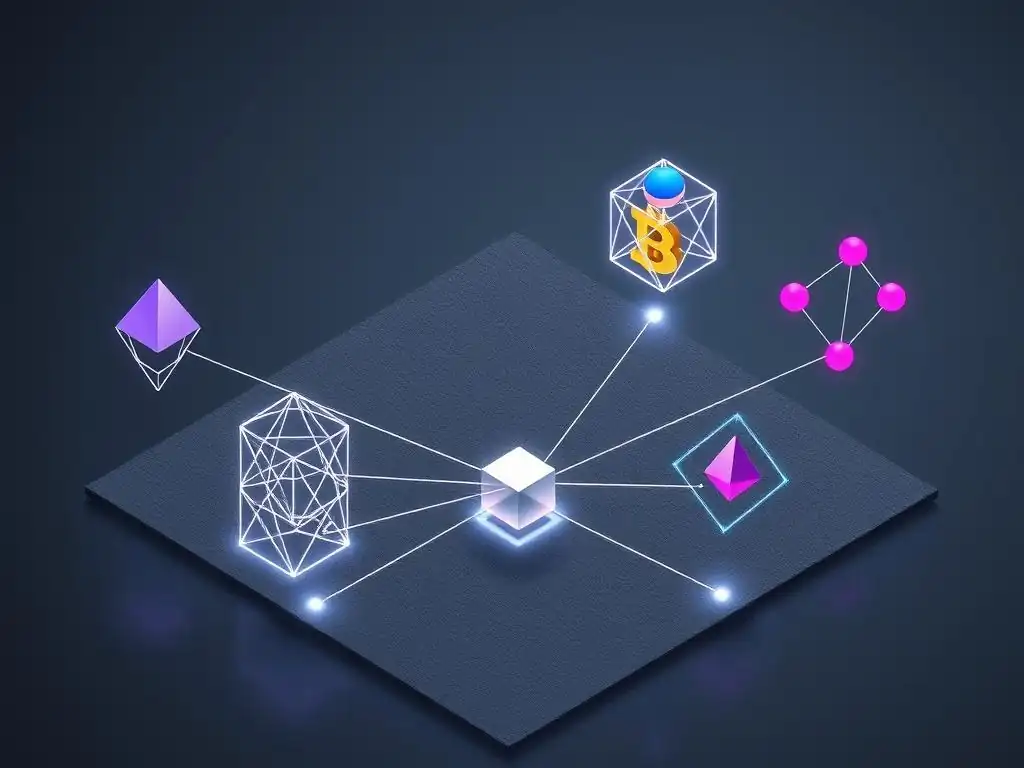
Achieving robust and secure blockchain interoperability is a complex technical and economic challenge. While the potential benefits are immense, significant hurdles must be overcome regardless of whether the future tends towards dominance or coexistence. These challenges include fundamental security risks, scalability limitations, and the complexities of navigating diverse regulatory environments. Addressing these issues is critical for the successful evolution of the blockchain ecosystem and will heavily influence the outcome regarding blockchain interoperability future dominance.
The history of attempts at interoperability is already marked by setbacks, particularly concerning security. The decentralized nature of blockchain makes building trust-minimized bridges and communication protocols inherently difficult. Furthermore, ensuring that interconnected networks can scale together without creating bottlenecks is a non-trivial engineering problem. Finally, the evolving and often fragmented global regulatory landscape presents significant compliance challenges for cross-chain applications and infrastructure.
Security Risks and Vulnerabilities in Interoperability Solutions
Security is arguably the most critical challenge facing blockchain interoperability. Connecting disparate blockchain networks expands the attack surface significantly. An exploit in an interoperability protocol or bridge can potentially put assets and data on multiple chains at risk. Unlike a vulnerability in a single dApp on one chain, a compromise of a core interoperability layer can have cascading effects across the entire interconnected ecosystem. This makes building secure interoperability solutions paramount.
The complexity of cross-chain interactions increases the potential for subtle bugs or design flaws that attackers can exploit. Verifying the state of one chain on another, ensuring the integrity of data being transferred, and managing cryptographic keys across different environments all introduce potential vulnerabilities. The substantial financial losses incurred from past bridge hacks underscore the severity of these risks and highlight that security, not just functionality, is the primary determinant of whether blockchain interoperability can safely enable either future dominance or widespread coexistence.
Bridge Exploits and Their Impact
As previously mentioned, cross-chain bridges have been particularly vulnerable targets for attackers. The centralized or semi-decentralized nature of many bridge designs means that compromising a relatively small number of validator keys or exploiting a smart contract vulnerability on the bridge itself can lead to the theft of significant amounts of locked assets. The ~$625 million Ronin Network hack and the ~$320 million Wormhole exploit are stark reminders of the financial impact of these vulnerabilities. These attacks not only result in massive financial losses but also erode user confidence in interoperability solutions.
The impact of bridge exploits extends beyond financial loss. They can disrupt the flow of assets between chains, halt activity on dApps that rely on cross-chain liquidity, and damage the reputation of the projects involved and the broader blockchain ecosystem. These security failures represent a major impediment to the widespread adoption of interoperability and pose a significant challenge to any vision of blockchain interoperability future dominance built upon current bridging technology. Developing more secure, trust-minimized bridging mechanisms or alternative interoperability solutions is essential.
Maintaining Consensus Across Multiple Chains
A more fundamental security challenge in some interoperability models involves maintaining consensus or verifying state across different chains with potentially different consensus mechanisms (e.g., Proof-of-Work vs. Proof-of-Stake). For one chain to reliably react to an event on another, it needs a way to verify that the event actually occurred and was finalized according to the source chain's rules. This verification process must be trust-minimized to align with blockchain principles.
Solutions involve various forms of light clients, zero-knowledge proofs, or intermediary relay networks that attest to the state of connected chains. However, implementing these securely and efficiently is complex. An attacker who could trick one chain into believing a false state on another could potentially double-spend assets or manipulate cross-chain dApps. Ensuring robust, cryptographically verifiable consensus and state proofs across heterogeneous networks is a deep technical challenge that must be solved for blockchain interoperability to reach its full potential, regardless of whether it leads to future dominance or coexistence.
Scalability Issues with Interoperable Networks
While interoperability aims to connect networks, the process of transferring data and value between chains can introduce its own scalability bottlenecks. If a dominant chain or a central interoperability hub becomes the conduit for a massive volume of cross-chain transactions, it could become congested, leading to high fees and slow transaction times, similar to the challenges faced by Ethereum before its Layer 2 scaling solutions gained traction. The overhead of verifying cross-chain messages and executing cross-chain logic adds complexity and computational cost.
Furthermore, the scalability of the entire interconnected ecosystem is limited by the scalability of its least efficient components. If connecting a fast chain to a slower one requires the faster chain to wait for confirmation on the slower chain, the overall system's performance is degraded. Designing interoperability solutions that allow networks to maintain their individual performance characteristics while interacting seamlessly is a significant engineering challenge. True blockchain interoperability future dominance or widespread coexistence requires solutions that scale collectively.
Regulatory Hurdles and Compliance Challenges
The regulatory landscape for cryptocurrencies and blockchain technology is still developing and varies significantly across jurisdictions. This fragmented and often uncertain environment poses substantial challenges for blockchain interoperability. Cross-chain transactions can involve multiple assets and protocols operating under different legal frameworks, making compliance complex. For instance, transferring a regulated security token from one chain to another might require adherence to specific KYC/AML procedures that are difficult to implement in a decentralized, cross-chain manner.
Interoperability solutions themselves might be subject to regulatory scrutiny. Bridges, in particular, could be viewed as money transmitters or financial intermediaries, potentially requiring licenses and compliance with regulations designed for traditional financial institutions. The decentralized nature of some interoperability protocols might make it difficult to identify responsible parties for compliance. Navigating this complex legal environment and building interoperability solutions that can function within existing and future regulatory frameworks is a major non-technical challenge that will impact the pace and nature of blockchain interoperability future dominance or coexistence.
The Future of Blockchain: Dominance or Coexistence?
The trajectory of the blockchain ecosystem remains uncertain, poised between two potential outcomes: the emergence of a single, dominant, highly interoperable blockchain or the flourishing of a diverse ecosystem of interconnected, specialized chains. Blockchain interoperability is the critical factor that will determine which of these scenarios, or perhaps a hybrid, ultimately prevails. The technical capabilities of interoperability solutions, the evolution of user needs, regulatory developments, and ongoing innovation will all play a role in shaping the blockchain interoperability future dominance narrative.
Understanding these potential futures is crucial for developers, investors, and users alike. Each scenario presents unique opportunities and challenges. While a dominant chain might offer simplicity and powerful network effects, a multi-chain world could foster greater innovation, resilience, and specialization. The path taken will significantly impact the structure and accessibility of the decentralized web for years to come.
Scenario 1: A Single Dominant Interoperable Blockchain
In this scenario, one blockchain network successfully integrates robust, secure, and efficient interoperability capabilities that allow it to serve as the primary hub for the entire ecosystem. This chain becomes the default layer for most user activity and dApp deployment, with other chains potentially becoming specialized "Layer 2" solutions or fading in relevance. This dominance would likely be achieved through a combination of superior technology, strong network effects, and successful standardization efforts.
The dominant chain wouldn't necessarily replace all other chains entirely, but it would become the central point of liquidity and interaction. For example, assets from other chains might be wrapped or represented on the dominant chain, and dApps would primarily reside there, interacting with functionalities or data on other chains through the dominant chain's interoperability layers.
This model offers potential benefits in terms of user experience and network efficiency but also raises concerns about centralization and potential single points of failure, challenging the core ethos of decentralization. The likelihood of this scenario hinges on one chain successfully overcoming the immense technical and network effect challenges to achieve blockchain interoperability future dominance.
Potential Benefits and Drawbacks
The benefits of a single dominant, interoperable blockchain could include a dramatically simplified user experience, as users would only need to interact with one primary network interface. Developers would benefit from a unified platform with access to the entire ecosystem's liquidity and user base, potentially accelerating innovation. Network effects would be maximized, leading to greater security (through pooled economic security) and potentially lower overall transaction costs due to scale. Inter-chain arbitrage and fragmentation issues could be significantly reduced.
However, the drawbacks are substantial. A single dominant chain could become a single point of failure, making the entire ecosystem vulnerable to attacks or outages. It could also lead to increased centralization of power, potentially controlled by the validators, developers, or governance participants of that single chain.
This concentration of power runs counter to the decentralized ideals of blockchain. Furthermore, a one-size-fits-all approach might stifle innovation in specialized blockchain designs and could struggle to meet the diverse performance requirements of all potential use cases. The pursuit of blockchain interoperability future dominance by a single entity presents a trade-off between efficiency and decentralization.
Scenario 2: A Thriving Ecosystem of Interconnected Blockchains
This scenario envisions a future where multiple specialized blockchains coexist and interact seamlessly through robust, standardized interoperability protocols. No single chain dominates; instead, value and data flow freely between networks optimized for different purposes – a high-throughput chain for gaming, a privacy chain for sensitive data, a secure chain for financial assets, etc. Interoperability is the key technology that makes this diverse ecosystem function as a cohesive whole.
In this multi-chain world, users would interact with applications that might leverage resources from multiple chains simultaneously, often without even knowing which chain the underlying transaction is occurring on. Developers would build dApps that are chain-agnostic or multichain by design, selecting the best chain or combination of chains for specific tasks. This model emphasizes resilience through decentralization across multiple networks and fosters innovation through specialization. It represents a future where blockchain interoperability facilitates collaboration rather than competition for future dominance.
The Importance of Standardization and Governance
For a multi-chain ecosystem to thrive, the importance of standardization and effective governance cannot be overstated. Just as the internet relies on open, non-proprietary standards (like TCP/IP, HTTP, SMTP), the interconnected blockchain world needs widely adopted, trust-minimized interoperability protocols. These standards must be open, secure, and flexible enough to accommodate a wide variety of blockchain architectures. Without robust standards, interoperability solutions risk becoming fragmented and insecure, recreating the very silos they aim to break down.
Furthermore, the governance of these interoperability protocols and the interactions between different chains is crucial. How are disputes resolved? How are upgrades coordinated? How are security vulnerabilities addressed across multiple independent networks? Establishing clear, decentralized governance frameworks for the interoperability layer is essential to ensure the long-term stability, security, and evolution of the multi-chain ecosystem. Successful standardization and governance are key enablers for a future of coexistence, providing a strong counterpoint to the possibility of blockchain interoperability future dominance by a single chain.
The Impact of Interoperability on Decentralized Finance (DeFi)
Decentralized Finance (DeFi) is one of the sectors most profoundly impacted by the development of blockchain interoperability. DeFi protocols currently exist in isolated pools on different chains, limiting liquidity and creating inefficiencies. Interoperability has the potential to unify these fragmented markets, unlocking significant value and enabling new types of financial applications. Whether the future involves a dominant chain or a multi-chain ecosystem, interoperability will be a game-changer for DeFi, influencing everything from lending platforms to decentralized exchanges.
The ability to seamlessly move assets and call smart contracts across chains can lead to more efficient capital allocation, reduced slippage in trading, and access to a wider range of financial products for users. This transformation of DeFi is a key driver behind the push for interoperability and provides a tangible example of its real-world impact, regardless of the outcome regarding blockchain interoperability future dominance.
Interoperability and the Future of Lending Platforms
Current decentralized lending platforms, like Aave or Compound primarily on Ethereum, operate within the confines of a single chain (or a few connected Layer 2s). This means users can only deposit collateral and borrow assets available on that specific network. Interoperability enables a future where users could deposit collateral on one chain (e.g., a high-value asset on Bitcoin via wrapping) and borrow assets on another chain (e.g., stablecoins on a high-throughput DeFi chain).
Cross-chain lending protocols are being developed that leverage interoperability solutions to allow users to interact with liquidity pools across multiple networks. This increases the overall liquidity available for borrowing and lending, potentially leading to better interest rates and a wider variety of supported assets. A more interconnected lending market, facilitated by robust blockchain interoperability, would be significantly more efficient and resilient, distributing risk and liquidity across the ecosystem, a development that supports either future dominance or coexistence depending on the architecture.
Interoperability and the Growth of Cross-Chain DEXs
Decentralized Exchanges (DEXs) are another area where interoperability is set to cause significant disruption. Currently, trading pairs are typically limited to assets available on a single chain or bridged assets which carry risks. Interoperability can enable true cross-chain trading, allowing users to swap assets native to different blockchains directly or via highly efficient cross-chain liquidity pools.
Projects are working on cross-chain DEX architectures that leverage atomic swaps, interoperability protocols, or specialized liquidity networks to facilitate swaps between assets on disparate chains. This would eliminate the need for centralized exchanges for many cross-chain trades, reducing counterparty risk and offering users more control over their assets. The growth of efficient, secure cross-chain DEXs is a strong indicator of the increasing importance of blockchain interoperability, regardless of the ultimate outcome regarding blockchain interoperability future dominance. It enables a more unified and liquid global market for decentralized assets.
The journey towards a truly interconnected blockchain ecosystem is fraught with challenges and possibilities. Blockchain interoperability is not merely a technical feature; it is a fundamental requirement for the widespread adoption and maturation of decentralized technologies. Whether this interoperability leads to the emergence of a single, dominant network or facilitates a thriving ecosystem of specialized, interconnected blockchains remains an open question, heavily influenced by ongoing technological development, security advancements, and regulatory clarity.
Navigating this blockchain interoperability future requires careful consideration of the trade-offs between efficiency, security, and decentralization. While a dominant chain might offer simplicity and amplified network effects, a multi-chain future enabled by robust interoperability could provide greater resilience, innovation, and specialization tailored to diverse needs.
Ultimately, the most likely outcome may be a hybrid model, where a few major, highly interoperable networks coexist alongside numerous specialized chains, all connected by secure and standardized protocols. The success of the decentralized web hinges on building these bridges effectively and securely, ensuring that value and data can flow freely across the entire ecosystem, regardless of the underlying network architecture.
Frequently Asked Questions
What is blockchain interoperability and why is it important?
Blockchain interoperability refers to the ability of different blockchains to communicate and share data with each other. It's crucial because it avoids data silos and allows for a more connected and efficient blockchain ecosystem.
How does blockchain interoperability extend beyond just cryptocurrencies?
While often discussed in the context of transferring crypto assets, interoperability also enables the seamless exchange of data and functionality between blockchains, benefiting DeFi, supply chain management, and other enterprise applications. It is not limited to finances.
What are some potential benefits of increased blockchain interoperability for businesses?
Increased interoperability can lead to improved efficiency, reduced costs, and the creation of new business models. It allows companies to leverage the strengths of different blockchains for specific tasks, creating a more flexible and adaptable infrastructure.
What are some of the main challenges hindering the widespread adoption of blockchain interoperability?
Challenges include technical complexities in building secure and reliable bridges between blockchains, the lack of standardized protocols, and concerns about regulatory compliance across different jurisdictions.
What are the potential future scenarios for blockchain interoperability: dominance or coexistence?
The future could see either one blockchain dominating through superior interoperability features, or a scenario where multiple blockchains coexist and specialize, relying on interoperability to connect their unique functionalities. The final outcome is uncertain.
The exploration of blockchain interoperability reveals a crucial juncture in the technology's evolution. The question of whether interoperability will lead to a single dominant blockchain or a thriving ecosystem of coexisting chains is not merely academic; it's a question that will shape the future of finance, data management, and countless other industries. The choices we make today regarding standardization, collaboration, and open-source development will determine the trajectory of this transformative technology.
The promise of seamless interaction between blockchains has profoundly influenced the cultural and social landscape, fostering a sense of possibility and democratized access to innovation. This potential for a more connected and collaborative digital world is deeply inspiring, and it underscores the importance of prioritizing interoperability in blockchain development. The future of blockchain isn't about one chain to rule them all, but about a network of interconnected chains, each serving a unique purpose and contributing to a larger, more resilient ecosystem.
This vision highlights the collaborative spirit needed to unlock the full potential of blockchain technology.
As we stand on the cusp of this interconnected blockchain future, I invite you to consider your role in shaping its development. How can you contribute to fostering collaboration, promoting open standards, and ensuring that the benefits of blockchain technology are accessible to all? The future of blockchain interoperability is not predetermined; it is being written now, by each of us. Let us strive to create a future where innovation thrives, and the power of blockchain is harnessed for the betterment of society.
Fuel the Future: Explore Blockchain Interoperability Now!
Thank you for exploring the world of blockchain interoperability! You now have a clear understanding of the different paths—whether dominance or coexistence—that could shape the future of this technology. If you're eager to get involved, here are some ways to take action:
- Learn More: Study specific interoperability projects such as Polkadot, Cosmos, or LayerZero to understand their unique approaches and contributions to the blockchain ecosystem. Gaining firsthand knowledge is essential!
- Share Your Perspective: Leave a comment below and tell us—do you believe interoperability will result in one dominant blockchain, or will a diverse, interconnected network of blockchains thrive? Your opinion is valuable!
- Reach out to a project mentioned in this article. Connecting with them could open opportunities to contribute and get involved.
Which interoperability initiative interests you the most, and what challenge do you think it will address first? Share your thoughts below!
Leave a Reply