
Funding the Future: Innovative Financial Models Powering Social Impact DAOs

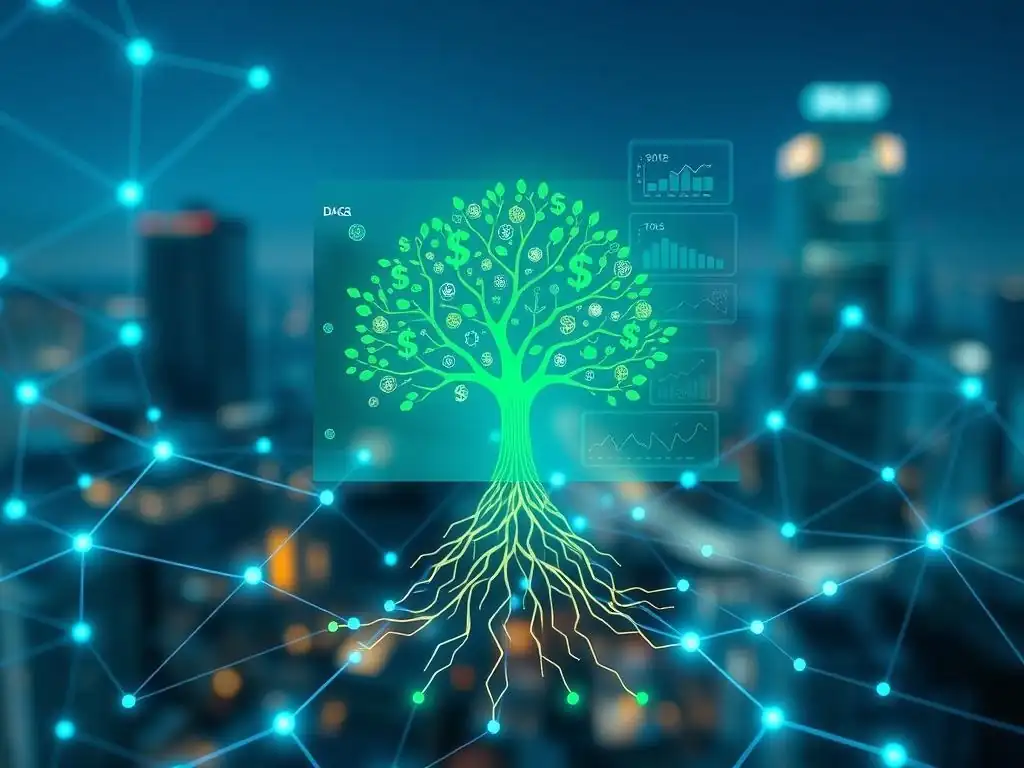
Welcome to Blockchain Trends, your source for understanding the real-world impact of this groundbreaking technology.
Are you ready to witness how blockchain is moving beyond digital currencies and revolutionizing social change? Dive in to discover how innovative financial models, specifically Blockchain Social Impact DAOs, are empowering communities and driving transformative initiatives. Explore how these decentralized autonomous organizations are funding a brighter future, sparking a new era of collaborative problem-solving. Read on and unlock the potential!
- Innovative Financial Models for Social Impact DAOs
-
Frequently Asked Questions
- What are Blockchain Social Impact DAOs and how do they differ from traditional charities?
- How do Social Impact DAOs leverage blockchain technology for funding?
- What are some examples of innovative financial models used by Social Impact DAOs?
- What are the main regulatory challenges facing Blockchain Social Impact DAOs?
- What is the potential future impact of Blockchain Social Impact DAOs on the social sector?
- Final Reflection: Empowering Change Through Decentralized Finance
- Ignite Your Impact: Build the Future of Social DAOs!
Tokenomics for Sustainable Ecosystems
Designing effective tokenomics is paramount for the long-term sustainability and growth of Blockchain social impact DAOs. Unlike traditional non-profits that rely heavily on sporadic donations or grant cycles, a well-structured token model can create a self-sustaining ecosystem where value is generated, distributed, and reinvested based on participation and impact. This aligns incentives for contributors, beneficiaries, and supporters, fostering a vibrant community dedicated to the DAO's mission. The complexity lies in balancing speculative potential with the need for stable, predictable funding streams to execute social good initiatives.
Furthermore, tokenomics allows social impact DAOs on blockchain to move beyond simple fundraising towards creating circular economies. By issuing various types of tokens, DAOs can incentivize specific behaviors such as contributing code, providing verification services, participating in governance, or achieving measurable social outcomes. For instance, a DAO focused on environmental restoration might issue tokens for verified tree planting or waste reduction, creating a direct link between action and economic reward within its ecosystem. This structured approach transforms passive beneficiaries or volunteers into active stakeholders with a vested interest in the DAO's success.
Utility Tokens for Engagement and Value
Utility tokens in a social impact DAO context provide holders with access to specific services, features, or privileges within the ecosystem. This could range from voting on minor proposals, accessing educational content related to the DAO's mission, or gaining priority access to certain programs. By requiring tokens for these interactions, the DAO creates demand for its tokens, which can indirectly support its funding model. For example, a DAO focused on decentralized education might require utility tokens to access premium learning modules, generating revenue that can then be used to fund scholarships or develop new content.
Impact Tokens: Rewarding Outcomes
Impact tokens are a novel mechanism designed to reward the achievement of specific, measurable social or environmental outcomes. These tokens are typically minted or distributed upon verifiable completion of a predefined impact goal, such as reducing a certain amount of CO2 or providing aid to a specific number of people. The challenge lies in robust, tamper-proof impact measurement and verification. Projects are exploring oracle networks and decentralized verification protocols to ensure that impact tokens are only issued when real-world results are confirmed, creating a direct financial incentive tied to social good.
Governance Tokens: Community Decision-Making
Governance tokens empower holders with voting rights, allowing them to participate in key decisions regarding the DAO's strategy, funding allocation, proposal approval, and protocol upgrades. While primarily focused on decentralized governance, governance tokens can also play a role in funding by aligning the community's financial interests with the DAO's long-term success. The value of governance tokens is often tied to the perceived value and potential of the DAO itself, encouraging token holders to make decisions that promote growth and impact, indirectly supporting the DAO's financial health.
Integrating decentralized finance (DeFi) primitives offers Blockchain social impact DAOs innovative ways to manage finances, generate yield, and facilitate transactions beyond traditional banking systems. DeFi protocols provide transparency, accessibility, and automation through smart contracts, potentially reducing administrative overhead and increasing the efficiency of fund deployment. By leveraging tools like yield farming, liquidity pools, and decentralized lending, social impact DAOs on blockchain can unlock new revenue streams and financial services previously unavailable or inefficient in traditional social sector funding.
This integration allows DAOs to put their treasury assets to work, generating passive income that can be reinvested into social projects. For instance, a DAO might stake stablecoins or other digital assets in a reputable DeFi protocol to earn yield, using the generated returns to fund operational costs or specific initiatives. Furthermore, DeFi can facilitate direct financial interactions between the DAO, its beneficiaries, and contributors, potentially bypassing intermediaries and reducing transaction costs, which is particularly impactful for global social projects operating in diverse economic environments.
Yield Farming for Social Projects
Yield farming involves depositing or staking cryptocurrency assets into DeFi protocols to earn rewards, typically in the form of additional tokens or transaction fees. Social impact DAOs can utilize yield farming on their treasury funds to generate passive income. For example, a DAO holding stablecoins could deposit them into a lending protocol like Aave or Compound, earning interest that supplements donations or token sales. While yields fluctuate and risks exist, strategic yield farming can provide a recurring funding source for social good initiatives.
Liquidity Pools for Impact Tokens
For social impact DAOs that issue their own tokens (utility, impact, or governance), creating liquidity pools on decentralized exchanges (DEXs) like Uniswap or Sushiswap is crucial for market accessibility. Providing liquidity involves depositing a pair of tokens (e.g., the DAO's token and a stablecoin) into a pool, allowing others to trade them. Liquidity providers earn a portion of the trading fees. This not only makes the DAO's tokens tradable but also can generate a small revenue stream for the DAO if it provides liquidity itself or incentivizes community members to do so.
Decentralized Lending for Social Entrepreneurs
Decentralized lending platforms can be leveraged by social impact DAOs to facilitate access to capital for social entrepreneurs or projects within their ecosystem. DAOs could potentially act as lenders, pooling funds to provide loans based on non-traditional collateral or reputation systems built on blockchain. Alternatively, DAOs could connect social entrepreneurs with decentralized lending protocols, helping them secure funding without relying on traditional banks which may have stringent requirements or high interest rates, particularly in developing regions.
Blockchain Impact Investing
Blockchain technology is poised to revolutionize impact investing by offering increased transparency, liquidity, and accessibility for funding social good projects. Traditionally, impact investing has often been illiquid and required significant capital, limiting participation. Blockchain enables the tokenization of impact investments, allowing fractional ownership and easier trading of assets representing stakes in social enterprises or projects. This opens the door for a broader range of investors, from institutions to individuals, to participate in funding initiatives aligned with their social values.
Moreover, blockchain provides a robust infrastructure for tracking and verifying impact outcomes, a critical challenge in impact investing. Smart contracts can automate the distribution of returns or incentives based on predefined, verifiable impact metrics. For instance, an investment token might be designed to pay a dividend only when a project achieves a specific educational milestone or environmental target, as recorded on the blockchain. This direct link between investment returns and verified impact increases accountability and trust, attracting capital specifically motivated by social and environmental returns alongside financial ones.
Tokenized Impact Funds
Tokenized impact funds are digital tokens representing shares in a portfolio of social enterprises or projects. Instead of investing directly in a single, often illiquid social venture, investors can buy tokens representing a diversified fund focused on, for example, renewable energy projects in Africa or affordable housing initiatives in Latin America. These tokens can be bought and sold on secondary markets, providing liquidity that is often lacking in traditional impact funds. This model makes impact investing more accessible to smaller investors and simplifies the process of managing and transferring ownership.
Blockchain-Based Impact Measurement
Accurate and verifiable impact measurement is fundamental to impact investing. Blockchain can provide an immutable and transparent ledger for recording impact data. Data points, perhaps collected via IoT devices, mobile apps, or verified reports, can be timestamped and stored on the blockchain, creating a tamper-proof record of a project's social or environmental performance. This data can then be used by smart contracts to trigger payments, distribute rewards (like impact tokens), or generate reports for impact investors, significantly enhancing trust and accountability.
Smart Contracts for Transparency
Smart contracts are self-executing contracts with the terms of the agreement directly written into code. In blockchain impact investing, smart contracts can automate various aspects of the investment process, from fund disbursement based on project milestones to the distribution of returns based on verified impact data. This automation reduces the need for intermediaries, lowers administrative costs, and increases transparency, as the logic and execution of the investment terms are publicly auditable on the blockchain.
Community-Driven Funding
Community-driven funding models leverage the collective power and resources of the DAO's members to fund social impact initiatives. These models shift away from centralized grant-making bodies or large single donors towards a more democratic and distributed approach where the community directly influences how funds are raised and allocated. This fosters a strong sense of ownership and engagement among members, who are not just passive observers but active participants in driving social change through their financial contributions and voting power within the Blockchain social impact DAOs.
Examples of community-driven funding include mechanisms that amplify smaller donations or allow members to directly vote on which projects receive funding. This approach is particularly effective for funding public goods or projects that benefit the entire community but may struggle to attract traditional venture capital. By empowering the community to direct resources, social impact DAOs on blockchain can ensure that funding aligns with the community's priorities and values, leading to more relevant and impactful outcomes on the ground.
Quadratic Funding for Projects
Quadratic funding is a mechanism often used for funding public goods, designed to give more weight to the number of contributors than the total amount contributed. In this model, a matching pool of funds (often from the DAO's treasury or dedicated donors) is distributed among projects based on the square of the sum of the square roots of individual contributions.
This incentivizes broad participation with small donations over large contributions from a few, effectively prioritizing projects that have widespread community support within the social impact DAO ecosystem. Gitcoin, for example, has popularized this method for funding open-source software, providing a strong precedent for its application in social impact.
Decentralized Autonomous Philanthropy
Decentralized Autonomous Philanthropy (DAP) refers to DAOs specifically established with a charitable or philanthropic mission. These DAOs pool funds from members and collectively decide, through governance processes, which causes, non-profits, or social projects to support. This model offers greater transparency in fund allocation and potentially lower overhead compared to traditional foundations. The community-driven decision-making ensures that funding aligns with the collective values of the philanthropic DAO's members.
Microfinance on Blockchain
Blockchain can facilitate decentralized microfinance initiatives, enabling the provision of small loans or grants directly to individuals or small groups in need, often in underserved communities. Within a social impact DAO framework, this could involve the DAO pooling funds to act as a lender or guarantor, or creating a platform where community members can directly provide micro-loans using stablecoins. Blockchain ensures transparency in transactions and repayments, and potentially allows for innovative credit scoring based on on-chain activity or community reputation, making financial services more accessible.
Frequently Asked Questions
They are Decentralized Autonomous Organizations (DAOs) specifically focused on social good. Unlike traditional charities, they utilize blockchain for transparent governance and funding, enabling community participation in decision-making.
They use mechanisms like token sales, DeFi integrations, and smart contracts to automate fundraising and distribution of resources. This enhances transparency and accountability compared to traditional funding models.
Examples include impact tokens that reward positive social outcomes, quadratic funding mechanisms that amplify community contributions, and DeFi protocols for generating sustainable revenue streams.
Regulatory uncertainty regarding DAO governance, token classification, and compliance with existing charity laws presents significant hurdles. Clarification is needed to foster responsible innovation.
They could revolutionize philanthropy by enabling greater transparency, efficiency, and community ownership of social initiatives. This could lead to more impactful and sustainable solutions to global challenges.
Final Reflection: Empowering Change Through Decentralized Finance
The exploration of Blockchain social impact DAOs reveals not just a technological innovation, but a paradigm shift in how we approach global challenges. The promise of transparent, decentralized funding mechanisms is no longer a distant dream; it's a tangible reality reshaping the landscape of social good, offering unprecedented opportunities for community-driven solutions and accountability in resource allocation.
The enduring influence of these DAOs lies in their ability to democratize access to capital and empower marginalized communities. Witnessing the growth of these initiatives firsthand underscores the profound potential of blockchain technology to foster genuine social change. Never doubt that a small group of thoughtful, committed citizens can change the world; indeed, it's the only thing that ever has.
- Margaret Mead. This quote resonates deeply with the spirit of social impact DAOs, where collective action, fueled by decentralized finance, is paving the way for a more equitable and sustainable future.
As you reflect on the potential of Blockchain social impact DAOs, consider how you can contribute to this transformative movement. Whether through direct investment, active participation in DAO governance, or simply spreading awareness, your actions can amplify the positive impact of these innovative financial models. Let us embrace the power of decentralized finance to build a brighter future, one DAO at a time.
Thank you for exploring the innovative financial models powering social impact organizations. You've gained valuable insights into how these organizations are driving positive change. Now, let's take action to build a better future together.
Here's how you can contribute to this movement:
- Research a social impact organization that aligns with your values and explore their current funding strategies. What innovations are they implementing, and what challenges do they face? This is your primary step—understanding the landscape is essential!
- Share this article within your community or on social media to spark discussions and raise awareness.
- Collaborate with friends and colleagues: What new, unconventional funding mechanisms could social impact organizations explore to enhance their impact and sustainability?
Which innovative idea from this article excites you the most, and how do you think it could transform the future of social good? Let's discuss in the comments!
Leave a Reply