
Precision Farming and Blockchain: Optimizing Resource Use in Agriculture

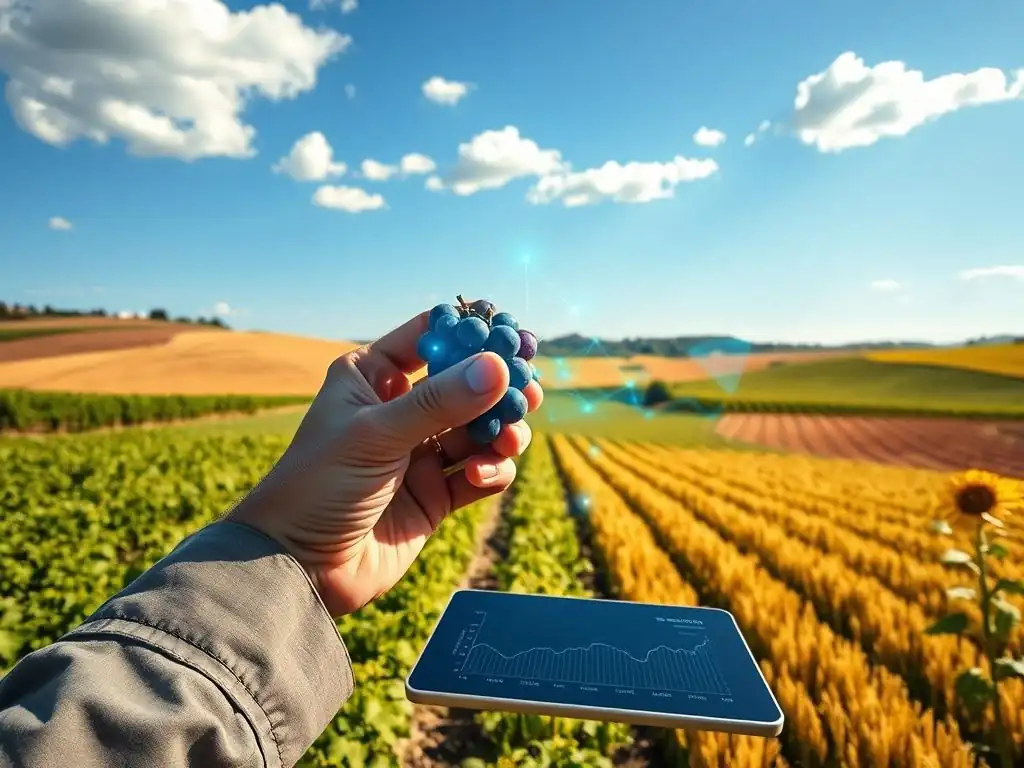
Welcome to Blockchain Trends, your compass in the ever-evolving world of decentralized technologies. Beyond the headlines of cryptocurrencies lies a universe of transformative applications. Ever wondered how blockchain can revolutionize entire industries?
This week, we delve into a fascinating case study: how blockchain for sustainable agriculture is reshaping farming practices. Discover how this innovative technology is optimizing resource use and driving a more eco-conscious future. Ready to explore the potential of blockchain in the field?
- Precision Farming and Blockchain: A Revolution in Sustainable Agriculture
- The Promise of Precision Agriculture: Boosting Efficiency and Sustainability
- Blockchain for Sustainable Agriculture: A Powerful Synergy
-
Blockchain-Based Solutions for Optimized Resource Use in Agriculture
- Water Management: Using Blockchain to Monitor and Conserve Water Resources
- Soil Health Monitoring: Leveraging Blockchain for Data-Driven Soil Management
- Fertilizer Optimization: Blockchain for Traceable and Efficient Fertilizer Application
- Blockchain for Irrigation Management: Optimizing Water Usage and Crop Yields
- Case Studies: Real-World Applications of Blockchain in Precision Farming
- Benefits of Integrating Blockchain Technology into Precision Farming
- Overcoming Challenges to Blockchain Adoption in Agriculture
- The Future of Blockchain and Precision Agriculture: A Vision for Sustainable Food Systems
- Conclusion: Blockchain's Transformative Potential for a Sustainable Agricultural Future
-
Frequently Asked Questions
- What role does blockchain play in precision farming?
- How can blockchain ensure the traceability of agricultural products?
- What are some potential enterprise applications of blockchain in agriculture?
- How can blockchain help with the regulation of sustainable agriculture practices?
- What is the future of decentralized systems in agriculture using blockchain?
- Final Reflection: Cultivating a Sustainable Future with Blockchain
- Unlock the Future of Farming: Take Action Now!
Precision Farming and Blockchain: A Revolution in Sustainable Agriculture
Exploring Blockchain's Role in Optimizing Agricultural Resource Management
The agricultural sector faces immense pressure to increase food production to feed a growing global population, projected to reach nearly 10 billion by 2050, while simultaneously minimizing environmental impact. Traditional farming methods often lead to inefficient resource use, including excessive water consumption, soil degradation, and reliance on chemical inputs.
Precision farming offers a technological pathway to address these challenges by using data and technology to manage crops and livestock more precisely. However, the vast amounts of data generated by precision agriculture systems, from sensors and satellites to weather stations and machinery, require robust management and secure sharing mechanisms to unlock their full potential.
This is where blockchain technology presents a compelling solution. Blockchain's inherent characteristics of immutability, transparency, and decentralization can provide the necessary infrastructure to manage agricultural data securely, share it reliably among stakeholders, and build trust across complex supply chains. By creating a tamper-proof ledger of inputs, treatments, environmental conditions, and outputs, blockchain enhances traceability and accountability. This foundational layer of trust and verifiable data is crucial for optimizing resource allocation, improving decision-making at the farm level, and enabling the broader implementation of blockchain for sustainable agriculture practices.
The Promise of Precision Agriculture: Boosting Efficiency and Sustainability
What is Precision Farming? Defining Key Technologies and Benefits
Precision farming, also known as precision agriculture, is a management strategy that uses information technology to ensure that crops and soil receive exactly what they need for optimum health and productivity. The goal is to maximize yields while minimizing resource use and environmental impact. Key technologies involved include GPS guidance systems, sensors (soil moisture, nutrient levels, weather), remote sensing (satellite and drone imagery), variable rate technology (VRT) for applying inputs like fertilizer and water precisely, and data analytics software. These tools allow farmers to move away from uniform, field-wide management to site-specific applications based on real-time data and analysis.
The benefits of adopting precision farming are significant and multifaceted. Economically, farmers can reduce costs by applying inputs only where and when they are needed, potentially lowering fertilizer use by 10-15% and pesticide use even more significantly in some cases, leading to savings and reduced environmental runoff. Environmentally, precision farming contributes to sustainability by conserving water, improving soil health, and reducing greenhouse gas emissions associated with excessive input use.
Furthermore, it can lead to improved crop quality and higher yields, contributing to food security. The integration of technologies like blockchain further amplifies these benefits by providing a trustworthy data foundation for these complex systems.
Challenges in Traditional Farming Practices: Waste, Inefficiency, and Environmental Impact
Traditional farming practices, often characterized by uniform resource application across entire fields, face numerous challenges that hinder efficiency and sustainability. One major issue is the overuse of inputs like water and fertilizers. For example, inefficient irrigation techniques can lead to significant water waste, a critical concern in water-scarce regions. The global agricultural sector accounts for approximately 70% of all freshwater withdrawals, and improving water efficiency is paramount. Similarly, applying fertilizers uniformly without accounting for variations in soil nutrient levels can lead to nutrient runoff, polluting waterways and contributing to harmful algal blooms.
Beyond input waste, traditional methods often lack precise data on crop health, pest outbreaks, or soil conditions in specific areas of a field. This can result in delayed responses to problems, leading to yield losses or the unnecessary application of pesticides as a preventative measure.
Furthermore, the lack of detailed, verifiable records makes it difficult to trace products back to their origin or verify sustainable practices, hindering efforts to build consumer trust and access markets that demand transparency. Addressing these inefficiencies and environmental impacts is essential, and emerging technologies, particularly blockchain for sustainable agriculture, offer powerful tools to drive this transformation.
Blockchain for Sustainable Agriculture: A Powerful Synergy
How Blockchain Enhances Transparency and Traceability in Food Supply Chains
One of the most significant contributions of blockchain technology to sustainable agriculture is its ability to create unprecedented transparency and traceability throughout the food supply chain. From the farm gate to the consumer's plate, blockchain can record every step a product takes: planting dates, types of seeds used, fertilizer and pesticide applications (including amounts and dates), irrigation schedules, harvesting data, processing information, transportation logistics, and retail points. Each transaction or data point is added as a block to the chain, time-stamped, and cryptographically secured, making it virtually impossible to alter retroactively without detection.
This immutable ledger provides a single source of truth accessible to authorized participants. For consumers, this means they can potentially scan a QR code on a product package and see its entire history, verifying claims about organic production, fair trade practices, or local sourcing. For producers and retailers, enhanced traceability allows for rapid identification and isolation of contaminated products in case of a food safety scare, minimizing the scope of recalls and protecting public health.
This level of transparency builds trust among all stakeholders and incentivizes the adoption of sustainable practices, as they can be verified and communicated effectively. Implementing blockchain for sustainable agriculture facilitates this trust layer.
Reducing Food Waste with Blockchain-Enabled Tracking Systems
Food waste is a massive global problem with significant economic and environmental consequences. An estimated one-third of all food produced globally is lost or wasted each year, amounting to approximately 1.3 billion tons. Much of this waste occurs within the supply chain due to inefficiencies, spoilage during transit, and difficulties in accurately tracking inventory and predicting shelf life. Blockchain technology offers a potent solution by providing granular, real-time visibility into the location, condition, and history of food products as they move from farm to fork.
By integrating with IoT sensors that monitor temperature, humidity, and location, a blockchain system can automatically record these critical data points at every stage of transport and storage. If conditions deviate from optimal levels, alerts can be triggered, allowing for timely intervention to prevent spoilage. Furthermore, the precise tracking of inventory reduces instances of overstocking or products expiring on shelves unnoticed.
Companies can gain better insights into demand patterns and logistical bottlenecks, optimizing distribution and reducing the likelihood of perishable goods reaching their expiration date before sale. This improved efficiency in logistics and inventory management is a direct benefit of using blockchain for sustainable agriculture focused on waste reduction.
Blockchain-Based Solutions for Optimized Resource Use in Agriculture
Water Management: Using Blockchain to Monitor and Conserve Water Resources
Efficient water management is paramount in agriculture, especially in regions facing water scarcity. Traditional methods often rely on estimations or scheduled irrigation, leading to overuse. Blockchain can play a crucial role by creating a transparent and immutable record of water usage data. Integrating blockchain with IoT sensors placed in fields and irrigation systems allows for the collection of real-time data on soil moisture levels, weather conditions, and actual water consumption. This data, once recorded on the blockchain, provides a verifiable history of water use for specific crops or fields.
Furthermore, blockchain can facilitate water trading or allocation systems based on verifiable usage data. In areas with regulated water rights, blockchain can ensure that usage stays within allocated limits and provide a transparent marketplace for trading surplus water rights.
For instance, a pilot project in Australia explored using blockchain for managing water entitlements in the Murray-Darling Basin, aiming to improve transparency and trust in water trading. By providing a secure and auditable ledger of water transactions and usage, blockchain encourages responsible water stewardship and supports the conservation of this vital resource, strengthening the case for blockchain for sustainable agriculture focused on water.
Soil Health Monitoring: Leveraging Blockchain for Data-Driven Soil Management
Soil health is the foundation of productive and sustainable agriculture. Monitoring key soil parameters like nutrient levels, pH, organic matter content, and microbial activity is essential for making informed decisions about fertilization, crop rotation, and cover cropping. Precision agriculture utilizes sensors and lab analysis to collect this data. However, managing, sharing, and verifying the integrity of this diverse dataset can be challenging. Blockchain offers a solution by providing a secure and decentralized platform to store and manage soil health data over time.
By recording soil test results, sensor readings, and details of soil improvement practices (like adding organic amendments or planting cover crops) on a blockchain, farmers can create a verifiable digital history of their soil. This immutable record can be shared with agronomists, input suppliers, or even financial institutions and insurers, providing trusted evidence of soil health improvements.
This data can inform precision application strategies for fertilizers and other inputs, ensuring they are applied only when and where needed based on specific soil requirements, thereby reducing waste and environmental impact. This data integrity provided by blockchain for sustainable agriculture is crucial for long-term soil health strategies.
Fertilizer Optimization: Blockchain for Traceable and Efficient Fertilizer Application
Fertilizers are critical for crop growth, but their overuse or inefficient application leads to significant environmental problems, including greenhouse gas emissions and water pollution. Precision farming techniques like variable rate application (VRA) allow fertilizers to be applied at different rates across a field based on soil tests and crop needs. Blockchain can enhance this process by creating a transparent and verifiable record of fertilizer use, from sourcing to application.
A blockchain ledger can track the origin and composition of fertilizers, ensuring authenticity and quality. At the farm level, it can record precisely when, where (linked to GPS coordinates), and how much of a specific fertilizer was applied to a particular field or zone, potentially linked to VRA equipment data. This creates an immutable audit trail of nutrient management practices.
This data can then be used to demonstrate compliance with environmental regulations, optimize future fertilizer plans based on historical performance and soil data, and even provide verifiable proof of sustainable practices to consumers or certification bodies. This detailed tracking enabled by blockchain for sustainable agriculture promotes accountability and efficiency in nutrient management.
Blockchain for Irrigation Management: Optimizing Water Usage and Crop Yields
Irrigation is a major consumer of agricultural water, and optimizing its use is critical for both sustainability and yield optimization, particularly in arid and semi-arid regions. While precision irrigation systems use sensors and weather data to apply water efficiently, integrating these systems with blockchain can add layers of trust, automation, and transparency to water management.
Blockchain can securely record data from soil moisture sensors, weather stations, and flow meters, creating a verifiable log of irrigation events, water volumes used, and environmental conditions. Smart contracts, automated agreements stored on the blockchain, can be programmed to trigger irrigation based on predefined conditions met by the sensor data (e.g., soil moisture dropping below a certain threshold).
This not only automates the process but also creates an immutable record of why and when irrigation occurred, providing valuable data for optimizing future water use strategies. Furthermore, this verifiable data is essential for participating in water efficiency incentive programs or demonstrating sustainable practices, highlighting another practical use case for blockchain for sustainable agriculture.
Case Studies: Real-World Applications of Blockchain in Precision Farming
Case Study 1: Blockchain for Traceability and Quality Assurance in Coffee Production
Several initiatives have demonstrated the power of blockchain in enhancing traceability and quality assurance, particularly in high-value crops like coffee. Companies like Farmer Connect and Bext360 have piloted blockchain solutions to track coffee beans from individual farms through washing stations, mills, exporters, roasters, and finally to consumers. Using QR codes on packaging, consumers can access details about the coffee's origin, the farmer who grew it, processing methods, and even verify fair trade or organic certifications.
For farmers, this increased transparency can lead to fairer compensation by providing verifiable proof of their product's quality and sustainable practices, potentially allowing them to command premium prices. For example, a pilot project involving over 100 farmers in Colombia using a blockchain platform reported increased trust with buyers and better data management. The immutable record of handling and quality checks throughout the supply chain also helps ensure that quality is maintained and provides clear accountability if issues arise. This illustrates how blockchain for sustainable agriculture can empower producers and build trust with consumers.
Case Study 2: Blockchain for Water Conservation in California's Almond Industry
California's almond industry, a significant user of agricultural water, has explored innovative technologies for water management. While specific public blockchain implementations for trading water rights in the almond industry are still nascent or proprietary, the underlying concept of using secure ledgers for water management is highly relevant. Projects have focused on using data platforms, often with blockchain-like principles for data integrity, to track water usage at the farm level.
The potential application of blockchain in this context involves creating a secure, shared ledger for recording precise water usage data from flow meters and irrigation systems across participating farms. This verifiable data can then be used to demonstrate compliance with water usage regulations, participate in water conservation programs, or inform collective water management strategies within a region.
While a fully public, large-scale blockchain for water trading in California agriculture is complex due to regulatory and infrastructure hurdles, the use of distributed ledger technology to ensure the integrity and transparency of water usage data at the farm level is a tangible application of blockchain for sustainable agriculture aimed squarely at resource conservation.
Benefits of Integrating Blockchain Technology into Precision Farming
Enhanced Transparency and Traceability for Consumers and Producers
Integrating blockchain into precision farming creates an unprecedented level of transparency and traceability throughout the agricultural value chain. For consumers, this means the ability to verify the journey of their food, gaining confidence in claims about origin, production methods, and sustainability. This access to verifiable information empowers conscious purchasing decisions. A survey by FoodLogiQ found that 70% of consumers say transparency is very important regarding how their food is produced, processed, and sourced.
For producers, enhanced traceability simplifies compliance with regulations and certifications, reduces the impact of recalls, and allows them to build a trusted brand based on verifiable practices. Farmers adopting blockchain for sustainable agriculture can potentially receive premiums for products grown using environmentally friendly methods or meeting specific quality standards, as these claims can be authenticated on the ledger. This mutual benefit fosters stronger relationships and trust between producers and consumers.
Improved Data Security and Integrity for Agricultural Information
Precision farming relies heavily on data – from soil sensors and weather stations to drone imagery and machinery logs. This data is valuable for decision-making but also sensitive, potentially containing proprietary information about farm practices and yield potential. Traditional data management systems can be vulnerable to hacking or tampering, compromising the integrity of the information. Blockchain's decentralized and cryptographic nature fundamentally enhances data security.
Once agricultural data is recorded on a blockchain, it is incredibly difficult and computationally expensive to alter or delete. Each new block of data is linked to the previous one, creating a secure chain. This immutability ensures the integrity of the data used for making precision farming decisions, verifying compliance, or tracking product history. Farmers can be more confident that their valuable data is secure and accurate, and stakeholders downstream can trust the information provided about farming practices and product attributes. This foundational security layer is essential for scaling blockchain for sustainable agriculture solutions.
Increased Efficiency and Reduced Costs in Agricultural Operations
The synergy between precision farming and blockchain leads to significant operational efficiencies and cost reductions. Precision farming optimizes input use (water, fertilizer, pesticides), directly lowering expenses and reducing waste. By providing a secure and transparent platform for managing data from precision agriculture tools, blockchain ensures that decisions based on this data are reliable. For example, accurate, verifiable soil data managed on a blockchain can lead to more precise fertilizer application, potentially reducing fertilizer costs by 10-20% in optimized systems.
Beyond input costs, blockchain can streamline supply chain logistics by providing real-time, verifiable information about product location and condition, reducing spoilage and improving inventory management. Automated processes through smart contracts can also reduce administrative overhead and transaction costs between different parties in the supply chain. Furthermore, the ability to easily verify sustainable practices via blockchain can open doors to new markets or premium pricing, increasing revenue and overall operational efficiency. The drive towards efficiency is a key motivator for adopting blockchain for sustainable agriculture.
Fostering Collaboration and Trust Among Stakeholders in the Agricultural Ecosystem
The agricultural ecosystem is complex, involving farmers, input suppliers, processors, distributors, retailers, regulators, and consumers. Lack of trust and information asymmetry often create inefficiencies and friction. Blockchain's distributed ledger technology can build a foundation of trust by providing a shared, immutable record of activities and transactions accessible to authorized participants.
Farmers can share verifiable data on practices with buyers, input suppliers can track the use of their products, and retailers can assure consumers about the provenance and quality of goods. Smart contracts on the blockchain can automate payments based on verifiable delivery or quality metrics, reducing disputes and ensuring timely compensation. This shared source of truth facilitates smoother interactions, encourages collaboration on sustainability initiatives, and creates a more interconnected and trustworthy agricultural supply chain. This collaborative potential is a core benefit of implementing blockchain for sustainable agriculture.
Overcoming Challenges to Blockchain Adoption in Agriculture
Addressing Data Privacy Concerns in Agricultural Data Management
While blockchain offers enhanced data security and integrity, the decentralized nature and immutability also raise concerns regarding data privacy, particularly for sensitive farm-level data. Farmers may be hesitant to share detailed information about their practices, yields, or financial performance, even with trusted partners. Ensuring that private or commercially sensitive data is protected while maintaining the benefits of transparency is a key challenge for blockchain for sustainable agriculture.
Solutions often involve using private or permissioned blockchains where access is restricted to authorized participants, rather than fully public networks. Techniques like zero-knowledge proofs can allow parties to verify that certain conditions are met (e.g., a farmer used certified organic practices) without revealing the underlying sensitive data. Legal frameworks and clear data ownership policies must also be established to give farmers control over their information and how it is used within blockchain networks. Careful design and implementation are crucial to balance transparency with privacy.
Ensuring Interoperability of Blockchain Systems in the Agricultural Sector
The agricultural sector is diverse, with various technologies, platforms, and stakeholders already in use. Implementing blockchain solutions effectively requires ensuring interoperability between different blockchain networks, legacy systems, and the myriad of data sources (IoT sensors, farm management software, etc.). A lack of standards and compatibility can create data silos, hindering the seamless flow of information necessary for end-to-end traceability and optimized resource management.
Developing industry-wide standards for data formatting, communication protocols, and blockchain network interactions is essential. Middleware solutions or API layers may be needed to connect disparate systems and translate data between different platforms. Collaboration among technology providers, agricultural organizations, and stakeholders is necessary to establish these standards and build bridges between different blockchain initiatives and existing infrastructure. Achieving robust interoperability is critical for the widespread adoption of blockchain for sustainable agriculture.
Educating Farmers and Stakeholders about Blockchain Technology
Blockchain technology is complex and often misunderstood. A significant barrier to its adoption in agriculture is the lack of awareness, understanding, and technical expertise among farmers and other stakeholders in the value chain. Farmers, in particular, may view it as overly technical, expensive, or unnecessary, especially those in regions with less access to digital infrastructure or technical support.
Efforts to promote blockchain for sustainable agriculture must include comprehensive education and training programs. These programs should clearly articulate the tangible benefits of blockchain (e.g., increased income potential, reduced costs, improved market access) in terms that resonate with agricultural producers. Demonstrating successful pilot projects and providing accessible, user-friendly interfaces for blockchain-based platforms are also crucial. Building trust and showcasing practical value are key to overcoming skepticism and encouraging adoption across the diverse agricultural landscape.
The Future of Blockchain and Precision Agriculture: A Vision for Sustainable Food Systems
The Convergence of IoT, AI, and Blockchain for Smart Agriculture
The future of sustainable agriculture lies in the convergence of advanced technologies. Precision farming already leverages IoT sensors for data collection and AI for data analysis and predictive insights. Integrating blockchain with these technologies creates a powerful trifecta for "smart agriculture." IoT devices collect real-time data on environmental conditions, crop health, and machinery performance. AI algorithms process this vast dataset to provide actionable recommendations (e.g., optimal irrigation schedules, precise fertilizer prescriptions, early disease detection).
Blockchain then provides the secure, transparent, and immutable layer to manage the data generated by IoT, record the decisions made by AI, and track their execution and outcomes. This creates a verifiable audit trail of every action taken on the farm, linked to specific conditions and recommendations. This integrated system allows for continuous optimization, enhances accountability, and provides the data foundation needed for complex sustainability certifications or carbon credit schemes. This technological synergy is driving the evolution of blockchain for sustainable agriculture.
Blockchain as a Catalyst for Sustainable and Ethical Food Production
Blockchain technology is poised to act as a significant catalyst for accelerating the adoption of sustainable and ethical practices in food production. By providing verifiable proof of origin, production methods (e.g., organic, fair trade, low carbon footprint), and resource usage (water, energy), blockchain enables farmers and food companies to credibly demonstrate their commitment to sustainability. This transparency allows consumers to make informed choices and supports market demand for responsibly produced food.
Furthermore, blockchain can facilitate the implementation of incentive programs for sustainable farming. For example, farmers could receive tokenized rewards or access preferential loans based on verifiable data on soil carbon sequestration, reduced water usage, or biodiversity improvements recorded on a blockchain ledger. This creates direct economic incentives for adopting practices that benefit the environment and society, moving beyond voluntary compliance to a data-driven system of rewards and accountability. This aligns perfectly with the goals of promoting blockchain for sustainable agriculture.
The Rise of Decentralized Autonomous Organizations (DAOs) in Agricultural Supply Chains
Looking further ahead, Decentralized Autonomous Organizations (DAOs) could play a transformative role in agricultural supply chains. DAOs are organizations governed by rules encoded as smart contracts on a blockchain, operating transparently without central authority. In agriculture, DAOs could be formed by groups of farmers, cooperatives, or supply chain participants to collectively manage resources, coordinate logistics, or even govern shared infrastructure like irrigation systems or processing facilities.
For instance, a DAO could manage a regional water allocation system based on real-time usage data and predefined rules, ensuring equitable distribution during droughts. Another DAO could oversee a supply chain for a specific commodity, automating payments to farmers upon verification of quality and quantity via smart contracts and blockchain records. This decentralized governance model could empower farmers, reduce reliance on intermediaries, and create more resilient, equitable, and sustainable agricultural systems, representing an advanced application of blockchain for sustainable agriculture.
Conclusion: Blockchain's Transformative Potential for a Sustainable Agricultural Future
Embracing Blockchain for a More Efficient, Transparent, and Sustainable Food System
The challenges facing global agriculture – increasing demand, resource scarcity, and environmental impact – require innovative solutions. Precision farming provides the tools to manage resources more efficiently at the farm level, but it generates vast amounts of data that need secure and transparent handling. Blockchain technology offers the missing piece, providing the trust layer, immutability, and traceability necessary to unlock the full potential of precision agriculture and build truly sustainable food systems.
From optimizing water and fertilizer use based on verifiable data to creating transparent supply chains that reduce waste and build consumer trust, the applications of blockchain for sustainable agriculture are diverse and impactful. While challenges related to adoption, interoperability, and data privacy remain, ongoing pilots and increasing industry interest demonstrate the technology's promise. Embracing blockchain is not just about technological adoption; it's about building a more efficient, transparent, and sustainable future for food production that benefits producers, consumers, and the planet alike.
Frequently Asked Questions
What role does blockchain play in precision farming?
Blockchain enhances precision farming by providing a transparent and immutable record of data related to farming practices, resource usage, and crop yields. This can help optimize resource allocation and improve overall sustainability.
How can blockchain ensure the traceability of agricultural products?
Blockchain technology allows for the creation of a secure and verifiable supply chain for agricultural products. This enhances traceability from farm to consumer, providing increased transparency and building trust.
What are some potential enterprise applications of blockchain in agriculture?
Blockchain can be used for supply chain management, farm management, and trade finance. These enterprise applications can improve efficiency, reduce costs, and enhance collaboration between different stakeholders.
How can blockchain help with the regulation of sustainable agriculture practices?
Blockchain can provide a verifiable audit trail for sustainable farming practices. This makes it easier to monitor compliance with regulations, promoting greater accountability and encouraging environmentally friendly approaches.
What is the future of decentralized systems in agriculture using blockchain?
The future involves more automated and transparent processes for resource management and trade. This will lead to greater efficiency and sustainability in agricultural production through decentralized systems.
Final Reflection: Cultivating a Sustainable Future with Blockchain
The exploration of precision farming and blockchain technology reveals a powerful synergy, demonstrating that sustainable agriculture is not just a possibility, but an achievable reality. The potential to optimize resource use, enhance transparency, and empower farmers through decentralized systems is no longer a futuristic vision, but a tangible solution to pressing global challenges.
This convergence of technology and agriculture has profoundly influenced, and continues to influence, the way we think about food production. The ability to trace food from farm to table, coupled with the efficient allocation of resources, offers a compelling pathway towards a more equitable and environmentally conscious food system. The ultimate goal of farming is not the growing of crops, but the cultivation and perfection of human beings.
- Masanobu Fukuoka. This quote encapsulates the deeper purpose behind leveraging technology for sustainable agriculture: to nurture not only the land, but also the well-being of communities and future generations.
Now, consider the implications of this knowledge. How can you, in your own sphere of influence, contribute to the adoption of blockchain for sustainable agriculture? Whether you're a consumer, a farmer, a technologist, or simply a concerned citizen, your awareness and support can help cultivate a future where food production is both efficient and environmentally responsible. Let us all strive to be active participants in this vital transformation, ensuring a more sustainable and abundant world for all.
Unlock the Future of Farming: Take Action Now!
Thanks for diving into the world of precision farming and blockchain! We hope you've gained valuable insights into how this technology is revolutionizing agriculture. Now, let's put that knowledge to work and cultivate a more sustainable future.
- Dive Deep: Research a specific blockchain solution: and its real-world impact on a local farm or agricultural cooperative. Uncover the data and share your findings!
- Connect: Engage in discussions about blockchain applications in agriculture on social media, using the hashtag #BlockchainFarming. Contribute your thoughts and learn from others.
- Explore: Visit a local farm that utilizes precision farming techniques. Ask about their experiences and share your findings online.
What innovative blockchain application in agriculture excites you the most, and how can you see yourself contributing to its growth?
Leave a Reply