
Slash Costs, Boost Transparency: The Economic Advantages of Blockchain in Property Management


Welcome to Blockchain Trends, your guide to navigating the revolutionary world of decentralized technologies. Are you ready to discover how blockchain is reshaping industries beyond just cryptocurrency? Dive in to uncover the cutting-edge advancements in DeFi, enterprise solutions, and the evolving regulatory landscape. Our latest deep dive reveals how leveraging blockchain can unlock significant blockchain property management cost savings, offering a glimpse into the future of real estate and beyond. Intrigued? Explore the data-backed insights and see how this technology is poised to transform asset management as we know it.
- Slash Costs, Boost Transparency: The Economic Advantages of Blockchain in Property Management
- Understanding the Economic Benefits of Blockchain in Property Management
- How Blockchain Reduces Property Management Costs
- Blockchain's Impact on Operational Efficiency in Property Management
- Enhancing Transparency and Trust in Property Management with Blockchain
- Blockchain for Property Management: Specific Use Cases and Applications
- Overcoming Challenges and Implementing Blockchain in Property Management
- The Future of Blockchain in Property Management: Trends and Predictions
- Conclusion: Embracing Blockchain for Sustainable Economic Growth in Property Management
-
Frequently Asked Questions
- How does blockchain technology contribute to cost savings in property management?
- Can blockchain enhance transparency in property management processes?
- What are some specific examples of blockchain applications in property management beyond cost reduction?
- How does blockchain impact regulatory compliance within property management?
- What is the future outlook for blockchain adoption in the property management industry?
- Final Reflection: Unlocking Efficiency Through Trust
- Unlock Your Property Potential: Step into the Blockchain Revolution!
Slash Costs, Boost Transparency: The Economic Advantages of Blockchain in Property Management
The property management sector, traditionally reliant on manual processes and fragmented systems, faces significant challenges in achieving optimal efficiency and transparency. These inefficiencies often translate into higher operational costs and reduced trust among stakeholders. However, a transformative technology is emerging as a powerful solution: blockchain. By leveraging decentralized ledgers and smart contracts, blockchain offers a new paradigm for managing properties, promising substantial economic advantages.
The Rising Need for Efficiency and Transparency in Real Estate
The complexities inherent in property management – from lease administration and rent collection to maintenance scheduling and financial reporting – often lead to bottlenecks and errors. Landlords, property managers, tenants, and investors frequently encounter delays, disputes, and a lack of clear visibility into transactions and records. Industry reports consistently highlight administrative overhead and transaction costs as major burdens.
For instance, traditional payment processing fees alone can add up significantly for large property portfolios. Furthermore, the lack of a single, verifiable source of truth for property data increases the risk of fraud and makes dispute resolution cumbersome and expensive. The demand for streamlined operations and verifiable, transparent data is greater than ever.
Property managers are under increasing pressure to reduce operational expenditures while simultaneously improving service delivery and building trust. Manual data entry, paper-based record-keeping, and reliance on intermediaries for tasks like rent collection and background checks contribute to high administrative costs. A study might show that administrative tasks consume a significant portion of a property manager's time, perhaps up to 30-40%, time that could be better spent on value-generating activities like tenant relations or property improvements.
The absence of real-time, accessible data also hinders quick decision-making and proactive management, potentially leading to higher vacancy rates or increased maintenance costs due to delayed responses. Addressing these inefficiencies is crucial for enhancing profitability and sustainability in the property management industry.
Blockchain: A Solution for Streamlining Property Operations
Blockchain technology, best known for its role in cryptocurrencies, offers a decentralized, immutable, and transparent ledger system that can fundamentally change how property is managed. Instead of relying on centralized databases or intermediaries, blockchain allows for secure, peer-to-peer transactions and record-keeping. Each transaction is recorded on a distributed network of computers, making it extremely difficult to alter or tamper with the data once it's added. This inherent security and immutability build a foundation of trust and reliability.
Furthermore, blockchain enables the use of smart contracts – self-executing contracts with the terms of the agreement directly written into code. These contracts automatically execute when predefined conditions are met, such as releasing a security deposit after a tenant moves out and property inspection is verified. By automating routine tasks like rent payments, lease renewals, and even maintenance triggers, blockchain significantly reduces the need for manual intervention and intermediaries. This automation directly contributes to Blockchain property management cost savings by cutting down on administrative labor, reducing errors, and potentially lowering fees associated with traditional transaction processing and legal services.
Understanding the Economic Benefits of Blockchain in Property Management
Blockchain's impact on the property management sector extends beyond just technological novelty; it introduces tangible economic advantages. By addressing core pain points related to cost, efficiency, and trust, blockchain paves the way for more profitable and sustainable property management practices. The economic benefits stem from its ability to create a more direct, secure, and automated environment for managing properties and related transactions.
Blockchain Property Management Cost Savings: An Overview
One of the most compelling benefits of adopting blockchain in property management is the potential for significant cost reductions. These savings are realized across various aspects of the business. For instance, automating rent collection through smart contracts can reduce or eliminate transaction fees associated with traditional payment gateways, which can range from 1% to 3% per transaction.
For a large portfolio managing millions in rent annually, this represents substantial savings. Similarly, reducing the need for manual data entry and reconciliation slashes administrative labor costs. Estimates suggest that automating processes with blockchain could reduce administrative overhead by 20% or more in some areas.
Beyond direct transaction and labor costs, blockchain also contributes to Blockchain property management cost savings by minimizing expenses related to disputes and fraud. The secure and immutable nature of blockchain records provides a verifiable audit trail for all transactions, lease terms, and communication logs. This reduces the likelihood of disagreements over payment history, lease compliance, or property conditions, thereby lowering legal fees and the time spent resolving conflicts. A property management company might see a reduction in legal expenses related to tenant disputes by potentially 10-15% or more after implementing blockchain-based record-keeping and smart contracts for clear, automated agreements.
Transparency and Security: Foundations for Economic Efficiency
Transparency and security, often seen as non-financial benefits, are actually critical foundations for economic efficiency in property management. Blockchain provides unprecedented transparency by creating a shared, distributed ledger accessible to authorized parties. This means landlords, property managers, and tenants can have visibility into transaction histories, lease agreements, and maintenance requests in near real-time, reducing information asymmetry. This transparency builds trust, which in turn streamlines interactions and reduces the friction often caused by doubt or lack of information. A tenant who can easily verify their payment history is less likely to dispute charges, saving administrative time and potential collection costs.
The enhanced security offered by blockchain, through cryptographic hashing and decentralized consensus mechanisms, makes it incredibly resistant to fraud and unauthorized data alteration. This security is economically beneficial in several ways. It protects against fraudulent transactions, such as double-spending or fake payment receipts, saving the cost of recovering lost funds or pursuing legal action. It also secures sensitive property and tenant data, reducing the risk and cost associated with data breaches, which can be substantial. The peace of mind and reduced risk provided by blockchain's security contribute to a more stable and economically predictable operating environment.
How Blockchain Reduces Property Management Costs
The mechanism by which blockchain delivers Blockchain property management cost savings is primarily through automation, process streamlining, and enhanced security measures. These elements work together to eliminate inefficiencies and reduce reliance on costly intermediaries and manual labor.
Automating Processes: Smart Contracts for Lease Agreements and Rent Collection
Smart contracts are perhaps the most powerful tool blockchain offers for direct cost reduction through automation. These self-executing programs can automate key processes like rent collection, security deposit management, and lease renewals. For rent collection, a smart contract can be programmed to automatically transfer rent funds from a tenant's digital wallet to the property manager's wallet on a specific date, provided the funds are available. If funds are insufficient, the contract can automatically trigger late fee calculations and notifications according to the lease terms embedded within the contract.
This automation significantly reduces the administrative burden of manually tracking payments, sending reminders, processing transactions, and reconciling accounts. It also minimizes errors associated with manual data entry. Property managers using such systems could potentially save several hours per week per property on rent collection alone, translating directly into lower labor costs.
Furthermore, smart contracts can automate lease agreement execution and management. Once terms are agreed upon, the contract can be deployed, automatically enforcing clauses related to payments, maintenance requests (if linked to other systems), and lease termination conditions, reducing the need for ongoing manual oversight and potentially lowering legal review frequency for standard agreements.
Streamlining Payments: Reduced Transaction Fees and Faster Processing
Traditional payment systems often involve multiple intermediaries, each adding fees and processing delays. Banks, payment gateways, and clearinghouses all play a role, contributing to transaction costs that add up, especially for frequent, lower-value transactions like monthly rent payments. Blockchain-based payment solutions, often utilizing cryptocurrencies or stablecoins running on a blockchain, can facilitate peer-to-peer transactions directly between tenant and property manager.
By cutting out intermediaries, blockchain payments can offer significantly lower transaction fees, sometimes reduced to a fraction of a percent or even just network gas fees, which can be minimal depending on the blockchain used. This is a clear source of Blockchain property management cost savings. Additionally, blockchain transactions can settle much faster than traditional methods, often within minutes, compared to days for bank transfers. Faster access to funds improves cash flow for property managers and owners, which has its own economic benefits, such as better liquidity management and reduced need for short-term financing.
Enhanced Security: Minimizing Fraud and Disputes in Property Transactions
The inherent security features of blockchain directly contribute to cost savings by preventing fraudulent activities and minimizing disputes. Every transaction recorded on a blockchain is cryptographically secured and linked to the previous one, creating an immutable chain of records. This makes it virtually impossible for a party to fraudulently alter transaction history, such as claiming rent was paid when it wasn't, or altering lease terms after the fact.
This verifiable audit trail significantly reduces the incidence of payment disputes and lease disagreements, which are often time-consuming and expensive to resolve, potentially involving legal costs. By providing a single, undeniable source of truth for all interactions and transactions recorded on the chain, blockchain minimizes the grounds for conflict. The cost savings come from reducing the time spent investigating discrepancies, negotiating resolutions, and, in severe cases, pursuing litigation. The peace of mind and reduced risk associated with this enhanced security are invaluable for long-term economic stability in property management.
Blockchain's Impact on Operational Efficiency in Property Management
Beyond direct cost reduction, blockchain technology dramatically improves operational efficiency by streamlining workflows, enhancing communication, and providing better access to information. These improvements free up resources, accelerate processes, and enable more informed decision-making.
Reduced Paperwork and Administrative Overhead with Blockchain
Property management is notoriously paperwork-heavy, involving physical or digital documents for leases, inspections, maintenance requests, invoices, and financial reports. Managing, storing, and retrieving these documents manually or through disparate digital systems is time-consuming and prone to errors. Blockchain offers a way to digitize and secure these records on a distributed ledger.
By creating digital tokens or entries on the blockchain representing leases, ownership records, or maintenance history, the need for physical paperwork is drastically reduced. Smart contracts can manage the lifecycle of these digital assets. This not only saves on printing, storage, and physical handling costs but also significantly reduces the administrative overhead associated with manual data entry, filing, and retrieval.
Property managers can access necessary documentation instantly from anywhere, leading to faster processing times for tasks like tenant onboarding or property inspections. This move towards a paperless, blockchain-secured system is a key driver of operational efficiency and contributes to Blockchain property management cost savings.
Improved Communication and Collaboration Through Decentralized Ledgers
Effective communication and collaboration among landlords, property managers, tenants, and service providers are essential but often hindered by centralized or fragmented information systems. Blockchain-based platforms can facilitate improved collaboration by providing a shared, transparent ledger that all authorized parties can access.
When a maintenance request is submitted via a blockchain-integrated system, for example, it can be recorded on the ledger, visible to the tenant, property manager, and the assigned maintenance vendor. Updates on the request's status (e.g., 'vendor assigned', 'work in progress', 'completed') can also be recorded immutably. This shared source of truth reduces the need for constant status updates via phone or email, minimizes misunderstandings, and ensures everyone is working with the same information. This streamlined communication saves time and reduces administrative effort, improving overall operational flow.
Real-Time Data Access for Informed Decision-Making
Traditional property management systems often suffer from data silos, making it difficult to get a comprehensive, real-time view of a property portfolio's performance. Financial data might be in one system, tenant data in another, and maintenance logs elsewhere. Compiling reports and gaining actionable insights can be a slow, manual process.
Blockchain can integrate data from various sources onto a single, distributed ledger or connect disparate systems via blockchain bridges, providing near real-time access to critical information. Property managers and owners can view financial flows (rent payments, expenses), lease statuses, maintenance histories, and other relevant data on demand. This immediate access to accurate, verifiable data enables faster and more informed decision-making, whether it's optimizing pricing strategies, identifying properties needing attention, or evaluating investment performance. Better data access leads to more efficient resource allocation and potentially higher profitability.
Enhancing Transparency and Trust in Property Management with Blockchain
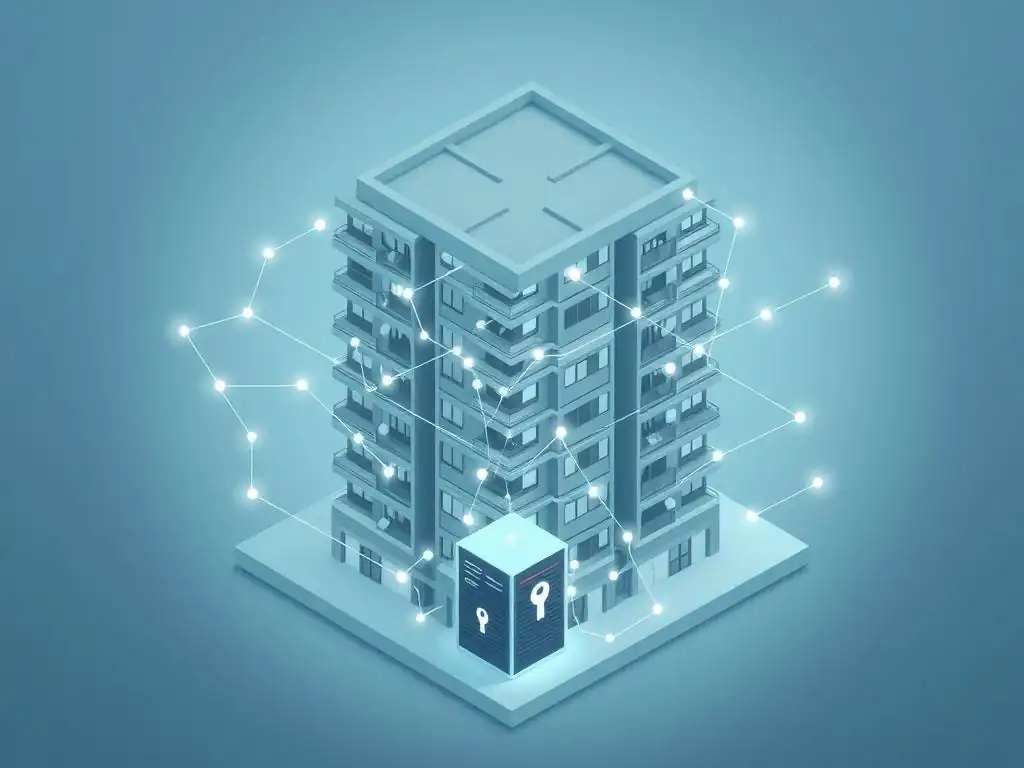
Transparency and trust are paramount in property management, impacting relationships with tenants, investors, and service providers. Blockchain's inherent characteristics make it an ideal technology for fostering a more transparent and trustworthy environment.
Secure and Immutable Records: Preventing Data Manipulation
A core feature of blockchain is the immutability of its records. Once data is added to the ledger and confirmed by the network, it is virtually impossible to alter or delete it without the consensus of the majority of network participants, which is highly impractical in a well-designed system. This contrasts sharply with traditional databases, where records can potentially be altered by malicious actors or even through simple errors.
For property management, this means that records of rent payments, maintenance requests, inspection reports, and lease agreements are tamper-proof. A tenant cannot falsely claim a payment was made, nor can a property manager unilaterally alter the terms of a lease recorded on the blockchain. This secure and verifiable history prevents data manipulation and provides an undeniable source of truth for all parties involved, significantly reducing potential disagreements and building confidence in the integrity of the data.
Increased Accountability: Tracking Property Ownership and Transactions
Blockchain provides a transparent and auditable trail of ownership and transaction history. While full property title on a blockchain is still evolving, recording aspects like beneficial ownership, leasehold interests, or even fractional ownership (via tokenization) on a blockchain ledger increases accountability. Every change in status or transaction is recorded with a timestamp and associated with specific digital identities (wallet addresses), providing a clear record of who did what and when.
This level of detail and transparency makes it easier to track the history of a property, its occupants, and all related financial and operational activities. Increased accountability discourages fraudulent behavior and negligence, as actions are permanently recorded and visible to authorized parties. For investors, this transparency offers greater confidence in the management of their assets, potentially attracting more investment into properties managed on blockchain platforms.
Building Trust with Tenants and Investors Through Blockchain Verification
Ultimately, enhanced transparency and accountability build trust. Tenants can trust that their payments are recorded accurately and that their lease terms are securely documented. Investors can trust that financial reports reflect verifiable transactions and that property management activities are recorded transparently. This trust is built on the verifiable nature of blockchain records.
By providing tenants with access to an immutable record of their payment history and lease details on a blockchain platform, property managers can reduce tenant anxiety and improve satisfaction. Similarly, investors can gain real-time access to verifiable data on property performance, vacancy rates, and expenditures, fostering greater confidence in the property manager's performance. This increased trust can lead to longer tenant retention, reduced vacancy periods, and stronger relationships with investors, all contributing to the long-term economic health of the property management business.
Blockchain for Property Management: Specific Use Cases and Applications
Blockchain's versatility allows it to be applied to various specific functions within property management, each offering unique economic benefits and efficiencies.
Tokenized Real Estate: Fractional Ownership and Increased Liquidity
Tokenization involves representing real-world assets, like real estate, as digital tokens on a blockchain. Each token can represent a fraction of the property's value. This has profound implications for property investment and management. Firstly, it enables fractional ownership, allowing investors to buy and sell small percentages of high-value properties, lowering the barrier to entry for real estate investment.
From a property management perspective, managing a property with multiple fractional owners becomes significantly simpler when ownership is recorded and transferred via blockchain tokens. Dividend distribution (from rental income) can be automated via smart contracts based on token ownership. Tokenization also increases liquidity; selling a fraction of a property by selling tokens is much faster and involves lower transaction costs than selling a physical property or even shares in a real estate investment trust (REIT). This increased liquidity and ease of transfer can make real estate a more attractive asset class, potentially increasing demand and property values over time.
Blockchain-Based Property Title Management: Streamlining Title Transfers
Traditional property title management is often a complex, slow, and expensive process involving multiple intermediaries, extensive paperwork, and centralized registries. Errors or fraud in this process can lead to costly legal battles. Recording property titles on a blockchain offers a secure, transparent, and potentially faster alternative.
While full-scale government land registries on blockchain are still developing, pilot projects have shown promising results. Recording title information on an immutable ledger makes ownership history clear and verifiable, reducing the risk of title disputes and fraud. Transferring ownership can theoretically be streamlined and accelerated through smart contracts, reducing the time and fees associated with title searches, insurance, and legal reviews. Estimates suggest that blockchain could reduce the cost and time of property transactions by potentially 20-30% or more by streamlining or eliminating manual steps and intermediaries involved in title transfers.
Supply Chain Management in Property Maintenance: Ensuring Transparency and Cost-Effectiveness
Managing maintenance and repairs involves coordinating with various vendors, tracking work orders, verifying completion, and processing payments. This supply chain can be inefficient and lack transparency, leading to inflated costs or disputes over services rendered. Blockchain can improve this process by providing a transparent ledger for tracking maintenance requests, vendor assignments, work progress, and payments.
When a maintenance request is initiated, it can be recorded on the blockchain. Smart contracts can be used to trigger payments to vendors automatically upon verification of work completion (perhaps via digital sign-off recorded on the chain). Vendors can also use the blockchain to record materials used, creating a transparent audit trail for expenses. This transparency helps property managers verify charges, prevent overbilling, and ensure timely completion of work, contributing to Blockchain property management cost savings by optimizing maintenance expenditures and reducing administrative time spent managing vendors.
Overcoming Challenges and Implementing Blockchain in Property Management
While the economic benefits are clear, implementing blockchain in property management is not without challenges. Addressing these hurdles is crucial for successful adoption and realizing the full potential for Blockchain property management cost savings.
Addressing Scalability and Interoperability Concerns
One challenge for widespread blockchain adoption, particularly for high-volume transactions like monthly rent payments across a large portfolio, is scalability. Some early blockchain networks faced limitations in the number of transactions they could process per second. While newer blockchain technologies and layer-2 solutions are significantly improving scalability, it remains a consideration for enterprise-level property management platforms.
Another challenge is interoperability – the ability for different blockchain networks or blockchain systems to communicate with existing legacy property management software and other technologies (like IoT devices). Property managers often use various software solutions for accounting, tenant management, and maintenance. Integrating blockchain systems with these existing tools requires careful planning and development to ensure seamless data flow and avoid creating new data silos. Solutions involve developing APIs and middleware to connect blockchain layers with traditional databases and software.
The legal and regulatory landscape surrounding blockchain, smart contracts, and tokenized assets is still evolving in many jurisdictions. Property management operates within a heavily regulated environment concerning contracts, tenant rights, data privacy (like GDPR or CCPA), and financial transactions.
Implementing blockchain solutions requires careful consideration of how they comply with existing laws. For instance, ensuring that a smart contract constitutes a legally binding lease agreement, or how property titles recorded on a blockchain are recognized by official land registries, are significant legal questions. Property managers must work closely with legal experts familiar with blockchain technology to ensure compliance and navigate potential legal ambiguities. This might involve using hybrid systems initially, where blockchain records complement, rather than entirely replace, traditional legal documentation, or advocating for clearer regulatory frameworks.
Case Study: Streamlining Rental Payments and Reducing Disputes with Blockchain at "Acme Property Group"
Acme Property Group, managing approximately 5,000 residential units, faced significant administrative costs related to rent collection and payment disputes. Their traditional system involved manual tracking, bank transfers, and paper checks, leading to delays, reconciliation errors, and roughly 10-15 payment disputes per month, each costing an estimated 2-3 hours of staff time to resolve, plus potential late fee collection issues.
Acme implemented a pilot blockchain-based rent payment system using a stablecoin pegged to their local currency. Tenants could pay rent via a user-friendly app that initiated a smart contract transaction. The smart contract was programmed to automatically process the payment, record it immutably on a private blockchain ledger, and trigger late fees if payment wasn't received by the due date.
Within six months of the pilot, Acme saw a dramatic reduction in manual reconciliation time, estimated at a saving of 15-20 hours per week across their team. Payment disputes related to non-receipt or incorrect amounts dropped by over 70%, saving significant staff time previously spent on investigations and communication.
Transaction fees were also reduced by an estimated 50-60% compared to their previous online payment gateway provider, contributing directly to Blockchain property management cost savings. While initial setup required investment, the operational efficiencies and cost reductions demonstrated a clear return on investment.
The Future of Blockchain in Property Management: Trends and Predictions
The adoption of blockchain in property management is still in its early stages, but several trends suggest its role will become increasingly significant, driving further economic advantages.
Increased Adoption of Blockchain-Based Property Platforms
We are likely to see a rise in comprehensive blockchain-based property management platforms that integrate various functions – from leasing and rent collection to maintenance tracking and financial reporting – onto a single, decentralized system. These platforms will offer built-in transparency and automation features, making it easier for property managers to adopt the technology without needing deep technical expertise.
As more property managers and real estate companies recognize the potential for Blockchain property management cost savings and efficiency gains, the network effect will likely accelerate adoption. Standard protocols and best practices for using blockchain in real estate will emerge, further streamlining implementation and interoperability across the industry. This increased adoption will make blockchain solutions more accessible and cost-effective for a wider range of property managers, from small landlords to large enterprises.
Integration with IoT Devices for Smart Property Management
The combination of blockchain and the Internet of Things (IoT) holds significant promise for smart property management. IoT devices, such as smart locks, thermostats, and sensors, collect vast amounts of data about property usage, security, and maintenance needs. Recording data from these devices onto a blockchain can provide a secure, immutable, and verifiable log of property conditions and events.
For example, a smart lock could record tenant entry/exit times on the blockchain, or a sensor could record temperature fluctuations indicating a potential HVAC issue. This data, secured on the blockchain, can automate maintenance requests via smart contracts or provide verifiable evidence in case of disputes. This integration can lead to more proactive maintenance, reduced energy costs (through automated climate control based on usage data), and enhanced security, contributing further to operational efficiency and Blockchain property management cost savings.
Emerging Trends: Decentralized Autonomous Organizations (DAOs) in Property Ownership
A more advanced application of blockchain is the emergence of Decentralized Autonomous Organizations (DAOs) for property ownership. A DAO is an organization represented by rules encoded as a transparent computer program, controlled by the organization members, and not influenced by a central government. In real estate, a DAO could collectively own and manage a property, with decisions (like approving repairs, setting rent, or selling the property) made by token holders through voting mechanisms embedded in smart contracts.
While still experimental, DAOs could revolutionize property ownership structures, potentially reducing the need for traditional management companies by automating many governance and operational tasks. Rental income could be automatically distributed to token holders based on predetermined rules. This model could offer a highly transparent and potentially lower-cost way to manage investment properties, although significant legal and regulatory hurdles remain.
Conclusion: Embracing Blockchain for Sustainable Economic Growth in Property Management
Blockchain technology offers a compelling path forward for the property management industry, addressing long-standing challenges related to cost, efficiency, and trust. Its ability to create secure, transparent, and automated systems provides a strong foundation for sustainable economic growth.
Blockchain Property Management: A Path to Greater Efficiency and Transparency
By enabling smart contracts for automation, providing immutable records for enhanced security, and creating shared, transparent ledgers, blockchain streamlines operations across the property management lifecycle. From leasing and rent collection to maintenance and financial reporting, processes become faster, more accurate, and less reliant on costly manual intervention and intermediaries. This leads directly to significant operational efficiencies and reduced administrative burdens. The inherent transparency builds trust among all stakeholders, fostering better relationships and reducing the likelihood of costly disputes.
The Long-Term Economic Advantages of Blockchain Adoption
The economic advantages of adopting blockchain in property management extend beyond immediate Blockchain property management cost savings. While reducing transaction fees, administrative labor, and dispute-related expenses are tangible short-term benefits, the long-term impact is even more significant. Increased efficiency leads to higher productivity and better resource allocation.
Enhanced transparency and trust can improve tenant retention and attract more investors, leading to higher occupancy rates and potentially increased property values. As the technology matures and adoption grows, the network effects will likely create even more value, making blockchain an increasingly essential tool for property managers aiming for profitability and resilience in a competitive market. Embracing this technology is not just about technological advancement; it's a strategic move towards a more economically sound future for property management.
Frequently Asked Questions
How does blockchain technology contribute to cost savings in property management?
Blockchain enables direct transactions between parties, bypassing traditional intermediaries like banks and escrow services. This reduces transaction fees and administrative overhead, leading to significant cost savings. Moreover, smart contracts automate processes, minimizing human error and further cutting expenses.
Can blockchain enhance transparency in property management processes?
Yes, absolutely. Blockchain provides an immutable and auditable ledger of all property-related transactions and data. This increased transparency builds trust between owners, tenants, and managers, reducing disputes and fostering accountability.
What are some specific examples of blockchain applications in property management beyond cost reduction?
Beyond cost savings, blockchain facilitates secure and efficient property title transfers, streamlines rental agreements, and improves data management for property maintenance and repairs. It also enables fractional ownership and tokenization of properties.
How does blockchain impact regulatory compliance within property management?
Blockchain's immutable record-keeping simplifies compliance with regulations, providing a clear audit trail for authorities. It also helps ensure data privacy and security, meeting stringent regulatory requirements related to sensitive information.
What is the future outlook for blockchain adoption in the property management industry?
The future looks promising. As blockchain technology matures and becomes more widely understood, we can expect increased adoption, leading to more efficient, transparent, and cost-effective property management practices. This includes a shift towards decentralized property management platforms.
Final Reflection: Unlocking Efficiency Through Trust
The exploration of blockchain's potential in property management culminates in a powerful realization: the convergence of cost savings and enhanced transparency is not just a possibility, but a tangible reality. In today's volatile economic climate, where efficiency and trust are paramount, the adoption of blockchain technology offers a compelling solution for streamlining operations and fostering greater confidence among stakeholders.
The impact of blockchain on the property management landscape is already beginning to reshape how we perceive ownership, transactions, and accountability. This shift towards decentralized, immutable records is not merely a technological upgrade; it represents a fundamental reimagining of trust in an industry often plagued by opacity. Trust is the glue of life. It's the most essential ingredient in effective communication. It's the foundational principle that holds all relationships.
- Stephen Covey. Blockchain, by its very nature, builds that trust, paving the way for more equitable and efficient property management practices.
As we look to the future, let us consider how we can actively contribute to the integration of blockchain technology within our own communities and businesses. Embrace the opportunity to explore, experiment, and advocate for solutions that promote transparency, reduce costs, and ultimately, build a more trustworthy and efficient property management ecosystem for all. The future of property management is not just about technology; it's about building a better, more equitable world, one block at a time.
Unlock Your Property Potential: Step into the Blockchain Revolution!
Thank you for exploring the economic benefits of blockchain in property management. We hope this article has highlighted how this technology can help reduce costs and improve transparency. Now, it’s time to take action.
Here are some steps to get started:
- Research blockchain-based property management platforms tailored to your needs. The sooner you begin, the sooner you can enjoy the advantages.
- Join our community forum to share your property management challenges and learn from others who are already leveraging blockchain technology. Ask questions and start new conversations!
- Consider attending local technology meetups focused on real estate innovation to connect with potential partners and explore pilot project opportunities.
How do you plan to use blockchain to transform your property management approach? Share your thoughts and challenges in the comments below!
Leave a Reply