
The Developer's Guide to Hyperledger: Tools and Resources for Building Enterprise Solutions


Welcome to Blockchain Trends, your compass in the rapidly evolving world of decentralized technology! Are you ready to unlock the power of blockchain beyond the hype? This week, we delve into the practical side of enterprise blockchain solutions, focusing specifically on the essential Hyperledger development tools resources every developer needs. Discover how these powerful tools are shaping the future of decentralized applications, and get ready to build the next generation of enterprise solutions. Intrigued? Let's dive in and explore the developer's guide to Hyperledger!
- Introduction to Hyperledger for Enterprise Blockchain Development
- Essential Hyperledger Development Tools
- Hyperledger Development Resources and Frameworks
- Practical Hyperledger Development: Building Enterprise Applications
- Learning Hyperledger: Courses and Community Resources
- The Future of Hyperledger and Enterprise Blockchain
- Conclusion: Embracing Hyperledger for Enterprise Blockchain Innovation
-
Frequently Asked Questions
- What is Hyperledger and how does it differ from other blockchain platforms?
- What are the key Hyperledger projects a developer should be familiar with?
- Where can I find reliable documentation and tutorials for Hyperledger development?
- What programming languages are typically used in Hyperledger development?
- How can I contribute to the Hyperledger community and get involved in open-source development?
- Final Reflection: Building the Future with Hyperledger
- Unleash Your Hyperledger Potential!
Introduction to Hyperledger for Enterprise Blockchain Development
Understanding Hyperledger's Role in Enterprise Blockchain Solutions
Hyperledger is not a cryptocurrency, nor is it a single blockchain. Instead, it is an open-source collaborative effort, hosted by the Linux Foundation, created to advance cross-industry blockchain technologies. It encompasses a suite of frameworks, tools, and libraries designed specifically for building enterprise-grade blockchain solutions.
Unlike public, permissionless blockchains like Bitcoin or Ethereum, Hyperledger projects focus on permissioned or private blockchain networks. This distinction is crucial for enterprises that require data privacy, control over network participants, and performance optimized for business operations. Hyperledger's modular and versatile nature allows developers to choose the components that best suit their specific enterprise needs, fostering innovation and customization within the blockchain space.
The Hyperledger ecosystem addresses the unique requirements of businesses seeking to leverage blockchain technology. Enterprises often need blockchains that can handle sensitive data, comply with regulatory requirements, and integrate seamlessly with existing IT infrastructure. Hyperledger frameworks are designed to meet these challenges, offering features like granular access control, high transaction throughput, and support for various consensus mechanisms. By providing a robust and flexible foundation, Hyperledger empowers organizations to build blockchain applications that solve real-world business problems across diverse industries, ranging from supply chain management and finance to healthcare and manufacturing.
Why Choose Hyperledger for Enterprise Blockchain?
Choosing Hyperledger for enterprise blockchain development offers several key advantages. Firstly, its permissioned nature is paramount for businesses concerned with data privacy and regulatory compliance. Unlike public blockchains where transactions are visible to everyone, Hyperledger networks can restrict access to authorized participants only. This control is essential for protecting sensitive business information and adhering to data protection regulations like GDPR or HIPAA. For instance, a healthcare consortium sharing patient data on a blockchain would require the stringent privacy controls that Hyperledger frameworks like Fabric or Besu provide.
Secondly, Hyperledger's modular architecture provides unparalleled flexibility and customization. Enterprises can select and combine different Hyperledger frameworks and tools to create blockchain solutions tailored to their specific use cases. For example, a company needing a high-throughput supply chain tracking system might choose Hyperledger Fabric for its performance and scalability, while another focusing on identity management might opt for Hyperledger Indy for its decentralized identity capabilities.
This modularity extends to consensus mechanisms, membership services, and data storage, allowing businesses to optimize their blockchain networks for performance, security, and cost-effectiveness. Furthermore, the backing of the Linux Foundation ensures continuous development, community support, and long-term stability, making Hyperledger a reliable choice for building mission-critical enterprise blockchain applications.
Essential Hyperledger Development Tools
Hyperledger Fabric: The Modular Blockchain Platform
Hyperledger Fabric stands out as a highly modular and extensible open-source blockchain platform, designed for developing enterprise-grade applications. It is a foundational Hyperledger project that offers a robust architecture for building permissioned blockchain networks. Fabric distinguishes itself with its support for pluggable components, including consensus mechanisms, membership services, and data storage options.
This modularity allows developers to tailor the blockchain platform to the specific requirements of their enterprise use cases, ensuring optimal performance, security, and scalability. Fabric is particularly well-suited for applications requiring high transaction throughput, confidentiality, and fine-grained access control, making it a popular choice for supply chain management, financial services, and healthcare solutions.
Fabric's architecture is designed to separate transaction processing into distinct phases: distributed logic processing and transaction ordering and commitment. This separation enhances scalability and performance compared to blockchain platforms that execute these phases concurrently. Smart contracts, known as "chaincode" in Fabric, are written in standard programming languages like Go, Java, and Node.js, lowering the barrier to entry for developers familiar with these languages.
The platform also emphasizes strong identity management through its Membership Service Provider (MSP), which manages user identities and access control within the network. Real-world examples of Hyperledger Fabric in action include IBM Food Trust, which uses Fabric to enhance food traceability across the supply chain, and TradeLens, a platform developed by Maersk and IBM for digitizing global trade, showcasing Fabric's capability to handle complex, enterprise-scale applications.
Setting Up a Hyperledger Fabric Development Environment
Setting up a Hyperledger Fabric development environment involves several key steps to ensure you have the necessary tools and components in place. Firstly, you will need to install prerequisites such as Docker and Docker Compose. Docker provides containerization technology essential for running Fabric components, while Docker Compose simplifies the orchestration of multi-container Docker applications. These tools are readily available for Linux, macOS, and Windows operating systems, and installation guides can be found on the Docker website. Once Docker and Docker Compose are installed, the next step is to download the Hyperledger Fabric samples and binaries. The Fabric project provides a script, bootstrap.sh, which can be used to download the necessary Fabric binaries, Docker images, and sample applications. This script simplifies the process of acquiring the correct versions of Fabric components.
After downloading the Fabric samples and binaries, you can navigate to the fabric-samples directory and explore the various sample applications and network configurations provided. The test-network sample is a particularly useful starting point for developers. It offers a simplified Fabric network setup that can be easily brought up and down using Docker Compose commands. To start the test network, you would typically use the command ./network.sh up createChannel within the test-network directory. This command deploys a basic Fabric network with two organizations, peer nodes, an ordering service, and a channel. Developers can then interact with this network using the Fabric SDKs (Software Development Kits) available in languages like Node.js, Java, and Go to deploy and test chaincode, query ledger data, and explore Fabric functionalities. The Fabric documentation provides comprehensive guides and tutorials to assist developers in setting up their development environments and running sample applications, making it relatively straightforward to begin experimenting with Hyperledger Fabric.
Key Components of Hyperledger Fabric: Chaincode, Ordering Service, and Membership Service Provider (MSP)
Hyperledger Fabric's architecture is built upon several core components that work together to provide a robust and secure blockchain platform. Three of the most fundamental components are Chaincode, the Ordering Service, and the Membership Service Provider (MSP). Chaincode, analogous to smart contracts in other blockchain platforms, is the core of application logic within Fabric. It is a program written in languages like Go, Java, or Node.js that defines the business rules and data structures for interacting with the blockchain ledger.
Chaincode is installed on peer nodes and invoked by client applications to execute transactions, query data, and update the ledger state. For example, in a supply chain application, chaincode might define functions for creating, transferring, and tracking assets as they move through the supply chain. The flexibility of chaincode programming languages and the ability to upgrade chaincode versions without disrupting the network are key advantages of Fabric.
The Ordering Service is responsible for ordering transactions into blocks and ensuring the consistent ordering of transactions across the entire network. Fabric supports pluggable ordering service implementations, allowing networks to choose the consensus mechanism that best suits their needs. Popular options include Solo (for development and testing), Kafka (for production environments requiring high throughput and fault tolerance), and Raft (a leader-based consensus protocol suitable for production deployments).
The ordering service receives endorsed transactions from peer nodes, orders them into blocks, and then broadcasts these blocks to all peers for validation and commitment to the ledger. This ordered approach ensures that all peers maintain a consistent view of the blockchain state.
The Membership Service Provider (MSP) manages identities and defines roles and permissions within the Hyperledger Fabric network. It is a crucial component for permissioned blockchains, as it controls who can participate in the network and what actions they are authorized to perform. MSPs manage cryptographic keys and certificates that are used to authenticate and authorize network participants, including peers, ordering nodes, and client applications.
Fabric supports different types of MSP implementations, including local MSPs (defined for a specific organization) and channel MSPs (defined for a specific channel). By providing a flexible and robust identity management framework, the MSP ensures that only authorized entities can access and interact with the Fabric network, maintaining data privacy and security. For instance, in a financial network using Fabric, the MSP would ensure that only verified financial institutions can participate and access sensitive transaction data.
Hyperledger Besu: Ethereum Client for Permissioned Networks
Hyperledger Besu is an open-source Ethereum client specifically designed for permissioned blockchain networks. It is written in Java and operates on the Ethereum Virtual Machine (EVM), making it compatible with Ethereum smart contracts and development tools. Besu distinguishes itself by offering enterprise-grade features, such as private transactions, pluggable consensus mechanisms, and robust monitoring capabilities, while adhering to the Ethereum protocol standards.
This combination makes Besu an attractive option for organizations seeking to leverage the mature Ethereum ecosystem within a permissioned and controlled environment. Besu is particularly relevant for financial institutions and other enterprises that require the familiarity of Ethereum development but need the privacy and performance benefits of a permissioned blockchain.
Besu's architecture is designed for modularity and extensibility. It supports various consensus algorithms, including Proof of Authority (PoA), IBFT 2.0, and Clique, allowing networks to choose the consensus mechanism that best aligns with their trust model and performance requirements. Besu also offers features for private transactions using technologies like Privacy Groups, enabling confidential transactions between specific network participants.
This is crucial for use cases where data confidentiality is paramount, such as in financial trading or supply chain management involving sensitive pricing information. Furthermore, Besu is designed for high performance and scalability, capable of handling demanding enterprise workloads. Examples of Besu's application include supply chain finance platforms and decentralized marketplaces where organizations require a permissioned blockchain with Ethereum compatibility and enterprise-grade features.
Deploying and Configuring Hyperledger Besu for Private Networks
Deploying and configuring Hyperledger Besu for private networks involves several key steps to set up a functional and secure permissioned blockchain environment. Firstly, you will need to obtain the Besu binaries, which can be downloaded from the Hyperledger Besu GitHub repository or built from source. Besu is distributed as a Java executable, making it platform-independent and easy to deploy on various operating systems.
Once you have the Besu binaries, you need to configure the network settings, including network ID, genesis block, and consensus mechanism. The genesis block is the first block in the blockchain and defines the initial state of the network, including the initial set of validators or authorized participants. Besu allows you to customize the genesis block to define parameters specific to your private network.
Configuration of Besu nodes is typically done through command-line options or a configuration file. Key configuration settings include specifying the network ID to ensure network isolation, configuring the chosen consensus algorithm (e.g., PoA or IBFT 2.0), and setting up peer discovery and networking parameters. For a permissioned network, you will need to manage node permissions, defining which nodes are allowed to join and participate in the network.
Besu provides mechanisms for node whitelisting and permissioning smart contracts to control access and ensure network security. Deployment can be done manually by running Besu nodes on individual machines or using containerization technologies like Docker and orchestration tools like Kubernetes for more scalable and manageable deployments. Besu's documentation provides detailed guides and examples for deploying and configuring Besu networks in various scenarios, including single-node development setups and multi-node production environments.
Hyperledger Besu's Compatibility with Ethereum Smart Contracts and Features
Hyperledger Besu's compatibility with Ethereum smart contracts and features is a significant advantage for developers familiar with the Ethereum ecosystem. Because Besu is an Ethereum client, it fully supports the Ethereum Virtual Machine (EVM), allowing developers to deploy and execute standard Ethereum smart contracts written in Solidity.
This compatibility means that existing Ethereum development tools, such as Truffle, Hardhat, and Remix, can be readily used to develop and deploy smart contracts on Besu networks. Developers can leverage their existing Solidity code and Ethereum development expertise to build enterprise applications on Besu without needing to learn new programming languages or development paradigms.
Beyond smart contract compatibility, Besu also supports many other Ethereum features relevant to enterprise use cases. It implements standard Ethereum JSON-RPC APIs, allowing client applications to interact with Besu networks using established Ethereum client libraries and tools like Web3.js and Ethers.js. Besu supports standard Ethereum transaction formats and account management, further simplifying integration with existing Ethereum infrastructure and tools. Moreover, Besu incorporates enterprise-specific features while maintaining Ethereum compatibility.
For example, its privacy features, like Privacy Groups, are built on top of the Ethereum protocol, providing confidentiality without sacrificing compatibility. This combination of Ethereum compatibility and enterprise-grade enhancements makes Besu a powerful platform for organizations seeking to leverage the benefits of permissioned blockchain while retaining access to the vast Ethereum developer ecosystem and toolset. Organizations can therefore benefit from the maturity and widespread adoption of Ethereum technologies while addressing the specific needs of enterprise blockchain deployments.
Hyperledger Sawtooth: Modular Blockchain Architecture
Hyperledger Sawtooth is another prominent Hyperledger project, distinguished by its modular architecture and focus on scalability and transaction security. Sawtooth is designed to be versatile and adaptable to a wide range of industry use cases, offering a flexible platform for building permissioned and permissionless blockchain networks. A key feature of Sawtooth is its innovative consensus mechanism, Proof of Elapsed Time (PoET), which leverages secure enclaves to ensure fair and efficient block generation.
Sawtooth's modularity extends to its consensus algorithms, transaction processors, and identity management, allowing developers to customize the platform to meet specific application requirements. Its support for various programming languages for transaction processors, including Python, Go, and JavaScript, makes it accessible to a broader range of developers.
Sawtooth's architecture emphasizes separating the core blockchain logic from the application-specific business logic. Transaction processors are responsible for defining the rules for transaction validation and state updates, while the core Sawtooth platform handles block creation, consensus, and ledger management. This separation of concerns simplifies development and allows for easier upgrades and maintenance of blockchain applications.
Sawtooth's pluggable consensus mechanisms enable networks to choose between different consensus algorithms based on their trust model and performance needs. Beyond PoET, Sawtooth also supports other consensus algorithms like Raft and Devmode for development and testing. Real-world applications of Sawtooth include supply chain tracking, digital asset management, and identity solutions, showcasing its adaptability and robustness for diverse enterprise use cases.
Exploring Hyperledger Sawtooth's Consensus Algorithms
Hyperledger Sawtooth offers a range of consensus algorithms, providing flexibility for networks to choose the mechanism that best suits their specific needs and security requirements. One of Sawtooth's most notable consensus algorithms is Proof of Elapsed Time (PoET). PoET is designed to be fair and efficient, particularly in permissionless or consortium blockchain environments.
It leverages trusted execution environments (TEEs), such as Intel Software Guard Extensions (SGX), to ensure randomness and prevent manipulation in the leader election process. In PoET, each validator requests a wait time from the TEE, and the validator with the shortest wait time is elected as the block leader. This approach aims to provide a fair and resource-efficient consensus mechanism, especially compared to computationally intensive algorithms like Proof of Work.
Besides PoET, Sawtooth also supports other consensus algorithms. For development and testing purposes, Sawtooth provides a simplified consensus mechanism called Devmode, which is not intended for production environments but is useful for quick network setup and experimentation. For permissioned networks or scenarios where Byzantine Fault Tolerance is required, Sawtooth supports Raft, a leader-based consensus algorithm known for its robustness and performance in distributed systems.
The pluggable nature of Sawtooth's consensus architecture allows for the potential integration of other consensus algorithms in the future, further enhancing its adaptability. The choice of consensus algorithm in Sawtooth depends on factors such as the network's trust model, performance requirements, and security considerations. For instance, a consortium blockchain might opt for Raft for its proven reliability, while a more open network might explore PoET for its fairness and efficiency.
Building Applications with Hyperledger Sawtooth's Transaction Processors
Building applications on Hyperledger Sawtooth revolves around the concept of transaction processors. Transaction processors are the application logic components in Sawtooth, responsible for defining the rules for transaction validation and state changes. They are written in programming languages like Python, Go, or JavaScript and are registered with the Sawtooth network to handle specific transaction families. A transaction family in Sawtooth represents a particular type of application or business logic, identified by a unique family name and version. Developers create transaction processors that implement the logic for handling transactions within a specific transaction family.
To build an application, developers first define the transaction family and the data structures needed for their application. Then, they implement a transaction processor that handles different types of transactions within that family. The transaction processor typically includes functions for validating transactions, applying state changes to the ledger, and querying the current state.
Sawtooth provides SDKs (Software Development Kits) in various programming languages to simplify the development of transaction processors and interaction with the Sawtooth network. These SDKs provide libraries and APIs for handling transaction creation, signing, and submission, as well as for interacting with the Sawtooth state.
For example, in a digital asset management application built on Sawtooth, a transaction processor might define transaction types for issuing assets, transferring assets, and querying asset balances. The modularity of transaction processors allows developers to focus on implementing the specific business logic of their application while leveraging the underlying Sawtooth platform for blockchain infrastructure and transaction management.
Hyperledger Iroha: Mobile-Focused Blockchain Platform
Hyperledger Iroha is a Hyperledger project designed to be a simple and easy-to-use blockchain platform, particularly focusing on mobile and lightweight applications. Iroha is written in C++ and emphasizes ease of deployment and development, making it accessible to developers with varying levels of blockchain expertise. Its architecture is streamlined and optimized for performance, making it suitable for resource-constrained environments and mobile devices.
Iroha is particularly well-suited for identity management, asset tracking, and applications where simplicity and ease of integration are paramount. It aims to provide a user-friendly blockchain platform that can be readily adopted for various use cases, especially in mobile-first scenarios.
Iroha distinguishes itself with its straightforward architecture and simplified development framework. It focuses on providing a set of pre-built functionalities and components that developers can easily leverage to build blockchain applications. Iroha's design prioritizes ease of understanding and use, making it a good entry point for developers new to blockchain technology.
It supports asset management, identity management, and domain-specific functionalities through its built-in features and extensible framework. While Iroha may not offer the same level of advanced customization as Hyperledger Fabric or Sawtooth, its simplicity and ease of use make it an attractive option for applications where rapid development and deployment are key requirements, particularly in mobile and IoT contexts.
Developing Mobile Applications with Hyperledger Iroha
Developing mobile applications with Hyperledger Iroha is facilitated by Iroha's focus on simplicity and ease of integration, particularly with mobile environments. Iroha provides client SDKs for mobile platforms, allowing developers to interact with Iroha blockchain networks directly from their mobile applications. These SDKs typically handle tasks such as transaction creation, signing, and submission, as well as querying data from the blockchain ledger.
Developers can use these SDKs to build mobile apps that leverage blockchain functionality for various use cases, such as mobile payments, digital identity wallets, or asset tracking applications. Iroha's lightweight architecture and performance optimizations make it well-suited for mobile devices, which often have limited processing power and network bandwidth compared to desktop or server environments.
The development process for mobile applications with Iroha typically involves using the Iroha client SDK to interact with a running Iroha network. Mobile developers can use their preferred mobile development frameworks, such as Android SDK for native Android apps or React Native for cross-platform apps, and integrate the Iroha SDK into their projects. The Iroha SDK provides APIs for performing blockchain operations, such as creating accounts, transferring assets, and querying account balances, directly from the mobile application.
For example, a mobile wallet application built with Iroha could use the SDK to manage user accounts, send and receive digital assets, and view transaction history. Iroha's documentation and community resources provide guidance and examples for mobile developers looking to build blockchain-enabled mobile applications using the Iroha platform.
Using Hyperledger Iroha's Simplified Development Framework
Hyperledger Iroha's simplified development framework is a key aspect of its design, aimed at making blockchain development more accessible and straightforward. Iroha achieves this simplicity through several design choices. Firstly, it offers a limited but well-defined set of functionalities focused on core blockchain features like asset management and identity. This focused scope reduces complexity compared to more feature-rich platforms. Secondly, Iroha provides a clear and concise data model and transaction structure, making it easier to understand and work with. The Iroha transaction model is designed to be intuitive and easy to implement in applications.
Furthermore, Iroha offers client SDKs in multiple programming languages, simplifying integration with various application development environments. These SDKs provide high-level APIs that abstract away much of the underlying blockchain complexity, allowing developers to focus on their application logic rather than low-level blockchain details. Iroha also emphasizes ease of deployment and setup.
Setting up an Iroha network is designed to be relatively straightforward, particularly for small-scale or development environments. The combination of a simplified architecture, clear data model, client SDKs, and ease of deployment contributes to Iroha's simplified development framework, making it a good choice for developers seeking a less complex entry point into blockchain development, especially for mobile and lightweight applications. This simplicity can accelerate development cycles and reduce the learning curve for teams new to blockchain technology.
Hyperledger Development Resources and Frameworks
Hyperledger Composer: A Rapid Development Tool (Deprecated)
Hyperledger Composer was a set of tools designed to accelerate the development of blockchain applications, particularly on Hyperledger Fabric. It provided a high-level, model-driven approach to defining business networks and interacting with blockchain ledgers. Composer aimed to simplify blockchain development by providing abstractions and tools that reduced the need for low-level coding and configuration.
It included features for modeling business networks, defining transactions, and generating REST APIs for interacting with deployed business networks. While Hyperledger Composer was a valuable tool for rapid prototyping and development, it is important to note that it has been deprecated and is no longer actively maintained by the Hyperledger project.
Composer's architecture revolved around a business network definition, which described the assets, participants, transactions, and access control rules of a blockchain application. This business network definition was defined using a modeling language and tooling provided by Composer. Developers could use Composer to visually design their business network, generate chaincode for Hyperledger Fabric, and deploy and test their applications.
Composer also included a REST server that automatically exposed APIs for interacting with the deployed business network, simplifying client application development. While Composer is no longer recommended for new projects due to its deprecation, understanding its concepts and approach can still be valuable for understanding the evolution of Hyperledger development tools and the principles of rapid application development in the blockchain space.
Understanding Hyperledger Composer's Model-Driven Approach
Hyperledger Composer's model-driven approach was central to its design and aimed to streamline blockchain application development. This approach emphasized defining the business network and its components using a high-level modeling language, rather than directly writing low-level code. The core of Composer's model-driven approach was the business network definition, which comprised several key elements: asset definitions, participant definitions, transaction definitions, and access control rules. Assets represented the tangible or intangible items being tracked on the blockchain, such as products in a supply chain or contracts in a financial network.
Participants represented the actors in the business network, such as organizations or individuals. Transactions defined the operations that could be performed on the assets and by the participants. Access control rules specified who could perform which transactions on which assets.
Using Composer's modeling language, developers could define these components in a declarative manner, focusing on the business logic rather than the underlying blockchain implementation details. Composer tools then used this business network definition to generate the necessary artifacts for deployment on Hyperledger Fabric, including chaincode, REST APIs, and client SDKs. This model-driven approach offered several advantages. It simplified development by abstracting away blockchain complexities and allowing developers to focus on business logic.
It facilitated rapid prototyping and iteration by enabling quick changes to the business network model and automatic regeneration of application components. And it improved collaboration between business stakeholders and developers by providing a common language and visual tools for describing and designing blockchain applications. While Composer is deprecated, the principles of model-driven development remain relevant and are reflected in other blockchain development tools and methodologies.
Alternatives to Hyperledger Composer: Hyperledger Fabric SDKs
With the deprecation of Hyperledger Composer, developers seeking to build applications on Hyperledger Fabric rely more directly on the Hyperledger Fabric SDKs (Software Development Kits). Fabric SDKs provide a lower-level but more flexible way to interact with Fabric networks. They are available in several programming languages, including Node.js, Java, and Go, allowing developers to choose the SDK that aligns with their preferred language and development environment. Fabric SDKs offer a comprehensive set of APIs for interacting with Fabric networks, including functionalities for connecting to Fabric peers and ordering services, enrolling users, deploying and invoking chaincode, and querying the ledger.
Using Fabric SDKs directly requires developers to handle more of the blockchain infrastructure and transaction management details compared to using Hyperledger Composer. However, this direct access provides greater control and customization over the application's interaction with the Fabric network. For example, developers using Fabric SDKs can fine-tune transaction endorsement policies, manage channel configurations, and implement more complex chaincode interactions. The Fabric SDKs are well-documented and supported by the Hyperledger community, providing developers with the resources needed to build robust and sophisticated Fabric applications. While the learning curve for using Fabric SDKs may be steeper than for Hyperledger Composer, they offer the necessary tools and flexibility for building production-ready enterprise blockchain solutions on Hyperledger Fabric. Examples of popular Fabric SDKs include fabric-sdk-node for Node.js, fabric-sdk-java for Java, and fabric-sdk-go for Go.
Hyperledger Caliper: Blockchain Performance Benchmarking
Hyperledger Caliper is a blockchain performance benchmarking tool designed to measure the performance of various blockchain platforms, including Hyperledger frameworks like Fabric, Besu, and Sawtooth. Caliper provides a standardized framework for conducting performance tests and generating comprehensive performance reports. It enables users to evaluate different blockchain platforms under various workloads and configurations, helping them to understand the performance characteristics of different blockchain technologies and optimize their blockchain deployments. Caliper is a valuable tool for researchers, developers, and organizations seeking to compare blockchain platforms, identify performance bottlenecks, and ensure their blockchain solutions meet their performance requirements.
Caliper's architecture is designed to be modular and extensible, supporting different blockchain adapters and workload generators. It works by deploying benchmark workloads on a target blockchain network and measuring key performance metrics, such as transaction throughput, latency, resource utilization, and scalability. Caliper allows users to define custom benchmark workloads that simulate real-world application scenarios, enabling realistic performance evaluations.
It generates detailed reports that summarize the performance results, providing insights into the strengths and weaknesses of different blockchain platforms under specific conditions. Caliper supports various benchmarking scenarios, including simple transaction throughput tests, complex application simulations, and stress tests under high load. By providing a standardized and rigorous approach to blockchain performance benchmarking, Caliper helps to promote informed decision-making in the selection and deployment of blockchain technologies.
Using Hyperledger Caliper to Evaluate Blockchain Performance
Using Hyperledger Caliper to evaluate blockchain performance involves several steps, from setting up the benchmarking environment to running tests and analyzing results. Firstly, you need to install Caliper and its dependencies, which typically include Node.js and Docker. Caliper is distributed as an npm package and can be installed using npm or yarn.
Once Caliper is installed, you need to configure it to connect to your target blockchain network. This configuration typically involves specifying the network connection details, such as API endpoints, channel names, and smart contract details. Caliper supports adapters for various blockchain platforms, including Hyperledger Fabric, Besu, and Sawtooth, and you need to select the appropriate adapter for your target platform.
After configuring Caliper, you need to define benchmark workloads. Workloads are defined in JavaScript files and specify the transactions to be executed during the benchmark test, the number of clients to simulate, and the duration of the test. Caliper provides a set of built-in workloads for common benchmarking scenarios, but you can also create custom workloads tailored to your specific application requirements. Once the workload is defined, you can run the benchmark test using the Caliper command-line interface.
Caliper executes the workload, collects performance metrics, and generates a detailed report in JSON or HTML format. The report typically includes metrics such as transaction throughput (transactions per second), transaction latency (average and percentile latency), resource utilization (CPU and memory usage), and error rates. Analyzing these metrics allows you to evaluate the performance of the blockchain network under the defined workload and identify potential performance bottlenecks or areas for optimization.
Configuring Hyperledger Caliper for Different Hyperledger Frameworks
Configuring Hyperledger Caliper for different Hyperledger frameworks requires adapting the Caliper configuration to the specific requirements and APIs of each framework. While Caliper provides a unified benchmarking framework, the connection details and interaction methods vary between frameworks like Fabric, Besu, and Sawtooth. For Hyperledger Fabric, configuring Caliper involves specifying the Fabric network configuration file (e.g., connection-profile.yaml), channel name, and chaincode details. The Fabric adapter in Caliper uses the Fabric SDK to interact with the Fabric network, so the configuration needs to align with the Fabric network setup.
For Hyperledger Besu, configuring Caliper requires specifying the Besu node endpoints (e.g., JSON-RPC API URLs) and network ID. The Besu adapter in Caliper uses the Ethereum JSON-RPC API to interact with Besu nodes, similar to how Ethereum client applications interact with Ethereum networks. Configuration for Hyperledger Sawtooth involves specifying the Sawtooth REST API endpoints and transaction family details.
The Sawtooth adapter uses the Sawtooth REST API to submit transactions and query state. In general, configuring Caliper for different Hyperledger frameworks involves adapting the network connection details, transaction submission methods, and data query mechanisms to match the specific APIs and protocols of each framework. Caliper's documentation provides detailed guides and examples for configuring Caliper for each supported Hyperledger framework, helping users to accurately benchmark the performance of different blockchain platforms using a consistent methodology.
Hyperledger Explorer: Blockchain Data Visualization
Hyperledger Explorer is a blockchain explorer tool designed to visualize and monitor the data on Hyperledger blockchain networks, particularly Hyperledger Fabric and Hyperledger Besu. Explorer provides a user-friendly web interface for browsing blocks, transactions, chaincode (smart contracts), and other network details. It helps users to understand the structure and activity of their blockchain networks, troubleshoot issues, and gain insights into transaction flow and data patterns. Explorer is a valuable tool for developers, operators, and business users who need to monitor and analyze the data on their Hyperledger blockchain networks.
Explorer works by connecting to a running Hyperledger network and indexing blockchain data into a database. It then provides a web interface that queries this indexed data and presents it in a visually accessible format. Explorer typically displays information such as block details (block number, timestamp, transaction count), transaction details (transaction ID, status, payload, chaincode invocation), channel information, and peer and orderer node status.
It allows users to search for specific transactions, blocks, or chaincode and filter data based on various criteria. Explorer supports real-time updates, reflecting changes in the blockchain network as they occur. By providing a comprehensive and user-friendly view of blockchain data, Hyperledger Explorer enhances transparency and facilitates monitoring and analysis of Hyperledger networks.
Setting Up Hyperledger Explorer to Monitor Blockchain Networks
Setting up Hyperledger Explorer to monitor blockchain networks involves several steps, including installing Explorer, configuring it to connect to the target network, and deploying and running the Explorer application. Firstly, you need to install Hyperledger Explorer and its dependencies, which typically include Node.js, PostgreSQL or another supported database, and Docker (optional, for containerized deployment). Explorer is distributed as an npm package and can be installed using npm or yarn. Once installed, you need to configure Explorer to connect to your Hyperledger network. This configuration typically involves specifying the network connection profile (for Fabric) or node endpoints (for Besu), database connection details, and other settings. The configuration is usually done through a configuration file (e.g., config.json) or environment variables.
For Hyperledger Fabric, configuring Explorer requires providing the Fabric network connection profile, which contains details about peer nodes, orderer nodes, and channel configurations. Explorer uses the Fabric SDK to connect to the Fabric network and retrieve blockchain data. For Hyperledger Besu, configuration involves specifying the Besu node JSON-RPC API endpoint and network ID. Explorer uses the JSON-RPC API to access blockchain data from Besu nodes. After configuring Explorer, you can deploy and run the Explorer application. Explorer can be run directly from the command line or deployed using Docker containers. Once running, you can access the Explorer web interface through a web browser, typically at http://localhost:8080 or a specified port. The Explorer web interface then provides a dashboard for monitoring the blockchain network and browsing blockchain data.
Analyzing Blockchain Transactions with Hyperledger Explorer
Analyzing blockchain transactions with Hyperledger Explorer is a key use case for this tool, enabling users to understand transaction flow, identify transaction patterns, and troubleshoot transaction-related issues. Explorer provides various features for analyzing transactions. Firstly, it displays detailed information about each transaction, including the transaction ID, status (e.g., valid or invalid), timestamp, invoking chaincode or contract, transaction payload (inputs and outputs), and endorsements (for Fabric). This detailed information allows users to examine the content and execution details of individual transactions.
Explorer also provides transaction lists and filtering capabilities. Users can browse lists of transactions within specific blocks or channels and filter transactions based on criteria such as transaction ID, chaincode name, or transaction status. This filtering allows users to focus on specific types of transactions or transactions related to particular smart contracts or channels.
Furthermore, Explorer often provides graphical visualizations of transaction flow, such as transaction graphs or block diagrams, which can help users to understand the overall transaction activity on the network. By examining transaction details, filtering transactions, and using visualization features, users can gain valuable insights into the transaction behavior on their Hyperledger blockchain networks, facilitating monitoring, auditing, and troubleshooting of blockchain applications. For example, in a supply chain application, Explorer could be used to track the journey of a product through the supply chain by examining the sequence of transactions related to that product.
Hyperledger Avalon: Trusted Compute Framework
Hyperledger Avalon is a trusted compute framework designed to enable secure and private computation on blockchain networks. Avalon focuses on integrating trusted execution environments (TEEs) with blockchain platforms, allowing for off-chain computation of sensitive data within secure hardware enclaves. This approach addresses the privacy and scalability limitations of traditional blockchain smart contracts, which typically execute on all nodes and expose data to all participants. Avalon enables confidential smart contracts and secure data processing within blockchain ecosystems, opening up new possibilities for privacy-preserving blockchain applications in areas like healthcare, finance, and supply chain management.
Avalon's architecture is based on using TEEs, such as Intel SGX or ARM TrustZone, to create secure enclaves where sensitive computations can be performed in isolation from the rest of the system. When a confidential smart contract is executed in Avalon, the computation is offloaded to a TEE, where the data and code are protected from unauthorized access. The results of the computation are then attested by the TEE and recorded on the blockchain, ensuring integrity and verifiability.
Avalon supports various blockchain platforms, including Hyperledger Fabric and Ethereum, and can be integrated with different TEE technologies. It provides a framework for developing and deploying confidential smart contracts and building privacy-preserving blockchain applications that require secure and isolated computation.
Integrating Trusted Execution Environments (TEEs) with Hyperledger
Integrating Trusted Execution Environments (TEEs) with Hyperledger, particularly through frameworks like Hyperledger Avalon, is a crucial step towards enabling secure and private computation on blockchain networks. TEEs provide a hardware-based security mechanism that creates isolated execution environments where code and data can be protected from unauthorized access, even from privileged software like operating systems or hypervisors. Avalon leverages TEEs to offload sensitive computations from the main blockchain execution environment to these secure enclaves.
The integration process typically involves deploying TEE-enabled worker nodes within the Hyperledger network. These worker nodes are equipped with TEE hardware and software and are responsible for executing confidential smart contracts within their secure enclaves.
When a transaction invoking a confidential smart contract is submitted to the Hyperledger network, Avalon routes the computation to a TEE-enabled worker node. The worker node executes the smart contract within its TEE, using the protected memory and execution environment provided by the TEE. The TEE generates cryptographic attestations to prove the integrity and authenticity of the computation results.
These attestations are then recorded on the blockchain, providing verifiable evidence that the computation was performed securely within a trusted environment. The integration of TEEs with Hyperledger frameworks like Fabric or Besu through Avalon enhances the privacy and security of blockchain applications by enabling confidential smart contracts and secure data processing, addressing key limitations of traditional blockchain smart contract execution models.
Secure and Private Computation with Hyperledger Avalon
Secure and private computation with Hyperledger Avalon is achieved through the use of Trusted Execution Environments (TEEs) to protect sensitive data and code during computation. Avalon's core functionality is to enable confidential smart contracts, which are smart contracts that can process private data without revealing it to all network participants or even the blockchain nodes themselves. This is in contrast to traditional blockchain smart contracts, where all computation and data are typically visible to all nodes in the network.
Avalon's approach uses TEEs to create secure enclaves where confidential smart contracts are executed. Within these enclaves, data is encrypted and protected from unauthorized access, ensuring data privacy and confidentiality.
When a confidential transaction is processed by Avalon, the computation is offloaded to a TEE-enabled worker node. The worker node executes the smart contract within its TEE, using the encrypted data and code. The TEE ensures that the computation is performed securely and privately, and it generates cryptographic proofs of the computation's integrity.
Only the attested results of the computation are recorded on the blockchain, while the sensitive input data and intermediate computation steps remain protected within the TEE. This approach allows organizations to leverage blockchain technology for applications involving sensitive data, such as healthcare records, financial transactions, or intellectual property, without compromising data privacy or security. Avalon's secure and private computation capabilities expand the applicability of blockchain technology to use cases where data confidentiality is paramount, enabling a new generation of privacy-preserving blockchain applications.
Practical Hyperledger Development: Building Enterprise Applications
Supply Chain Management with Hyperledger Fabric
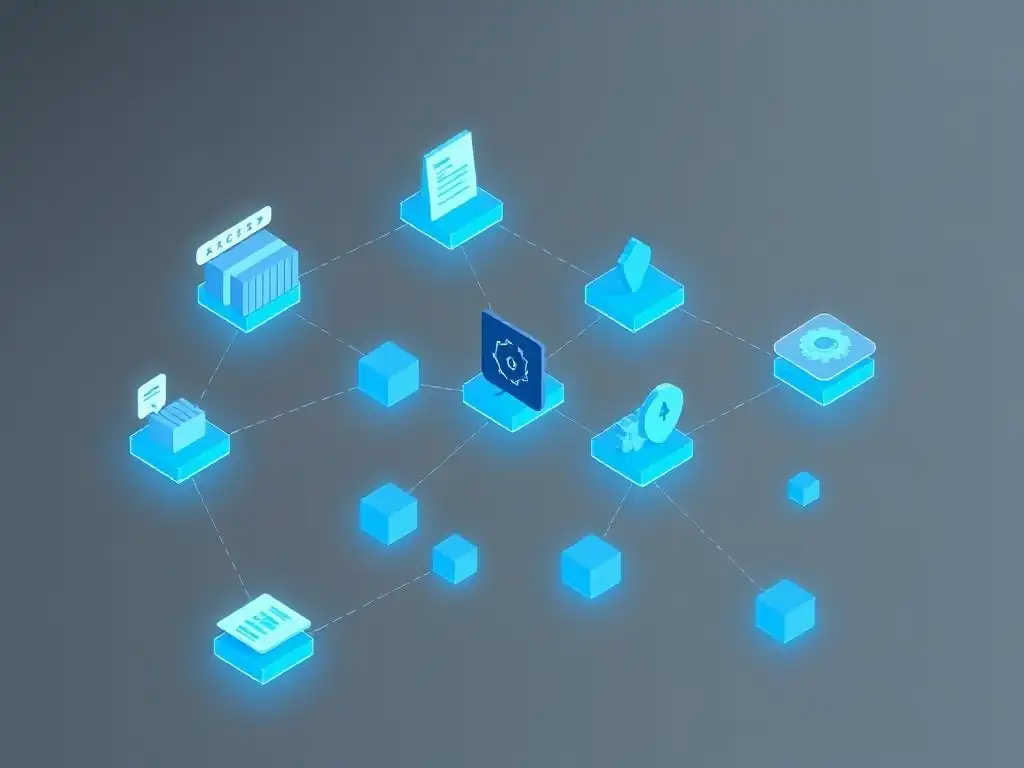
Hyperledger Fabric is particularly well-suited for building supply chain management applications due to its robust architecture, permissioned nature, and support for complex business logic through chaincode. Supply chains often involve multiple organizations, sensitive data, and complex workflows, all of which can be effectively addressed by Hyperledger Fabric's features. Using Fabric, organizations can create a shared, transparent, and secure platform for tracking goods, managing inventory, verifying product authenticity, and streamlining supply chain processes. Fabric's ability to control data access and ensure data privacy is crucial in supply chain scenarios where sensitive information needs to be shared selectively among authorized participants.
In a supply chain application built on Hyperledger Fabric, each organization in the supply chain can become a member of the Fabric network. Data about products, shipments, and transactions is recorded on the Fabric ledger, providing a shared and immutable record of the supply chain's history. Chaincode is used to define the business rules and processes for managing the supply chain, such as creating product records, transferring ownership, tracking location, and verifying quality.
Fabric's permissioned nature ensures that only authorized participants can access and update supply chain data, maintaining data confidentiality and integrity. Real-world examples of supply chain applications built on Hyperledger Fabric include solutions for food traceability, pharmaceutical supply chain security, and tracking of high-value goods, demonstrating Fabric's effectiveness in addressing complex supply chain challenges.
Defining a Supply Chain Model in Hyperledger Fabric
Defining a supply chain model in Hyperledger Fabric involves identifying the key entities, assets, and processes within the supply chain and representing them in Fabric's data model and chaincode logic. Typically, a supply chain model in Fabric would include entities such as suppliers, manufacturers, distributors, retailers, and consumers. Assets represent the goods or products being tracked in the supply chain, such as raw materials, components, finished products, or shipments. Transactions define the actions that can be performed on these assets, such as creating a product record, transferring ownership of a product, updating product location, or verifying product quality.
In Fabric, assets can be represented as state variables stored on the ledger, and transactions are implemented as functions within chaincode. The data model for assets would define the attributes of each asset type, such as product ID, description, origin, manufacturing date, location, and ownership history.
Chaincode would define functions for creating, reading, updating, and deleting assets, as well as functions for implementing supply chain processes like product shipment, receiving, and quality verification. Access control policies in Fabric can be used to define which participants are authorized to perform specific transactions on different types of assets.
For example, only a manufacturer might be authorized to create a new product record, while only a distributor might be authorized to update the location of a shipment. By carefully defining the data model, chaincode logic, and access control policies, developers can create a robust and secure supply chain application on Hyperledger Fabric that accurately reflects the real-world supply chain processes and requirements.
Implementing Chaincode for Tracking Products and Transactions
Implementing chaincode for tracking products and transactions in a Hyperledger Fabric supply chain application is crucial for defining the business logic and data interactions within the blockchain network. Chaincode in this context would contain functions to manage the lifecycle of products as they move through the supply chain, from origin to consumer. Key chaincode functions would typically include: CreateProduct: to register a new product in the system, recording details like product ID, description, origin, and manufacturing date. TransferProduct: to record the transfer of ownership of a product from one participant to another in the supply chain, such as from manufacturer to distributor or distributor to retailer. UpdateProductLocation: to track the current location of a product as it moves through the supply chain, enabling real-time visibility into product movement. VerifyProductQuality: to record quality checks or certifications performed on a product at different stages of the supply chain, ensuring product authenticity and quality. QueryProductHistory: to retrieve the complete history of transactions related to a specific product, providing a transparent audit trail of its journey through the supply chain.
These chaincode functions would interact with the Fabric ledger to store and retrieve product data and transaction records. Chaincode would also implement validation logic to ensure data integrity and enforce business rules. For example, the TransferProduct function might validate that the sender is the current owner of the product and that the receiver is a valid participant in the supply chain network. Chaincode can be written in languages like Go, Java, or Node.js, allowing developers to choose the language they are most comfortable with. Well-designed chaincode is essential for building a functional and efficient supply chain application on Hyperledger Fabric, ensuring accurate tracking of products and transactions and enabling transparency and trust among supply chain participants.
Identity Management with Hyperledger Indy
Hyperledger Indy is specifically designed for decentralized identity management, making it an ideal platform for building enterprise identity solutions. Indy provides a set of tools, libraries, and components for creating and managing decentralized identities based on blockchain technology. It enables individuals and organizations to have self-sovereign identities, where they control their own identity data and can selectively share it with others as needed.
Indy is particularly relevant for use cases requiring secure and privacy-preserving identity management, such as digital credentials, verifiable claims, and secure data sharing. Its focus on privacy, security, and interoperability makes it a strong choice for building enterprise identity solutions that empower individuals and organizations with greater control over their digital identities.
Indy's architecture is built around the concepts of decentralized identifiers (DIDs) and verifiable credentials. DIDs are globally unique identifiers that are controlled by the identity owner and are anchored on a distributed ledger. Verifiable credentials are digitally signed assertions about an identity holder, issued by a trusted issuer and verifiable by a verifier.
Indy provides components for creating, managing, and resolving DIDs, issuing and verifying verifiable credentials, and establishing secure communication channels between identity participants. It emphasizes privacy-preserving identity management, allowing individuals to share only the necessary identity information and control who has access to their data. Real-world applications of Hyperledger Indy include digital identity wallets, verifiable academic credentials, and decentralized identity solutions for government and healthcare, demonstrating its versatility and effectiveness in addressing diverse identity management challenges.
Building a Decentralized Identity Solution with Hyperledger Indy
Building a decentralized identity solution with Hyperledger Indy involves several key steps, from setting up an Indy network to developing applications that leverage Indy's identity management capabilities. Firstly, you need to set up an Indy network, which typically consists of Indy nodes that maintain the distributed ledger and provide identity services. Indy nodes can be deployed on-premises or in the cloud, and the network can be permissioned or permissionless depending on the use case.
Once the Indy network is set up, you can start developing applications that use Indy SDKs (Software Development Kits) to interact with the network. Indy SDKs are available in various programming languages, including Python, Java, and Node.js, providing developers with the tools needed to build identity applications.
The development process typically involves creating DIDs for identity holders, issuing verifiable credentials, and verifying credentials when needed. Indy SDKs provide APIs for creating and managing DIDs, generating and signing verifiable credentials, and verifying credential signatures. Applications can use these APIs to build user interfaces for managing digital identities, issuing credentials to users, and verifying credentials presented by users.
For example, a university could build an application that uses Indy to issue verifiable academic credentials to its graduates, and employers could build applications to verify these credentials when hiring. Building a decentralized identity solution with Indy requires understanding Indy's core concepts, such as DIDs and verifiable credentials, and using the Indy SDKs to implement identity management functionalities in applications.
Verifiable Credentials and Secure Data Sharing
Verifiable credentials and secure data sharing are central to Hyperledger Indy's approach to decentralized identity management. Verifiable credentials are digital representations of credentials, such as diplomas, licenses, or memberships, that are issued by a trusted issuer and can be cryptographically verified by a verifier. They are designed to be tamper-proof, privacy-preserving, and interoperable, enabling secure and efficient sharing of identity information. In Indy, verifiable credentials are based on open standards and protocols, ensuring interoperability with other identity systems and applications. They provide a secure and privacy-preserving alternative to traditional paper-based credentials or centralized digital identity systems.
Secure data sharing in Indy is facilitated by verifiable credentials and decentralized identifiers (DIDs). When an individual or organization needs to share identity information, they can present a verifiable credential to a verifier. The verifier can cryptographically verify the authenticity and integrity of the credential using the issuer's public key, without needing to contact the issuer directly.
This decentralized verification process enhances privacy and security, as it reduces reliance on centralized identity providers and minimizes data sharing. Indy also supports selective disclosure, allowing individuals to share only specific attributes from a verifiable credential, rather than the entire credential, further enhancing privacy. Verifiable credentials and secure data sharing are key enablers for building privacy-preserving and user-centric identity solutions on Hyperledger Indy, empowering individuals with greater control over their digital identities and data.
Best Practices for Hyperledger Enterprise Solutions Development
Developing enterprise solutions on Hyperledger platforms requires adherence to best practices to ensure security, performance, scalability, and maintainability. These best practices encompass various aspects of the development lifecycle, from architecture design and chaincode development to network configuration and deployment. Following these best practices is essential for building robust and production-ready Hyperledger applications that meet the demanding requirements of enterprise environments. Ignoring these practices can lead to security vulnerabilities, performance bottlenecks, and operational challenges, hindering the successful adoption of Hyperledger technology in enterprise settings.
Best practices for Hyperledger development often draw upon general software engineering principles adapted to the specific context of blockchain and distributed ledger technologies. They also reflect the unique characteristics of Hyperledger platforms, such as their permissioned nature, modular architecture, and focus on enterprise use cases. Adopting these best practices is not only about writing code but also about designing secure and efficient blockchain solutions, configuring networks effectively, and ensuring long-term maintainability and scalability. By following these guidelines, developers can maximize the benefits of Hyperledger technology and build enterprise blockchain applications that are reliable, secure, and performant.
Security Considerations for Hyperledger Blockchain Applications
Security considerations are paramount when developing Hyperledger blockchain applications, especially for enterprise use cases that often handle sensitive data and mission-critical operations. Security best practices for Hyperledger applications cover various aspects, including chaincode security, network security, data security, and access control. Chaincode security involves writing secure smart contracts that are free from vulnerabilities such as reentrancy attacks, integer overflows, and access control bypasses.
Thoroughly testing and auditing chaincode is essential to identify and mitigate potential security risks. Network security focuses on securing the Hyperledger network infrastructure, including peer nodes, orderer nodes, and communication channels. This includes using secure communication protocols (e.g., TLS), implementing firewalls and intrusion detection systems, and regularly patching and updating network components.
Data security involves protecting sensitive data stored on the blockchain ledger and ensuring data privacy. This can be achieved through encryption, access control policies, and data masking techniques. Hyperledger platforms offer features for data encryption and access control, which should be properly configured and utilized. Access control is crucial for permissioned blockchain networks like Hyperledger, ensuring that only authorized participants can access and modify data.
Implementing fine-grained access control policies based on roles and permissions is essential to prevent unauthorized access and data breaches. Regular security assessments, penetration testing, and security audits should be conducted to identify and address security vulnerabilities in Hyperledger applications and networks. By proactively addressing security considerations throughout the development lifecycle, organizations can build secure and trustworthy Hyperledger blockchain solutions.
Performance Optimization Techniques for Hyperledger Networks
Performance optimization is a critical aspect of developing enterprise-grade Hyperledger networks, ensuring that applications can handle the required transaction throughput and latency under real-world workloads. Performance optimization techniques for Hyperledger networks can be applied at various levels, including network configuration, chaincode design, and application architecture. Network configuration optimizations include choosing appropriate consensus mechanisms, optimizing block sizes and block creation intervals, and tuning network parameters for optimal communication and data propagation. For example, selecting a consensus mechanism like Raft or Kafka can provide higher throughput compared to more resource-intensive algorithms like Proof of Work.
Chaincode design plays a significant role in performance. Efficient chaincode should be written to minimize computational overhead and ledger interactions. Avoiding complex loops, minimizing state read/write operations, and optimizing data structures can significantly improve chaincode performance. Asynchronous chaincode execution and caching mechanisms can also be used to enhance performance.
Application architecture optimizations include designing applications to minimize network traffic and transaction contention. Batching transactions, offloading computationally intensive tasks to off-chain systems, and using caching at the application level can improve overall system performance. Performance monitoring and benchmarking using tools like Hyperledger Caliper are essential for identifying performance bottlenecks and evaluating the effectiveness of optimization techniques. Regular performance testing and tuning should be conducted to ensure that Hyperledger networks meet the performance requirements of enterprise applications.
Learning Hyperledger: Courses and Community Resources
Official Hyperledger Documentation and Tutorials
The official Hyperledger documentation and tutorials are invaluable resources for developers seeking to learn and master Hyperledger technologies. The Hyperledger project provides comprehensive documentation for all its frameworks, tools, and libraries, covering various aspects from architecture and concepts to development and deployment. The documentation is regularly updated and maintained by the Hyperledger community, ensuring that it reflects the latest features and best practices. It serves as the primary source of truth for understanding Hyperledger technologies and is essential for both beginners and experienced developers.
The official Hyperledger documentation includes detailed guides, tutorials, and examples for getting started with different Hyperledger frameworks like Fabric, Besu, Sawtooth, and Indy. It covers topics such as setting up development environments, writing smart contracts (chaincode), deploying networks, and interacting with blockchain applications. The tutorials provide step-by-step instructions for building sample applications and exploring various Hyperledger functionalities.
The documentation also includes API references, architecture overviews, and conceptual explanations, providing a comprehensive understanding of Hyperledger technologies. For developers new to Hyperledger, the official documentation and tutorials are the recommended starting point for their learning journey. They provide a structured and authoritative learning path, guiding developers through the essential concepts and practical skills needed to develop Hyperledger applications.
Online Courses and Training Programs for Hyperledger Developers
In addition to official documentation, numerous online courses and training programs are available for Hyperledger developers, catering to different skill levels and learning preferences. These courses are offered by various providers, including online learning platforms, training companies, and Hyperledger community members. They provide structured learning paths, hands-on exercises, and expert guidance to help developers acquire Hyperledger development skills more effectively. Online courses and training programs can complement the official documentation and tutorials, offering a more interactive and guided learning experience.
Online courses for Hyperledger development cover a wide range of topics, including Hyperledger Fabric development, Hyperledger Besu development, Hyperledger Indy development, and general Hyperledger concepts and architectures. Some courses focus on specific Hyperledger frameworks, providing in-depth training on their features and development tools. Others offer broader overviews of the Hyperledger ecosystem and cover multiple frameworks and tools.
Many courses include hands-on labs and projects, allowing developers to apply their learning and gain practical experience. Some courses also offer certifications upon completion, which can validate developers' Hyperledger skills and enhance their career prospects. Platforms like Coursera, edX, Udemy, and Linux Foundation Training offer various Hyperledger courses and training programs, providing developers with diverse learning options to choose from.
Engaging with the Hyperledger Community: Forums, Meetups, and Events
Engaging with the Hyperledger community is crucial for Hyperledger developers to stay up-to-date with the latest developments, learn from experienced practitioners, and contribute to the Hyperledger ecosystem. The Hyperledger community is active and vibrant, comprising developers, researchers, organizations, and enthusiasts from around the world. It provides various channels for communication, collaboration, and knowledge sharing, including online forums, mailing lists, chat platforms, meetups, and events. Participating in the Hyperledger community offers numerous benefits for developers, including access to expert knowledge, networking opportunities, and the chance to contribute to open-source projects.
Online forums and mailing lists, such as the Hyperledger mailing lists and Stack Overflow, are valuable platforms for asking questions, seeking help, and sharing knowledge about Hyperledger technologies. Hyperledger also has active chat channels on platforms like Rocket.Chat, providing real-time communication and collaboration opportunities. Hyperledger meetups and events, such as Hyperledger Global Forum and Hyperledger regional meetups, are organized regularly around the world, bringing together community members for networking, presentations, workshops, and hackathons.
Attending these meetups and events provides opportunities to learn from industry experts, connect with other developers, and discover new Hyperledger use cases and best practices. Contributing to Hyperledger open-source projects, such as reporting bugs, submitting code contributions, or participating in documentation efforts, is another way to engage with the community and enhance one's Hyperledger skills. Active participation in the Hyperledger community is essential for continuous learning, professional growth, and contributing to the advancement of Hyperledger technologies.
The Future of Hyperledger and Enterprise Blockchain
Emerging Trends in Hyperledger Development
Emerging trends in Hyperledger development are shaping the future of enterprise blockchain and reflecting the evolving needs of businesses adopting distributed ledger technologies. One significant trend is the increasing focus on interoperability between different blockchain platforms and networks. Hyperledger is actively working on initiatives to enhance interoperability, enabling seamless data and value exchange between Hyperledger networks and other blockchain ecosystems. This trend is driven by the recognition that enterprises often operate in interconnected ecosystems and require blockchain solutions that can interact with various platforms and partners.
Another key trend is the growing adoption of confidential computing and privacy-enhancing technologies within Hyperledger. Projects like Hyperledger Avalon and advancements in TEE integration are enabling secure and private computation on Hyperledger networks, addressing concerns about data privacy and confidentiality in enterprise blockchain applications. This trend is particularly important for industries like healthcare, finance, and supply chain management, where sensitive data needs to be processed on blockchain platforms without compromising privacy.
Furthermore, there is increasing emphasis on developer tooling and developer experience within the Hyperledger ecosystem. Efforts are underway to simplify Hyperledger development, improve SDKs and APIs, and provide better tooling for debugging, testing, and deploying Hyperledger applications.
This trend aims to lower the barrier to entry for developers and accelerate the adoption of Hyperledger technologies. The evolution of Hyperledger development is driven by the need to address enterprise requirements for interoperability, privacy, and developer productivity, shaping the future landscape of enterprise blockchain solutions.
Hyperledger's Role in the Broader Enterprise Blockchain Ecosystem
Hyperledger plays a pivotal role in the broader enterprise blockchain ecosystem as a leading open-source collaborative effort focused on advancing cross-industry blockchain technologies. Unlike public, permissionless blockchains, Hyperledger's focus on permissioned and private blockchain networks positions it as a key enabler for enterprise adoption of blockchain technology. Hyperledger's suite of frameworks, tools, and libraries provides a robust and flexible foundation for building enterprise-grade blockchain solutions across diverse industries. Its modular architecture, enterprise-grade features, and strong community support make it a trusted and reliable choice for organizations seeking to leverage blockchain technology for business innovation.
Hyperledger's open-source nature and collaborative governance model foster innovation and drive the evolution of enterprise blockchain technologies. The Hyperledger community brings together leading technology companies, startups, academic institutions, and individual developers, creating a vibrant ecosystem for knowledge sharing, technology development, and industry collaboration. Hyperledger actively collaborates with other blockchain initiatives and standards bodies, promoting interoperability and standardization within the broader blockchain ecosystem.
As enterprise blockchain adoption continues to grow, Hyperledger is expected to remain a central and influential force, shaping the direction of enterprise blockchain technologies and driving innovation across industries. Its commitment to open source, collaboration, and enterprise-focused solutions positions Hyperledger as a cornerstone of the future enterprise blockchain landscape.
Conclusion: Embracing Hyperledger for Enterprise Blockchain Innovation
Hyperledger stands as a powerful and versatile suite of tools and frameworks, offering developers a robust foundation for building innovative enterprise blockchain solutions. Its focus on permissioned networks, modularity, and enterprise-grade features makes it an ideal choice for organizations seeking to leverage blockchain technology to address real-world business challenges. From supply chain management and finance to healthcare and identity management, Hyperledger provides the building blocks for creating secure, scalable, and privacy-preserving blockchain applications.
As the enterprise blockchain landscape continues to evolve, Hyperledger is poised to remain at the forefront of innovation. Its active community, continuous development, and commitment to open standards ensure that Hyperledger technologies will continue to adapt and meet the evolving needs of businesses.
By embracing Hyperledger, developers and organizations can unlock the transformative potential of blockchain technology and drive innovation across industries, building a future where decentralized systems play an increasingly important role in enterprise operations and digital transformation. The resources and tools outlined in this guide provide a starting point for developers to embark on their Hyperledger journey and contribute to the growing ecosystem of enterprise blockchain solutions.
Frequently Asked Questions
What is Hyperledger and how does it differ from other blockchain platforms?
Hyperledger is an umbrella project of open-source blockchain frameworks and tools designed for enterprise-grade solutions, focusing on permissioned blockchains. Unlike public blockchains like Bitcoin, Hyperledger emphasizes data privacy and control, making it suitable for business applications.
What are the key Hyperledger projects a developer should be familiar with?
Key projects include Hyperledger Fabric, a modular blockchain framework; Hyperledger Besu, an Ethereum client; and Hyperledger Indy, focused on decentralized identity. Understanding these frameworks is crucial for building specific enterprise blockchain solutions.
Where can I find reliable documentation and tutorials for Hyperledger development?
The Hyperledger Foundation website provides comprehensive documentation, tutorials, and community forums. Other resources include official project repositories on GitHub and various online learning platforms.
What programming languages are typically used in Hyperledger development?
Common languages include Go, used extensively in Hyperledger Fabric; Java, used in Hyperledger Besu; and JavaScript, for developing client-side applications and smart contracts. The choice depends on the specific Hyperledger framework being used.
How can I contribute to the Hyperledger community and get involved in open-source development?
You can contribute by reporting bugs, submitting code contributions through GitHub, participating in community forums and working groups, and sharing your knowledge through blog posts and tutorials. Active participation helps grow the Hyperledger ecosystem.
Final Reflection: Building the Future with Hyperledger
The journey through Hyperledger development, as explored in this guide, highlights the critical role of open-source tools and resources in shaping the future of enterprise blockchain solutions. The landscape is constantly evolving, and understanding the available tools is no longer a luxury, but a necessity for developers aiming to build secure, transparent, and efficient systems. This guide serves as a stepping stone, empowering developers to navigate the complexities of Hyperledger and contribute to its growing ecosystem.
The impact of Hyperledger extends far beyond the realm of coding; it's about fostering trust and collaboration in a decentralized world. Witnessing the growth of Hyperledger and its adoption across various industries has been truly inspiring, reinforcing the belief that technology can be a powerful force for positive change. The future of trust is not in institutions, but in code.
This quote encapsulates the transformative potential of Hyperledger, enabling us to build systems where trust is inherent in the technology itself, rather than relying solely on intermediaries.
As you embark on your own Hyperledger development journey, remember that the tools and resources discussed here are merely starting points. The true power lies in your creativity, your willingness to experiment, and your commitment to building solutions that address real-world challenges. Embrace the open-source spirit, contribute to the community, and let your innovation shape the future of decentralized enterprise solutions. The possibilities are limitless, and the future of Hyperledger is in your hands.
Unleash Your Hyperledger Potential!
Thanks for diving into the world of Hyperledger with us! We hope you've gained valuable insights and are feeling inspired to build innovative enterprise solutions. Now, let's translate that knowledge into action.
Here are a few ways to take your Hyperledger journey to the next level:
- Start Building: Download the Hyperledger Fabric SDK and begin experimenting with a simple application. This hands-on experience is the best way to truly understand the platform's capabilities.
- Explore Advanced Modules: Delve into Hyperledger Indy or Iroha for identity management or permissioned blockchain solutions, respectively, broadening your understanding of the Hyperledger ecosystem.
- Share Your Insights: Contribute to the Blockchain Trends community by sharing your own Hyperledger projects or challenges in the comments below.
What innovative Hyperledger solution are you most excited to explore, and what initial hurdles do you anticipate overcoming?
Leave a Reply